
Review · GETTYSBURG
2-Hour Gettysburg Battlefield Guided History Bus Tour with a National Park Guide
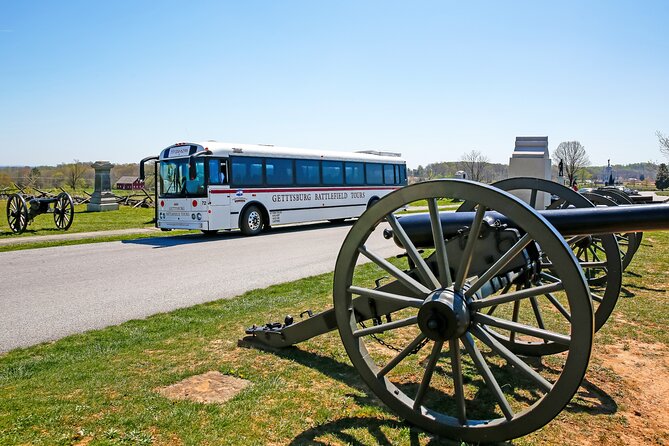
Gettysburg makes far more sense when you can see the hills, roads, fields, and stone walls that shaped the fighting. This two-hour bus tour links the major sites with a clear account of the battle, from the opening clashes to Pickett’s Charge and the Union victory.
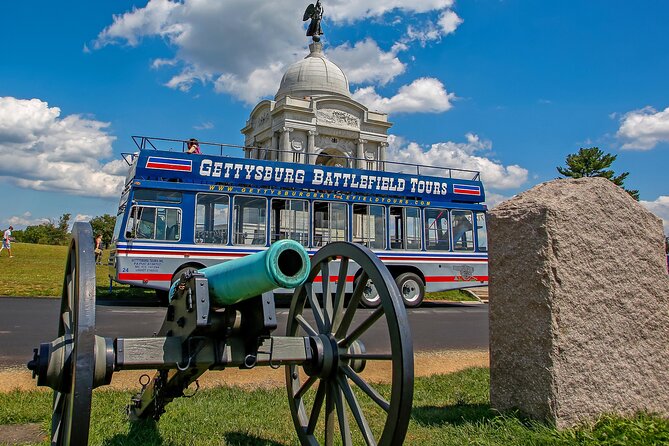
I like the comfortable air-conditioned coach, especially in winter or hot summer weather, and I like that you may step off at selected points rather than stare through glass for the entire tour. The guide and driver work together, with guides such as John, Christina, and Paul praised for bringing the battle into focus.
The main consideration is pace. Gettysburg covers a large area, and two hours gives you the broad story, not every monument or unit action. One guest also found the microphone too loud, and a few people may find the amount of information heavy.
Key points to know before you go
- Follow the battle in order: The strongest tours use a chronological story, making the three days easier to understand.
- Ride across a huge park: An air-conditioned coach saves time and energy compared with walking between distant sites.
- See the famous ground: The route may include Devil’s Den, Little Round Top, Pickett’s Charge, and other major positions.
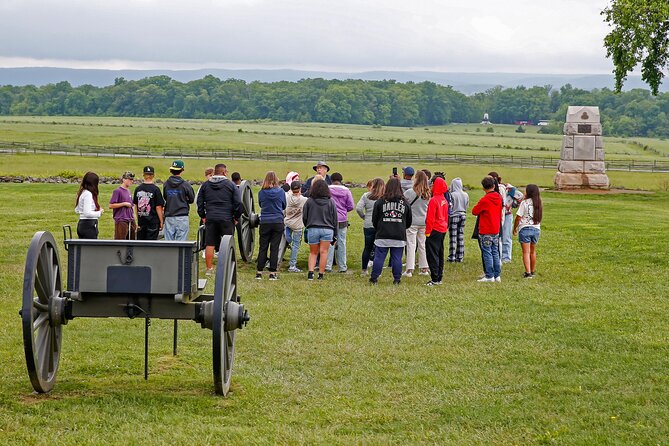
- Step off the coach: Selected stops let you stand on the battlefield and take in the views directly.
- Meet in central Gettysburg: The tour leaves from Gettysburg Tour Center at 778 Baltimore Street.
- Allow two focused hours: This works well as a first visit, but serious Civil War students will want extra time afterward.
Why a bus is a smart first look at Gettysburg
Gettysburg National Military Park is too spread out for a quick walking tour. The battlefield reaches across open fields, wooded areas, ridges, and roads outside the town. On foot, you would see only a small part of it in two hours. By bus, you can cover the main ground while a guide explains how each position fits into the larger fight.
I find that useful because Gettysburg is not just a collection of monuments. The shape of the land mattered. A rise in elevation could help artillery. A rocky slope could provide cover. A road could carry troops toward a weak point or become a route of retreat. From a bus seat, you can see these relationships without spending the day navigating from one distant site to another.
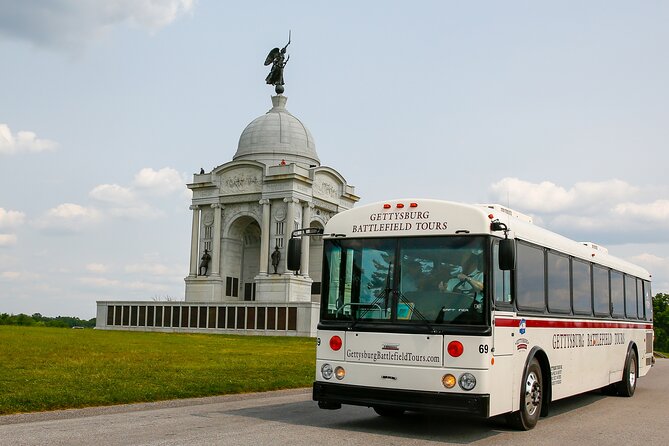
The coach also gives you shelter from the weather. The tour operates in all weather conditions, so dress for the day even if you expect to remain inside most of the time. The bus is air-conditioned, and recent departures have included warm, clean coaches with large windows and enough room for clear views.
The group can reach up to 40 people. That is not a private tour, but the size remains manageable for a short motorcoach outing. Your guide speaks to the whole bus, and the driver handles the battlefield roads while you focus on the story.
More Battlefield and Military History Tours in the USA:
- Gettysburg Battlefield Self-Guided Driving Audio Tour
★ 4.5 · 910 reviews - Gettysburg: Horse-Drawn Carriage Battlefield Tour
★ 4.8 · 896 reviews - Guided Savannah Civil War History Walking Tour
★ 5.0 · 492 reviews
Starting at Gettysburg Tour Center
The meeting point is Gettysburg Tour Center, 778 Baltimore Street, Gettysburg, Pennsylvania. The tour returns to this same location, and hotel pickup is not included. Plan to reach the center on your own and allow enough time to check in before departure.
This central start works well if you are already exploring Gettysburg town. It also makes the tour easy to use as an opening activity. You can get an overview of the park first, then return later to places that caught your attention.
The tour includes the driver, guide, and air-conditioned coach. The guide may also serve as the person leading the bus commentary, though the driver and guide have separate jobs on some departures. Guides named in recent feedback include John, Christina, Christine, and Paul, with praise for clear explanations, strong chronology, and an easy manner with questions.
Do not expect a private battlefield specialist assigned only to your party. The tour has a shared group format. That keeps the price at $43 per person, a reasonable figure for two hours of transport and guided interpretation across a large national park.
The three-day battle in two hours
Gettysburg was the Union victory that ended Robert E. Lee’s second major invasion of the North. It was also the bloodiest battle of the Civil War and the setting that later inspired Abraham Lincoln’s Gettysburg Address.
You will not receive every tactical detail in a two-hour trip, nor should you expect that. The value here is structure. A good guide gives you the sequence of events, shows where the armies were placed, and explains why certain ridges and roads mattered. Without that framework, the monuments can blur into a long list of names and dates.
The best version of this tour follows the fighting chronologically. Paul, for example, has been singled out for telling the battle in order and covering the main points without losing the thread. That approach helps if your school history is distant or if you know a few famous names but not how the events connected.
The guide may also add smaller details beside the well-known episodes. That can help turn a famous battle into a human event involving soldiers, civilians, commanders, wounded men, and families. Gettysburg was not an isolated military exercise. The town and its people suffered, and recovery took years.
Because the battle involved tens of thousands of casualties, the subject can be sobering. The tone may include a few light jokes to keep a long explanation moving, but this is still a serious visit. I would not treat it as a casual sightseeing loop. The power of the tour comes from understanding the cost of the ground you are seeing.
Devil’s Den and the rocky ground
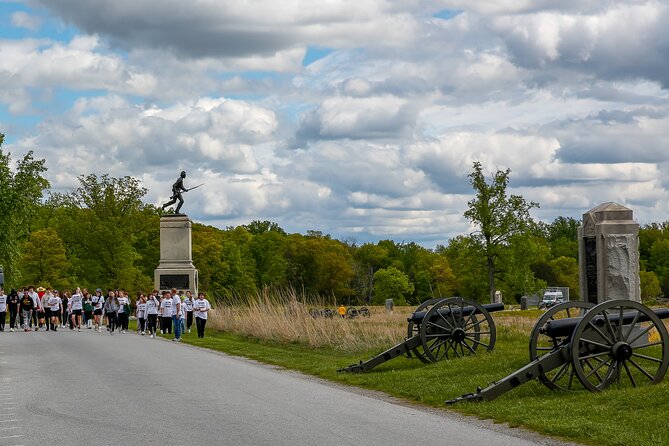
Devil’s Den is one of the most recognizable natural features in the park. It is a rock formation below Little Round Top, and you may have a chance to explore it with the group or view it during a stop.
This is a useful place for understanding how natural cover affected the battle. Rocks, slopes, and gaps are not abstract map symbols when you are standing beside them. You can look at the terrain and begin to see why troops would seek protection there and why controlling nearby high ground mattered.
The stop is also one of the more accessible visual moments for families. The rocks give children something concrete to look at, rather than asking them to hold a long chain of military movements in their heads. Still, walking around rocky ground requires care, and the schedule may not allow an extended exploration.
The itinerary describes possible stops rather than promising a long visit at every named location. The guide decides how to use the time, road conditions, and group needs. If Devil’s Den is a must-see for you, ask at the start how the stops are planned that day.
More National Park Trips in the USA:
- Branson: Top of the Rock Ozarks Heritage Preserve
★ 4.7 · 690 reviews
Little Round Top and the high ground

Little Round Top offers a broad view of the battlefield below. A monument sits at the top, and the elevated position helps explain why high ground was so important to both armies.
From this kind of viewpoint, the battle becomes easier to picture. You can see the spaces between positions rather than only hearing distances described in miles or yards. The guide can point out how the hills and valleys affected movement, sightlines, and defensive choices.
This is also where a short bus tour can do something a book cannot. Maps are useful, but standing above the fields gives you a direct sense of scale. You may begin to understand how difficult it was for commanders to direct troops across open ground and how quickly a plan could change.
The drawback is that you may have only a short time outside the coach. This is a survey tour, not a walking examination of Little Round Top. If you want to study monuments, read inscriptions, or trace a specific regiment’s route, plan a separate return visit.
The field of Pickett’s Charge
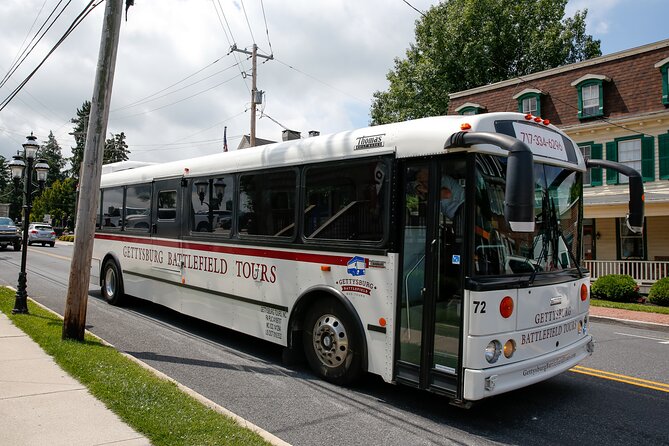
The area associated with Pickett’s Charge is one of the tour’s most important stops. Here, the guide can show you the broad space between the two armies and explain why the final Confederate assault became such a defining moment of the battle.
The open distance matters. You can look across the field and see how exposed an advancing force would be. A guide’s explanation of artillery, troop movement, timing, and defensive fire gives the view meaning. Without that context, it is simply a wide field. With it, the ground becomes the setting for the battle’s best-known assault.
This is also where the tour connects battlefield geography with the larger outcome of the Civil War. The Union victory at Gettysburg ended Lee’s second invasion of the North, and the failed assault became linked with the High Water Mark of the Rebellion.
You may not leave with every name memorized, but you should have a clearer idea of why this ground mattered. That is the right goal for a two-hour introduction.
What the guides do best
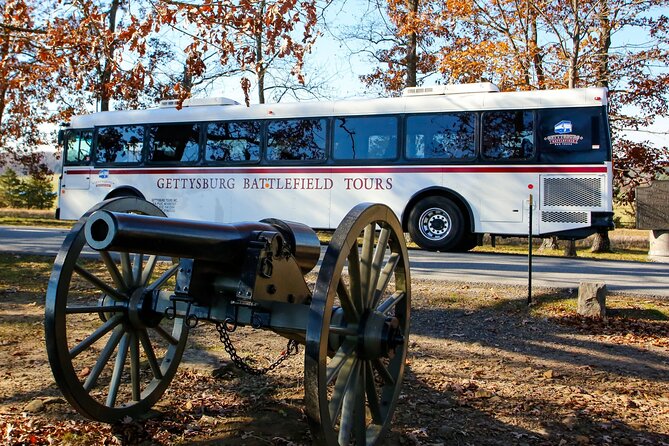
The guide is the heart of the experience. The strongest comments about this tour focus on clear speaking, passion for the subject, and the ability to make complicated events understandable.
John is described as an excellent guide who answers questions and gives easy-to-follow explanations. Christina has been praised for lively descriptions and for showing how hills and valleys shaped the battle. Paul is known for a chronological account that keeps the main events connected. Christine has also received strong marks for informative commentary, while drivers such as Cheryl and Stacey have been noted for safe, pleasant service.
Your assigned guide will vary, so you should not book expecting a particular person. Still, these examples show the kind of presentation to expect: a mix of dates, commanders, battlefield positions, and stories that help the facts stick.
There is one important caution. A few people have found the amount of information overwhelming, especially when several facts arrive without enough pause. A microphone was also described as too loud on one departure. If the sound level bothers you, mention it early and ask the guide to adjust it.
I prefer this kind of guided visit to trying to follow the battlefield alone on a first trip. You can always return with a map and focus on one regiment or monument. At the beginning, having someone explain the basic shape of the battle saves time and prevents confusion.
The $43 price and the value of two hours
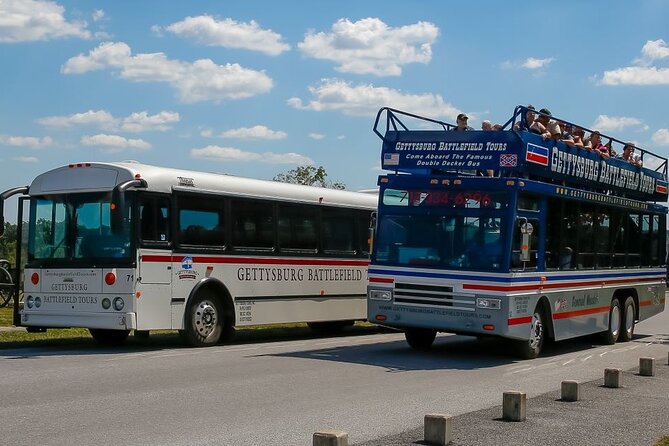
At $43 per person, the tour is not the cheapest way to see Gettysburg, but it offers good value if you want transportation and interpretation together. You are paying for a coach across a wide park, a guide’s account of the battle, and the chance to stop at major sites without planning the route yourself.
The value rises if this is your first visit. A self-guided drive can show you the same roads and monuments, but it requires preparation and a clear sense of where to go. You may also miss why one position matters more than another. The bus gives you a reliable starting point.
The value is lower if you already know the battlefield well or want long periods at individual monuments. Two hours moves quickly. You will get the main story and key views, not a specialist’s examination of every phase.
The tour is recommended by 91 percent of customers and carries a 4.7 rating from 2,201 ratings. Those figures suggest a dependable choice, though the occasional complaint about dense commentary and loud audio is worth keeping in mind.
Bring bottled water and a snack if useful. The tour is short, but the timing may not suit a meal break, and you may want something simple during the ride.
Who should book this Gettysburg tour?
I would recommend it to first-time visitors, families, couples, and anyone who wants a clear introduction before exploring alone. It also suits people who cannot spend a full day walking or driving the park.
The coach is particularly useful in January and other quieter months. Winter departures can offer smaller crowds and a warm bus, though you should dress for the weather because the tour operates outdoors as well as inside the coach. October and December can also bring fewer crowds, depending on conditions.
History students and Civil War enthusiasts will appreciate the route, but serious specialists should see it as a foundation. Use the tour to learn the layout, then return to the sites that match your interests.
Most people can take part, and service animals are allowed. The experience is offered in English. It is not a hotel pickup service, so you need to reach the Baltimore Street meeting point yourself.
Free cancellation is available up to 24 hours before the start time. Cancellations or changes inside that window are not refunded, and poor weather can lead to a new date or a full refund.
My call: book it for orientation, not total coverage
Book this tour if you want to understand Gettysburg quickly and comfortably. The combination of a large battlefield, a clear guide, and stops at places such as Devil’s Den, Little Round Top, and Pickett’s Charge gives you a useful first look for $43.
Skip it only if you want a slow, highly specialized visit or already know the park well. For most first visits, I would take the bus early in the day, listen for the guide’s explanation of the terrain, and then return on your own to the monuments that mean the most to you.
FAQ
Where does the Gettysburg bus tour start?
The tour departs from Gettysburg Tour Center at 778 Baltimore Street, Gettysburg, Pennsylvania 17325.
Where does the tour end?
The activity ends back at the same meeting point on Baltimore Street.
How long does the tour last?
The guided bus tour lasts approximately two hours.
What is included in the $43 price?
The price includes the driver and guide, the Gettysburg Battlefield Guided History Bus Tour, and transport by air-conditioned coach bus.
Is hotel pickup included?
No. Hotel pickup and drop-off are not included, so you must reach Gettysburg Tour Center on your own.
Which Gettysburg sites will I see?
The tour may include Devil’s Den, Little Round Top, the area associated with Pickett’s Charge, and other important battlefield locations. The exact stops can vary.
Is the tour offered in English?
Yes. The tour is offered in English.
Can I cancel for a full refund?
Yes, if you cancel at least 24 hours before the experience start time. Cancellations made less than 24 hours in advance are not refunded. If poor weather causes the operator to cancel, you will be offered another date or a full refund.
More Two-Hour Tours in the USA
- 2 Hour LoDo Historic Walking Tour in Denver
★ 5.0 · 1,106 reviews - 2 Hour Historic Market Food Tour and Hands-On Biscuit Class
★ 5.0 · 251 reviews - 2-Hour Food, History and Street Art Tour of Ponce City Market
★ 5.0 · 159 reviews - Portland, Maine: 2-Hour Guided History Tour
★ 4.9 · 127 reviews
Just added around the USA
- Red Rocks Amphitheatre Historical Walking Tour★ 5.0 · 74 reviews
- 1-Hour Segway Tour of Cheyenne Cañon Art, History and Nature★ 5.0 · 36 reviews
- Colorado Springs – Guided Walking Ghost / History Tour★ 5.0 · 168 reviews
- Ancient Landscapes Private Geology Hike at Garden of the Gods★ 5.0 · 31 reviews
- Village Food Tours Lunch & History Tour★ 5.0 · 80 reviews
- 2.5 Hour Kayaking with Manatee and History Tour in Tarpon Springs★ 5.0 · 24 reviews
- Safety Harbor Ghost Tour★ 5.0 · 60 reviews
- Historical Bicycle Tour of Dunedin★ 5.0 · 44 reviews
Gettysburg History Tours, compared.


Gettysburg: Horse-Drawn Carriage Battlefield Tour
Read our review →
Ghost Tour: History and Haunts – Family Friendly – Best in Gettysburg
Read our review →
Gettysburg: 1863 Historic Downtown Walking Tour
Read our review →
Gettysburg: “History and Haunts” Family Friendly Ghost Tour
Read our review →
Gettysburg: Beer, Wine, and History Guided Walking Tour
Read our review →Browse the lists this tour appears in