

Review · VIETNAM
Hoi An Ancient Town – Walking Tour with Local Guide
Hoi An’s old town is easy to admire and surprisingly easy to misunderstand. This small-group walk puts the temples, merchant houses, Japanese Covered Bridge, market, and quiet side lanes into a clear story, with guides such as Trung, Duy, Tom, and Tin explaining how the town grew as a trading port. I especially like the maximum group of 10 and the indoor rest stops, useful in Central Vietnam’s heat or rain.
The $14 price is strong for a first look at Hoi An, particularly because you visit several heritage interiors rather than simply strolling past painted façades. The main consideration is the extra 120,000 VND entrance fee, payable in cash, and the fact that the old town can become crowded during festivals such as Tet.
Key reasons this Hoi An walk works well
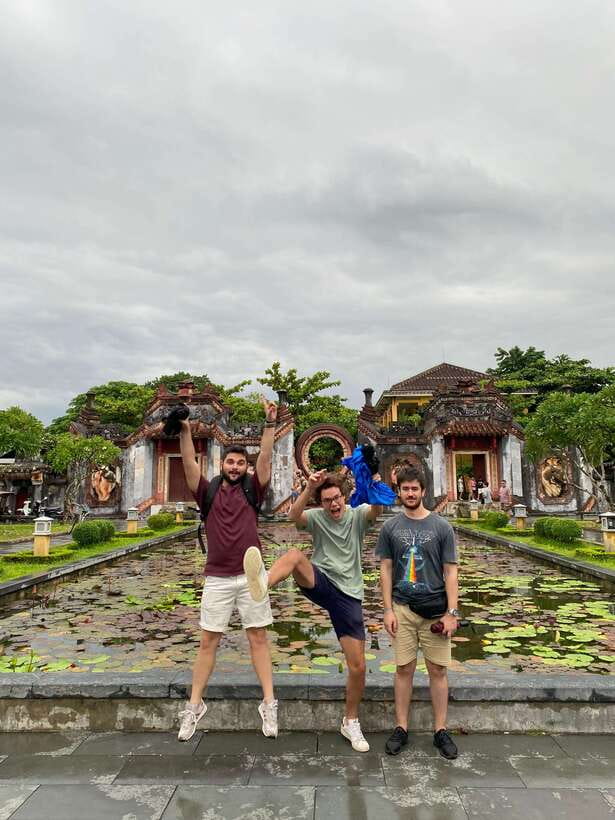
- A full old-town route in 150 minutes: See Ba Mu Temple gate, an assembly hall, the Japanese Covered Bridge, heritage houses, museums, the market, and more.
- Small groups capped at 10: Your guide can answer questions and keep the group together in busy lanes.
- A local drink or dessert included: The walk ends with tea, a traditional sweet, or a refreshing herbal drink such as the one served at Mot.
- Useful advice for the rest of your stay: Guides share suggestions for local food, cafés, tailor shops, and other Hoi An activities.
- Good cultural orientation: You learn how to read the town’s Chinese, Japanese, Vietnamese, and trading influences before exploring on your own.
- Indoor breaks help: Heritage buildings and sheltered stops make the route easier in hot, wet, or crowded conditions.
Why a guide helps in Hoi An’s old town
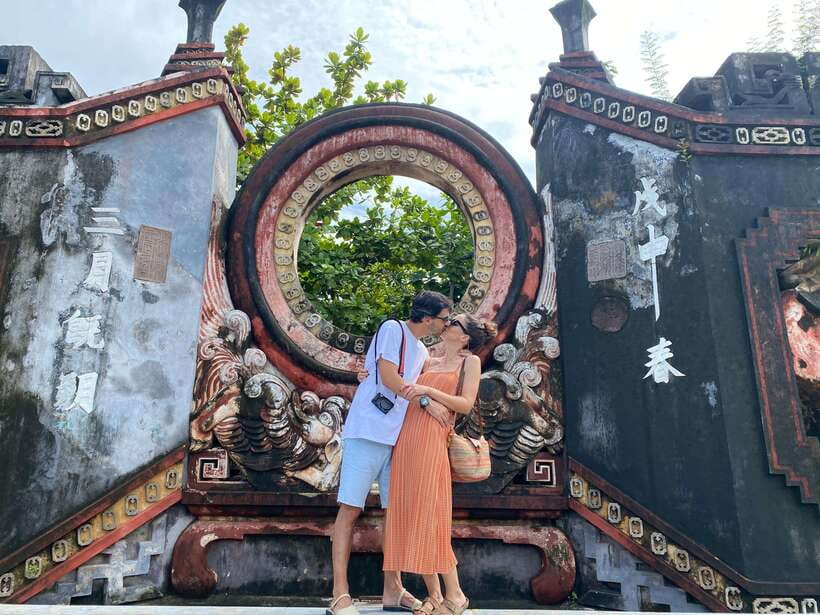
Hoi An can look simple at first: yellow walls, wooden shutters, lanterns, souvenir shops, and narrow lanes. Yet much of its meaning is easy to miss without context. A carved panel, a courtyard layout, or an altar inside a merchant house can seem decorative until someone explains what it says about trade, family life, religion, and local customs.
That is the main value of this walk. You are not just ticking off old buildings. You are learning how the town fits together.
The English-speaking guides are local, and the names appearing across the current guiding team include Trung, Duy, Tom, Tin, Trang, and Yui. You cannot choose a particular guide unless the operator confirms it, but the strong pattern is clear: the guides focus on clear explanations, humor, questions, and practical help. Trung is often praised for keeping groups together in crowded streets, taking photos, and offering useful advice after the formal tour ends. Duy is noted for answering questions about Vietnamese and Hoi An history in clear English.
That personal approach matters in a small group. With no more than 10 people, the guide can stop when someone has a question, point out a detail to the whole group, and keep the walking pace comfortable. This is not a private tour, but it should feel less hurried and impersonal than a large coach group.
More Ancient History Tours in Vietnam
- Hoi An: Ancient Town Guided Walking Tour
★ 4.9 · 766 reviews - Marble Mountains – Hoi An Ancient Town Sunset Daily Ingroup Tour
★ 5.0 · 690 reviews - Hoi An Ancient Town Walking Tour with a Local
★ 5.0 · 517 reviews
Starting at 95 Phan Chu Trinh Street
The meeting point is at 95 Phan Chu Trinh Street, in front of a tailor shop on the corner of the intersection. You should arrive ready to walk, with comfortable clothes and shoes. Pick-up and drop-off are not included, so plan your route to and from the meeting point yourself.
Starting outside the main old-town core is useful. You meet the guide before getting swallowed by the busiest lanes, and the walk can ease you into Hoi An rather than dropping you straight into its most crowded section.
The town requires a heritage entrance ticket costing 120,000 VND per person. This is separate from the $14 tour price and must be paid in cash. The ticket supports access to the designated heritage sites included along the route. The tour provides a separate entrance arrangement, but you still need to have the ticket fee ready.
The advertised duration is 150 minutes. Some tour accounts describe the walk as roughly two and a half hours, while the old-town visit is also presented as a three-hour portion of the itinerary. Allow a little flexibility rather than arranging a tight dinner reservation immediately afterward.
Ba Mu Temple gate and the first photo stops

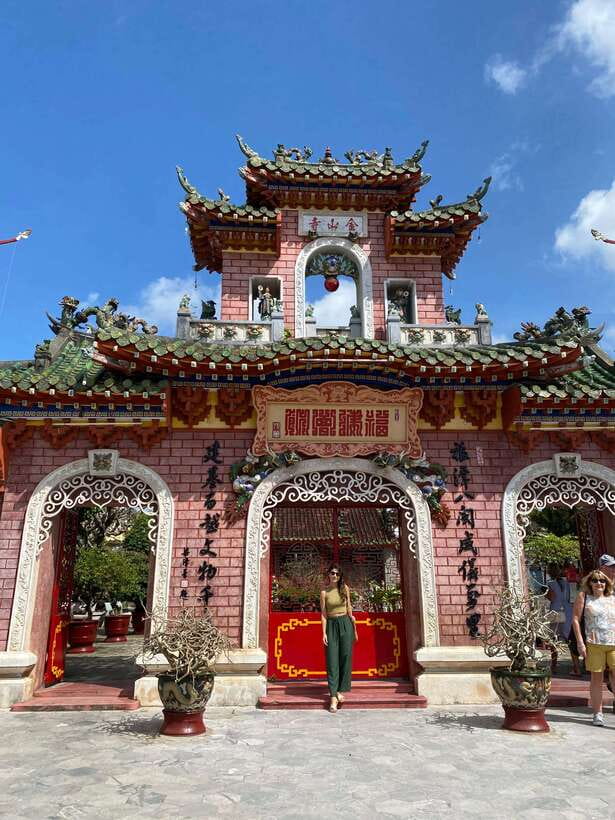
Ba Mu Temple gate makes a strong opening stop because it introduces Hoi An through color and architecture before the route moves into the more famous buildings. The gate is a popular place for photographs, but the guide adds the useful layer: what the structure is connected to, how it fits into local worship, and why details that look purely decorative matter.
This is also where you can settle into the rhythm of the walk. The route includes time for photographs rather than racing from one address to the next. Guides also help with group photos, a small service that becomes valuable when you are traveling alone or with only one companion.
Do not expect an archaeological excavation or a long temple ceremony. This is an orientation walk, so each stop receives enough explanation to make it meaningful while leaving room for the next site.
Assembly halls and Hoi An’s trading past

The Fujian or Cantonese Assembly Hall is one of the stops that gives Hoi An its wider Asian character. These halls were linked to Chinese communities and served social, religious, and community purposes. The details inside, including the layout and ornament, make more sense when you understand that Hoi An was shaped by traders and immigrant communities, not by one culture alone.
Your guide explains the differences in a way that helps you notice them during the rest of your stay. Hoi An’s old buildings are not all variations of the same yellow house. Their features reflect family traditions, religious practice, business ties, and contact with other parts of Asia.
This is one of the better reasons to take the tour early in your visit. If you walk through the old town first without context, you may see an attractive series of façades. After this stop, you have a better sense of what to look for in courtyards, shrines, roofs, and wooden screens.
More History Walking Tours in Vietnam
- Hue Imperial Ancient City Walking Tour
★ 4.8 · 308 reviews - Hanoi: Cho Gioi Vietnam War History Walking Tour
★ 5.0 · 102 reviews - Hanoi City Highlights Walking Tour – Landmarks & History
★ 5.0 · 34 reviews
The Japanese Covered Bridge
The Japanese Covered Bridge is Hoi An’s most famous landmark, and the tour gives you a chance to see it as part of the town’s story rather than as a quick photo stop. Its design reflects the historic presence of Japanese merchants and the town’s role in regional trade.
Crowds can make the bridge area hectic. The guide’s job here is partly historical and partly practical: keep the group together, find a sensible place to pause, and help you see the structure without losing half the group to passing foot traffic.
The bridge is not large, so the visit itself is brief. That is not a flaw. The value comes from combining the bridge with the nearby heritage houses and assembly halls. You see how different communities left their mark within a compact trading town.
Kazik Park and Hoi An’s modern connection
Kazik Park offers a change of pace from the older interiors. It honors Kazimierz Kwiatkowski, the Polish architect and conservation specialist associated with efforts to protect Hoi An and other Vietnamese heritage sites. The stop helps explain that preserving the old town was not automatic. Conservation work played a major role in allowing Hoi An to remain a living historic center.
This is a useful reminder that Hoi An is not simply an untouched old town. It is a working place with shops, homes, food stalls, cultural venues, and residents, all operating within a protected area. A good guide can help you understand that balance without turning the walk into a lecture.
Tan Ky Heritage House
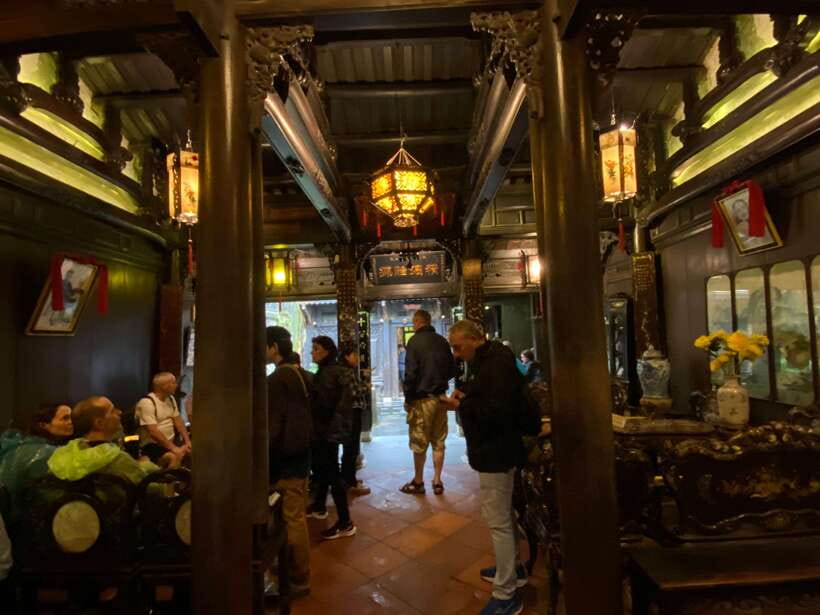
Tan Ky Heritage House is one of the strongest stops for understanding how a merchant family lived and worked. Its architecture reflects local Vietnamese design alongside Chinese and Japanese influences, a combination that makes sense in a port town with long-distance trade.
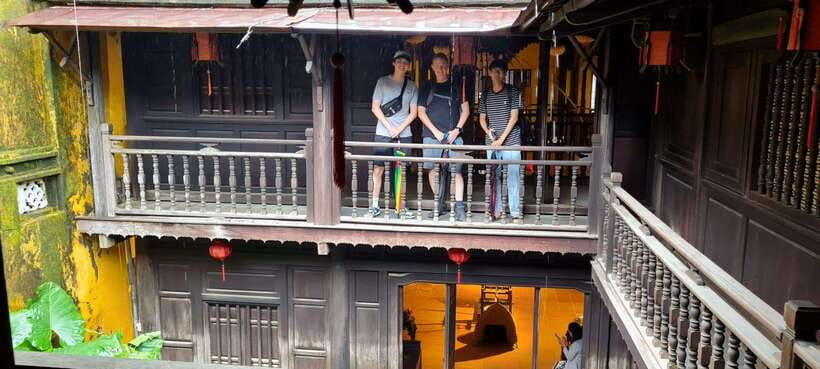
Look for the narrow frontage and the deeper interior arrangement. Traditional town houses often had to make good use of limited street space, with business activity toward the front and private household areas farther inside. Wooden details, beams, furniture, and the courtyard help you imagine the building as a family home and commercial space, not merely a museum display.
This stop can feel busy, especially at popular times. You may not have complete freedom to linger in every room. Still, the guide’s explanation gives the building structure and purpose, which is more useful than wandering through it without knowing what you are seeing.
Traditional art and folk culture

The Hoi An Traditional Art Performance House and the Museum of Folk Culture add a cultural layer beyond architecture. The performance house presents traditional arts in a compact setting, while the folk museum focuses on everyday customs and local life.
These stops are particularly helpful if your Hoi An visit includes an evening cultural show or a larger performance. One person specifically found that learning about the town first made a later memory show easier to understand. That is a sensible order: get some background during the walk, then watch a performance with a better idea of the symbols and traditions involved.
The museum also breaks up the walking. You can step indoors, slow down, and look at objects connected with work, celebrations, clothing, and domestic life. The experience is not designed as a long museum study session, so if you want to examine every display closely, plan a separate return visit.
Hoi An Market and the end of the route
The market is a practical finish because it shifts the focus from heritage buildings to daily commerce. You see where food, ingredients, and local shopping fit into the town’s life. The guide can also help you distinguish between places worth returning to and areas aimed mainly at passing shoppers.
The walk usually ends with a local tea, dessert, or herbal drink. Several tour accounts describe a stop at Mot for its refreshing herbal drink, though the exact treat may depend on the day and the guide. This is a modest inclusion, but it works well. You get a cool pause after the walk and a taste of something local without committing to a full meal.
By this point, you should also have a working list of places to try later. Guides offer advice on local dishes, cafés, tailor shops, and other activities. Take notes on your phone because this kind of information is easy to forget once you start shopping or stopping for food.
Is $14 good value?
At $14 per person, the tour is good value if you want more than a self-guided photo walk. The price includes an English-speaking local guide, the small group, access to several key heritage sites, side lanes and photo stops, and a local drink or dessert.
The extra 120,000 VND ticket matters. Add it to your mental budget before booking, and carry cash. Even with that cost, the package remains fairly priced for a route that covers several major sites in two and a half hours.
The strongest value is not the number of stops. It is the time saved figuring out what each building means. If you have only one day in Hoi An, the guide helps you get your bearings quickly. If you have several days, the walk gives you a useful map for later independent exploring.
The tour is less useful for someone who prefers to spend an hour inside each museum or photograph every building at their own speed. You will be moving as a group, and the route aims for breadth rather than close study.
Heat, rain, crowds, and walking comfort
Hoi An can be hot, wet, or crowded, depending on the season and time of day. Comfortable clothes are specifically recommended, and sensible walking shoes are a good idea. The itinerary includes several indoor breaks, which makes the route more manageable than a continuous outdoor walk.
Crowds are a real consideration. During Tet, the old town can become particularly busy. One guide handled this by keeping the group close and adjusting choices along the way. That is exactly what you want from a small-group guide, but no guide can make a popular old town empty.
Baby strollers are not allowed, and the activity is not suitable for babies under one year. The route is designed around walking through narrow streets and heritage interiors, so families should consider those limits before booking.
The tour does not include hotel transport. You need to reach the meeting point at 95 Phan Chu Trinh Street and make your own way back afterward. Free cancellation is available up to 24 hours before the start, and you can reserve now and pay later, which helps if your Hoi An schedule is still shifting.
Who should book this Hoi An walk?
I would put this tour near the beginning of your Hoi An stay. It gives you a useful framework before you return to the old town for food, shopping, lantern-lit walks, or a performance.
It suits first-time visitors, solo travelers, couples, and small families with older children who can manage the walking. It is also a good fit if you have limited time and want the main heritage sights without arranging separate visits.
You should choose it if you like local explanation, manageable walking, and practical recommendations. The warm, funny guide style repeatedly helps the experience feel social without becoming forced, and guides make an effort to answer questions rather than deliver a memorized speech.
You may prefer exploring alone if you dislike fixed routes, want long photography stops, or plan to spend most of your time shopping. The old town is easy to wander, and independent exploration has its own rewards. Just know that you will likely miss some interiors and background information.
Should you book it?
Yes, if this is your first time in Hoi An and you want a clear introduction for a modest price. The combination of a 10-person limit, local English-speaking guides, major sights, heritage interiors, indoor pauses, and useful food and shopping tips gives the walk real purpose.
Book it early in your stay, carry the 120,000 VND cash entrance fee, and leave room after the advertised 150 minutes in case the group moves slowly. If you want a relaxed overview before exploring Hoi An on your own, this is a practical choice. If you already know the old town well or prefer total independence, spend the money on a meal and wander at your own pace instead.
FAQ
How long does the Hoi An walking tour last?
The activity is advertised as lasting 150 minutes, or about two and a half hours. The old-town visit may be described as up to three hours, so allow some extra time in your schedule.
Where does the tour start?
The meeting point is 95 Phan Chu Trinh Street, Hoi An, in front of a tailor shop at the corner of the intersection.
Is the heritage entrance ticket included?
No. You must pay 120,000 VND per person separately, and the fee must be paid in cash.
What language does the guide speak?
The tour is conducted in English by a live local guide. Guides named in the current team include Trung, Duy, Tom, Tin, Trang, and Yui, but a specific guide is not guaranteed.
What does the tour visit?
The route includes Ba Mu Temple gate, a Fujian or Cantonese Assembly Hall, the Japanese Covered Bridge, Kazik Park, Tan Ky Heritage House, the Hoi An Traditional Art Performance House, the Museum of Folk Culture, and Hoi An Market.
Is food or drink included?
A traditional dessert or local tea is included. The walk may finish with a refreshing herbal drink at Mot, depending on the route and arrangements that day.
Just added around Vietnam
- Hue: 3 Best Royal Tombs Tour and Ancient Pagoda★ 4.9 · 100 reviews
- Ho Chi Minh City Tour with Colonial Heritage and Chinatown★ 4.6 · 48 reviews
- Ho Chi Minh City: Half-day History And Culture Tour★ 4.5 · 33 reviews
- Hanoi City Highlights Walking Tour – Landmarks & History★ 5.0 · 34 reviews
- Hanoi: Historic Jeep Tour★ 4.9 · 30 reviews
- Hanoi: Cho Gioi Vietnam War History Walking Tour★ 5.0 · 102 reviews
- From Ho Chi Minh City: Heritage & Culture Half-Day Tour★ 4.7 · 37 reviews
- From Hanoi: Trang An eco-tourism – Hoa Lu ancient & Mua Cave★ 4.7 · 51 reviews
Vietnam History Tours, compared.
Ninh Binh Heritage Full Day Tour with Buffet Lunch and Limousine
Read our review →
Premium Cu Chi Tunnels Tour with Local Expert by SpeedBoat
Read our review →
Halong Heritage Luxury Day Cruise-Buffet lunch&Limousine transfer
Read our review →

Marble Mountains – Hoi An Ancient Town Sunset Daily Ingroup Tour
Read our review →

From Ho Chi Minh: Cu Chi Tunnels Half-Day History Tour with Guide
Read our review →Browse the lists this tour appears in