
Review · SPAIN
Oviedo : Walking tour of the Historic Center
Oviedo’s old center is compact, handsome, and full of stories that are easy to miss without a guide. This two-hour walk links the city’s royal past, the beginning of the Camino de Santiago, the world of La Regenta, and more than 100 public sculptures scattered through town.
I like the small private-group format, which lets a guide adjust the pace and spend more time where you are most interested. I also like the practical local advice: Aurora, Paula, Patri, and other guides have helped visitors choose restaurants and plan the rest of their stay. The main consideration is that much of the value comes from explanation rather than entry visits, so this suits you best if you want context while walking, not a long indoor museum tour.
Key points at a glance
- Begin with Ana Ozores: Meet the bronze figure from Leopoldo Alas Clarín’s La Regenta in Plaza de Alfonso II.
- See Oviedo’s grand civic squares: Visit Plaza de la Constitución, City Hall, San Isidoro El Real, and Plaza del Fontán.
- Spot Botero’s La Maternidad: The famous mother-and-child sculpture sits near the Campoamor Theater.
- Connect Oviedo with the Camino: Learn why the Asturian capital is linked with the early pilgrimage route to Santiago.
- Choose English or Spanish: Live guiding is available in both languages, with named guides including Aurora, Paula, Patri, and Cristina.
- Plan for a two-hour walk: The route is wheelchair accessible, and hotel pickup can be arranged in Oviedo.
Why Oviedo makes a good walking-tour city
Oviedo is easy to approach on foot, but its story is not as simple as its size suggests. The city was tied to the early kings of Asturias, became an important religious center, and is closely connected with the origins of the Camino de Santiago. A guide can connect those threads as you move through squares and streets instead of leaving you to read disconnected plaques.
The route also gives you several different versions of Oviedo in a short time. You see royal and religious symbols around the cathedral, formal civic buildings in the center, colorful market architecture at El Fontán, and modern public art near the theater.
That variety is what makes the walk useful on your first day. You get a map in your head, a short list of places to return to, and suggestions for food and further sightseeing. Roman, medieval, literary, artistic, and present-day Oviedo all appear within a fairly small area.
The tour costs $165 per group of up to five people. That price makes more sense for a family or group of friends than for a solo visitor. Split five ways, it works out to $33 per person; for two people, it becomes a much more expensive introduction. The private format also gives you more control than a large group walk, especially if someone in your party needs a slower pace.
More History Walking Tours in Spain
- Barcelona: Tapas Walking Tour with Food, Wine, and History
★ 4.8 · 4,261 reviews - Barcelona Tapas Walking Tour: Food, Wine & History
★ 4.5 · 1,928 reviews - Madrid Historical Walking Tour
★ 5.0 · 721 reviews
Starting with Ana Ozores in Plaza de Alfonso II
The walk begins in Plaza de Alfonso II El Casto, one of Oviedo’s key historic spaces. Before setting off, the guide introduces you to the bronze statue of Ana Ozores, the central character in Leopoldo Alas Clarín’s novel La Regenta.
This is a smart opening. You are not simply looking at a statue of a fictional woman. You are meeting a figure tied to Oviedo’s literary identity. The novel’s city is known as Vetusta, and Ana Ozores helps explain why Oviedo’s streets, churches, and social world have such a strong place in Spanish literature.
The square is also a useful orientation point. It brings together the cathedral area, the old streets, and the city’s royal associations. If you are arriving without much background on Asturias, this first stop gives you a sense that Oviedo is more than a pleasant regional capital. It was an important center for the Asturian monarchy and for Christian pilgrimage.
The pace here should suit most people. You begin with explanation and observation rather than a steep climb or a rushed list of monuments. If you want to take photographs of the statue, the square, or the cathedral area, tell your guide early so the stop does not feel hurried.
Plaza de la Constitución and San Isidoro El Real
From the opening square, you walk through Oviedo’s elegant central streets to Plaza de la Constitución. This is the city’s largest and most important square, and it gives you a broader sense of public Oviedo.
Two buildings anchor the stop. One is the facade of Oviedo City Hall. The other is San Isidoro El Real, a former Jesuit school and one of the square’s main architectural features. The guide’s role here is especially useful because the buildings represent different parts of the city’s civic and religious life.
I like this section because it moves beyond postcard sightseeing. You get to think about how a city organizes itself around government, religion, education, and public gathering spaces. The square also helps you understand the scale of Oviedo. It feels formal and open after the tighter streets near the cathedral.
Do not expect a long interior visit to San Isidoro El Real as part of the advertised walk. The focus is on the exterior and the story of the place. If entering the church matters to you, ask the guide what can be added or visited separately.
The colors and daily life of Plaza del Fontán
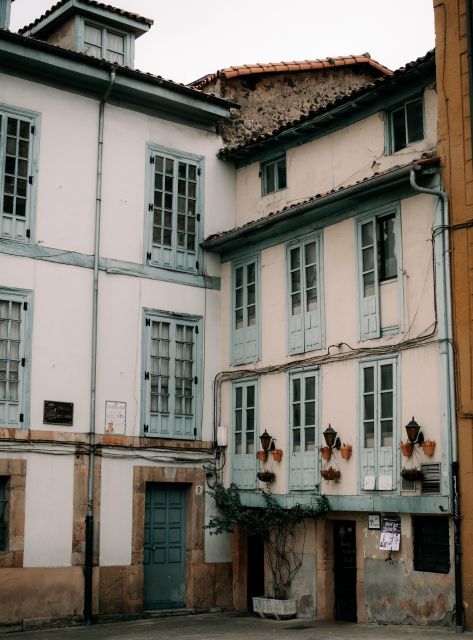
Next comes Plaza del Fontán, one of the most appealing stops on the route. Its colorful buildings and outdoor terraces give the square a more relaxed character than Plaza de la Constitución.
El Fontán is a good place to pause and watch ordinary city life. The terraces make it a natural spot for a coffee or a meal later, and the square’s location places it close to other central sights. Your guide can point out how the area fits into Oviedo’s daily rhythm rather than treating it as a monument viewed only from a distance.
This is also one of the places where a private walk can feel more personal. You can ask about eating nearby, Asturian specialties, or which parts of the center are worth revisiting after the tour. Paula and Aurora were praised for useful food suggestions, and several guides have offered advice on what to do during the rest of a stay.
The drawback is timing. Two hours goes quickly, and the tour includes several major places. You may have only a short stop at El Fontán rather than time to sit on a terrace. If you want to eat there, return after the walk.
More Old Town and Historic Centre Walks in Spain
- Madrid Essential: Historic Center, Plaza Mayor & Royal Palace
★ 5.0 · 6,416 reviews - Valencia Old Town Tour with Wine & Tapas in 11th Century Historic Monument
★ 5.0 · 3,234 reviews - Madrid Historic Centre Food Tour with Authentic Tapas & Wines
★ 5.0 · 814 reviews - Madrid in a Day Tour:Royal Palace, Historic Center & Prado Museum
★ 5.0 · 628 reviews
Botero’s La Maternidad and the sculpture trail
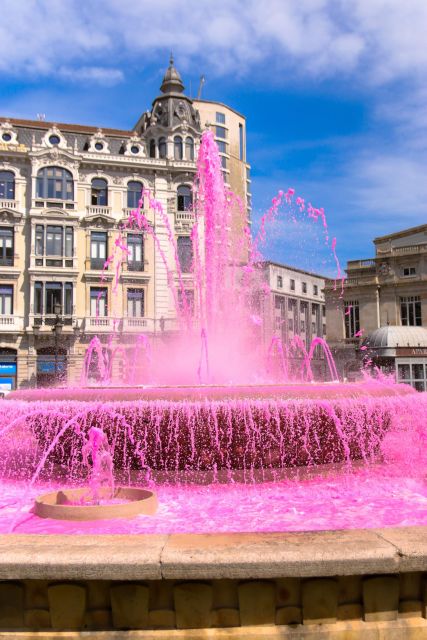
Oviedo is known for its public sculpture, with more than 100 works spread around the city. The walk introduces you to La Maternidad, Fernando Botero’s large bronze mother-and-child sculpture in Plaza de la Escandalera.
The sculpture is easy to remember because Botero’s rounded forms are so distinctive. It also changes the mood of the tour. After royal history, churches, and civic buildings, you are looking at a modern work that has become part of the city’s public space.
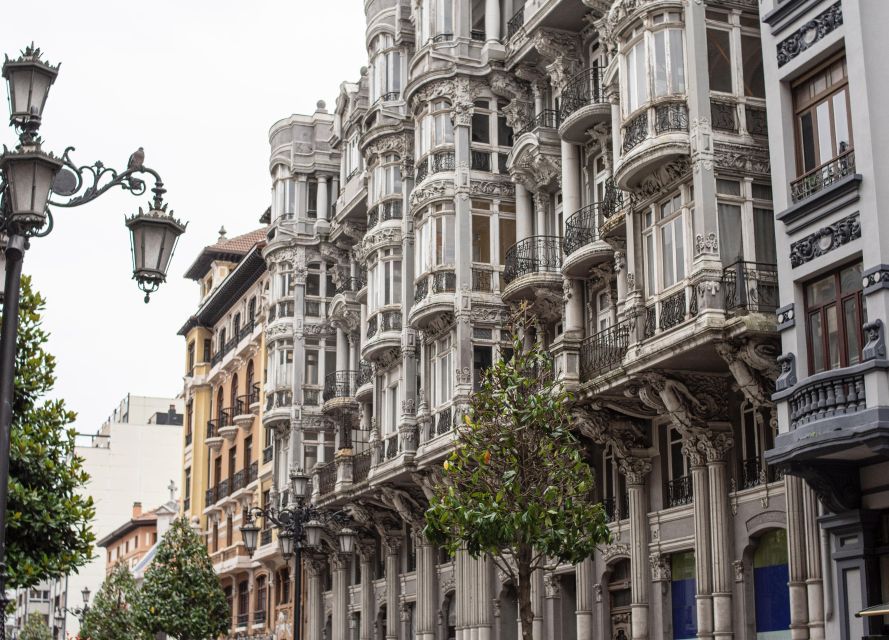
Plaza de la Escandalera is framed by bourgeois-style buildings and sits near Teatro Campoamor. It is an excellent place to notice how Oviedo mixes old and newer cultural markers without separating them into different districts.
You should not expect to see all 100-plus sculptures in two hours. Think of this stop as an introduction to one of Oviedo’s most unusual features. Once you know to look for public art, you will notice more pieces as you continue walking on your own.
Teatro Campoamor and the Princess of Asturias Awards
The Campoamor Theater is one of Oviedo’s best-known cultural buildings and the endpoint named for the route. It is also where the Princess of Asturias Awards are presented.
That detail gives the theater more meaning than a quick exterior photograph. The building connects the city to one of Spain’s best-known annual cultural events, while its position near Plaza de la Escandalera makes it easy to include with the Botero sculpture.
The advertised route presents the theater as the finish point, while the walking description also says the group returns to Plaza de Alfonso II to look at the cathedral. Ask your guide at the start which ending applies to your booking. The two areas are central and close enough to plan around, but it is useful to know where your two hours will finish.
If you are meeting someone afterward, do not assume the final stop without checking. The listed endpoint and the written route do not match perfectly.
The cathedral and Oviedo’s royal past
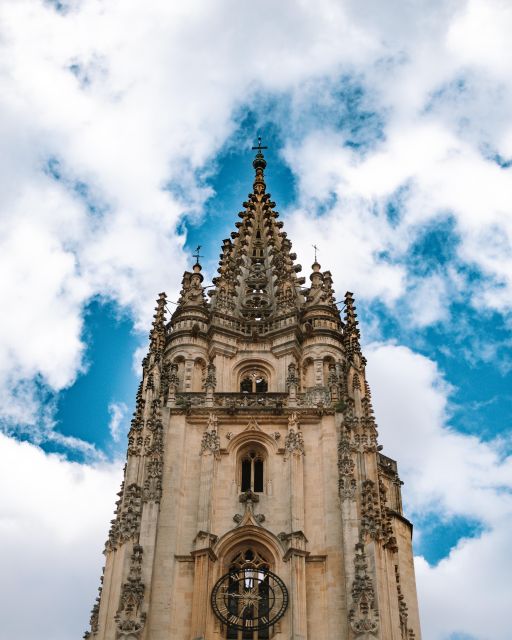
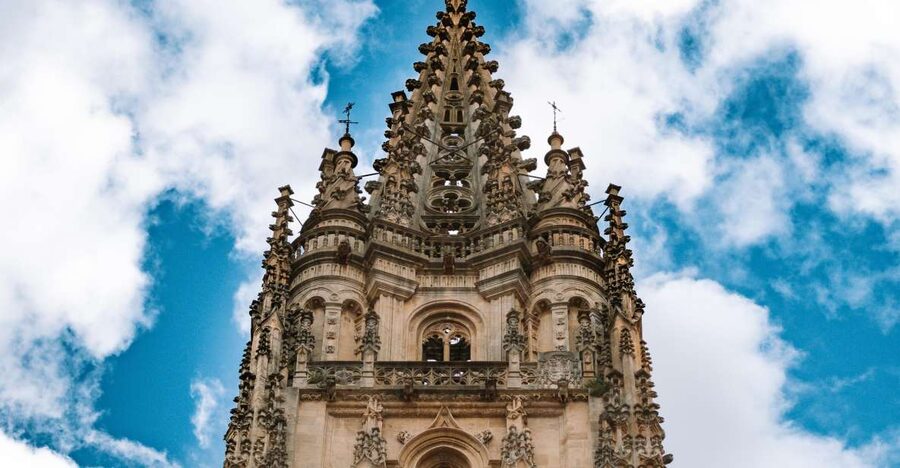
The route description finishes with the facade and portico of Oviedo Cathedral, also called the Cathedral of San Salvador. The cathedral is one of the city’s defining sights, and its Gothic exterior gives the walk a strong closing point.
The tour focuses on the facade and portico rather than promising a full interior visit. That distinction matters. If you want to see the cathedral inside, discuss a separate visit with your guide. Romanesque and pre-Romanesque sites in Asturias are important parts of the region’s story, but they are not described as stops on this particular two-hour walk.
The cathedral also connects naturally to the Camino de Santiago. Oviedo is associated with an early route to Santiago, and the cathedral has long been a major religious reference point for pilgrims. Even if you are not walking the Camino, this context helps explain why the city has such a strong connection to pilgrimage.
For me, this is one of the walk’s most useful themes. You see the Camino not only as a marked trail, but as part of Oviedo’s identity, religious history, and place within northern Spain.
What the guides add to the walk
The strongest part of this experience is the guide. The named guides in the information include Aurora, Paula, Patri, and Cristina, and the available languages are Spanish and English.
Aurora is especially good at balancing dates and details with the larger story of the city. Paula brings an easy, family-friendly style and offers practical suggestions for restaurants and extra sights. Patri is known for explaining a large amount of information with warmth and energy. Cristina has also been described as friendly and clear in communication.
You cannot necessarily choose a specific guide when booking, so treat those names as examples of the guiding team rather than a guarantee. Still, the repeated praise for clear explanations, humor, local recommendations, and enthusiasm points to what you should look for: ask questions and use the guide as a resource, not just as a person leading you from square to square.
One useful tip is to book this early in your stay, preferably on your first day or first evening in Oviedo. That gives you time to use the restaurant advice, return to places that caught your eye, and plan any cathedral or museum visits.
A few people have also found value in combining this walk with a separate cathedral tour from the same guide. That can make sense if you want more than exterior views and prefer continuity in the explanations.
Timing, pickup, and accessibility
The walk lasts about two hours and is divided into four roughly 30-minute sections in the supplied schedule. That is enough time for a clear introduction, but not enough for long stops inside several buildings.
Hotel pickup is optional. You can provide the name of your hotel in Oviedo and arrange for the guide to meet you there. Starting times are described as indicative, so you can discuss a suitable time after booking.
The experience is listed as wheelchair accessible. Oviedo’s central streets and squares are manageable for many visitors, but your own needs may depend on the exact starting point and route on the day. Tell the provider in advance if you need a particular meeting arrangement or pace.
The tour can be booked with free cancellation up to 24 hours before the start, and you can reserve now and pay later. Those terms are useful if your Oviedo plans are still changing.
Who gets the most from this Oviedo walk
I would choose this tour if you are visiting Oviedo for the first time, want a compact introduction, and prefer learning through streets and squares rather than spending two hours indoors.
It is a good fit for:
- Families who want a guide to keep children engaged with stories and sculptures
- Couples or friends who can share the $165 group price
- Camino pilgrims who want to understand Oviedo’s place in the pilgrimage story
- Readers interested in La Regenta and Spanish literary settings
- Visitors who want restaurant advice and a plan for the rest of their stay
- Anyone who prefers English or Spanish guiding and a flexible private format
It is less suitable if you want a long cathedral visit, detailed museum time, or a full survey of Asturias’s pre-Romanesque monuments. It also offers less value for a solo visitor because the cost is set per group rather than per person.
The fine arts museum came up as an especially worthwhile extra stop for one visitor, but it is not part of the stated route. Ask your guide about adding it to your plans rather than expecting it during the two-hour walk.
Is the $165 price fair?
For up to five people, the value is solid if you use the guide well. You are paying for a private introduction to Oviedo, a route through its main central sights, explanations in your chosen language, and practical advice that can shape the rest of your visit.
The price is harder to justify for one or two people. A public group tour, if available elsewhere, could cost less. The advantage here is the chance to ask questions freely, adjust the pace, and focus more time on places that interest you.
I would make the most of the price by booking early, asking for restaurant suggestions, confirming the cathedral and Campoamor ending, and mentioning any interests in literature, pilgrimage, sculpture, or architecture before the walk begins.
Should you book the Oviedo historic center walk?
Book it if you want a friendly, informed introduction to Oviedo with a strong local voice. The route covers the cathedral area, royal history, La Regenta, El Fontán, Botero’s sculpture, City Hall, San Isidoro El Real, and the Campoamor Theater without requiring transport.
The best reason to choose it is not simply the number of sights. It is the combination of clear storytelling and useful advice for the rest of your visit. If you are traveling with up to five people, the group price becomes much more attractive.
Skip it if you mainly want interior access or a specialized architectural tour. Otherwise, schedule it near the beginning of your stay, confirm the exact endpoint, and treat the two hours as your orientation to a city worth exploring at a slower pace afterward.
FAQ
How long does the Oviedo walking tour last?
The tour lasts approximately two hours.
What languages are available?
The live guide is available in Spanish and English.
How many people can join the private group?
The listed price is $165 for a group of up to five people.
Is hotel pickup available?
Yes. Pickup is optional, and you can provide the name of your hotel in Oviedo so the guide can meet you there.
Is the route wheelchair accessible?
Yes. The activity is listed as wheelchair accessible.
Can I cancel the booking for a full refund?
Yes. You can cancel up to 24 hours in advance for a full refund.
Just added around Spain
- Visita Guiada Por El Casco Histórico De Cuenca Y Su Catedral★ 5.0 · 45 reviews
- Night Walking Tour of Medieval Cuenca★ 5.0 · 64 reviews
- Mosque of Cordoba History Tour in English Tickets included★ 5.0 · 257 reviews
- 2 Hours Tour around Cádiz: History, anecdotes and curiosities★ 5.0 · 89 reviews
- Jerez de la Frontera History and Art Walking Tour★ 4.5 · 49 reviews
- Bilbao Historical Small Group Tour★ 4.5 · 159 reviews
- The Authentic Bilbao Pintxos, Food & Wine Tour with a Local★ 5.0 · 360 reviews
- Girona, Costa Brava and Medieval Village from Barcelona★ 5.0 · 149 reviews
Spain History Tours, compared.
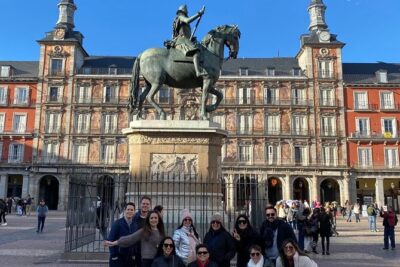
Madrid Essential: Historic Center, Plaza Mayor & Royal Palace
Read our review →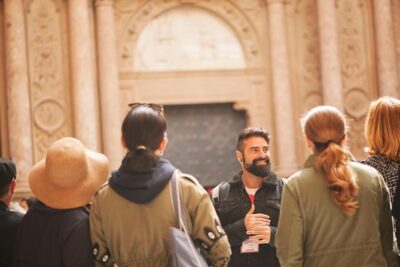
Montserrat with Black Madonna & Medieval Winery with Tapas/Lunch
Read our review →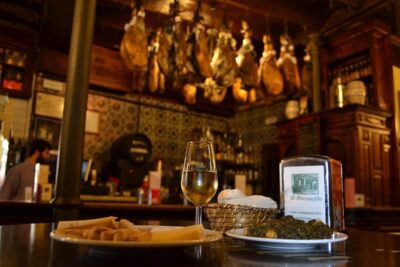
Sevilla Food Tour: Tapas, Wine, History & Traditions
Read our review →
Valencia Old Town Tour with Wine & Tapas in 11th Century Historic Monument
Read our review →
Madrid Tapas & Taverns Small Group Food & History Tour
Read our review →
Barcelona Tapas Walking Tour: Food, Wine & History
Read our review →
Ultimate Seville Tapas, Wine & History Small Group Tour
Read our review →
Córdoba: Skip-the-Line Great Mosque-Cathedral History Tour
Read our review →Browse the lists this tour appears in