
Review · UK
Chatham: The Historic Dockyard Chatham Annual Ticket
Chatham’s Historic Dockyard is not a quick ship museum. It is a whole working naval yard, with three historic vessels, a submarine, rope-making workshops, lifeboats, galleries, and restored dockyard buildings. You can peer through Ocelot’s periscope, take the bridge of a Second World War destroyer, and ring the bell on a Victorian sloop.
I especially like the authentic ropewalk, where rope has been made for British ships since 1618, and the 365-day ticket. A four-hour visit is not enough for everything, so the chance to return turns a busy day into good value. The main drawback is that the site is large, and parking costs extra.
Key things to know before you go

- The submarine is a real highlight: Step aboard Cold War submarine Ocelot and see how tight life onboard could be.
- The ropewalk is more than a museum: Watch rope-making connected to a craft practiced at Chatham since 1618.
- You need more than four hours: The dockyard has enough ships, galleries, and exhibitions for repeat visits.
- The annual ticket changes the value: Your first entry remains valid for 365 days after activation.
- It suits mixed-age groups: Ships, lifeboats, interactive displays, and school holiday activities give families plenty to do.
- Expect an authentic historic setting: Restored buildings and working demonstrations make this feel like a place of labor, not just a collection of objects.
A dockyard built to rule the seas
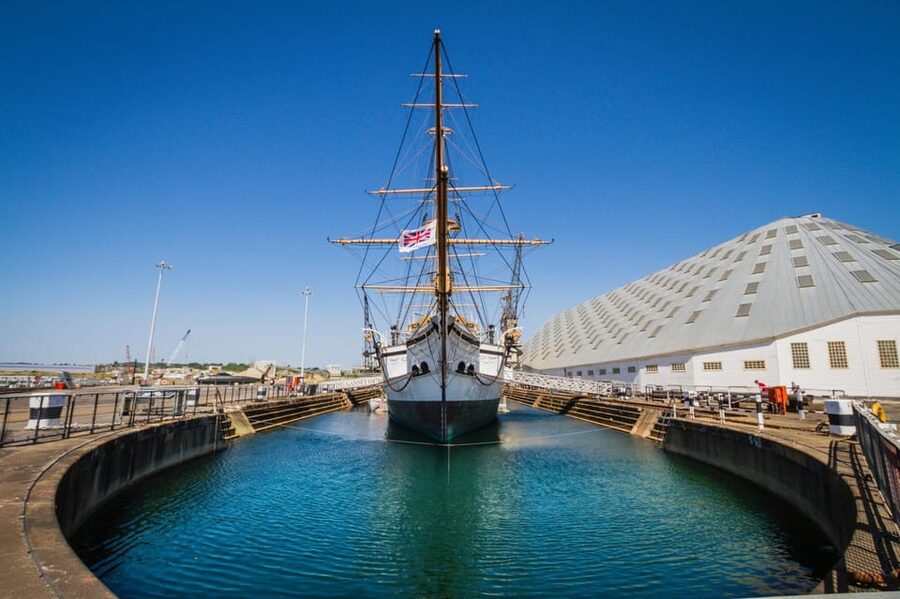
The Historic Dockyard Chatham takes you into the age when Britain’s naval power depended on skilled workers, timber, rope, sails, and ships built by hand. This was a secure naval workplace for generations. Today, you can walk through the same broad setting and see how many different trades supported the fleet.
I like that the experience spreads across an actual dockyard rather than placing every object in one modern hall. The buildings, ships, ropewalk, workshops, and exhibition spaces give the history room to breathe. You are not only looking at a ship. You are also seeing the industrial world that kept ships at sea.
The scale matters. You may arrive expecting a two-hour museum visit and still be looking at new sections several hours later. One four-hour visit can cover the main ships and exhibitions, but it will feel rushed if you want to read everything and spend time in the rope-making area.
More Tickets in the UK:
- Edinburgh: Edinburgh Castle Guided History Tour with Tickets
★ 4.8 · 9,933 reviews - Portsmouth: Historic Dockyard Ultimate Explorer Ticket
★ 4.8 · 1,052 reviews - WW2 London Walking Tour & Churchill War Rooms Entrance Ticket
★ 4.5 · 933 reviews
Boarding the three historic vessels
The three vessels provide the most hands-on part of the day. Each one represents a different period and gives you a different sense of naval life.
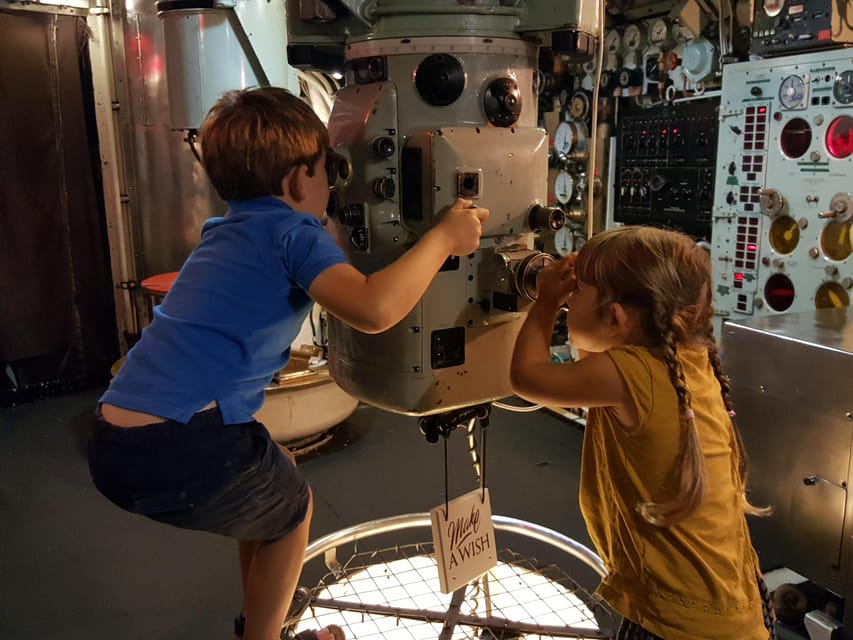
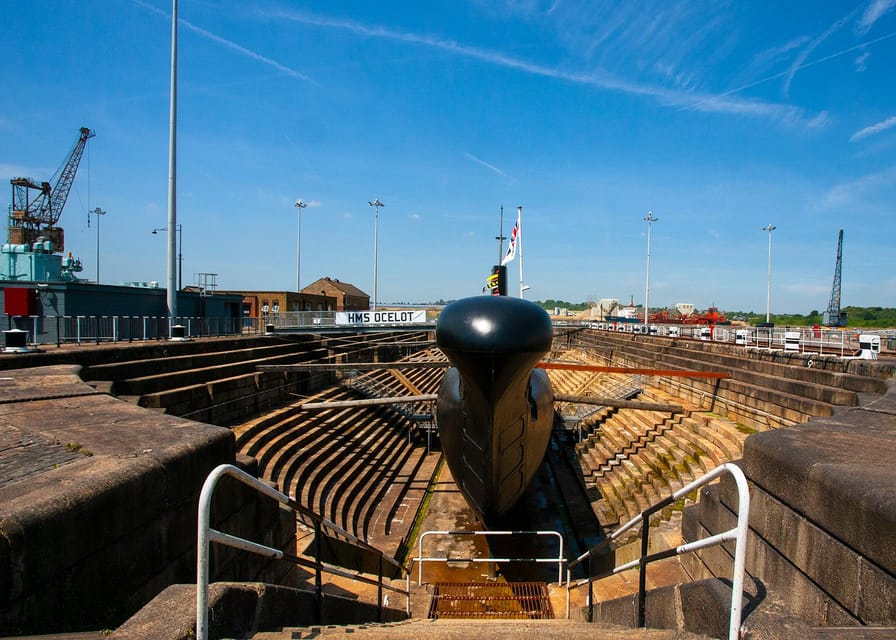
On the Cold War submarine Ocelot, the periscope is a natural first stop. Look through it and you get a small but memorable sense of how a submarine crew searched the surface while remaining concealed below it. The vessel also shows how compact life onboard could be, with machinery, equipment, and living spaces packed together.
The submarine works especially well for visitors who enjoy technical history or military stories. It is also useful for families because the periscope gives younger children a clear activity rather than another display panel. If you dislike confined spaces, you may want to keep your time onboard short.
The Second World War destroyer offers a different experience. Here, you can take charge on the bridge and picture the ship operating as part of a larger fleet. The bridge helps connect the vessel’s equipment to its purpose. Instead of seeing an anonymous warship from the outside, you can stand where decisions were made and commands were given.
The Victorian sloop adds a more traditional naval atmosphere. Ringing the ship’s bell is a small detail, but it gives the vessel a sense of ceremony and daily routine. Together, the three ships let you compare naval technology across time, from the age of sail to the Cold War.
A practical point: the ships are not simply three similar stops. The submarine is compact and technical, the destroyer focuses on command and wartime service, and the sloop brings you closer to older seafaring traditions. Allow extra time for all three instead of treating them as quick photo stops.
The ropewalk is worth planning around
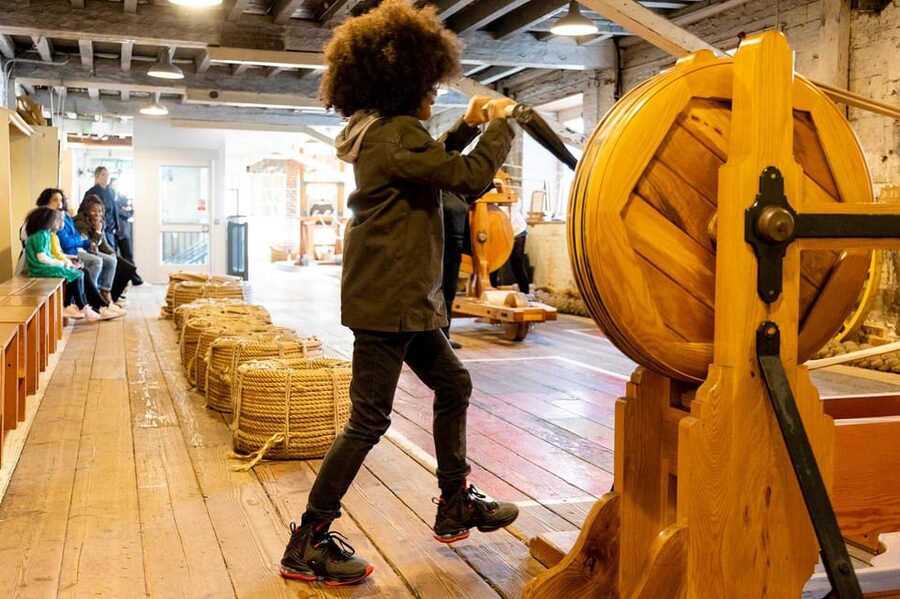
The quarter-mile-long ropery is one of the most distinctive parts of Chatham. Rope has been made here since 1618, and the long building reflects the basic problem of rope-making: strands need space to be twisted, stretched, and worked into stronger lengths.
The rope-making demonstration is a must-see. It turns an old industrial process into something you can follow with your eyes. You see how a material that looks simple in a finished ship required skill, space, and repeated manual work.
I would plan your day around the ropewalk rather than leaving it until the final few minutes. The demonstration and museum area are frequently singled out as the most memorable part of a visit, and they offer something you cannot get from boarding a warship alone.
The ropewalk also helps explain why a naval dockyard needed so many trades. Building the ship was only one task. Ropes, fittings, tools, storage, repairs, and transport all mattered. This is where Chatham feels most like a working industrial site rather than a collection of preserved vessels.
Command of the Oceans and the dockyard story
The Command of the Oceans exhibition adds an interactive layer to the visit. Its unusual feature is the chance to discover what lies beneath the floor, where the hidden remains of an ancient ship help reveal earlier maritime history.
This exhibit is useful if you want the larger story before or after boarding the ships. The vessels show you naval life at close range, while the exhibition explains the forces and technology that helped Britain control major sea routes.
The dockyard’s displays also make the site easier to understand for first-time visitors. You can connect the working buildings, ships, and naval objects instead of treating each one as an isolated attraction. The result is a fuller picture of how a dockyard operated.
No. 1 Smithery provides another change of pace. It presents collections from Royal Museums Greenwich and Imperial War Museums, giving you a chance to see objects and stories beyond the dockyard’s own ships. The building is a good place to slow down when you need a break from climbing aboard vessels.
More History Tours in the UK:
- London Small Group Tour of Historical Pubs
★ 5.0 · 10,422 reviews - A History of Terror – Belfast City Centre Walking Tour
★ 5.0 · 2,883 reviews - Edinburgh: Whisky Tasting with History and Storytelling
★ 4.9 · 2,451 reviews - Edinburgh: Old Town History and Tales Walking Tour
★ 4.8 · 2,361 reviews
Lifeboats, rescue work, and everyday courage
The RNLI Historic Lifeboat collection is the United Kingdom’s largest collection of historic RNLI lifeboats. The display brings the focus away from naval power and toward rescue work, service, and the people who went out in dangerous conditions to help others.
This collection broadens the day. If warships are not your main interest, the lifeboats give you another reason to visit. You can compare the design priorities of rescue boats with those of destroyers and submarines, while also seeing how maritime technology served very different purposes.
The crashing-wave atmosphere around the lifeboat collection adds to the setting. It is a reminder that boats were not only symbols of national power. They were also working tools used in emergencies.
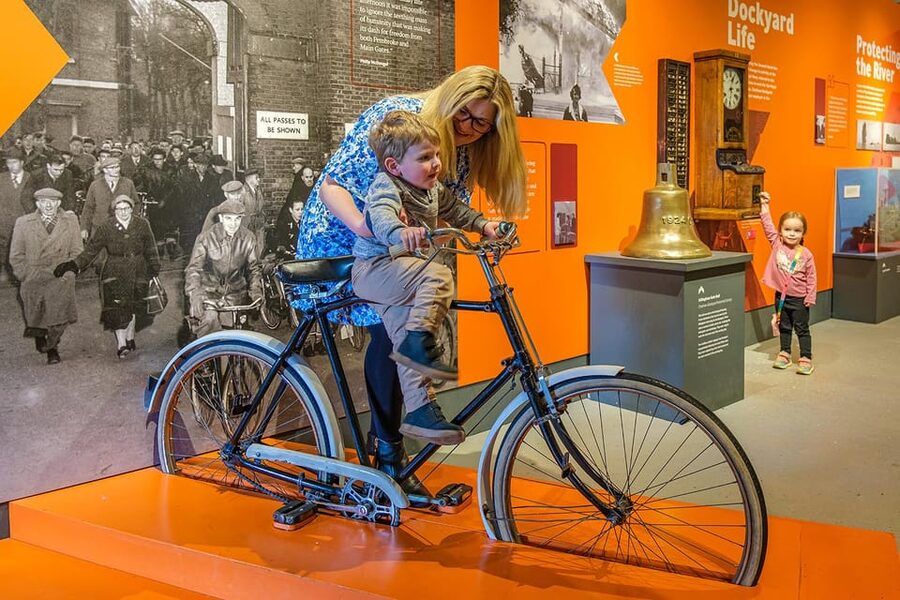
For families, the lifeboats help keep the visit varied. The day moves from military ships to rescue craft, from historic buildings to interactive displays, and from indoor collections to open dockyard spaces.
How long should you allow?
Four hours will give you a worthwhile visit, but it may not give you the whole dockyard. That is the clearest practical point to take from the experience. You need time for the three vessels, the ropewalk, Command of the Oceans, No. 1 Smithery, the lifeboats, and the other exhibitions.
If you want to see the main highlights without reading every panel, plan a focused half-day. Start with the ships, then visit the ropewalk and finish with the indoor collections. This approach helps you avoid using all your energy on the first vessel.
If you prefer a slower museum day, the annual ticket is a major advantage. You can make one visit for the ships, return for the rope-making demonstration, and use another day for the exhibitions and lifeboats. The ticket is valid for 365 days from first activation, so you are not forced to see everything at once.
School holiday activities are included, which gives families another reason to return. The exact activities can change, but their inclusion adds value during school breaks.
What the $37 price really buys you
At $37 per person, the ticket is not the cheapest single attraction in southeast England. Its value depends on how you use it. If you spend only two hours and skip the ropewalk and indoor exhibits, the price may feel high.
Use the full day, and the calculation improves. Entry covers the historic dockyard, permanent and temporary exhibitions, the three vessels, the submarine museum, the lifeboat collection, the rope-making museum, and other displays. You also receive return access for 365 days after activation.
That repeat access is the key benefit. The site is too large for many people to see properly in one short visit. A second or third trip lets you explore without rushing and makes the ticket feel more like an annual membership than a one-time admission.
Parking is not included, so add that cost to your plans. The ticket itself includes the main attractions, but not every possible expense connected with your day.
Who will enjoy Chatham most?
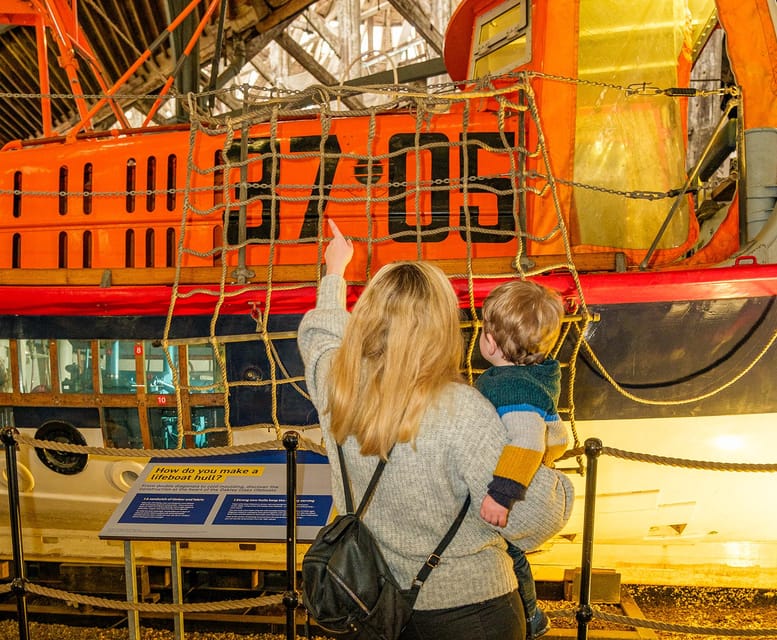
This experience suits families, history fans, military enthusiasts, and anyone who likes working heritage sites. Children have ships to board, a submarine periscope to use, lifeboats to inspect, and holiday activities to break up the longer displays.
Adults can spend more time with the dockyard’s industrial and naval story. The ropewalk is particularly good for anyone interested in traditional craft, while the exhibitions appeal to visitors who want more context than a ship tour alone can provide.
It also works well for mixed groups. One person can focus on submarines and wartime ships, while another spends time with rope-making, lifeboats, or museum collections. The wide range of displays prevents the day from depending on one single attraction.
The site is wheelchair accessible, though the historic ships and submarine may present different conditions from the wider dockyard. If access is especially important for your party, check current details for the specific vessel areas before visiting.
Staff, guides, and the feel of the visit
The dockyard has guides and staff throughout the site, and their presence adds useful context. You can expect English-language guidance, and the atmosphere is helped by staff who are clearly engaged with the subject.
One useful detail is the openness of the guiding. At Ocelot, a civilian guide was able to handle detailed submarine questions and was happy to hear personal stories from a former submariner. That suggests the experience can work for both newcomers and people who already know naval history.
The setting also feels maintained rather than forgotten. Restored buildings, clear exhibits, and well-kept historic vessels help you focus on the story. You will still encounter the practical limits of an old dockyard, including uneven movement between areas and a lot of walking.
Food and facilities are available on site. The experience can include a café stop, and there is a play area for children, giving parents a chance to pause with a hot drink. One visit also included music and food as part of the day, though such programming may vary.
Small drawbacks to keep in mind
The biggest issue is time. You can easily spend four hours here and still feel you have missed parts of the collection. That is a good problem for an annual ticket, but less useful if you are fitting Chatham into a tight southeast England schedule.
The ticket exchange process may also take a little patience. A barcode may need extra manual handling at the entrance, which can slow the start of your visit. Have your booking details ready and allow a few extra minutes.
The site has changed little in some areas over the years. That will please visitors who value preservation, but anyone expecting a steady stream of new attractions may find the experience familiar on a repeat visit. Temporary exhibitions and holiday activities help add variation.
Weather matters, too. Much of the dockyard experience involves moving between buildings and outdoor spaces. On a cold or wet day, the indoor exhibitions and cafés become more important, so dress for changeable conditions.
Should you book the annual ticket?
You should book it if you can give Chatham most of a day, want to return within a year, or enjoy a mix of ships, industrial craft, military history, and lifeboats. The ropewalk, submarine Ocelot, and annual return access are the strongest reasons to choose this ticket.
I would be more cautious if you have only a short stop in the area or are interested in just one ship. The site rewards time, and parking is extra. For most visitors, though, the $37 price becomes good value when you use the full day and treat the ticket as a year of access rather than a single entry.
FAQ
How long is the Chatham Historic Dockyard ticket valid?
The ticket is valid for 365 days from first activation.
What is included with the ticket?
Entry to The Historic Dockyard Chatham, all temporary and permanent exhibitions, and school holiday activities are included.
Can I board historic ships?
Yes. The experience includes access to three historic warships: a Cold War submarine, a Second World War destroyer, and a Victorian sloop.
Is the submarine included?
Yes. You can access the Cold War submarine Ocelot and peer through its periscope.
Is parking included?
No. Parking is not included in the ticket price.
Is the dockyard wheelchair accessible?
Yes, the experience is described as wheelchair accessible.
Can I cancel my booking?
Yes. You can cancel up to 24 hours in advance for a full refund. You can also reserve now and pay later.
Just added around the UK
- Private tour of the stunning Cotswolds with an expert local guide★ 5.0 · 45 reviews
- Medieval Walking Tour of Chester★ 5.0 · 155 reviews
- Curious Cambridge – The History Tour that’s FUN!!!★ 5.0 · 80 reviews
- 2.5-Hours Walking Tour of Birmingham into Black Heritage Madiba★ 5.0 · 49 reviews
- Birmingham Gangs Nighttime Historical Walking Tour with Pub Stops★ 5.0 · 53 reviews
- Award Winning Private 2 Hour Belfast Political Black Taxi Tour★ 5.0 · 53 reviews
- Private Political History & Murals Tour Belfast★ 5.0 · 182 reviews
- Belfast Walking Tour: City Centre History, Troubles & Stories★ 5.0 · 39 reviews
UK History Tours, compared.

Edinburgh: Edinburgh Castle Guided History Tour with Tickets
Read our review →
A History of Terror – Belfast City Centre Walking Tour
Read our review →
Edinburgh: Whisky Tasting with History and Storytelling
Read our review →
Edinburgh: Old Town History and Tales Walking Tour
Read our review →
Old Town Walking Tour History and Tales in Edinburgh
Read our review →
Edinburgh: Old Town and Underground Historical Tour
Read our review →Browse the lists this tour appears in