
Review · UK
Jane Austen’s Bath And History Trail
Jane Austen’s Bath comes alive best on foot, where a former address, a grand ballroom, and a carefully planned Georgian square help explain how the city shaped her novels. This 2.5-hour walk with Ulrich Wenske also reaches Bath Abbey, the thermal springs, the Circus, and the Roman Baths area.
I like the way the tour joins Austen’s life to the wider story of Bath, rather than treating her as an isolated literary figure. I also like the small maximum of 10 people, which leaves room for questions and can make the walk feel personal. The main caution is simple: you will walk a fair distance, with some uphill sections and steps, and several major museums require separate admission.
Key points to know
- Pulteney Bridge is the meeting point: Start at the Pulteney Bridge Coffee Shop, 17 Pulteney Bridge, not at the Jane Austen Centre.
- Austen’s Bath addresses are part of the route: See the plaque at No. 4 Sydney Place and learn about her short stay at No. 13 in the city.
- The Jane Austen Centre entry is included: You may enter and visit the book shop, while the internal museum tour costs extra.
- Bath’s grandest Georgian spaces feature heavily: The walk includes Great Pulteney Street, the Circus, the Assembly Rooms, and Royal Crescent.
- Several famous interiors cost extra: Admission to No. 1 Royal Crescent, Bath Abbey, the Roman Baths, and other museums is not included.
- Allow for weather and walking: The tour may be changed or canceled in poor weather, and comfortable shoes are important.
Why Austen’s Bath works best as a walking story
Jane Austen lived in Bath for short periods, yet the city left a strong mark on her work. The attraction of this tour is not simply seeing a plaque or standing outside a former address. It is understanding how Bath’s social life, architecture, dances, promenades, and strict ideas about status became useful material for her novels.
Ulrich Wenske leads the walk in English or German and brings in wider details about Bath, its architects, and its past. His style, based on the experience described by past participants, is relaxed and conversational. He answers questions, adapts to the group, and adds occasional personal stories, including memories of seeing the Beatles in Hamburg.
The tour is especially useful during a first visit. It gives you a good sense of Bath’s layout and links the main sights into one route. You can then decide which interiors deserve your own time and admission fee.
More History Tours in the UK:
- London Small Group Tour of Historical Pubs
★ 5.0 · 10,422 reviews - Edinburgh: Edinburgh Castle Guided History Tour with Tickets
★ 4.8 · 9,933 reviews - A History of Terror – Belfast City Centre Walking Tour
★ 5.0 · 2,883 reviews
Starting at Pulteney Bridge and Great Pulteney Street
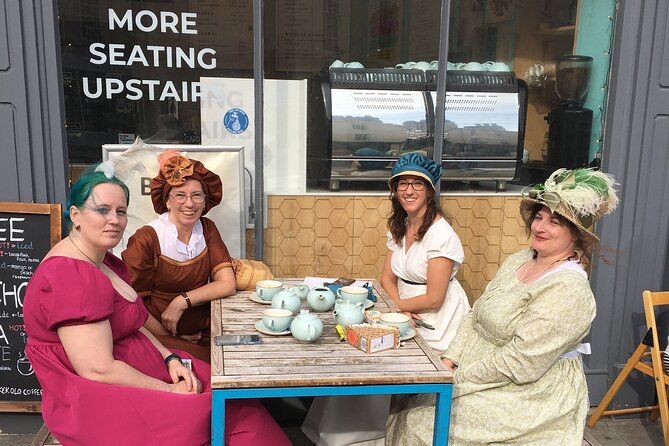
Meet at the Pulteney Bridge Coffee Shop at 17 Pulteney Bridge. This detail matters. The walk does not begin at the Jane Austen Centre, and the two locations are about a 20-minute walk apart. Check the map before setting out, because missing the starting point could mean missing the tour.
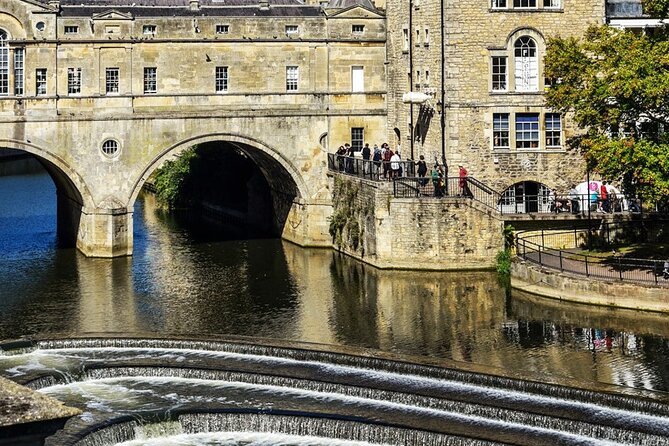
Pulteney Bridge is an unusual place to begin. Designed in 1769, it was modeled after Florence’s Ponte Vecchio and has shops on both sides. The bridge gives you an immediate sense of Bath’s polished Georgian ambitions, while the River Avon below adds a practical city setting to all that grand design.
From here, the route continues along Argyle Street toward Laura Place and Great Pulteney Street. This first section takes about 15 to 20 minutes and focuses on town-house architecture and notable residents from the 18th and 19th centuries.
Great Pulteney Street is one of Bath’s most impressive urban views. Its broad scale and repeated facades show how Georgian planners used architecture to create order and status. You can also see the Holburne Museum of Art from this area.
The route may continue toward the museum to view No. 4 Sydney Place. A plaque marks it as Jane Austen’s first dwelling in Bath. There is no admission charge for viewing the exterior, but the stop is still valuable because it turns Austen’s connection to Bath into something physical and precise.
The Jane Austen Centre and the practical difference between entry and a tour
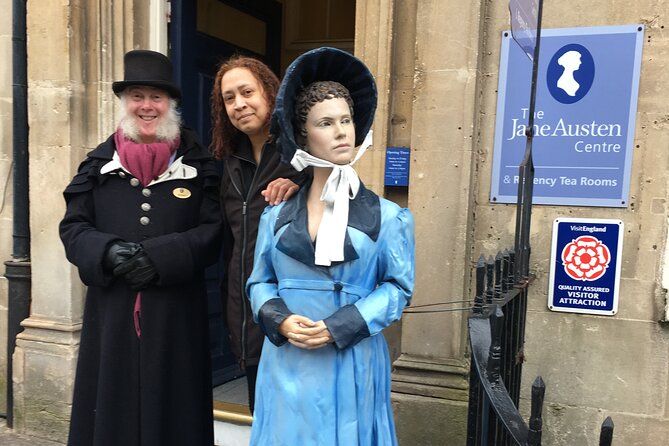
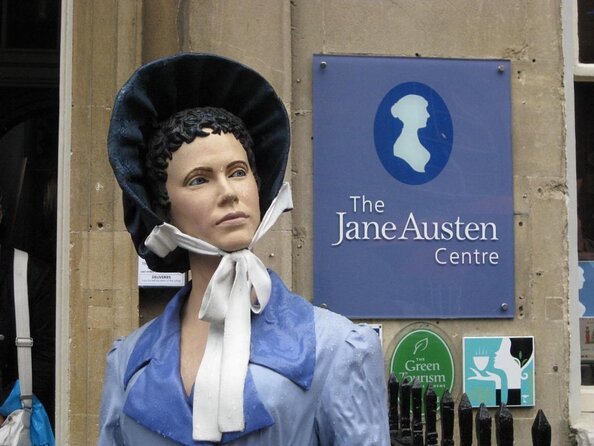
The Jane Austen Centre offers a look at Regency life and explores how Bath affected Austen’s life and writing. Entry to the centre is included with this walk, along with time to visit the book shop.
There is an important distinction here. The centre’s internal guided tour is not included. You can book that separately if you want a fuller museum visit, but this experience gives you a chance to enter and look around without adding that tour cost.
That arrangement works well if you want a brief Austen-focused stop as part of a larger Bath walk. If you are a devoted Austen reader and want a detailed museum experience, plan extra time and money for the separate internal tour.
The centre also helps put the outdoor addresses into context. A plaque on a street can feel spare on its own. After seeing the centre, you have a clearer idea of the social world Austen observed and later used in works such as Northanger Abbey.
No. 1 Royal Crescent and the Georgian ideal
No. 1 Royal Crescent is one of Bath’s most photographed buildings. The crescent contains 30 terraced houses joined by giant Ionic columns, creating one of the city’s most recognizable views.
The walk pauses here for about 15 minutes. You will hear how this grand development was built in the second half of the 18th century and why the design became such a strong symbol of Georgian Bath.
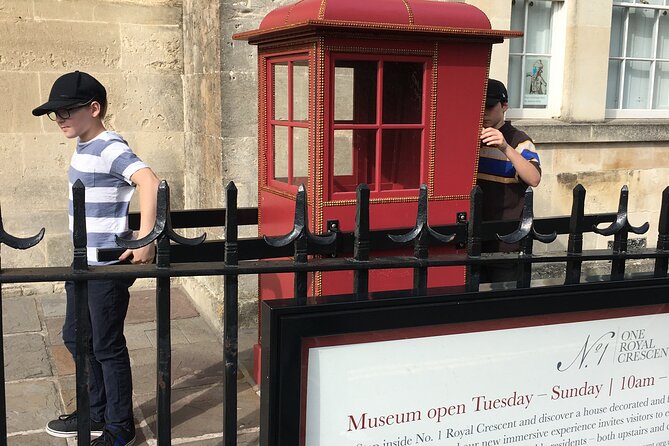
You can visit No. 1 Royal Crescent as a museum, but admission is not included. Inside, the museum shows how one of these large houses looked and functioned. I see this as an optional extra rather than a flaw in the walk. The exterior explanation is enough for a general introduction, while the museum suits you if you want domestic detail and period interiors.
This is also a good place to remember that Austen’s Bath was not only a city of elegant facades. These houses were part of a social system where appearance, introductions, money, and family connections mattered. That setting helps explain the pressure beneath the manners in her novels.
Same city, a different century:
- Edinburgh: Whisky Tasting with History and Storytelling
★ 4.9 · 2,451 reviews - Edinburgh: Old Town History and Tales Walking Tour
★ 4.8 · 2,361 reviews - Old Town Walking Tour History and Tales in Edinburgh
★ 5.0 · 2,168 reviews - Soho Music & Historic Pubs Tour
★ 5.0 · 1,993 reviews
Bath Abbey, medieval kings, and a free look inside
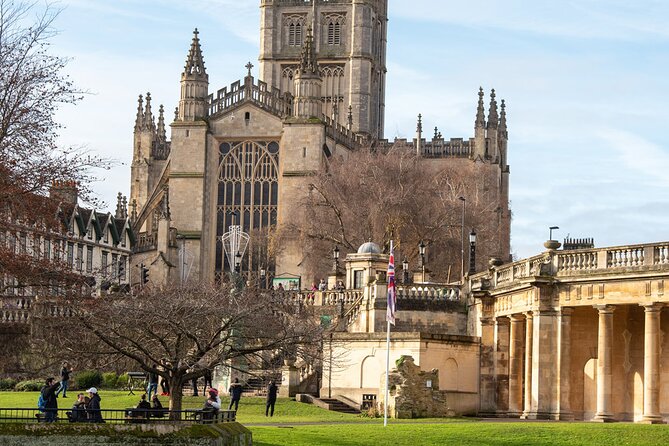
Bath Abbey brings a very different layer to the walk. The building began as a grand medieval cathedral in the early 12th century. Restoration began under Bishop Oliver King in 1499, and the work was completed under Elizabeth I in 1611.
The Abbey is known for its memorials and wall plaques, as well as its connection to the coronation of Edgar I, described as the first King of England, in 977. Ulrich explains these details while giving you the chance to visit the interior.
The Abbey stop lasts about 20 minutes. That is enough for an introduction, but not a long architectural study. If you enjoy church interiors, you may want to return later and give the building more time.
The stop also helps show why Bath is more than a Georgian spa city. The Abbey’s medieval and Tudor layers sit close to the elegant streets associated with Austen. In a short walk, you move between very different periods of English history.
Thermal springs and Bath’s oldest attraction
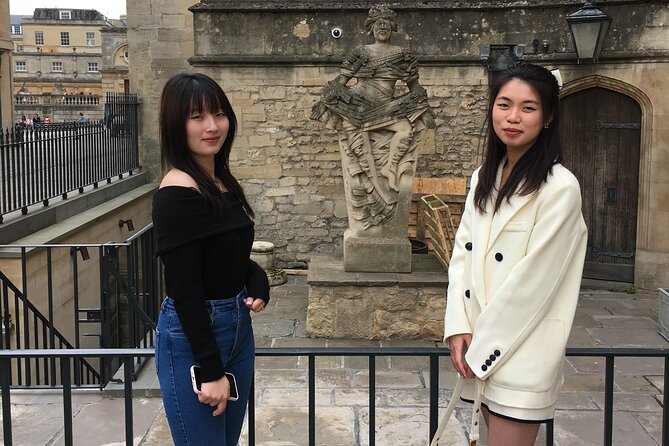
The route also explains Bath’s natural thermal water. The Hetling Spring, Cross Spring, and King’s Spring are linked to water that began its long underground journey around 10,000 years ago.
The modern bathing experience includes a rooftop pool kept at about 35 degrees Celsius and open in summer and winter. This is presented as the only place in Britain where you can swim in natural thermal water. The tour explains the springs rather than providing bathing access, so do not treat this walk as a spa visit.
The springs are central to Bath’s identity. They explain why people came here long before the Georgian period and why the city developed as a place for health, leisure, and social display.
For you, this stop adds useful context to the Roman Baths and the Pump Room nearby. Bath’s spa culture did not begin with Austen, but Austen’s Bath depended on an older tradition of people coming to the city to take the waters and see society.
Austen’s No. 13 and the city’s social squares
Another stop covers the square connected with Austen’s short residence at No. 13 in 1799. The focus is on the details of her time in Bath rather than on a long interior visit.
That brevity is appropriate. Austen’s Bath residences were not preserved as a single grand memorial complex, and the city is better understood by connecting several modest addresses with the public places around them.
The square also offers a chance to look at Bath’s planning and architecture. The appeal comes from the combination of a specific Austen connection and a wider explanation of how grand urban spaces were designed for movement, display, and social contact.
You may find this one of the more useful parts of the route if you have read Austen’s Bath novels. The city becomes less like a backdrop and more like a working part of the story.
The Circus, where planning becomes theatre
The Circus is one of Bath’s great architectural set pieces. Work began in 1754, and the John Wood architects designed it with inspiration from prehistoric stone circles and the Colosseum in Rome.
The circular form is more than a pretty arrangement of houses. It creates a controlled view from every angle and turns a residential development into a kind of stage. The repeated facades, columns, and carved details reward a slow look upward.
This stop takes around 20 minutes and is free. Ulrich explains the design and the unusual thinking behind it. You may also hear about the echoing trees in the middle of the Circus, a small feature that can make the stop more playful than a standard architecture talk.
I especially like this section for visitors who are not devoted Austen readers. It gives you a strong understanding of Bath’s architecture and explains why the city feels so carefully planned.
Assembly Rooms and the social machinery of Regency Bath
The Assembly Rooms were public rooms where fashionable people met during the Regency period. The complex includes a ballroom, the Octagon, a card room, and a tea room, and these spaces still host events.
The stop lasts about 15 minutes, and admission is not included. The building matters because it shows the social setting behind Austen’s plots. Dances were not merely entertainment. They were places to be seen, meet potential partners, observe alliances, and manage reputation.
You may want to visit the interior separately if you care about Austen’s social world. The outdoor explanation gives you the setting, while the rooms themselves offer the scale of the events and the formality of Georgian life.
This part of the route is also a useful reminder that Bath’s attractions work together. The streets, squares, Pump Room, and Assembly Rooms formed one social circuit. Austen’s characters move through that circuit because real people did too.
The Roman Baths and Pump Room area
The walk reaches Bath’s main ancient landmark, dating from the 1st century AD. The Roman Baths include the temple of Sulis Minerva and the pools that made this site important in Roman Britain.
Admission and the audio tour are not included. Booking the audio tour separately before or after the walk is recommended. That extra visit can take your Bath experience from a quick introduction to a detailed archaeological stop.
Next to the Roman Baths is the Pump Room, a symbol of Bath’s Georgian golden age. The fashionable elite gathered here for balls, tea, and the ritual of taking the waters. In Northanger Abbey, Catherine and Isabella meet in this setting.
The Roman Baths and Pump Room area neatly joins the tour’s two main themes. The Roman site explains the city’s ancient foundation, while the Pump Room explains its later social life. Austen’s Bath developed on top of both.
Walking conditions, group size, and weather
This is a walking tour, not a bus circuit. Expect a fair amount of walking, some uphill sections, and steep steps in places. Wear comfortable shoes and bring water. The pace is generally described as slow, but the amount of ground covered can still leave your feet tired.
The maximum group size is 10 people. That is a sensible size for narrow streets and outdoor explanations, and it gives you a better chance to ask questions than a large city tour.
Most people can participate, and the start is near public transportation. Still, you should think honestly about hills, steps, and standing outdoors for more than two hours.
Weather can affect the experience. The activity requires good weather, and poor conditions may lead to a different date or a full refund. On a rainy day, the guide may offer shelter or a more limited indoor approach, but you should still bring suitable clothing.
Price, admissions, and what the $40.24 buys you
At about $40.24 per person, this is a moderate-cost introduction to Bath. The price does not cover every major attraction, so the value depends on what you want from the day.
You are paying for a guided route, local explanation, entry to the Jane Austen Centre, and a connected look at Bath’s architecture, literary links, medieval church, thermal springs, and Roman setting. You are not paying for the interiors of No. 1 Royal Crescent, Bath Abbey, the Roman Baths, or the Assembly Rooms.
That can actually work in your favor. You can use the walk to choose your paid visits instead of buying every ticket blindly. If you want to see several interiors, add those costs to your budget.
Free cancellation is available if you cancel at least 24 hours before the start time. Changes or cancellations inside that period are not refunded, and the cut-off follows local time.
Who should book this Bath walk?
I would choose this tour if you want Austen and Bath together, rather than a narrow literary lecture. It suits first-time visitors who need to get their bearings and readers who want to connect Austen’s writing with real streets, squares, and social spaces.
It also suits architecture fans. Great Pulteney Street, the Circus, Royal Crescent, and Pulteney Bridge receive enough attention to make the walk worthwhile even if your Austen interest is modest.
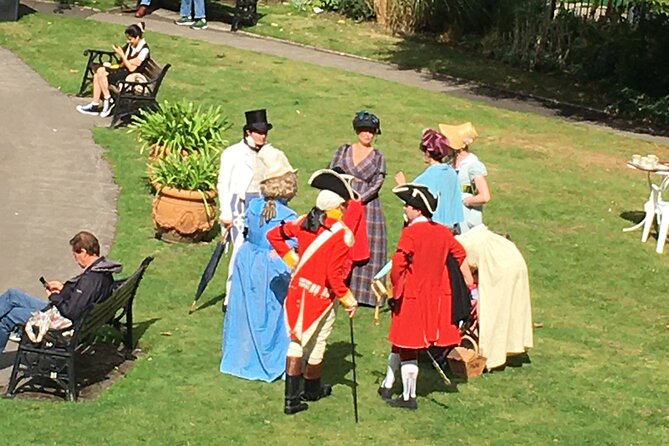
You may want something else if you prefer long museum visits, a period-costumed guide, or a fully indoor activity. One past participant expected period dress, but Ulrich leads as a well-informed modern guide. The tour also moves on at a steady pace, so speak up if you need a little more time at a stop.
Should you book Jane Austen’s Bath and History Trail?
Book it if you have about two and a half hours and want a clear, human introduction to Bath. Ulrich Wenske’s route covers the main landmarks while adding Austen addresses, Georgian social life, medieval history, Roman Bath culture, and practical orientation.
Bring good shoes, water, and a rain plan. Check the Pulteney Bridge meeting point carefully, then use the tour to decide which museums deserve your remaining time and money. For many visitors, that combination of literary context and city-wide orientation makes the $40.24 cost worthwhile.
FAQ
Where does the tour begin?
The tour begins at the Pulteney Bridge Coffee Shop, 17 Pulteney Bridge, Bath BA2 4AY, UK.
Where does the tour finish?
The activity ends back at the meeting point on Pulteney Bridge.
Is admission to the Jane Austen Centre included?
Entry to the Jane Austen Centre and a visit to its book shop are included. The centre’s internal guided tour must be booked separately.
Are museum entrance fees included?
No. Admission to museums and attractions such as No. 1 Royal Crescent and the Roman Baths is not included. Bath Abbey entry is also listed separately from the tour price.
How long does the tour last?
The walk lasts approximately 2 hours and 30 minutes.
What happens if the weather is poor?
The experience requires good weather. If it is canceled because of poor weather, you will be offered another date or a full refund.
Just added around the UK
- Private tour of the stunning Cotswolds with an expert local guide★ 5.0 · 45 reviews
- Medieval Walking Tour of Chester★ 5.0 · 155 reviews
- Curious Cambridge – The History Tour that’s FUN!!!★ 5.0 · 80 reviews
- 2.5-Hours Walking Tour of Birmingham into Black Heritage Madiba★ 5.0 · 49 reviews
- Birmingham Gangs Nighttime Historical Walking Tour with Pub Stops★ 5.0 · 53 reviews
- Private Political History & Murals Tour Belfast★ 5.0 · 182 reviews
- Belfast Walking Tour: City Centre History, Troubles & Stories★ 5.0 · 39 reviews
- Award Winning Private 2 Hour Belfast Political Black Taxi Tour★ 5.0 · 53 reviews
UK History Tours, compared.
Edinburgh: Edinburgh Castle Guided History Tour with Tickets
Read our review →
A History of Terror – Belfast City Centre Walking Tour
Read our review →
Edinburgh: Whisky Tasting with History and Storytelling
Read our review →
Edinburgh: Old Town History and Tales Walking Tour
Read our review →
Old Town Walking Tour History and Tales in Edinburgh
Read our review →
Edinburgh: Old Town and Underground Historical Tour
Read our review →Browse the lists this tour appears in