
Review · UK
A History of Terror – Belfast City Centre Walking Tour
Belfast looks calm today, but its shopping streets and nightlife quarter carry memories of bombings, loss, policing, and political conflict. This 2.5-hour walking tour connects those places to the story of The Troubles, beginning at City Hall and ending beside the River Lagan.
I like the clear route through central Belfast and the use of headsets, which matter when a group reaches 25 people. I also like the balance between political facts and personal memories, with guides such as James, Anne, Mylie, and Róisín bringing lived experience and strong storytelling to difficult subjects.
The main drawback is the subject itself. You will hear about violence and people who died, and much of the tour involves standing while listening rather than continuous walking. Rain is another factor, so bring a waterproof jacket.
Key points to know before you book
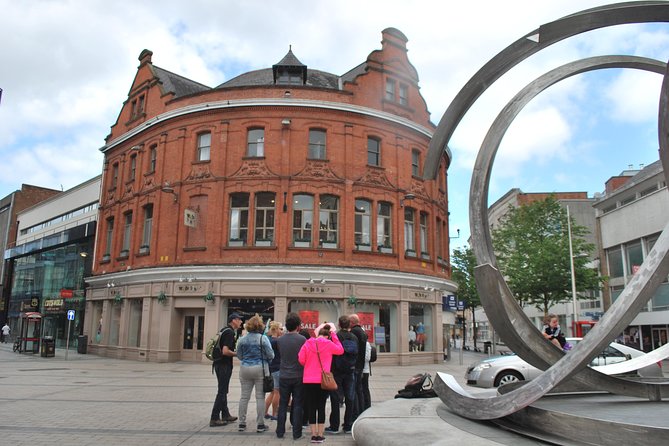
- The tour visits real sites linked to The Troubles, including Donegall Place, Castle Lane, and the area around the Spirit of Belfast.
- It covers both conflict and peace, tracing the road from violence in the early 1970s to the fragile peace of today.
- Personal stories add emotional weight, with guides sharing memories and experiences of growing up during the conflict.
- The route is about 1.5 miles and flat, with no hills or steps in Belfast city centre.
- Headsets are supplied, a useful feature for hearing the guide in a group of up to 25.
- The price is about $36 per person, good value if you want a serious introduction to Belfast’s modern history.
Why this Belfast walking tour matters
Many city tours point out grand buildings and attractive streets. This one asks you to look again at ordinary places. A shopping street can also be the site of a bomb attack. A public artwork can sit beside memories of a night that helped push Belfast into a new period of violence.
That contrast is the heart of the experience. You are not taken to a distant museum and given a detached account. You move through the centre of Belfast while the guide explains what happened at each location and how those events affected daily life.
The tour takes a neutral approach to the British and Irish relationship, the religious divide, and the political claims at the centre of the conflict. That does not make the subject neat or simple. It gives you enough background to understand why the conflict began, how it grew, and why peace remains a work in progress.
I would take this tour early in a Belfast visit. It gives later sightseeing more meaning, especially if you notice political murals, public art, old security sites, or references to the border and Brexit.
More History Walking Tours in the UK
- Edinburgh: Old Town History and Tales Walking Tour
★ 4.8 · 2,361 reviews - Old Town Walking Tour History and Tales in Edinburgh
★ 5.0 · 2,168 reviews - Shadows of York: Ghost Walk and Horrible History.
★ 5.0 · 1,403 reviews
City Hall sets the political scene
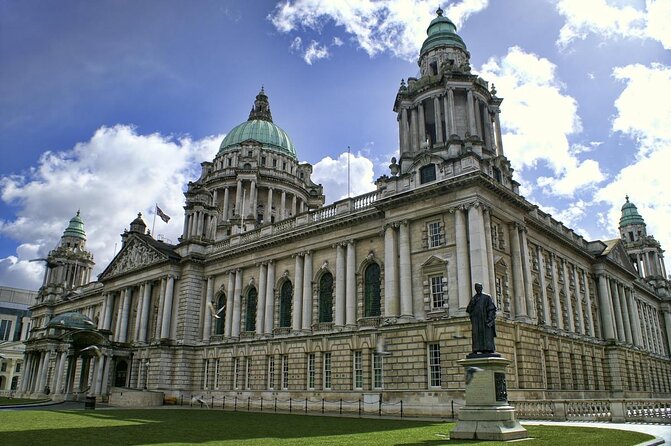
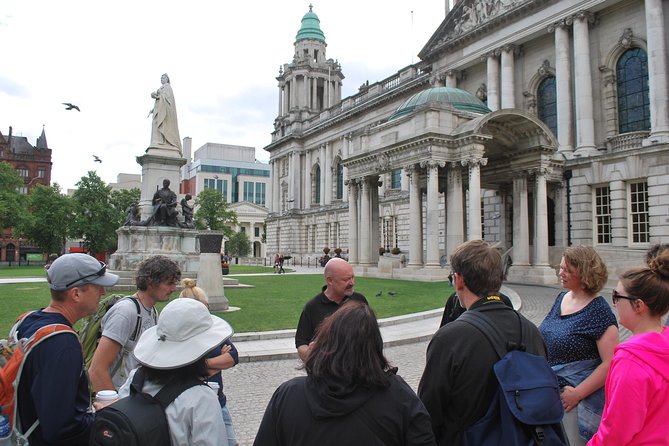
Meet at Belfast City Hall at 10:30 a.m. The opening talk takes place in the grounds, so your guide can introduce the city before the group begins its route.
This first section explains the long relationship between Britain and Ireland and the conditions that led to The Troubles in the late 1960s. You need this background. Without it, later stories about bombings, policing, and identity can feel like disconnected tragedies.
The guide also sets expectations for the tour’s tone. This is not a ghost walk or a sensational story of terror. It is a history of political division and human loss, presented through places in the city.
Allow about 20 minutes here. Since the talk happens outdoors, a wet morning can affect the opening. The city centre is flat, though, and no steps or hills make this a demanding start.
Donegall Place and the hidden past of a shopping street
Donegall Place may look like a normal city shopping street. The tour uses that ordinary setting to explain a nightclub bombing in 1971, the deaths and suffering that followed, and the creation of the Ring of Steel.
This is one of the useful ideas running through the walk: Belfast’s past is not confined to monuments. It is under the pavement, behind modern shopfronts, and along streets people use every day.
The stop lasts about 15 minutes. You will likely spend more time listening than walking, so the tour feels closer to a series of outdoor history talks joined by short walks. That format works well for this subject, since the details need time and care.
Castle Lane brings the conflict into daily life
At Castle Lane, the guide explains what life felt like in Belfast at the height of The Troubles. The setting is now a pedestrian shopping area, which makes the contrast especially sharp.
You hear about a particular event that remains strongly remembered in the city. The value here is not just learning a date or incident. The guide helps you picture how violence altered normal routines, movement, and the way people viewed familiar streets.
This is also a point where the tour may feel emotionally heavy. If you prefer light sightseeing, this is not the right tour. If you want to understand how conflict shaped ordinary life, the stop gives you a direct sense of the subject.
Same city, a different century:
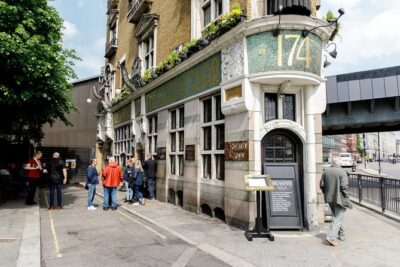
- London Small Group Tour of Historical Pubs
★ 5.0 · 10,422 reviews - Edinburgh: Edinburgh Castle Guided History Tour with Tickets
★ 4.8 · 9,933 reviews - Edinburgh: Whisky Tasting with History and Storytelling
★ 4.9 · 2,451 reviews - Soho Music & Historic Pubs Tour
★ 5.0 · 1,993 reviews
The Spirit of Belfast and the start of escalation
The Spirit of Belfast, a large public artwork sometimes called the Onion Rings, provides a memorable landmark for the next section. The sculpture is linked with resilience and renewal, but the guide uses its location to tell a darker story.
Events that began in a nearby bar in 1971 helped push Northern Ireland into a rapidly worsening cycle of violence. The guide connects the local incident to the wider political situation, helping you see how individual events could have consequences far beyond one street.
I like this part because the artwork gives the story a visual counterpoint. You are hearing about escalation while looking at a symbol of a city trying to recover. Belfast’s present does not erase its past, and the tour does not pretend that it does.
Cathedral Quarter, from violence to cultural life
The Cathedral Quarter is now one of Belfast’s main areas for bars, nightlife, culture, and street art. Its lanes and walls look very different from the city described in the earlier stops.
Here, the guide covers more major events and begins to explain the path toward peace. The shift in tone is important. You are still dealing with violence and loss, but you also begin to understand how the city changed.
This is one of the more atmospheric sections of the route. Street art and regenerated buildings show Belfast’s newer identity, while the guide’s stories pull you back to the 1970s. The result is a useful lesson in how cities carry several eras at once.
The stop takes around 20 minutes. You may find the Cathedral Quarter the most visually interesting part of the tour, but the history remains the focus. Do not expect a bar crawl or a detailed art tour.
Ann Street explains policing and Brexit
At Ann Street, the group stops beside Belfast’s largest police station. The guide explains how Northern Ireland was policed during The Troubles and how policing changed after the peace agreement.
This section adds an important layer. The conflict was not only about political speeches and armed groups. It also affected security, surveillance, public trust, and the basic experience of moving around the city.
The talk then turns to Brexit and the possible impact on borders. That brings the tour into the present and shows that the questions behind The Troubles did not vanish when the violence declined.
This is a good stop for anyone who wants current context rather than a tour that ends in the 1990s. At about 15 minutes, it is brief enough to keep the route moving while still giving you a link between Belfast’s past and its political future.
The Beacon of Hope closes the story by the River Lagan
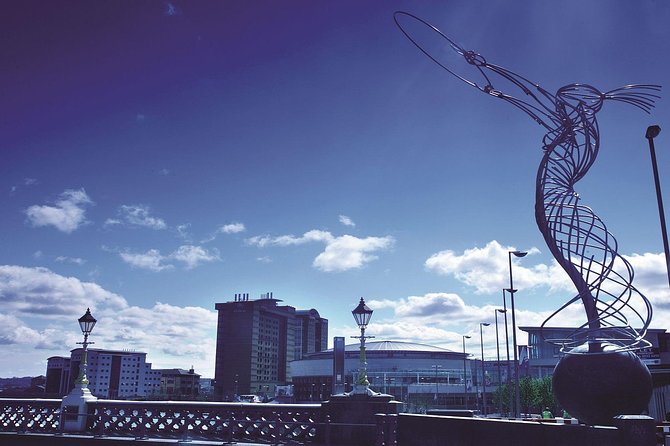
The final stop is at the Beacon of Hope on Oxford Street, beside the River Lagan. This public artwork celebrates resilience and regeneration, making it a fitting place to compare modern Belfast with some of its darkest days.
The guide explains how the peace was reached and why it remains fragile. You also discuss what the future may hold. That ending avoids presenting Belfast as a city that simply solved its problems and moved on.
The tour ends here after roughly 2 hours and 30 minutes. City Hall is about a five-minute walk away, so you can return to the starting area easily. The riverside finish also gives the experience a change of setting after the tighter streets of the city centre.
The guides make or break a tour like this
The strongest part of this experience is the guide’s ability to handle painful history without turning it into theatre. James is described as warm, funny, and deeply informed, with a strong grasp of The Troubles. Anne brings personal memories of being a child during the conflict, while Róisín has been praised for emotional storytelling and a careful presentation.
Mylie has also received strong praise for combining political history with the city’s present-day life. Her background is not the point. What matters is preparation, balance, and the ability to explain both sides of a divided history clearly.
Guide quality can vary in any scheduled walking tour. One poor experience involved a speaker failing halfway through, leaving some people unable to hear in a group of 25. The headsets are meant to prevent that problem, but it is still worth staying reasonably close to the guide and speaking up quickly if the equipment stops working.
A good guide will name victims and explain events without reducing people to statistics. That human detail is one reason this tour has been so meaningful for many people who grew up during The Troubles or heard only one side of the story.
Walking conditions, weather, and group size
The route covers about 1.5 miles through central Belfast. The ground is flat, with no hills or steps, so the physical effort is moderate. Comfortable shoes still make sense because you will be on your feet for much of the morning.
The description says there is more standing and listening than continuous walking. If you need regular seating, you may find the format tiring, though dry seats are sometimes available when the weather allows.
The tour runs in all weather unless conditions force cancellation. Belfast rain can arrive without much warning, so pack a waterproof jacket. Warm clothing is useful in winter, especially during the longer talks outside.
The group can reach 25 people. That is not a tiny private walk, but headsets help keep the guide audible. The flat route and central meeting point make it manageable for most people, and service animals are allowed.
The minimum age is 12. Because of the subject matter, parents should decide if the material suits younger teenagers.
Is $36 good value for Belfast?
At about $36 per person, this is not the cheapest way to see central Belfast, but it offers more than a basic orientation walk. You get 2.5 hours with a local guide, a carefully connected route, headsets, and detailed discussion of a subject that is difficult to understand from landmarks alone.
The value is strongest if you want history and context. You are paying for interpretation, not entry to an attraction. Every stop is free to enter, but the point is the guide’s explanation of what happened there and why it mattered.
The tour has a top rating from 2,882 ratings, with 99 percent recommending it. That does not remove the normal risk of a guide or audio problem, but it does show that the format has worked well for a large number of people.
I would compare it with the cost of a museum visit, but not treat it as a replacement for every other Belfast sight. It will not take you to the Titanic attraction or the farther-away political murals. Instead, it gives you a focused introduction to the city centre and The Troubles.
Who should book this experience?
You should book it if you want a serious first look at Belfast’s political past and prefer learning from places rather than reading labels indoors. It suits adults, older teenagers, history fans, and anyone who wants to understand the city before exploring it alone.
It is also a strong choice if you want a balanced account. The tour addresses British and Irish perspectives, religious and political divisions, policing, personal memory, peace, and Brexit without asking you to adopt a particular conclusion.
You may want another type of tour if you dislike emotionally difficult subjects, have trouble standing for long periods, or want a broad sightseeing route focused on architecture and attractions. This walk gives limited attention to Belfast’s general landmarks because its subject is The Troubles.
Book ahead if your dates are fixed. It is booked around 24 days in advance on average, and the maximum group size is 25. You can cancel for a full refund up to 24 hours before the start time. Cancellations or changes inside 24 hours are not refunded, while a weather cancellation offers a different date or full refund.
Should you book A History of Terror?
I would book it if Belfast is new to you and you want the background needed to read the city properly. The route is easy, the price is fair for the time involved, and the best guides combine facts with personal memories rather than giving you a dry timeline.
Go prepared for sadness, standing, and outdoor weather. If you do, this tour can give you a more honest understanding of Belfast than a quick pass through its shopping streets. It does not offer easy answers, but it helps you see how violence, identity, peace, and hope all remain part of the same city.
FAQ
How long is A History of Terror?
The tour lasts approximately 2 hours and 30 minutes.
Where does the tour begin?
It begins at Belfast City Hall in Donegall Square North, Belfast BT1 5GS.
Where does the tour end?
It ends at the Beacon of Hope on Oxford Street, Belfast BT1 3NB. From there, City Hall is about a five-minute walk away.
How much walking is involved?
The route covers about 1.5 miles. Belfast city centre is flat, with no hills or steps, though you should wear comfortable footwear.
What age is this tour suitable for?
The minimum age is 12 years.
Can I cancel for a refund?
Yes. You can cancel at least 24 hours before the start time for a full refund. Cancellations or changes made less than 24 hours before the start time are not refunded.
Just added around the UK
- Private tour of the stunning Cotswolds with an expert local guide★ 5.0 · 45 reviews
- Medieval Walking Tour of Chester★ 5.0 · 155 reviews
- Curious Cambridge – The History Tour that’s FUN!!!★ 5.0 · 80 reviews
- 2.5-Hours Walking Tour of Birmingham into Black Heritage Madiba★ 5.0 · 49 reviews
- Birmingham Gangs Nighttime Historical Walking Tour with Pub Stops★ 5.0 · 53 reviews
- Award Winning Private 2 Hour Belfast Political Black Taxi Tour★ 5.0 · 53 reviews
- Private Political History & Murals Tour Belfast★ 5.0 · 182 reviews
- Belfast Walking Tour: City Centre History, Troubles & Stories★ 5.0 · 39 reviews
UK History Tours, compared.
Edinburgh: Edinburgh Castle Guided History Tour with Tickets
Read our review →
Edinburgh: Whisky Tasting with History and Storytelling
Read our review →
Edinburgh: Old Town History and Tales Walking Tour
Read our review →
Old Town Walking Tour History and Tales in Edinburgh
Read our review →
Edinburgh: Old Town and Underground Historical Tour
Read our review →
Browse the lists this tour appears in