
Review · UK
Private Political History & Murals Tour Belfast
Belfast’s political story is painted across its walls. In about 90 minutes, this private tour takes you from the Peace Wall to the Shankill and Falls Roads, where murals, memorials, and street corners help explain The Troubles in human terms. Guides such as Sean, Brian, Brendan, and Thomas bring local experience to the subject.
I like the small private format, since you can ask direct questions instead of listening from the back of a packed bus. I also like the balance of walking and riding: you leave the vehicle at the Peace Wall and have time to look closely, then stay comfortable between the main sites.
The main consideration is that the tour is short for such a difficult subject. The Crumlin Road Gaol is only a drive-by, and one guide’s political viewpoint or accent may not suit every visitor, so listen critically and ask questions.
Key points to know before you book
- The Peace Wall is a real stop: You can get out, walk along it, and leave a good-luck message for future generations.
- Shankill Road and Falls Road are treated separately: The tour explains Loyalist and Republican communities, their paramilitaries, and their very different memories of The Troubles.
- Local guides shape the experience: Sean, Brian, Brendan, Thomas, Dan, Michael, and Michel have all led tours, with local experience often adding weight to the discussion.
- You travel privately: Your group rides in an air-conditioned vehicle rather than joining a crowded city tour.
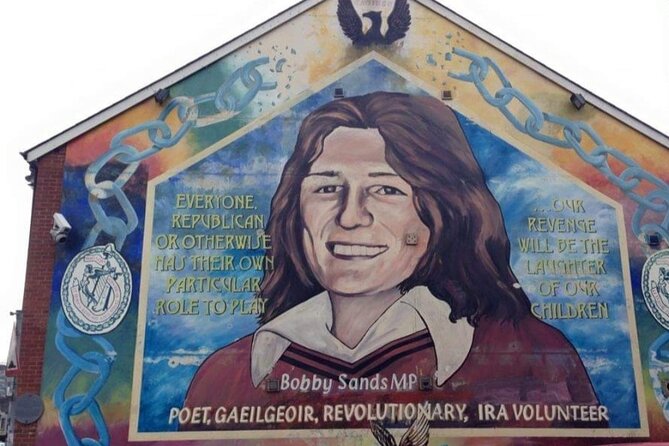
- The Bobby Sands Mural is a major focus: The Falls Road stop connects the mural to Republican politics, the hunger strikes, and the wider conflict.
- The price buys personal attention: At $76.39 per person, value depends on your group size and how much you want to ask and discuss.
Why Belfast’s walls tell more than a museum label
I would put this tour near the start of a Belfast visit, not at the end. The city’s political past can feel confusing at first: Unionist and Loyalist are not interchangeable terms, Republican and Nationalist are not identical, and the murals often assume you already know the story.
A good guide gives you a working map. You learn why the Peace Wall exists, why one community’s heroes may be another community’s enemies, and how events in the 1960s helped lead to decades of violence known as The Troubles.
That setting matters. You are not only hearing dates inside a museum. You are looking at walls, roads, homes, and public images in the places where these arguments took shape. The subject is serious, but the guides aim to keep the experience open and human. Several guides are described as funny, friendly, and willing to handle endless questions without turning the tour into a lecture.
You should still keep your mind switched on. This is local storytelling, not a neutral audio guide. One guide was criticized for presenting a strong political bias, and one person had difficulty understanding an accent. Those are useful cautions, not reasons to dismiss the tour. Ask for clarification, compare viewpoints, and remember that Northern Ireland’s past is still politically sensitive.
More Private History Tours in the UK
- Private Historical Walking Tour of York
★ 5.0 · 1,324 reviews - Loch Ness & Culloden Battlefield Private Tour from Inverness
★ 5.0 · 932 reviews - Private Group: Historical Pub Walking Tour of London
★ 5.0 · 660 reviews
The Peace Wall: a short walk with heavy meaning
The first stop gives the tour its emotional center. At the Peace Wall, you leave the vehicle and walk beside the barrier while the guide explains why it was built and what it represents.
You also have the chance to sign the wall with a good-luck message for future generations. That simple act can feel strange at first. The wall is both a practical barrier and a public record of how much fear and separation shaped daily life.
Allow yourself to look rather than rush. You may notice messages from people from many countries, alongside local words about peace, loss, and hope. The tour allows about 10 minutes here, so it is enough for a short walk and photographs, but not a long personal visit.
The stop is free, and there is no separate admission to budget for. Its value comes from having someone explain the wall’s purpose and place it in Belfast’s wider story. Without that context, it can look like a striking photo stop. With context, it becomes a reminder that peace can be real while division still lingers.
Shankill Road and the Loyalist story
The tour then spends about 40 minutes around Shankill Road. This is one of the two main teaching stops, and it gives you time to look at murals and hear about Loyalist paramilitaries, local residents, and major events during The Troubles.
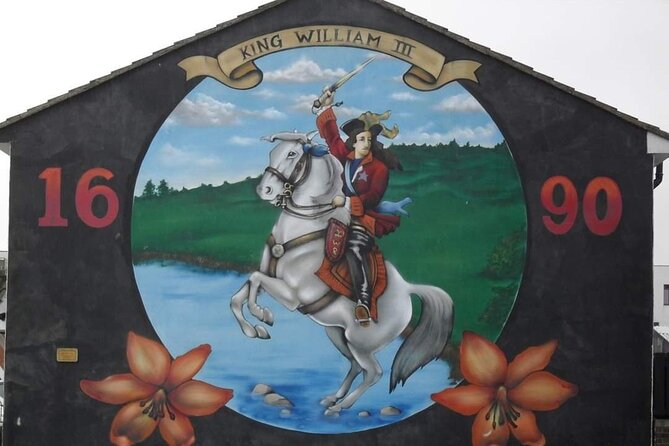
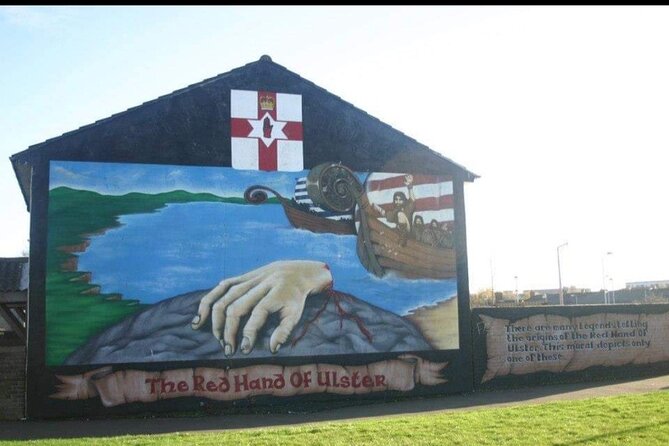
Your guide may explain how the area’s political identity developed and why certain figures and symbols appear on walls. The goal is not to admire murals as simple street art. They are public statements about loyalty, memory, sacrifice, and belonging.
This is where the private format earns its keep. You can stop to ask what a symbol means, why a particular person is remembered, or how residents viewed events at the time. Guides including Sean and Brian have been praised for answering detailed questions, while Brendan has been described as warm, personal, and respectful when discussing people affected by the conflict.
I would not expect every answer to be politically neutral. A guide who grew up during The Troubles may offer details that are hard to find in a general city tour, but personal experience also shapes interpretation. You can listen carefully without accepting every conclusion.
The 40-minute timing is useful. It gives enough room for explanation without turning the tour into a full morning of political study. If you want to photograph murals, you will need to do so while keeping up with the group and the guide’s schedule.
Falls Road and the Bobby Sands Mural
The Falls Road stop provides the Republican side of the story. Here you learn about Republican paramilitaries, the reasons given for their uprising, local residents, and the events of The Troubles.
The Bobby Sands Mural is the key image. The guide connects it to Republican memory and the political struggle, rather than leaving you with a quick photograph and a name. This is also the point where the tour can become especially personal and emotional.
Several guides, including Sean, Thomas, and Michael, have been praised for explaining the conflict with care while still making the subject approachable. One guide was described as having lived through the period, which can give the discussion a direct quality that a textbook cannot provide. You may hear stories that make the period feel less like a set of political positions and more like a series of choices made by families and communities under pressure.
The Falls Road and Shankill Road stops work best together. Seeing only one side would give you a partial picture. Taken in sequence, they show how two communities built their own public memories and how the same decades can be recalled in very different ways.
You may leave this section with more questions than answers. That is not a flaw. Belfast’s political story cannot be reduced to heroes and villains, and a responsible tour should leave room for grief, anger, and uncertainty.
Same city, a different century:
- London Small Group Tour of Historical Pubs
★ 5.0 · 10,422 reviews - Edinburgh: Edinburgh Castle Guided History Tour with Tickets
★ 4.8 · 9,933 reviews - A History of Terror – Belfast City Centre Walking Tour
★ 5.0 · 2,883 reviews - Edinburgh: Whisky Tasting with History and Storytelling
★ 4.9 · 2,451 reviews
Crumlin Road Gaol is a drive-by, not a prison visit
The final stop is brief. You drive past Crumlin Road Gaol and the old Court House while the guide explains their connection to people involved in The Troubles who were held and sentenced there.
You do not enter the prison on this tour. The stop takes about five minutes, so treat it as useful background rather than a full attraction. If you want an interior visit, you would need to arrange a separate Crumlin Road Gaol experience.
This short stop still helps complete the story. The murals show how communities remembered the conflict in public, while the prison and court represent the legal and custodial side of it. One guide specifically helped set the stage for a separate visit to the gaol, which is a good reason to take notes if you plan to return.
A private vehicle makes the short schedule work
The tour lasts about 1 hour 30 minutes to 1 hour 45 minutes. That is a compact schedule, but private transport lets you cover the four locations without spending much time finding your way between them.
You ride in an air-conditioned vehicle with only your own group. That matters on a wet or cold Belfast day, and it means you can ask questions without competing with a large crowd. Pickup is offered from locations in Belfast, with the main meeting point at Ten Square Hotel beside Belfast City Hall.
If your pickup is more than 1 kilometer from Belfast City Hall, a small fee may be added on the day, equal to a taxi fare starting at £10 for the pickup, not per person. Confirm this before you assume hotel pickup is included everywhere.
The listed vehicle is private and air-conditioned. Some descriptions from past participants refer to a black cab, but you should confirm the exact vehicle if that detail matters to you. The key practical benefit is private transport and direct access to the guide, not a particular style of cab.
The tour ends back at the meeting point. That makes it easy to continue sightseeing in central Belfast, though you should not plan a tightly timed connection immediately afterward. Traffic, questions, weather, and the pace of the group can affect the finish.
Is $76.39 per person a fair price?
At $76.39 per person, this is not the cheapest way to see Belfast’s murals. You are paying for a private vehicle, a local guide, and the freedom to shape the conversation around your own questions.
The value improves with a small group. If two or three people share the tour, the personal attention can make the cost worthwhile, especially if this is your first visit and you want a clear introduction to The Troubles. With a larger private group, the price per person may feel easier to justify.
There are no entry fees included because the main stops are viewed from public areas. You are paying for interpretation rather than admissions. That is important: the tour’s worth depends on the quality of the guide, not on the number of attractions checked off a list.
The high overall rating and 95 percent recommendation figure suggest strong satisfaction, but I would still book for the format and subject, not for a guarantee of a perfect match with your guide. Guide assignments vary, and the experience can feel different depending on the guide’s accent, politics, humor, and personal connection to Belfast.
Who will get the most from this tour?
I would recommend it to you if you want a direct introduction to Belfast’s political past and prefer conversation to a large scheduled bus tour. It suits first-time visitors, families with older children, and couples who want to ask questions without holding up a full coach.
It is also useful if someone in your group already knows a little about The Troubles and wants to test that understanding. One participant with a 23-year-old son found the tour useful because it explained the subject in a clear, first-hand way.
You should be ready for difficult material. The tour deals with paramilitaries, violence, prison, loss, and political division. It is not a light sightseeing ride, though the guides often use humor and friendly conversation to make the hour and a half manageable.
I would choose a longer or more specialized experience if you want detailed coverage of the peace process, extensive time at each mural, or entry to Crumlin Road Gaol. This tour gives you a strong foundation, not a full academic account.
Practical details for a smoother visit
Book with enough notice if your dates are fixed. This experience is often reserved about 22 days ahead, which suggests that popular times can fill before arrival.
Wear shoes suitable for a short walk at the Peace Wall and the mural areas. The vehicle reduces walking between sites, but you still need to get out and stand outdoors. The tour requires good weather, and poor conditions can lead to a new date or a full refund.
Confirmation arrives at booking. Service animals are allowed, the tour is near public transport, and most people can participate. Gratuities are not included, so bring that cost into your budget if your guide gives you a thoughtful and useful experience.
You can cancel for a full refund up to 24 hours before the start time. Changes or cancellations inside that window are not accepted for a refund.
Should you book the Private Political History and Murals Tour?
Book it if you want local explanation, private transport, and honest access to both Shankill and Falls Roads in a short window. The best part is the chance to ask direct questions while standing beside the walls and murals that still carry Belfast’s political memory.
Do not book it expecting a full prison visit, a long walking tour, or a perfectly neutral account from every guide. You may hear a strong personal viewpoint, and the subject can be upsetting.
For most first-time visitors, I think the format is worthwhile. It gives you the basic map, the major symbols, and enough context to explore Belfast with greater care afterward. If you have time, pair it with a separate visit to Crumlin Road Gaol or further reading recommended by your guide.
FAQ
How long does the tour last?
The tour lasts approximately 1 hour 30 minutes to 1 hour 45 minutes.
Where does the tour start?
The main meeting point is Ten Square Hotel, 10 Donegall Square South, Belfast, beside Belfast City Hall.
Does the tour offer pickup?
Yes. Pickup is offered from locations in Belfast and further away. If the pickup point is more than 1 kilometer from Belfast City Hall, a small fee may be added, starting at £10 for the entire pickup rather than per person.
Is the tour private?
Yes. Only your group participates in the activity.
What vehicle is used?
The tour includes private transportation in an air-conditioned vehicle. Some descriptions refer to a black cab, so confirm the exact vehicle if that is important to you.
Do you enter Crumlin Road Gaol?
No. The tour drives past the old prison and Court House and explains their connection to The Troubles. Entry to the gaol is not included.
What language is the tour offered in?
The tour is offered in English.
What is the cancellation policy?
You can cancel at least 24 hours before the local start time for a full refund. Cancellations or changes made less than 24 hours before the start time are not accepted for a refund. If poor weather causes the tour to be canceled, you can receive a different date or a full refund.
Just added around the UK
- Private tour of the stunning Cotswolds with an expert local guide★ 5.0 · 45 reviews
- Medieval Walking Tour of Chester★ 5.0 · 155 reviews
- Curious Cambridge – The History Tour that’s FUN!!!★ 5.0 · 80 reviews
- 2.5-Hours Walking Tour of Birmingham into Black Heritage Madiba★ 5.0 · 49 reviews
- Birmingham Gangs Nighttime Historical Walking Tour with Pub Stops★ 5.0 · 53 reviews
- Award Winning Private 2 Hour Belfast Political Black Taxi Tour★ 5.0 · 53 reviews
- Belfast Walking Tour: City Centre History, Troubles & Stories★ 5.0 · 39 reviews
- Belfast Political/history/troubles private taxi/cab tour★ 5.0 · 69 reviews
UK History Tours, compared.
Edinburgh: Edinburgh Castle Guided History Tour with Tickets
Read our review →
A History of Terror – Belfast City Centre Walking Tour
Read our review →
Edinburgh: Whisky Tasting with History and Storytelling
Read our review →
Edinburgh: Old Town History and Tales Walking Tour
Read our review →
Old Town Walking Tour History and Tales in Edinburgh
Read our review →
Edinburgh: Old Town and Underground Historical Tour
Read our review →Browse the lists this tour appears in