
Review · UK
Belfast Walking Tour: City Centre History, Troubles & Stories
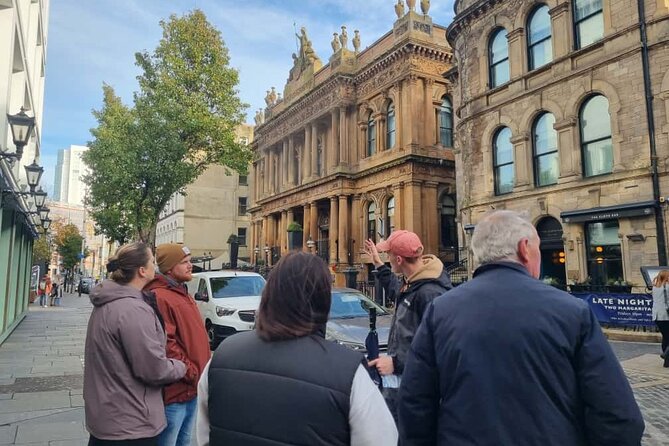
Belfast’s story is written across its city centre: grand civic buildings, old industrial streets, peace symbols, and playful public art. This walk links those places with the personal stories and political context that can be hard to find on your own. Guide Corey brings a local point of view, including memories of growing up in Belfast.
I like the tour’s small maximum of 15 people, which gives you a fair chance to ask questions. I also like the supplied audio headsets. They let you listen while taking photos or walking a little apart from the group. The main thing to consider is the weather: this is an outdoor walk, and poor conditions can lead to a rescheduled tour or refund.
Key points to know before booking
- A local guide with personal Belfast stories: Corey explains the city’s politics and past in a clear, friendly way, with personal memories that add human detail.
- Nine central sights in about two hours: The route covers City Hall, the Linen Quarter, the Cathedral Quarter, the riverfront, and several major sculptures.
- A useful first activity in Belfast: The walk helps you get your bearings and can shape your plans for restaurants, pubs, and attractions afterward.
- Headsets make a real difference: You can hear the guide near traffic, in noisy streets, or while stepping aside for photographs.
- A small group with a broad subject range: Expect architecture, industry, religion, politics, conflict, peace, and modern Belfast.
- Good value at $30.16: You get a guided city introduction lasting roughly 2 to 3 hours, with no separate admission costs listed for the stops.
Why this Belfast walk makes sense early in your trip
Belfast is compact enough to explore on foot, but its story is not simple. One block can take you from Victorian civic pride to industrial decline, then on to the political divisions and peace efforts that still shape the city.
That is why I see this as a strong first or second activity. You are not just ticking off landmarks. You are learning how the places fit together. Afterward, City Hall, the Linen Quarter, the Cathedral Quarter, and the riverfront should feel less like disconnected stops.
The tour is led in English and lasts around 2 to 3 hours. The group is capped at 15 people, a useful limit for a walking tour where the guide needs to speak clearly and answer questions. At $30.16 per person, the price is reasonable if you want interpretation rather than a self-guided stroll.
The high rating of 4.9 from 39 reviews, with 97 percent recommending it, reflects a consistent pattern: Corey is praised for his friendly delivery, local perspective, humour, and ability to explain difficult subjects without turning the walk into a lecture.
More History Walking Tours in the UK
- A History of Terror – Belfast City Centre Walking Tour
★ 5.0 · 2,883 reviews - Edinburgh: Old Town History and Tales Walking Tour
★ 4.8 · 2,361 reviews - Old Town Walking Tour History and Tales in Edinburgh
★ 5.0 · 2,168 reviews
Starting at City Hall and Donegall Square
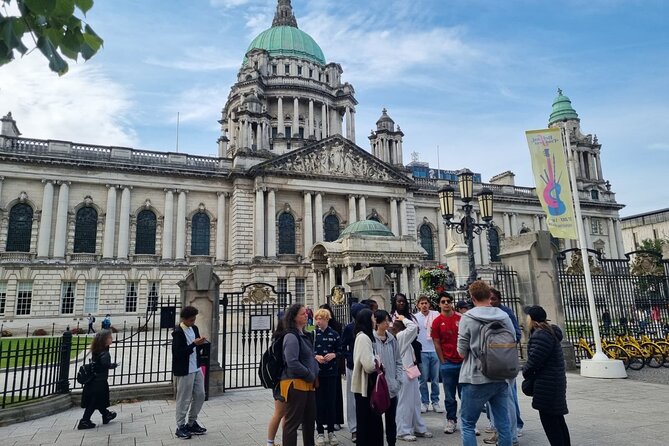
Meet at Belfast City Hall in Donegall Square North. The building is an obvious meeting point, and it gives Corey a strong opening stage for explaining Belfast’s civic identity.
You will spend about 20 minutes here. City Hall is more than a handsome landmark. It represents the city’s public life, political power, and changing sense of identity. The architecture, stonework, and stained glass help set up the larger themes of the walk: pride, division, ambition, and memory.
From there, the group moves into Donegall Square. This is a short stop of about 10 minutes, but it helps you understand how the centre functions as a meeting place for business, public events, transport, and daily city life.
I like this beginning because it gets you oriented quickly. You are in the middle of Belfast, surrounded by the city’s major civic and commercial routes, rather than starting in a quiet corner with little context. The drawback is that central streets can be noisy, so the headsets are especially useful here.
The Linen Quarter and Belfast’s industrial past
The Linen Quarter offers a change in mood. Here, the focus shifts from government and civic pride to manufacturing, trade, and work.
Belfast was once known as Linenopolis, a sign of how important linen production became to the city’s economy and international reputation. The 10-minute stop is brief, but it introduces a major part of Belfast’s identity that can be missed if you focus only on the Troubles.
This is one of the walk’s most useful choices. Belfast is often presented mainly through its political past, yet the city’s industrial success helped shape its buildings, wealth, population, and social divisions long before the late twentieth century.
You should expect a concise explanation rather than a specialist industrial-history tour. The value comes from seeing the Linen Quarter as part of a larger story. It shows how Belfast grew, what kinds of work sustained it, and why the city centre has such a mix of grand architecture and former industrial areas.
Linen Hall Library and the city’s cultural memory
The walk continues to Linen Hall Library, Belfast’s oldest library. You spend about 10 minutes here, learning about its role as a place where books, archives, and local memory have been kept for more than two centuries.
This stop adds a cultural layer to the tour. After hearing about power and manufacturing, you get a reminder that cities also preserve themselves through reading, research, and public institutions.
The library is also a useful counterpoint to Belfast’s outdoor memorials and sculptures. Some parts of the city tell their story through stone or steel. Linen Hall Library does so through documents and collections.
The schedule allows only a short visit, so you should not expect an extended research session or a long indoor stop. Still, it is a worthwhile inclusion. It gives you another way to think about how Belfast records its past.
Same city, a different century:
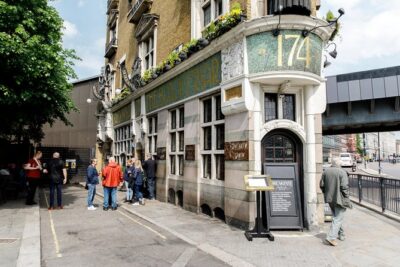
- London Small Group Tour of Historical Pubs
★ 5.0 · 10,422 reviews - Edinburgh: Edinburgh Castle Guided History Tour with Tickets
★ 4.8 · 9,933 reviews - Edinburgh: Whisky Tasting with History and Storytelling
★ 4.9 · 2,451 reviews - Soho Music & Historic Pubs Tour
★ 5.0 · 1,993 reviews
Belfast Cathedral and the Cathedral Quarter
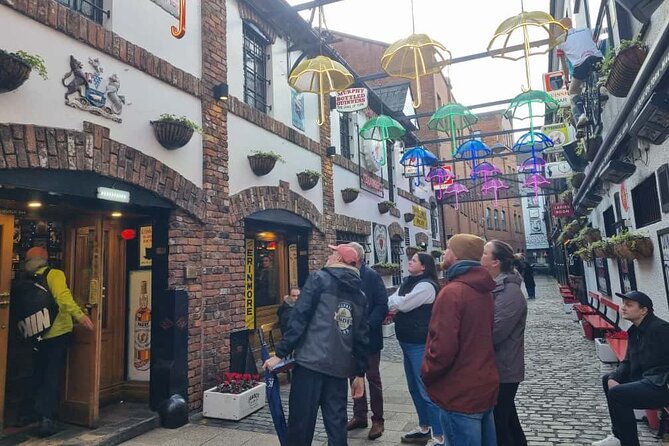
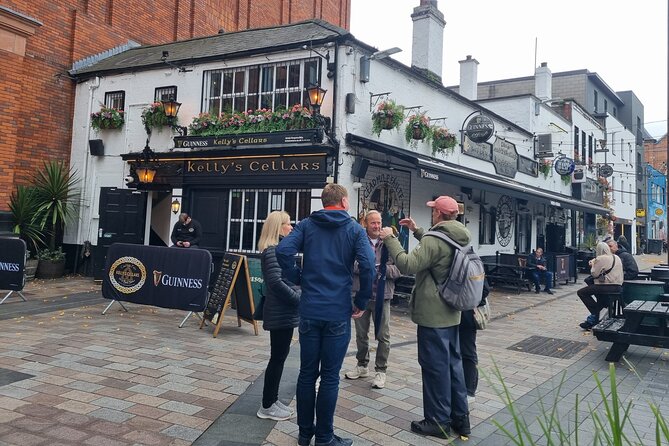
At Belfast Cathedral, also called the Cathedral Church of St. Anne, the emphasis turns to architecture, religion, and the city’s creative centre.
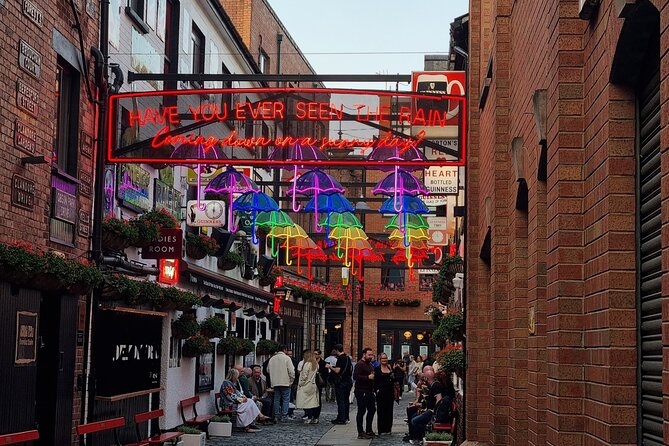
The cathedral is linked to the Cathedral Quarter, an area known for cultural activity and nightlife. The stop lasts about 10 minutes, enough to admire the building and hear why it matters in the city’s layout and identity.
This section of the walk helps broaden the picture of Belfast. Religious buildings here are not just photo stops. They point toward the importance of faith and community in a place where religious identity has often been tied to politics.
Corey’s strength, based on the available feedback, is explaining these subjects in a way that stays approachable. You can ask questions, and the tour is designed for a conversation rather than a memorized list of dates.
The Cathedral Quarter can also be lively, so expect a city setting rather than a quiet heritage site. That energy is part of the area’s appeal, but it may mean interruptions from traffic or street noise. Again, the headsets help.
The Albert Memorial Clock and stories from the waterfront
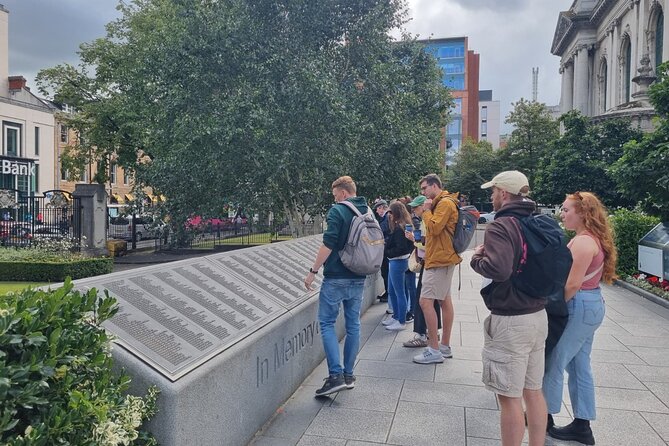
The Albert Memorial Clock Tower is one of Belfast’s most recognizable landmarks. Built in memory of Prince Albert, Queen Victoria’s husband, it is often called Belfast’s leaning tower.
You will spend roughly 10 minutes here. The guide covers the building itself, along with stories of sailors and the nightlife that once surrounded this part of the city.
This is a good example of how the walk mixes formal history with local colour. The clock tower is easy to photograph, but its full interest comes from the stories tied to its setting. It connects Belfast’s civic ambitions with the working port and the people who passed through it.
Do not expect the tower to be explored inside. The experience is a walking explanation from the public area. That is perfectly suitable for a city overview, but visitors wanting detailed architectural access should treat this as an introduction rather than a dedicated clock-tower visit.
The Big Fish and Belfast’s sense of humour
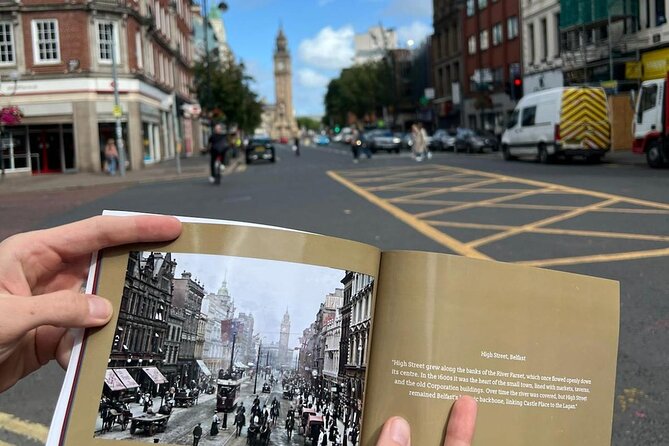
At the riverfront, you meet the Big Fish, a large ceramic-tiled salmon often called the Salmon of Knowledge.
The sculpture is covered in tiles that tell parts of Belfast’s story. You have time to see the details, take photographs, and hear why this playful landmark matters. Rubbing its nose is said to bring luck, so you may as well give it a try. Belfast does not take every monument solemnly, and that is part of its character.
This stop works well after the heavier political and industrial subjects. It gives the walk a lighter moment without abandoning the city’s past. The sculpture still carries history, but it presents it through public art and humour.
The riverfront also helps you see the city’s connection to water, trade, and movement. It is a natural place for photographs, although the group may pause for only about 10 minutes.
Peace, resilience, and the final sculptures
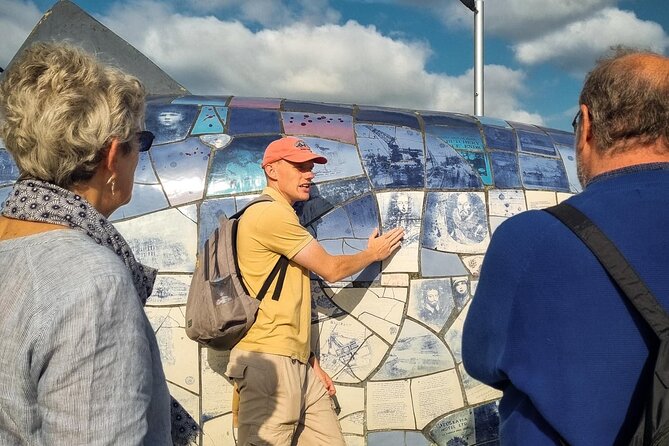
The Beacon of Hope provides one of the walk’s clearest symbols of Belfast’s efforts to move beyond conflict. The sculpture represents peace, resilience, and a more hopeful future.
The tour does not treat Belfast’s troubled past as a simple story with a neat ending. That is important. The city has changed, but questions about identity, memory, and community remain part of its present.
Corey’s personal connection is a notable part of the experience. He grew up in Belfast, and he sometimes explains the city through memories of everyday life. Those stories can help you understand how political tension affected ordinary children and families, not just leaders and institutions.
The tone appears to be honest but not sensational. That balance matters. You may hear about difficult experiences, including the ways young people could be pulled into hostile behaviour, but the purpose is to explain the environment rather than celebrate it.
The final stop is the Spirit of Belfast, an abstract sculpture made of steel and light. It represents the energy and forward direction of the modern city. Ending here gives the walk a sense of movement from old industry and conflict toward renewal and creativity.
It is a fitting finish, though some visitors may prefer a longer focus on the Troubles themselves. This tour gives that subject an important place, but it also covers architecture, industry, religion, public art, and modern Belfast. It is best viewed as a broad introduction, not a specialist conflict tour.
What Corey adds to the experience
The guide is central to the value of this walk. Corey is repeatedly described as warm, clear, funny, and proud of Belfast. Those qualities matter because the subject can become dry or overly political when presented without a human voice.
He also appears willing to adjust the conversation. One person who joined alone received a more tailored experience based on personal interests. Other feedback points to full answers, local suggestions, and help with places to eat and visit after the walk.
Corey’s wife, Michelle, sometimes joins the experience. That can add another friendly local presence, though the main guide is Corey.
The audio headsets are a practical advantage. You can hear the commentary while taking a photograph, standing near the edge of the group, or walking through a noisy section. This is more comfortable than crowding around a guide and trying to catch every word.
The tour is offered in English. Most people can take part, and service animals are allowed. Since this is a city-centre walk lasting up to three hours, wear comfortable shoes and check the forecast before setting out.
Price, timing, and who gets the best value
At $30.16, the tour is priced as a modest guided introduction rather than a premium private experience. The value is strongest if you want context, local stories, and a clear route through the centre.
You are not paying separate admission fees for the listed stops. The appeal is the guide’s interpretation, not access to a paid attraction. If you are happy to read plaques, follow a map, and research Belfast later, you can spend less by walking independently. But doing so will not give you the same easy access to personal stories or a connected explanation of the city.
The 2 to 3 hour length is also well judged for a first look. It is long enough to cover nine places but short enough to leave the rest of your day open. One review describes it as neither too long nor too short, and that seems fair based on the route.
I would choose this tour for:
- A first visit to Belfast
- Couples and families wanting a shared introduction
- Solo visitors who like asking questions
- People interested in politics, local culture, architecture, and public art
- Anyone arriving for a short city break
- Visitors who want restaurant and attraction ideas from a local guide
I would look elsewhere if you want a long visit inside historic buildings, a museum-focused experience, or a specialist examination of the Troubles. This walk touches all those themes but keeps moving.
Weather, cancellation, and group details
You receive confirmation when you book. The activity starts and ends at Belfast City Hall, so you do not need to arrange a separate return transfer.
The maximum group size is 15 people. That is small enough for a more personal feel while still offering a social experience.
Free cancellation is available if you cancel at least 24 hours before the start time. Changes or cancellations inside that window are not refunded. The tour requires good weather, and if poor weather causes cancellation, you are offered another date or a full refund. A minimum number of participants also applies, with the same choice of an alternative or refund if the tour does not run.
Should you book this Belfast walking tour?
Book it if you want Belfast explained by a local rather than simply displayed in front of you. Corey’s personal stories, clear delivery, humour, and use of headsets are the strongest reasons to choose it.
The tour is especially useful at the start of your stay. It gives you a map in your head, introduces the city’s major themes, and may help you decide which museums, neighbourhoods, pubs, or attractions deserve more time.
Skip it if you need a deep specialist tour of the Troubles or prefer to explore indoors at your own pace. For most visitors seeking a balanced city introduction, the combination of civic Belfast, Linenopolis, religious landmarks, waterfront art, and peace symbolism makes $30.16 a sound use of a morning or afternoon.
FAQ
Where does the Belfast walking tour start?
The tour starts at Belfast City Hall, Donegall Square North, Belfast BT1 5GS, UK.
Where does the tour finish?
The activity ends back at the meeting point at Belfast City Hall.
How long does the tour last?
The tour lasts approximately 2 to 3 hours.
How much does the tour cost?
The listed price is $30.16 per person.
What language is the tour offered in?
The tour is offered in English.
How many people can join the tour?
The maximum group size is 15 travelers.
Can I cancel for a full refund?
Yes. You can cancel at least 24 hours before the start time for a full refund. Cancellations within 24 hours are not refunded. If poor weather or an insufficient number of participants causes the tour to be canceled, you are offered another date or a full refund.
Just added around the UK
- Private tour of the stunning Cotswolds with an expert local guide★ 5.0 · 45 reviews
- Medieval Walking Tour of Chester★ 5.0 · 155 reviews
- Curious Cambridge – The History Tour that’s FUN!!!★ 5.0 · 80 reviews
- 2.5-Hours Walking Tour of Birmingham into Black Heritage Madiba★ 5.0 · 49 reviews
- Birmingham Gangs Nighttime Historical Walking Tour with Pub Stops★ 5.0 · 53 reviews
- Award Winning Private 2 Hour Belfast Political Black Taxi Tour★ 5.0 · 53 reviews
- Private Political History & Murals Tour Belfast★ 5.0 · 182 reviews
- Belfast Political/history/troubles private taxi/cab tour★ 5.0 · 69 reviews
UK History Tours, compared.
Edinburgh: Edinburgh Castle Guided History Tour with Tickets
Read our review →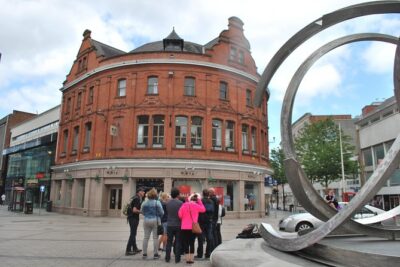
A History of Terror – Belfast City Centre Walking Tour
Read our review →
Edinburgh: Whisky Tasting with History and Storytelling
Read our review →
Edinburgh: Old Town History and Tales Walking Tour
Read our review →
Old Town Walking Tour History and Tales in Edinburgh
Read our review →
Edinburgh: Old Town and Underground Historical Tour
Read our review →Browse the lists this tour appears in