
Review · SPAIN
Medieval Three Villages Small Group Day Trip from Barcelona
Besalú’s stone bridge, Rupit’s hanging footbridge, and Tavertet’s cliffs give this trip a fine mix of medieval charm and open-country scenery. You get more than old streets: the route includes a 12th-century Jewish mikveh, a tiny village perched on volcanic rock, and views over the Ter River valley.
I like the small-group format, which gives your guide room to answer questions and adjust the pace. I also like the generous free time, especially in Rupit, where you can choose a restaurant, visit the castle ruins, or simply wander. The main drawback is the length: at about 10 and a half hours, this is a full day with several hours on winding roads.
Key points
- Besalú sets the historical tone: See its Romanesque bridge, medieval streets, monastery, Jewish baths, and former synagogue.
- Castellfollit de la Roca is a quick but striking stop: The village sits on the edge of a basalt precipice.
- Rupit gives you the most free time: Walk its cobbled lanes, cross the wooden suspension bridge, visit Sant Miquel, and stop for lunch.
- Tavertet is about views: Look across the cliffs toward Pantà de Sau lake and see its Romanesque church.
- The day runs long but stays varied: History, villages, mountain roads, local food, and countryside fill the route.
- Plan for changing weather: The higher villages can be cold, even when Barcelona feels mild.
Why this day trip works beyond Barcelona
Barcelona can easily fill several days, but Catalonia is much more than Gaudí buildings and city boulevards. This outing takes you into the province of Girona and the inland hills, where medieval villages still have stone lanes, old churches, and houses built long before modern roads reached them.
The route is especially good if you want several different settings in one day. Besalú feels like a preserved medieval town. Rupit is smaller and more intimate, with a wooden bridge and old houses pressed along narrow streets. Tavertet is quieter still, with its main appeal coming from the cliffs and views.
The tour costs about $119.72 per person. That is not a budget bus ride, but it covers a full day, an English-speaking local guide, and air-conditioned transportation from central Barcelona. You also avoid arranging several regional buses or trying to connect remote villages on your own. Food, drinks, and hotel pickup are not included, so keep those extra costs in mind.
More Medieval History Tours in Spain
- Montserrat with Black Madonna & Medieval Winery with Tapas/Lunch
★ 5.0 · 5,209 reviews - From Seville: Italica Roman City & Medieval Monastery Tour
★ 4.5 · 1,051 reviews - Tenerife: Castillo San Miguel Medieval Show and Banquet
954 reviews
Starting beside the Palau de la Música
You meet at the Explore Catalunya office at C/ Palau de la Música, 1, close to Barcelona’s famous Palau de la Música Catalana. The practical meeting time is 8:15 a.m., with departure at 8:30.
This early start matters. Besalú is about a 90-minute drive away, and the route includes three villages plus several scenic points. At the office, you can use the restroom, grab a quick coffee, and hear how the day will run before leaving through Barcelona’s Eixample district.
The guide gives a short introduction to Barcelona and the surrounding region during the first part of the drive. Then you can settle into the vehicle. The maximum group size is 20, though some departures have been much smaller, with only five or eight passengers. That difference can affect the feel of the day, but the tour is designed around a small-group vehicle rather than a large coach.
Besalú: bridge, baths, and medieval streets
Besalú is the strongest history stop on the route. You begin with a guided walk through the old town, then have some time to look around independently.
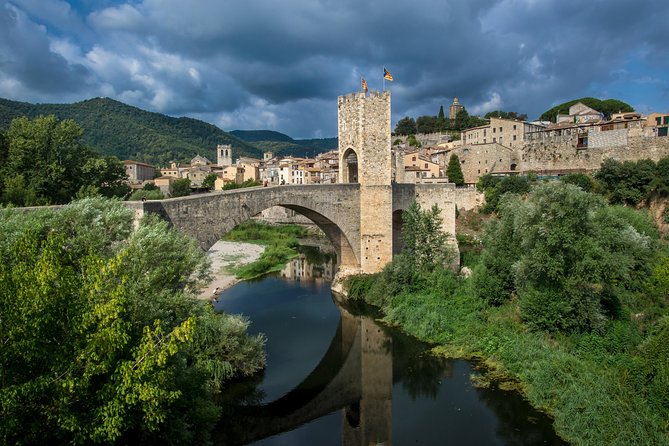
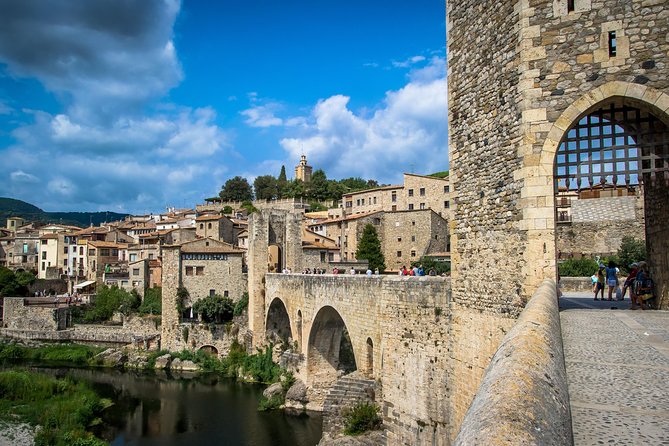
The star sight is the 12th-century Romanesque bridge. Its stone arches make a fine entrance to the town, and the view back toward the old buildings helps explain why Besalú is one of Catalonia’s best-known medieval villages. Bring your camera, but do not rush across it. The bridge is one of those places where the approach is almost as interesting as the crossing.
Inside the old quarter, you will see streets lined with medieval-era architecture and buildings connected to the town’s Jewish past. The visit to the 12th-century mikveh, or Jewish ritual bath, adds real depth to the stop. You may also see the site associated with the medieval synagogue.
The former monastery of Sant Pere, dating from the 11th century, is another important point. Your guide can connect these buildings to the town’s religious and civic life, giving you more than a quick photo stop.
Besalú receives about two hours. That is enough for the guided walk and some personal wandering, though the time can feel short if you want to enter every open building, browse shops, and sit at a café. If independent shopping is a priority, use your free minutes carefully. The town is the largest and most substantial of the three villages, so it is the stop where you may most wish for another half hour.
Castellfollit de la Roca: a village on volcanic rock
Between Besalú and Rupit, the vehicle passes Castellfollit de la Roca. This tiny village occupies the edge of a basalt cliff, created by ancient volcanic activity.
The settlement is remarkably small, with about 1,000 residents living within roughly 1,000 square meters. That compact setting is the point. From the road, you get a striking look at houses lined along the top of the dark rock shelf.
This is mainly a viewing stop rather than a long village visit. You should think of it as a memorable interlude between the two main walks. If you want a detailed exploration of Castellfollit itself, this day trip may not provide enough time, but the passing view adds something very different to the route.
Same city, a different century:
- Madrid Essential: Historic Center, Plaza Mayor & Royal Palace
★ 5.0 · 6,416 reviews - Barcelona: Tapas Walking Tour with Food, Wine, and History
★ 4.8 · 4,261 reviews - Sevilla Food Tour: Tapas, Wine, History & Traditions
★ 5.0 · 3,468 reviews - Valencia Old Town Tour with Wine & Tapas in 11th Century Historic Monument
★ 5.0 · 3,234 reviews
Rupit: the best place for lunch and wandering
Rupit is where the schedule slows down. You have about two hours and 30 minutes for the village, lunch, and the drive onward toward Tavertet.
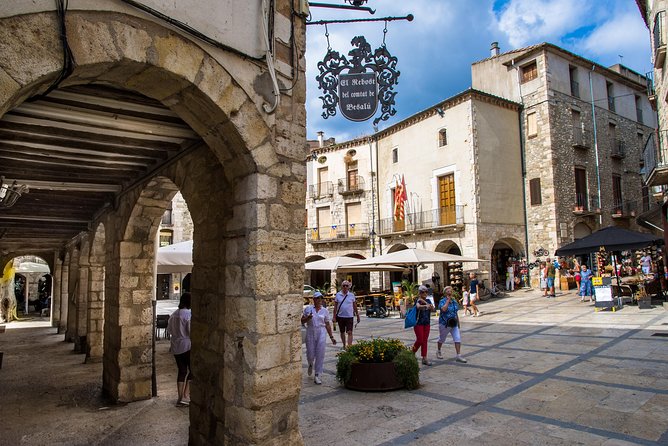
The village is known for cobbled roads, stone houses, and 16th-century buildings. You can cross the wooden hanging bridge, one of the most recognizable features in Rupit, then walk toward the Baroque church of Sant Miquel.
You also have the option of visiting the ruins of Rupit Castle, set on a rocky rise above the village. The ruins are not a grand palace, so keep your expectations sensible. The pleasure is in the setting and the short walk, with old stone underfoot and the village gathered below.
Lunch is at your own expense. Your guide can suggest a traditional restaurant and may help make a reservation, which is useful because Rupit’s restaurants can fill up. The available information does not provide a fixed restaurant list, so ask your guide early in the day rather than waiting until you are hungry.
You could also bring a picnic and eat outside near the castle area, if that suits you. Since the tour does not include food, budget for a proper meal, a drink, and perhaps coffee later in Tavertet.
Rupit is probably the most enjoyable stop for unstructured time. Besalú gives you more formal history, while Tavertet gives you the best views. Rupit lets you set your own rhythm. Walk, eat, browse, or simply sit in a small square and watch the old village carry on around you.
The road to Tavertet and Cingles de Tavertet
After Rupit, the route turns toward the sandstone cliffs of Cingles de Tavertet and the Ter River valley. The drive is part of the attraction, with mountain roads and changing views across the countryside.
The route passes signs of older settlement, including a megalithic tomb and an Iberian Wall. These details remind you that people lived in this region long before the medieval villages took shape. You will not have a full archaeological visit at each feature, but your guide can point out what you are seeing and explain why the area mattered.
The scenery becomes more open as you approach Tavertet. This is a good time to have your phone or camera ready, but also take a break from photographing every bend. The best part of a rural route is often the chance to watch the view change through the window.
Tavertet: preserved homes and wide views
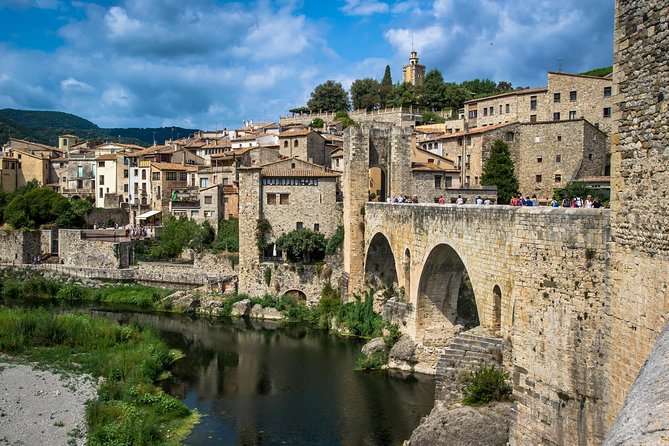
Tavertet is the final medieval village, and it has a different character from Besalú and Rupit. About 48 homes from the 16th and 17th centuries remain preserved, creating a compact historic center.
Your guide gives a short introduction before you see the 11th-century Romanesque Church of Sant Cristòfol. The church is modest compared with Barcelona’s grand monuments, but its age and setting make it worthwhile. This is a place for details: old stonework, quiet lanes, and the sense of a village that has not been rebuilt around modern tourism.
The scheduled village visit is brief, about 30 minutes. You then have time for a short walk to a viewpoint over Pantà de Sau lake, or you can stop for coffee at your own expense. The overlook is the main reason to visit Tavertet. From the cliffs, you get broad views across the Ter River valley and the wooded hills around the reservoir.
This short stop can feel too brief if you want a longer walk. It works best if you treat Tavertet as a final scenic pause rather than another full village tour. One practical point: the higher elevation can bring cooler air and rain, even when Barcelona is warm.
The return through Catalan countryside
The return journey begins around 5:30 p.m. and reaches Barcelona at about 6:45 p.m. The route includes views of wooded areas such as Magatalls and the El Montseny natural park, which has UNESCO Man and Biosphere status.
By this point, you will probably be ready to rest. That is not a criticism. This is a long day, and the drive back gives you a chance to recover after the walking and village streets. Your guide can help you find a taxi or the metro near the end point at Arc de Triomf, or suggest a place for dinner.
The final drop-off is not the original office. You finish near Arc de Triomf in Ciutat Vella, so check your evening plans before booking anything with a tight start time.
Guides make a real difference
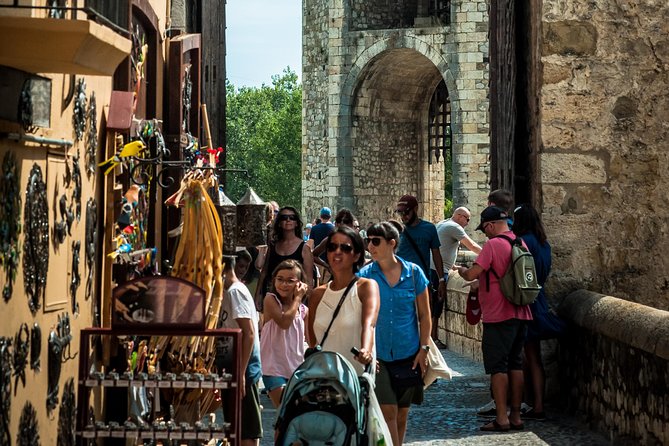
The tour guide is central to the experience because the route involves several short walks, local history, restaurant advice, and a fair amount of driving. Past departures have been led by guides including Sergio, Rod, Berta, Carme, Xavi, Nuria, Rodrigo, and others. The assigned guide can vary, but the strongest pattern is a guide who also manages the transport, timing, and practical questions.
Sergio is noted for adapting the schedule to bad weather and checking that everyone was comfortable. Rod is praised for explaining Catalan culture as well as the sites. Carme and Berta are both associated with clear historical explanations and useful restaurant suggestions. One practical warning from a departure was a missing microphone, which made it harder for passengers in the back to hear. That is unusual, but if your vehicle has a microphone, use a seat where you can hear the guide clearly.
Because the groups may include people from several countries, the small vehicle can also become a pleasant social space. Still, the quality of the day depends partly on how well the guide handles the balance between explanation and free time. This tour works best when you want both: a clear introduction, then room to explore alone.
What to bring and how to pace yourself
Wear comfortable shoes. Besalú, Rupit, and Tavertet all involve old stone or cobbled streets, and you may walk on uneven surfaces near the viewpoints and castle ruins.
Bring a jacket and an umbrella, particularly in cooler months or when rain is forecast. The mountain villages can be colder than Barcelona, and one family found the higher elevations much chillier than expected. Weather can also affect the views at Tavertet.
Pack water and money for lunch, coffee, and any food you want during the day. Since lunch is not included, ask about restaurant options when you arrive in Rupit. If you prefer a picnic, the tour information specifically allows for that possibility.
A moderate level of fitness is expected. You do not need to be a serious hiker, but you should be comfortable walking through old villages and taking short uphill or uneven routes. The schedule includes free time, so you can choose how much extra walking to do.
Who should book this trip?
I would choose this tour if you want medieval Catalonia without renting a car. It suits anyone who enjoys old architecture, churches, village streets, and scenic drives more than a packed list of major monuments.
Families with older children and teenagers can find plenty to enjoy, especially the bridge in Besalú, the hanging bridge in Rupit, the castle ruins, and the cliff views. Couples and solo visitors may also like the mixture of guided context and independent time.
I would think twice if you dislike long vehicle days, winding mountain roads, or fixed schedules. You will spend much of the morning and late afternoon in transit, and Tavertet receives only a short visit. The route is also less suitable if you need extensive free time in one village.
The free-cancellation policy allows you to cancel up to 24 hours before the start time for a full refund. The tour also needs a minimum number of participants, so a date could be changed or refunded if that minimum is not met.
Should you book the Medieval Three Villages tour?
Book it if you want a broad taste of Catalonia beyond Barcelona in one well-organized day. Besalú gives you the strongest historical visit, Rupit gives you the best time to wander and eat, and Tavertet supplies the memorable mountain views.
The value is strongest for visitors who would otherwise struggle to reach these villages by public transport. At roughly $119.72, you are paying for transport, a full day, local guidance, and a small-group setting rather than just admission to one attraction.
Choose another outing if you want a slow day, a long hike, or deep time in one town. For most visitors with one spare day in Barcelona, though, this is a rewarding way to see old Catalonia, especially if you arrive prepared for cool weather, a long schedule, and lunch planning in Rupit.
FAQ
Where does the tour start?
You meet at the Explore Catalunya office at C/ Palau de la Música, 1, near the Palau de la Música in central Barcelona. The meeting time is 8:15 a.m., with departure at 8:30 a.m.
Where does the tour end?
The tour ends near Arc de Triomf in Ciutat Vella, Barcelona, at about 6:45 p.m.
How long does the tour last?
The full experience lasts approximately 10 hours and 30 minutes, including the drives between Barcelona and the villages.
Is lunch included?
No. Lunch and drinks are not included. You have time to eat in Rupit, and your guide can suggest a restaurant or help with a reservation.
Is the tour offered in English?
Yes. The tour operates in English and includes a local guide.
How large is the group?
The maximum group size is 20 people. The vehicle is air-conditioned, and some departures operate with much smaller groups.
What happens if I need to cancel?
You can cancel at least 24 hours before the start time for a full refund. Cancellations or changes made less than 24 hours before departure are not refunded or accepted.
More Day Tours in Spain
- From Barcelona: Girona, Besalú & Medieval Villages Day Trip
★ 4.8 · 92 reviews - Normandy D-Day Sites & Cemetery Day Trip from Paris with Lunch
★ 5.0 · 6,877 reviews - Kyoto: Fushimi Inari, Kinkakuji, Bamboo Grove 1 Day Bus Tour
★ 4.8 · 4,316 reviews - From Bangkok: Ayutthaya Historical Park Guided Day Trip
★ 4.6 · 3,020 reviews
More Small-Group History Tours in Spain
- Madrid Tapas & Taverns Small Group Food & History Tour
★ 5.0 · 2,664 reviews - Ultimate Seville Tapas, Wine & History Small Group Tour
★ 5.0 · 1,766 reviews - Pyrenees & Medieval Towns Small Group Tour from Barcelona
★ 4.5 · 669 reviews - Besalu & 3 Medieval Towns Small Group Tour with Hotel Pick-Up
★ 5.0 · 562 reviews
Just added around Spain
- Visita Guiada Por El Casco Histórico De Cuenca Y Su Catedral★ 5.0 · 45 reviews
- Night Walking Tour of Medieval Cuenca★ 5.0 · 64 reviews
- Mosque of Cordoba History Tour in English Tickets included★ 5.0 · 257 reviews
- 2 Hours Tour around Cádiz: History, anecdotes and curiosities★ 5.0 · 89 reviews
- Jerez de la Frontera History and Art Walking Tour★ 4.5 · 49 reviews
- Bilbao Historical Small Group Tour★ 4.5 · 159 reviews
- The Authentic Bilbao Pintxos, Food & Wine Tour with a Local★ 5.0 · 360 reviews
- Girona, Costa Brava and Medieval Village from Barcelona★ 5.0 · 149 reviews
Spain History Tours, compared.
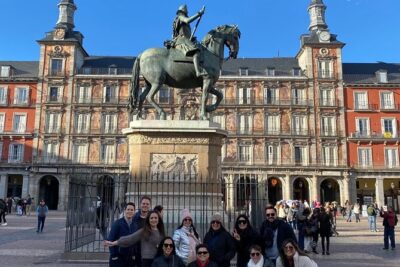
Madrid Essential: Historic Center, Plaza Mayor & Royal Palace
Read our review →
Montserrat with Black Madonna & Medieval Winery with Tapas/Lunch
Read our review →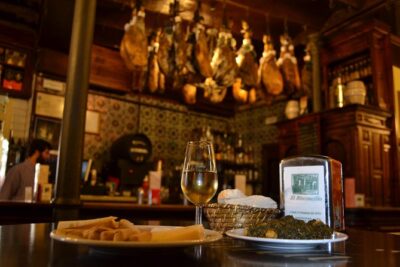
Sevilla Food Tour: Tapas, Wine, History & Traditions
Read our review →
Valencia Old Town Tour with Wine & Tapas in 11th Century Historic Monument
Read our review →
Madrid Tapas & Taverns Small Group Food & History Tour
Read our review →
Barcelona Tapas Walking Tour: Food, Wine & History
Read our review →
Ultimate Seville Tapas, Wine & History Small Group Tour
Read our review →
Córdoba: Skip-the-Line Great Mosque-Cathedral History Tour
Read our review →Browse the lists this tour appears in