
Review · VIETNAM
Hoi An Ancient Town Walking Tour with a Local
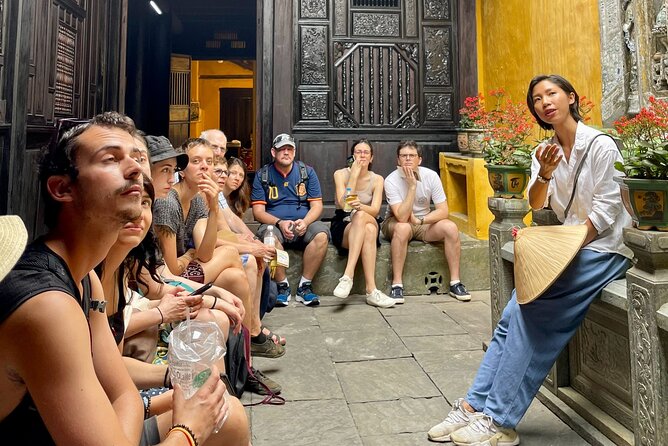
Hoi An’s old town makes more sense when someone points out the people behind its painted façades. This three-hour walk connects Japanese, Cantonese, Vietnamese, and merchant traditions, then finishes among market stalls and local snacks. I like the small group limit of 10 and the way the route mixes famous sights with everyday places.
I also like the useful human touches: guides such as Kun, Anh, Trang, and Minh are praised for clear explanations, good humor, and restaurant and shopping tips. Anh has taken visitors through a house’s working kitchen, while other guides have offered cold herbal tea and advice for a lantern boat ride. The main catch is that the ₫120,000 UNESCO entrance ticket is extra, and every stop is on foot.
Key points at a glance
- Six stops in about three hours: The route covers cultural buildings, a theatre, and the central market without needing a vehicle.
- A multicultural view of Hoi An: Japanese, Cantonese, and Vietnamese influences appear in the buildings and stories.
- A genuinely small group: The tour accepts no more than 10 people, which gives you a better chance to ask questions.
- Practical local advice: Guides including Kun, Anh, Trang, and Minh are known for sharing food, shop, and evening activity suggestions.
- Tea and tastings are part of the experience: A special herbal tea is included, with small food samples mentioned during the walk.
- Budget-friendly, but not all-inclusive: The $9.89 price is low, though the UNESCO ticket and any market purchases are separate.
Why this walk is a smart first look at Hoi An

At $9.89 per person, this is priced as an affordable orientation walk rather than a full private tour. You get a local guide, a clear route through the old town, and about three hours of explanation for less than many single attraction experiences cost.
The value is strongest if you are new to Hoi An. Instead of wandering past old buildings without knowing why they matter, you hear how the town developed, why Japanese and Cantonese communities were present, and how merchant families lived. That context can make the rest of your stay more rewarding.
The group cap matters. Ten people is still a group, but it is small enough for a guide to keep the pace together and answer questions. Some bookings may become private if only one person joins, though that is not guaranteed.
You should budget separately for the Hoi An UNESCO entrance ticket, listed at ₫120,000 per person. Admission is not included at the individual stops, so check with the guide how the ticket applies to the day’s route. Food, souvenirs, and any other purchases at the market are also your responsibility.
More Ancient History Tours in Vietnam
- Hoi An: Ancient Town Guided Walking Tour
★ 4.9 · 766 reviews - Marble Mountains – Hoi An Ancient Town Sunset Daily Ingroup Tour
★ 5.0 · 690 reviews - Hoi An Ancient Town – Walking Tour with Local Guide
★ 4.9 · 385 reviews
Starting at the Japanese Culture Gallery
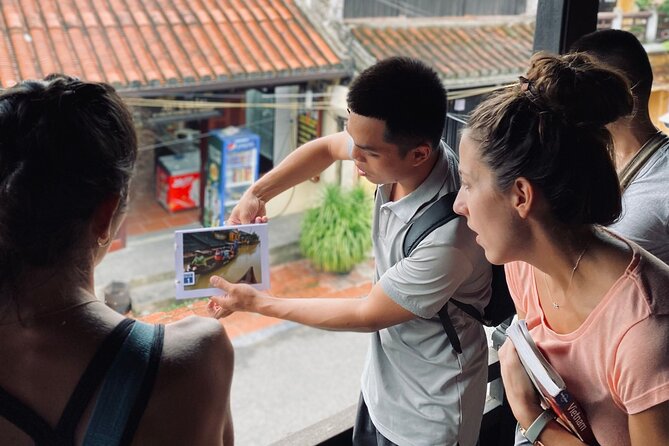
The walk begins at 125 Đ. Phan Chu Trinh, in Hoi An’s Minh An area. The first stop is the Japanese Culture Gallery, where you get a short timeline of Hoi An and an explanation of Japan’s place in the town’s past.
This is a useful opening because it gives you a framework for the rest of the walk. You are not simply looking at old woodwork and colorful façades. You are learning how trade and migration shaped the town, and why Japanese artistic ideas still appear in its architecture and cultural identity.
The stop lasts about 25 minutes. Admission is not included, and the tour information does not give a separate entrance price. Plan for a spoken introduction as well as time to look around the gallery.
A guide’s skill matters most here. Kun, Trang, Nguyen, Karla, Anh, June, Sanh, and Minh are among the guides associated with especially warm, clear, and engaging tours. The exact guide for your booking may differ, so you should treat those names as examples rather than a promise.
The Japanese Covered Bridge and Hoi An’s best-known symbol
The Japanese Covered Bridge is the route’s most recognizable sight. It is a compact architectural landmark and a useful place to connect the town’s Japanese influence with its wider trading past.
You get about 20 minutes here. That is enough for an explanation and a closer look, but not a long museum-style visit. If you want extensive time for photographs, you may need to return on your own after the tour.
The bridge is also where the walking format makes sense. Hoi An’s old center is compact, and seeing the sights on foot lets you notice the relationship between the bridge, streets, houses, and commercial areas. A vehicle would get you nowhere useful in this part of town.
The tour does not promise a quiet visit. Hoi An’s central streets can be active, especially around its best-known landmarks. Keep your belongings close, stay with the group, and wear shoes that are comfortable for several hours of walking.
Cantonese Assembly Hall and the town’s Chinese connections
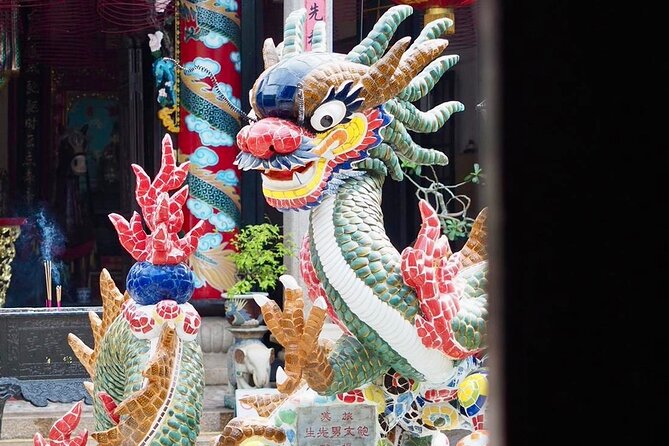
The Cantonese Assembly Hall gives the walk another cultural angle. Its decoration, colors, and layout reflect the Cantonese community that helped shape Hoi An’s commercial life.
The stop lasts around 25 minutes. Your guide explains the building’s design and historical role, which is more useful than a quick photograph from the street. Look for details in the ornament and structure, then ask how the hall fits into the town’s wider mix of communities.
This part of the route is one reason I would choose the tour over a simple self-guided stroll. Hoi An’s old town can look uniform at first, with rows of attractive historic façades. The guide helps you see that the buildings do not all tell the same story.
The experience is not aimed at architecture specialists. It is better suited to someone who wants a clear introduction, with enough detail to understand what is in front of them without spending an entire day in formal lectures.
More History Walking Tours in Vietnam
- Hue Imperial Ancient City Walking Tour
★ 4.8 · 308 reviews - Hanoi: Cho Gioi Vietnam War History Walking Tour
★ 5.0 · 102 reviews - Hanoi City Highlights Walking Tour – Landmarks & History
★ 5.0 · 34 reviews
Quan Thang Ancient House and the merchant family story
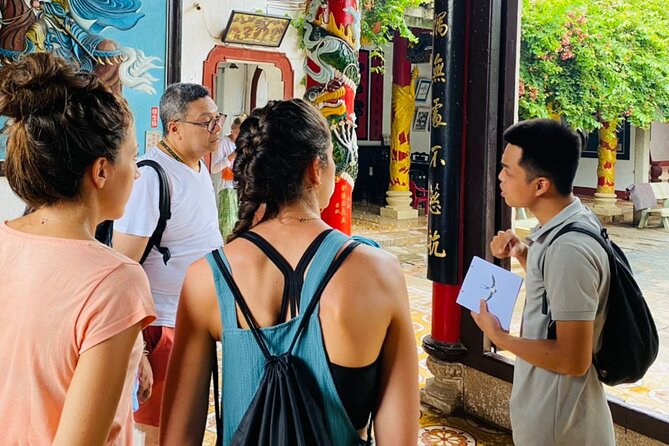
At Quan Thang Ancient House, you step inside a preserved home connected with a prosperous merchant family. The house offers a more personal view of the past than a public hall does.
The visit takes about 25 minutes. You can expect an explanation of the home’s design and an account of how a well-off family lived. The building itself is the point, so take time to notice the timber work, room arrangement, and signs of long-term family use.
One of the most useful details shared on this type of walk is how old homes have coped with Hoi An’s floods. Anh has explained how one house survived across eight generations and shown the working kitchen through a back entrance. That kind of detail brings daily life into the story and moves the tour beyond dates and architectural labels.
Conditions can vary inside historic houses. Passageways may be narrow, and the tour has a fixed pace because the group continues to the next stop. If you enjoy lingering over every room, you may want to return later on your own.
Traditional performance and a taste of local culture
The Hoi An Traditional Art Performance Theatre is scheduled for about 35 minutes, making it one of the longer stops. It presents local music, dance, and theatrical forms with traditional instruments.
This section gives the walk a change of rhythm. After several historic buildings, you get to see cultural traditions presented through performance rather than only through a guide’s explanation.
The description does not guarantee a particular performance or named artists, so you should think of this as a cultural introduction rather than a full evening show. The exact experience may depend on the schedule on the day.
It is still a worthwhile inclusion for first-time visitors. You hear and see aspects of Hoi An’s culture that a street walk alone might miss. If live performance is your main interest, ask the operator about the day’s program before booking.
Hoi An Central Market: the strongest finish
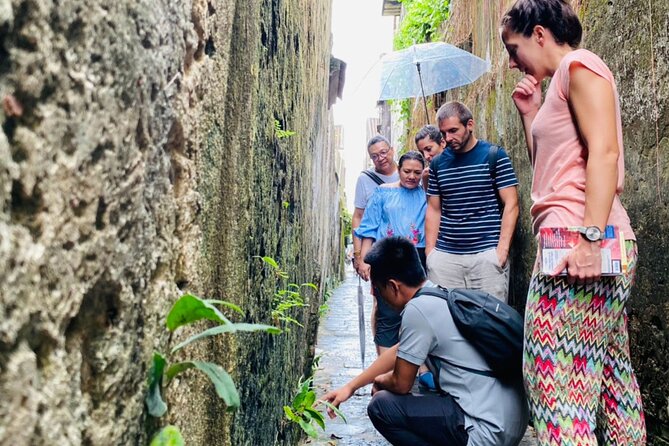
The final stop is Hoi An Central Market at 19 Trần Phú, Cẩm Châu. The walk ends among stalls selling local food, handicrafts, and souvenirs, with about 35 minutes set aside for the market.
This is a good ending because it links the historic town to ordinary commerce. You can look at what people buy, compare local specialties, and ask your guide what is worth trying. Small tastings are mentioned as part of the experience, and the included special herbal tea gives you a brief pause during the route.
Do not expect the $9.89 price to cover a market meal or shopping. You pay for anything you choose to buy. The guide can help you understand unfamiliar foods and may share practical advice about places to eat later.
The market is also where the tour becomes most useful for the rest of your stay. Guides have offered restaurant suggestions, shop advice, and tips for booking a lantern boat ride. Trang has provided a list of places to try, while Anh has shared recommendations at the end of the walk. Bring a phone or small notebook if you like to save names.
The advertised end point is Hoi An Market, so you are well placed to continue exploring afterward. Check the exact meeting instructions before setting out, since the start and finish are in different parts of the old town.
What the guides add to the experience
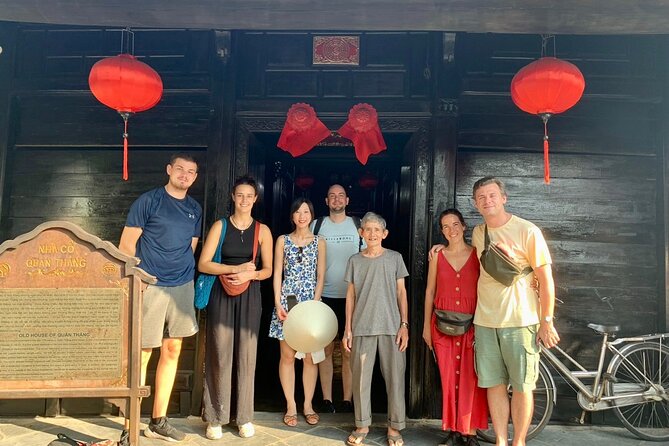
The strongest feature here is not a single building. It is the guide. A good local explanation can show you how architecture, food, trade, family life, and present-day Hoi An connect.
Kun is described as warm, encouraging, fun, and well informed, with a good sense of pace. Anh brings detailed stories about architecture, Vietnamese life, and homes that have survived generations of floods. Trang is praised for clear English and useful recommendations. Karla is known for friendly conversation and practical help for the rest of a trip.
Other guides, including Nguyen, June, Sanh, and Minh, have been praised for keeping the walk engaging and explaining local history and culture clearly. You should not assume one particular person will lead your departure, but the repeated pattern is useful: this experience depends heavily on the individual guide, and the available guides have strong marks for warmth and communication.
The pace seems leisurely rather than rushed. That suits Hoi An, where the point is to notice details. Still, you are walking for close to three hours, with several stops and time in the market. Comfortable footwear, sun protection, and water are sensible choices, even though the tour includes tea.
Who should book this Hoi An walk
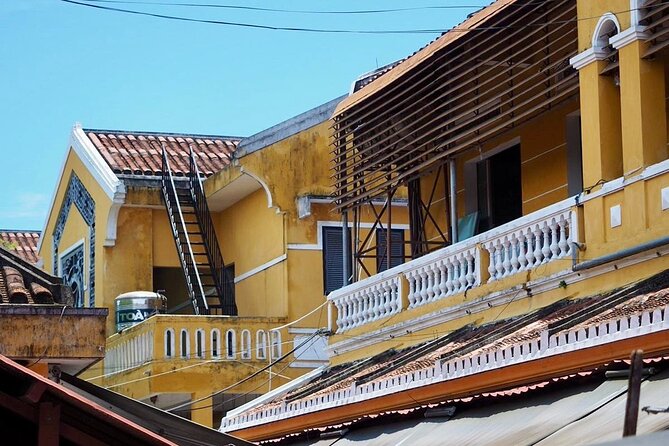
I would choose this tour if you want a short, affordable introduction before exploring Hoi An on your own. It suits first-time visitors, couples, solo explorers, and small families who want history explained in plain language.
It is also a good fit if food and local advice matter as much as monuments. The market finish, tastings, herbal tea, and restaurant suggestions give the walk practical value beyond sightseeing.
You may want something else if you dislike walking, need long uninterrupted photo stops, or want a private guide guaranteed from the start. The route is group-based, admission costs extra, and the tour follows a set sequence.
Most people can take part, and service animals are allowed. The experience requires good weather. If poor weather or too few bookings cancel the tour, you are offered another date or experience, or a full refund. You can cancel for a full refund up to 24 hours before the start time. Changes or cancellations inside that window are not accepted.
Is the $9.89 price worth it?
Yes, if you use it as a walking orientation rather than a complete day of paid attractions. For less than $10, you get a local guide, six planned stops, cultural explanation, a market visit, and tea. The small group limit makes the price especially attractive.
The extra UNESCO ticket changes the final cost, but it does not erase the value. You are paying for interpretation and organization as much as access to buildings. Without a guide, it is easy to see Hoi An’s old houses and halls without understanding their different communities and uses.
I would book it early in your stay, then use the guide’s suggestions to shape later meals, shopping, and evening plans. If you only have a few hours in Hoi An, the route covers a lot without requiring transport.
Final verdict: book it for context, not just sightseeing
Book this walk if you want Hoi An explained by a local person, with a manageable route and a strong mix of architecture, culture, food, and practical advice. The best reasons are the small group, low price, and guides who make the town feel connected to real family and community stories.
Skip it if you want a private, unhurried architectural study or a tour with all entrance fees and food included. For most first-time visitors, though, this is a sensible way to get your bearings, learn what you are looking at, and leave with better ideas for the rest of your time in Hoi An.
FAQ
How long does the Hoi An walking tour last?
The tour lasts approximately three hours.
How much does the tour cost?
The listed price is $9.89 per person.
What is the maximum group size?
The tour accepts a maximum of 10 people.
Where does the tour start?
It starts at 125 Đ. Phan Chu Trinh, Phường Minh An, Hội An, Quảng Nam 510000, Vietnam.
Where does the tour finish?
It finishes at Hoi An Market, 19 Trần Phú, Cẩm Châu, Hội An, Quảng Nam, Vietnam.
Is the Hoi An UNESCO entrance ticket included?
No. The UNESCO entrance ticket costs ₫120,000 per person and is not included.
Is food or tea included?
Special herbal tea is included. Small tastings may also be offered during the walk, while market purchases are separate.
Which sights are visited?
The route includes the Japanese Culture Gallery, Japanese Covered Bridge, Cantonese Assembly Hall, Quan Thang Ancient House, Hoi An Traditional Art Performance Theatre, and Hoi An Central Market.
Is the tour suitable for most people?
Yes. Most people can participate, and service animals are allowed. The experience involves walking for about three hours.
Can I cancel for a refund?
You can cancel up to 24 hours before the start time for a full refund. Cancellations or changes made less than 24 hours before the start are not accepted.
Just added around Vietnam
- Hue: 3 Best Royal Tombs Tour and Ancient Pagoda★ 4.9 · 100 reviews
- Ho Chi Minh City Tour with Colonial Heritage and Chinatown★ 4.6 · 48 reviews
- Ho Chi Minh City: Half-day History And Culture Tour★ 4.5 · 33 reviews
- Hanoi City Highlights Walking Tour – Landmarks & History★ 5.0 · 34 reviews
- Hanoi: Historic Jeep Tour★ 4.9 · 30 reviews
- Hanoi: Cho Gioi Vietnam War History Walking Tour★ 5.0 · 102 reviews
- From Ho Chi Minh City: Heritage & Culture Half-Day Tour★ 4.7 · 37 reviews
- From Hanoi: Trang An eco-tourism – Hoa Lu ancient & Mua Cave★ 4.7 · 51 reviews
Vietnam History Tours, compared.
Ninh Binh Heritage Full Day Tour with Buffet Lunch and Limousine
Read our review →
Premium Cu Chi Tunnels Tour with Local Expert by SpeedBoat
Read our review →
Halong Heritage Luxury Day Cruise-Buffet lunch&Limousine transfer
Read our review →

Marble Mountains – Hoi An Ancient Town Sunset Daily Ingroup Tour
Read our review →
From Ho Chi Minh: Cu Chi Tunnels Half-Day History Tour with Guide
Read our review →
Heritage Binh Chuan 2 Days 1 Night discovery in Lan Ha Bay
Read our review →Browse the lists this tour appears in