
Review · DUBAI
Dubai: Al Fahidi Historical District Heritage Tour
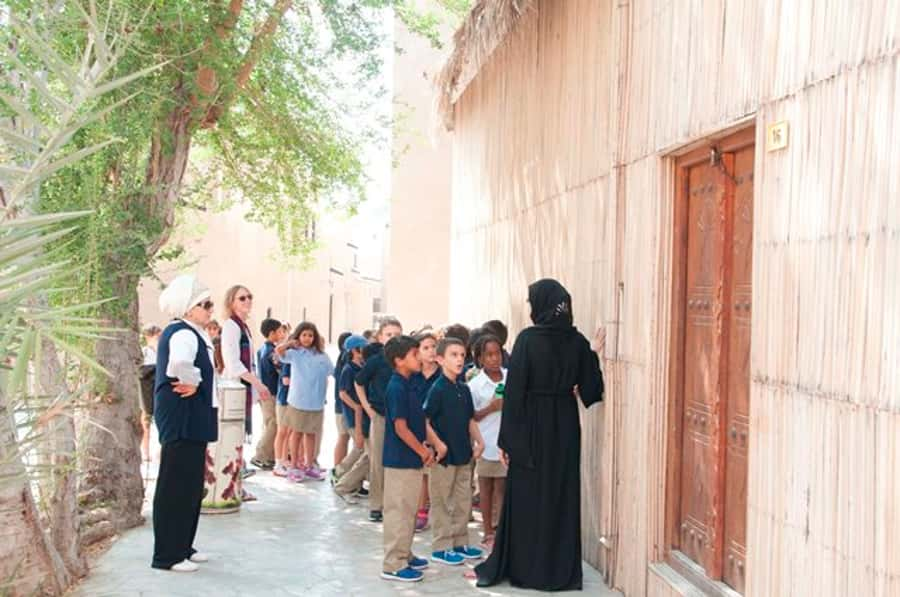
Dubai’s Al Fahidi Historical District offers a welcome change from the city’s glass towers and grand malls. In 1.5 hours, you walk among old windtower houses, enter the Ruler’s Court Mosque, and sit down at the Sheikh Mohammed Center for Cultural Understanding, or SMCCU, for Arabic coffee, dates, and open questions about life in the Emirates.
I like the access to the Ruler’s Court Mosque, which is reserved for people taking part in this SMCCU program. I also like the frank cultural conversation: you can ask about Islam, local customs, family life, clothing, or daily life in Dubai without having to guess which questions are acceptable.
The main thing to understand is that this is not a nonstop walking tour. A good part of the visit involves sitting with the guide for discussion, so it may disappoint you if you want 90 minutes of streets, buildings, and photographs.
Key points to know before you book
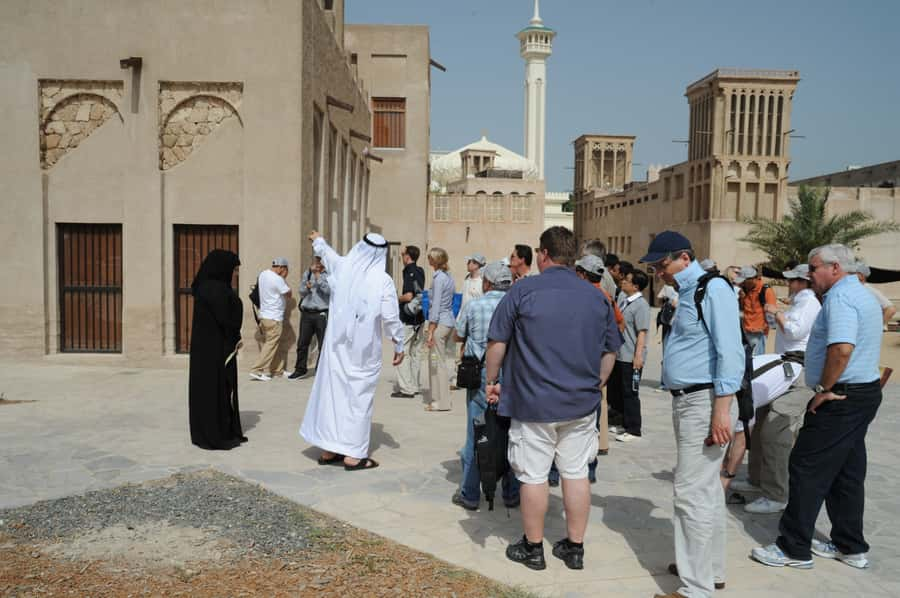
- The mosque visit is special access: The Ruler’s Court Mosque is open to participants in the SMCCU program, with suitable clothing available to borrow.
- The conversation is central: Expect time for direct questions about Emirati culture, religion, customs, and city life.
- The old district has a clear architectural focus: Windtower houses show how older Creek-side buildings handled heat before air-conditioning.
- Arabic hospitality is part of the tour: You receive Arabic coffee and dates, with tea also part of the welcome described for the visit.
- The meeting point is specific: Start at SMCCU House 26 on Al Musallah Road, beside the Al Seef roundabout in Bur Dubai.
- The tour suits curious first-time visitors: It is best for people who want context and conversation, not simply a quick photo walk.
Why Al Fahidi feels different from modern Dubai
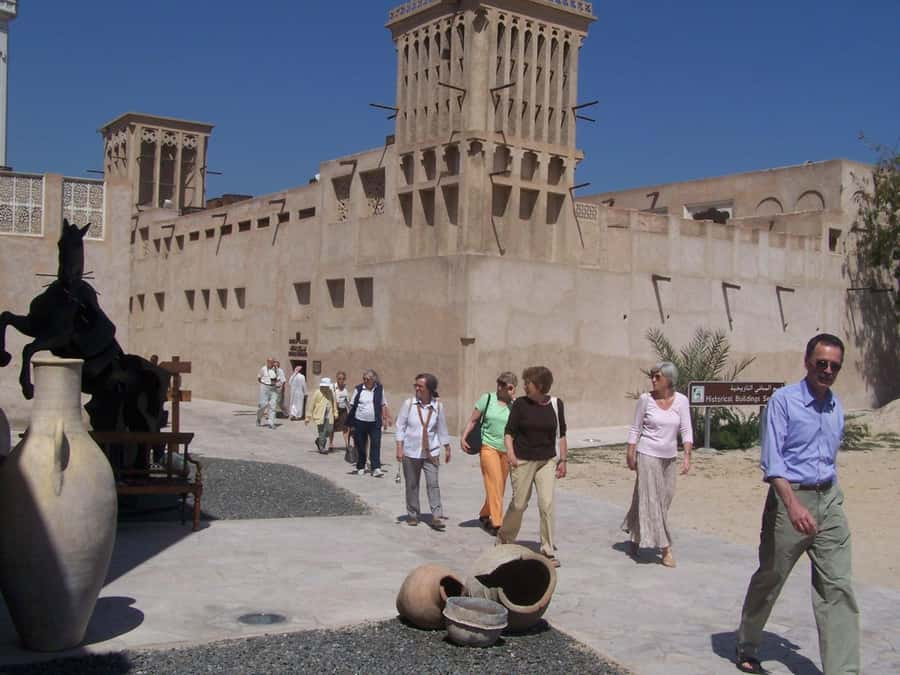
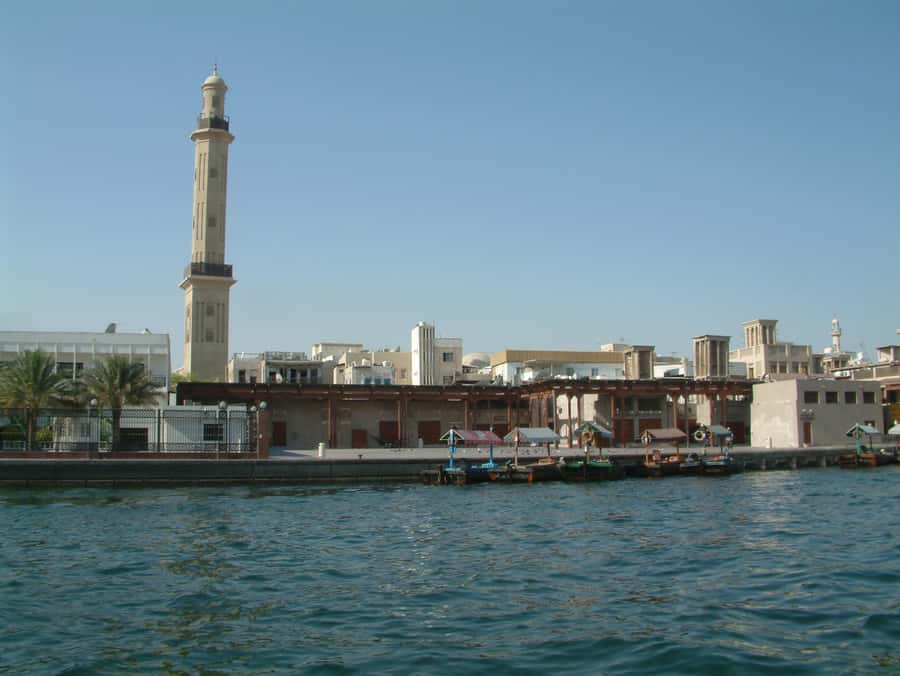
Dubai is often presented through skyscrapers, artificial islands, luxury hotels, and polished shopping centers. Al Fahidi gives you another version of the city, one built around narrow lanes, modest courtyard houses, and windtowers.
This district preserves some of the last remaining windtower houses in Dubai. The windtower was not just a decorative feature. It helped catch air and direct it into the house, offering a simple way to make hot rooms more bearable before modern cooling systems.
I like this part of the tour because the buildings make the city’s earlier way of life easier to picture. You are not only hearing that Dubai grew from a Creek settlement. You are looking at the sort of homes and streets that supported that community.
The area is also useful for putting Dubai’s rapid growth into perspective. The old houses do not erase the modern city nearby, but they show how recent much of Dubai’s present-day appearance really is.
Your guide leads you through the district while explaining the architecture and the role of the Creek settlement buildings. The walk is guided rather than a long independent wander, so the value comes from learning how to read what you see.
More History Tours in Dubai:
- Dubai Evening Heritage Safari by Vintage G Class Al Marmoom Oasis
★ 5.0 · 1,500 reviews - Dubai: Abu Dhabi Grand Mosque, Palace, and Heritage Village
★ 4.8 · 1,265 reviews - Dubai Camel Desert Safari, Traditional Meal & Heritage Activities
★ 5.0 · 937 reviews
Starting at SMCCU House 26
You meet at the Sheikh Mohammed Center for Cultural Understanding, House 26, on Al Musallah Road. The building is near the Ruler’s Court, close to the British Embassy, and just behind the Al Seef roundabout.
That precise location matters. Al Fahidi contains several historic buildings and lanes, so you should allow enough time to find House 26 rather than relying on a vague idea of being somewhere in the old district.
The SMCCU itself occupies a traditional windtower house. The setting begins the lesson before the guide says much. You are welcomed in an older-style building, then introduced to the center’s approach of Open Doors. Open Minds.
The welcome includes Arabic coffee and dates, and the description of the visit also includes Arabic tea. These small details are not filler. Hospitality is an important part of the cultural explanation, and sitting down over a drink creates a more natural setting for questions than a standard monument briefing.
The tone is designed to make conversation easy. You do not need to arrive with a long list of questions, but you will get more from the tour if you bring a few. Ask about local customs, religion, clothing, food, family traditions, or what daily life is like in the United Arab Emirates.
Walking through the windtower houses
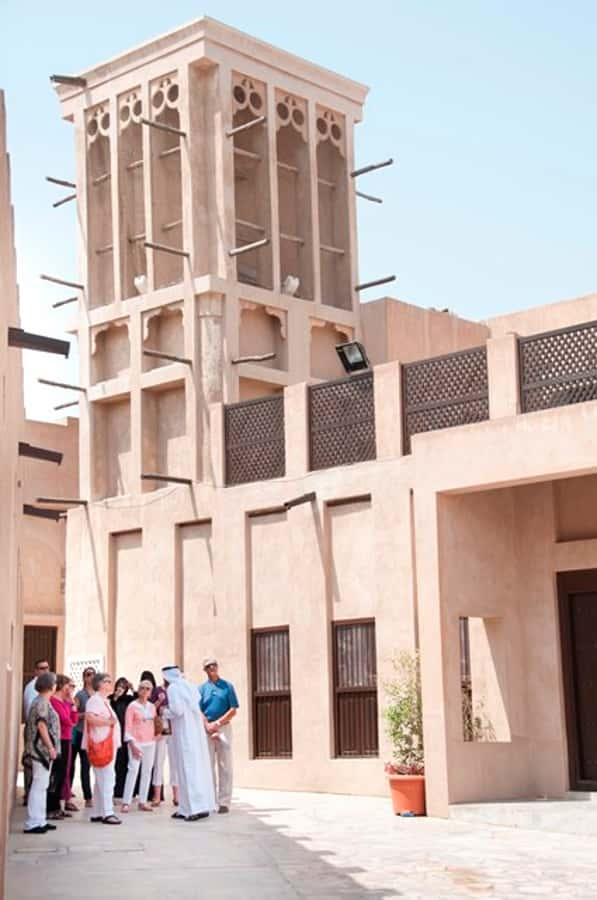
After the welcome, you head into Al Fahidi with an English-speaking guide. The walk focuses on traditional architecture and the history of the settlement buildings rather than on modern Dubai attractions.
Look up at the windtowers as you go. Their shape is one of the most useful visual clues in the district, since it reflects practical responses to heat and ventilation. The old houses also help you understand the importance of courtyards and compact lanes in a climate where shade matters.
Do not expect a large archaeological site. Al Fahidi is a restored historic area within present-day Dubai, and the tour is short. Its strength is not the number of buildings you enter. It is the way the guide links the surviving architecture to older patterns of life along the Creek.
This part is likely to suit you if you enjoy context. If you want a self-guided photo session, you may find the pace less flexible because the group follows the guide’s explanation and then continues to the mosque.
The walking is not the whole visit. One visitor left early after realizing that much of the program involved sitting and discussing culture rather than walking through the district. That is the clearest practical warning here: book this as a cultural conversation with a short historical walk, not as a pure sightseeing stroll.
Entering the Ruler’s Court Mosque
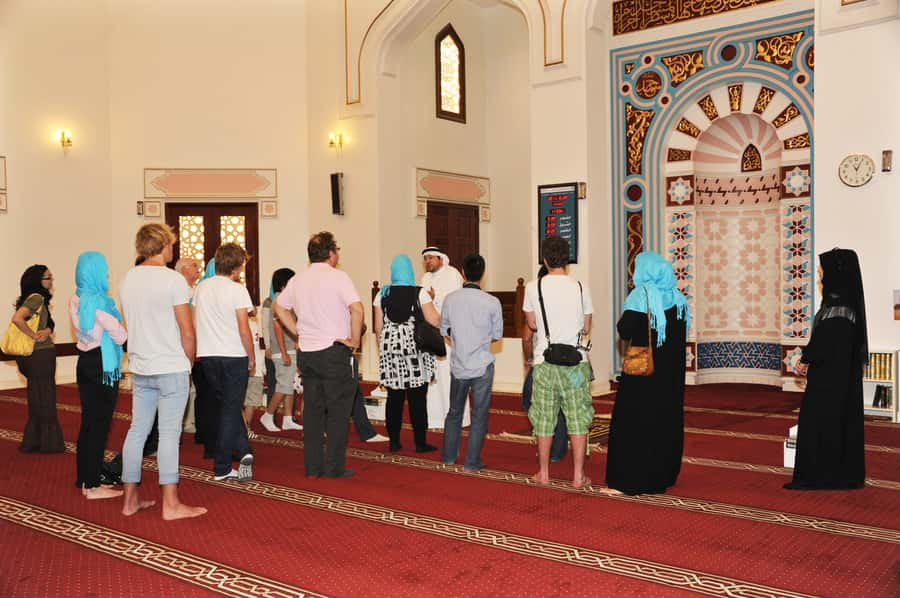
The tour continues to the Ruler’s Court Mosque for a short discussion about the mosque and its place in Emirati life. Access is limited to people taking part in the SMCCU program, which makes this more than a view from the street.
The mosque portion gives you a chance to ask about Islam in a setting connected to religious practice. One highly praised aspect of the program is its explanation of Islam, and that can be especially useful if you want more than a quick architectural look.
The focus is respectful and educational. You are there to understand the building and its role in local life, not simply to collect another photograph.
The SMCCU provides attire that you can borrow during this part of the tour. That is useful if your clothing does not meet mosque requirements, and it removes some of the stress of deciding in advance exactly what to wear. You should still approach the visit with the usual respect expected at a religious site.
The mosque discussion is short, so do not expect a long lecture on theology or a full religious tour. Its value lies in the chance to ask clear questions and connect the building with everyday Emirati culture.
Same city, a different century:
- Dubai: Heritage Safari in Vintage Land Rover with Dinner
★ 4.8 · 861 reviews - Dubai: Historic City Highlights Day Trip
★ 4.4 · 807 reviews - Dubai: Abu Dhabi Trip with Lunch at Al Khayma Heritage Restaurant
★ 5.0 · 805 reviews - Dubai: Heritage Safari, Camel Ride & Al Marmoom Oasis Dinner
★ 4.8 · 431 reviews
The conversation at SMCCU
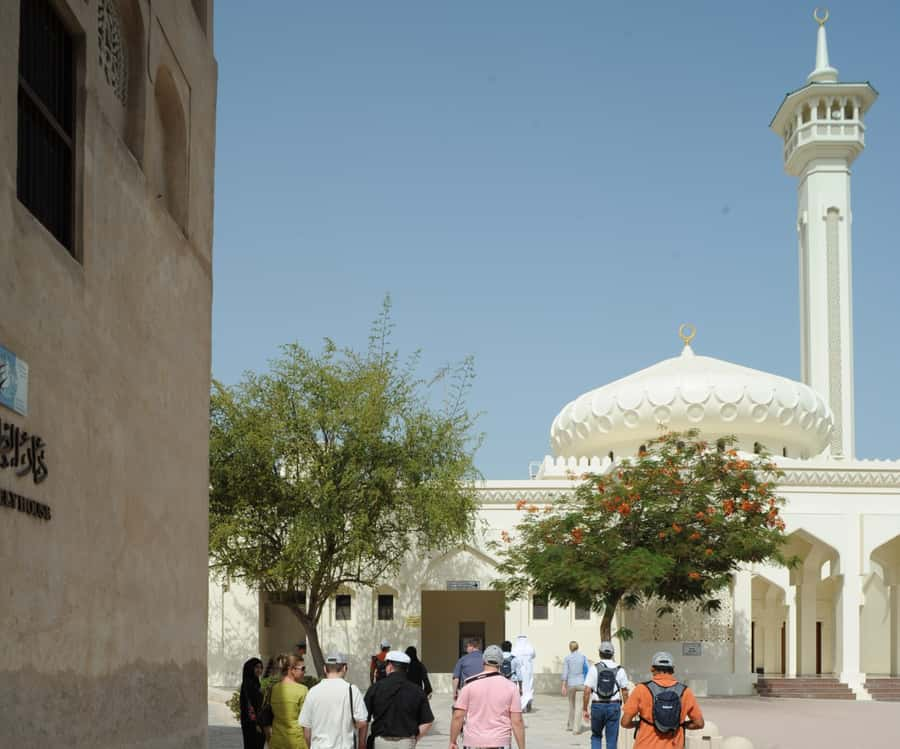
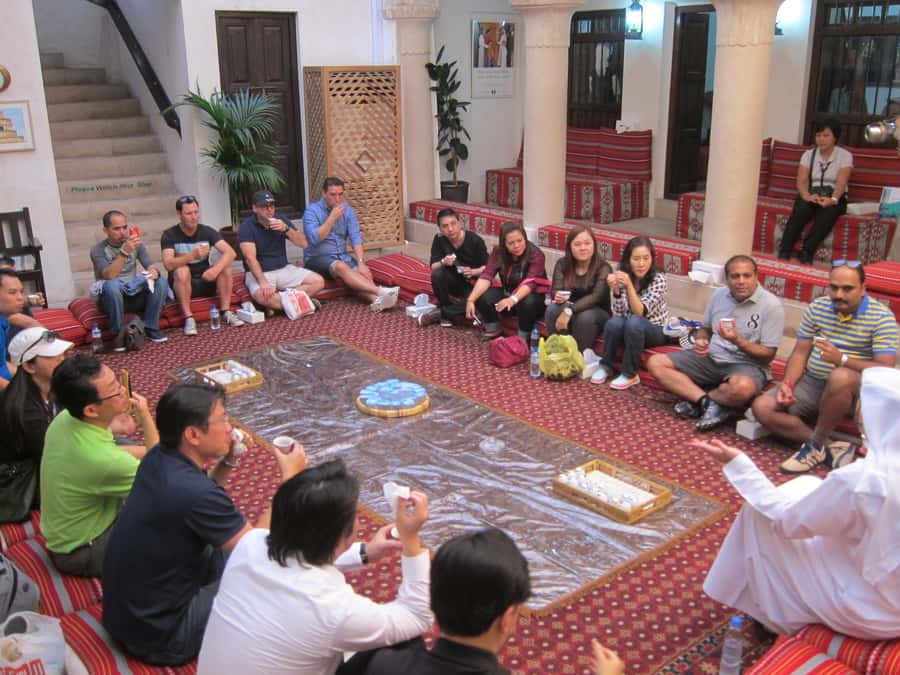
After the mosque, you return to the SMCCU windtower house for Arabic coffee and dates. This is where the program’s main purpose becomes clear.
The center works to explain local culture, customs, and religion while improving communication between people from different backgrounds. In practical terms, that means you can ask questions that might be difficult to raise during a conventional sightseeing tour.
I like this format because Dubai can be easy to see and hard to understand. A visitor may notice the abayas, mosques, hospitality, and rapid development but still lack the cultural context to connect those pieces. The Q&A gives you a place to ask why customs matter rather than simply observing them from a distance.
The session may cover everyday life in the city, religion, local traditions, or the ways Emirati society has changed. The exact flow depends on the guide and the questions from the group, so you should not expect a fixed script with identical answers every time.
This is also the part that creates the biggest difference between a good match and a poor one. If you enjoy conversation, the hour can be the most useful section of the visit. If you want constant movement, it may feel too slow.
The high rating of 4.8 from 40 assessments fits the tour’s strongest qualities: people value what they learn, the welcoming format, and the chance to ask direct questions. Several comments describe the program as highly informative and interesting, while one particularly enthusiastic assessment called it the best experience of a Dubai visit. Those reactions make sense if cultural understanding is your priority.
Is $31 a fair price?
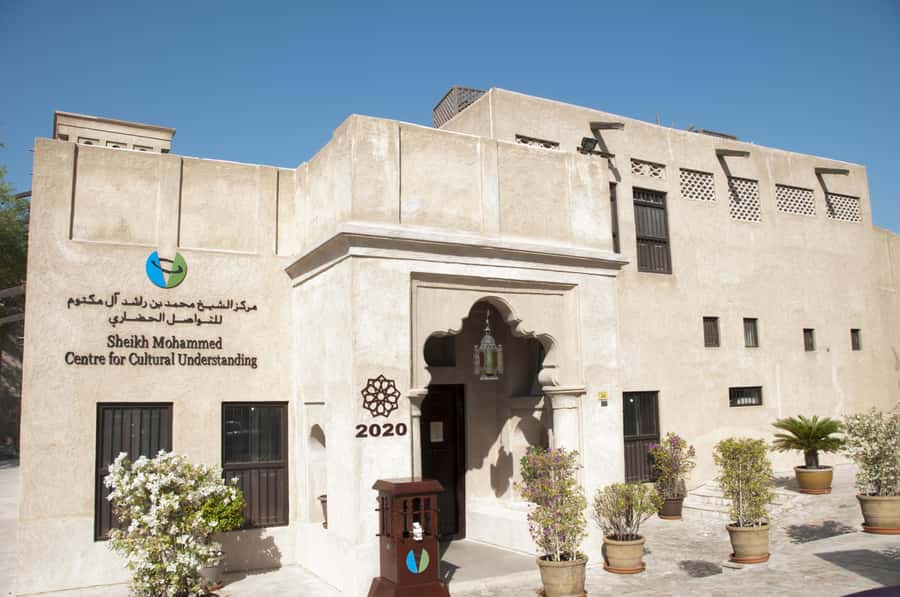
At $31 per person, the price is reasonable if you value access and explanation rather than a long list of sights. You are paying for a live English-speaking guide, entry to SMCCU, access to the Ruler’s Court Mosque, the guided district walk, and Arabic coffee with dates.
The tour lasts only 1.5 hours, so the cost is not a bargain if you measure value by time alone. You will not spend half a day exploring every corner of old Dubai. The value comes from the combination of a historic district, a mosque visit that is not generally open through this program, and a structured cultural conversation.
I would compare it with the cost of wandering Al Fahidi alone. You can see the lanes and windtower houses without paying for a guide, but you would miss the organized access to the mosque and the opportunity to ask an informed local cultural question in a formal setting.
For a first visit to Dubai, that added context can be worth the fee. It can also help you make more sense of other parts of the city during the rest of your stay.
Who will get the most from this tour?
This is a good choice for you if:
- You are visiting Dubai for the first time and want cultural background.
- You enjoy asking questions rather than only taking pictures.
- You want a respectful introduction to Islam and Emirati customs.
- You prefer a short activity that fits around other plans.
- You want to see an older side of Dubai before visiting its modern attractions.
- You appreciate food and hospitality as part of cultural learning.
Families may find the open Q&A useful if children have questions about local dress, religion, or daily life. The format also works for solo visitors who want a guided introduction without committing to a long group excursion.
You may want something else if your main goal is a long architectural walk, a photography session, or a broad tour of many Dubai landmarks. The activity is wheelchair accessible, but the provided information does not describe the exact surface conditions or route details, so you should confirm any specific mobility needs before booking.
Practical details that affect your visit
The tour is offered in English with a live guide. No guide names are provided, and the quality of the conversation will depend partly on the questions asked by the group and the guide’s style.
Plan around the full 1.5 hours. The official length includes the walk, mosque discussion, and time at SMCCU, so leaving early means missing part of the program. The mosque visit comes after the district walk, followed by the return to the cultural center.
The meeting point is not a hotel pickup point. You make your own way to SMCCU House 26, Al Musallah Road and the Al Seef roundabout, in Bur Dubai. Use the nearby landmarks to confirm you are at the correct house: the Ruler’s Court, the British Embassy, and the Al Seef roundabout.
You can reserve now and pay later, which helps if your Dubai schedule is still changing. Cancellation is free up to 24 hours before the activity for a full refund. Starting times vary, so check the available slot when you choose your date.
Wear clothing that will allow you to take part comfortably in the mosque visit. The SMCCU can lend suitable attire, but respectful dress is still the sensible approach.
Should you book the Al Fahidi heritage tour?
Book it if you want understanding as well as sightseeing. The windtower houses, mosque access, Arabic coffee, dates, and open cultural Q&A make this a focused introduction to Emirati life.
Do not book it expecting a long walking tour. The most important decision is knowing that a substantial part of the 90 minutes may be spent seated in cultural discussion. That was the only clear point of disappointment, and it came from expecting more time on the streets.
For $31, I think this is a strong pick for a first or second day in Dubai, especially if you want a human explanation of customs and religion rather than another view of the skyline. If you are curious, respectful, and willing to ask questions, the short visit can add meaning to everything else you see in the city.
FAQ
How long does the Al Fahidi heritage tour last?
The tour lasts 1.5 hours.
What language is the tour conducted in?
The tour is conducted in English with a live guide.
Where does the tour meet?
You meet at the Sheikh Mohammed Center for Cultural Understanding, House 26, Al Musallah Road and the Al Seef roundabout in Bur Dubai.
What places are included in the tour?
The tour includes the Al Fahidi Historical District, the Ruler’s Court Mosque, and the SMCCU windtower house.
Can I enter the Ruler’s Court Mosque during the tour?
Yes. Entrance to the Ruler’s Court Mosque is included, and the mosque is open to people taking part in the SMCCU program.
Is suitable clothing provided for the mosque visit?
Yes. The SMCCU provides attire that can be borrowed during the mosque portion of the tour.
Are food and drinks included?
Yes. Arabic coffee and dates are included, and the welcome also includes Arabic tea.
Is the tour wheelchair accessible?
Yes. The activity is listed as wheelchair accessible.
Can I cancel the booking for a refund?
Yes. You can cancel up to 24 hours in advance for a full refund.
Can I reserve the tour and pay later?
Yes. You can reserve your place and pay later, which keeps your plans flexible.
Just added around Dubai
- Old Dubai Historic Guided Tour: Creek, Street Food & Souks★ 4.9 · 156 reviews
- Old Dubai Heritage Tour: Souks, Mosques & more hidden gems!★ 4.3 · 72 reviews
- Historic Forts, Boats and Pearls of Old Dubai Walking Tour★ 5.0 · 31 reviews
- Dubai: Heritage Camel Desert Safari with Traditional Dinner★ 4.9 · 80 reviews
- Dubai: Walking, Architecture and History Tour of Dubai Opera★ 4.9 · 40 reviews
- Dubai: Desert Safari or Hatta Tour with Kayaking★ 3.4 · 213 reviews
- Dubai: Heritage Desert Safari wtih Overnight and Breakfast★ 4.9 · 35 reviews
- Dubai: Heritage Safari, Camel Ride & Al Marmoom Oasis Dinner★ 4.8 · 431 reviews
Dubai History Tours, compared.

Dubai Evening Heritage Safari by Vintage G Class Al Marmoom Oasis
Read our review →
Dubai: Abu Dhabi Grand Mosque, Palace, and Heritage Village
Read our review →
Dubai Camel Desert Safari, Traditional Meal & Heritage Activities
Read our review →
Dubai: Heritage Safari in Vintage Land Rover with Dinner
Read our review →
Dubai: Abu Dhabi Trip with Lunch at Al Khayma Heritage Restaurant
Read our review →
Dubai: Heritage Safari, Camel Ride & Al Marmoom Oasis Dinner
Read our review →
Dubai: Desert Safari or Hatta Tour with Kayaking
Read our review →Browse the lists this tour appears in