
Review · UK
A Walk Through Time: History of Liverpool Walking Tour
Liverpool’s story comes into sharp focus on this walk because you follow its growth in the streets themselves, from the medieval parish site to the docks that made it a global port. The route connects the Three Graces, Old Dock, and Royal Albert Dock rather than treating them as isolated sights.
I like the way the tour explains Liverpool through trade and shipping, not just the Beatles. I also like the chance to hear local stories from guides such as John and Julio, who bring strong personal knowledge of the city. The main drawback is pace: the guide may cover a lot in 110 minutes, and one person found the talk fast to follow.
The walk is priced at about $27.74 per person, a fair deal if you want a useful first look at central Liverpool. Come ready for nearly two hours outside, wear comfortable shoes, and bring a warm coat. Wind off the Mersey can make a cool day feel colder.
Key points at a glance
- Liverpool’s story unfolds in order: You move from the city’s 1207 medieval origins through its Georgian growth and dockside power to modern Liverpool ONE.
- The Atlantic trade is not skipped: The guide discusses Liverpool’s role in the slave trade and the less comfortable parts of its commercial past.
- John and Julio bring a local voice: The guides are praised for clear explanations, humor, strong command of the subject, and an ability to answer questions.
- The Old Dock is a key stop: Built in 1715, it helps explain how Liverpool became one of the world’s most effective ports.
- The tour is packed into 110 minutes: You see many landmarks, but the short format means some stops are brief and the talk can move quickly.
- The route is mainly outdoors: The walk runs between the waterfront, historic streets, and public squares, so weather matters.
Why this walk gives Liverpool a useful shape
Liverpool can seem like a collection of handsome waterfront buildings, shopping streets, and old commercial offices. This tour helps you connect them. You learn why the city grew, how its docks changed world trade, and why the waterfront looks the way it does today.
That sense of connection is the tour’s real value. You are not simply stopping for a photograph at the Royal Liver Building, then another at Albert Dock. You are shown how medieval Liverpool became a port, how trade brought wealth, and how the city’s commercial success also tied it to the Atlantic slave trade.
The guide-led format matters here. A plaque can tell you when a building was built. A historian can explain what was happening around it, why the site mattered, and how one period led to the next. Guides John and Julio are both praised for making a large amount of information easy to follow. John, in particular, is described as passionate, funny, and generous with his time for questions.
The tour has a maximum group size of 40 people. That is not a tiny group, but it is still manageable for a walking talk if everyone stays close. One smaller group had a particularly engaging experience with Julio. Your exact guide and group size may vary.
More History Walking Tours in the UK
- A History of Terror – Belfast City Centre Walking Tour
★ 5.0 · 2,883 reviews - Edinburgh: Old Town History and Tales Walking Tour
★ 4.8 · 2,361 reviews - Old Town Walking Tour History and Tales in Edinburgh
★ 5.0 · 2,168 reviews
Starting beside the Three Graces
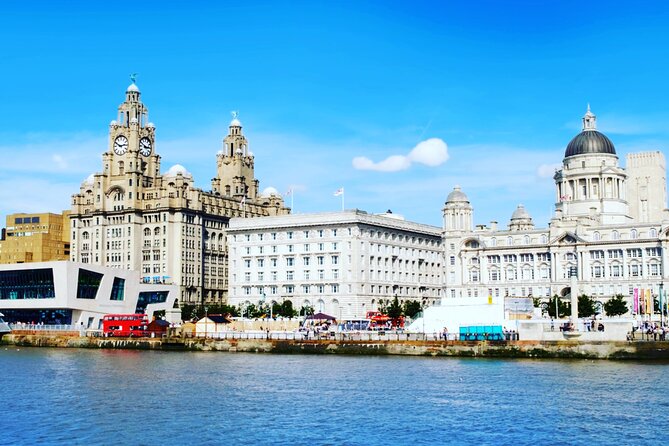
The walk begins at the Liver Building on Pier Head, beside Liverpool’s famous waterfront trio: the Royal Liver Building, the Cunard Building, and the Port of Liverpool Building. These are known together as the Three Graces.
You get an introduction to the buildings and to Liverpool’s waterfront before moving on. The opening talk lasts about 10 minutes, so do not expect a long visit inside the Royal Liver Building. Admission is not included, and the tour is designed as an outside walking experience.
This is a strong place to begin. The waterfront immediately shows you the scale of Liverpool’s ambitions. The buildings were created for a city deeply tied to ocean travel, trade, shipping, and business. The guide uses that view to set up the larger story.
I would arrive a few minutes early. The meeting point is at the Liver Building, Pier Head, and the waterfront can be busy and exposed. You will want to begin without rushing, especially if you need time to find the exact spot.
Medieval Liverpool at the parish church gardens
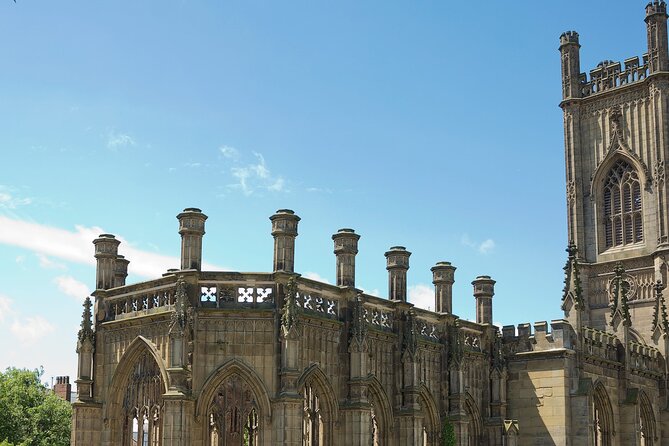
The next stop takes you across the Strand to Liverpool Parish Church Gardens. This site was once associated with St. Nicholas’ Church, named for the patron saint of sailors and a fitting symbol for a port city.
Here, you get the city’s medieval starting point. Liverpool received its town charter in 1207, and the guide uses the surviving evidence at this site to explain the early settlement. This part of the walk is especially useful because the grand waterfront can make Liverpool seem like a mainly 18th and 19th-century city.
The stop lasts about 15 minutes and is free. Look closely at what remains and listen for the guide’s explanation of how Liverpool’s position by the water shaped its future. The city did not become a major port overnight. Its medieval beginning created the base for later growth.
This is one of the more rewarding stops for first-time visitors because it resets your sense of time. Liverpool’s story reaches back well before the Georgian town hall, the cotton trade, and the large docks.
Old Hall Street and the hard facts of trade
Old Hall Street takes you farther into the old commercial city. The street dates from the 13th century and was linked to the town’s early civic life. Along the route, you pass listed buildings and reach the former Cotton Exchange area.
The guide explains how trade from across the world passed through Liverpool and how the city overtook London in the cotton trade by the late 18th century. This is also where the tour addresses Liverpool’s role in Atlantic trade, including its involvement in the transatlantic slave trade.
That subject is essential, and it is good that the walk does not present Liverpool’s commercial rise as a simple success story. The wealth that financed buildings, businesses, and docks also came through exploitation and forced labor. The guide’s approach gives you a fuller understanding of what the city gained and who paid the cost.
The talk here lasts about 10 minutes. Since the subject is serious and the material is compact, listen closely. If you want a long treatment of Liverpool’s role in the slave trade, this tour will not provide that level of detail. It introduces the subject as part of a wider city history.
Same city, a different century:
- London Small Group Tour of Historical Pubs
★ 5.0 · 10,422 reviews - Edinburgh: Edinburgh Castle Guided History Tour with Tickets
★ 4.8 · 9,933 reviews - Edinburgh: Whisky Tasting with History and Storytelling
★ 4.9 · 2,451 reviews - Soho Music & Historic Pubs Tour
★ 5.0 · 1,993 reviews
Liverpool Town Hall and Georgian power
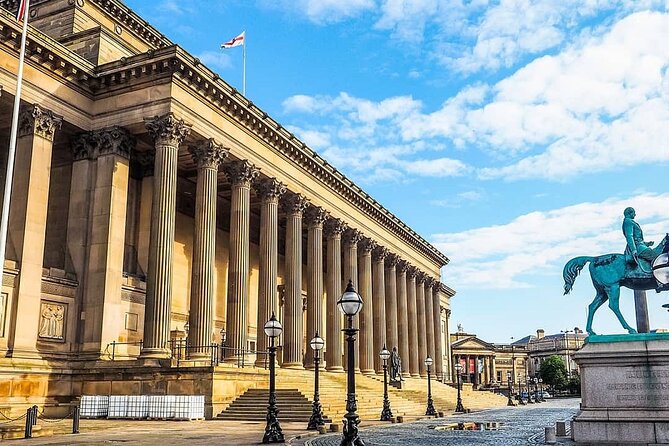
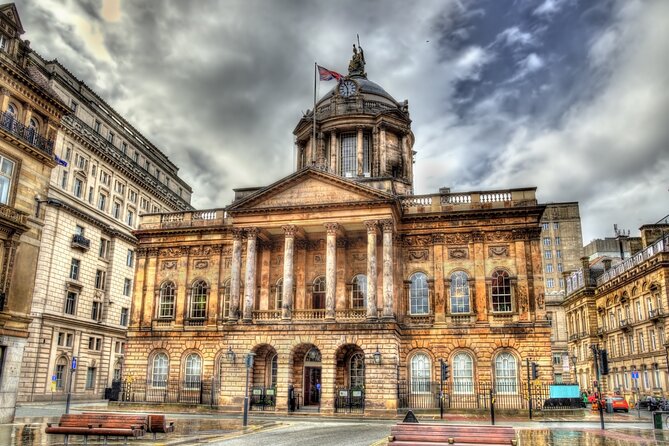
Liverpool Town Hall, built in 1749, gives the walk a look at the city’s Georgian confidence. The guide discusses the building itself and explains how Liverpool developed into a major port and commercial center.
Admission is not included, and the tour does not appear to include an interior visit. The value is in understanding the building’s place in the city. After hearing about the medieval settlement and the growth of Atlantic trade, you can see why civic buildings became grander and more formal.
The stop takes about 10 minutes. That is enough for a clear introduction, but not enough for every architectural detail. If you have a special interest in Georgian interiors, you will need another visit on your own.
For most people, the important point is the link between money and public architecture. Liverpool Town Hall reflects a period when the city had the wealth and confidence to build on a large scale.
Castle Street and the missing castle
Castle Street is one of the best parts of the route for seeing Liverpool’s changing appearance. The buildings along the street carry you into the 18th century, while the name points back to Liverpool Castle and an earlier stage of the city’s development.
The guide explains how this area changed as Liverpool grew from a small town into a major port. You are not just walking past attractive facades. You are using the street to read the city’s progress from medieval settlement to commercial center.
The stop lasts about 15 minutes. That gives the guide time to connect architecture, civic history, and the old castle site. It also gives you a chance to slow down after the faster sections of the walk.
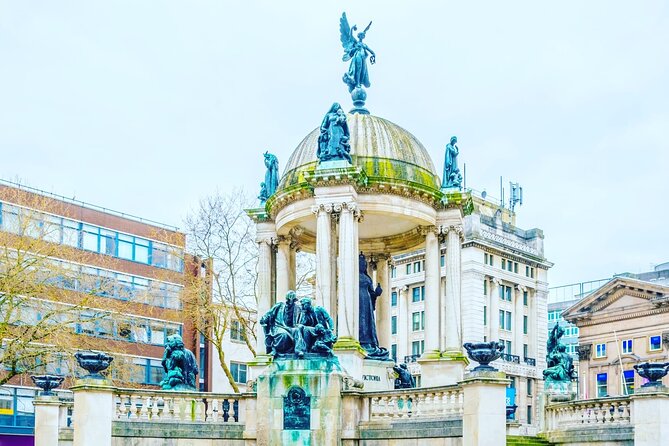
The Queen Victoria Monument follows near the bottom of Castle Street. Here, the talk returns to Liverpool’s rise as a global trading port by 1800. The stop lasts about 10 minutes and helps tie together the earlier discussion of shipping, commerce, and civic growth.
Modern Liverpool ONE and the Old Dock
The route then passes through Liverpool ONE, the modern shopping and leisure district. The guide gives you a short tour of its shops and attractions, lasting about 10 minutes.
This may be the least historic section at first glance, but it has a practical role. You see how the city center has been reused and reshaped for modern life. After walking through old commercial streets, the contrast is clear.
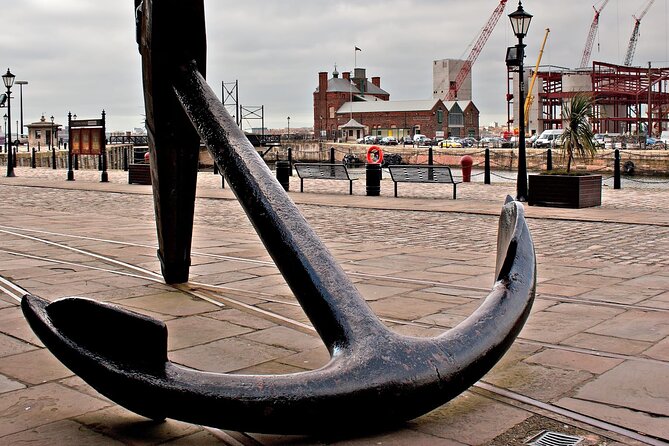
The Old Dock stop is more central to the tour’s main story. Built in 1715, it was the first commercial wet dock of its kind and helped Liverpool handle ships and cargo with greater efficiency. The guide explains how this dock changed the city’s position in world trade.
The stop lasts about 10 minutes and is free. Do not expect a fully preserved dock basin to dominate the view. The value lies in the site’s location and the explanation of what once happened there. Without the guide, you could easily walk past without grasping its importance.
This is where the tour makes its strongest case for value. You learn not only that Liverpool had docks, but why dock design mattered. Better facilities meant faster handling of goods, more trade, and greater influence.
Royal Albert Dock and Liverpool’s wartime role
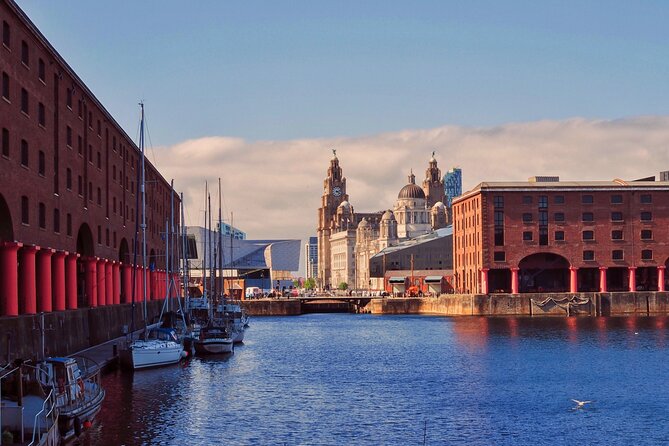
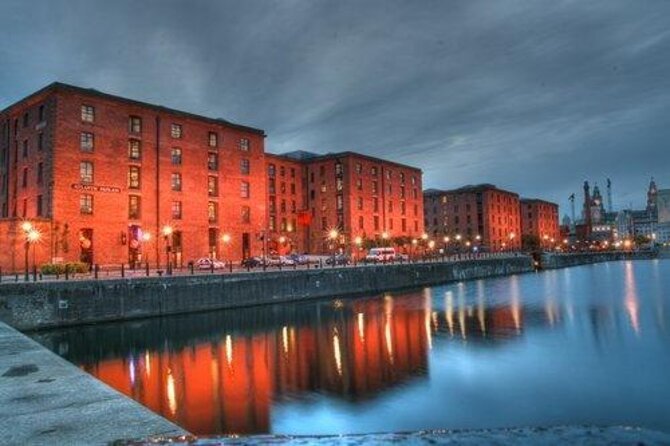
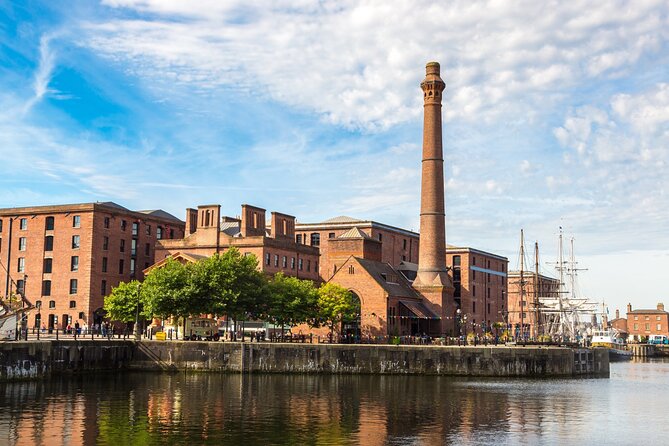
Royal Albert Dock brings you into the 19th century. Built in 1846, it became a major center of Liverpool’s commerce and remains one of the city’s best-known waterfront areas.
The talk covers the dock’s commercial role and Liverpool’s involvement in the First and Second World Wars. The stop lasts about 10 minutes. You get a compact account of how the dock served both trade and national wartime needs.
This is a good point to appreciate the physical setting. The dock’s broad water, brick warehouses, and surrounding museums give you a sense of how goods, people, and military activity once moved through the waterfront. The tour does not promise entry to the museums or buildings, so plan separate visits if you want interiors.
The route then returns to the Three Graces for a final look at Liverpool’s waterfront. The listed stop lasts about five minutes. The meeting information also gives the Queen Victoria Monument at One Derby Square as the end point, so check the exact finishing location when you book. Both locations are central, with access to major sights and nearby streets.
What the guide adds to the experience
The strongest part of this walk is the spoken explanation. John is repeatedly praised for his command of Liverpool’s past, his enthusiasm, and his ability to keep the talk lively even in poor weather. Julio is also described as engaging and clear.
I like that the guides appear willing to answer questions. One local who had lived in Liverpool for decades still learned new things on the walk. That suggests the tour is not limited to basic facts for first-time visitors.
The style can be information-heavy. One person found the guide spoke too quickly, and that is a fair concern. The tour covers medieval Liverpool, civic history, port development, cotton, Atlantic trade, the docks, modern redevelopment, and both world wars in less than two hours.
You should stand where you can hear clearly and stay near the guide. Traffic and waterfront wind may make listening harder. If you prefer a slow walk with long pauses for photographs, this may feel rushed. If you enjoy a focused history talk with plenty of facts, the pace will likely suit you.
Price, timing, weather, and who should book
At $27.74 per person, I see this as good value for a first orientation to Liverpool. You get about 110 minutes with a historian guide and visit a wide range of important sites without paying separate admission fees.
The price is less attractive if you want extended time inside buildings or museums. Most stops are outside, and the tour gives you an overview rather than a series of in-depth visits. Its strength is the connection between places.
The walk is offered in English and comes with a mobile ticket. Most people can take part, and service animals are allowed. Public transportation is nearby, making the starting point practical for a city-center visit.
Book this for your first day in Liverpool if you want context before exploring alone. It suits people interested in maritime history, architecture, commerce, civic development, and the difficult facts behind the city’s wealth. It also works well for locals who want a fresh account of their own city.
You need comfortable shoes. The route is not long by hiking standards, but you will be on your feet for nearly two hours. The waterfront can be cold and windy, so a warm coat is sensible even when the forecast looks mild.
The cancellation terms are straightforward: you can cancel up to 24 hours before the start for a full refund. The experience requires good weather, and a weather cancellation brings either another date or a full refund. There have been rare cases of very late cancellation due to guide emergencies, so if this walk is central to your day, avoid scheduling an important timed attraction immediately afterward.
Should you book the History of Liverpool walk?
I would book it if you want a fast, fact-filled introduction to Liverpool and its port. The route covers more than the usual music-focused city visit, and the discussion of Atlantic trade gives the tour needed honesty.
Choose it especially if you appreciate a strong guide. John and Julio bring energy and local insight, but the amount of information means you must listen closely. Wear warm clothing, expect outdoor conditions, and accept that some stops are brief.
Skip it if you want a leisurely photo walk, a small private group, or extensive access inside historic buildings. For most visitors seeking a practical overview at a reasonable price, this is a solid way to understand how Liverpool became the city you see today.
FAQ
How long does the History of Liverpool walking tour last?
The tour lasts approximately 1 hour and 50 minutes.
Where does the walking tour begin?
It begins at the Royal Liver Building, Liver Building, Pier Head, Liverpool L3 1HU.
Where does the tour finish?
The meeting information gives the Queen Victoria Monument at One Derby Square, James Street, as the end point. The route also includes a final stop at the Three Graces, so confirm the precise finish when booking.
What language is the tour offered in?
The tour is offered in English.
Is admission to the buildings included?
Admission is not included at the Royal Liver Building or Liverpool Town Hall. The other listed stops are free.
What happens if the weather is poor?
The experience requires good weather. If it is canceled because of poor weather, you will be offered another date or a full refund.
Just added around the UK
- Private tour of the stunning Cotswolds with an expert local guide★ 5.0 · 45 reviews
- Medieval Walking Tour of Chester★ 5.0 · 155 reviews
- Curious Cambridge – The History Tour that’s FUN!!!★ 5.0 · 80 reviews
- 2.5-Hours Walking Tour of Birmingham into Black Heritage Madiba★ 5.0 · 49 reviews
- Birmingham Gangs Nighttime Historical Walking Tour with Pub Stops★ 5.0 · 53 reviews
- Award Winning Private 2 Hour Belfast Political Black Taxi Tour★ 5.0 · 53 reviews
- Private Political History & Murals Tour Belfast★ 5.0 · 182 reviews
- Belfast Walking Tour: City Centre History, Troubles & Stories★ 5.0 · 39 reviews
UK History Tours, compared.
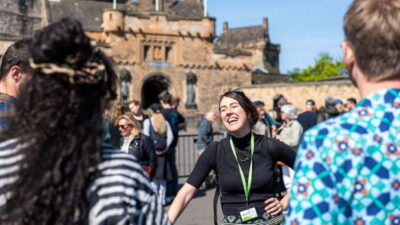
Edinburgh: Edinburgh Castle Guided History Tour with Tickets
Read our review →
A History of Terror – Belfast City Centre Walking Tour
Read our review →
Edinburgh: Whisky Tasting with History and Storytelling
Read our review →
Edinburgh: Old Town History and Tales Walking Tour
Read our review →
Old Town Walking Tour History and Tales in Edinburgh
Read our review →
Edinburgh: Old Town and Underground Historical Tour
Read our review →Browse the lists this tour appears in