
Review · BANGKOK
From Bangkok: Historical Day Tour to River Kwai
The most powerful part of this day is not the famous bridge. It is the chance to connect the bridge, the museum, the cemetery, and the railway into one clear story about wartime labor and loss. At Kanchanaburi, the past is not locked away in a museum. You walk beside the track, cross the bridge, and ride a train over part of the original line.
I like the well-planned sequence of the stops, especially starting with the cemetery and museum before the train ride. I also like the small-group format, comfortable air-conditioned van, careful drivers, and guides such as Luke, William, Jokey, Woody, and Henry, who have been praised for explaining both the railway and Thai culture.
The catch is the distance. Kanchanaburi is about 130 kilometers from Bangkok, and the drive can take roughly three hours each way. Traffic may stretch this 10-hour tour closer to 12 hours, and time at the cemetery or museum can feel short.
Key points to know before booking
- The Death Railway becomes real on the train ride: You travel on an original section of track, including the dramatic wooden viaduct beside the river.
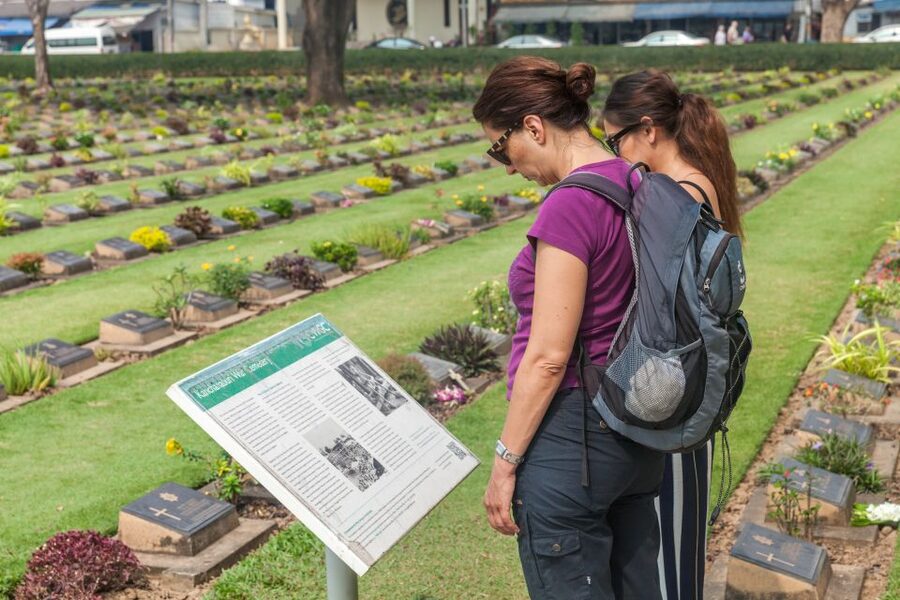
- The Thailand-Burma Railway Centre sets the context: Photos, artifacts, and displays explain the construction of the railway and the terrible conditions faced by Allied prisoners of war.
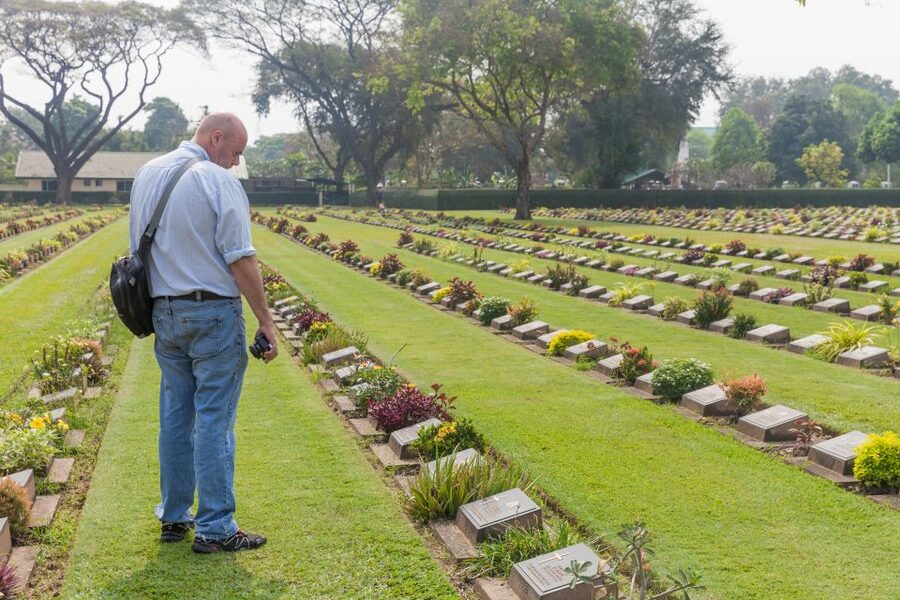
- The cemetery is quiet and carefully maintained: It is a place for respect, not a quick photo stop, so some visitors may wish for more time there.
- The bridge is only one part of the story: The tour links it with the cemetery, museum, railway, and Krasae cave area.
- Lunch is included and generally well regarded: The meal offers several choices, with a buffet available for an added charge.
- The long drive is the main tradeoff: Early pickup, air conditioning, toilet stops, and a smooth driver make the distance easier, but they cannot shorten the road.
Why the River Kwai day trip matters
The River Kwai tour works because it gives you several ways to understand the same event. The cemetery shows the human cost. The museum explains the wider campaign. The bridge gives you the familiar landmark. The train ride shows the engineering challenge and the harsh terrain.
The railway was built during World War II under Japanese control, with Allied prisoners of war and Asian laborers forced to work in brutal conditions. The planned route was intended to connect Thailand with Burma, now Myanmar. Thousands of Allied soldiers died during its construction, and the name Death Railway is not a dramatic travel slogan. It reflects the scale of suffering tied to the line.
I would not book this as a light sightseeing outing. You will see beautiful countryside from the train, but the subject is painful. The best guides keep both sides in view: the sadness of the past and the ordinary life of present-day Kanchanaburi.
More History Tours in Bangkok:
- From Bangkok: Ayutthaya Historical Park Guided Day Trip
★ 4.6 · 3,020 reviews - UNESCO’s Ayutthaya Historical Park: Full-Day Tour from Bangkok
★ 4.5 · 1,559 reviews - Historical City of Ayutthaya – Unesco Full Day Tour From Bangkok
★ 5.0 · 847 reviews
Leaving Bangkok before the traffic builds
Pickup times begin early. Hotel pickup is available in parts of Sukhumvit, Khaosan, and Silom, generally around 6:00 or 6:15 AM. The main meeting point is at River City Bangkok, at 23 Charoen Krung Soi 24 in Talad Noi.
An early start matters here. Bangkok traffic can be severe, and the road journey to Kanchanaburi is long. Some groups have reached the first stop in about two hours, while the published estimate for the trip to Kanchanaburi is closer to three hours. On the way, the guide may explain Thai culture, the day’s schedule, and the history you are about to see.
The air-conditioned van is a major part of the value. This is not a short excursion where an uncomfortable ride is easy to ignore. You spend many hours on the road, so a clean vehicle and a careful driver make a real difference. Drivers such as Bun and the other assigned drivers have earned praise for smooth, cautious driving.
There may be a comfort stop during the journey. Still, bring water, a hat, and something small to eat if you need breakfast early. Guides often provide water, and one guide was also praised for offering cool wet towels during a particularly hot day.
Paying respects at Kanchanaburi War Cemetery
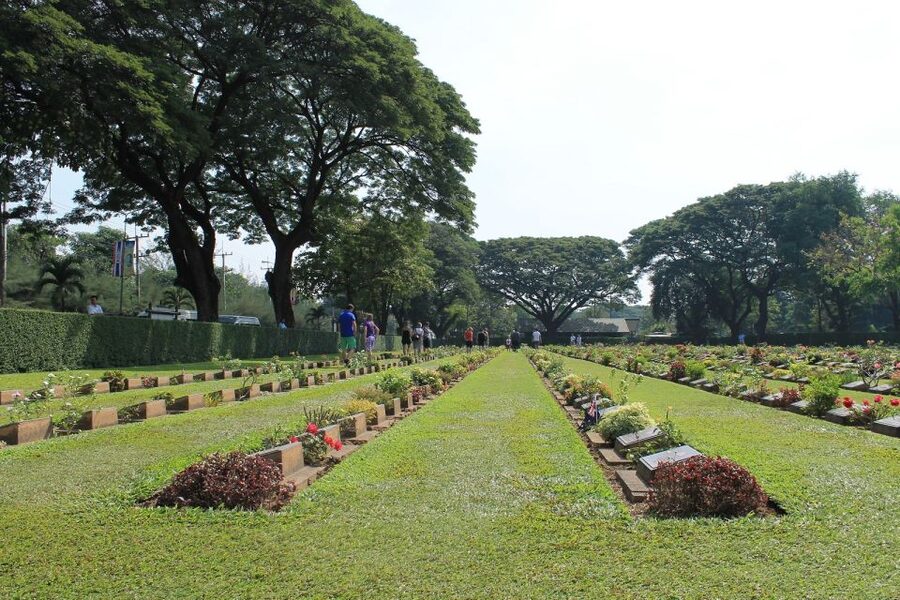
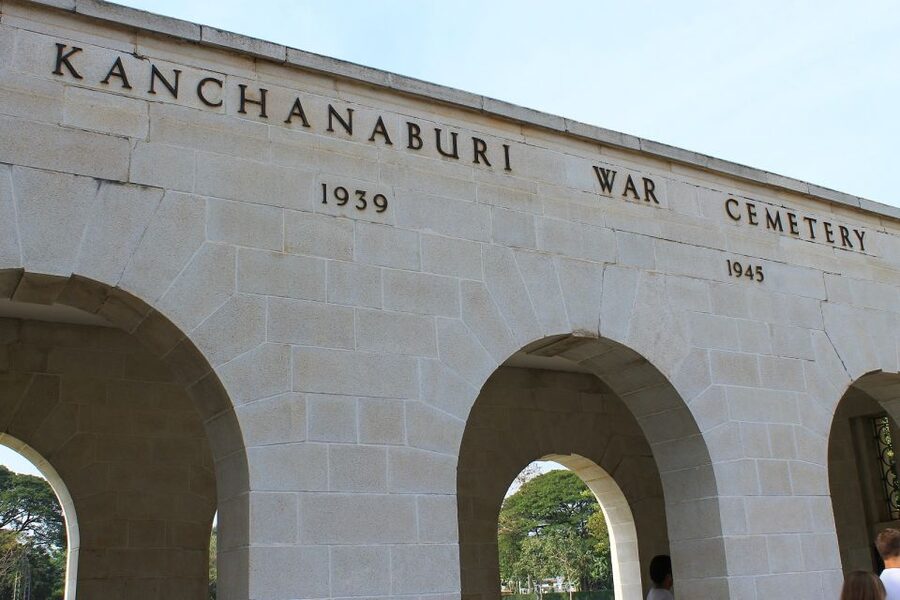
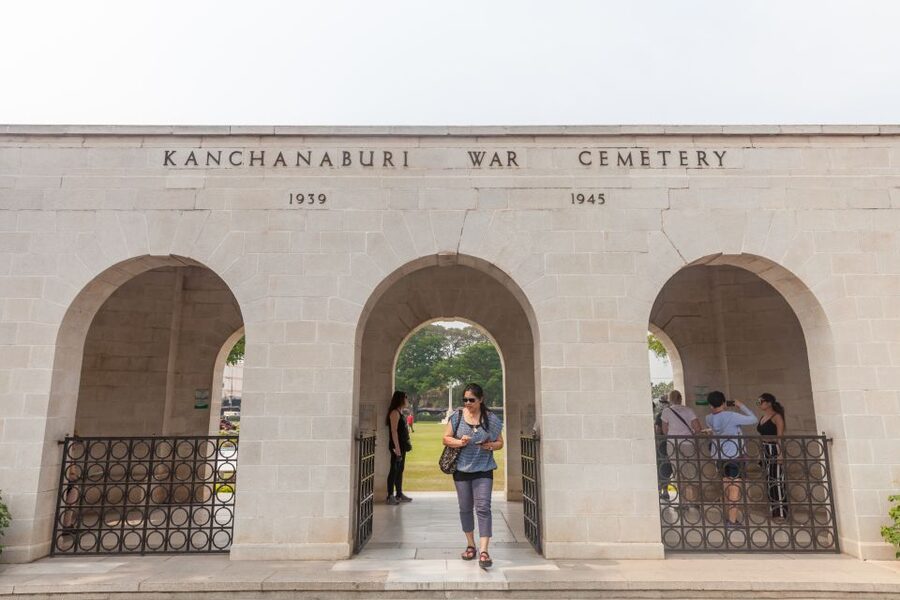
The War Cemetery is one of the most moving stops. Its neat rows of graves contain the remains of an estimated 9,000 Allied soldiers who died while working on the railway or in connected wartime camps.
This is not a place to rush through with your camera raised. Read the names and ages where you can. The cemetery’s careful upkeep creates a sharp contrast with the suffering described inside the museum. It also reminds you that the railway story is made up of individual lives, not just military statistics.
The schedule usually gives you enough time to walk through the grounds, but this is one area where the tour can feel compressed. Some people would prefer another 10 or 15 minutes here, especially because the cemetery is central to the meaning of the whole trip.
Wear comfortable shoes and protect yourself from the sun. The grounds are open and exposed, and Kanchanaburi can be very hot, particularly from late spring through the warmer months. A hat and water are more useful here than stylish footwear.
Building the story inside the Thailand-Burma Railway Centre
The Thailand-Burma Railway Centre is the main educational stop. It is an interactive museum and research center devoted to the railway’s construction, wartime setting, prisoners of war, and the conditions that led to so many deaths.
You will see photographs, artifacts, and displays that help explain what the bridge and track cannot show on their own. The museum gives you the background needed to understand why the railway was built, how prisoners were used, and why the project became so deadly.
The usual visit is around an hour. That is enough to take in the main material, but not enough to read every panel in detail, particularly if you want to spend time on the second floor. If you are a serious World War II enthusiast, you may leave wishing for a longer visit.
I like having the museum near the start of the day because it prevents the bridge from becoming just a famous movie image. You see the railway with a better sense of its human cost. Some tours have arranged the cemetery and museum first, while traffic or local timing can occasionally change the order.
Same city, a different century:
- Bangkok City Highlights Tour: Grand Palace & Three Iconic Temples
★ 4.5 · 542 reviews - Private Excursion to Floating Market and Ayutthaya World Heritage
★ 5.0 · 515 reviews - From Bangkok: Ayutthaya Heritage Tour with Sunset Boat Ride
★ 4.5 · 490 reviews - Private Excursion to Ayutthaya, UNESCO World Heritage site with Boat Tour
★ 5.0 · 460 reviews
Seeing the famous bridge on the River Kwai
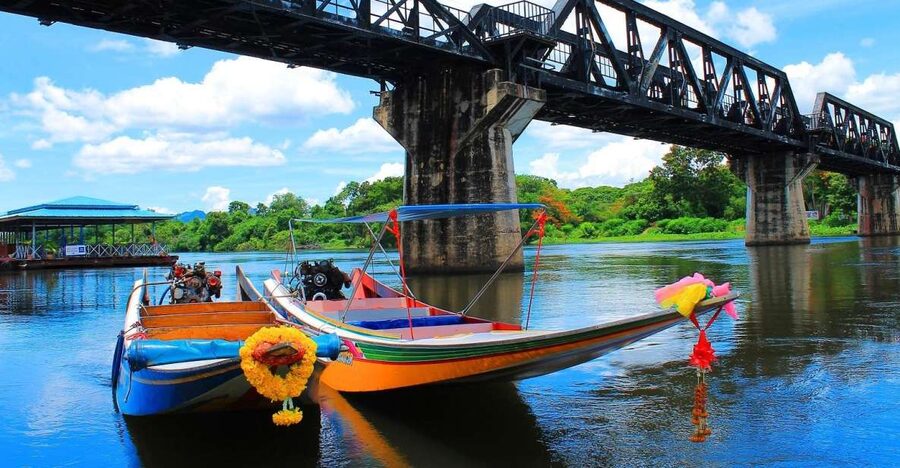
The bridge is the stop most people picture before booking. It is a working railway bridge over the river, and you can walk across it when conditions allow. You may also have the chance to watch a train pass through, which makes the structure feel much less like a static monument.
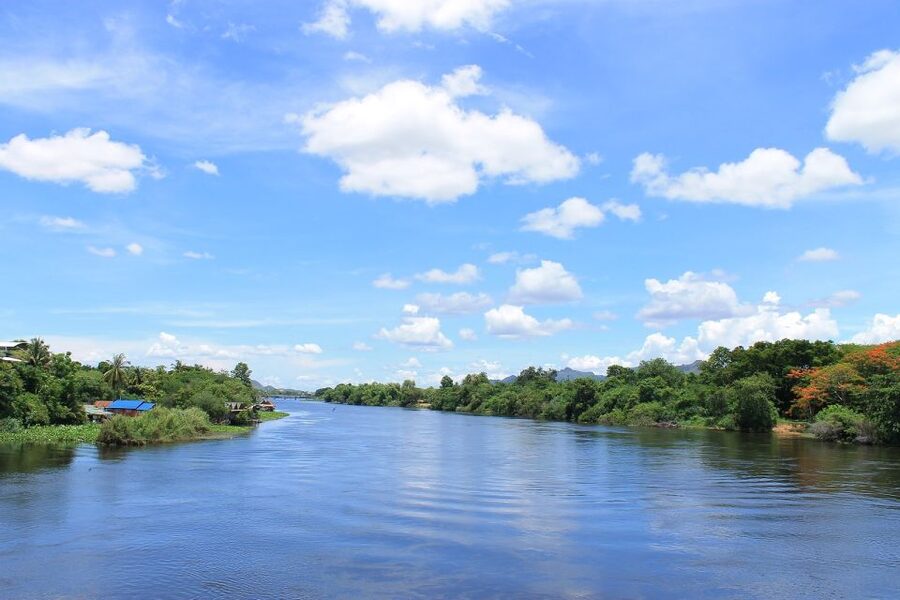
There is time for photographs and for looking along the river. The setting is pleasant, with water, greenery, and hills around Kanchanaburi, but the beauty should not erase the history. The bridge is part of a railway built through coercion and extreme hardship.
Time here is usually adequate for the essential experience, though some people would gladly spend longer on the bridge. If you want careful photos, stay alert to the group meeting time and listen for instructions from your guide. The railway remains active, so you need to follow safety directions.
The bridge also helps explain the next part of the day. You do not just look at the Death Railway. You ride it.
Riding the original Death Railway track
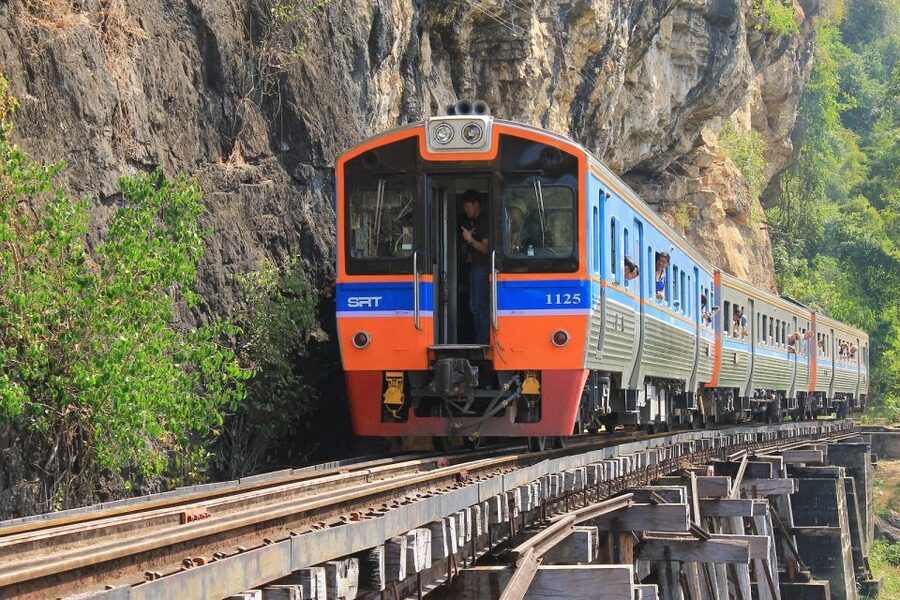
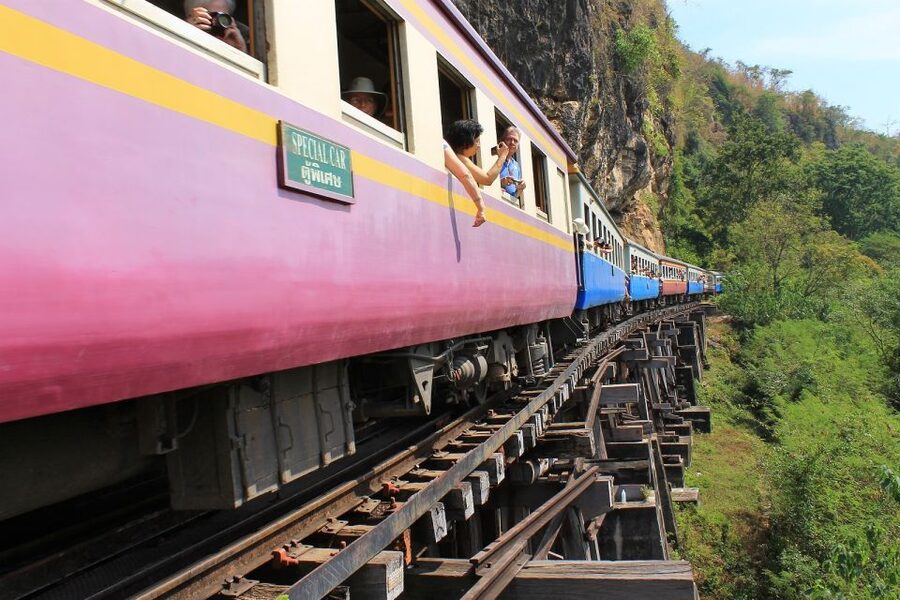
The train ride is the highlight for many people. You board a regular train and travel along an original section of the Death Railway, usually for about an hour before getting off near the Tham Krasae area.
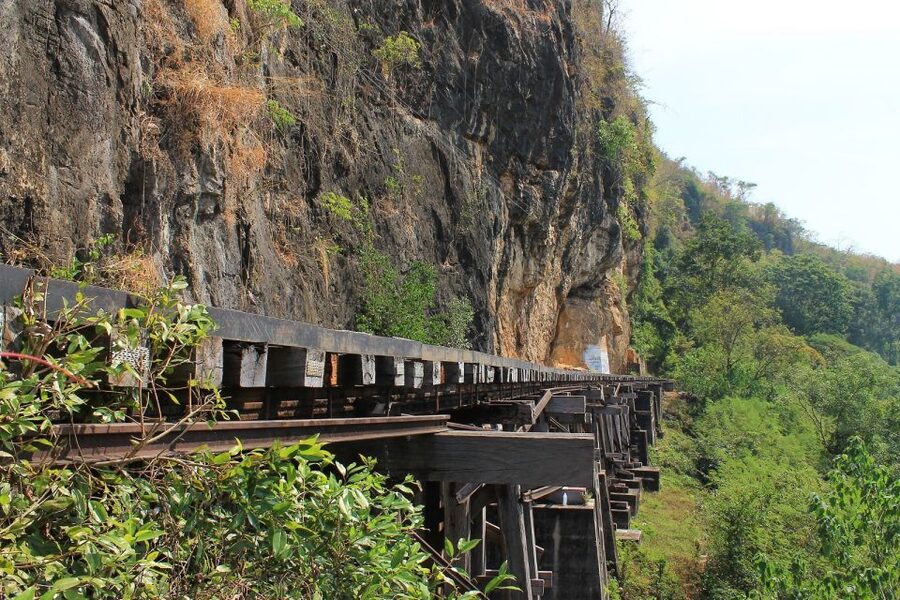
The route gives you a better sense of the countryside outside Bangkok. You pass rural views and approach the more dramatic section where the railway runs along wooden trestles beside the river. The scenery is attractive, but the ride carries a serious undertone because you know how the line was built.
The basic train fee, listed as THB 100, is included. This does not guarantee an assigned seat. You can pay an extra THB 200 per person for a reserved seat, although the exact amount should be confirmed with the guide on the day. Some groups have boarded at a useful point or arrived early enough to find seats without paying extra.
If having a seat matters to you, pay the optional charge upfront rather than leaving it to chance. Otherwise, you may be standing or sharing space during part of the ride. A seat on the side facing the wooden viaduct can improve the view, and one guide took care to position the group well for the crossing.
The train is not a luxury rail experience. It is a basic local train, and that is part of its value. You are using the railway in a way that feels connected to the place rather than viewing it only from a tour van.
Tham Krasae, the wooden viaduct, and the cave
After the train, the group gets off near the Tham Krasae area. You can walk along the track and see the wooden viaduct from closer range. This is one of the clearest places to understand the engineering difficulty of the route.
There is also a cave with a Buddha statue. The ground can be uneven, and one practical tip is to go only as far as feels comfortable. Sensible shoes are important, especially if the surface is muddy or slippery. This section may not suit you if walking on uneven ground is difficult.
The cave is a small part of the day, not the main reason to book. Its value is that it adds another layer to the stop: railway, river, bridge construction, and a present-day Buddhist site all sit close together.
Lunch after the railway ride
Lunch is included at a nearby restaurant after you leave the train. The meal has been praised for being tasty and well organized, with vegetarian alternatives available. It is generally described as a comfortable break after the morning’s walking and travel.
The standard meal is not presented as a grand feast, and the buffet may cost extra. For most people, the included choices should be enough. If you have dietary restrictions, tell the guide early rather than waiting until you sit down.
The lunch stop also gives the group time to settle before the long drive back to Bangkok. That pause matters. By this stage, you have been out since early morning, spent time in the sun, and taken in difficult material.
Guides, group size, and the human side of the day
Guide quality can shape this tour. The strongest guides described for this experience include Luke, William, Jokey, Woody, Henry, Bobo, Phillip, and Thewt. Their styles differ, but the best combination is clear explanations, good time control, attention to water and comfort, and a willingness to answer questions.
A small group is another advantage. One booking ended up with only three friends, creating an experience that felt close to a private tour. Smaller groups also make it easier for a guide to help with train seating, keep everyone together, and adjust slightly when traffic or timing changes.
English and Thai are the available tour languages. English ability may vary by guide, but the strongest guide reports describe clear, friendly explanations. Do not expect a university lecture. Expect practical historical context, local information, and a guide who helps you get through a packed day without missing the main sights.
Is the $51 price good value?
At $51 per person, this is strong value if you want to see the main Kanchanaburi sites in one day. The cost includes air-conditioned transport, entrance fees, an English or Thai speaking guide, lunch, and the basic train fare.
You would pay separately for transport, museum and memorial admission, the railway ticket, lunch, and the effort of arranging the route on your own. The tour also removes the need to work out how the cemetery, museum, bridge, train, and Tham Krasae area connect.
The price does not cover the optional assigned train seat, which costs THB 200 per person. That is not an unreasonable extra if you want more certainty, especially on a busy day. The bigger cost is your time. A 10-hour schedule can become 12 hours because of Bangkok traffic, and the drive takes around three hours each way.
I see this as good value for a first visit, particularly if you have only a few days in Bangkok. If you are staying in Kanchanaburi, a slower local visit may suit you better.
Practical advice for a smoother day
Bring a hat, sunscreen, water, and comfortable shoes. You will walk through the cemetery, museum, bridge area, railway section, and possibly the uneven cave area.
Plan for heat. A small fan can help, and a guide may provide water or a cool towel, but you should still carry your own supply. Keep your camera ready for the countryside from the train, but give the cemetery the quiet attention it deserves.
Allow flexibility on the return. Drop-off times can shift with traffic, and the van may return you to the central meeting point or, in some cases, closer to your hotel if the route allows. Do not schedule a tight evening flight or an important Bangkok booking after this tour.
Free cancellation is available up to 24 hours before departure, and you can reserve while paying later. Pickup is optional, with central meeting at River City Bangkok and early hotel pickup in selected areas.
Should you book this River Kwai tour?
Book it if you want a clear, efficient introduction to Kanchanaburi and the Death Railway. The mix of cemetery, museum, bridge, train, cave area, and lunch gives you more than a single landmark, and the $51 price covers the main costs.
Think twice if you dislike long road journeys or want hours to study every museum display. The schedule is full, the traffic can be rough, and some stops may feel brief.
For most people with limited time in Bangkok, I would choose this tour. Go with the right expectations: it is a long day, the subject is sobering, and the train is basic. In return, you get a meaningful look at one of Thailand’s most important World War II sites, plus a memorable ride through the countryside on the original railway.
FAQ
How long is the Bangkok to River Kwai tour?
The scheduled duration is 10 hours, but Bangkok traffic can delay both pickup and return. The journey to Kanchanaburi takes approximately three hours each way, so the full day may run closer to 12 hours.
What does the $51 price include?
The price includes lunch, entrance fees, an English or Thai speaking guide, the basic THB 100 train fee, and transport in an air-conditioned van.
Is a train seat included?
The basic train fee is included, but it does not guarantee an assigned seat. An assigned seat can be requested for an additional THB 200 per person.
Where does the tour meet?
The main meeting point is BMP Bigcountry at River City Bangkok, 23 Charoen Krung Soi 24, Talad Noi, Sampantawong, Bangkok 10100. Optional hotel pickup is available in parts of Sukhumvit, Khaosan, and Silom.
What places does the tour visit?
The day includes Kanchanaburi War Cemetery, the Thailand-Burma Railway Centre, the bridge on the River Kwai, a train ride on the original Death Railway track, and the Tham Krasae area with its cave and wooden railway viaduct.
Can I cancel the booking?
You can cancel up to 24 hours before departure for a full refund. Reserve now and pay later is also available.
Just added around Bangkok
- River Kwai Day Tour from Bangkok: History, Scenic Views & Culture★ 4.5 · 36 reviews
- Private Tour to Ayutthaya, World Heritage Site with Boat Tour★ 5.0 · 39 reviews
- Private tour to Ayutthaya and Boat Tour Heritage Site★ 5.0 · 28 reviews
- Bangkok Heritage Highlights: Grand Palace & Three Temples Tour★ 4.5 · 52 reviews
- Explore the World Heritage Of Ayutthaya★ 5.0 · 36 reviews
- Private Tour to Ayutthaya, World Heritage Site with Boat Tour★ 5.0 · 55 reviews
- Private Guided Day Tour to Erawan Museum & Ancient City★ 4.5 · 25 reviews
- Foodie Experience of Historic Bang Rak★ 5.0 · 109 reviews
Bangkok History Tours, compared.
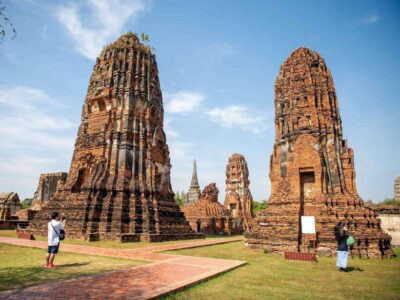
From Bangkok: Ayutthaya Historical Park Guided Day Trip
Read our review →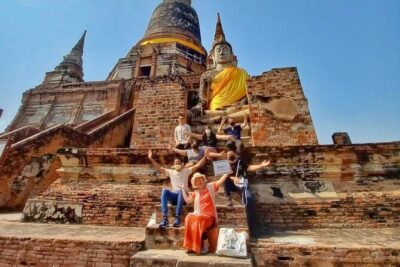
UNESCO’s Ayutthaya Historical Park: Full-Day Tour from Bangkok
Read our review →
Historical City of Ayutthaya – Unesco Full Day Tour From Bangkok
Read our review →
Bangkok City Highlights Tour: Grand Palace & Three Iconic Temples
Read our review →
Private Excursion to Floating Market and Ayutthaya World Heritage
Read our review →
From Bangkok: Ayutthaya Heritage Tour with Sunset Boat Ride
Read our review →
Private Excursion to Ayutthaya, UNESCO World Heritage site with Boat Tour
Read our review →
The Ultimate Ancient city of Ayutthaya Private Day Trip
Read our review →Browse the lists this tour appears in