
Review · SAVANNAH
Savannah Slavery to Freedom Guided History Tour
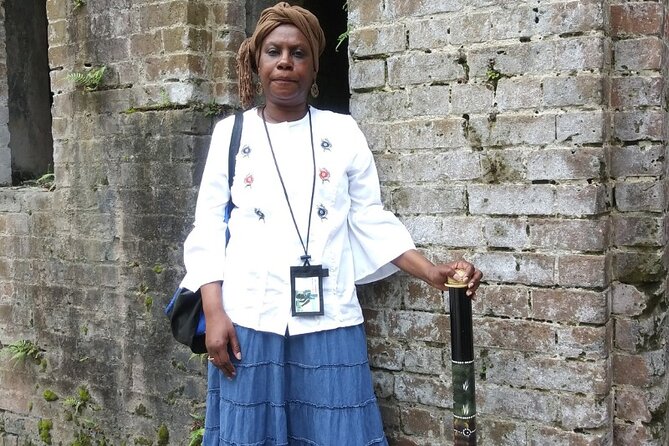
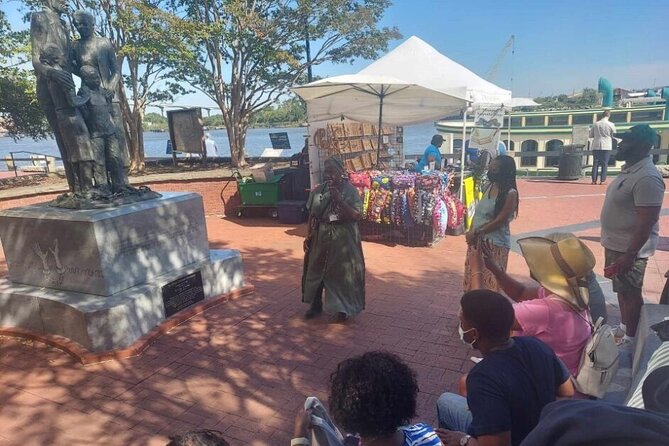
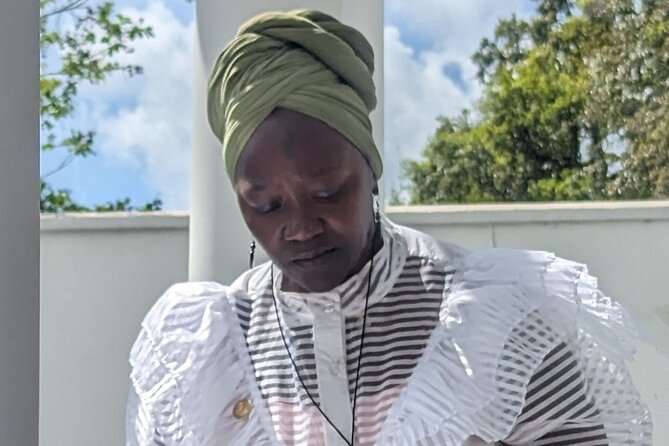
Savannah’s story looks different when you follow the labor, courage, and survival of the African people who helped build it. This tour puts that history at the center, with Sistah Patt, a Master Gullah Geechee Truth-Teller, or guide Sister Rosalyn leading the way through the city.
I like the tour’s clear focus on the economics of slavery and the work that shaped Savannah’s waterfront. I also like the personal, energetic storytelling, which brings in architectural, spiritual, cultural, and family history instead of treating slavery as a short sidebar. The main drawback is that this is primarily a bus tour, with limited time outside the vehicle, so it may disappoint you if you want frequent stops and lots of photographs.
Key points to know before booking

- A Black history tour with a clear Savannah focus: You trace how enslaved Africans helped construct warehouses and develop the city.
- Sistah Patt brings lived local context: Her Gullah Geechee storytelling links history, culture, advocacy, and present-day Savannah.
- The route includes major historic locations: River Street, Johnson Square, the African American Monument, Second African Baptist Church, and Laurel Grove Cemetery all play a role.
- The format is mostly vehicle-based: Expect a narrated ride with some walking, not a long walking tour with a stop at every location.
- Good for families with older children: Some children respond strongly to the subject, so use your judgment for ages seven and under.
- The price is $54.78 per person: At roughly three hours, the value depends on how much you want focused interpretation rather than a broad city sightseeing loop.
Why this tour changes the way you see Savannah
Savannah is often presented through its squares, grand homes, churches, and elegant streets. Those sights matter, but they can leave out the people whose forced labor made much of the city possible. This experience corrects that imbalance by asking you to look at Savannah through Black history first.
The tour begins at 223 Martin Luther King Jr. Boulevard and returns there. Gray Line Savannah operates the experience, with a maximum group size of 32 people. That is large enough to feel like a proper coach tour, but still small enough for a guide’s voice and stories to reach the group.
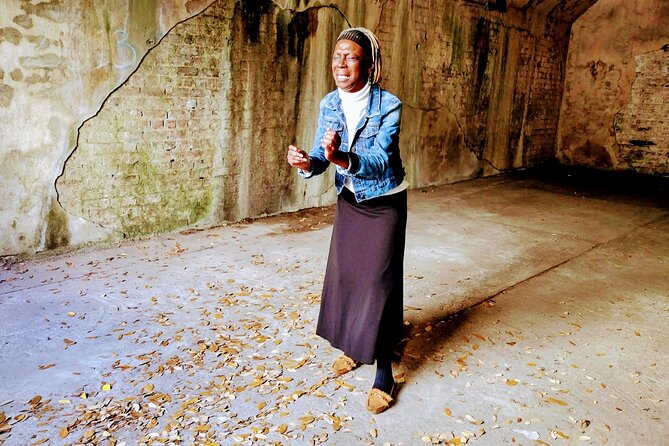
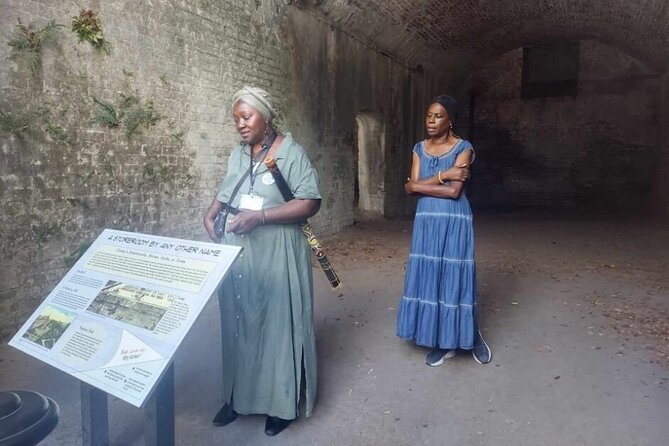
The most praised part of the experience is the guide. Sistah Patt is lively, direct, and warm, using humor without softening the facts. Sister Rosalyn, also called Rozz, brings a serious and thoughtful style, with strong attention to Gullah Geechee and Black history. Your guide may shape the tone of the day, but both names are associated with a personal approach rather than a dry script.
I especially appreciate that the tour does not treat slavery as a grim chapter that ends at emancipation. It connects forced labor to Savannah’s growth, then follows the long and difficult movement toward freedom. That gives you a clearer sense of cause and effect.
More Guided Tours in Savannah:
- Historic Savannah Guided Walking Tour
★ 5.0 · 2,918 reviews - 60-Minute Guided Segway History Tour of Savannah
★ 5.0 · 1,163 reviews - Guided Savannah Civil War History Walking Tour
★ 5.0 · 492 reviews
River Street and the labor behind Savannah’s waterfront
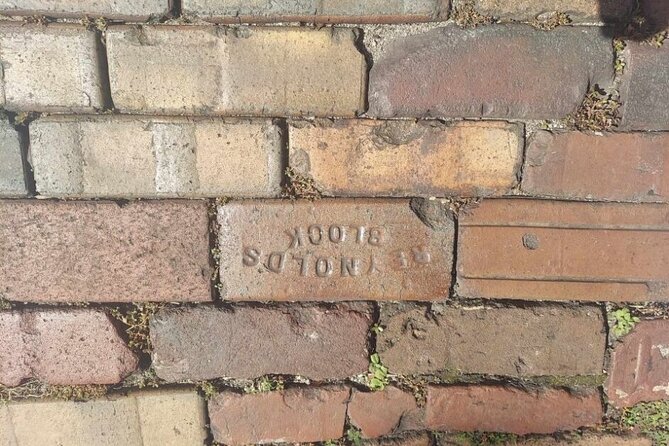
One of the first major themes is the history of West African peoples brought to Savannah and forced into labor. The guide explains how their skills and labor helped build the warehouses along River Street.
That connection is important because River Street is easy to admire without thinking about who created the infrastructure. The stone walls, warehouse spaces, and waterfront trade are part of Savannah’s familiar visitor experience. This tour asks you to connect those physical places with the people who were compelled to construct and support them.
You will likely hear about the West African tribal backgrounds of the people brought to the region, along with the knowledge they carried with them. The experience places attention on building skills, agricultural ability, medicinal knowledge, spiritual traditions, and cultural practices. That broader view matters. It presents enslaved people as individuals and communities with expertise, not only as victims of a system.
The route is mostly viewed from the vehicle, so you should not expect a long period to examine River Street on foot. If you want waterfront photographs, plan separate time before or after the tour. Here, the value comes from the explanation, not from an extended stop.
Johnson Square and the business of slavery
Johnson Square is another key location. The guide explains that enslaved people were auctioned there, bringing the commercial machinery of slavery into the heart of Savannah’s public life.
This is a difficult subject, but the tour’s approach appears designed to explain how money drove the system. That economic context helps you understand why slavery was not an accidental feature of Savannah’s development. It was tied to trade, property, construction, agriculture, and wealth.
The square itself may look peaceful today. That contrast can make the history harder to process. You are standing in a place now used for ordinary city life while learning about people who were bought and sold there. The tour’s strength is its willingness to connect a familiar landmark to that uncomfortable past instead of allowing the pretty setting to erase it.
If you are sensitive to graphic historical material, keep in mind that the subject can be intense. One family found the tour too heavy for children aged seven and eleven, while another family felt that children aged eight and thirteen learned a great deal from Sistah Patt. The guide’s style is engaging, but the topic remains serious.
The African American Monument and the story of freedom
The African American Monument is included as part of the experience. Its presence gives the tour a place to consider survival and achievement, not just oppression.
That balance is one of the tour’s best features. The story moves from forced arrival and labor toward resistance, faith, family, community, and the long pursuit of freedom. The emphasis is not on guilt for its own sake. It is on understanding what happened, who benefited, who suffered, and how Black communities continued to shape Savannah.
The vehicle ride also passes the Second African Baptist Church. This connects the tour to the spiritual and communal side of the freedom story. You learn about the role of Black churches and organized communities as the tour follows the road from slavery toward freedom.
The church is viewed as part of the passing route rather than presented as a long interior visit. That distinction matters. If you want to explore the building at length, you will need a separate plan. On this tour, the church functions as one piece of a larger story.
More History Tours in Savannah:
- Savannah History and Haunts Candlelit Ghost Walking Tour
★ 5.0 · 3,235 reviews - Narrated Historic Savannah Sightseeing Trolley Tour
★ 4.5 · 2,375 reviews - Southern Flavors Food, Pub Crawl, and History Walking Tour
★ 4.5 · 1,623 reviews - Genteel and Bard’s Savannah Dark History and Ghost Encounter Walking Tour
★ 5.0 · 1,546 reviews
Laurel Grove Cemetery and memory in Savannah
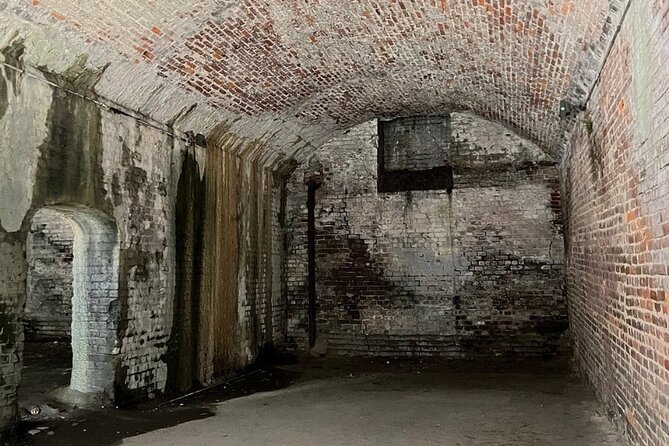
Laurel Grove Cemetery is included among the important sites. Cemeteries can tell you what a city chooses to remember, and how it honors people after death. In the setting of this tour, Laurel Grove helps extend the story beyond the era of slavery.
The cemetery visit also gives the guide a chance to discuss Black families, community life, and the people who helped shape Savannah over generations. The supplied details do not promise a long walking stop, so expect the amount of time outside the bus to vary with the day’s route and guide.
That limited time is a recurring point to consider. One person found the tour informative but wished it had more stops. Another said the group only got out once. You can take photos from the vehicle, but this is not the right choice if your main goal is to walk through every location.
A bus tour with some walking, not a full walking experience
The official duration is about three hours, while the narrated portion is described as two to two and a half hours. Morning and afternoon departures make it easier to fit the experience around meals, museums, and other Savannah plans.
The coach format has clear benefits. You get a broader view of the city without spending three hours walking in heat or rain. You can cover locations that would be tiring to connect on foot, and comfortable seats make it easier to focus on the narration.
The tradeoff is pace. The tour moves through several subjects and locations, so the experience can feel fast. One person described it as an information-packed two hours, while another felt that the full three hours was longer than needed. Your enjoyment will depend on how much spoken history you can absorb in one sitting.
I suggest taking notes if you are the sort of person who likes to remember names and ideas. The narration covers architecture, economics, family connections, spirituality, local culture, and the struggle for freedom. It is easy to leave with more information than you can recall later.
The maximum group size is 32. That is not an intimate private tour, but it is also not an enormous sightseeing crowd. Since the experience is built around the guide’s narration, choose a seat where you can hear clearly.
The value of $54.78
At $54.78 per person, this is not the cheapest way to see Savannah. You are paying for roughly three hours, transportation, and a focused guide who presents a subject that many general city tours only touch briefly.
The price makes sense if you want a serious lesson tied to actual places. It is less appealing if you mainly want a photo tour, a quick overview of Savannah’s architecture, or a hop-on, hop-off style ride. You may see fewer attractions than on a broad city tour, but the interpretation is far more specific.
The tour also offers something difficult to reproduce on your own. You can visit River Street, Johnson Square, the monument, and Laurel Grove Cemetery independently, but you would not automatically know how the sites connect. The guide provides the structure, local perspective, and historical links.
For a family, the cost adds up quickly. Still, families with older children may find the experience worth the expense because it creates conversation long after the tour ends. For younger children, consider their ability to handle discussions of enslavement, auctions, violence, and freedom.
Who will get the most from this experience
I would choose this tour if you want:
- A focused introduction to Savannah’s Black history
- More attention to slavery than most general city tours provide
- A guide with local Gullah Geechee and African American context
- A mix of transportation and limited walking
- A history experience that includes both suffering and resilience
- A way to understand the city’s buildings, waterfront, churches, and public squares through a different lens
It is particularly useful early in your Savannah stay. Once you understand the role of enslaved labor and Black communities, later visits to River Street, the historic squares, churches, and old houses can feel more complete.
I would hesitate to book it for a child who is easily upset by difficult subjects. The tour can be engaging and even funny at times, but humor does not remove the emotional weight. Speak with your family honestly before reserving.
Photography-focused visitors should also set expectations. You can take pictures from the bus, but there may be only one main opportunity to get out. If you want a slow, stop-heavy route, this may not be your best fit.
Practical details that matter
You receive confirmation when you book, and the experience is offered in English. Service animals are allowed, and most people can participate. If you need an ADA-accessible vehicle, request it at least 24 hours in advance.
Bottled water is not included, so bring your own. Parking is also your responsibility. Gratuities for the guide are not included, so budget for that separately if you feel the service deserves it.
The meeting point is 223 Martin Luther King Jr. Boulevard, and the tour ends at the same location. Some experiences in the wider Gray Line operation may offer hotel pickup, but this tour’s stated meeting point is the address above, so confirm your arrangements before setting out.
You can cancel for a full refund up to 24 hours before the start time. Changes or cancellations inside that window are not accepted, and no refund is offered. Poor weather or failure to meet the minimum number of participants can lead to a cancellation, in which case you can choose another date or receive a full refund.
Should you book the Savannah Slavery to Freedom Tour?
Book it if you want the history that many Savannah sightseeing routes leave out. The strongest reason to go is the guide, especially if you can join Sistah Patt. Her style combines facts, local memory, humor, and moral clarity. Sister Rosalyn offers another strong version of the experience, with careful attention to Savannah’s Gullah Geechee and Black past.
Do not book it expecting a long walking tour or a string of photo stops. You will spend most of the time on a vehicle, listening and looking out at the places being discussed.
For history-minded adults, older children, and anyone who wants a more honest account of how Savannah was built, this is a very good use of three hours. The 4.9 rating from 407 reviews and 98 percent recommendation rate fit the experience’s main strengths: powerful storytelling, a clear subject, and an unusually direct connection between Savannah’s landmarks and its Black history.
FAQ
How long does the Savannah Slavery to Freedom Tour last?
The experience lasts approximately three hours. The narrated portion is listed as two to two and a half hours.
Where does the tour begin and end?
It begins at 223 Martin Luther King Jr. Boulevard, Savannah, Georgia 31401. The tour ends back at the meeting point.
Is this a walking tour or a bus tour?
It combines a narrated vehicle ride with some walking. You should expect to spend most of the experience on the vehicle, with limited opportunities to get out.
Who leads the tour?
The tour may be led by Sistah Patt, a Master Gullah Geechee Truth-Teller, or by Sister Rosalyn, also called Rozz in tour descriptions and comments.
Which historic places are included?
The experience includes River Street, Johnson Square, the African American Monument, Laurel Grove Cemetery, and a route past the Second African Baptist Church.
Is the tour suitable for children?
Most travelers can participate, but the subject can be intense for young children. Use your judgment, especially for children around seven to eleven years old.
Can I cancel for a refund?
Yes. You can cancel at least 24 hours before the start time for a full refund. Cancellations or changes made less than 24 hours before the tour are not accepted and are not refunded.
Just added around Savannah
- Savannah: Historic District Guided Bike Tour★ 4.8 · 47 reviews
- Savannah: Historical Panoramic City Tour★ 4.8 · 72 reviews
- Savannah: History and Culture Walking Tour★ 4.6 · 149 reviews
- Savannah: Historical Pub Crawl Tour with Drinks Included★ 3.9 · 34 reviews
- Savannah: African American History Tour★ 4.9 · 72 reviews
- Savannah: History, Culture, & Scenic Views E-Bike Tour★ 5.0 · 69 reviews
- Savannah: Battles & Brews Civil War History Pub Crawl★ 4.4 · 36 reviews
- Savannah: Historical Bike Tour with Tour Guide★ 4.8 · 140 reviews
Savannah History Tours, compared.
Savannah History and Haunts Candlelit Ghost Walking Tour
Read our review →
Narrated Historic Savannah Sightseeing Trolley Tour
Read our review →
Southern Flavors Food, Pub Crawl, and History Walking Tour
Read our review →
Genteel and Bard’s Savannah Dark History and Ghost Encounter Walking Tour
Read our review →
60-Minute Guided Segway History Tour of Savannah
Read our review →
Browse the lists this tour appears in