
Review · SAVANNAH
Heart of Savannah History Walking Tour – 2hr
Savannah’s story is written into its squares, churches, mansions, and tree-lined streets. This tour connects those pieces in a clean two-hour route, beginning at Wright Square and ending beside the famous fountain in Forsyth Park. Along the way, you get colonial planning, Revolutionary War drama, Civil War history, Girl Scout lore, movie trivia, and a little ghost talk.
I like the way this tour gives you a useful city orientation early in your visit. I also like the mix of major sights and less obvious details, such as the fingerprints in the gray brick at Sorrel Weed House and the mail-order French fountain in Forsyth Park. The main consideration is pace: there is plenty to cover, and some sections may feel long if you want frequent breaks or extended time for questions.
Key points
- Starts at Wright Square and ends at Forsyth Park, creating a useful north-to-south introduction to Savannah’s historic district.
- Covers about one mile in two hours, with benches along the way, though comfortable shoes remain important.
- Includes Forrest Gump’s Chippewa Square filming location, plus the real story behind the square’s Oglethorpe monument.
- Explains Savannah’s unusual square system, the city’s colonial founding, and the roles of Tomochichi and General James Oglethorpe.
- Passes major homes and buildings, including Green-Meldrim House, Mercer Williams House, Armstrong-Kessler House, and the Juliette Gordon Low Birthplace.
- Uses local guides with different personalities, including Rick Moss, Mark, Rose, and Crystal, with humor and storytelling often central to the experience.
Why this route works for a first look at Savannah

Savannah can feel confusing at first. The historic district is easy to walk, but its squares, churches, mansions, and layers of history do not always explain themselves. This route gives you a basic map in your head, then adds the stories that make each corner memorable.
You begin at Wright Square, near the center of the historic district, and work south toward Forsyth Park. That direction matters. You start with the city’s founding plan, move through colonial and Revolutionary War history, then reach the grand homes and public park that help define modern Savannah.
The tour lasts about two hours and covers roughly one mile. That is a fairly gentle distance for a walking tour, and benches are available along the way. Still, the route includes frequent stops, street crossings, and periods of standing. In Savannah’s summer heat and humidity, bring water and consider the morning departure.
The tour operates in rain, so an umbrella is sensible. In severe weather, you may be offered a new date. The activity is offered in English, and the group can reach up to 30 people. That size is manageable, but sound can be an issue on busy streets. One person specifically wished for microphones, so stay close to the guide if you have trouble hearing.
More History Walking Tours in Savannah
- Savannah History and Haunts Candlelit Ghost Walking Tour
★ 5.0 · 3,235 reviews - Historic Savannah Guided Walking Tour
★ 5.0 · 2,918 reviews - Southern Flavors Food, Pub Crawl, and History Walking Tour
★ 4.5 · 1,623 reviews
Wright Square explains the city’s basic design
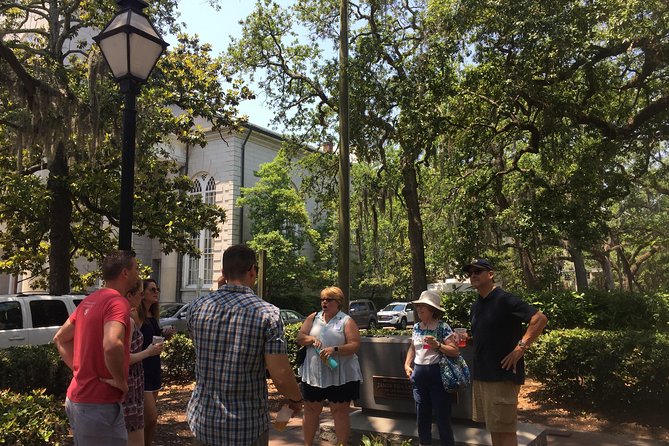
At Wright Square, the guide explains why Savannah was founded on a 40-foot bluff and how General James Oglethorpe laid out the settlement. The square system is one of the city’s most useful features, so this is the right place to learn how it works before you start exploring on your own.
You also hear about Tomochichi, chief of the Yamacraw people. His connection to the early colony adds an important perspective to the usual Oglethorpe-centered story. The Gordon Monument now marks the center of the square, and the tour explains Tomochichi’s place in that history.
The port of Savannah also enters the story. The tour points out that it is the third-largest port in the nation, a fact that helps connect the quiet squares to the working city beyond them.
This first stop lasts about 15 minutes. It is a strong opening because it gives you the framework for everything that follows. If you plan to spend several days in Savannah, pay attention here. The square pattern will help you navigate without constantly checking your phone.
Birthplaces, churches, and the stories behind the facades
The next stops shift from city planning to people and architecture. At the Juliette Gordon Low Birthplace, you see the exterior of the home where the founder of the Girl Scouts was born in 1860. The tour does not enter the house, so you should not book this experience expecting an interior visit.
Even from the street, the stop adds a useful personal story to the route. You learn about the Gordon family and how the building is used today. It is a short pause, about ten minutes, and works best as part of the larger walk rather than as a full museum visit.
The Independent Presbyterian Church provides another compact lesson. The church was founded in 1755 on Ellis Square, then rebuilt after fire and later moved after a hurricane damaged the replacement building. The present structure was built in 1855 at Bull Street and Oglethorpe Avenue.
You learn which United States president married there in 1885 and why the steeple is so well known. The stop takes only about five minutes, but it shows how Savannah’s buildings have been shaped by fire, storms, relocation, and rebuilding.
Chippewa Square and the Forrest Gump connection
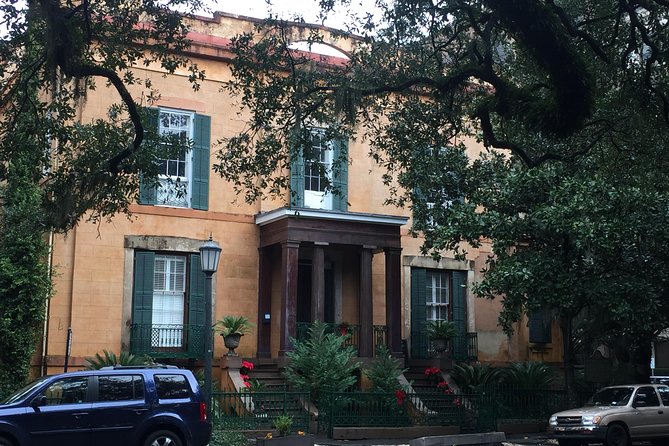
Chippewa Square is the tour’s most obvious pop-culture stop. This is where Forrest Gump sat with his box of chocolates while waiting for the bus. The famous bench itself is not permanently installed there, but the square served as the filming location.
The guide also clears up a common mistake about the monument in the middle of the square. It is General James Oglethorpe, not Captain Morgan. The resemblance has become a running joke, especially since Savannah allows to-go cups, but the statue’s real purpose is to honor the founder of the colony.
This is a good example of the tour’s balance. You get a familiar movie reference, then move into a more useful explanation of Savannah’s beginnings. The stop lasts about ten minutes, giving you time for photos without turning the tour into a film-location outing.
If Forrest Gump is the main reason you are interested, keep your expectations realistic. The stop is brief, and the tour is primarily about Savannah’s history, architecture, and public spaces.
More History Walking Tours in the USA
- Genteel and Bard’s Savannah Dark History and Ghost Encounter Walking Tour
★ 5.0 · 1,546 reviews - Creepy Crawl Night-Time Haunted Pub Walking Tour of Savannah’s Historic District
★ 4.5 · 802 reviews - Genteel and Bard’s Savannah History Walking Tour
★ 5.0 · 684 reviews - Savannah: Historic District Foodie Walking Tour
★ 4.8 · 613 reviews
Sorrel Weed House adds brickwork and ghost stories
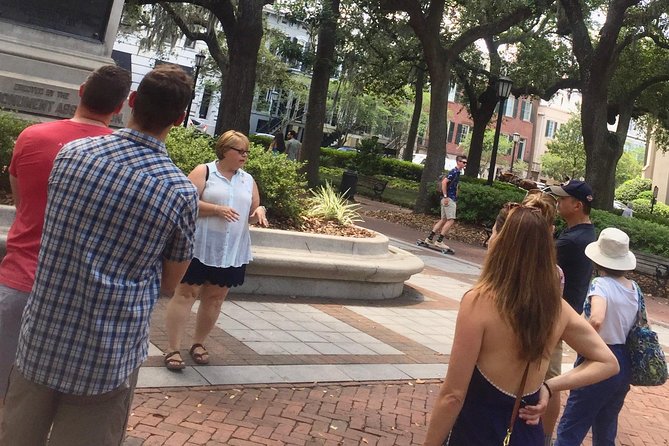
The stop at the Old Sorrel Weed House is short, about two minutes, but it brings in the sort of odd detail that helps a walking tour stick in your mind. You hear about the gray Savannah brick wall around the courtyard, including the fingerprints pressed into the brick.
The guide explains where the brick came from and why those marks remain visible. You pass the home rather than taking an interior tour, so this is another exterior-focused stop.
The Sorrel Weed House is also known as one of Savannah’s most haunted homes. Ghost stories are part of the city’s tourism culture, and this tour uses them as seasoning rather than the main course. If you prefer strictly military, political, or architectural history, a few supernatural references may feel like a detour. If you enjoy local folklore, the lighter tone makes the walk more fun.
Madison Square brings the American Revolution into view
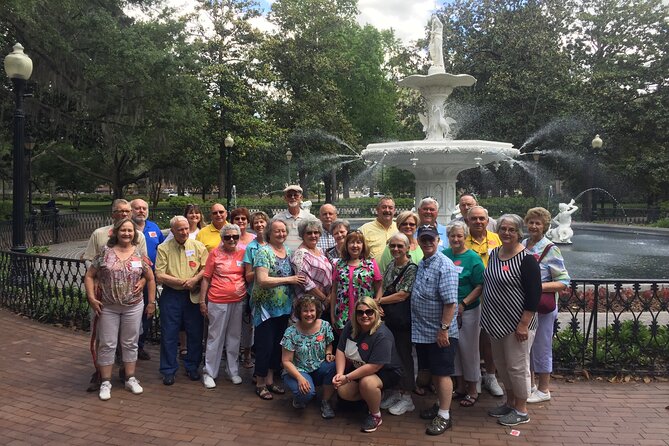
At Madison Square, the peaceful setting hides a violent past. The square occupies the site of one of the bloodiest battles of the American Revolution, the Siege of Savannah.
This is one of the tour’s best reminders that Savannah is not just a pretty collection of homes. The squares were built into the life of the city, and some witnessed war, occupation, and loss. The stop helps you connect the tidy present-day streets with the much harsher events that shaped them.
Madison Square is also useful for understanding the rhythm of the tour. You are not stopping at every building for a full architectural lecture. Instead, each square provides a short historical chapter, keeping the walk moving while giving you reasons to return later for a closer look.
Green-Meldrim House and Sherman’s Savannah
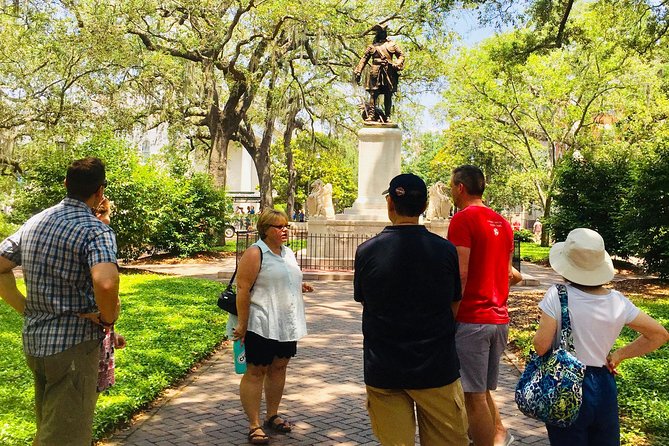
Green-Meldrim House is one of the architectural highlights. Completed in 1853, it is presented as a prime example of Gothic architecture in the South. Its original cost was $93,000, equal to about $3.2 million today, making it the most expensive home in Savannah during the 1800s.
The house also played a major role during the Civil War. General William T. Sherman used it as his headquarters during his March to the Sea and occupation of Savannah.
This pairing of architecture and war history works well. You see an elaborate home, then learn how it became part of a military campaign. The house is not simply a pretty facade. It helps show how private spaces became tied to national events.
The tour also passes the former Savannah Volunteer Guard building, now owned by the Savannah College of Art and Design. You do not go inside, but it adds another layer to the city’s military and civic story.
Tea rooms, apothecary cabinets, and Mercer Williams House
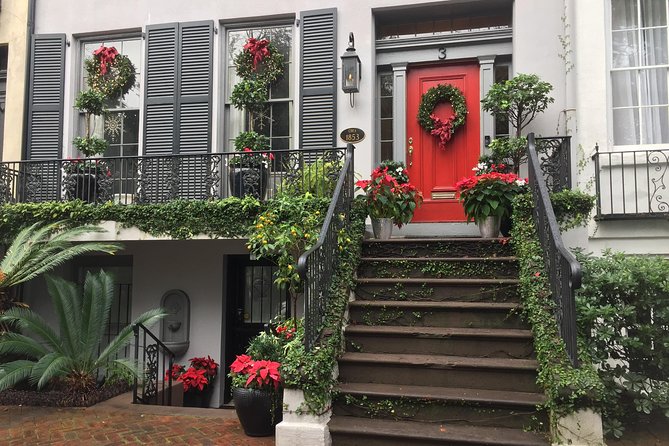
The route passes the building that contains the Gryphon Tea Room. The room occupies what is known as the Shriner’s Building, and the interior still includes original mahogany cabinetry and small cubbies from its earlier use as Solomon’s Apothecary.
You do not appear to stop for a meal as part of the tour, but the guide points out the location as a possible place for lunch, dinner, or tea. That kind of suggestion is useful because the walk ends near several places where you can continue exploring on foot.
The Mercer Williams House brings Savannah’s modern tourism story into the route. The house became famous through John Berendt’s book Midnight in the Garden of Good and Evil, which tells the story of Jim Williams, the home’s owner, and the 1981 shooting of his assistant, Danny.
The book was published in 1993 and remained on the New York bestseller list for 216 weeks. The later film helped put Savannah on the tourism map. You see the exterior and hear the story, but the house is not an interior stop on this tour.
If you plan to visit Savannah, reading the book or watching the movie before arriving will make this section more meaningful. The story is woven into the city’s public image, and the tour gives you the setting without requiring a separate house visit.
Armstrong-Kessler House and the route’s grandest facade
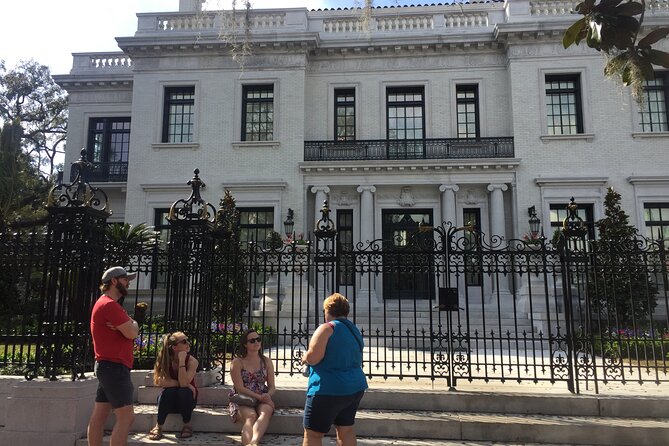
The Armstrong-Kessler House is a private home and is not open for tours, but it may be the most visually impressive exterior on the route. The guide discusses the home’s history and who lives in the more than 26,000-square-foot residence today.
This is a good stop for architecture lovers because the house makes its impression quickly. You do not need an interior tour to understand why it draws attention. The visit is limited to the street, so remember that this is a viewing stop, not an admission attraction.
The route’s focus on private homes is one of its strengths and one of its limits. You get close to remarkable buildings and hear the stories behind them, but most of the experience remains outdoors. If you want room interiors, plan separate visits to the homes and museums that allow entry.
Forsyth Park finishes the walk with Savannah’s postcard view
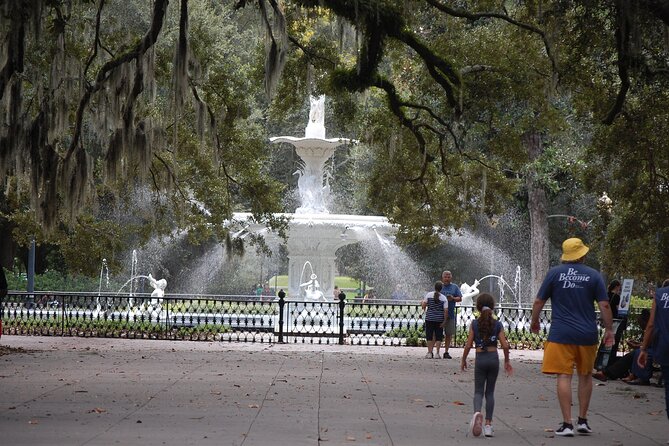
The tour ends at Forsyth Park, beside its famous fountain. The park began in 1848 with ten acres and now covers 30 acres. It is often compared with Central Park, and the analogy helps explain its role as a large public green space in the middle of the city.
The fountain is the closing image. It was ordered from a catalog in France and installed in 1858, an amusing detail that makes the ornate centerpiece feel more approachable. You will have time for the classic fountain photo before the tour ends.
This is a practical finish. You are not left at an obscure corner of town. From Forsyth Park, you can continue walking, rest in the park, or use the location as a starting point for more of the southern historic district.
Guide style, group size, and practical comfort
The guides named in the experience include Rick Moss, Mark, Rose, and Crystal. Their styles vary, but the strongest pattern is clear: expect storytelling, humor, and frequent historical side notes rather than a dry lecture.
Crystal is described as engaging and funny, while Rose is noted for correcting local folklore and answering questions. Rick Moss is praised for warmth and anecdotes, and Mark for humor and clear historical explanations. Since guide assignment can vary, you should treat these names as examples rather than a promise of who will lead your departure.
The group maximum is 30 people. Some departures may feel more personal, while others will be closer to the full limit. Keep near the guide in crowded areas, especially if you are concerned about hearing every detail.
Wear comfortable walking shoes. The route is only about one mile, but the two-hour length comes from repeated stops and explanations. Bring water in hot weather, and consider an umbrella because the tour runs rain or shine.
Service animals are allowed, most people can participate, and the starting point is near public transportation. The tour has morning and afternoon options, so I would choose based on heat, sun, and the rest of your plans rather than simply selecting the first available time.
Value, cancellation terms, and who should book
The price is not provided in the tour details, so I cannot judge the exact cost. The value rests in the guide rather than admission tickets: the route includes outdoor stops, and there are no major entry fees built into the experience. If the posted rate is reasonable for a two-hour guided walk, you are paying for local context, route planning, and stories that would be easy to miss on your own.
You can cancel up to 24 hours before the start time for a full refund. Cancellations or changes inside 24 hours are not refundable. If severe weather or low enrollment cancels the tour, you are offered another date or a full refund.
I would book this if you want a first-day introduction to Savannah, enjoy architecture and local stories, or want a guide to explain why the squares matter. It is also a good choice for couples, families, solo visitors, and anyone who likes to mix serious history with movie references and folklore.
I would look elsewhere if you want interior access to historic houses, a small private tour guaranteed at every departure, or a tightly focused Civil War walk. For most first visits, though, this is a useful and entertaining way to get your bearings, finish at Forsyth Park, and decide which stories deserve a closer look.
FAQ
How long is the Heart of Savannah History Walking Tour?
The tour lasts approximately two hours.
Where does the tour begin?
It begins in Wright Square, in front of the Gordon Monument.
Where does the tour end?
The tour ends at the fountain in Forsyth Park.
How far do you walk?
The tour covers approximately one mile, with benches along the way.
Does the tour enter the Juliette Gordon Low Birthplace?
No. You admire the birthplace from outside, but the tour does not go into the home.
Does the tour go inside Mercer Williams House or Armstrong-Kessler House?
No. These are exterior viewing stops. Armstrong-Kessler House is a private home and is not open for tours.
Is the Forrest Gump bench included?
The tour visits Chippewa Square, where Forrest Gump sat while waiting for the bus. The stop focuses on the filming location and the square’s history.
What happens if the weather is severe?
The tour operates rain or shine. In severe weather, you may be offered a different date. If the tour is canceled because of poor weather, you can choose a new date or receive a full refund.
Just added around Savannah
- Savannah: Historic District Guided Bike Tour★ 4.8 · 47 reviews
- Savannah: Historical Pub Crawl Tour with Drinks Included★ 3.9 · 34 reviews
- Savannah: Historical Panoramic City Tour★ 4.8 · 72 reviews
- Savannah: History and Culture Walking Tour★ 4.6 · 149 reviews
- Savannah: African American History Tour★ 4.9 · 72 reviews
- Savannah: History, Culture, & Scenic Views E-Bike Tour★ 5.0 · 69 reviews
- Savannah: Battles & Brews Civil War History Pub Crawl★ 4.4 · 36 reviews
- Savannah: Historical Bike Tour with Tour Guide★ 4.8 · 140 reviews
Savannah History Tours, compared.
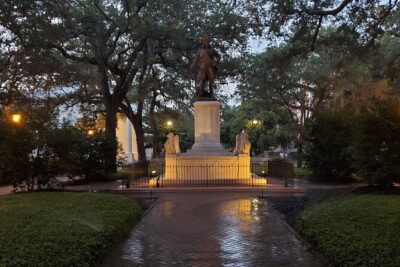
Savannah History and Haunts Candlelit Ghost Walking Tour
Read our review →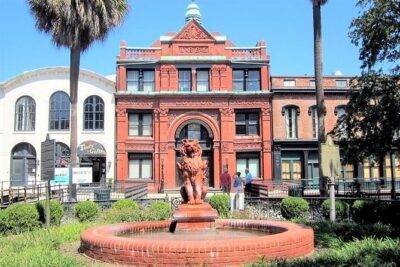
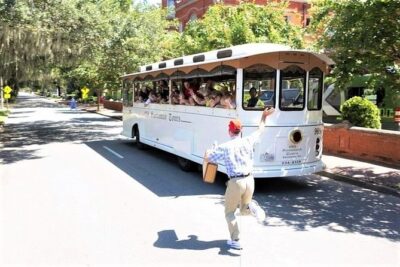
Narrated Historic Savannah Sightseeing Trolley Tour
Read our review →
Southern Flavors Food, Pub Crawl, and History Walking Tour
Read our review →
Genteel and Bard’s Savannah Dark History and Ghost Encounter Walking Tour
Read our review →
60-Minute Guided Segway History Tour of Savannah
Read our review →

Bonaventure Cemetery & Wormsloe State Historic Site Tour
Read our review →Browse the lists this tour appears in