
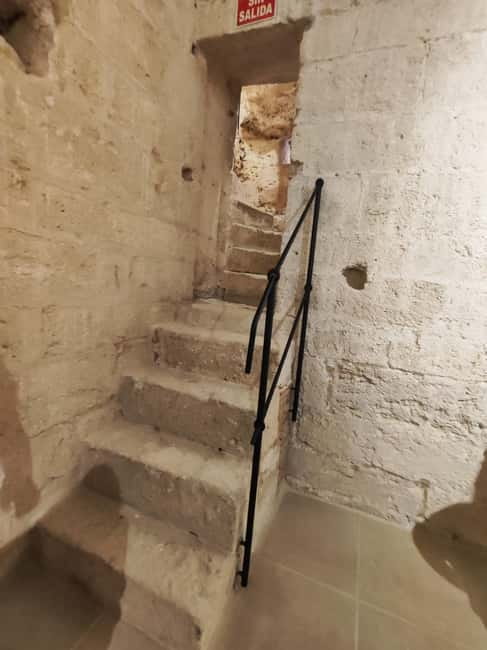
Review · SPAIN
Discover the fascinating Alcazaba: History and unique views
Almería’s Alcazaba is more than a fortress you photograph from below. Inside, its three enclosures show how Muslim rulers and later Christian monarchs reshaped the same hilltop stronghold. I especially like the access to the Torre del Homenaje and the reopened Wall of the Candle, where the city opens out below you. I also like that an official Andalusian guide handles the history instead of leaving you to decode a large, quiet site on your own. The one drawback is the pace: one hour and 30 minutes can feel brisk if you want long photo stops.
The tour also goes into Arab houses, cisterns, and troop baths, which give the visit more substance than a quick circuit of walls and views. Ines has received particular praise for her warm manner and clear grasp of both the monument and Almería. Bring water, sunscreen, and shoes suited to slopes, because this is an outdoor walk over old defensive routes.
Key points at a glance
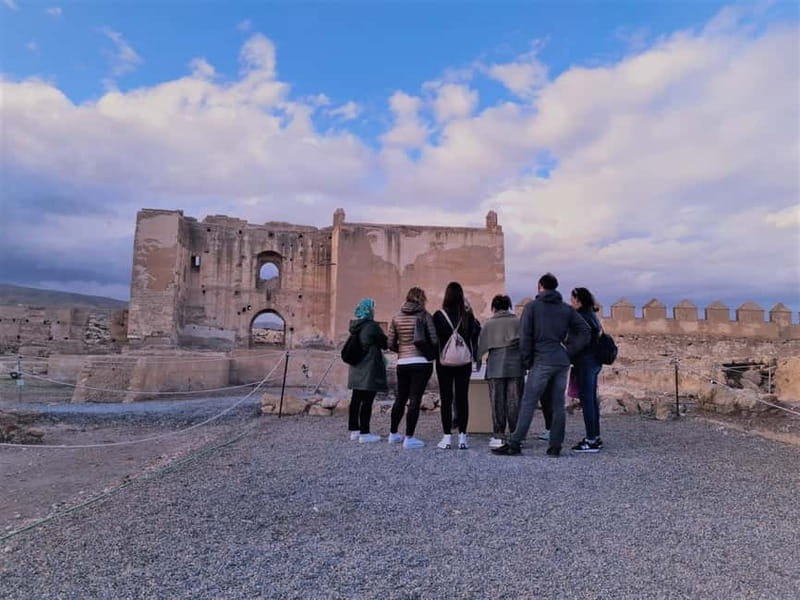
- Three historic enclosures: Two Muslim sections and one Christian section reveal the monument’s changing purpose.
- New access to the Torre del Homenaje: Since 2023, this important tower has been open again during the experience.
- Panoramas from the Wall of the Candle: The reopened wall gives you a high view over Almería and the Alcazaba complex.
- Small-group feel when numbers are low: You may have room to ask questions and stop for photographs, though one guide has been noted as moving quickly.
- Official historical interpretation: The guide is accredited by the Junta de Andalucía, with ticket management included.
- A 90-minute visit for $16: The price is reasonable if you want context, access, and a structured route rather than a self-guided walk.
Why Almería’s Alcazaba deserves your time
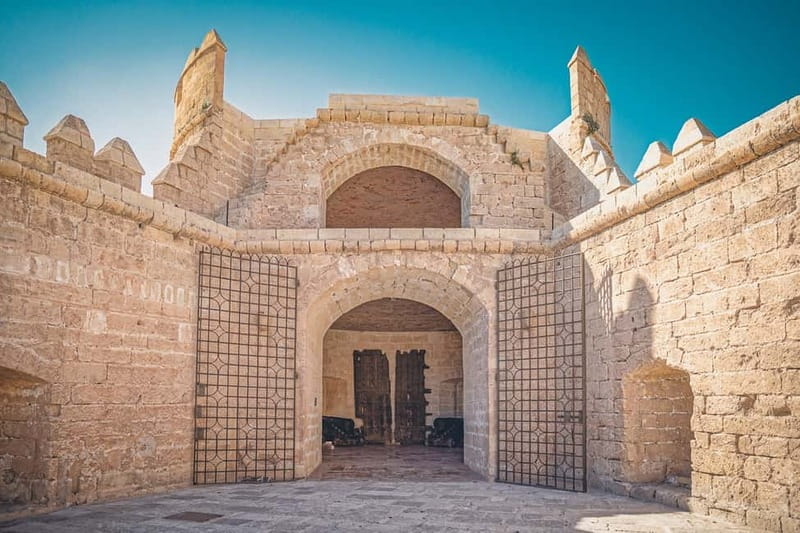
The Alcazaba dominates the north side of Almería’s historic quarter. Its walls climb the hill in broad stages, making the site feel like a fortified town rather than a single castle building. You see watchtowers, courtyards, old domestic spaces, military features, and the remains of a mosque.
The age of the place is part of its appeal. You are looking at more than 1,000 years of use, repair, and change. The tour connects those layers instead of treating the Alcazaba as one frozen moment. The first two enclosures reflect Muslim rule, while the third carries the imprint of the Catholic Monarchs and later Christian military planning.
That division gives the visit a useful shape. You begin with the practical needs of a fortified Muslim settlement, then see how the complex was altered when political power changed. I find that approach more helpful than a simple list of dates because it explains why the buildings look and feel different from one enclosure to the next.
The monument is also unusually good for understanding the relationship between defense and daily life. Cisterns stored water. Baths served the troops. Arab houses show that people lived and worked inside the protected area. Towers and walls were not just dramatic backdrops. They supported a functioning community and garrison.
More History Tours in Spain:
- Madrid Essential: Historic Center, Plaza Mayor & Royal Palace
★ 5.0 · 6,416 reviews - Montserrat with Black Madonna & Medieval Winery with Tapas/Lunch
★ 5.0 · 5,209 reviews - Barcelona: Tapas Walking Tour with Food, Wine, and History
★ 4.8 · 4,261 reviews
Meeting at Calle Almanzor
The meeting point is at the main entrance of the Alcazaba, on Calle Almanzor, before the staircase. That detail matters. You are not meeting at a café, a bus stop, or somewhere across the city. Go directly to the monument entrance and arrive on time, since access follows the site’s schedule.
The starting information lists three possible meeting point selections, all connected with the Alcazaba Monumental Complex. Confirm the exact selection when booking, but plan around the main entrance before the steps.
You should bring your original passport or identification card. Staff at the monument may request it during official check-in. It is an easy detail to overlook, especially if you normally leave your passport in your accommodation, but it is part of the access process here.
The tour includes ticket management and skip-the-line access. The monument itself is currently free for European Union citizens, and admission is usually also free for other nationalities under current regulations. The $16 charge therefore pays for the guided service, organization, and historical interpretation rather than simply functioning as an entrance ticket.
That makes the price fair for visitors who want the place explained. If you already enjoy reading every sign and taking your time alone, you may prefer a self-guided visit. If you want the main story in 90 minutes, the fee is easier to justify.
The first enclosure: water, open space, and the military town
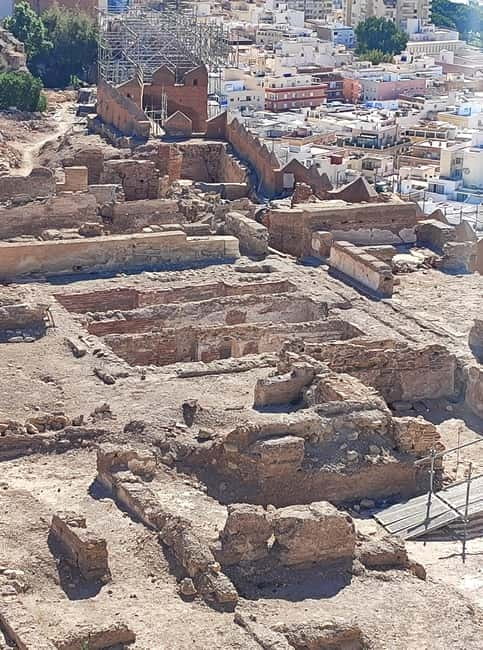
The first section introduces the Alcazaba as a working fortified settlement. The route includes the cisterns, and this is one of the most useful stops because water supply is central to any hilltop fortress. Walls are impressive, but stored water explains how people could remain behind them during trouble.
You also see archaeological remains and traces of older domestic use. The Arab houses help shift your attention from rulers and battles to ordinary routines. Even partial remains can show how the complex supported life inside its defenses.
Expect a mixture of guided explanation and photo stops. One part of the scheduled route allows about 10 minutes for a guided visit and photography. That is enough to get your bearings and take a few pictures, but not enough for a long architectural study.
The first enclosure is a good place to ask questions about construction and function. The guide explains how the spaces fit into the wider complex, and the route gives you a working sense of the Alcazaba before the higher sections begin.
The main issue is the terrain. The path includes historic slopes and ramps, not a smooth museum floor. Comfortable shoes are essential, and you should be in a condition that allows you to walk uphill and across uneven historic surfaces.
The second enclosure: houses, baths, and daily life
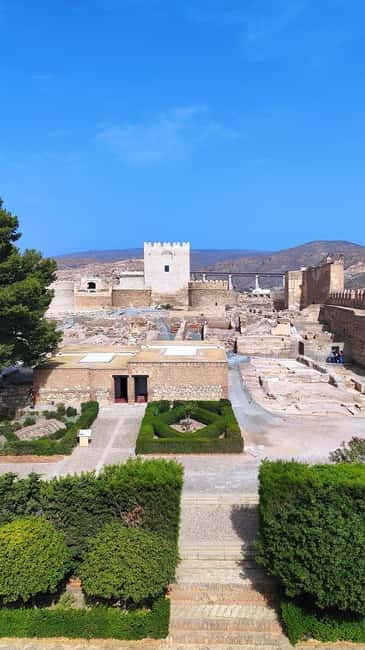
The second Muslim enclosure adds more detail to the story. Here, the tour includes the Arab houses and troop baths, two features that make the site feel less abstract.
The houses help you imagine the Alcazaba as a place where people lived, not only a line of soldiers on a wall. The troop baths point to the routines of a garrison. Together, they show how military sites depended on shelter, hygiene, water, and organized daily life.
A guided explanation is especially useful in spaces like these. Ruins rarely explain themselves. Without context, you may see low walls or fragments and move on. With the guide, you can understand what role the rooms played and how the complex changed over time.
This part of the tour includes roughly 20 minutes of guided exploration, followed by a photo stop of about 15 minutes elsewhere in the route. The timing gives you a chance to listen and then record the details that interest you.
You may want to keep your camera ready, but do not let photography take over. One guide has been described as moving a little quickly, requiring visitors to grab photographs fast. That is a useful warning for anyone who likes careful compositions. Listen first, then use the designated photo time rather than trying to photograph every doorway while the group is moving.
Same city, a different century:
- Sevilla Food Tour: Tapas, Wine, History & Traditions
★ 5.0 · 3,468 reviews - Valencia Old Town Tour with Wine & Tapas in 11th Century Historic Monument
★ 5.0 · 3,234 reviews - Madrid Tapas & Taverns Small Group Food & History Tour
★ 5.0 · 2,664 reviews - Barcelona Tapas Walking Tour: Food, Wine & History
★ 4.5 · 1,928 reviews
The Christian enclosure and Torre del Homenaje
The third enclosure is Christian in origin and crowns the complex. Its connection with the Catholic Monarchs gives the final section a different political meaning. The Alcazaba was not abandoned when power changed. It was adapted to new rulers, new military needs, and a new visual language.
The Torre del Homenaje is a major reason to choose this particular visit. Access has been available again since 2023, giving you a chance to enter a tower that adds depth to the fortress experience. Towers are often the clearest way to understand a defensive complex because they show how height, visibility, and controlled access worked together.
The itinerary allows about 15 minutes for a guided visit in this part of the site. That is not a long time, so you should expect a focused explanation rather than a slow, room-by-room inspection. The guide’s role is to connect the tower with the broader story of the Christian enclosure and the Alcazaba’s later use.
The route also includes a further 15-minute visit and then about 15 minutes of scenic views on the way out. The sequence should leave you with both the historical framework and a visual sense of how the fortress commands the city.
The Wall of the Candle and Almería views
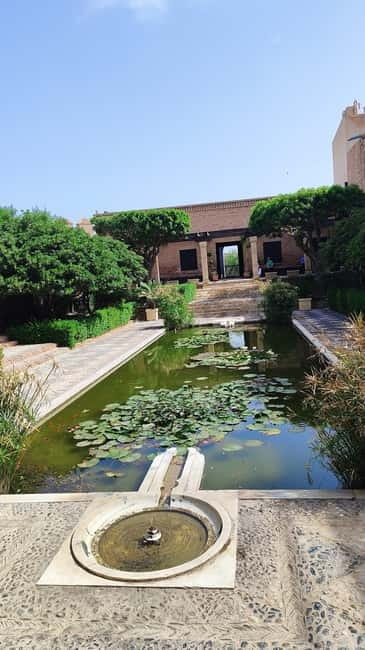
The reopened Wall of the Candle is another strong feature of the tour. From here, you get a panoramic view over Almería and across the Alcazaba Monumental Complex. The view helps explain the fortress’s position better than a street-level photograph can.
Take a moment to look back at the walls and towers from above. The complex is easier to read when you can see how its sections step along the hill. You also gain a clearer sense of why the site was built in this position and how it watched over the historic quarter.
This is likely to be one of the best places for photographs, but it is also where the pace may matter most. The published route includes scenic views for about 15 minutes. That is generous enough for a few photographs and a short look around, but it may not satisfy you if you want to linger until the light changes.
The outdoor setting makes weather important. Almería can be sunny and exposed, and there is little point trying to tough out the visit without water or sun protection. Wear a hat if you use one, apply sunscreen, and choose clothing suited to the forecast.
How the guiding affects the experience
The guide is the main reason to book rather than simply enter the monument. The tour is led by a professional accredited by the Junta de Andalucía, and the presentation covers construction, historical use, and the changes made by different cultures.
The strongest praise has focused on the guide’s warmth, passion for architecture, and ability to explain the site and city together. Ines has been singled out for being welcoming and for giving visitors a broad understanding of Almería, not just a string of facts about the walls.
That city connection matters. A fortress tour can become too inward-looking, with every detail trapped inside the monument. Linking the Alcazaba to Almería helps you understand why the complex mattered and how it shaped the city’s history.
Language is a practical consideration. The live tour is available in Spanish and Italian. Some content is presented in its original language. If you need another language, this experience may not be the right fit.
Group size is not specified, so you should not assume a private tour. Still, the experience can feel personal when numbers are low. A small group makes it easier to ask questions and pause for photographs. The tradeoff is that a larger group may make the guide’s pace feel faster and make it harder to stay close during transitions.
The 90-minute route in practical terms
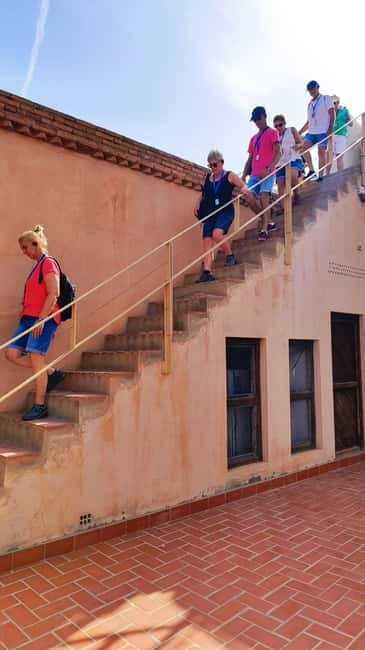
The total duration is about one and a half hours. The route combines several short guided sections, photo stops, a visit to the tower and defensive areas, and scenic views on the way through the complex.
A typical flow looks like this:
- Meet at the main entrance before the staircase.
- Begin with an introduction to the Alcazaba and a guided photo stop.
- Explore the first and second Muslim enclosures.
- See cisterns, Arab houses, and troop baths.
- Continue into the Christian enclosure.
- Visit the Torre del Homenaje.
- Reach the Wall of the Candle and enjoy views over Almería.
- Finish at one of the listed drop-off points within the Alcazaba complex.
The exact order can vary with access and site conditions, but the important point is that the tour covers all three enclosures rather than focusing only on the most photogenic wall.
At $16 per person, the visit offers good value for someone with limited time in Almería. You get a structured route, official interpretation, ticket handling, and access to the recently reopened areas. The value is less clear if you want to spend several hours sketching, photographing, or reading every archaeological detail at your own pace.
Who should book this Alcazaba tour?
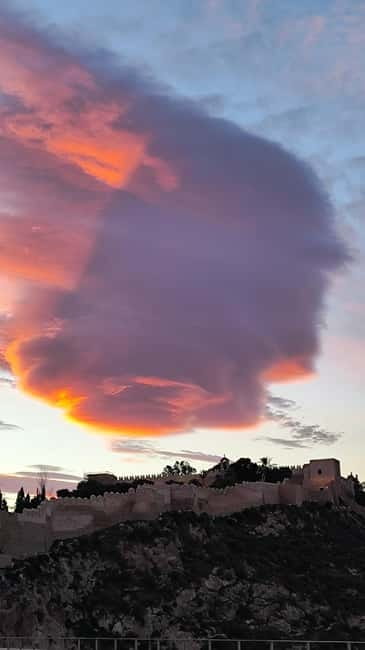
I would choose this for a first visit to the Alcazaba, especially if you have only a morning or afternoon in Almería. The guide gives you a clear framework, and the route includes the main historical and visual highlights.
It also suits people who like architecture, fortifications, and the overlap between Muslim and Christian history. The combination of cisterns, homes, baths, walls, and towers gives you more than a standard castle walk.
You should think twice if you have difficulty walking on slopes or ramps. The experience is not suitable for wheelchair users, and mobility scooters, electric wheelchairs, walking frames, and baby carriages are not allowed. High heels are also a poor choice.
The site is not suitable for unaccompanied minors, party groups, or bachelor and bachelorette groups. Smoking, vaping, alcohol, drones, oversized luggage, bikes, skateboards, skates, and scooters are prohibited. You should also avoid bringing sharp objects, speakers, or anything that might lead to touching the exhibits.
Cancellation is flexible up to 24 hours before the start for a full refund, and you can reserve now and pay later. Those terms are useful if your Almería plans may shift, but the more important choice is matching the tour’s active walking style and language with your needs.
Should you book it?
Book this tour if you want the Alcazaba’s story made clear in 90 minutes, with access to the Torre del Homenaje and the reopened Wall of the Candle. The official guide, practical route, and $16 price make it a sensible choice for a first visit.
Skip it if you prefer a slow, solitary exploration or need a wheelchair-accessible route. Also allow extra time before or after the tour if photography matters to you, since the guided pace may be quick in places. For most able walkers who want history, views, and a useful introduction to Almería, this is a well-priced way to understand the city’s most important monument.
FAQ
How long does the Alcazaba tour last?
The tour lasts about 1.5 hours.
How much does the experience cost?
The listed price is $16 per person.
Where does the tour meet?
You meet at the main entrance of the Alcazaba Monumental Complex on Calle Almanzor, before the staircase.
Is admission to the Alcazaba included?
Ticket management is included. The monument is currently free for European Union citizens and is usually free for other nationalities as well, depending on current monument regulations. Private transport to the meeting point is not included.
Which languages are available?
The live guide is available in Spanish and Italian. Some content is shown in its original language.
Will I visit all three sections of the Alcazaba?
Yes. The route covers two Muslim enclosures and one Christian enclosure.
Can I enter the Torre del Homenaje?
The tour includes access to the Torre del Homenaje, which has been open again since 2023.
Is the tour suitable for wheelchair users?
No. The experience is not suitable for wheelchair users and includes historic slopes and ramps. Comfortable shoes are required.
Just added around Spain
- Visita Guiada Por El Casco Histórico De Cuenca Y Su Catedral★ 5.0 · 45 reviews
- Night Walking Tour of Medieval Cuenca★ 5.0 · 64 reviews
- Mosque of Cordoba History Tour in English Tickets included★ 5.0 · 257 reviews
- 2 Hours Tour around Cádiz: History, anecdotes and curiosities★ 5.0 · 89 reviews
- Jerez de la Frontera History and Art Walking Tour★ 4.5 · 49 reviews
- Bilbao Historical Small Group Tour★ 4.5 · 159 reviews
- The Authentic Bilbao Pintxos, Food & Wine Tour with a Local★ 5.0 · 360 reviews
- Girona, Costa Brava and Medieval Village from Barcelona★ 5.0 · 149 reviews
Spain History Tours, compared.
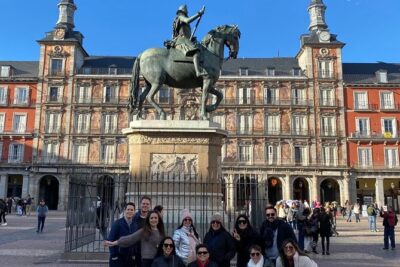
Madrid Essential: Historic Center, Plaza Mayor & Royal Palace
Read our review →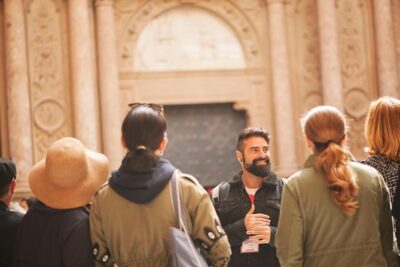
Montserrat with Black Madonna & Medieval Winery with Tapas/Lunch
Read our review →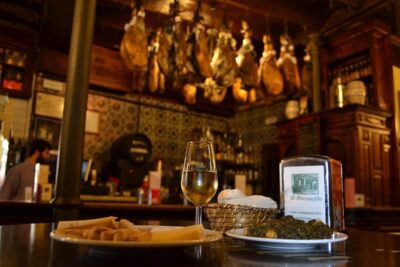
Sevilla Food Tour: Tapas, Wine, History & Traditions
Read our review →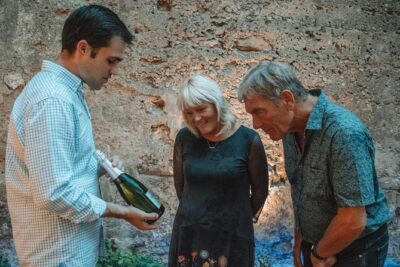
Valencia Old Town Tour with Wine & Tapas in 11th Century Historic Monument
Read our review →
Madrid Tapas & Taverns Small Group Food & History Tour
Read our review →
Barcelona Tapas Walking Tour: Food, Wine & History
Read our review →
Ultimate Seville Tapas, Wine & History Small Group Tour
Read our review →
Córdoba: Skip-the-Line Great Mosque-Cathedral History Tour
Read our review →Browse the lists this tour appears in