

Review · SPAIN
A Coruña: Historic Walking Tour Old Town and Highlights
A Coruña’s best introduction is on foot, where glass-fronted Marina galleries, medieval lanes, grand plazas, and seafaring streets fit into one compact route. This two-hour walking tour connects the city’s main sights without wasting time on transport.
I like the small group limit of 10, and I like that guides such as Alex and Alejandro add local stories, history, restaurant tips, and ideas for the rest of your day. The main tradeoff is that this is an outdoor overview: monument admission is not included, and the walk runs rain or shine.
Key points to know before booking
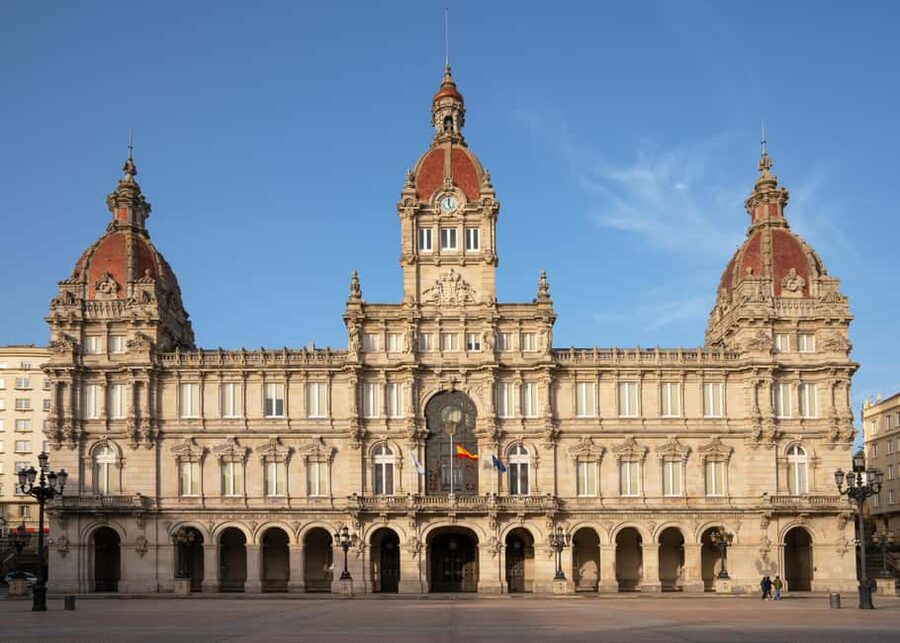
- A compact route from Teatro Colón to the Obelisk: You cross the Old Town, Pescadería, Calle Real, and the gardens in a useful westward walk.
- The Marina galleries are a major highlight: These glass-fronted façades show why A Coruña is often linked so closely with its maritime setting.
- Alex and Alejandro are noted for clear, lively guiding: Expect history, architecture, humor, and practical suggestions when they lead your group.
- Only 10 people maximum: A small group makes it easier to hear the guide and ask questions.
- No museum or monument entry is included: The value comes from the guided walk and outside views, not from interior visits.
- Good for cruise port days: The two-hour schedule leaves time for lunch, shopping, or more sightseeing afterward.
Why this walk makes sense in A Coruña
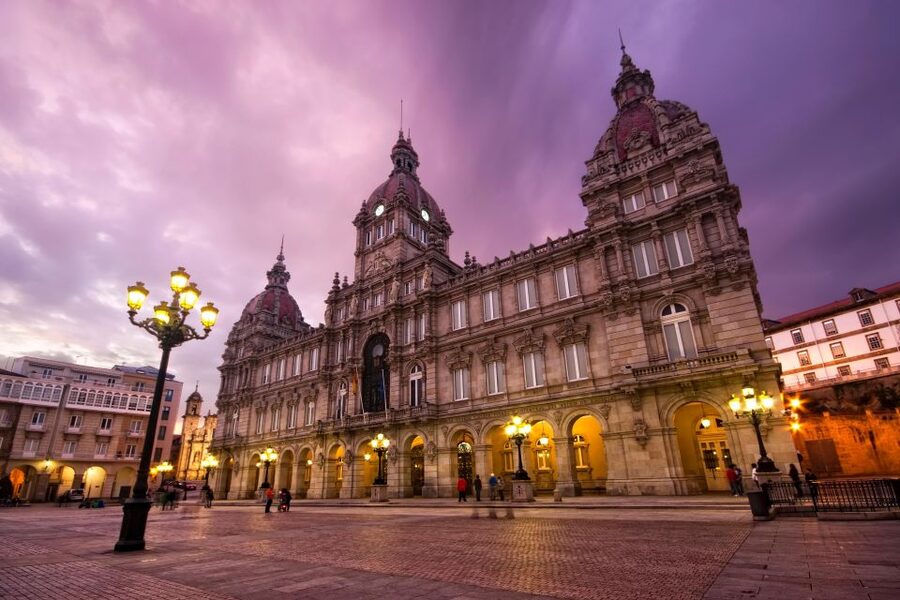
A Coruña can look easy to visit at first. The center is walkable, the sea is never far away, and several key sights sit close together. Yet the city makes more sense when someone explains how its old streets, grand civic buildings, churches, and glazed façades fit together.
This route gives you that framework. It begins at Teatro Colón and moves through the historic center before finishing at the Obelisk near the waterfront gardens. You are not simply ticking off buildings. You are seeing how A Coruña combines a medieval core with a later commercial city facing the Atlantic.
The route also crosses two different parts of the center. The Old Town brings churches, squares, noble homes, and quieter lanes. Pescadería and Calle Real feel more urban and commercial, with shops, cafés, and the city’s familiar white galleries. That change of mood is one reason the walk feels more useful than a short plaza-by-plaza tour.
I would book it early in a visit. A guide can point out places to return to, explain what deserves more time, and suggest where to eat. Alex is especially praised for giving clear recommendations after the formal tour, which is handy if you have only one afternoon.
More History Walking Tours in Spain
- Barcelona: Tapas Walking Tour with Food, Wine, and History
★ 4.8 · 4,261 reviews - Barcelona Tapas Walking Tour: Food, Wine & History
★ 4.5 · 1,928 reviews - Madrid Historical Walking Tour
★ 5.0 · 721 reviews
From Teatro Colón to María Pita Palace
The meeting point is the main entrance of Teatro Colón. Look for the guide with a distinctive black backpack and an official guide badge on a blue lanyard. That detail matters in a busy city center, especially if several groups are gathering nearby.
The theater provides a sensible starting point because the tour quickly moves into the civic heart of A Coruña. Your first listed stop is Teatro Rosalía de Castro, where you make a photo stop and hear about the building and its place in the city. Expect an outside explanation rather than a performance or theater visit.
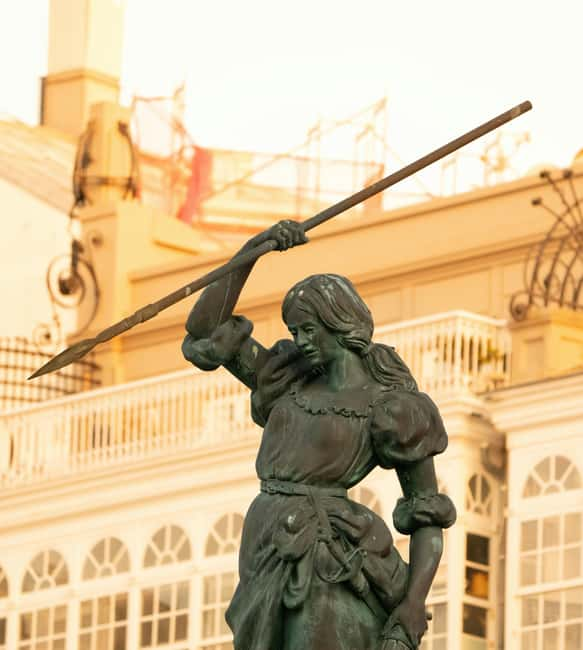
From there, the walk reaches Praza de María Pita. This is one of the city’s defining public spaces, with María Pita Palace facing the square. The plaza gives the guide room to explain local government, civic identity, and the story behind María Pita, a figure closely linked with A Coruña’s character.
The square is also a good early pause for orientation. You can see how the city uses monumental public architecture to face its residents, while the narrower historic streets nearby offer a more intimate scale. I like this contrast because it keeps the tour from becoming a string of unrelated photo stops.
Churches and squares in the Old Town

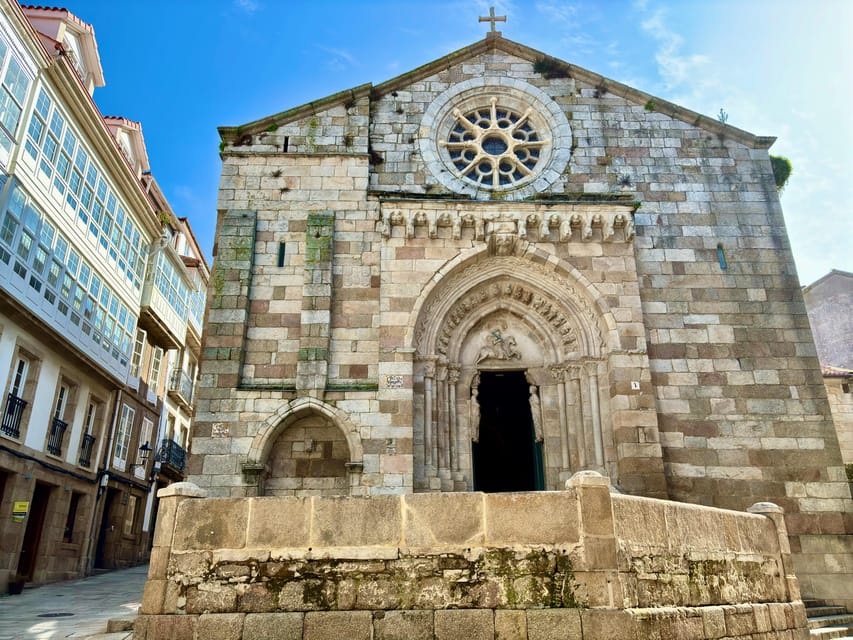
The route then turns toward Igrexa de Santiago, one of the clearest reminders that A Coruña’s center grew from an older religious and medieval town. The itinerary includes a visit and guided explanation, but opening conditions can affect what you see inside. Treat the church as both a possible interior stop and an important exterior landmark.
Praza Santa Bárbara follows, offering a quieter setting than María Pita. This is where the walk slows down and the city’s older character becomes easier to notice. You might find the square more rewarding after the larger civic spaces because the scale is calmer and the buildings feel closer around you.
Palacio de Cornide adds another layer. The guide uses the building as a point for discussing architecture, ownership, and the city’s social past. The tour does not include a palace admission, so the value here is the explanation and the view from the street.
Next comes the Colexiata de Santa María do Campo. This church is an important Old Town stop, and the surrounding streets help show how the historic center developed around religious buildings and local neighborhoods. You will want comfortable shoes here. Old-town walking is not a place for stiff footwear, and the tour keeps moving rather than setting up a long seated talk.
Praza de Azcárraga offers another change in pace. It is a useful stop for understanding the historic center as a series of connected spaces rather than one single square. A good guide can make these transitions meaningful, pointing out how streets, churches, homes, and public areas relate to one another.
The Church of San Nicolás is also included as a photo stop and guided sight. As with the other churches, you should not assume a full interior visit or a special opening. This is an important practical point: the tour gives you context for the buildings, but it is not a ticketed church and museum circuit.
Calle Real and the city’s modern face
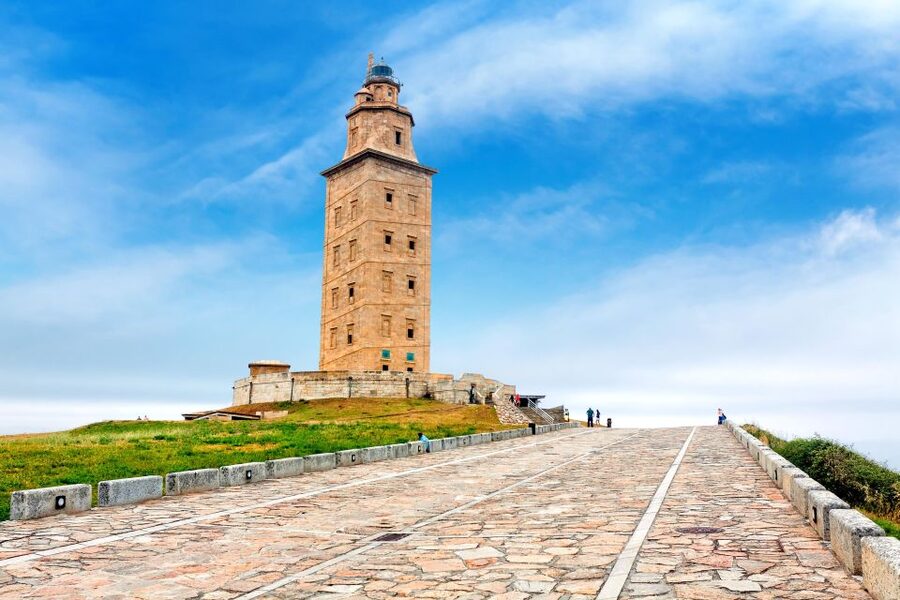
After the Old Town, the route reaches Rúa Real, or Calle Real. This is where A Coruña’s historic center becomes more commercial and social. Shops, cafés, and daily city life replace the quieter feel of the older lanes.
Calle Real is also one of the best places to understand the city’s modernist façades. A Coruña is famous for its galerías, enclosed glass balconies that catch light and help connect homes with the sea-facing climate. The galleries are not just decoration. They are part of the city’s visual identity and one of the strongest reasons to explore the center on foot.
This section should appeal to anyone who enjoys architecture but does not want a specialist lecture. Guides Alex and Alejandro are praised for explaining how social class, building design, and the city’s growth shaped the streets. You can expect the discussion to move between architecture, Spanish history, literature, and local stories rather than stay narrowly focused on dates.
The walk’s outdoor format is especially useful here. A coach can pass through the main streets, but it cannot give you the same view of individual façades or let you pause in a narrow lane. One past participant specifically valued walking into areas a coach could not reach. That is a strong reason to choose this option on a cruise stop.
More Old Town and Historic Centre Walks in Spain
- Madrid Essential: Historic Center, Plaza Mayor & Royal Palace
★ 5.0 · 6,416 reviews - Valencia Old Town Tour with Wine & Tapas in 11th Century Historic Monument
★ 5.0 · 3,234 reviews - Madrid Historic Centre Food Tour with Authentic Tapas & Wines
★ 5.0 · 814 reviews - Madrid in a Day Tour:Royal Palace, Historic Center & Prado Museum
★ 5.0 · 628 reviews
The Marina galleries and the walk to the Obelisk
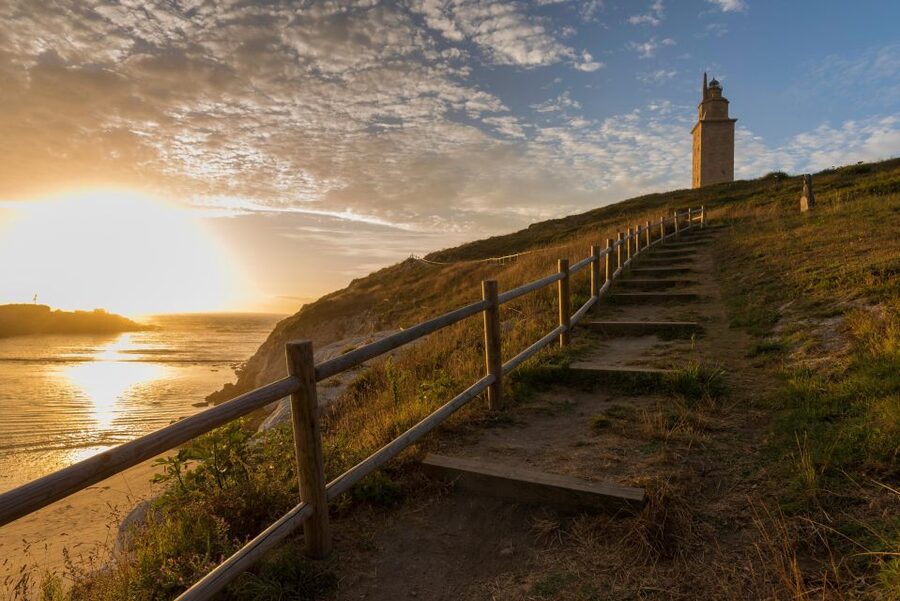
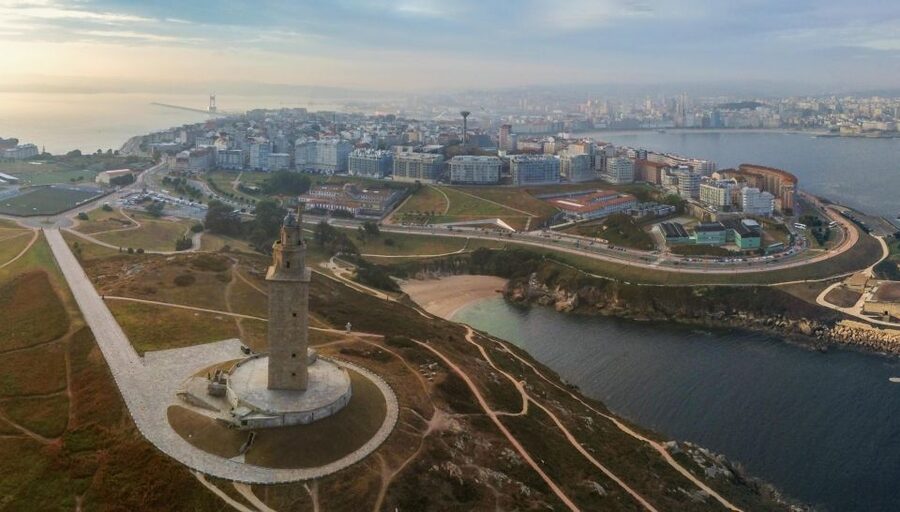
The final stretch leads through Jardínes de Méndez Núñez and finishes at the Obelisk. This gives the tour a clear ending rather than dropping you back at the starting point.
The gardens are a pleasant transition between the central streets and the waterfront area. They also give you a chance to think about the city as a place shaped by the sea, trade, public life, and movement. The Obelisk is a useful final marker for continuing on your own, finding food, or planning the next part of the day.
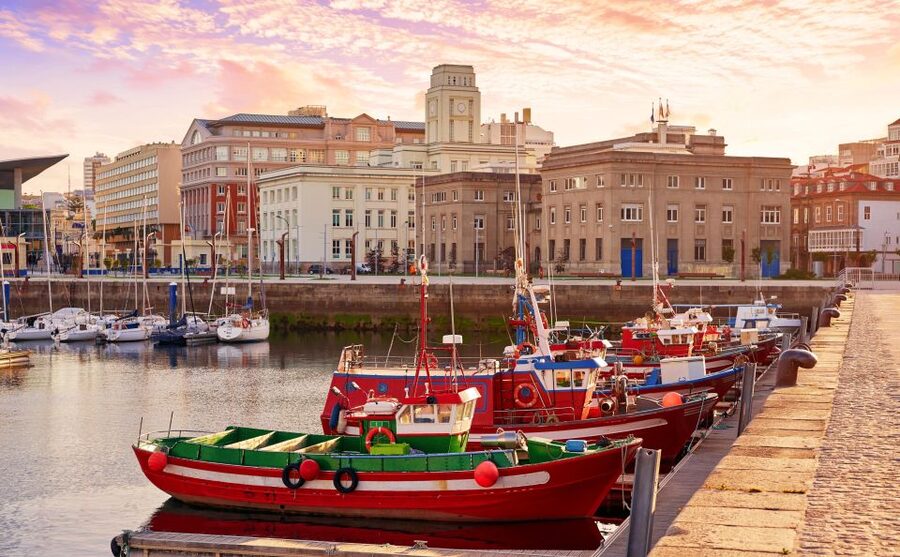
The route’s strongest visual theme is the Marina. The galleries create long, bright façades that reflect A Coruña’s coastal setting. They are easy to photograph, but a guide adds the important part: why this style became so closely tied to the city and how the buildings reflect both climate and urban ambition.
Keep in mind that the tour ends at the Obelisk, not at Teatro Colón. That is usually an advantage because you finish near another central area, but you should plan your onward route. If your hotel, ship transfer, or meeting point is back near the theater, leave extra time.
What the guide adds
A Coruña is a city where basic sightseeing is possible without a guide. You can walk through the center, photograph the galleries, and find María Pita Palace on a map. The guide earns the fee by connecting those sights.
Alex receives especially strong praise for being friendly, amusing, clear in English, and passionate about A Coruña. Alejandro is also described as a strong guide with wide knowledge of Spanish history, Galicia, architecture, and literature. Since the assigned guide can vary, do not treat Alex as guaranteed, but the tour is designed around a live English or Spanish guide.
The small group helps. With a maximum of 10 people, you are less likely to lose the guide in a crowded street, and you can ask about a building that catches your eye. Some departures may be much smaller, even only two or four people, though that depends on bookings.
The pace appears well suited to sightseeing rather than exercise. You cover many stops in two hours, so expect frequent pauses and explanations instead of long stretches of silent walking. The route is wheelchair accessible, but if you use a wheelchair or have limited mobility, confirm current route conditions when booking because historic streets and building access can vary.
Price, timing, and what you get
At $19 per person, the tour is good value if you want a clear introduction to A Coruña. You are paying for a local guide, a planned route, and useful interpretation of sights that would otherwise be easy to pass without understanding.
The price includes all fees and taxes and the guide. It does not include food, drinks, museum tickets, or monument admission. That keeps the base price low, but you should budget separately if you want to enter museums or churches after the walk.
Two hours is long enough to cover the center without using up your entire day. It works well before lunch, after arriving in port, or as a first activity followed by independent sightseeing. The tour is also rain or shine, so check the forecast and bring a waterproof layer or umbrella when needed.
Free cancellation is available up to 24 hours before the start time, and you can reserve without paying immediately. Those terms are useful if your plans depend on ship timing or changing weather, but they do not remove the need to arrive ready for an outdoor walk.
Who should book this tour
I would recommend it to first-time visitors, cruise passengers, couples, solo visitors, and anyone who wants history without a full-day commitment. It is particularly useful if you enjoy architecture and want to understand why A Coruña looks different from many other Spanish cities.
It also suits you if you like practical guidance. Alex and Alejandro are known for adding suggestions for restaurants, drinks, cultural sights, and places to continue after the tour. That advice can turn a two-hour walk into a plan for the rest of your day.
You may want another option if you strongly prefer interior visits, a museum-focused experience, or a slower route with long time at each site. The churches and palaces are mainly experienced from the street, and the itinerary covers many places in a short period.
Bring comfortable shoes, comfortable clothes, and weather-appropriate outdoor clothing. Since the tour operates in all weather, a light rain layer is not optional on a wet Galician day.
Should you book A Coruña Historic Walking Tour?
Book it if you want a compact, affordable introduction to the city with a real local voice. The route covers the sights most visitors want to see, but its real strength is the connection between medieval streets, civic architecture, modernist galleries, and the sea.
I would make it one of my first activities in A Coruña, especially on a short visit. Choose it with realistic expectations: you get two hours of guided outdoor sightseeing, not a series of museum entries. For $19, a small group, an accessible route, English or Spanish guiding, and a finish near the Obelisk, that is a sensible deal.
FAQ
How long does the A Coruña historic walking tour last?
The tour lasts two hours.
Where does the tour begin?
It begins at the main entrance of Teatro Colón.
How do I recognize the guide?
The guide will carry a distinctive black backpack and wear an official tour guide badge on a blue lanyard.
Where does the tour finish?
The walk finishes at the Obelisk.
What languages are available?
The live tour guide speaks English or Spanish.
How many people can join the group?
The group is limited to 10 participants.
Is the tour wheelchair accessible?
Yes, the activity is listed as wheelchair accessible.
Are food and drinks included?
No. Food and drinks are not included.
Are entrance fees to churches, monuments, or museums included?
No. Entrance fees are not included. The tour includes the guide and listed fees and taxes.
What should I bring?
Bring comfortable shoes, comfortable clothes, weather-appropriate clothing, and outdoor clothing. The tour takes place rain or shine.
Just added around Spain
- Night Walking Tour of Medieval Cuenca★ 5.0 · 64 reviews
- Visita Guiada Por El Casco Histórico De Cuenca Y Su Catedral★ 5.0 · 45 reviews
- Mosque of Cordoba History Tour in English Tickets included★ 5.0 · 257 reviews
- 2 Hours Tour around Cádiz: History, anecdotes and curiosities★ 5.0 · 89 reviews
- Jerez de la Frontera History and Art Walking Tour★ 4.5 · 49 reviews
- Bilbao Historical Small Group Tour★ 4.5 · 159 reviews
- The Authentic Bilbao Pintxos, Food & Wine Tour with a Local★ 5.0 · 360 reviews
- Girona, Costa Brava and Medieval Village from Barcelona★ 5.0 · 149 reviews
Spain History Tours, compared.
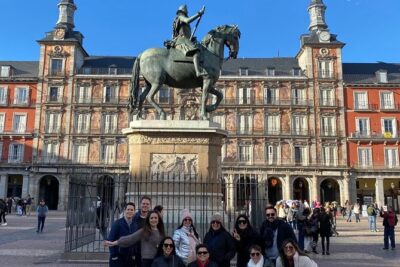
Madrid Essential: Historic Center, Plaza Mayor & Royal Palace
Read our review →
Montserrat with Black Madonna & Medieval Winery with Tapas/Lunch
Read our review →
Sevilla Food Tour: Tapas, Wine, History & Traditions
Read our review →
Valencia Old Town Tour with Wine & Tapas in 11th Century Historic Monument
Read our review →
Madrid Tapas & Taverns Small Group Food & History Tour
Read our review →
Barcelona Tapas Walking Tour: Food, Wine & History
Read our review →
Ultimate Seville Tapas, Wine & History Small Group Tour
Read our review →
Córdoba: Skip-the-Line Great Mosque-Cathedral History Tour
Read our review →Browse the lists this tour appears in