

Review · AMSTERDAM
Amsterdam: Iconic Canals & Historic Sights Walking Tour
Amsterdam’s story unfolds quickly on foot, from the grand Royal Palace to the quiet Begijnhof and the old lanes around Oude Kerk. I like that this tour connects big landmarks with smaller details, including leaning houses, secret courtyards, hidden churches, and the reason bikes shape daily life here.
I also like the wartime stories in the Jewish Quarter and the practical advice you get from a local guide. The main drawback is pace: two hours is enough for a strong introduction, but not enough to visit paid sights inside. Plan on a tip at the end, since guides such as Craig and Adrián depend on that custom.
Key points at a glance
- Start at the National Monument: Meet in the open center of Dam Square, beside one of Amsterdam’s easiest landmarks to find.
- See five different sides of Amsterdam: The route moves from royal power and medieval religion to canal life, wartime memory, and quiet courtyards.
- Get practical bike advice: You’ll learn why bikes dominate the streets and how to move around more safely.
- Hear personal city stories: Guides such as Craig and Adrián add humor and local color to the standard sights.
- Expect an orientation, not a museum tour: Paid attraction entries are not included, so the value comes from the guide, route, and context.
- Good for a first visit: The walk gives you a clear map of central Amsterdam before you explore on your own.
Why this two-hour walk works as an Amsterdam introduction
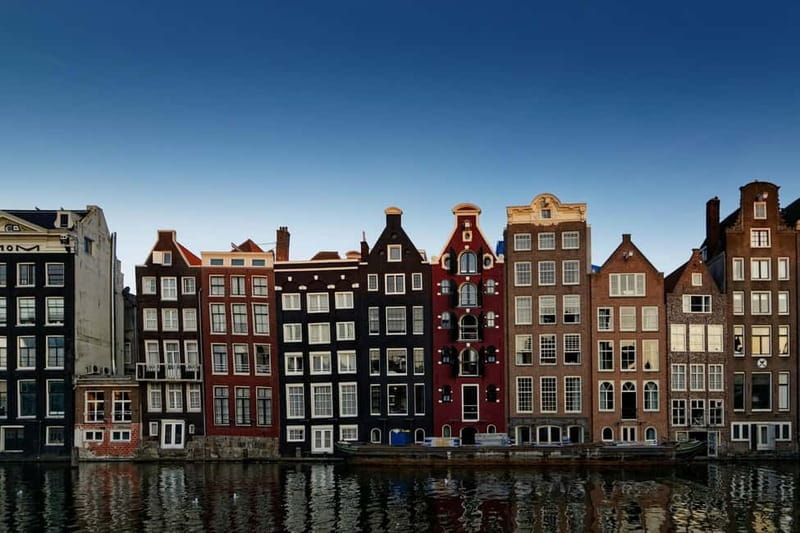
Amsterdam can feel easy at first glance. The streets are compact, the canals are beautiful, and many sights sit close together. Yet the city’s story is layered, and it is easy to walk past an old church, courtyard, or canal house without understanding what you are seeing.
This tour gives you a useful framework. You begin with the city’s royal and civic center, pass through the oldest part of Amsterdam, then move toward the Jewish Quarter and Begijnhof. The route shows how Amsterdam changed from a trading center into a wealthy Golden Age city, how religious and social groups found space within it, and how wartime events still shape the city’s memory.
I would treat this as a first-day orientation. You will not spend long inside any one attraction, but you will collect enough context to decide where you want to return. The route also helps you get your bearings before tackling Amsterdam’s confusing mix of canals, narrow lanes, trams, and bike paths.
The tour lasts two hours and is led in English or Spanish. It is wheelchair accessible, though the walk still takes place across historic streets and bridges. Wear comfortable shoes, especially if you plan to keep exploring after the tour.
More History Walking Tours in Amsterdam
- Amsterdam: Life of Anne Frank and World War II Walking Tour
★ 4.8 · 10,467 reviews - Amsterdam: Haunted History and Ghost Walking Tour
★ 4.5 · 488 reviews - Amsterdam History Walking Tour
★ 5.0 · 281 reviews
Meeting at Dam Square and the National Monument
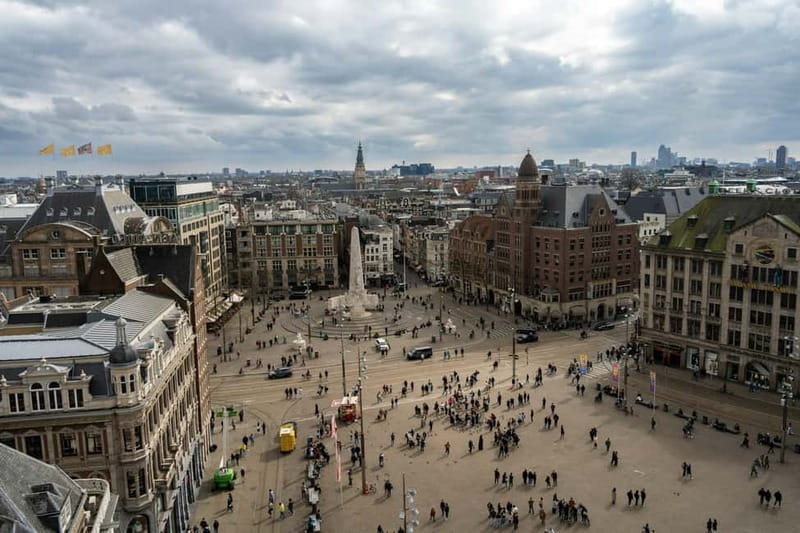
The meeting point is in front of the National Monument in Dam Square. This is a sensible place to begin because it is central, visible, and close to several major sights. Look for the guide near the monument rather than waiting beside the Royal Palace.
Dam Square gives you an immediate lesson in Amsterdam’s changing identity. It began as part of the city’s early development around the Amstel River and later became a place for trade, public events, royal ceremonies, and national remembrance. The National Monument adds a modern layer of memory to the square.
The opening talk should help you understand the city’s basic shape. Amsterdam is not a city of one grand boulevard or one central historic district. It is a web of water, bridges, narrow streets, and neighborhoods that grew at different times.
The square can be crowded and noisy, so this is not the quietest part of the walk. Still, it is a useful place to start because the guide can point you toward the major historic center and explain how the nearby sights fit together.
The Royal Palace and Amsterdam’s civic power
The Royal Palace of Amsterdam is the first major stop. Its broad, formal exterior is a sharp contrast to the narrow canal houses you will see later. The building began as a city hall during the Dutch Golden Age, when Amsterdam was one of Europe’s leading centers of trade and finance. It later became a royal residence.
The guide spends about 24 minutes discussing the palace. That gives you time to look at the architecture and hear how Amsterdam’s merchants once projected power through public buildings. The palace is not just a royal attraction. It represents the confidence of a city that had grown wealthy through shipping, commerce, and global trade.
You do not get admission to the palace as part of this walk. That is important if you want to see the interior rooms and grand civic spaces. The tour gives you outside context, while a separate visit would be needed for the paid attraction.
I like this stop because it starts the tour with a clear question: how did a relatively small water-based city become so influential? The answer comes through trade, city planning, religious tolerance, and a powerful merchant class. You will hear some of that story here before moving into the older lanes.
Oude Kerk in the Red Light District

From Dam Square, the walk continues toward Oude Kerk, Amsterdam’s oldest building. The church sits in the heart of the Red Light District, a setting that can surprise first-time visitors. Medieval religious life, modern nightlife, narrow lanes, and busy foot traffic all meet in this small area.
The guide gives about 24 minutes to the church and its surroundings. That is enough time to explain the building’s age, its role in the old city, and the way Amsterdam changed around it. You will also see how the Red Light District is not simply a nightlife zone. It occupies one of the city’s oldest sections, with churches, old houses, and traces of earlier community life.
Oude Kerk is especially useful for understanding Amsterdam’s layered character. A city can be famous for tolerance and personal freedom while also carrying a serious religious and civic past. The tour presents that contrast without asking you to reduce the area to one theme.
The drawback is that this part of the route can be crowded and distracting. You may have to listen carefully, and the church’s interior is not included. If you want a quieter look at the building, consider returning at another time.
More History Walking Tours in the Netherlands
- Amsterdam: Highlights & History Walking Tour
★ 4.8 · 266 reviews - Anne Frank and Amsterdam Jewish History Walking Tour
★ 5.0 · 259 reviews - Amsterdam: Ghost Walking Tour and Dark History
★ 4.8 · 118 reviews - Amsterdam: Anna Frank and World War II History Walking Tour
★ 4.8 · 86 reviews
Canals, bridges, leaning houses, and secret churches
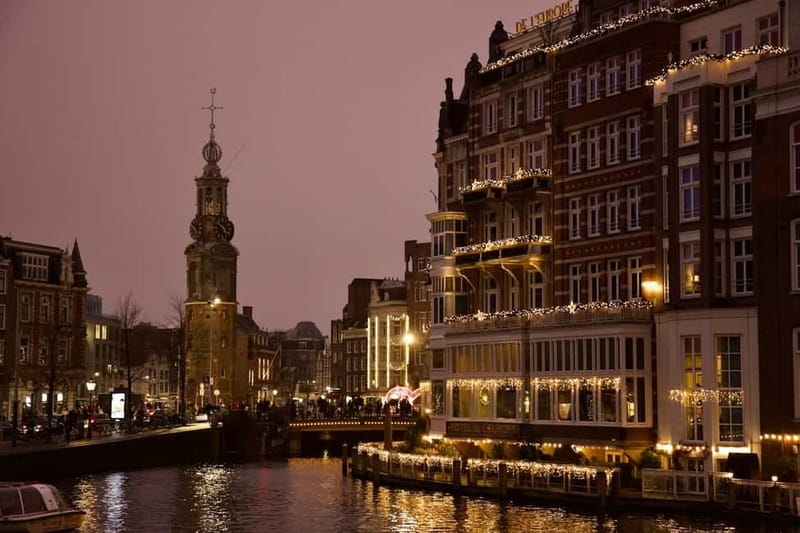
The canal section is the most scenic part of the walk. You will cross bridges, follow narrow streets, and pass the tall houses that make Amsterdam instantly recognizable. Some buildings lean noticeably, a feature that can look playful in photographs but also reflects the challenges of building on soft ground and using narrow urban plots.
Your guide explains how the canals shaped Amsterdam’s growth. They were useful for moving goods, creating house plots, and organizing the expanding city. They also made the city wealthy and visually distinctive. The water is not just decoration. It is part of the reason Amsterdam developed as it did.
This is where the tour’s small details pay off. Look for unusual rooflines, narrow façades, quiet entries, and buildings that seem to hide behind the main streets. You may pass courtyards and former secret churches that reveal how religious and social groups adapted to life in a city with strict public rules but a reputation for tolerance.
The canal walk is also the best time to take photographs. The bridges provide wider views, while the narrow streets show the scale of everyday Amsterdam. I would keep your phone or camera ready, but do not let photographs distract you from the guide. Many of the most interesting details are easy to miss when you are watching only the water.
Learning how to survive Amsterdam’s bike traffic
The bicycle talk may sound like a small part of the tour, but it is practical. Bikes outnumber people in Amsterdam, and cycling is central to daily life. You will learn why the bike became such a strong part of the city and how it affects the way streets are used.
For a first visit, this advice matters. Many visitors look toward cars or trams and forget that a bike lane can be just as active. You need to pay attention when crossing streets, stepping onto paths, or standing near a bridge.
The guide’s tips are useful beyond the two-hour walk. You will be better prepared to walk through central Amsterdam without blocking cycle lanes or stepping into traffic. This is one of those small lessons that can make the rest of your stay less stressful.
The tour does not include a bicycle ride, rental, or transportation. That is a plus if you want to walk at an easy sightseeing pace, but you should not book it expecting an active cycling experience.
The Jewish Quarter and stories of wartime courage
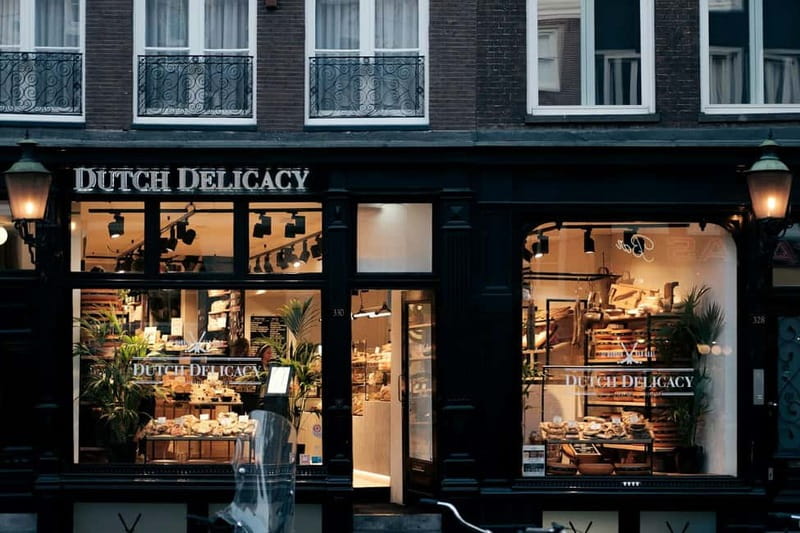
The route continues into the Jewish Quarter, where the tone becomes more serious. Here, the guide discusses the Nazi occupation, wartime persecution, resistance, and the strength of people who endured it.
This section gives the tour moral and historical weight. Amsterdam is often presented through canals, bicycles, and relaxed street life. The Jewish Quarter reminds you that the city also carries painful memories and stories of loss. A good guide can connect those events to streets and neighborhoods rather than presenting them as distant facts.
You should expect this part of the walk to be thoughtful rather than light entertainment. The guide’s mix of humor and local knowledge may work well in the earlier sections, but the wartime material calls for attention and respect.
The tour does not include entrance to a museum or memorial site. If you want a fuller study of Amsterdam’s wartime history, you will need to visit paid attractions separately. The walking tour still gives you a useful first layer of context and can help you choose which places deserve more of your time.
Quiet moments at the Begijnhof
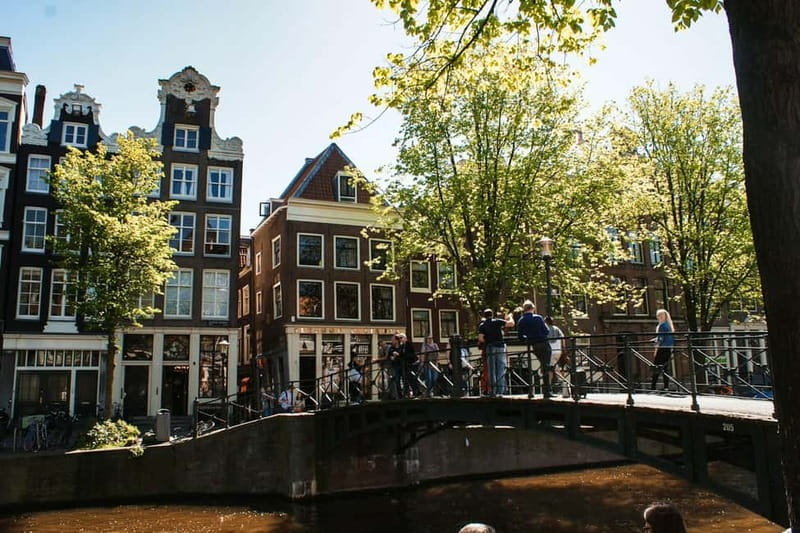
The final main stop is the Begijnhof, a peaceful courtyard hidden behind the busy central streets. Its calm atmosphere makes it a strong contrast to Dam Square and the Red Light District.
The Begijnhof has centuries of history connected with religious women who lived in a community setting. The guide explains how this private-feeling space functioned and why it remains important to Amsterdam’s story.
I like ending here because the tour finishes with a quieter view of the city. Amsterdam is not only grand buildings and crowded lanes. It also has enclosed courtyards, modest homes, and spaces where daily life once followed a slower rhythm.
Please remember that a courtyard like this is more than a photo stop. It is a place with a residential and reflective character. Listen to the guide’s instructions and keep your voice low. The peaceful setting is part of what makes the stop worthwhile.
Guide style, languages, and the human touch
The tour is led by a live local guide in English or Spanish. Recent guide feedback specifically praises Craig and Adrián, with Adrián described as a fantastic guide and Craig praised for his friendly manner and strong knowledge of the city.
Guide quality matters more on a walking tour than on a bus ride. You spend two hours hearing explanations while moving through public streets, so the guide needs to keep the group together, speak clearly, and adjust the tone between light city trivia and serious wartime history.
The guides also provide suggestions for places to eat, drink, and explore. These tips are included in the experience and can be useful after the walk, though the specific recommendations may depend on who leads your tour.
One practical point: a tip is expected at the end. The listed price is only $4.71 per person, which makes the booking price unusually low for a two-hour guided city walk. You should treat that amount as the starting cost, not the full measure of what the guide’s time is worth.
Is $4.71 good value?
At $4.71, this tour is easy to fit into a short Amsterdam visit. You receive two hours with a live English or Spanish-speaking guide, a central route, practical city advice, and an introduction to several major historic areas.
The value depends on what you want. If you need admission to the Royal Palace or Oude Kerk, the price does not cover it. If you want a small-group museum visit or an in-depth specialist tour, this may feel too general.
For a first look at Amsterdam, the value is strong. You see more than one neighborhood, learn how the city fits together, and can decide which sights deserve a separate paid visit. The low price also leaves room in your budget for museums, canal cruises, or food afterward.
Because the tour relies on guide tips, plan for that extra cost. The exact amount is not provided, so you should decide what feels fair based on the quality and length of the experience.
Who should book this walking tour?
I would recommend it to first-time visitors, short-stay visitors, and anyone who wants a quick introduction before exploring alone. It suits people who enjoy history but also want practical advice about bikes, streets, food, and daily life.
It is also a good fit if you want to see Amsterdam’s famous sights without spending the entire morning inside one attraction. The route gives you a broad view of the center and leaves you free to return to the places that interest you most.
You may want something else if you dislike walking, want extensive interior visits, or prefer a slow photography walk. Two hours moves at a useful but steady pace, and the tour covers serious history as well as lighter city stories.
Should you book it?
Book this tour if you want an affordable orientation to Amsterdam with strong coverage of canals, architecture, wartime memory, and local customs. The combination of Dam Square, Oude Kerk, the Jewish Quarter, and Begijnhof gives you more range than a simple canal walk.
Skip it if you already know central Amsterdam well or want a specialist tour focused on one subject. For most first visits, though, this is a sensible way to get your bearings, avoid basic bike mistakes, and understand why the city looks and feels the way it does.
FAQ
Where does the Amsterdam walking tour start?
The tour starts in front of the National Monument in Dam Square.
How long does the walking tour last?
The tour lasts two hours.
Which sights are included on the route?
The route includes the Royal Palace of Amsterdam, Oude Kerk, Amsterdam’s canals and bridges, the Jewish Quarter, and the Begijnhof.
Is entry to the Royal Palace included?
No. Paid attraction admission is not included, so entry to the Royal Palace would be optional and separate.
Is entry to Oude Kerk included?
No. Paid attraction admission is not included in the tour price.
What languages are available?
The live tour guide is available in English or Spanish.
Is the tour wheelchair accessible?
Yes, the activity is listed as wheelchair accessible.
What should I bring?
Bring comfortable shoes for the two-hour walking route.
Are food and drinks included?
No. Food and drinks are not included, though the guide provides tips on where to eat and drink in Amsterdam.
Can I cancel the tour?
Yes. You can cancel up to 24 hours in advance for a full refund. The reserve-now, pay-later option also lets you book without paying immediately.
Just added around Amsterdam
- Amsterdam Walking Tour: Urban Legends & History with local guide★ 5.0 · 39 reviews
- Amsterdam: Luxury Canal Cruise with Historic VR Experience★ 5.0 · 305 reviews
- Amsterdam 3 hrs Bike Tour – live guide En/Fr/De/Nl/Sp★ 4.5 · 138 reviews
- Amsterdam: Anne Frank and World War II Walking Tour (TOP RATED)★ 4.5 · 72 reviews
- Small Group Tour to Nazi WWII concentration camp from Amsterdam★ 5.0 · 112 reviews
- Guided Walking Tour Amsterdam – Legends, History & Ghost Stories★ 5.0 · 28 reviews
- LGBTQI+ History Tour of Amsterdam★ 5.0 · 123 reviews
- Amsterdam Haunted History and Ghost Walking Tour★ 5.0 · 47 reviews
Amsterdam History Tours, compared.

Amsterdam: Life of Anne Frank and World War II Walking Tour
Read our review →
Amsterdam: Dutch WWII Resistance Museum Entry Ticket
Read our review →
Amsterdam: Haunted History and Ghost Walking Tour
Read our review →
Amsterdam High-End Dutch Food & History Tour – Up to 8 guests
Read our review →
Amsterdam: Historic City Sightseeing Canal Cruise
Read our review →
Amsterdam: National Holocaust Museum Entry Ticket
Read our review →
Anne Frank and the Jewish History of Amsterdam Private Tour
Read our review →Browse the lists this tour appears in