
Review · SALEM
Best Salem Witch Trials Historical Walking Tour
Salem’s witch trials are easier to understand when you connect names and decisions to real streets. This 90-minute walk takes you from the Witch Trials Memorial to the Witch House, former jail and court sites, and places tied to Bridget Bishop, George Corwin, and the Parris family. The stories are personal, not just a list of dates.
I like the compact route and the way it helps you get your bearings in downtown Salem. I also like that guides use old images to explain vanished buildings, since most trial-era structures are gone. The main drawback is that you spend much of the tour standing outside and listening. If you expect to enter several historic buildings or visit the actual hanging site, this tour may feel limited.
Key points to know before you book
- The tour covers about one mile in 90 minutes, with frequent stops for stories and discussion.
- The Witch House is the only surviving Salem building directly tied to the 1692 trials.
- Most sites are locations, not preserved buildings, so expect interpretation rather than interior visits.
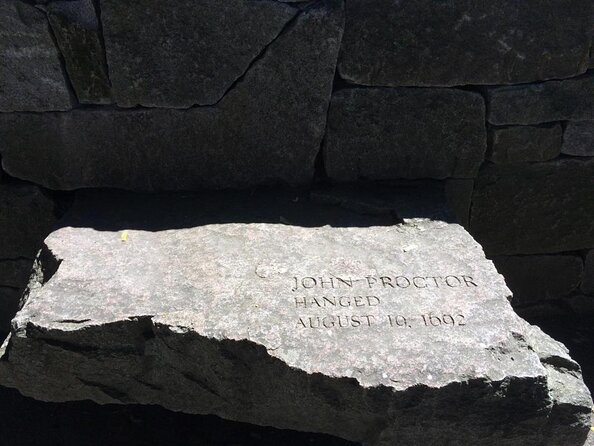
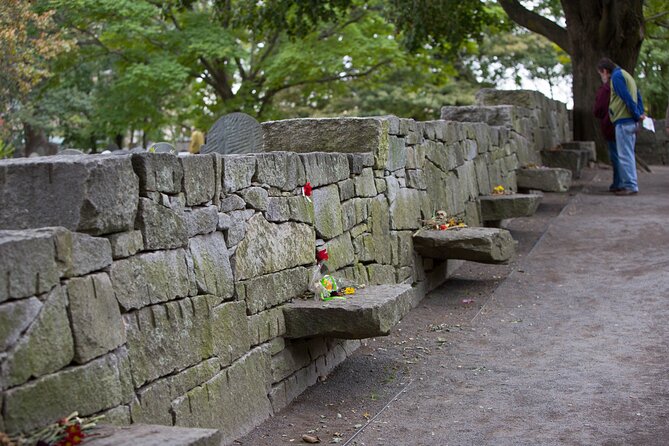
- The Salem Witch Trials Memorial gives the tour its emotional center, with 20 victims named on stone benches.
- The experience is history-first, not a theatrical ghost walk, though the guide may use humor and vivid storytelling.
- October requires extra planning, since traffic, parking, crowds, and street vendors can slow your arrival.
What this Salem witch trials tour really offers
This is a walking history lesson through modern Salem. You will not see a perfectly preserved colonial town where every trial happened inside an old timbered building. The witch trials took place more than three centuries ago, and many structures were torn down or replaced.
That fact shapes the experience. At several stops, your guide points to a present-day building or street corner and explains what once occupied the site. The value comes from linking the place to the people involved: judges, accusers, prisoners, and victims.
The route focuses on the 1692 witchcraft hysteria, including the theories behind it, the court process, the jailing of accused people, and the personal stories of those caught in it. Guides also separate documented facts from popular myths, an important service in a city where the trials are often treated as spooky entertainment.
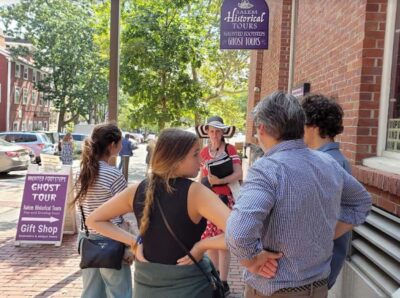
You meet at the Salem Historical Tours office at 8 Central Street. Tours leave at 10 a.m., 1 p.m., and 4 p.m. Arrive 15 minutes early, especially in October, when Salem traffic and parking can be far worse than your GPS estimate suggests.
The group can include up to 40 people. That is a fairly large walking group, so your experience may depend on where you stand and how clearly the guide projects. The tour is offered in English.
More Dark History and Haunted Tours in the USA
- Savannah History and Haunts Candlelit Ghost Walking Tour
★ 5.0 · 3,235 reviews - New Orleans Small-Group Haunted History Carriage Tour
★ 4.5 · 2,289 reviews - New Orleans Haunted History Ghost Tour
★ 4.5 · 2,084 reviews
The memorial gives the tragedy a human face
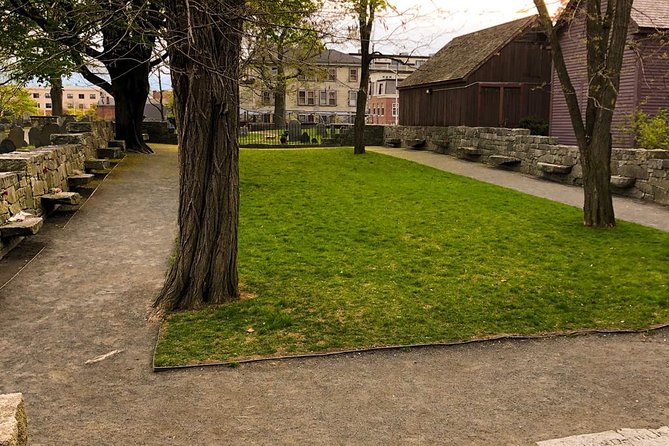
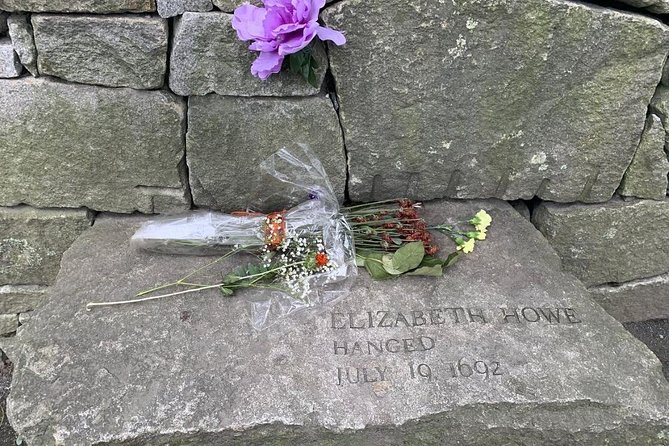
The Salem Witch Trials Memorial is one of the most meaningful stops. Dedicated in 1992, it honors the 20 innocent people who died during the 1692 trials.
The memorial uses stone benches, each marked with a victim’s name, the date of death, and the manner of death. Your guide explains the design and shares individual stories rather than treating the 20 victims as one anonymous group.
This is where the tour’s subject becomes more than a strange episode from colonial history. You begin to see how accusation, fear, authority, and community pressure affected particular families and neighbors.
Plan to listen closely here. A few minutes can pass quickly, and the tour schedule may not allow long personal reflection at every bench. One practical point is worth noting: the guide may discuss the memorial without walking you through every section of it. If you want time to read each name, return after the tour.
Rockafellas and the former First Church site
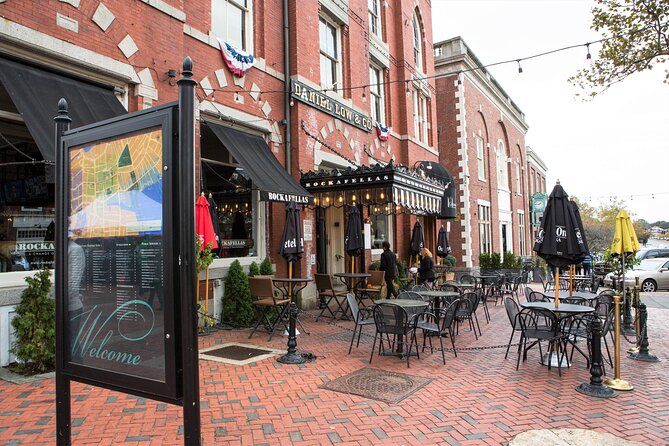
Rockafellas Restaurant occupies what is also known as the Daniel Low and Company building. The site once held Salem’s First Church and the city meeting house during the witch trials.
You will not enter the restaurant as part of the tour, and admission is not included. The stop works as a lesson in how Salem’s old civic spaces have changed. A place that is now used for dining once served as a center of town life, where public matters and religious concerns overlapped.
That setting matters because the trials were not isolated from daily life. Church, government, family disputes, and local reputation all fed into the crisis. Looking at the site from the street helps you picture how close together Salem’s main institutions were.
George Corwin’s house and the Joshua Ward House
The Joshua Ward House is now the Merchant Hotel, but the important connection lies beneath its present identity. This was the site of George Corwin’s home.
Corwin served as High Sheriff of Essex County in 1692. He signed arrest and execution warrants, seized personal property, and was associated with harsh treatment of prisoners. The tour also connects him with interrogation and torture carried out at his home.
This stop is a good example of the tour’s central challenge. You are visiting a meaningful location, but not a preserved 1692 interior. The building you see is not presented as Corwin’s original house, so you need to listen to the explanation rather than expect a museum display.
For me, this is still useful history. The trials depended on people who carried out orders. By focusing on Corwin, the tour shows how officials turned accusations into arrests, confiscations, and punishment.
More History Walking Tours in the USA
- History and Hauntings of Salem Guided Walking Tour
★ 5.0 · 14,564 reviews - Boston: Freedom Trail History Small Group Walking Tour
★ 5.0 · 6,450 reviews - Historic Charleston Guided Sightseeing Walking Tour
★ 5.0 · 6,216 reviews - Historic Savannah Guided Walking Tour
★ 5.0 · 2,918 reviews
The Witch House is the essential stop
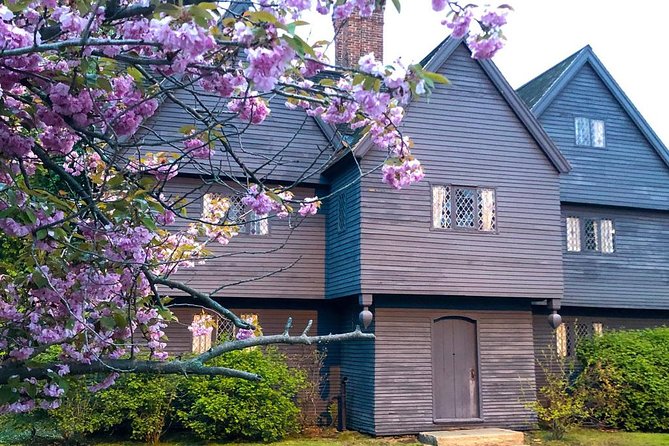
The Witch House is the only remaining structure in Salem with a direct connection to the 1692 witch trials. It was the home of Judge Jonathan Corwin and dates to the 1660s.
Corwin was one of the judges who met with Judge Hathorne to discuss accusations and determine who might be considered a witch. The building’s survival gives you a rare chance to look at a real structure linked to the people who shaped the trials.
The walking tour stops here, but admission to the house is not included. If you want to go inside, plan that as a separate visit and check the timing of your day. The exterior alone cannot provide the full museum experience.
The Witch House also helps you understand the limits of the tour. This is one of the few places where you can point to an actual surviving building. Other stops depend on street locations, photographs, maps, and spoken explanation.
Betty Parris and the early accusations
The Salem YMCA on Sewall Street marks another site with a less obvious connection. The street was named for Judge Stephen Sewall, who served on the Witchcraft Court.
In July 1692, nine-year-old Betty Parris was moved to this area. She was the daughter of Reverend Parris, and the tour explains her role, along with that of her cousin, in the events that helped start the witchcraft hysteria.
The house itself is gone. That can disappoint anyone expecting a preserved home, but the location helps place the early accusations on an actual street rather than in an abstract timeline.
This stop is especially useful for families and first-time students of the trials because it deals with how the crisis began. The guide may explain the setting and the people involved, but the amount of detail can vary with the group and the pace.
Bridget Bishop, Lyceum Hall, and a fast-moving story
Turner’s Seafood occupies Lyceum Hall, built on land once owned by Bridget Bishop and her husband, Edward. Bishop was the first woman executed during the 1692 trials.
Her story is one of the tour’s strongest personal episodes. The account shows how quickly suspicion could become official action. Bishop’s arrest, trial, and execution took only eight days.
The restaurant is not part of the admission, so this is another outside stop. You are not touring Bishop’s house. Instead, you are standing on land connected to her life while the guide reconstructs what happened.
That distinction is worth keeping in mind. The tour is not a series of house museums. It is a sequence of historical locations, some marked by modern businesses and offices. If you enjoy connecting present-day streets with earlier events, the format works well. If you need physical remains at every stop, it may feel thin.
The jail site and the grim reality of imprisonment
The Witch Dungeon Museum provides a visual reminder of colonial imprisonment, though the museum itself is not directly tied to the 1692 witchcraft trials. Your guide explains that accused people were held in cramped cells, sometimes no bigger than a phone booth or closet.
Prisoners had to pay for their own jail time, adding financial hardship to fear and confinement. The stop also offers a photo opportunity in the pillories, or stocks.
The museum admission is not included. The stop is best understood as context rather than proof that the trials happened inside that museum. It helps you picture the conditions prisoners faced, but you should not confuse the museum’s recreated or interpretive setting with a surviving trial jail.
This portion of the tour adds texture to the legal story. Arrests and accusations were not the end of the ordeal. People could remain imprisoned, sick, isolated, and unable to pay for their release.
A lighter pause at the Bewitched statue
The statue of Elizabeth Montgomery, who played Samantha Stevens on the television series Bewitched, provides a break from the darker material. You can take a photograph with the character and hear about episodes filmed in Salem.
The guide also explains whose land the statue sits on, adding an ironic twist to the stop. It is not directly connected to the 1692 trials, but it reflects Salem’s modern identity and its long relationship with witchcraft-themed popular culture.
This moment may appeal to families and television fans. It also keeps the tour from becoming relentlessly grim. The statue is brief, so treat it as a quick interlude rather than a major historical stop.
The court site and the missing jail
The Salem Masonic Building, home of Essex Lodge, marks the former location of the Witchcraft Court, also called the Court of Oyer and Terminer. The court once sat in the middle of Washington Street, in front of the present building. Additional trials took place there in January 1693.
The guide explains the court’s decisions and some of its failures. One accused person was found innocent by a jury, but the judges overturned that result. That detail shows how little protection an acquittal could provide when the authorities were committed to prosecution.
The former Witchcraft Jail was at 50 St. Peter Street. The jail is gone, but the location is connected with prisoners including Giles Corey, who was crushed during interrogation. Some prisoners died in jail.
These locations are important, but they demand imagination. You will see modern streets and buildings, not cells or a colonial courtroom. Guides may use old-book images to show what vanished structures once looked like. Ask questions if you want the location clarified, since several stops are easy to miss in the modern city.
What the guide’s style can change
The guide is central to this experience. Strong guides make the missing buildings less of a problem by creating a clear timeline and giving each person a role in the story.
Some guides use humor to make the grim subject easier to absorb. Bob, in particular, has been praised for bringing the people of the period to life while keeping the mood from becoming unbearable. Other guides have been described as friendly, enthusiastic, and willing to answer questions.
Presentation can vary. If your guide gives many anecdotes without enough chronology, the events may feel scattered. You can improve the experience by asking for the broad sequence: what sparked the accusations, how the court formed, how imprisonment worked, and how the trials ended.
The best approach is to listen for structure, not just spooky details. Ask about what is documented, what is debated, and what remains unknown. The company explains that the actual hanging site is more than a mile away and is not included because the full walk would be much longer and harder for some participants.
Price, pace, and practical comfort
At $30 per person, the tour is reasonably priced for a 90-minute guided walk. You are paying for a local guide, route planning, historical explanation, and access to stories that would take research to assemble on your own.
The value depends on your expectations. If you want a guided introduction before exploring Salem independently, $30 is fair. If you plan to visit several paid museums anyway, remember that entry fees at the Witch House, Witch Dungeon Museum, restaurants, and other buildings are not included.
The walk covers about one mile, with frequent stops. You need to walk and stand for most of the 90 minutes. Salem has narrow and uneven sidewalks, brick and cobblestone surfaces, and stairs. October crowds and street vendors can make movement harder.
The tour operates in all weather, so wear shoes with a firm sole and dress for rain, wind, or cold. There are no public restrooms included, and hotel pickup, drop-off, and parking are not provided. Service animals are allowed, and children must be accompanied by an adult.
Free cancellation is available if you cancel at least 24 hours before the start time. Changes or cancellations made later do not qualify for a refund.
Who should book this walk?
I would recommend it to first-time Salem visitors who want a clear introduction to the witch trials and a practical way to see several downtown sites. It also suits families with older children and teenagers who can manage a mile of walking and standing.
History fans should find plenty to work with, especially if they enjoy names, court procedure, and the difference between surviving evidence and later legend. The personal stories of Betty Parris, Bridget Bishop, George Corwin, Jonathan Corwin, and Giles Corey give the tour a human focus.
You may want another option if you expect theatrical performances, extensive interior access, or a walk to the actual hanging site. You should also think twice if uneven pavement, stairs, or long periods of standing are difficult.
Should you book the Salem Witch Trials Historical Walking Tour?
Book it if you want a compact, guide-led introduction to Salem’s 1692 crisis and understand that many stops are modern locations tied to vanished buildings. The Witch House and Salem Witch Trials Memorial are the strongest anchors, while the former court, jail, church, and homes supply the wider story.
Skip it if you prefer to explore at your own pace along Salem’s free yellow trail or need a tour built around preserved interiors. For the best experience, arrive early, ask questions about the timeline, and return after the walk to spend more time at the memorial and any museums that interest you.
FAQ
How long is the Salem Witch Trials Historical Walking Tour?
The tour lasts approximately 90 minutes and covers about one mile on foot.
Where does the tour begin?
It begins at the Salem Historical Tours office at 8 Central Street, Salem, Massachusetts. You should arrive 15 minutes before the scheduled departure.
What time do the tours depart?
Tours depart at 10 a.m., 1 p.m., and 4 p.m.
Is admission to the Witch House included?
No. Admission to the Witch House is not included in the $30 tour price.
Does the tour visit the actual hanging site?
No. The actual hanging site is more than one mile from the downtown route and is not included in this 90-minute walk.
Is the walking tour accessible for people with mobility concerns?
The tour can be difficult for some participants because Salem has narrow and uneven sidewalks, bricks, cobblestones, stairs, and October crowds. Each participant must be able to complete about one mile within 90 minutes, with frequent stops.
Just added around the USA
- Red Rocks Amphitheatre Historical Walking Tour★ 5.0 · 74 reviews
- 1-Hour Segway Tour of Cheyenne Cañon Art, History and Nature★ 5.0 · 36 reviews
- Colorado Springs – Guided Walking Ghost / History Tour★ 5.0 · 168 reviews
- Ancient Landscapes Private Geology Hike at Garden of the Gods★ 5.0 · 31 reviews
- Village Food Tours Lunch & History Tour★ 5.0 · 80 reviews
- 2.5 Hour Kayaking with Manatee and History Tour in Tarpon Springs★ 5.0 · 24 reviews
- Safety Harbor Ghost Tour★ 5.0 · 60 reviews
- Historical Bicycle Tour of Dunedin★ 5.0 · 44 reviews
Salem History Tours, compared.
History and Hauntings of Salem Guided Walking Tour
Read our review →
Wicked Awesome Tours: Witch Trial History and Salem Haunts!
Read our review →
2.5-Hour Salem History & Sightseeing Guided Walking Tour
Read our review →
Salem Night Tour: Haunt and History Guided Night Tour
Read our review →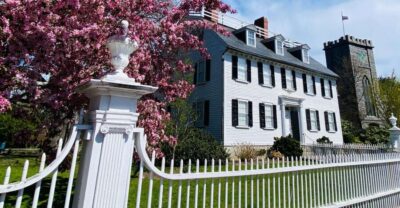
Salem, MA: History and Hauntings Guided Walking Tour
Read our review →
Salem: Secrets of Salem Hidden History Walking Tour
Read our review →
Browse the lists this tour appears in