
Review · CHICAGO
Chicago Walking Tour: Historic Treasures of Chicago
Chicago’s early skyscrapers make the best kind of city lesson: look up, step inside, and the past suddenly feels close. This two-hour walking tour links grand hotels, pioneering office buildings, and ornate public spaces around the Loop, with a certified guide explaining what you are seeing.
I like the small maximum of 15 people, which leaves room for questions, and I like that admission to the Chicago Architecture Center galleries is included. The interior stops are the real prize, especially the Palmer House and Chicago Cultural Center. The main drawback is that building access can change on weekends, holidays, or during unexpected closures, so the exact indoor experience is not guaranteed.
Key points to know before you book
- Six architectural stops in two hours: You move from the Chicago Architecture Center to the Wrigley Building, Palmer House, Carbide and Carbon Building, Reliance Building, and Chicago Cultural Center.
- Small groups help: The tour caps attendance at 15, making it easier to hear the guide and ask questions.
- The interiors matter most: The Palmer House lobby and Chicago Cultural Center add detail you cannot get from sidewalk views alone.
- A certified guide leads the way: Guides including Bob, Jim, John, Maureen, Laurel, Margaret, and others have brought strong knowledge and humor to the route.
- The tour ends downtown: You finish at the Chicago Cultural Center, close to State Street and the Loop, with the option to walk back to the Chicago Architecture Center with the docent.
- Good value at $35: You get two hours of guided architecture, plus entry to the Chicago Architecture Center galleries.
Why this Chicago architecture walk works
Chicago is often sold through its skyline, but the most rewarding details sit at eye level, or just above it. A bronze doorway, a tiled lobby, a decorative ceiling, or a clever structural decision can say as much about the city as a famous tower.
This route gives you a useful frame for understanding those details. You are not simply ticking off buildings. You are moving through the city’s central business district while learning how Chicago became a laboratory for tall buildings, department stores, hotels, and public design.
At $35, the tour is priced well for a two-hour experience led by a professional certified guide. The Chicago Architecture Center gallery admission adds value, especially if you have time before or after the walk to look at its displays.
I would not book this as a replacement for a full architecture river cruise or a long specialist tour. It is shorter and more focused on a handful of landmarks. I would choose it as a first introduction, or as a useful land-based companion to a river tour.
More History Walking Tours in the USA
- Chicago in a Day: Food, History & Architecture Walking Tour
★ 5.0 · 1,153 reviews - Chicago Walking Tour: Historic Skyscrapers
★ 5.0 · 67 reviews - Historic Homes and Cottages of Wicker Park Walking Tour
★ 5.0 · 44 reviews
Starting at the Chicago Architecture Center
The tour begins at the Chicago Architecture Center, at 111 E. Wacker Drive. The docent gives introductory remarks and includes admission to the center’s galleries, although the formal introduction at the start is brief, about five minutes.
That short opening is useful because it gives you a starting point for the buildings ahead. The center also gives you a chance to see Chicago architecture in a broader setting rather than encountering each structure as an isolated photo stop.
I would arrive ready to walk and keep your belongings light. Luggage and strollers cannot be stored, and there is no coat check. The tour is near public transportation, so it is easy to reach without arranging a hotel transfer. Pick-up and drop-off are not included.
The group maximum of 15 is one of the tour’s practical strengths. In a small group, you can usually hear the explanation on a busy downtown street and ask about details that catch your eye.
The Wrigley Building and Michigan Avenue
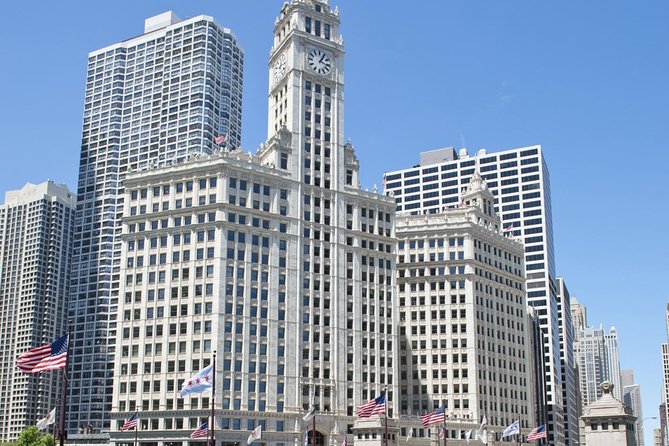
The Wrigley Building is the first major exterior landmark. You view it from outside, so this portion is short, about five minutes, but the building gives the route an immediate sense of scale and style.
The stop is also a reminder that Chicago architecture is not only about plain steel and glass. The building’s presence along Michigan Avenue helps you see how commercial architecture was designed to attract attention from the street.
Your guide’s job here is especially important. A quick photo stop can feel thin without context, while a good explanation helps you notice proportion, decoration, and the building’s place in the city. Guides such as John, Bob, and Russell have been praised for creating a clear story as the group walks between buildings.
Because the route uses public sidewalks, the pace may be affected by downtown activity or special events. One guide had to adjust the route during a Memorial Day parade and kept the tour moving. That kind of flexibility matters on a city walk.
The Palmer House lobby and a taste of old Chicago
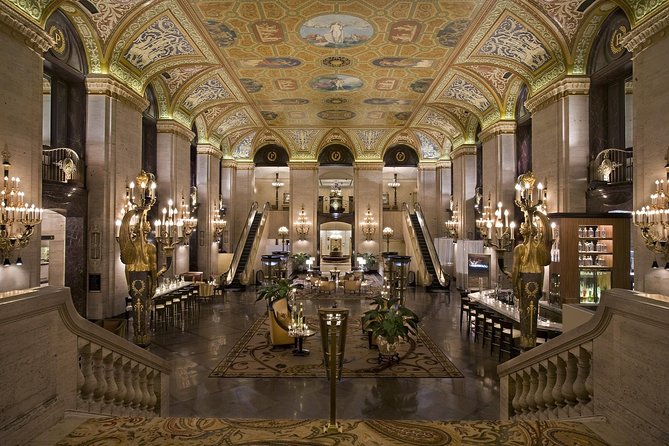
The Palmer House is one of the tour’s most appealing stops because you see both the exterior and interior. The group spends about 10 minutes here, and the lobby supplies the sort of visual reward that an outside-only architecture walk cannot match.
Look for the sense of ceremony. Historic hotels were designed to make an arrival feel important, and the interior gives you a direct feel for that tradition. The stop also connects architecture with the social life of Chicago, including the city’s development as a major center for business, shopping, and public gatherings.
Access to the Palmer House requires proof of COVID-19 vaccination under the stated tour conditions. That is a practical requirement to check before booking, particularly if you are planning around a tight schedule.
The indoor visit may also be affected by hotel operations, weekends, holidays, or unforeseen closures. If entry is unavailable, you can still view the building from outside, but the lobby is one of the places that gives this tour much of its character.
More History Walking Tours in Chicago:
- History and Hauntings of Salem Guided Walking Tour
★ 5.0 · 14,564 reviews - Lisbon: History, Stories and Lifestyle Walking Tour
★ 4.8 · 10,902 reviews - Amsterdam: Life of Anne Frank and World War II Walking Tour
★ 4.8 · 10,467 reviews - Berlin: Third Reich & Cold War Guided Walking Tour
★ 4.9 · 8,378 reviews
The Carbide and Carbon Building’s decorative contrast
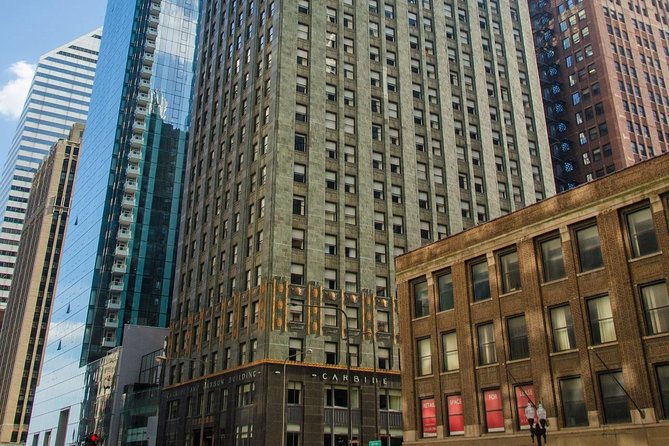
The Carbide and Carbon Building is another exterior stop, lasting about five minutes. It provides a useful contrast with the older commercial buildings along the route.
You will want to listen closely here rather than expect a long visit. The value is in understanding how architectural styles changed and how different buildings competed for attention in the growing city center.
This is where a guide can turn a short pause into a worthwhile lesson. The strongest guides on this route do not simply name the building. They point out details, explain design choices, and connect the structure to the larger story of Chicago’s skyscraper era.
If your interest is mainly in interiors, this stop will feel less substantial than the Palmer House or Cultural Center. If you enjoy comparing styles from one block to the next, it adds a helpful piece to the sequence.
The Reliance Building and Chicago’s early skyscraper story
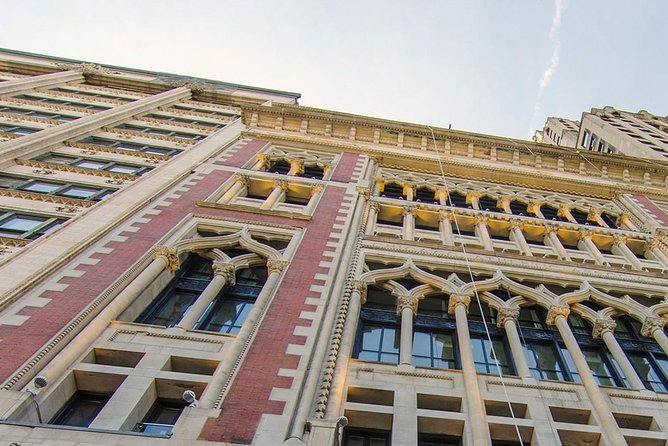
The Reliance Building is viewed from outside, with about five minutes devoted to it. It is an important stop for understanding the move toward taller, lighter office buildings and the changing appearance of Chicago’s commercial streets.
The route works well here because you have already seen several different types of urban architecture. Instead of treating each building as a separate monument, the guide can show you how they fit into a period of rapid experimentation.
This is also a good point to ask questions. The tour’s past guides have been praised for welcoming questions and adapting explanations to the group. Margaret, Maureen, Paul, and Beth are among the guides who have been singled out for clear, engaging instruction and thoughtful answers.
The stop is brief, so do not expect a long architectural lecture at every address. The experience depends on the guide’s storytelling and on your willingness to look up, notice small details, and keep pace.
Inside the Chicago Cultural Center
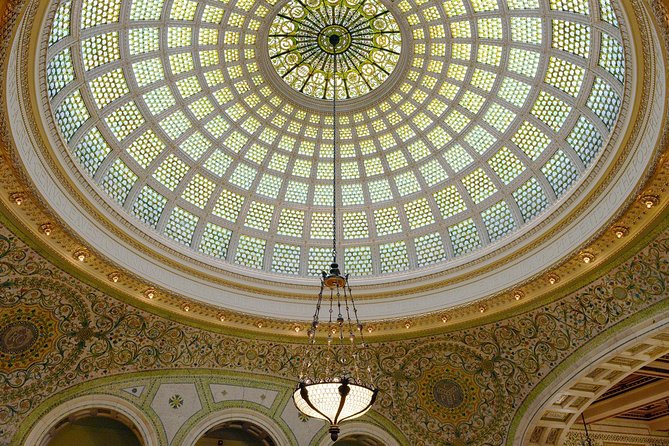
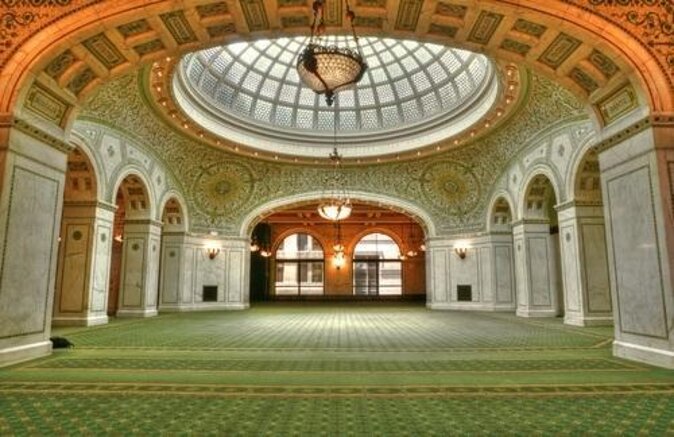
The tour ends at the Chicago Cultural Center, at 78 E. Washington Street. You view both the exterior and interior, with about 10 minutes set aside for the stop.
This is likely the route’s strongest finish. The interior gives you a grand public space rather than another office or hotel facade, and it helps explain how Chicago’s civic buildings used decorative materials and large-scale design to create a sense of importance.
The Cultural Center is also a practical ending point. You are in the Loop, near major downtown sights and public transportation, so you can continue exploring without retracing the full route. The docent returns to the Chicago Architecture Center, and you may accompany the docent back if you need to return there.
The stated tour time ends at the Cultural Center, so plan your next activity from that location. Building access can change, and the indoor portion may be shortened or adjusted if the building is closed.
What the guides add to the experience
The guides make or break a walking tour, and this one benefits from a strong record of engaging instruction. Names that have received particular praise include Bob, Jim, John, Russell, Maureen, Laurel, Margaret, Paul, Jean, and Beth.
The common thread is not a single scripted personality. Some guides use humor, others focus on building details or social history, and several have encouraged questions throughout the walk. That variety is useful because architecture appeals to different interests. You might care about decorative design, the growth of retail, Chicago’s early public buildings, or the lives shaped by these spaces.
I especially like the reports of guides bringing buildings to life rather than reciting dates. One guide helped a group notice details inside Macy’s that they had overlooked on earlier visits. That is exactly what a good city walk should do: change the way you see a familiar place.
The tour is also suitable for people who have already taken another architecture tour. One participant who had done other Chicago architecture tours still found this route worthwhile, largely because of the interiors and the guide’s presentation.
Pace, comfort, and practical limits
The walk lasts about two hours and covers several central Chicago locations. The pace has been described as comfortable, but you should still expect to remain on your feet for most of the experience.
Most people can participate, and service animals are allowed. Pets are not allowed. Since the tour takes place in public streets and historic buildings, conditions may change based on weather, building schedules, parades, or other downtown events.
Rain does not automatically ruin the experience. A rainy-day group still found the tour rewarding because the guide kept the architectural and historical focus strong. Still, wear suitable shoes and bring weather protection. The tour does not provide luggage storage or coat check.
Free cancellation is available if you cancel at least 24 hours before the start time. Changes or cancellations made within 24 hours are not accepted for a refund, and the cut-off uses local Chicago time.
Who should book this tour
I would recommend it to first-time Chicago visitors who want a compact introduction to the Loop. It is also a good choice for people who prefer buildings and city history to food stops, shopping, or theatrical sightseeing.
Architecture fans will appreciate the mix of exterior landmarks and interior access. History-minded visitors will get more from the route than someone who only wants skyline photographs, since the guides explain how the buildings relate to Chicago’s growth.
Families and mixed-interest groups may find the two-hour length manageable, though the tour is still a walking activity with limited seating. The small group size helps, particularly if someone in your party wants to ask questions.
You might skip it if your schedule allows only one major Chicago architecture experience and you specifically want a long river view of the skyline. In that case, a river cruise may offer a broader visual sweep. Choose this walk when you want to enter historic spaces and hear the city explained from street level.
Should you book it?
At $35, this is a sensible buy for a focused two-hour introduction to Chicago architecture. The best value comes from the combination of a small group, certified guide, Chicago Architecture Center gallery admission, and access to interiors such as the Palmer House and Chicago Cultural Center.
Book it if you want a well-paced downtown walk with plenty of context and a real chance to ask questions. Keep your schedule flexible enough for changes to indoor access, and check the vaccination requirement for the Palmer House before you go. If those conditions work for you, this is an efficient and personable way to start seeing Chicago’s central buildings with sharper eyes.
FAQ
How long does the Chicago Historic Treasures tour last?
The tour lasts approximately two hours.
What is the price?
The price is $35 per person.
Where does the tour begin?
It begins at the Chicago Architecture Center, 111 E. Wacker Drive, Chicago.
Where does the tour end?
The tour ends at the Chicago Cultural Center, 78 E. Washington Street, Chicago.
Can I return to the Chicago Architecture Center after the tour?
Yes. The docent returns to the Chicago Architecture Center, and you may accompany the docent back.
What buildings are included?
The route includes the Chicago Architecture Center, Wrigley Building, Palmer House, Carbide and Carbon Building, Reliance Building, and Chicago Cultural Center.
Is admission to the Chicago Architecture Center included?
Yes. Admission to the Chicago Architecture Center galleries is included.
Is hotel transportation included?
No. Hotel pick-up and drop-off are not included.
Is proof of vaccination required?
Proof of COVID-19 vaccination is required to enter the Palmer House location under the stated tour conditions.
Can I cancel for a refund?
Yes, if you cancel at least 24 hours before the experience start time. Cancellations made less than 24 hours before the start time are not refunded.
Just added around Chicago
- Historical and Architectural Chicago Fireboat River & Lake Cruise★ 5.0 · 246 reviews
- Walkin’ with Colin: Chicago History-Mystery-Comedy-Tragedy Tour★ 5.0 · 218 reviews
- Chicago Walking Tour: Historic Skyscrapers★ 5.0 · 67 reviews
- Chicago River Architecture Tour Aboard a Historic Yacht★ 5.0 · 45 reviews
- Historic Homes and Cottages of Wicker Park Walking Tour★ 5.0 · 44 reviews
- African American Heritage Tour of Chicago★ 4.5 · 127 reviews
- Chicago: Historic Gangsters & Twilight Tales Night Cruise★ 4.1 · 63 reviews
- Chicago: Food, History and Architecture Tour★ 4.8 · 104 reviews
Chicago History Tours, compared.
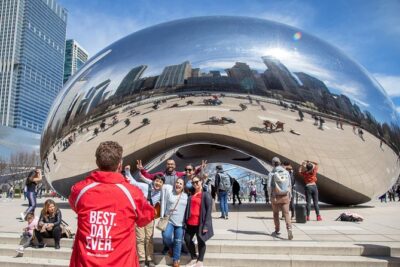
Chicago in a Day: Food, History & Architecture Walking Tour
Read our review →
Medieval Torture Museum Ticket with Audio Guide and Ghost Hunting
Read our review →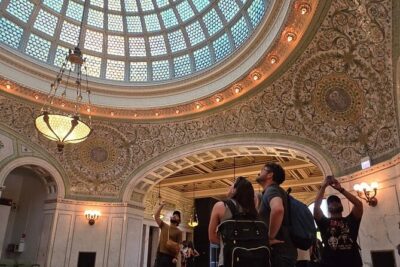

Historical and Architectural Chicago Fireboat River & Lake Cruise
Read our review →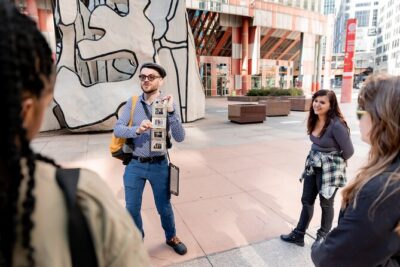
Walkin’ with Colin: Chicago History-Mystery-Comedy-Tragedy Tour
Read our review →

Browse the lists this tour appears in