
Review · SPAIN
Cuenca: Medieval Old Town
Cuenca’s old town sits on a natural rock above the deep gorges of the Júcar and Huécar rivers, with buildings that seem to cling to the cliffs. The main attraction is the hanging architecture, especially the famous houses projecting over the ravines and the remarkable 12-story apartments built in the 16th century.
I like the low price and the fact that a local guide gives the streets some meaning instead of leaving you to admire the views without context. I also like the two-hour length, which gives you a useful introduction without taking up an entire day.
The main catch is simple: this is a Spanish-only tour. Cuenca’s narrow, elevated old town may also be difficult for people with mobility impairments, although one parent reported completing the walk with a one-year-old child in a stroller.
Key points to know before booking
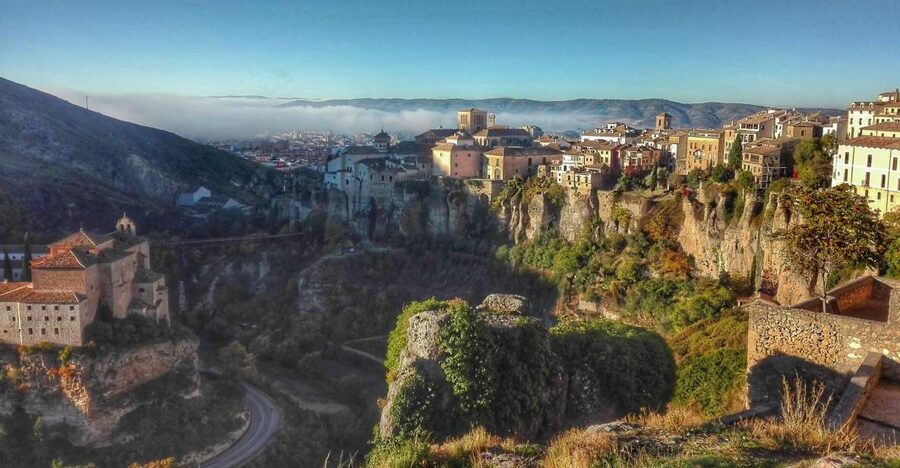
- Cuenca’s cliffside setting: See the old town perched above the Júcar and Huécar river gorges.
- A Spanish-only walking tour: The guide explains Cuenca’s history and monuments in Spanish.
- Unusual medieval architecture: Look for the famous hanging houses and 16th-century apartments said to reach 12 stories.
- Two hours for $10: The short format offers an inexpensive introduction to the historic center.
- Guides in red uniforms: Meet below the arches of City Hall, next to the tourist office.
- A route for mobile walkers: The tour is not suitable for wheelchair users or people with mobility impairments.
Why Cuenca’s old town is worth your time
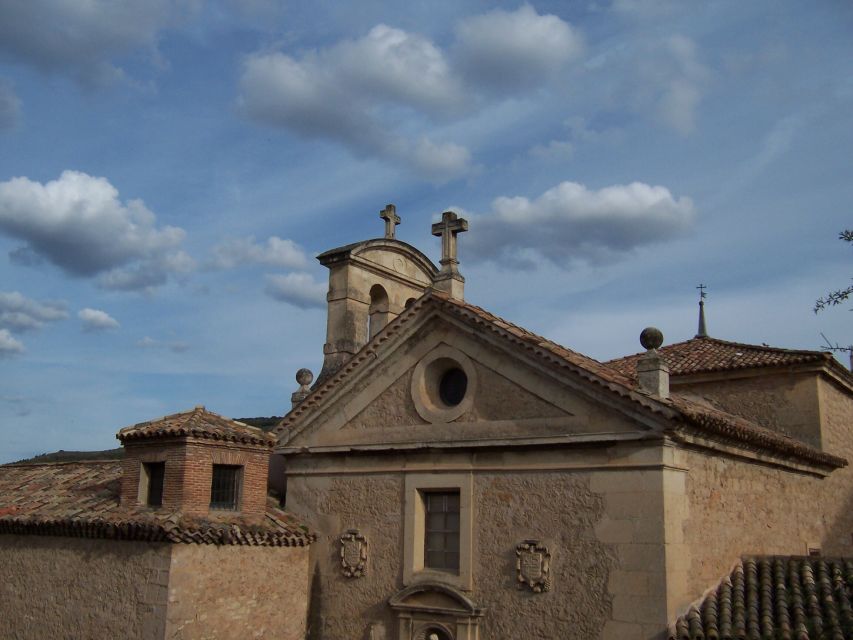
Cuenca is not a flat historic center laid out for easy strolling. It occupies a rocky high point between two river gorges, so the city’s medieval core feels vertical, compact, and slightly improbable. Streets rise and fall, buildings press close together, and sudden openings reveal the ravines below.
That setting is the reason to take this tour. You are not simply checking off a cathedral, a square, and a museum. You are learning how an old city adapted to a difficult piece of rock. The architecture makes sense only when you see the terrain beneath it.
Cuenca was declared a UNESCO World Heritage Site in 1996. That designation matters here because the old town retains a strong sense of place. Its narrow streets, religious buildings, and cliffside homes still form one connected historic area rather than a few isolated sights.
I would choose this walk as an introduction to Cuenca, especially if you have only a short time in town. At two hours, it gives you the basic shape of the city and points out the places you may want to revisit on your own.
More Medieval History Tours in Spain
- Montserrat with Black Madonna & Medieval Winery with Tapas/Lunch
★ 5.0 · 5,209 reviews - From Seville: Italica Roman City & Medieval Monastery Tour
★ 4.5 · 1,051 reviews - Medieval Three Villages Small Group Day Trip from Barcelona
★ 5.0 · 994 reviews
Starting beneath the City Hall arches
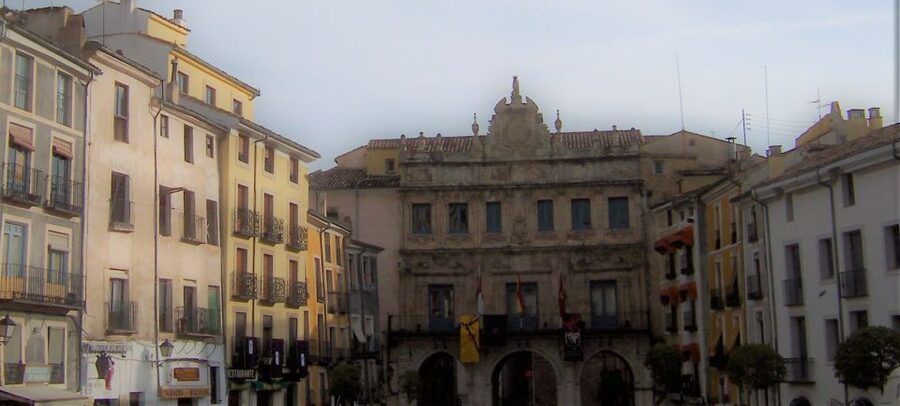
The meeting point is just below the arches of Cuenca City Hall, beside the tourist office. Look for guides wearing red uniforms. This is a useful arrangement because the City Hall arches are a clear central landmark, and the nearby tourist office gives you a practical place to orient yourself before the walk begins.
Arrive at least five minutes early. That small buffer matters in an old town where a wrong turn can put you on a different narrow lane within moments. It also gives you time to identify the guide and settle in before the group moves into the historic center.
There is no pickup service. You make your own way to the meeting point, so this tour works best for someone already visiting Cuenca rather than someone expecting hotel transport or a sightseeing bus.
The guide leads the tour in Spanish. Angela and Raúl are two guides associated with particularly warm and effective tours. Angela was praised for being professional, kind, and able to manage a group that included a small child. Raúl was noted for connecting well with different people while guiding a large group through Cuenca’s streets.
Guide quality matters on a walk like this. The route itself is free to explore, but the guide decides how much you understand about the buildings, local life, and stories attached to the old town.
Narrow streets and a city built on rock
Once the walk enters the old town, expect a close look at the narrow lanes and the main historic monuments. The tour is designed to show you Cuenca’s secrets rather than simply point toward a few postcard views.
I like the way this format lets the city reveal itself gradually. A tight street can lead to a sudden view over a gorge, while a plain-looking façade may be part of a much older building than you expect. The contrast between enclosed lanes and open views is one of Cuenca’s strongest features.
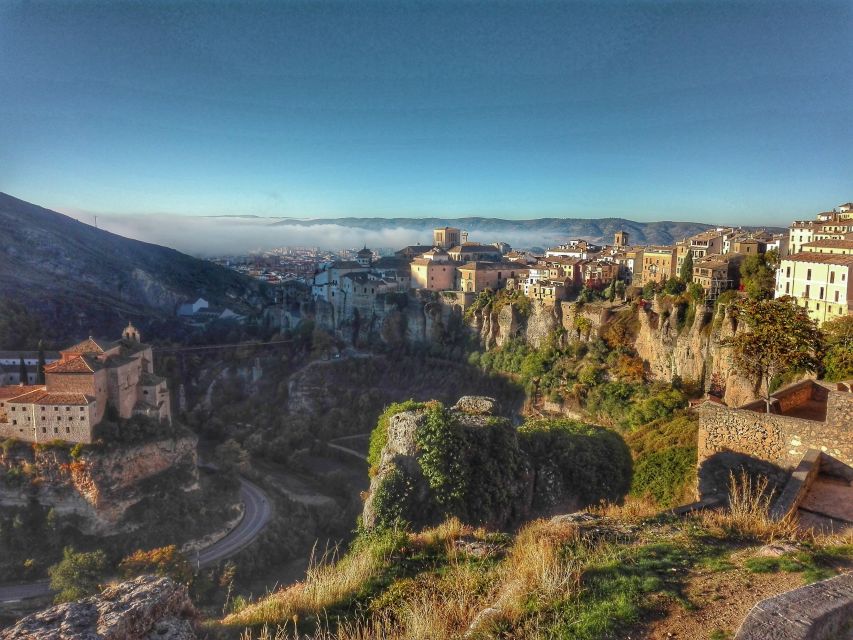
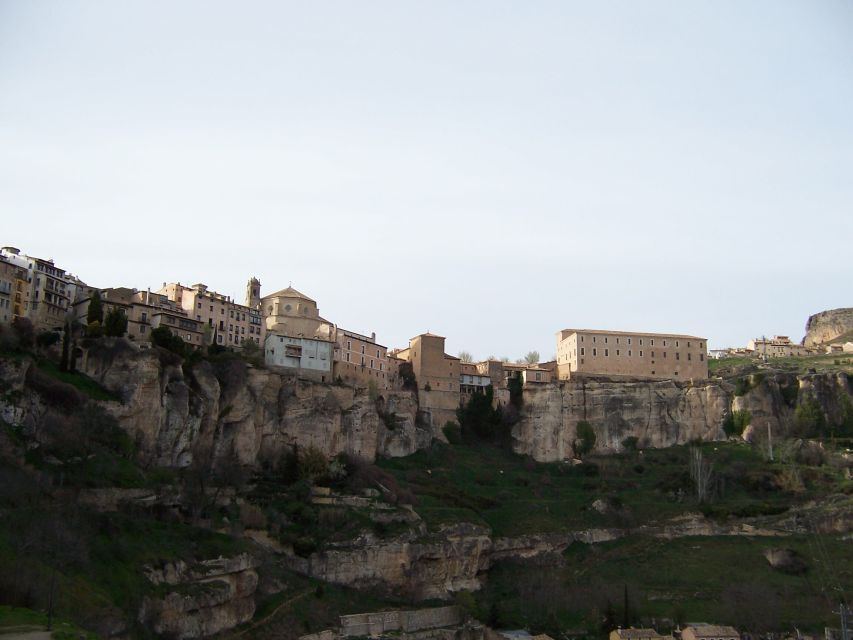
The old town’s position above the Júcar and Huécar rivers also explains the city’s nickname, the Eagle’s Nest. From the high ground, you can look down into the deep cuts made by the rivers. These viewpoints help you understand why Cuenca developed in such a dramatic location and why the architecture had to work with the rock rather than ignore it.
The tour also gives you an introduction to local life and history. The exact balance depends on the guide and the pace of the group. Some guides use humor and stories to keep the walk lively. A German-speaking participant particularly enjoyed a guide’s dry humor, while another person felt too much time was spent standing and listening to stories that did not add enough to the visit.
That difference is worth noting. If you like historical anecdotes and a relaxed pace, the storytelling may be part of the appeal. If you prefer to keep moving from monument to monument, two hours may feel longer than necessary.
Hanging houses and improbable architecture
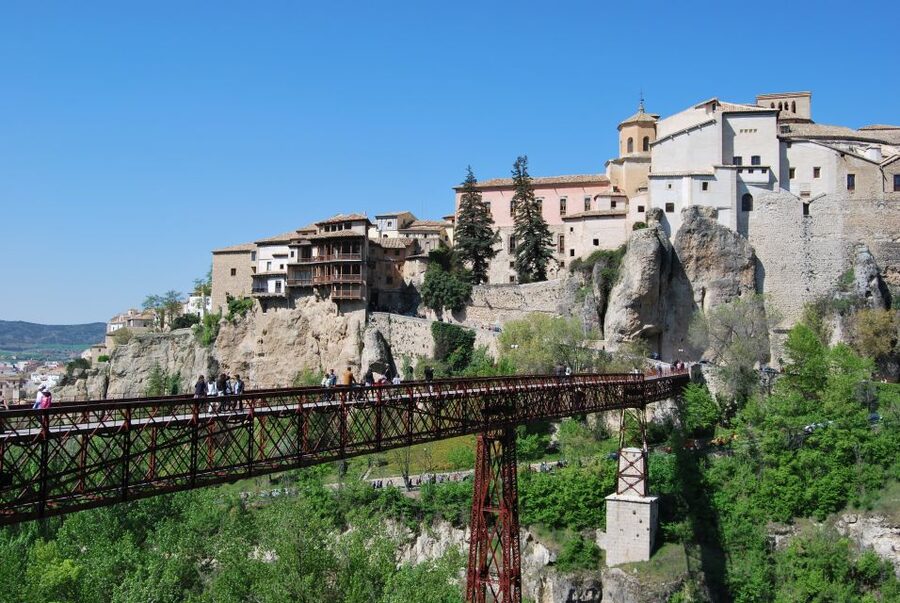
The hanging houses are Cuenca’s signature sight. Their outer sections extend over the gorge, creating the impression that the buildings are suspended above empty space. The design is startling even after you understand that the structures are anchored to the rock.
A guided explanation is useful here because the buildings can look like a single dramatic image from the outside. The walk helps place them within the wider old town and explains how the city’s steep site shaped its homes and streets.
The description of Cuenca’s apartments from the 16th century adds another striking detail. Some are said to reach 12 stories, making them among the highest apartments in Europe for their time. That claim gives you a fresh way to look at the city. Cuenca’s historic architecture is not only about decorative façades. It is also about building upward when horizontal space was limited.
You should keep your eyes on the relationship between the houses and the gorge. The most interesting feature is not just the height of one building, but the way the entire city edge seems to balance above the river valleys.
One practical point deserves attention. At least one person expected to cross the bridge near the hanging houses and was disappointed when that did not happen as part of the route. If the bridge view is a priority for you, ask the guide at the start whether the scheduled walk includes it. You may need to set aside time to cross it independently.
More Old Town and Historic Centre Walks in Spain
- Madrid Essential: Historic Center, Plaza Mayor & Royal Palace
★ 5.0 · 6,416 reviews - Valencia Old Town Tour with Wine & Tapas in 11th Century Historic Monument
★ 5.0 · 3,234 reviews - Madrid Historic Centre Food Tour with Authentic Tapas & Wines
★ 5.0 · 814 reviews - Madrid in a Day Tour:Royal Palace, Historic Center & Prado Museum
★ 5.0 · 628 reviews
Ecclesiastical buildings and Cuenca’s older character
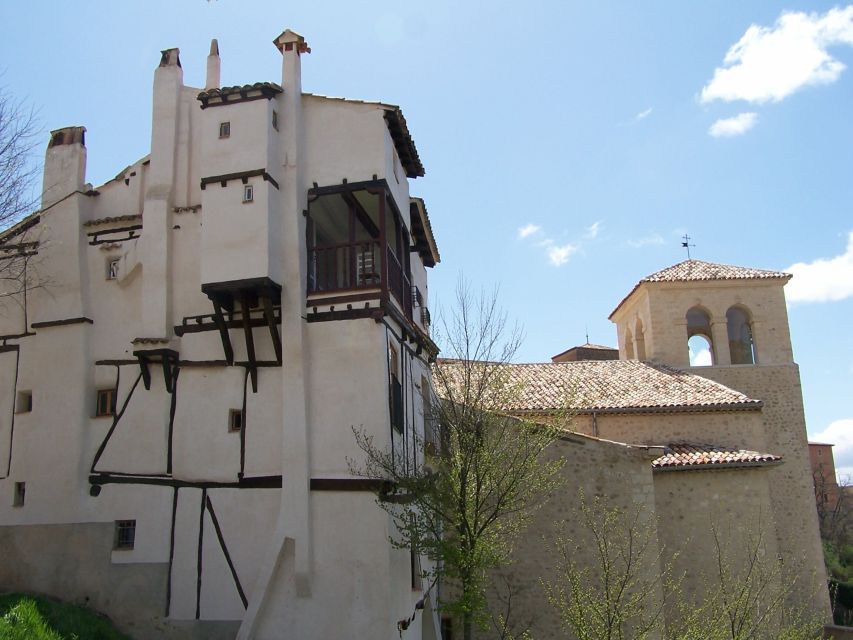
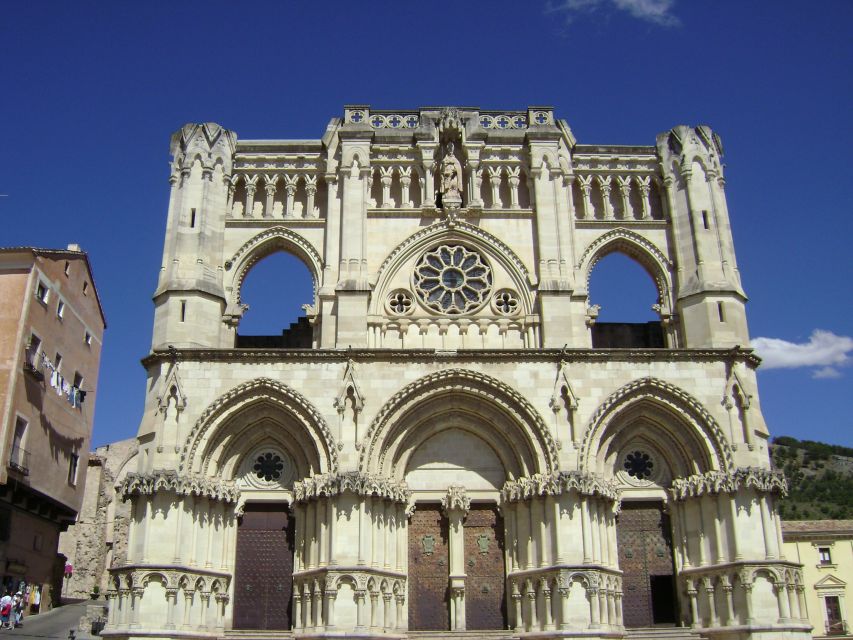
Cuenca’s religious architecture forms another part of the walk. The tour introduces you to the main ecclesiastical monuments in the old town and places them within the story of the city.
The supplied details do not specify every interior visit or monument included at each departure time, so you should think of this as a guided exterior-focused walk through the historic center rather than a guaranteed series of admissions. The value comes from seeing the religious buildings alongside the streets, cliffs, and homes that shaped daily life.
I find this combination more useful than viewing grand architecture in isolation. A church or other religious building tells only part of the story. The surrounding lanes show how residents moved through the city, where homes were built, and how the settlement fitted onto the rock.
The Spanish-only format can work very well if you understand Spanish. The guide can explain local details in a natural way, and humor often comes through best in the guide’s own language. If you do not speak Spanish, the visual setting still has value, but you will miss much of the historical explanation.
How the two-hour pace feels
Two hours is a sensible length for a first look at Cuenca. It is long enough to move beyond one viewpoint and short enough to fit around meals, independent sightseeing, or another activity.
The pace may not be constant. Expect periods of walking followed by stops while the guide explains a monument, a story, or a view. One person found the tour too slow because of extended stops, while others described it as enjoyable and praised the guides’ ability to keep a large group together.
That tells you what kind of experience this is. It is not a rapid photo walk. You are paying for interpretation as well as movement. If you want a detailed explanation of the old town, the stops are useful. If you already know Cuenca or want only the fastest route to the best views, you may prefer to explore independently.
The group size can affect the experience. Raúl was specifically praised for handling a large group and making an effort to reach different people. In a big group, stay close enough to hear the guide and keep track of the red uniform when the party turns into another lane.
A stroller may be possible in some circumstances. One parent completed the tour with a one-year-old child in a stroller. Still, the activity is officially not suitable for people with mobility impairments or wheelchair users, so you should not treat that single example as a guarantee of easy access.
Is $10 good value for Cuenca?
At $10 per person, this is an inexpensive way to get a structured introduction to one of Spain’s most unusual old towns. The fee includes a local guide, and the tour lasts two hours. There is no pickup service, so your main extra cost is simply getting yourself to City Hall.
The value is strongest if you speak Spanish and want context for the old town’s architecture. A guide can explain why the houses hang over the gorge, point out the most important monuments, and connect the city’s steep setting with its history.
The value is less clear if you do not understand Spanish or if you want a tightly timed route with constant movement. In that case, you may still enjoy the views, but much of what you are paying for is the guide’s spoken explanation.
The tour allows free cancellation up to 24 hours before the start time, with a full refund, and you can reserve now and pay later. Those terms make it easier to fit the walk into a changing Spanish itinerary.
Who should book this walk?
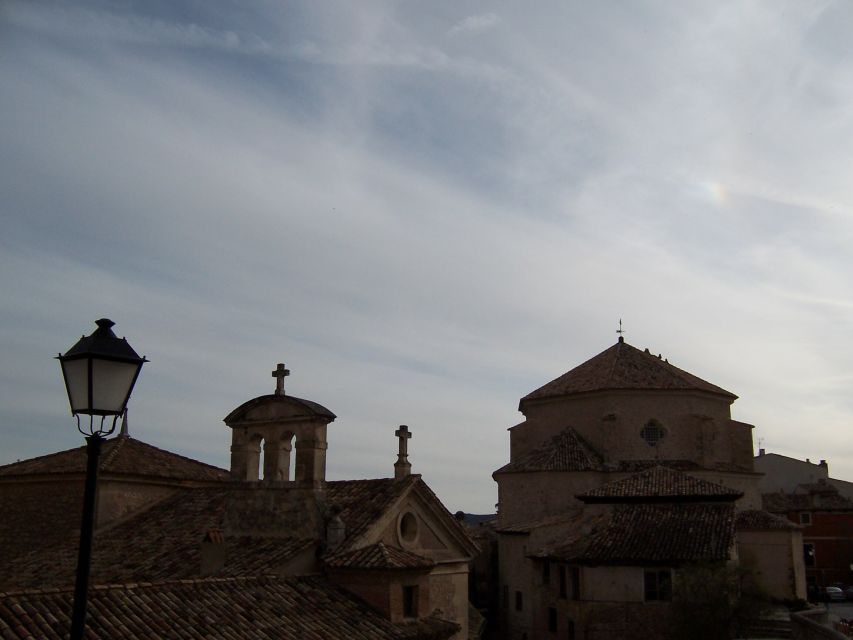
I would recommend this experience to a first-time visitor who wants a quick orientation to Cuenca and understands Spanish. It suits people who enjoy old streets, unusual buildings, river views, and local stories more than people who want a museum-heavy visit.
It also works well for a short stop in Cuenca. Two hours is enough to see the main character of the old town without giving up the rest of your day.
Families may find the tour workable, as shown by the parent who completed it with a stroller, but the route is not officially suitable for wheelchair users or people with mobility impairments. Ask about the exact path if you have any concern about walking conditions.
I would be more cautious if the bridge by the hanging houses is your main goal. Confirm that point before the tour begins, then plan extra time to see the bridge yourself if it is not included.
The final call
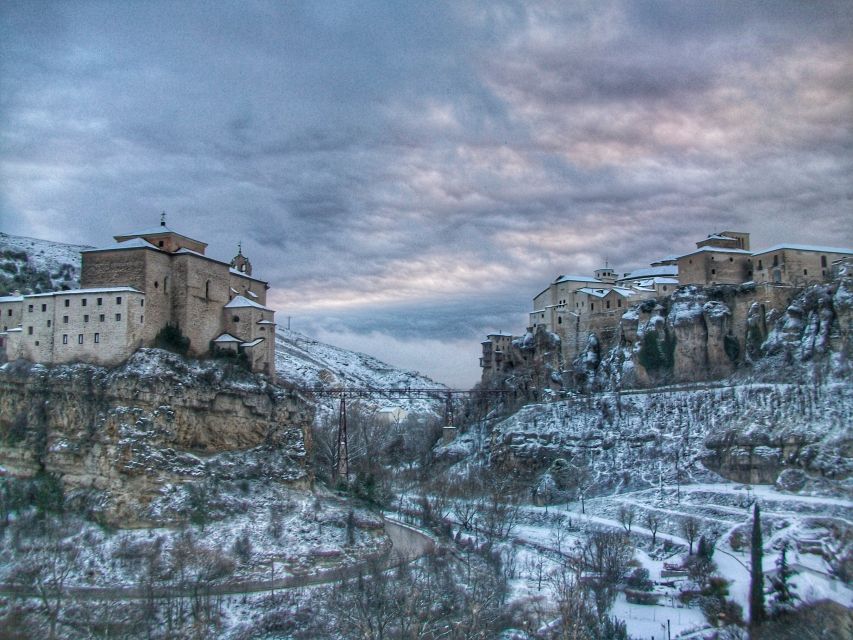
Book this tour if you want an affordable Spanish-language introduction to Cuenca’s medieval center, especially its hanging houses, deep river gorges, and unusual vertical apartments. The guides can add humor, local detail, and a sense of how the city works.
Skip it if you need an English tour, require accessible routes, or prefer to move quickly without long storytelling stops. For everyone else, $10 is a fair price for two hours in one of Spain’s most dramatic old towns.
FAQ
How much does the Cuenca medieval old town tour cost?
The listed price is $10 per person.
How long does the tour last?
The tour lasts two hours.
What language is the tour conducted in?
The tour is conducted only in Spanish with a live Spanish-speaking guide.
Where is the meeting point?
Meet just below the arches of Cuenca City Hall, next to the tourist office. The guides wear red uniforms.
Is hotel pickup included?
No. Pickup service is not included, so you must make your own way to the meeting point.
How early should I arrive?
You should be at the meeting point at least five minutes before the scheduled start time.
Is the tour suitable for wheelchair users?
No. The activity is not suitable for wheelchair users or people with mobility impairments.
Can I cancel for a full refund?
Yes. You can cancel up to 24 hours in advance for a full refund. You can also reserve now and pay later.
Just added around Spain
- Visita Guiada Por El Casco Histórico De Cuenca Y Su Catedral★ 5.0 · 45 reviews
- Night Walking Tour of Medieval Cuenca★ 5.0 · 64 reviews
- Mosque of Cordoba History Tour in English Tickets included★ 5.0 · 257 reviews
- 2 Hours Tour around Cádiz: History, anecdotes and curiosities★ 5.0 · 89 reviews
- Jerez de la Frontera History and Art Walking Tour★ 4.5 · 49 reviews
- Bilbao Historical Small Group Tour★ 4.5 · 159 reviews
- The Authentic Bilbao Pintxos, Food & Wine Tour with a Local★ 5.0 · 360 reviews
- Girona, Costa Brava and Medieval Village from Barcelona★ 5.0 · 149 reviews
Spain History Tours, compared.
Madrid Essential: Historic Center, Plaza Mayor & Royal Palace
Read our review →
Montserrat with Black Madonna & Medieval Winery with Tapas/Lunch
Read our review →
Sevilla Food Tour: Tapas, Wine, History & Traditions
Read our review →
Valencia Old Town Tour with Wine & Tapas in 11th Century Historic Monument
Read our review →
Madrid Tapas & Taverns Small Group Food & History Tour
Read our review →
Barcelona Tapas Walking Tour: Food, Wine & History
Read our review →
Ultimate Seville Tapas, Wine & History Small Group Tour
Read our review →
Córdoba: Skip-the-Line Great Mosque-Cathedral History Tour
Read our review →Browse the lists this tour appears in