
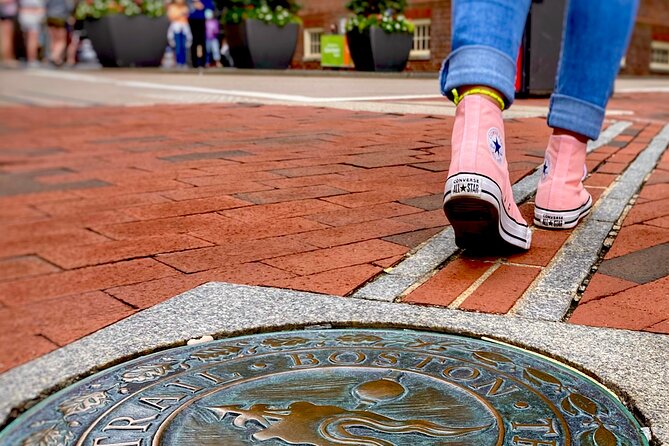
Review · BOSTON
Freedom Trail Guided Walking Tour (SMALL GROUP)
Boston’s Freedom Trail is more than a red line through downtown. In 90 minutes, this tour connects Boston Common, Granary Burying Ground, the Old State House, the Boston Massacre site, and Faneuil Hall with stories about Paul Revere, Samuel Adams, John Hancock, and the events that led to independence. Guide Saba Alhadi also adds simple smartphone tips for framing and composing photos.
I like the balance of serious history and practical photography. I also like the small-group format, which can make it easier to hear the guide and ask questions in noisy downtown streets. The main drawback is time: this is a highlights tour, not a walk of the entire 2.5-mile trail, and Paul Revere’s House and Old North Church are not included.
Key points at a glance
- A 90-minute introduction: See many of the central Freedom Trail landmarks without spending half a day on foot.
- History with myth-busting: Learn what really happened during Paul Revere’s ride, the Boston Massacre, and the Boston Tea Party.
- Photo help along the way: Get guidance on framing, angles, color contrast, and smartphone settings.
- Park Street to Faneuil Hall: The route begins near Boston Common and finishes at Quincy Market and Faneuil Hall.
- Small, but not guaranteed tiny: The stated maximum is 15 people, though one past holiday weekend group was larger.
- Plan for the walk: There are no restroom stops, and you should arrive 10 minutes early with a moderate level of fitness.
A smart way to meet Boston’s Revolution-era landmarks
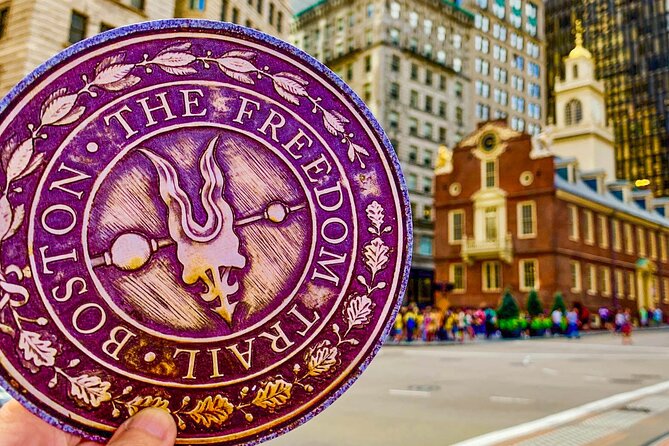
The Freedom Trail is one of the easiest ways to get your bearings in central Boston. It links churches, burial grounds, meeting halls, government buildings, and street corners where the city’s colonial story unfolded.
This tour focuses on the downtown section, beginning at Park Street Church and ending at Faneuil Hall Marketplace. You cover a useful collection of sites in a short period, with the guide moving between major events rather than giving an exhaustive lecture at every doorway.
That approach works well if you are visiting Boston for the first time and want the basic story before exploring on your own. You get context for the buildings around you, instead of simply walking past old brick walls and plaques.
The historical angle is especially focused on separating fact from popular legend. You hear about the actual events of April 18, 1775, Paul Revere’s role on the eve of the Revolution, the limits of the famous poem about his ride, the Boston Tea Party, the Boston Massacre, the Declaration of Independence, and the Treaty of Paris.
Saba Alhadi leads the tour, and the supplied information also notes a longtime local guide. Past experiences describe a guide who answers questions, adjusts the pace, and can sometimes tailor the walk when a group has already seen certain landmarks. That flexibility depends on the group and the day, but it is worth using the question time if you want more detail on a particular person or event.
More History Walking Tours in Boston
- Boston: Freedom Trail History Small Group Walking Tour
★ 5.0 · 6,450 reviews - Boston: Freedom Trail History Small Group Walking Tour
★ 4.9 · 1,590 reviews - Boston Pizza Lovers Food and History Walking Food Tour
★ 4.5 · 1,082 reviews
Starting beside Boston Common and Park Street Church
The meeting point is Park Street Church at 1 Park Street. The tour starts at 1:15 pm, and arriving 10 minutes early is sensible. The church sits beside Boston Common, the official starting point of the Freedom Trail and the oldest public park in the United States.
Boston Common gives the tour a useful opening setting. It was not just a pleasant patch of green. Its long public role helps explain how Boston’s civic life developed around shared meeting places, churches, government offices, and markets.
Park Street Church takes only a short stop, but its steeple is hard to miss above Boston Common. The church is also tied to abolitionist history, giving the walk a chance to move beyond the Revolution and show how Boston’s political and social debates continued into later periods.
The first part of the walk is fairly compact, but you are still outdoors in city traffic. Cars, pedestrians, and street noise are part of the setting. A small group helps here because you can stay closer to the guide and hear the commentary more easily.
Granary Burying Ground and Boston’s famous names
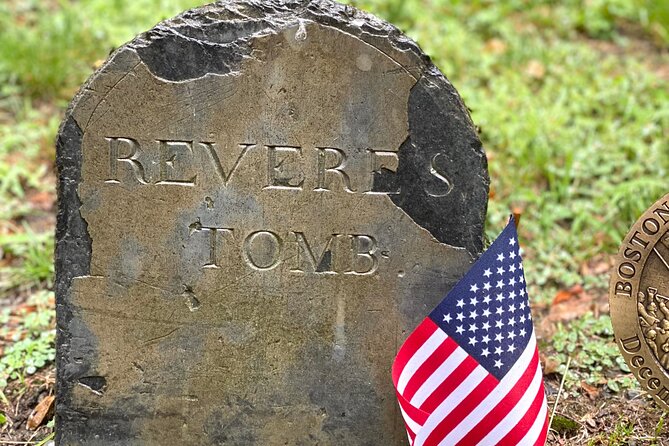
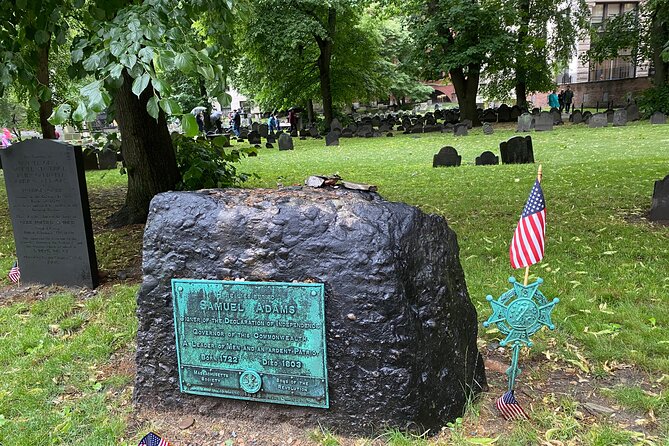
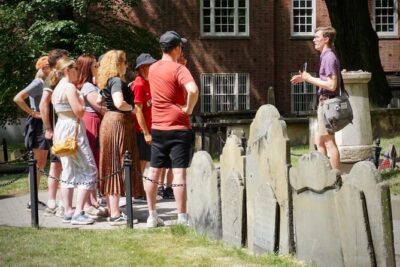
Granary Burying Ground is one of the most meaningful stops on the route. This cemetery holds the graves of Samuel Adams, Paul Revere, and John Hancock, along with other important figures from Boston’s colonial period.
The stop is valuable because it puts names from schoolbook history in a real place. You are not only hearing about Adams or Hancock as political figures. You are standing among the markers connected with the people who shaped Boston’s resistance to British rule.
Expect about 10 minutes here. That is enough time for explanation and photographs, but not for a slow study of every stone. If cemeteries interest you, you may want to return later on your own.
The nearby King’s Chapel is another brief stop. It was the first Anglican church in colonial Boston, and the current stone building opened in 1754. Admission to the interior is not included, so the tour treats it mainly as an exterior landmark and historical reference point.
The route also passes a historic burying ground dating from 1630, identified as Boston’s oldest. The itinerary gives only a short amount of time to several of these sites, so listen for the broader connection: Boston’s burial grounds reveal how close daily life, religion, politics, and death were in the early town.
Franklin, the Old Corner Bookstore, and the city’s changing streets
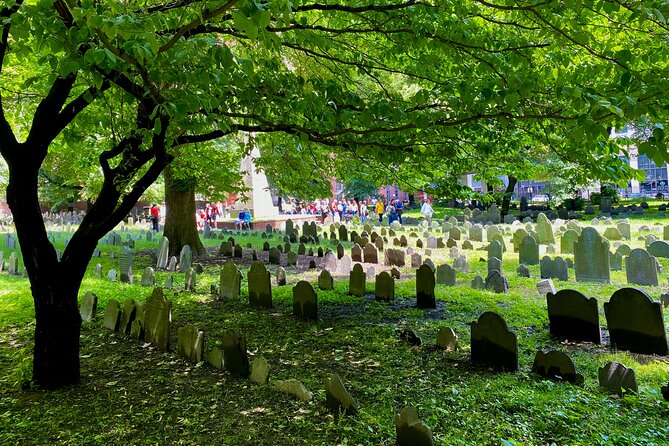
At the Benjamin Franklin statue, you learn that the site marks the original location of Boston Latin School, described as the first public school in America. Franklin attended the school, though he did not graduate. The stop is short, yet it connects a familiar face from American history with education and the city’s early institutions.
The Old Corner Bookstore adds a different layer. Built in 1718 as a residence and apothecary, it later became a bookstore in 1828. You will not spend long here, but the building helps show how Boston’s commercial streets changed over time.
This is one of the tour’s strengths. The walk is not limited to battle stories and famous speeches. It includes buildings that tell you how people lived, learned, worshipped, worked, and bought things.
The photography guidance fits naturally into this section. You may get suggestions about framing a narrow facade, using angles to include the surrounding street, or finding color contrast between old masonry and modern Boston. The tour is not a photography class, so history remains the main subject. Still, the photo tips can help you return home with more than standard front-facing snapshots.
More History Walking Tours in the USA
- Boston History Tour: Scenic Walk Through Time & Landmarks
★ 5.0 · 627 reviews - Boston’s North End Food and History Walking Tour
★ 5.0 · 459 reviews - Walk the Historic Freedom Trail with Costumed Guide
★ 4.5 · 329 reviews - Boston Seafood Lovers Food and History Walking Tour
★ 5.0 · 208 reviews
Old South Meeting House and the road to the Boston Tea Party
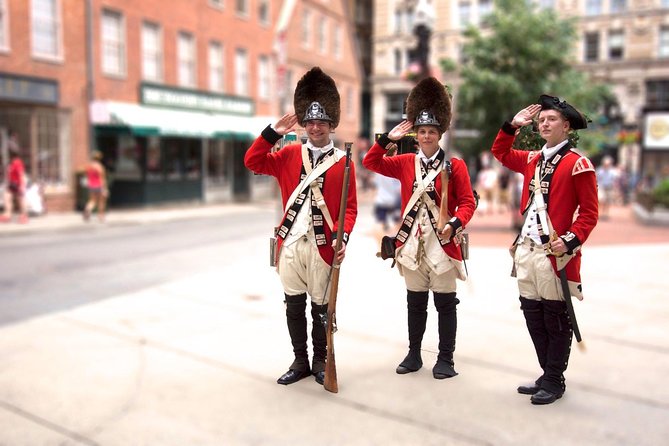
Old South Meeting House is one of the major political sites on the walk. Colonists gathered here to protest British rule, and the building became closely connected with the events leading to the Boston Tea Party in 1773.
The tour spends about five minutes at the site. Admission to the interior is not included, so you should not expect an extended visit inside. The exterior and surrounding streets are enough to set up the story, but anyone wanting to explore the building itself will need separate time and admission.
This is where the guide’s focus on correcting myths can be useful. The Boston Tea Party is often reduced to a quick schoolbook image of men throwing tea into the harbor. The tour places it within the wider dispute over taxation, representation, and British authority.
The experience is strongest when you treat these stops as connected chapters. Boston Common, the churches, burial grounds, meeting house, and government buildings are not isolated attractions. Together, they show how protest spread through public spaces and how local arguments became a national break with Britain.
Old State House and the Boston Massacre site
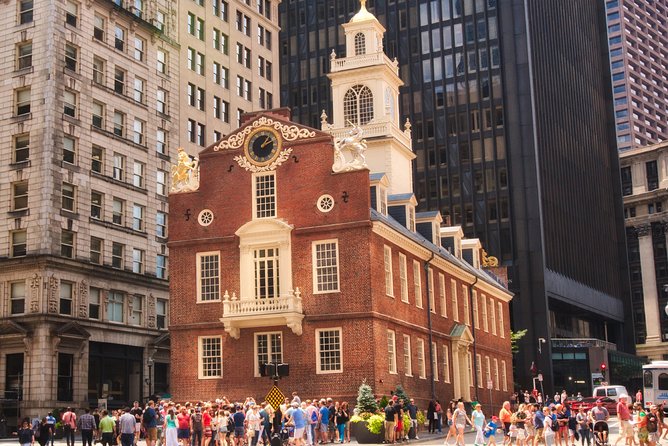
The Old State House is one of the most important stops on the route. It was the seat of colonial government, and the Declaration of Independence was read to Boston residents from its balcony in 1776.
The building also sits beside the Boston Massacre site. In 1770, British soldiers fired on colonists, killing five people and worsening the conflict between Boston residents and British authorities.
The tour treats the two sites together, which makes sense. The Old State House represents official power, while the nearby marker recalls the violent confrontation that helped turn public anger into organized resistance.
At the Boston Massacre site, the guide explains what happened and how later political messaging shaped the way the event was remembered. This is an important part of the walk if you prefer clear context over a simple list of dates.
The stop is brief, around three minutes at the massacre marker, followed by more explanation around the nearby buildings. The downtown setting can be noisy, so stay close and do not wander off for photographs while the guide is speaking.
Ending at Faneuil Hall and the Boston sign
Faneuil Hall Marketplace is the end point. Faneuil Hall itself is known as the Cradle of Liberty because of its role as a meeting place during the struggle for independence.
The final stop gives you a practical advantage. You finish in an area with food, shops, and Quincy Market, so you can continue your afternoon without arranging another transfer. One past group enjoyed ending the walk with snacks at Quincy Market, though food is not part of the tour.
The final Boston sign on City Hall Plaza is designed as a photo stop, with Faneuil Hall in the background. It is a modern, easy-to-recognize image that contrasts with the colonial buildings visited earlier.
Finishing here also makes the route feel complete. You begin beside Boston Common, where the Freedom Trail starts, and end near the marketplace where public debate, trade, and city life continue in a much more modern setting.
What the photography tips really add
The photography portion is best understood as a useful extra, not the main product. The tour description makes clear that this is a history-focused walk rather than a formal photography course.
You may receive help with:
- Smartphone camera settings
- Framing historic buildings
- Choosing angles
- Grouping subjects in a picture
- Using color contrast
- Making photos feel less ordinary
Several past experiences specifically valued the chance to turn the tour pictures into souvenirs. One participant learned about composition, framing, color, and processing images on a phone. Another appreciated advice that could be used on future trips.
I like this feature because it gives you something practical to do at each stop. Rather than taking the same picture as everyone else, you have a reason to look at the building, statue, or street from a different position.
Still, expectations matter. If you want a dedicated photography workshop with long pauses for technical instruction, this is not the right format. The guide must keep the group moving and cover the historical story in a limited time.
Small-group comfort, timing, and walking demands
The stated maximum is 15 people. That is small enough to create a more personal setting than the large costumed-guide groups often seen along the Freedom Trail.
A past holiday weekend did involve 21 people, so I would treat 15 as the intended maximum rather than an absolute guarantee under every circumstance. If group size is central to your decision, reconfirm before the tour and ask about the expected number for your date.
The walk lasts about 90 minutes and requires a moderate level of physical fitness. You are outdoors, moving through downtown streets, and stopping at several sites. Wear comfortable shoes and consider the weather forecast. The tour requires good weather, with a different date or full refund offered if poor weather causes cancellation.
There are no restroom stops. Use facilities before meeting at Park Street Church. You should also bring water, especially in warm weather, since one past experience took place during a hot Boston day.
Children must be accompanied by an adult. The format can suit families, solo visitors, couples, and locals, but younger children may find the historical explanations demanding if they are not interested in the subject.
Is $45 a fair price?
At $45 per person, this is not the cheapest way to walk the Freedom Trail. You can follow the red line independently, read signs, and visit some sites without paying for a guide.
The value comes from the interpretation. You are paying for a structured route, explanations of disputed events, answers to questions, and photo help. For a first visit, that can save you from spending the day piecing together separate facts from plaques and guidebooks.
The 90-minute length also has value if your Boston schedule is tight. You see many of the central landmarks, then have time for Faneuil Hall, Quincy Market, the North End, or another activity.
The price is harder to justify if you want all 16 official Freedom Trail sites, long interior visits, or a full tour of Paul Revere’s neighborhood. This experience does not include Paul Revere’s House or Old North Church. Those are covered on the provider’s separate North End and Little Italy tour.
Who should book this Freedom Trail walk?
I would choose this tour if you want a clear introduction to Boston’s colonial story without committing to a three or four-hour walk. It suits first-time visitors, families with older children, couples, solo visitors, and locals who want fresh context for familiar streets.
It is also a good fit if you use your phone for travel photography and enjoy learning small improvements as you go. The history remains central, but the photo tips make the walk more active.
I would choose another option if you want the entire Freedom Trail, interior access to several buildings, or a tour devoted mainly to Paul Revere and the North End. You may also prefer a longer format if you want extended time for questions at every stop.
Book at least a little ahead if possible. The experience is often reserved about 21 days in advance, which suggests that popular dates can fill. Free cancellation is available up to 24 hours before the start time, while late cancellations and late changes are not refunded.
Should you book it?
Book it if you want a focused, story-led introduction to Boston with a small-group feel and useful smartphone photo advice. The route covers the heart of the trail, and Saba Alhadi’s approach puts unusual emphasis on what actually happened behind familiar legends.
Skip it if your goal is to walk every Freedom Trail site or spend a long time inside each historic building. For most first-time visitors, though, $45 is reasonable for a well-paced orientation that ends in a convenient part of downtown.
FAQ
How long does the Freedom Trail Guided Walking Tour last?
The tour lasts approximately 90 minutes.
Where does the tour begin?
It begins at Park Street Church, 1 Park Street, Boston, Massachusetts 02108.
Where does the tour end?
The tour ends at Faneuil Hall Marketplace in Boston.
What time does the tour start?
The scheduled start time is 1:15 pm.
Are Paul Revere’s House and Old North Church included?
No. Those sites are not included on this tour. They are covered on the provider’s separate North End and Little Italy history and photography tour.
How large is the group?
The stated maximum is 15 travelers. A past holiday weekend had a larger group, so you may want to reconfirm the expected size before your date.
Are photography skills required?
No. The tour includes smartphone photo tips, but it is primarily a history-focused walking tour, not a formal photography class.
Is admission to every historic building included?
No. Admission is included at some stops, while entry to King’s Chapel, Old South Meeting House, and the Old State House is not included.
Are restroom stops provided?
No. There are no restroom stops during the tour, so use facilities before arriving.
What happens if the weather is poor?
If the experience is canceled because of poor weather, you are offered a different date or a full refund. You can also cancel for a full refund up to 24 hours before the start time.
More Small-Group History Tours in Boston
- Boston Freedom Trail History Pub Crawl Small-Group Tour
★ 5.0 · 996 reviews - Beacon Hill Boston History + Photo Walking Tour (SMALL Group)
★ 5.0 · 163 reviews - Boston’s Architecture, History + Photo Walking Tour (SMALL Group)
★ 5.0 · 91 reviews - Beacon Hill + Back Bay History + Photo Walking Tour(SMALL Group)
★ 5.0 · 60 reviews
Just added around Boston
- Boston’s North End History + Photo Walking Tour (SMALL Group)★ 5.0 · 27 reviews
- Boston’s Architecture, History + Photo Walking Tour (SMALL Group)★ 5.0 · 91 reviews
- Haunted Boston’s Historic Streets Walking Guided Tour★ 4.5 · 184 reviews
- Boston: Underground Railroad History Tour of Beacon Hill★ 5.0 · 141 reviews
- Beacon Hill Boston History + Photo Walking Tour (SMALL Group)★ 5.0 · 163 reviews
- A Taste of the Freedom Trail: Boston’s Iconic Food & History Tour★ 5.0 · 32 reviews
- Boston: Food and History of The Freedom Trail Private Tour★ 5.0 · 159 reviews
- Beacon Hill + Back Bay History + Photo Walking Tour(SMALL Group)★ 5.0 · 60 reviews
Boston History Tours, compared.
Boston: Freedom Trail History Small Group Walking Tour
Read our review →
Tour of Historic Fenway Park, America’s Most Beloved Ballpark
Read our review →
Boston Food & History: Pizza, North End & Freedom Trail
Read our review →Boston: Freedom Trail History Small Group Walking Tour
Read our review →
City Cruises Boston Historic Sightseeing Harbor Cruise
Read our review →
Boston Pizza Lovers Food and History Walking Food Tour
Read our review →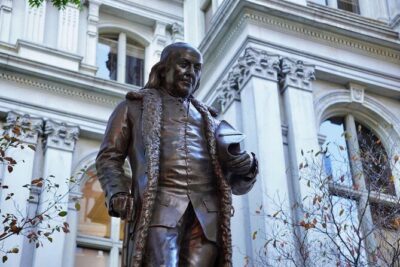
Boston Freedom Trail History Pub Crawl Small-Group Tour
Read our review →
Boston City View Bicycle Tour: History and Landmarks
Read our review →Browse the lists this tour appears in