
Review · UK
Glasgow: Historical Walking Tour: Guided by a local actor
Glasgow’s past comes alive through performance on this two-hour central walking tour, where a trained local actor turns buildings, lanes, and old scandals into a connected story. You begin between the lions in George Square and finish at Mercat Cross, covering the city’s medieval roots, trading wealth, political upheaval, and working-life struggles.
I like the guide-led storytelling, especially when Ian, Martin, Luke, or Gordon is leading, and I like the route’s practical sweep through George Square, Merchant City, the Gallery of Modern Art, and Glasgow Cross. The main consideration is that this is an outdoor history walk, rain or shine, and the two hours leave no time to tour the museums or cathedral interiors.
Key points to know before booking
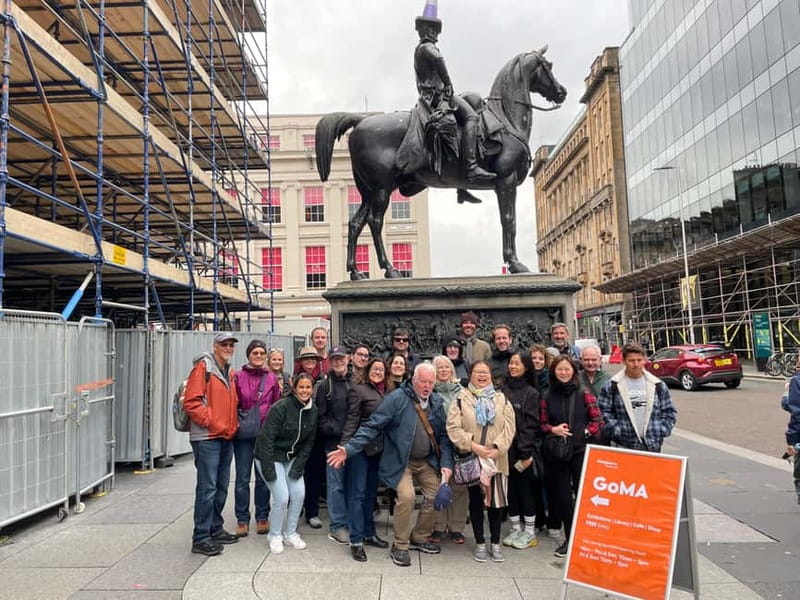
- Actor-led storytelling: Guides including Ian, Martin, Luke, and Gordon use humor, poetry, anecdotes, and dramatic delivery rather than reading a dry list of dates.
- A useful first look at central Glasgow: The route links George Square, the commercial district, Merchant City, the Gallery of Modern Art, and Mercat Cross.
- History with some bite: Expect stories about fortunes lost, public executions, grave robbing, Irish immigration, politics, and Glasgow’s role in the British Empire.
- Flat walking route: The tour takes place on flat terrain and is listed as wheelchair accessible, though you still need comfortable shoes and weather-ready clothing.
- Good value at $20: You get a two-hour orientation with a local guide, while Glasgow’s museums and galleries can be visited free afterward.
- No interior visits during the walk: Glasgow Cathedral, the Gallery of Modern Art, and the Police Museum are pointed out rather than toured in detail.
Why this Glasgow walk works so well
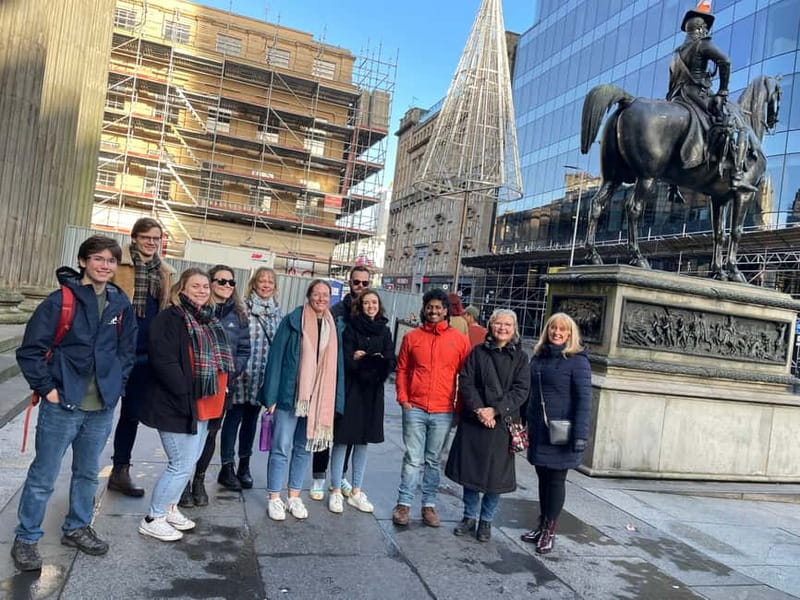
This is not simply a stroll past handsome stone buildings. It is a city story told in stages. George Square introduces civic pride and imperial ambition. Merchant City explains how money shaped Glasgow. The lanes and old crossroads bring in crime, punishment, religion, migration, and ordinary city life.
That structure matters. Glasgow can seem scattered at first, with grand civic buildings close to modern shops and older streets. A good guide connects the pieces. The actor training helps because the history is delivered as a story, often with a joke or a pointed aside at the right moment.
I would choose this tour early in a Glasgow visit. You get your bearings without spending half a day indoors, and the guide can point out places to return to later. The best guides also give useful suggestions for food, cultural stops, and later walks. Martin, Ian, Luke, and Gordon are specifically praised for clear speaking, personal warmth, humor, and the ability to keep a group involved.
The quality does depend partly on who leads your departure. The experience provider uses different guides, so you may not receive the same person named in another booking. That is not necessarily a problem. The recurring strength is the format: trained performers who know the city and can make a group listen in the middle of a busy square.
More History Walking Tours in the UK
- A History of Terror – Belfast City Centre Walking Tour
★ 5.0 · 2,883 reviews - Edinburgh: Old Town History and Tales Walking Tour
★ 4.8 · 2,361 reviews - Old Town Walking Tour History and Tales in Edinburgh
★ 5.0 · 2,168 reviews
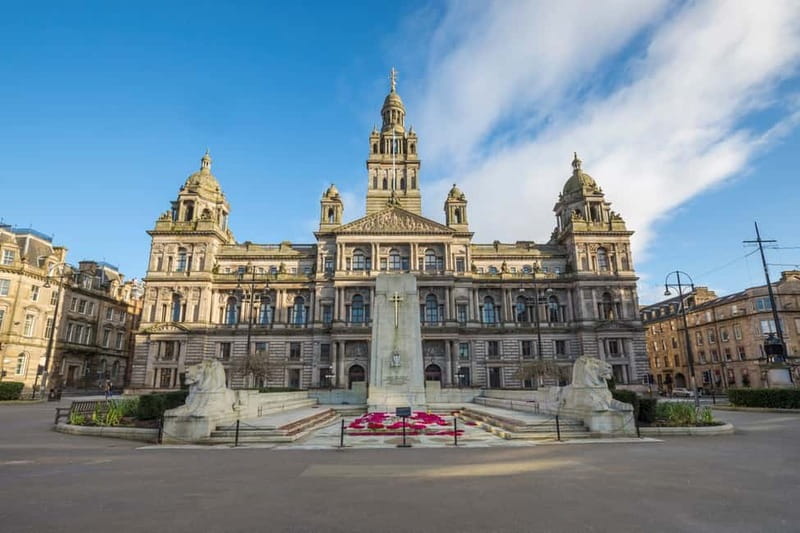
George Square: civic pride, royal names, and grand stone
Meet your guide between the lions in George Square, just behind the white granite Cenotaph and War Memorial. If a major disruption affects the square, the backup meeting point is Piper Whisky Bar at the corner of Cochrane Street and George Square.
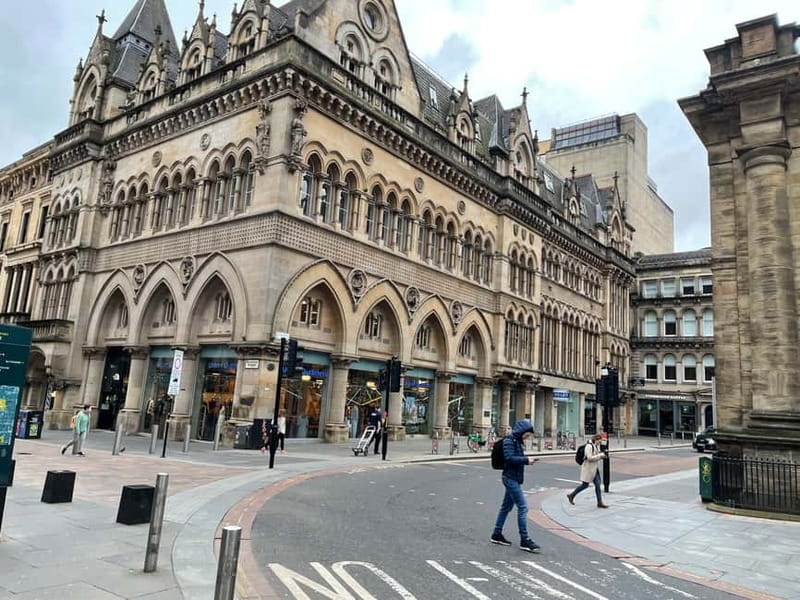
The square gives the tour a strong opening scene. You can look across at the Victorian City Chambers, the Merchants’ House, and the headquarters of Glasgow City Council. These buildings help explain how Glasgow presented itself as a serious commercial and civic power.
Your guide also explains why the square carries the name of an English king. That detail opens a wider conversation about Scotland’s political relationship with England and the way public spaces preserve power in stone, plaques, statues, and names.
The first section includes a guided look and a photo stop. Allow yourself a few minutes to take in the architecture, but do not expect a long pause for private photography. The guide’s job here is to set the scene, not to provide an architectural lecture on every façade.
I like this opening because it gives you a visual shorthand for Glasgow. You see government, commerce, memorial culture, and imperial confidence gathered in one place. If this is your first visit, it is a useful way to understand why Glasgow became known as the second city of the British Empire.
From early settlement to a commercial capital
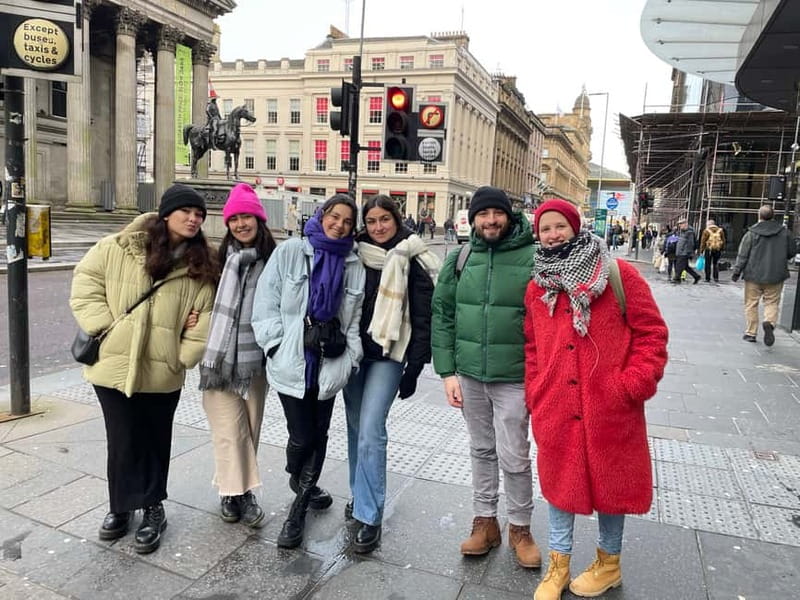
The walk then moves through the central streets toward the modern commercial district. Along the way, the guide covers Glasgow’s early Christian and Roman connections and the ancient tribes that shaped the area.
This section will suit you if you prefer history that keeps moving. You are not planted in front of a single monument for half an hour. Instead, the streets become a timeline. The route shows how a place with early religious and Roman associations grew into a commercial center.
The tour also tackles the beginnings of commercial capitalism, socialism, and the British Labour movement. That combination is one of the more useful features of the walk. Glasgow’s story is not only about merchants making money. It is also about the social response to industrial wealth, working conditions, and political power.
The guide’s role is especially important here. Facts about trade and politics can quickly become a blur, but a performer can give them character and rhythm. Gordon, for example, is praised for telling the story in an engaging way, using poetry and old-style storytelling. Ian is praised for combining social and political detail with humor. Those touches help the ideas stay with you.
Do not expect a full study of Glasgow’s industrial economy in two hours. You get an introduction, with enough signposts to guide later reading or sightseeing. The value is in seeing the connections as you walk, not in collecting every date.
Merchant City and the old trading families
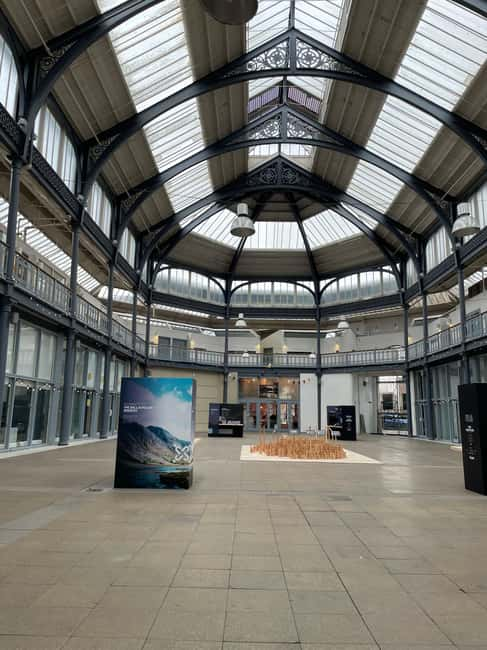
The Merchant City section is the heart of the tour. You explore lanes and alleys while hearing about the merchants who helped shape this part of Glasgow. The route points out the homes and palaces of the original trading barons, along with the fortunes they built, lost, and sometimes rebuilt.
This is where the city’s polished image meets its harder edge. Grand façades suggest success, but the stories also bring in risk, ambition, and the human cost of commerce. The guide may connect Glasgow’s overseas trade to major events, including the claim that Glaswegians helped set the American War of Independence alight.
Treat that kind of story as a prompt to ask questions. A theatrical guide may present disputed or colorful episodes with confidence, and the pleasure is in hearing the local version. If you want a formal academic account, this is not the right format. If you want a memorable explanation of how Glasgow saw its place in the world, it works much better.
Merchant City is also a good place to notice how old and new uses sit together. You may be walking past shopping streets and modern businesses while hearing about earlier commercial families. That contrast makes the history feel connected to the present rather than sealed away in a museum.
The guide may also discuss Irish immigration and its influence on Glasgow’s growth. This adds an important social layer. The city was shaped not only by wealthy merchants and civic leaders, but also by communities who arrived, worked, worshipped, and helped expand Glasgow.
Same city, a different century:
- London Small Group Tour of Historical Pubs
★ 5.0 · 10,422 reviews - Edinburgh: Edinburgh Castle Guided History Tour with Tickets
★ 4.8 · 9,933 reviews - Edinburgh: Whisky Tasting with History and Storytelling
★ 4.9 · 2,451 reviews - Soho Music & Historic Pubs Tour
★ 5.0 · 1,993 reviews
The Gallery of Modern Art and free cultural stops
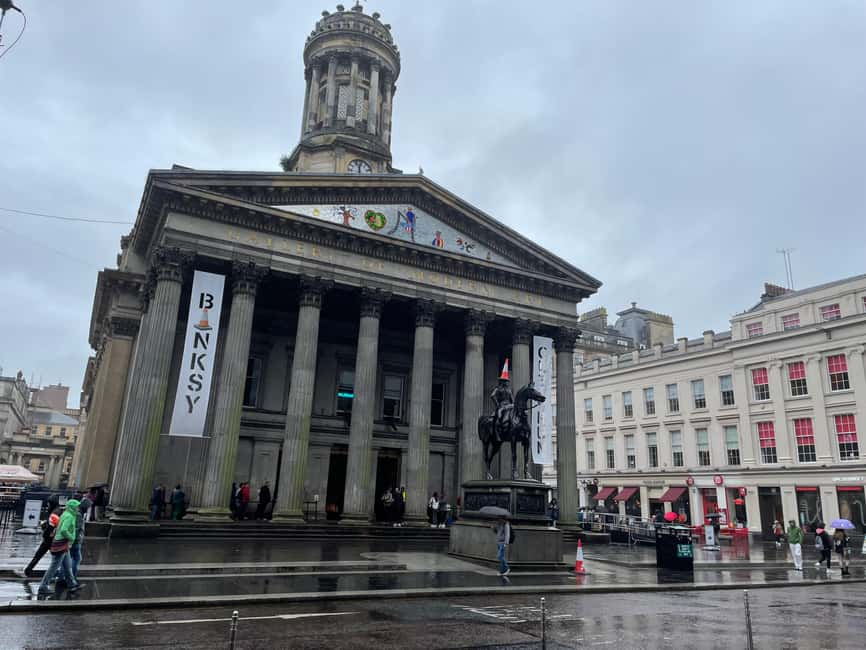
The route passes the Gallery of Modern Art, where the guide gives you context and points out the collection. The tour does not include time for a full gallery visit, so plan to return later if you want to go inside.
This is a useful arrangement for a short city walk. You are shown where the cultural stop is, but you are not forced to rush through exhibits while watching the clock. Glasgow’s museums and galleries are free to visit, so you can build a separate indoor stop around your own interests.
The same applies to Glasgow Cathedral and the Police Museum. They are part of the wider story and may be pointed out during the route, but they are not fully explored during the two-hour walk. I see this as a strength for some people and a limitation for others.
If you want a tour that gets you inside historic buildings, book something else or leave extra time afterward. If you want a lively introduction before choosing where to spend the rest of your day, the arrangement is sensible. You avoid paying another admission fee, and the guide helps you decide what deserves a closer look.
The Gallery of Modern Art also gives the tour a change of mood. After civic architecture, trade, and political history, contemporary art reminds you that Glasgow is not frozen in the past. The walk keeps linking old stories to the city you see today.
Glasgow Cross and Mercat Cross: a darker ending
The final stretch heads toward Glasgow Cross and Mercat Cross, where public executions once took place. This is a sharper ending than a simple return to the starting square. The tour moves from civic pride and merchant wealth to punishment, spectacle, and the less comfortable parts of urban life.
You may also hear stories involving murder, ghosts, and grave robbing. These details give the final section a darker tone, but they are presented as part of Glasgow’s social story rather than as a pure ghost walk. The focus remains on how people lived, died, worshipped, traded, and were punished.
Mercat Cross is a fitting place to finish because it was a major public meeting point. It helps you picture the old medieval center, when city life gathered around crossroads, markets, religious buildings, and official punishment. The route gives you a sense of where Glasgow began before later expansion spread the city outward.
The supplied directions contain slightly different wording about the ending, with the route identifying Mercat Cross and the meeting information saying the activity ends back at the meeting point. Check the final meeting details when you book if the exact finishing point matters to your plans.
What the actor guides add
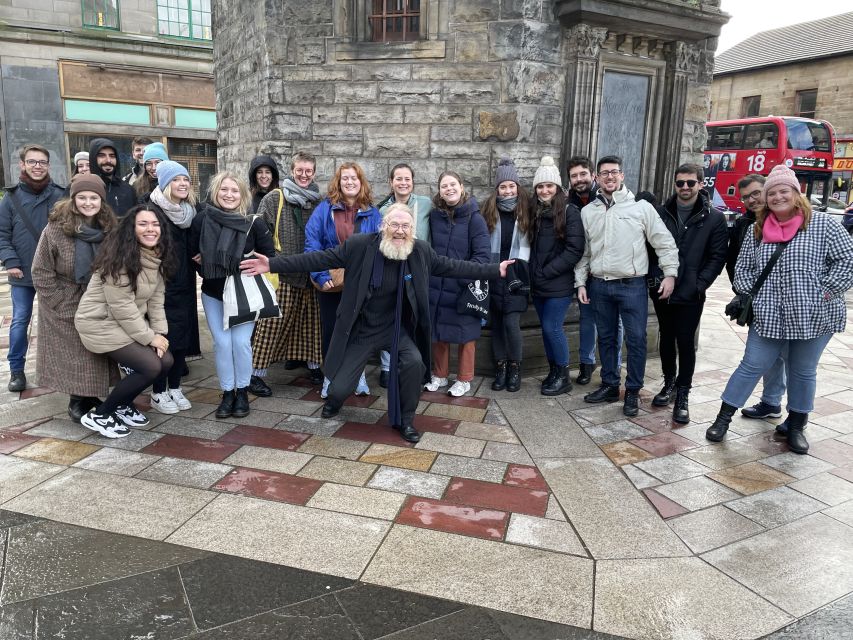
The strongest feature is the delivery. A standard guide can tell you that a building dates from a certain period. A trained actor can make you care why it mattered, who used it, and what kind of city grew around it.
Martin is praised for dramatic connection with a large group and for projecting clearly. Ian is praised for answering questions and helping people with ideas for places to eat and visit after the walk. Luke is described as funny, easy to hear, and good at bringing history to life. Gordon is praised for wit, charm, poetry, and a warm approach even in cold rain.
Those details tell you what to look for. You want a guide who can be heard without strain, keeps the group moving, and makes room for questions. You also want someone who can adjust the mood, since the route includes civic architecture, politics, immigration, humor, and darker tales.
The tour can work with a larger group, but a large group naturally makes intimate conversation harder. One guide is specifically praised for making individuals feel noticed even with about 35 people. Still, stand where you can see and hear clearly, especially in George Square and on busy streets.
Price, pace, and practical comfort
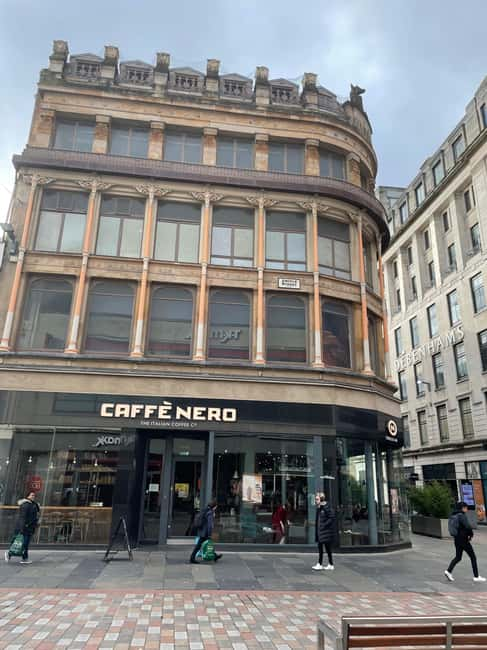
At $20 per person, I consider this good value for a two-hour orientation, particularly because it combines a local guide, a broad central route, and a performance element. You are paying for interpretation, not admission tickets. That keeps the cost down, but it also means the experience depends heavily on the guide.
The route takes place on flat terrain and is listed as wheelchair accessible. You should still wear comfortable shoes because two hours on city streets can feel longer than the distance suggests. Bring a camera, comfortable clothing, and weather-appropriate layers.
This is a rain-or-shine activity. Glasgow weather can change quickly, and there is no promise of shelter during the storytelling stops. A waterproof outer layer is a better choice than relying on an umbrella, especially when you need to keep one hand free and hear the guide clearly.
Food, drinks, hotel pickup, and hotel drop-off are not included. You meet in George Square, so plan your own way there. The tour is in English, and the guide’s local accent is part of the experience, though clear projection is repeatedly valued by those who took the walk.
Free cancellation up to 24 hours before the start gives you some flexibility, and you can reserve now while paying later. Those terms are helpful if your Glasgow schedule is still shifting.
Who should book this walking tour?
I would recommend it to first-time visitors who want a story-led introduction rather than a list of landmarks. It suits adults, families with older children, and anyone who enjoys humor, local anecdotes, political history, architecture, and a little macabre detail.
It is also a good fit if you have only a short stay. In two hours, you cover several central districts and leave with clear ideas for later visits. Pair it with Glasgow Cathedral, the Gallery of Modern Art, or the Police Museum afterward, since the tour points them out but does not include interior time.
I would be less likely to choose it if your main aim is detailed architecture, a cathedral interior, or a small private conversation with a specialist. The tour is broad, lively, and theatrical. It is not a slow study of one building or a quiet seminar.
Should you book it?
Book this Glasgow walk if you want the city explained by someone who can tell a good story, keep the pace moving, and add humor to politics, trade, immigration, and old crimes. At $20, it offers a lot of useful orientation for the price.
Skip it only if you dislike group walking tours, outdoor weather, or theatrical delivery. For most visitors, especially on a first morning in Glasgow, the route gives you a strong sense of the central city and a practical list of places to explore next.
FAQ
How long does the Glasgow historical walking tour last?
The tour lasts two hours. Check availability for the current starting times.
Where does the tour begin?
Meet your guide between the lions in George Square, just behind the white granite Cenotaph and War Memorial.
What happens if George Square is disrupted?
The backup meeting point is Piper Whisky Bar at the corner of Cochrane Street and George Square.
Where does the tour finish?
The route lists Mercat Cross as the finish. The meeting information also says the activity ends back at the meeting point, so confirm the final arrangement when booking if this affects your schedule.
Is the tour wheelchair accessible?
Yes. The tour is listed as wheelchair accessible and takes place on flat terrain.
Are Glasgow Cathedral and the museums included inside the tour?
No. The guide can point out Glasgow Cathedral, the Gallery of Modern Art, and the Police Museum, but there is not enough time for interior visits during the walk. Glasgow museums and galleries are free to visit separately.
What should you bring?
Bring comfortable shoes, a camera, comfortable clothing, and clothing suitable for the weather. The tour operates rain or shine.
Just added around the UK
- Private tour of the stunning Cotswolds with an expert local guide★ 5.0 · 45 reviews
- Medieval Walking Tour of Chester★ 5.0 · 155 reviews
- Curious Cambridge – The History Tour that’s FUN!!!★ 5.0 · 80 reviews
- 2.5-Hours Walking Tour of Birmingham into Black Heritage Madiba★ 5.0 · 49 reviews
- Birmingham Gangs Nighttime Historical Walking Tour with Pub Stops★ 5.0 · 53 reviews
- Award Winning Private 2 Hour Belfast Political Black Taxi Tour★ 5.0 · 53 reviews
- Private Political History & Murals Tour Belfast★ 5.0 · 182 reviews
- Belfast Walking Tour: City Centre History, Troubles & Stories★ 5.0 · 39 reviews
UK History Tours, compared.
Edinburgh: Edinburgh Castle Guided History Tour with Tickets
Read our review →
A History of Terror – Belfast City Centre Walking Tour
Read our review →
Edinburgh: Whisky Tasting with History and Storytelling
Read our review →
Edinburgh: Old Town History and Tales Walking Tour
Read our review →
Old Town Walking Tour History and Tales in Edinburgh
Read our review →
Edinburgh: Old Town and Underground Historical Tour
Read our review →Browse the lists this tour appears in