
Review · UK
Glasgow: The Magnificent and Mysterious History of Glasgow
Glasgow’s story is written into its streets: medieval faith, tobacco money, industrial labor, grand Victorian buildings, and modern street art all share the same compact center. This 2.5-hour walk takes you from George Square through Merchant City and the old lanes toward Glasgow Cathedral, with plenty of sharp local stories along the way. St Mungo, merchants, workers, musicians, and a few rogues all get their turn.
I like the way the tour connects big sights, such as the City Chambers, with easy-to-miss places such as Virginia Court and the Britannia Panopticon. I also like the guides’ mix of facts and humor. Bruce is often praised for his storytelling and wit, while Henry brings clear explanations and strong social and political context. The drawback is simple: this is an outdoor walk in Glasgow, so rain, cold, and changeable weather are part of the deal.
Key points to know before you go
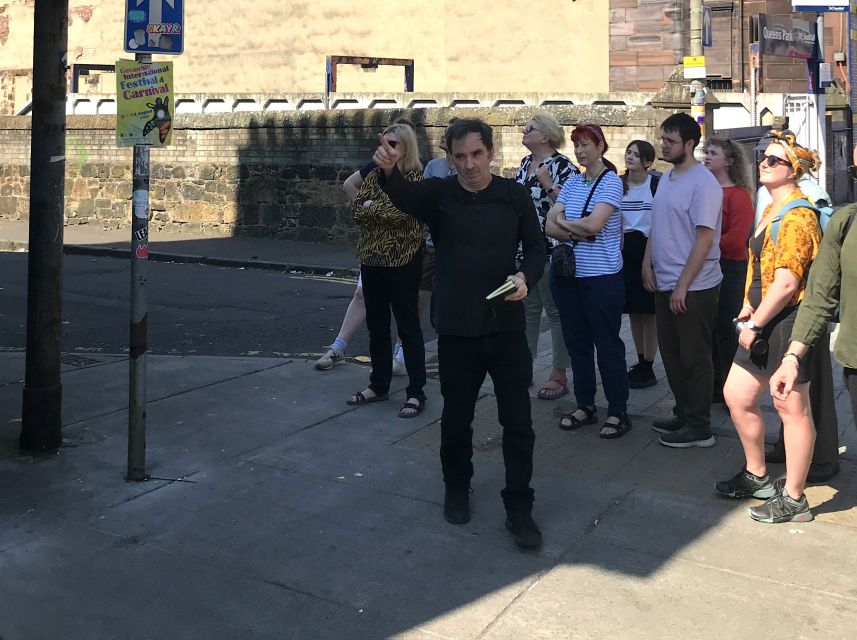
- Glasgow in one walk: Cover the city’s medieval beginnings, tobacco wealth, Victorian expansion, and modern arts scene in about 2.5 hours.
- A strong local story: Guides such as Bruce, Henry, Ben, and James bring personalities and scandals into the history rather than giving you a list of dates.
- Merchant City focus: See Tobacco Merchant’s House, Virginia Court, Candleriggs, Mercat Cross, and the old trading streets.
- Unusual stops: The route includes the Britannia Panopticon, the world’s oldest surviving music hall, plus murals, old police architecture, and the Ramshorn.
- Good value at $18: You get a live English-speaking guide and a broad introduction to central Glasgow without paying museum-entry prices.
- Come ready to walk: Expect roughly 4 kilometers, a reasonable level of fitness, comfortable shoes, and rain gear.
Why this Glasgow walk works so well
Many city tours give you a monument, a date, and a quick photograph. This one tries to show how Glasgow changed. You begin with a small religious settlement linked to Saint Mungo, move through the money and power of the 18th and 19th centuries, and finish in a city known for music, murals, theaters, and creative energy.
That broad sweep is the tour’s main strength. You are not only looking at fine stonework. You are hearing about the people who paid for it, the workers who built it, the traders who made fortunes, and the social changes that followed.
The route also helps you read Glasgow’s center. A narrow court may reveal how cramped the old city was. A grand façade may point to overseas trade. A theater or mural may show how Glasgow has continued to reinvent itself. I find that approach more useful than simply ticking off famous sights.
The guide matters a great deal here. Bruce receives especially strong praise for his humor, warmth, and ability to tell a story without losing the facts. Henry is noted for explaining the social, political, and cultural setting behind Glasgow’s past, and Ben is described as both entertaining and well informed. The exact guide depends on the date, but you can expect a live English-language presentation rather than a recorded commentary.
More History Tours in the UK:
- London Small Group Tour of Historical Pubs
★ 5.0 · 10,422 reviews - Edinburgh: Edinburgh Castle Guided History Tour with Tickets
★ 4.8 · 9,933 reviews - A History of Terror – Belfast City Centre Walking Tour
★ 5.0 · 2,883 reviews
Starting at George Square and the City Chambers
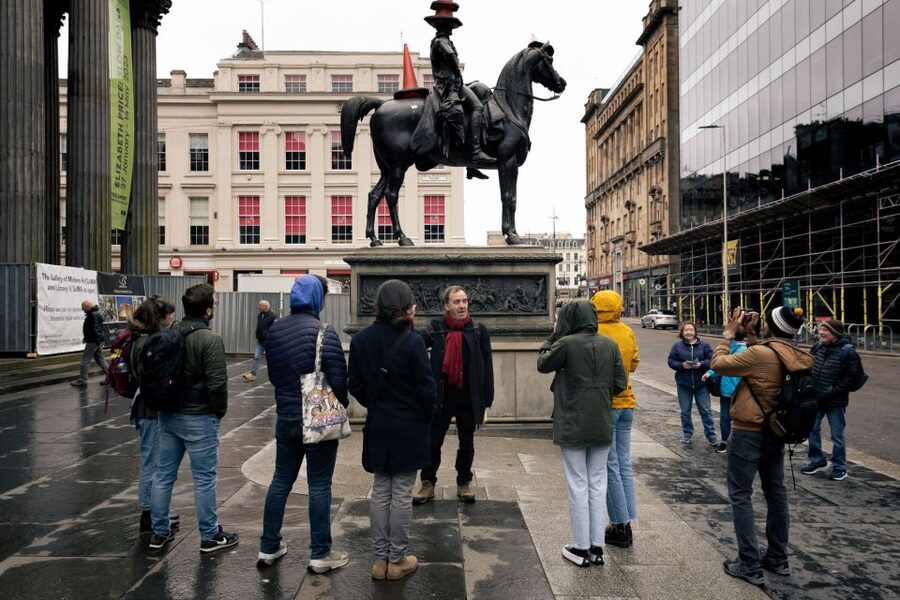
Meet outside the main entrance to Costa Coffee on the north side of George Square. This is a practical starting point because George Square is central, easy to find, and surrounded by some of Glasgow’s most important public buildings.
The first major stop is Glasgow City Chambers. Allow about 12 minutes here for the guided explanation and photographs. The building gives you an immediate sense of the civic confidence that Glasgow developed during its prosperous Victorian period.
Look up as you listen. The exterior, sculpture, and scale are not accidental decoration. They reflect a city that wanted to present itself as wealthy, powerful, and worthy of international attention. The guide uses the building to explain Glasgow’s rise and its place as the Second City of the Empire.
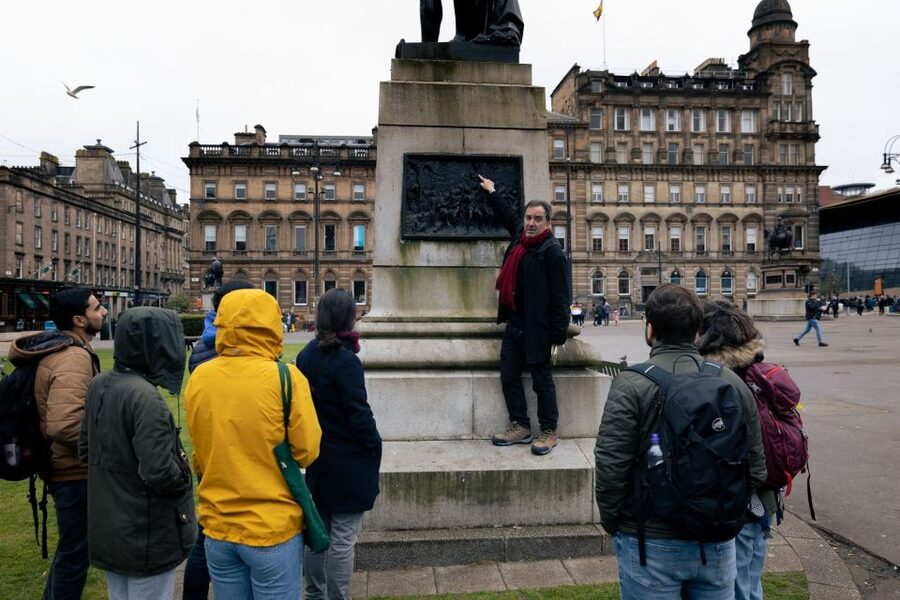
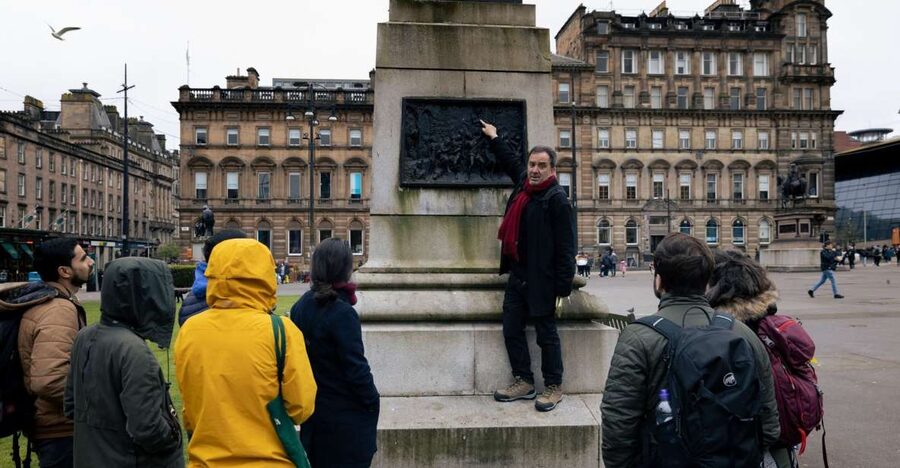
From there, the walk pauses at the Cenotaph, the Walter Scott Monument, and the monument to Robert Burns. These brief stops are useful because they add public memory to the city story. You will hear how Scotland’s writers, poets, soldiers, and civic leaders have been represented in Glasgow’s streets.
The short stop at 155 Queen Street continues the architecture lesson. You do not spend long at each monument, so this section works best if you listen closely and take quick photographs rather than expecting extended time at every location.
From Georgian façades to tobacco wealth
The route turns toward the old commercial quarter, where Glasgow’s history becomes more personal. A stop near Paesano Pizza leads into the story of the city’s merchants and traders, while the Tobacco Merchant’s House shows how overseas commerce shaped the streets.
This is where the tour moves beyond the simple idea that Glasgow became wealthy through industry. Tobacco, shipping, trade, and finance helped build fortunes before the city’s industrial expansion reached its height. The elegant architecture of Merchant City makes more sense once you understand who paid for it.
Virginia Court and the Merchant City Inn area offer a look at the older street pattern. Courts and lanes can be easy to pass without noticing, especially when you are focused on larger buildings. Your guide points out the small clues that reveal how people lived, worked, and moved through the old commercial center.
A stop at Jacobean corsetry adds one of the tour’s more unusual details. It is the sort of location you might not choose on your own, and that is exactly why a walking guide earns the ticket price. You are directed toward the odd corners and local references that do not always appear in a standard city guide.
The old police post and Rab Ha’s Hotel continue the walk through Glasgow’s less formal history. Expect memorable characters, colorful episodes, and some darker stories. The tour does not present the city as a polished success story only. It includes scandals and difficult chapters too, which gives the grand buildings a more human setting.
Hutchesons Hall, murals, and the city’s working side
At 1802 @ Hutchesons Hall, the guide links architecture with the people and institutions that helped shape Glasgow. The tour repeatedly returns to this idea: merchants may have funded expansion, but workers made the city function.
That balance is important. Glasgow’s grand public buildings can make the past look comfortable and orderly. The stories of labor, trade, and ordinary city life remind you that prosperity was not shared equally. You get a more useful understanding of how modern Glasgow was built.
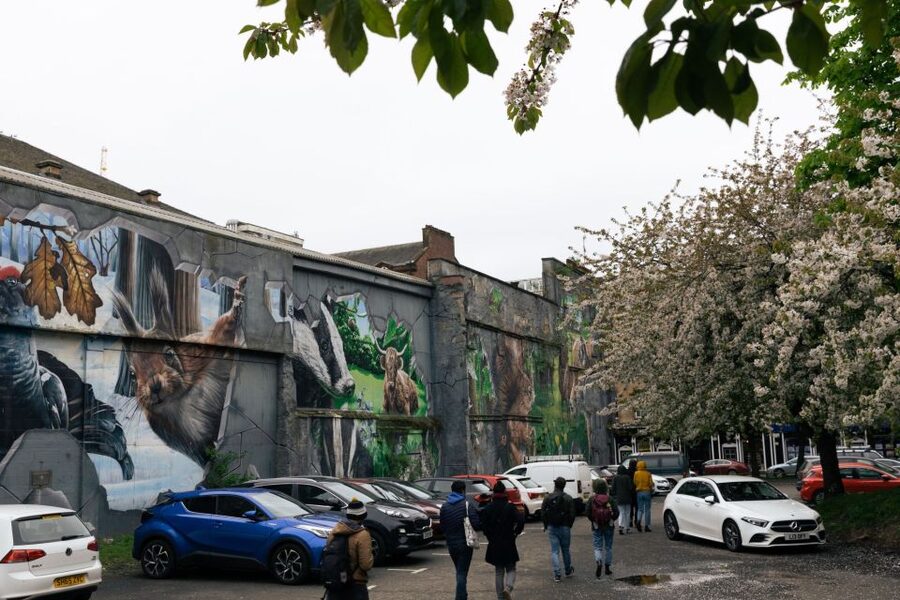
The BOW DOWN, HONOUR THE ROOTS mural introduces the city’s contemporary street-art trail. This is one of the route’s best transitions. Instead of treating old Glasgow and present-day Glasgow as separate worlds, the guide shows how the city keeps telling stories in new ways.
Next come the City Halls and Old Fruitmarket. These places connect performance, markets, public gatherings, and urban change. Candleriggs adds another layer, helping you picture the commercial activity that once filled this part of the city.
The Tron Theatre brings the story into Glasgow’s present arts scene. The city’s creative identity is not only something for an evening show. It is visible in the buildings, murals, music venues, and repurposed spaces along the route.
Same city, a different century:
- Edinburgh: Whisky Tasting with History and Storytelling
★ 4.9 · 2,451 reviews - Edinburgh: Old Town History and Tales Walking Tour
★ 4.8 · 2,361 reviews - Old Town Walking Tour History and Tales in Edinburgh
★ 5.0 · 2,168 reviews - Soho Music & Historic Pubs Tour
★ 5.0 · 1,993 reviews
The Britannia Panopticon and Glasgow’s theatrical past
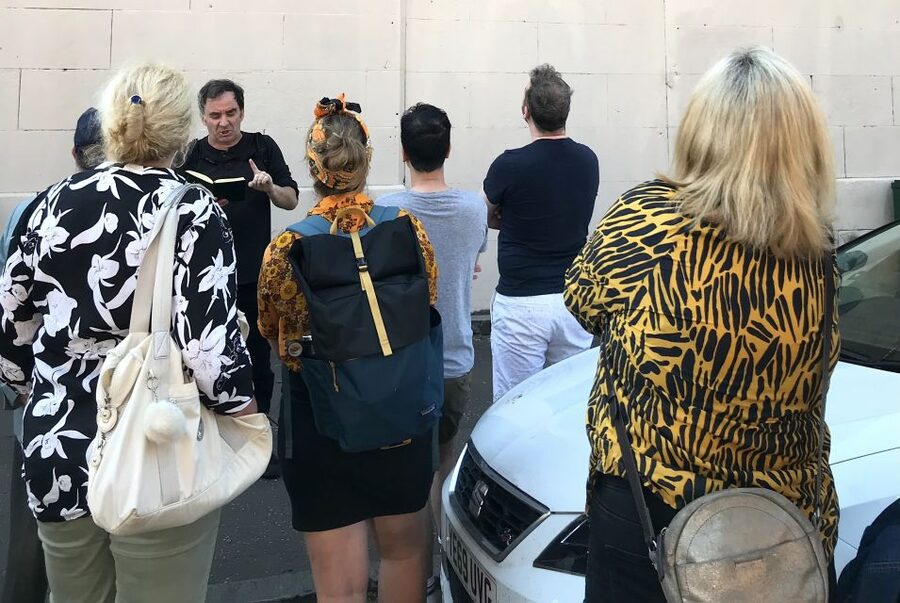
The Sharmanka Kinetic Theatre and the Britannia Panopticon are among the most distinctive stops. The Britannia Panopticon is the world’s oldest surviving music hall, and it offers a sharp change of mood from the civic grandeur around George Square.
The music hall helps explain a different Glasgow: popular entertainment, comedy, performance, and the everyday public life of the city. It is also a reminder that history is not only found in churches, monuments, and government buildings. Sometimes it is hiding behind an unassuming frontage.
You then pass the Billy Connolly mural, one of the stops on Glasgow’s mural trail. Connolly gives the route a strong link to modern Scottish comedy and popular culture. The mural also shows how Glasgow uses public art to celebrate people who helped shape its identity.
The Briggait and Saltmarket shift the focus back toward trade and urban movement. Bare Bones Chocolate appears as a quick modern stop, a small reminder that the old center is still used by working businesses rather than preserved only as a museum piece.
Because the tour includes so many places, some stops are brief. That is a benefit if you want a wide overview, but it may feel quick if you hope to study every building or enter every venue. Think of the walk as a guided introduction, not a series of full interior visits.
Mercat Cross, High Street, and the old city core
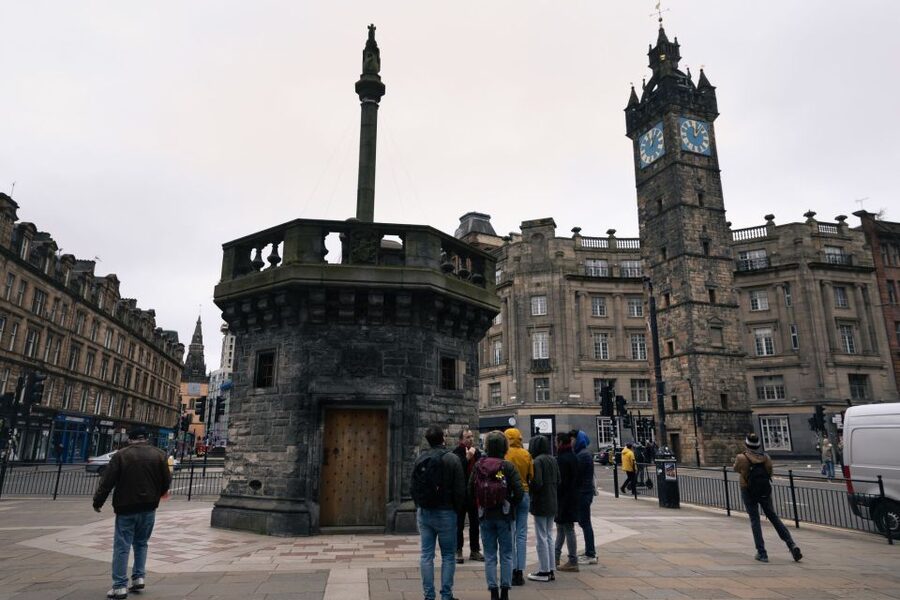
Mercat Cross is an important point on the route because market crosses were tied to civic life, trade, announcements, and public authority. From there, the walk continues along High Street, one of the key historic routes in central Glasgow.
This section brings the medieval and later city together. The early story of Glasgow can feel distant when you are looking at Victorian architecture, but High Street helps connect those periods. The streets preserve the shape of an older center even as the buildings and uses have changed.
Babbity Bowster adds another local reference before the tour reaches the Fellow Glasgow Residents mural. The mural brings the city’s current voice into the walk once again. By this point, you have seen a clear pattern: Glasgow’s past is not locked away. It is still being argued over, celebrated, painted, performed, and used.
The Ramshorn is the final major stop before Glasgow Cathedral. Its history and appearance make it a fitting bridge between the city’s religious origins and its later urban life. The guide can bring together the themes you have been following: faith, civic power, trade, architecture, art, and the people who lived through Glasgow’s changes.
Finishing at Glasgow Cathedral
The walk ends at Glasgow Cathedral, rather than returning to the starting point. That makes the route useful for a first afternoon in the city because you finish near one of Glasgow’s major historic sights.
You should plan your next activity with this endpoint in mind. The tour begins at George Square and works south and east through the center toward the cathedral area. The exact time spent at each stop can vary with the group, questions, traffic, and weather, but the full experience is scheduled for 2.5 hours.
The cathedral is also a satisfying final chapter. Glasgow’s story begins with its early religious roots, and the cathedral helps bring that beginning back into view after the route has shown you merchants, markets, theaters, murals, and civic buildings.
What the pace and walking are really like
This is an active walking tour, but it is not described as a forced march. One recent account put the distance at about 4 kilometers, with several minutes of walking followed by stops to listen and look. That pattern makes the distance manageable for many people with a reasonable level of fitness.
You will still be on your feet for 2.5 hours. Wear shoes that you can comfortably walk in, and bring a waterproof layer. Glasgow weather can change quickly, and the tour runs in rain or shine.
Large bags and luggage are not allowed. That matters if you are arriving directly from a train, cruise, or airport connection. Arrange to leave your luggage elsewhere before joining the group.
The stated suitability guidance excludes children under 10, people with mobility impairments, and people with a low level of fitness. One local participant found the walk manageable with a pram, but that individual experience should not replace the official guidance. If mobility or endurance is a concern, ask before booking.
Is $18 good value for Glasgow?
At $18 per person, I consider this a strong-value introduction to central Glasgow. You get an experienced guide, a wide route, and a useful explanation of how the city developed. You also see places you could easily miss if you followed only the main shopping streets.
The value comes from the connections. City Chambers alone is worth seeing, but the tour becomes more useful when you understand how it relates to tobacco wealth, civic pride, workers, and the city’s later cultural life.
You are not paying for a long list of admission tickets. The experience is mainly an outdoor guided walk, with photo stops and commentary. If you want extensive time inside attractions, this is not the right format. If you want to get your bearings and decide what deserves a later visit, it is a sensible first step.
The booking terms also keep the decision fairly flexible: you can cancel up to 24 hours in advance for a full refund, and reserve now while paying later. Starting times vary, so check availability for your date.
Who will enjoy this tour most?
I would choose this walk if you are visiting Glasgow for the first time, have only a few hours in the center, or want a story that joins old Glasgow to the city you see today. It is also a good pick for people who enjoy architecture but want more than building dates.
The tour suits curious adults and older children who can handle a long outdoor walk. It is especially useful for visitors who worry that Glasgow’s past may be hard to read at street level. A guide can point out the clues and explain why they matter.
You may prefer a shorter or more focused experience if you dislike walking in poor weather, need frequent seating, or want long visits inside individual attractions. The route covers a lot, and the reward is breadth rather than depth at one site.
Should you book the Magnificent and Mysterious History of Glasgow?
I would book it for a first visit, especially early in your stay. The walk gives you a practical map of the center and enough historical context to make later visits to the cathedral, museums, theaters, and old quarters more meaningful.
Choose it if you like lively storytelling, unusual stops, street art, architecture, and the occasional darker tale. Bruce, Henry, Ben, and James have all been praised for making the material clear, funny, and personal, though your guide will depend on the day.
Skip it if two and a half hours outdoors sounds tiring or if you want a tour built around interiors and formal exhibits. For most reasonably fit visitors, though, $18 buys a generous introduction to Glasgow, with much more character than a simple monument checklist.
FAQ
Where does the Glasgow walking tour start?
It starts just outside the main entrance to Costa Coffee on the north side of George Square.
Where does the tour finish?
The tour finishes at Glasgow Cathedral.
How long does the walking tour last?
The tour lasts 2.5 hours.
What language is the tour in?
The live tour is conducted in English.
What is the price?
The listed price is $18 per person.
What sights are included?
The route includes Glasgow City Chambers, the Cenotaph, the Walter Scott Monument, the Robert Burns Monument, Tobacco Merchant’s House, Virginia Court, Hutchesons Hall, the Old Fruitmarket, the Tron Theatre, Britannia Panopticon, the Briggait, Mercat Cross, High Street, the Ramshorn, and Glasgow Cathedral, along with murals and other city landmarks.
Do I need to be fit for the tour?
You need a reasonable level of fitness because the tour involves walking for 2.5 hours. One account estimated the route at about 4 kilometers.
What should I bring?
Bring comfortable shoes, rain gear, and clothing suited to the weather.
Does the tour operate in bad weather?
Yes. The tour takes place rain or shine, and Glasgow weather can change quickly.
Can I bring luggage or a large bag?
No. Luggage and large bags are not allowed.
Can children join the tour?
The activity is not suitable for children under 10 years old.
Can I cancel my booking?
You can cancel up to 24 hours in advance for a full refund. You can also reserve now and pay later.
Just added around the UK
- Private tour of the stunning Cotswolds with an expert local guide★ 5.0 · 45 reviews
- Medieval Walking Tour of Chester★ 5.0 · 155 reviews
- Curious Cambridge – The History Tour that’s FUN!!!★ 5.0 · 80 reviews
- 2.5-Hours Walking Tour of Birmingham into Black Heritage Madiba★ 5.0 · 49 reviews
- Birmingham Gangs Nighttime Historical Walking Tour with Pub Stops★ 5.0 · 53 reviews
- Belfast Walking Tour: City Centre History, Troubles & Stories★ 5.0 · 39 reviews
- Award Winning Private 2 Hour Belfast Political Black Taxi Tour★ 5.0 · 53 reviews
- Private Political History & Murals Tour Belfast★ 5.0 · 182 reviews
UK History Tours, compared.
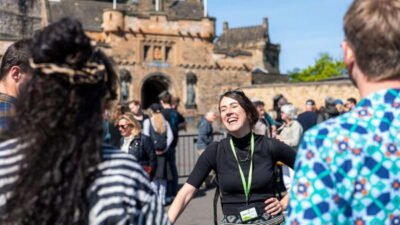
Edinburgh: Edinburgh Castle Guided History Tour with Tickets
Read our review →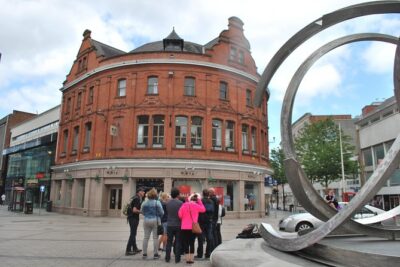
A History of Terror – Belfast City Centre Walking Tour
Read our review →
Edinburgh: Whisky Tasting with History and Storytelling
Read our review →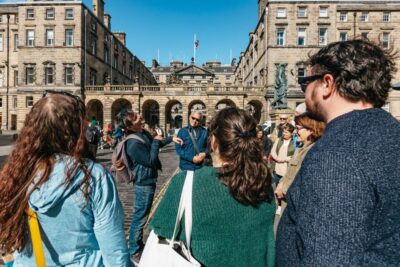
Edinburgh: Old Town History and Tales Walking Tour
Read our review →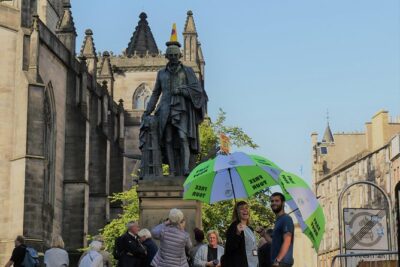
Old Town Walking Tour History and Tales in Edinburgh
Read our review →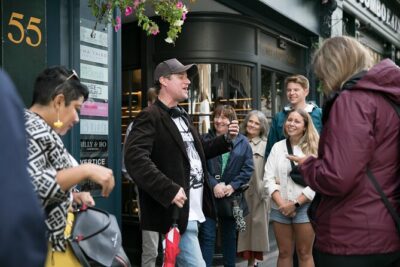
Edinburgh: Old Town and Underground Historical Tour
Read our review →Browse the lists this tour appears in