
Review · SPAIN
Granada: Historic Center and Lower Albaicin Walking Tour
Granada’s past comes into focus on this 2.5-hour walk, which links the city’s grand central monuments with the narrow lanes of the lower Albaicin. The best moment comes when you reach a viewpoint with the Alhambra spread across the valley, a scene that gives the whole tour a clear sense of place.
I like the mix of major sights and small details, especially the Islamic influence, the Reconquista story, and the chance to hear about local customs such as flamenco. At $16, I also like that you get a useful orientation to Granada without paying for monument entry you may not need.
The main consideration is the uphill walk into the lower Albaicin. The tour is not suitable for people with mobility impairments, and even some able walkers may want a short rest on the cobbled streets.
Key points at a glance
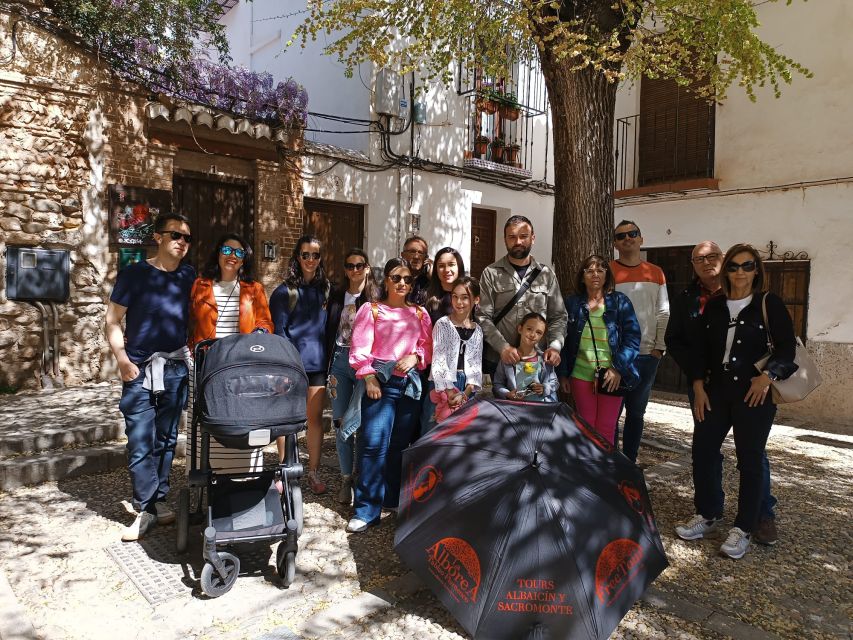
- See Granada’s historic core: Visit the Alcaiceria, Madraza, Cathedral, Bib Rambla, Corral del Carbón, and other important buildings from the outside and along the route.
- Walk into the lower Albaicin: Narrow Moorish-era streets give you a feel for Granada’s Islamic past without taking you far into the steeper upper neighborhood.
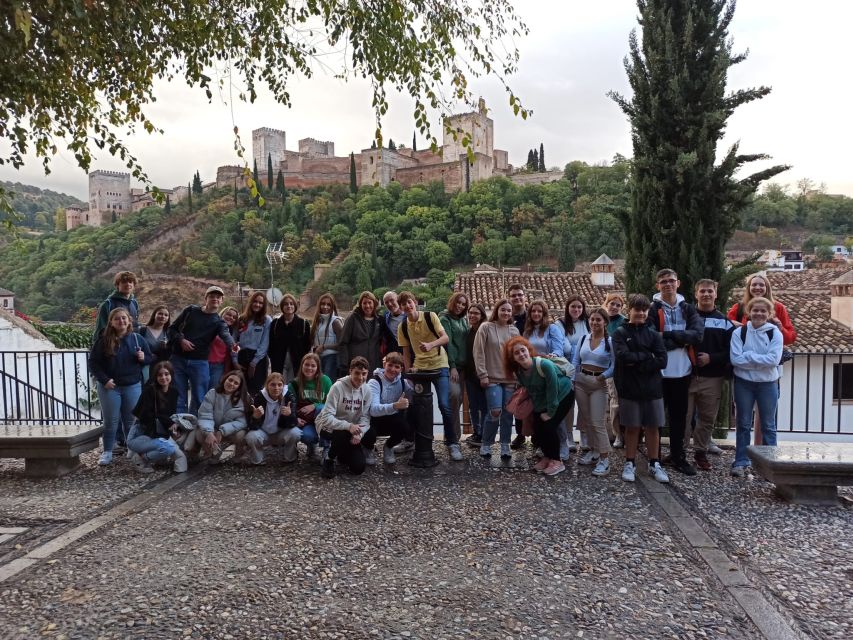
- Photograph the Alhambra: The tour includes a stop at a viewpoint with a clear look toward Granada’s most famous landmark.
- Learn the 1492 story: Your guide explains the final stage of the Reconquista and how it shaped Granada.
- Benefit from local advice: Guides such as Pablo, Irene, Jaime, and Rocio have offered suggestions for places to visit and eat after the walk.
- Keep the cost low: The $16 price includes the guide and walking tour, with free cancellation up to 24 hours before the start.
Why this Granada walk works well as a first activity
I would put this tour near the beginning of a Granada visit. It covers enough ground to help you understand how the center, the lower Albaicin, and the Alhambra relate to one another, but it does not try to take you inside every major monument.
That distinction matters. Granada has a lot to see, and the names can blur together on your first day: Madraza, Alcaiceria, Chancillería, Cathedral, Albaicin, Alhambra. A guide gives each place a role in the story, so you can return later with a better plan.
The walk also gives you both sides of Granada’s character. The center has formal squares, churches, courts, and civic buildings. The lower Albaicin feels older and more intimate, with winding streets that recall the city’s Moorish past. Ending with a view of the Alhambra ties those parts together.
Several guides have received especially warm praise for making the history easy to follow. Pablo is described as friendly and entertaining, while Jaime has been particularly patient with questions and walking breaks. Irene has led tours that were detailed and interactive, and Rocio has been praised for her clear command of Granada’s past. Your guide may be someone else, but the experience depends heavily on the person leading it.
More History Walking Tours in Spain
- Barcelona: Tapas Walking Tour with Food, Wine, and History
★ 4.8 · 4,261 reviews - Barcelona Tapas Walking Tour: Food, Wine & History
★ 4.5 · 1,928 reviews - Madrid Historical Walking Tour
★ 5.0 · 721 reviews
Starting beside the Catholic Kings monument
The meeting point is in front of the monument to Isabel la Católica and Cristóbal Colón, also known as Ferdinand and Isabella and Christopher Columbus. It is in the heart of Granada, close to the central sights covered on the walk.
This is a useful starting place because the monument opens the door to one of the tour’s main subjects: Granada in 1492. The city was the last Muslim-ruled kingdom in Iberia to fall to the Catholic monarchs, and the Reconquista concluded here. A good guide can explain that transition without reducing Granada to a simple before-and-after story.
You should arrive ready to walk rather than expecting a series of long indoor visits. The listed price includes the guide and walking tour, not entry tickets to the monuments. That keeps the cost down and lets you choose which places deserve a separate visit later.
The tour is offered in Spanish and English. Because some historic streets are narrow and busy, stay near the guide at the meeting point and pay attention when the group turns into side streets.
Corral del Carbón and the old commercial quarter
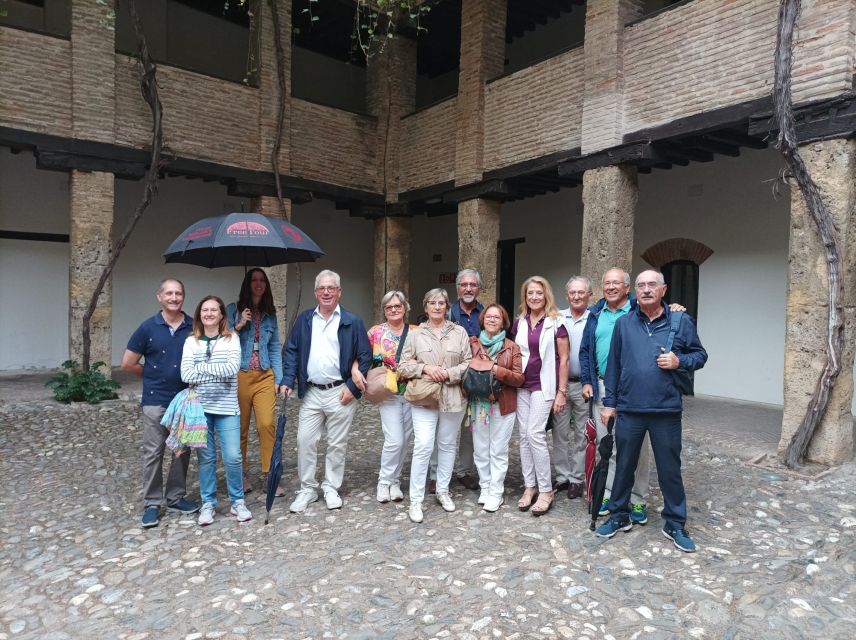
One of the early sights is the Corral del Carbón, an important reminder that Granada was once a major trading city. Its name is linked to coal, and the building served commercial and lodging functions. It is one of those places that can be easy to walk past without a guide.
From there, the route takes you toward the Alcaiceria. This former market area is tied to Granada’s Islamic commercial past, and its lanes still give the center a more intimate feel than the broad streets around the Cathedral.
I find this part of the walk useful because it shows how old Granada survives in fragments. You are not simply looking at isolated monuments. You are moving through the places where trade, religion, administration, and daily life once overlapped.
The Alcaiceria is also a good reminder to keep your expectations in check. It is now a shopping area, so the modern setting can be more commercial than historic. The value here comes from the explanation and the street plan, not from expecting a preserved medieval market untouched by time.
Bib Rambla, the Madraza, and Granada’s central squares
Plaza Bib Rambla is one of the city’s key public spaces and includes the Giants Fountain. A stop here gives your guide room to explain how Granada’s center developed around open squares and civic activity.
The route also includes the Madraza, a former Islamic school with an important connection to Granada’s intellectual life. Even if you later decide to visit it properly, seeing it in the context of the surrounding center helps you understand that Islamic Granada was not only a military or royal story. It was also a place of study, trade, law, and public life.
This is one of the strongest sections for architecture. Your guide may point out changes in building style and explain how later Christian institutions were placed within a city shaped by centuries of Muslim rule.
One particularly useful feature is the chance to ask questions. The guide has been praised for responding carefully to questions about architecture, old paving, and the way Granada was built. If you are curious, ask. This is not a tour where you need to remain silent and simply follow the flag.
More Old Town and Historic Centre Walks in Spain
- Madrid Essential: Historic Center, Plaza Mayor & Royal Palace
★ 5.0 · 6,416 reviews - Valencia Old Town Tour with Wine & Tapas in 11th Century Historic Monument
★ 5.0 · 3,234 reviews - Madrid Historic Centre Food Tour with Authentic Tapas & Wines
★ 5.0 · 814 reviews - Madrid in a Day Tour:Royal Palace, Historic Center & Prado Museum
★ 5.0 · 628 reviews
The Cathedral and the buildings of Christian Granada
The walk continues past the Cathedral, the Church of Saint Ana, the Royal High Court, the Royal Chancillería, and the Royal Jail. These buildings help tell the story of Granada after 1492, when the city became a center of Christian royal and legal power.
You should not confuse seeing these buildings on a walking route with taking a full interior tour. The focus here is orientation, architecture, and historical explanation. If the Cathedral is high on your list, you will likely want to return with time set aside for a more careful visit.
The Royal Chancillería is especially useful in the wider story because it reflects Granada’s role in law and administration. The nearby buildings show how the city center was reshaped after the transfer of power.
The Church of Saint Ana adds another architectural layer beside the river area, while the Royal Jail points to the practical side of civic life. Together, these stops keep the tour from becoming a procession of only famous names. You see the institutions that governed, judged, worshipped, and confined people.
Entering the lower Albaicin
The change in mood is clear when you leave the central streets and enter the lower Albaicin. The lanes become narrower, the route less formal, and the Moorish character more apparent.
This is not a full exploration of the highest parts of the Albaicin. The walk visits the lower section, which is a sensible choice for a short city tour. You get the character of the neighborhood without spending the entire 2.5 hours on a steep climb.
Still, the route is not flat. You will walk over cobbled streets and may encounter an uphill section. Comfortable shoes are essential, and anyone with knee, heart, or other mobility concerns should think carefully before booking.
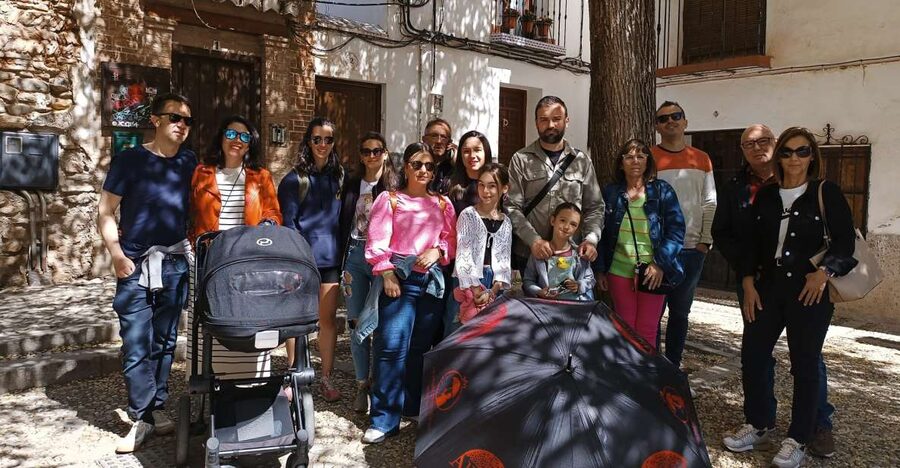
One family group found that some people needed breaks while walking uphill, and the guide adjusted the pace because the group was small. That is encouraging, but you should not assume every departure will feel like a private tour. Group size can vary, and a larger group may make it harder to wait for slower walkers.
The lower Albaicin is where the tour’s connection to Granada’s Islamic past becomes most physical. Instead of hearing only about Moorish rule in a square, you are walking through a street pattern that still recalls that era. The setting makes the history easier to remember.
The Alhambra viewpoint and the tour’s best photograph
The final highlight is the viewpoint toward the Alhambra. From the lower Albaicin, you get a different perspective than you would from inside the palace complex or from the hilltop itself.
This is a strong ending because it gives you the photograph most people hope to take in Granada. More important, it shows the relationship between the Alhambra and the old city below. The palace is not an isolated attraction. It was part of a wider urban setting, connected to the Albaicin and the center by geography and history.
Bring your camera, but also give yourself a moment to look beyond the screen. The view is the kind of scene that can help you decide how to spend the rest of your time in Granada.
If you have already booked an Alhambra visit, this viewpoint adds context rather than replacing it. If you have not booked one, the stop may make you more eager to see the palace, but it does not include entry to the Alhambra.
How the guides shape the experience
The strongest praise for this tour centers on the guides’ storytelling and willingness to answer questions. That matters more here than fancy equipment or a long list of stops.
Pablo has been described as both entertaining and well informed, with useful suggestions for places to visit later. Jaime has been praised for his patience, help with practical questions, and ability to adjust the pace. Irene has made the tour interactive by asking the group questions rather than delivering one long speech. Other guides, including Anna, Emilio, Elene, Rocio, and others, have also been praised for their warmth and clear explanations.
A small group can make a large difference. One January departure had only seven people and felt close to a private walk. Another had five people. That kind of group lets you ask more questions and makes it easier for the guide to slow down when needed.
You should also allow for the possibility that English delivery will vary. One person found a guide’s accent hard to understand at times, even though the grammar was good and most of the explanation remained clear. This is a reasonable caution for anyone who struggles with accents or depends on catching every word.
The tour also seems to leave room for local topics beyond monuments. A peaceful stop to explain flamenco was a memorable part of one outing, and practical tips about food and further sightseeing have been part of the experience. Those details can be just as useful as the formal history.
Is $16 good value in Granada?
At $16 per person, this is a low-cost way to get a structured introduction to central Granada and the lower Albaicin. The price covers a live guide and 2.5 hours of walking, which works out to a modest cost for a half-day orientation.
The value is strongest if you are new to Granada, want historical context, or prefer to explore on foot rather than read a guidebook while navigating. You also get advice that can shape the rest of your visit, including ideas for other places to see and eat.
It is less useful if you want long interior visits, a deep architectural study of one building, or a relaxed stroll with very little uphill walking. This is a survey tour. You see many places, hear the story linking them, and decide where to return.
The booking terms add flexibility. You can cancel up to 24 hours before the tour for a full refund, and you can reserve now and pay later. Those policies are helpful when your Granada plans are still changing.
Who should book this walk?
I would recommend it to first-time Granada visitors, couples, families with older children who can manage the walk, and anyone who wants to understand the city before choosing which monuments to visit in depth.
It is also a good fit if you enjoy asking questions. The guides have been praised for handling questions about architecture, history, customs, and local places. A small group can make that exchange especially worthwhile.
I would be more cautious if you have mobility impairments, difficulty with cobblestones, or trouble walking uphill. The tour specifically says it is not suitable for people with mobility impairments, and the lower Albaicin section is the reason.
You should also choose your starting time with care. The tour lasts 2.5 hours, and one participant had to leave early to catch a train. If you have a fixed departure or timed Alhambra entry afterward, leave a generous gap.
Should you book the Granada Historic Center and Lower Albaicin Tour?
Book it if you want an inexpensive, well-organized introduction to Granada that combines the central monuments with a taste of the lower Albaicin. The Alhambra viewpoint, 1492 history, Moorish street plan, and practical local advice give the walk more substance than a simple sightseeing circuit.
Skip it if you need step-free access or want to spend most of your time inside monuments. For most reasonably active visitors, though, this is a sensible first-day choice. It helps you get your bearings, puts Granada’s Islamic and Christian past into context, and gives you a clear list of places to explore on your own.
FAQ
How long does the walking tour last?
The tour lasts 2.5 hours.
What is the price?
The price is $16 per person.
Where do I meet the guide?
Meet in front of the monument of Isabel la Católica and Cristóbal Colón in the center of Granada.
What languages are available?
The live tour is available in Spanish and English.
What sights are included on the route?
The route includes the Corral del Carbón, Alcaiceria, Plaza Bib Rambla, the Church of Saint Ana, the Royal High Court, the Giants Fountain, the Madraza, the Cathedral, the Royal Chancillería, the Royal Jail, and the lower Albaicin.
Does the tour include an Alhambra visit?
No. The tour includes a viewpoint with a view of the Alhambra, but it does not include entry to the Alhambra.
What should I bring?
Bring comfortable shoes for the historic streets and uphill section.
Is the tour suitable for people with mobility impairments?
No. The activity is listed as unsuitable for people with mobility impairments.
Can I cancel or pay later?
You can cancel up to 24 hours in advance for a full refund. You can also reserve your place and pay later.
Just added around Spain
- Visita Guiada Por El Casco Histórico De Cuenca Y Su Catedral★ 5.0 · 45 reviews
- Night Walking Tour of Medieval Cuenca★ 5.0 · 64 reviews
- Mosque of Cordoba History Tour in English Tickets included★ 5.0 · 257 reviews
- 2 Hours Tour around Cádiz: History, anecdotes and curiosities★ 5.0 · 89 reviews
- Jerez de la Frontera History and Art Walking Tour★ 4.5 · 49 reviews
- Bilbao Historical Small Group Tour★ 4.5 · 159 reviews
- The Authentic Bilbao Pintxos, Food & Wine Tour with a Local★ 5.0 · 360 reviews
- Girona, Costa Brava and Medieval Village from Barcelona★ 5.0 · 149 reviews
Spain History Tours, compared.
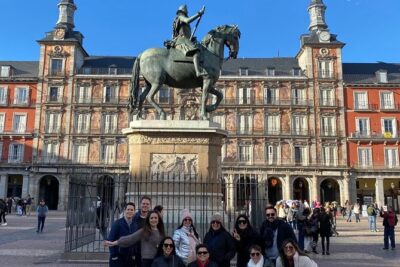
Madrid Essential: Historic Center, Plaza Mayor & Royal Palace
Read our review →
Montserrat with Black Madonna & Medieval Winery with Tapas/Lunch
Read our review →
Sevilla Food Tour: Tapas, Wine, History & Traditions
Read our review →
Valencia Old Town Tour with Wine & Tapas in 11th Century Historic Monument
Read our review →
Madrid Tapas & Taverns Small Group Food & History Tour
Read our review →
Barcelona Tapas Walking Tour: Food, Wine & History
Read our review →
Ultimate Seville Tapas, Wine & History Small Group Tour
Read our review →
Córdoba: Skip-the-Line Great Mosque-Cathedral History Tour
Read our review →Browse the lists this tour appears in