
Review · SPAIN
Guided Tour of Historic and Monumental Trujillo
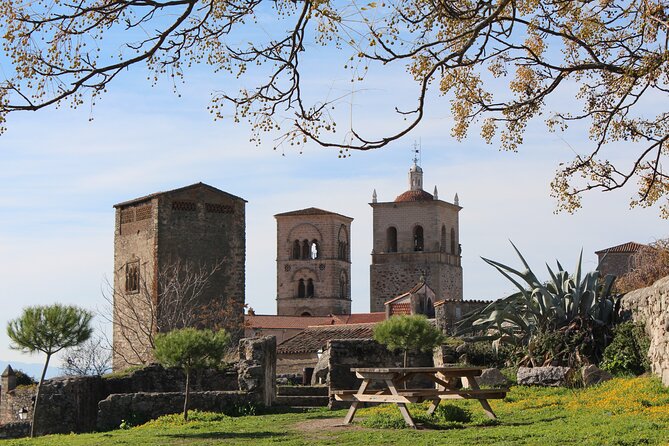
Trujillo’s Plaza Mayor is one of Spain’s great town squares, lined with Renaissance palaces and watched over by Francisco Pizarro on horseback. From here, this two-hour walk climbs into the medieval town, where castles, churches, convents, towers, and fortified houses crowd behind the old walls. You get a compact lesson in Extremadura’s past without spending much money.
I like the way the tour connects grand history with small details, including the house linked to María de Escobar and the gate defended by the Bejarano family. I also like the practical focus on photo spots and themed routes tied to Isabel la Católica, Carlos V, and film locations. The main consideration is pace: two hours covers a lot, and the walk includes historic streets and uphill sections toward the castle.
- Plaza Mayor first: Begin among Renaissance façades and the famous equestrian statue of Francisco Pizarro.
- Medieval layers: See Muslim defenses, Gothic churches, noble houses, and military buildings in one compact route.
- A guide-led walk: Guide Ana is specifically noted for making the visit lively and full of useful comments.
- Strong value: At $13.90 per person, the tour gives you two hours of context and orientation for a modest price.
- Useful photo advice: The guide points out appealing corners and viewpoints as you move through the old town.
Start with Trujillo’s grand Plaza Mayor
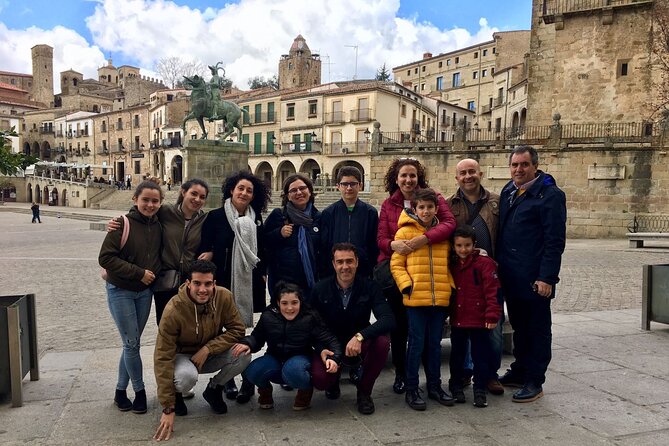
The tour begins at TurismoTrujillo.es Actividades Turísticas, at Plaza Mayor, 20. That is a handy meeting point because the square gives you an immediate sense of Trujillo’s importance. You are not starting on an anonymous street or at the edge of town. You begin in the middle of the story.
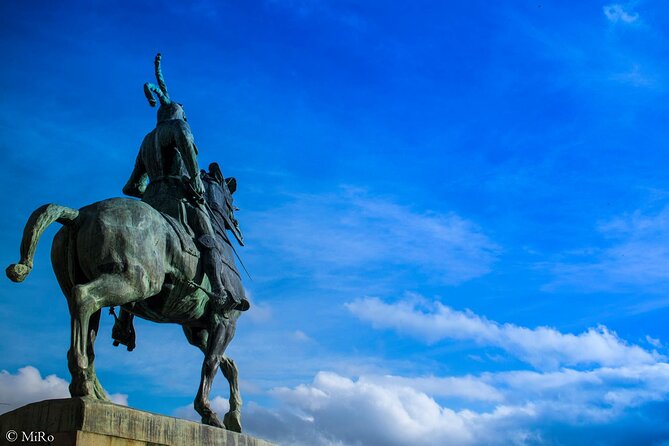
The square is framed by Renaissance palaces and older noble houses. Its most familiar feature is the equestrian monument to Francisco Pizarro, the Trujillo-born conqueror of Peru. The statue is not just a photo prop. It opens the door to the town’s connection with Spain’s 16th-century expansion overseas, a subject that appears again in the Pizarro House Museum and the Escobar family house.
One short stop explains the square’s 16th-century construction, begun in 1562 by order of Hernando Pizarro. That detail helps you read the buildings around you. The Plaza Mayor was not simply an open space. It was shaped by powerful families who used architecture to display money, influence, and family ties.
The repeated Plaza Mayor entries in the route are best understood as one opening area with several points of interest, not separate visits that take up a large part of the tour. Expect a short introduction, a look at the square’s architecture, and time around the statue before the walk moves into the old town.
Read the palaces before entering the walls
The Palacio de San Carlos, also called the Palacio de los Vargas-Carvajal, is one of the square’s key buildings. Its original Plateresque façade is the detail to watch for. Plateresque architecture is known for finely worked decoration, and here the façade helps show how local nobles turned a public square into a display of status.
The tour does not list a separate admission for the palace, so you should expect to study it from the outside unless the guide tells you otherwise. That is not a major weakness on a short walking tour. The point is to understand the building’s place in the square and the families behind it, rather than spend much of the morning inside one residence.
I appreciate this kind of introduction because it gives you a way to look at Trujillo. Instead of seeing only attractive stone walls, you begin to notice the difference between a palace, a fortified house, a church, and a military gate. The guide’s commentary turns the old center into a readable map.
More Guided Tours in Spain:
- Madrid Historical Tour with Local Guide in Eco Tuk Tuk Private
★ 5.0 · 876 reviews - Guided Tour of Madrid of the Austrias and the Historic Center
★ 5.0 · 520 reviews - Seville: Tapas, Taverns and History Guided Walking Tour
★ 4.9 · 515 reviews
Enter the medieval town through houses of power
Once the route leaves the square, Trujillo changes character. The monumental façades give way to a medieval center filled with strong houses, manor houses, churches, convents, towers, and sections of the old wall. The streets and buildings are the main experience here, so allow yourself time to look up and around rather than treating the walk as a checklist.
The Casa-Fuerte de Luis de Chaves El Viejo is an especially useful stop. This 13th and 14th-century strong house is linked to the Catholic Monarchs, who stayed there during the Wars of Succession. Its importance comes from its dual role: it was both a residence and a defensive building.
That combination explains much about Trujillo. Powerful families needed attractive homes, but they also needed walls, heavy construction, and protected entrances. In a town shaped by conflict and changing royal power, a noble house could function as a small fortress.
The Palacio Viejo or Casa de la Cadena adds another layer. The site is connected to a 13th-century church founded by the Military Order of Santiago. Military orders were not only battlefield institutions. They also shaped settlements, controlled territory, and supported religious buildings. A brief stop here gives you a useful link between faith, military power, and local government.
Climb toward the Muslim alcazaba
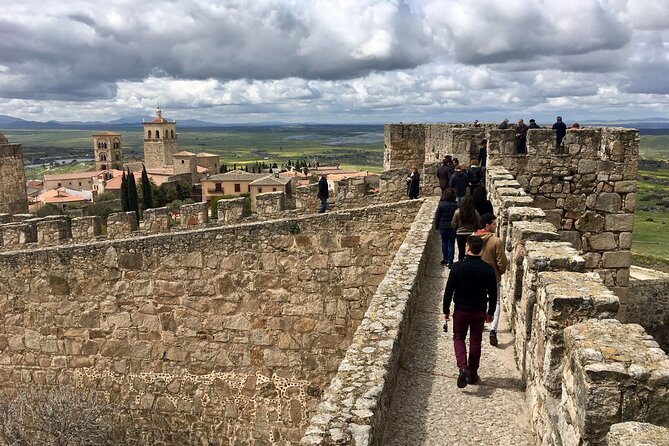
The Castillo de Trujillo is the route’s biggest physical and historical payoff. The fortress includes a Muslim alcazaba and an aljibe dating from the 10th to the 12th centuries. The castle area shows that Trujillo’s story began well before the Renaissance palaces of the Plaza Mayor.
An alcazaba was a fortified enclosure, while an aljibe was a water cistern. The cistern matters because water storage was essential to a defended settlement. A castle could have thick walls and a strong position, but without water it could not hold out for long. Even a short explanation of the aljibe adds practical sense to the ruins.
The climb is also the section to think about if you have limited mobility. The tour lasts about two hours and takes place in the historic center, including the castle area. The supplied information says most people can participate, but it does not promise a flat route or step-free access. Wear sensible shoes and be ready for uneven medieval streets.
The route’s photo advice is particularly useful here. Trujillo offers a mix of broad views, stone details, gateways, and framed streets. A guide who points out good corners can save you from rushing past the best angles while trying to keep up with the group.
See the Pizarro and Escobar family connections
The Pizarro House Museum is described as a 15th-century Hidalgo manor house. The word Hidalgo points to the lower noble class, a useful reminder that the town’s overseas story began in a local social setting. Pizarro was not an abstract historical figure who appeared only in a textbook. His family belonged to the network of houses and families you are seeing in Trujillo’s old center.
The stop helps connect the Plaza Mayor statue with the actual domestic world of the town. It also gives the Pizarro story more texture than a monument alone can provide. Check the tour’s exact arrangements if entering the museum is important to you, since the route information identifies the house but does not specify a separate museum admission.
The Casa Fuerte de los Escobar offers another unusual connection. This 15th-century military building is associated with María de Escobar, identified in the tour as the first woman to bring wheat and barley seeds to Peru. That detail makes the overseas connection more personal and less predictable. It also broadens the story beyond the better-known male conquerors.
I like this stop because it shows how plants, food, families, and trade moved between continents. It is a small story, but it gives the grand imperial narrative a human scale.
More History Tours in Spain:
- Madrid Essential: Historic Center, Plaza Mayor & Royal Palace
★ 5.0 · 6,416 reviews - Montserrat with Black Madonna & Medieval Winery with Tapas/Lunch
★ 5.0 · 5,209 reviews - Barcelona: Tapas Walking Tour with Food, Wine, and History
★ 4.8 · 4,261 reviews - Sevilla Food Tour: Tapas, Wine, History & Traditions
★ 5.0 · 3,468 reviews
Study Santa María la Mayor and Torre Julia
The Iglesia de Santa María la Mayor is one of Trujillo’s major religious monuments. It is described as a Gothic church with earlier Romanesque remains, including Torre Julia. The Spanish-Flemish altarpiece by Fernando Gallego is another important feature.
This is the point where the town’s religious history becomes visible in layers. Romanesque remains, Gothic construction, and a Spanish-Flemish altarpiece belong to different periods and artistic influences. You do not need a long lecture to appreciate the sequence. The building itself shows how a church can be altered, expanded, and given new decoration over generations.
The route information does not specify a separate admission charge, and the listed stops are marked without an admission ticket. Still, church access can depend on opening arrangements, religious services, or the guide’s timing. Treat the exterior architecture and the guide’s explanation as certain parts of the walk, and consider any interior view an added possibility rather than the sole reason to book.
Finish at gates and defenses
The Triumph Gate, or Puerta del Triunfo, was an important opening in the medieval defenses. Nearby, the Bejarano Redoubt is a 13th-century strong house that defended the gate. This pairing is one of the more useful parts of the tour because it lets you see how houses and walls worked together.
The final stop, Puerta de San Andrés, is one of the seven gates in Trujillo’s wall. It sits beside the Church of San Andrés and brings the route back to the town’s defensive structure. Gates were practical control points, but they also shaped how people entered, left, and understood the town.
By the end, you have seen more than isolated monuments. You have followed a pattern: public square, noble palace, fortified residence, religious foundation, Muslim fortress, church, and defensive gate. That sequence makes Trujillo easier to explore on your own afterward.
What the $13.90 price gives you
At $13.90 per person, this is a strong-value introduction to Trujillo. You are paying for about two hours with a guide who brings order to a dense historic center. The route includes major names and smaller details, and the price is modest compared with a private tour.
The value is greatest if this is your first visit. You get an overview of the old town, learn which buildings deserve a closer look, and receive advice about photographic corners. The tour also gives you several historical threads to follow later, from the Catholic Monarchs to Pizarro, María de Escobar, the Military Order of Santiago, and the Muslim alcazaba.
The tradeoff is depth. Two hours cannot provide a full museum visit, an extended examination of every palace, and a slow architectural study of every church. If you want long interior visits or a highly specialized history lecture, you may need more time on your own.
The tour has a maximum of 30 people. That is not a tiny private group, so the experience may feel more like a standard guided walk than a personal tour. The high rating, listed at 5 from 933 reviews with 100 percent recommending it, points to strong satisfaction overall, and Ana is specifically praised for making the route lively and full of comments. Still, a group of up to 30 can affect how easily you hear every word in a narrow street or crowded square.
Practical details before you book
The activity uses a mobile ticket, and confirmation is provided at booking. It starts and ends at the same Plaza Mayor meeting point, making it easy to fit into a day of sightseeing without arranging a separate return transfer.
The meeting address is TurismoTrujillo.es Actividades Turísticas, Pl. Mayor, 20, 10200 Trujillo, Cáceres, Spain. The site is near public transportation, and service animals are allowed. Most people can participate, but the route’s medieval setting means you should plan for walking, uneven surfaces, and the climb toward the castle.
Free cancellation is available if you cancel at least 24 hours before the local start time. Changes or cancellations made less than 24 hours before the start are not accepted for a refund. The tour is often booked about eight days ahead, so advance planning is sensible if your schedule is fixed.
Who should book this Trujillo walk?
I would choose this tour if you want a clear first look at Trujillo, especially if you are interested in architecture, medieval defenses, religious buildings, or Spain’s connection with the Americas. It suits first-time visitors who prefer a guided introduction before exploring the town alone.
It is also a good fit for photographers. The guide points out useful views and corners, and the route moves through a varied set of spaces: the open Plaza Mayor, old streets, fortified houses, castle defenses, gates, and church façades.
You may want a different plan if you dislike group walks, need guaranteed step-free access, or want long visits inside every monument. The two-hour format is brisk, and several stops are explained from outside. But for a low price and a concentrated route through Trujillo’s most important historic areas, it gives you a lot to work with.
FAQ
How long does the Guided Tour of Historic and Monumental Trujillo last?
The tour lasts approximately two hours.
Where does the tour begin?
It begins at TurismoTrujillo.es Actividades Turísticas, Pl. Mayor, 20, in Trujillo.
Where does the tour end?
The activity ends back at the meeting point in Plaza Mayor.
How much does the tour cost?
The listed price is $13.90 per person.
What are the main sights on the route?
The route includes Plaza Mayor, Palacio de San Carlos, the Francisco Pizarro monument, the medieval historic center, Casa-Fuerte de Luis de Chaves El Viejo, Palacio Viejo or de la Cadena, Castillo de Trujillo, Pizarro House Museum, Santa María la Mayor, Casa Fuerte de los Escobar, Triumph Gate, Bejarano Redoubt, and Puerta de San Andrés.
Is the tour offered with a mobile ticket?
Yes. The experience includes a mobile ticket.
How large can the tour group be?
The maximum group size is 30 people.
Can I cancel for a full refund?
Yes. You can cancel at least 24 hours before the experience start time for a full refund. Cancellations or changes made less than 24 hours before the start are not accepted for a refund.
Should you book it?
Book this tour if you want an affordable, well-organized introduction to Trujillo’s walls, castle, palaces, churches, and family history. The strongest reasons are the broad route, the useful photo guidance, and the lively commentary associated with guide Ana. Go in expecting a brisk outdoor walk rather than a series of long interior visits, and you will get a solid two-hour foundation for exploring Trujillo on your own.
Just added around Spain
- Visita Guiada Por El Casco Histórico De Cuenca Y Su Catedral★ 5.0 · 45 reviews
- Night Walking Tour of Medieval Cuenca★ 5.0 · 64 reviews
- Mosque of Cordoba History Tour in English Tickets included★ 5.0 · 257 reviews
- 2 Hours Tour around Cádiz: History, anecdotes and curiosities★ 5.0 · 89 reviews
- Jerez de la Frontera History and Art Walking Tour★ 4.5 · 49 reviews
- Bilbao Historical Small Group Tour★ 4.5 · 159 reviews
- The Authentic Bilbao Pintxos, Food & Wine Tour with a Local★ 5.0 · 360 reviews
- Girona, Costa Brava and Medieval Village from Barcelona★ 5.0 · 149 reviews
Spain History Tours, compared.
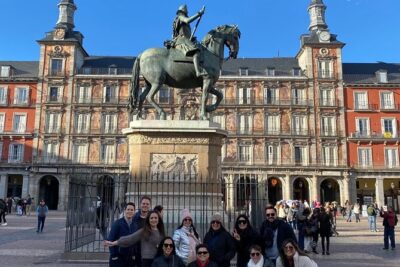
Madrid Essential: Historic Center, Plaza Mayor & Royal Palace
Read our review →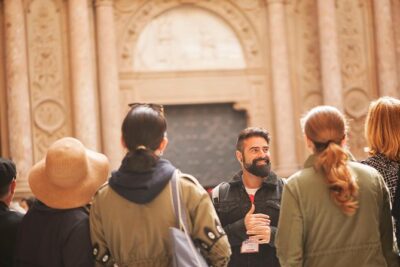
Montserrat with Black Madonna & Medieval Winery with Tapas/Lunch
Read our review →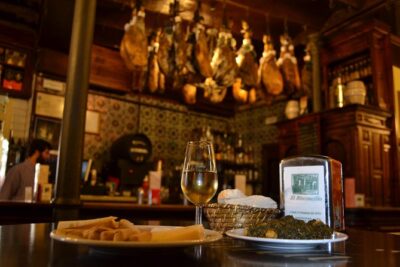
Sevilla Food Tour: Tapas, Wine, History & Traditions
Read our review →
Valencia Old Town Tour with Wine & Tapas in 11th Century Historic Monument
Read our review →
Madrid Tapas & Taverns Small Group Food & History Tour
Read our review →
Barcelona Tapas Walking Tour: Food, Wine & History
Read our review →
Ultimate Seville Tapas, Wine & History Small Group Tour
Read our review →
Córdoba: Skip-the-Line Great Mosque-Cathedral History Tour
Read our review →Browse the lists this tour appears in