
Review · BELGIUM
Historical Walking Tour: Legends of Antwerp
Antwerp’s old center is made for stories, and this tour links them neatly. You’ll move from the guild houses of Grote Markt to Rubens, printing, fashion, medieval alleyways, and the tale of Nello and Patrasche. I especially like the stop at Vlaeykensgang, a tucked-away lane that is easy to miss, and the final batch of practical tips near the cathedral.
I also like the range. In two hours, you get art, trade, religion, literature, and local folklore instead of a long march past facades. Guides such as Arie, Luc, Beren, Marc, and Gaston have been praised for clear storytelling and humor. The main drawback is simple: a group of up to 35 can be hard to hear, especially in traffic, crowds, or hot weather.
Key points to know before you book
- Grote Markt sets the stage: Start among Antwerp’s guild houses, City Hall, and the Brabo Fountain.
- Rubens appears in several forms: The route covers Carolus Borromeus Church and the exterior of Rubenshuis.
- Vlaeykensgang is the route’s best small discovery: This medieval alley is difficult to find without help.
- The tour mixes major sights with local stories: Expect legends, trade history, printing, fashion, and the Nello and Patrasche tale.
- The fee is unusually low: The listed price is $3.62 per group of up to six, and the tour’s tip-based model means you should plan an appropriate gratuity.
- Come ready to stand and walk: The pace is manageable, but there is little sitting and parts of the route can be noisy or sunny.
Why this two-hour walk works so well in Antwerp
Antwerp can feel scattered at first. The cathedral, Grote Markt, Rubens sites, shopping streets, and old lanes sit close together, but a first-time visitor may not see how they fit. This walk gives you a useful framework early in your stay.
The route is not built around one subject. It shows how Antwerp grew from a medieval city into a major trading center, then connects that story with painters, printers, churches, fashion, and popular legends. I like that mix because you are less likely to spend two hours hearing dates without understanding the city’s character.
The guides are a major part of the experience. Arie is repeatedly praised for warmth and clear delivery. Luc is noted for a calm style, good pacing, and a voice that carries well. Beren is described as funny and effective at handling crowds, while Marc is praised for putting Antwerp’s story in chronological order. Your guide will determine the exact tone, but the tour appears to rely on personal enthusiasm rather than a rigid script.
The fee deserves a little explanation. At $3.62 per group of up to six, this is remarkable value if you simply want orientation and context. The low advertised cost is linked to a tip-based format, so the price is not the full measure of what you should budget. If your guide gives you a useful two-hour introduction, plan to tip accordingly.
More History Walking Tours in Belgium
- Historical Walking Tour: Legends of Bruges
★ 5.0 · 2,541 reviews - Historical Walking Tour: Legends of Gent
★ 5.0 · 1,761 reviews - Brussels: Historical Walking Tour with Chocolate & Waffle Tasting
★ 5.0 · 1,165 reviews
Grote Markt and the story at the city’s center
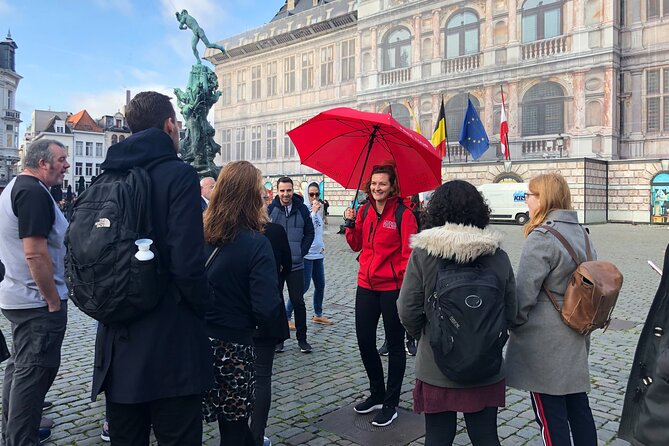
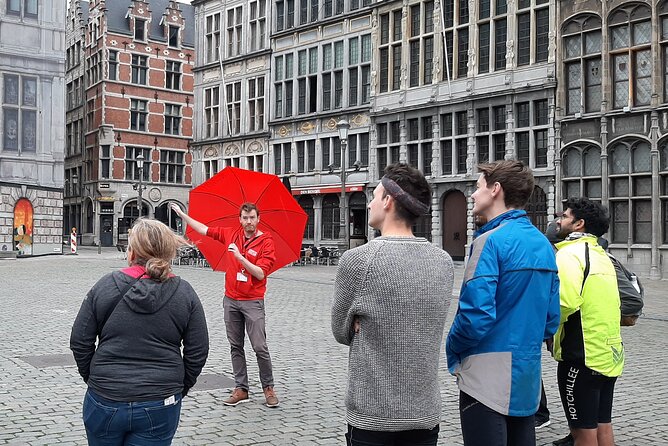
The walk begins at Grote Markt, the square most visitors associate with old Antwerp. It is ringed by ornate medieval guild houses, with City Hall on one side and the Brabo Fountain at the center.
This is a strong opening because the square provides an instant lesson in civic pride and commercial power. Your guide explains the stories attached to the fountain and the buildings, giving you something to look for later when you return on your own.
The stop lasts about 10 minutes. That is enough for an introduction, but not enough for a detailed architectural study. Think of it as a way to read the square, not a substitute for lingering there with your camera or a guidebook.
Hendrik Conscience Square and Carolus Borromeus Church
Next comes the square named for Flemish writer Hendrik Conscience. It is a quieter, more reflective stop, with an impressive Baroque church and the old city library nearby.
This is one of the route’s useful changes of mood. Grote Markt is open and ceremonial. The Conscience area feels more connected to books, ideas, and Antwerp’s Flemish identity. The guide’s explanation helps you see why the city is not only a port and shopping destination.
Carolus Borromeus Church follows, with about 10 minutes devoted to the building. This 17th-century Baroque church is closely linked with Peter Paul Rubens, whose work includes paintings and decorative contributions to the interior and facade.
A visit inside is included during opening hours, but that qualification matters. Church access can depend on the schedule, so you should not assume the interior will always be available. If you get inside, take a moment to look upward and around the decorative details. If not, the guide can still explain why this church matters to Antwerp’s art story.
The Bourse and Antwerp’s trading age
Handelsbeurs Antwerpen, or the Bourse of Antwerp, introduces the city’s commercial side. The building is presented as the world’s first Wall Street, and the stop explains how Antwerp became an international trading center during the 16th century.
This is an important part of the walk because it keeps the tour from becoming only an art-and-church circuit. Rubens did not create Antwerp’s importance by himself. Money, shipping, trade, and a growing market helped fund the churches, homes, and cultural life that you see in the old center.
The stop lasts about 10 minutes, and entry is included during opening hours. As with the church, access depends on the site being open. The building is worth understanding even if you later choose not to spend extra time inside.
Same city, a different century:
- Ghent: 50-Minute Medieval Center Guided Boat Trip
★ 4.5 · 5,637 reviews - Brussels: Historical Tour with Chocolate & Waffle Tasting
★ 4.8 · 1,206 reviews - THE Storytelling Tour of Bruges | First Day Must | History & Tips
★ 5.0 · 925 reviews - Ghent: 40 Minute Medieval Center Guided Boat Tour
★ 4.4 · 884 reviews
Rubenshuis, fashion, and the modern city
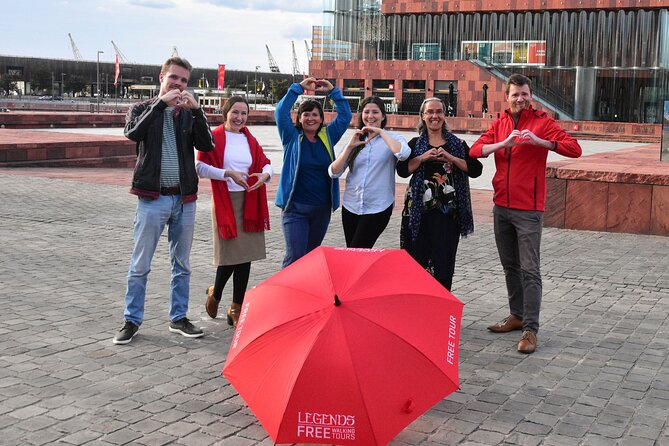
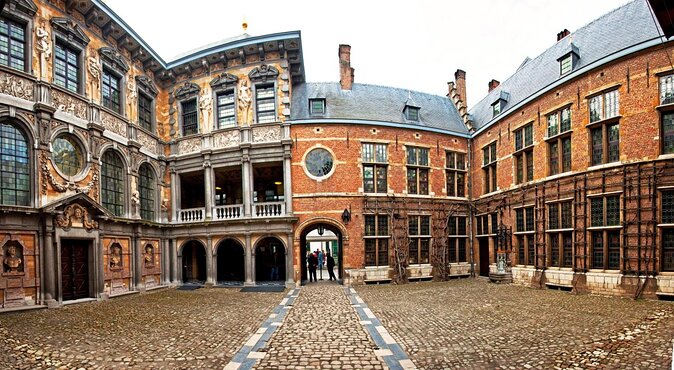
The route then turns toward Rubenshuis, the former home and workshop of Peter Paul Rubens. The guide shares details about his life and the methods behind his success.
The tour does not include admission to the Rubens House, so this is primarily an exterior and orientation stop. That is useful if you plan to visit later, but you should allow separate time and money if you want to see the museum itself. The stop lasts around 10 minutes.
The next section passes through Antwerp’s designer quarter and near MoMu, the Fashion Museum Antwerp. Here the focus shifts from a famous painter to the city’s continuing role in fashion.
You will hear why Antwerp became known as a fashion center and where to look for designer shopping. This is a good feature for anyone who wants more than old buildings. It also helps connect the historic center with the city you see today.
MoMu admission is not included. The tour only passes through the area, so treat this as a short introduction rather than a museum visit.
Plantin-Moretus and the power of the printed word
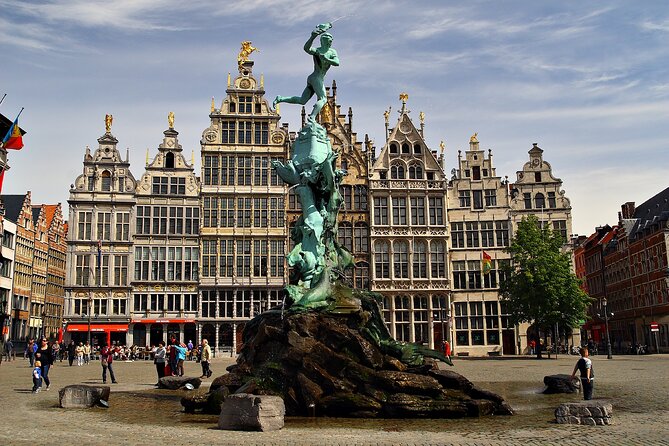
Museum Plantin-Moretus is one of the most rewarding stops for people who enjoy unusual museums. Its subject is books and printing, and the site was the first museum listed as a UNESCO World Heritage property.
The guide explains how printing helped spread ideas and strengthen Antwerp’s place in European trade and culture. That gives the earlier stops more meaning. A city becomes influential not only through merchants and painters, but also through the ability to produce and circulate information.
A visit to the historic garden is usually included during opening hours. The wording is important: this is not a promise of a full museum visit. You should check the opening conditions if Plantin-Moretus is high on your list, then return for a longer visit after the walking tour.
The tour allows about 10 minutes here. That is enough to understand why the museum matters, but you will need a separate visit for its full displays.
Vlaeykensgang, the route’s most atmospheric lane
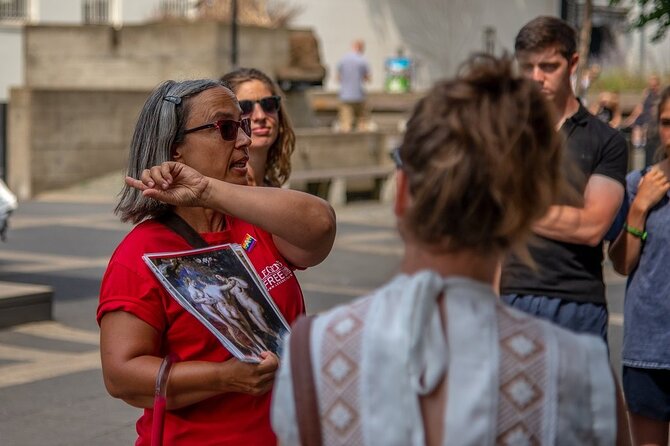
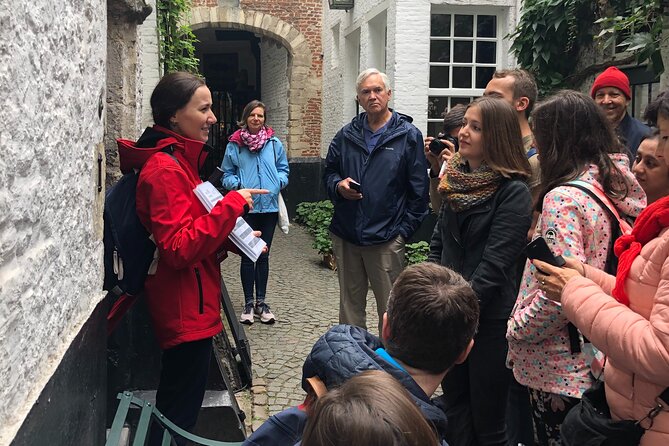
Vlaeykensgang is the kind of place that rewards a guide. It is a preserved medieval street hidden behind the more obvious routes of the old center, and it is not easy to locate on your own.
The lane offers a sharp contrast with the grand square and large churches. Instead of wide views and formal facades, you get a close, quiet passage that helps you imagine the older shape of the city. The guide takes you through it and explains its connection with medieval Antwerp.
Allow about 10 minutes. That sounds brief, but the alley is small. The main value is finding it and understanding what you are seeing, not spending a long time there.
This is also one place where a larger group can affect the experience. If the lane is crowded, stay close enough to hear without blocking the route. Your guide may need to keep everyone moving.
Nello and Patrasche, a story with an international following
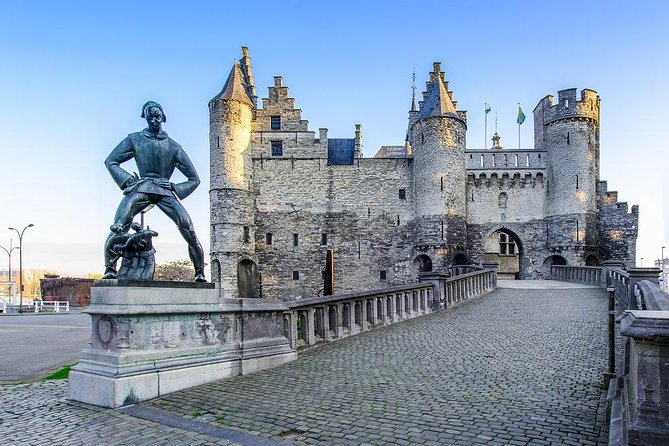
The Nello and Patrasche Statue is a small but memorable stop. The story concerns Nello, a boy, and Patrasche, his dog. It has attracted many visitors from Asia, although plenty of local people are not familiar with the tale.
The guide explains why this statue matters and how the story became connected with Antwerp. It is a good example of the difference between a city’s official history and the stories that draw people to a particular corner.
You get only about five minutes here, so do not expect a long literary talk. Still, the stop adds a human and emotional note after the sections on trade, art, and institutions.
Ending at the Cathedral of Our Lady
The walk finishes at Handschoenmarkt, in front of the Cathedral of Our Lady. The guide closes with facts about the cathedral’s construction and offers suggestions for the rest of your time in Antwerp.
This is a practical ending. You are left in a central spot, close to several major sights, cafes, and streets worth exploring. The recommendations can also help you decide which museums deserve your time after the walk.
The cathedral itself is not treated as a full museum visit. The tour ends outside, and entry conditions or admission are not described as part of the experience. If you want to see the interior, plan that separately.
Group size, pace, and hearing the guide
The maximum group size is 35. That is not enormous, but it is large enough to affect how you experience the walk. Several guides have handled large groups well, including on busy public holidays, but the quality of your position in the group still matters.
Stand near the guide and move forward when the group stops. In noisy streets, you may miss details if you remain at the back. One account specifically points out that a microphone or headset would help in large groups, so people with hearing concerns should consider this before booking.
The tour lasts about two hours and includes repeated periods of standing. It is not described as an excessive distance, but it is still a walking tour, and there are few chances to sit. Comfortable shoes are essential.
Weather also changes the experience. On a hot day, standing in direct sun can become tiring. On a wet day, the walk can still go ahead, but waterproof shoes and a light rain layer will make it easier. Service animals are allowed, and most people can take part.
Who will get the most from this tour
I would choose this walk early in an Antwerp stay. It gives you a map in your head and helps you decide which places deserve a longer visit. It suits first-time visitors, people with only one day, and families who want history broken into short stops.
It is also a good fit if you like stories more than exhaustive museum detail. You hear enough about Rubens, printing, trade, churches, fashion, and folklore to make later sightseeing more rewarding.
You may want a different plan if you dislike standing, struggle to hear in groups, or want long interior visits. The 10-minute stops are introductions. They are not replacements for the Rubens House, Plantin-Moretus, MoMu, or the cathedral as full attractions.
The tour is offered in English. It starts at Grote Markt and ends at Handschoenmarkt, so the route is easy to connect with other sightseeing in the center. Confirmation arrives at booking, and free cancellation is available up to 24 hours before the start time. Cancellations inside that window are not refunded, and the experience requires a minimum number of participants.
Should you book Legends of Antwerp?
Book it if you want a lively first look at Antwerp with more substance than a quick photo walk. The combination of Grote Markt, Rubens, the Bourse, Plantin-Moretus, Vlaeykensgang, and Nello and Patrasche gives you a broad picture in a short time.
The low fee makes the risk small, especially if you are willing to tip the guide for a good experience. Just arrive in comfortable shoes, stay close enough to hear, and avoid scheduling it when you are already tired from a full day on your feet.
I would skip it only if you need guaranteed quiet commentary, a small private group, or extended time inside each museum. For most first visits, it is a smart way to get your bearings and collect useful ideas for the rest of your stay.
FAQ
Where does the Historical Walking Tour: Legends of Antwerp start?
The tour starts at Grote Markt, 2000 Antwerpen, Belgium.
Where does the tour finish?
The walk ends at Handschoenmarkt, in front of the Cathedral of Our Lady.
How long does the tour take?
The tour lasts approximately two hours.
What language is the tour offered in?
The tour is offered in English.
How much does the tour cost?
The listed price is $3.62 per group of up to six people. The tour uses a low-fee, tip-based model, so you should also plan a gratuity for the guide.
Is admission to the attractions included?
All fees and taxes are included. The route includes visits to Carolus Borromeus Church and Handelsbeurs during opening hours, and usually includes the historic garden at Museum Plantin-Moretus. Admission to Rubenshuis and MoMu is not included.
How large can the group be?
The tour can have a maximum of 35 participants.
What happens if I need to cancel?
You can cancel at least 24 hours before the start time for a full refund. Cancellations or changes made less than 24 hours before the tour are not refunded or accepted.
Just added around Belgium
- Historic Battle of the Bulge Sites Tour from Brussels★ 5.0 · 31 reviews
- Historical Walking Tour: The Story of Brussels – by Legends★ 5.0 · 164 reviews
- 2-Hour Historical Walking Tour in Bruges with Praline Included★ 5.0 · 291 reviews
- Bruges Bites & Sights – Belgian Food, Beer & A Little Bit Of History★ 5.0 · 94 reviews
- Medieval Tour in Bruges with Chocolate Tasting★ 5.0 · 71 reviews
- Best of Bruges: History, Chocolate & Beer Tour★ 5.0 · 256 reviews
- Food tasting & Historical walk★ 4.5 · 47 reviews
- Bruges at Night: Murder, Mystery & Dark Stories Small Group Walk★ 5.0 · 137 reviews
Belgium History Tours, compared.
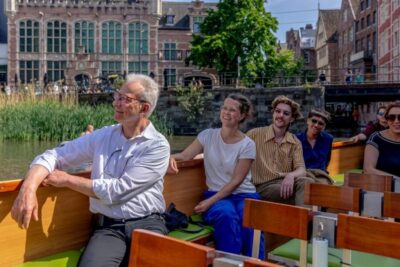
Ghent: 50-Minute Medieval Center Guided Boat Trip
Read our review →
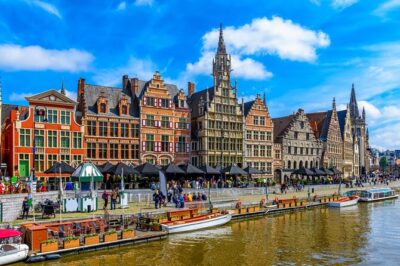
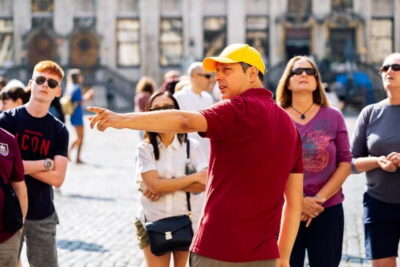
Brussels: Historical Tour with Chocolate & Waffle Tasting
Read our review →
Brussels: Historical Walking Tour with Chocolate & Waffle Tasting
Read our review →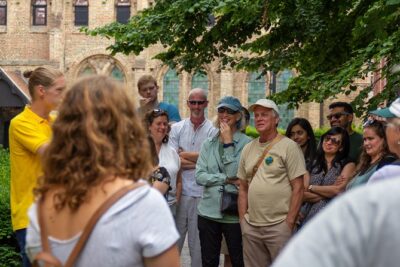
THE Storytelling Tour of Bruges | First Day Must | History & Tips
Read our review →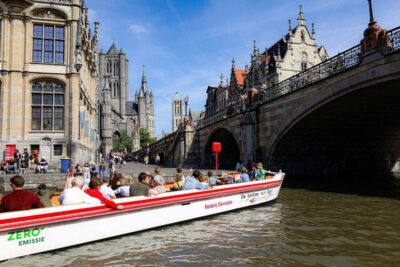
Ghent: 40 Minute Medieval Center Guided Boat Tour
Read our review →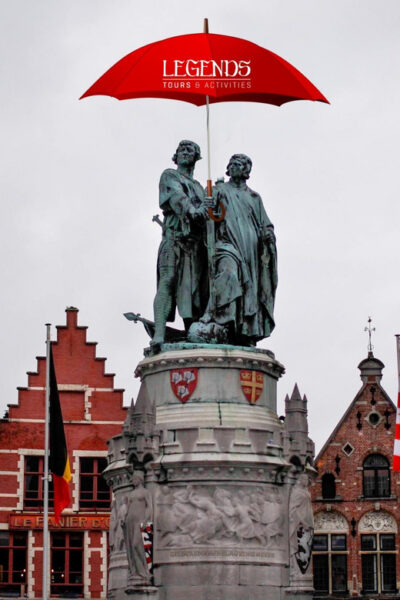
Historical Walking Tour: The Story of Bruges – by Legends
Read our review →Browse the lists this tour appears in