

Review · SPAIN
Jerez: Historic Center Guided Tour
Jerez de la Frontera reveals its character one street at a time, from Moorish lanes and Alcázar walls to grand churches shaped by centuries of Christian rule. This two-hour walk gives you a useful first look at the city without burying you in dates.
I like the way the route connects Jerez’s past to what you see now, and I like the strong local touch from guides such as Rose, Lucia, Marta, Charo, and Maria. The optional two-wine sherry tasting is another smart finish. The main catch is that the tour does not include entry inside the Alcázar or cathedral, and two hours can feel short if you want detailed interior visits.
Key points at a glance
- Start in Plaza del Arenal: Set off from one of Jerez’s central gathering places and quickly reach the old quarters.
- Follow Jerez through many eras: Hear about the Tartessians, Phoenicians, Romans, Visigoths, Moors, and Christian rulers.
- See San Miguel and San Dionisio: Compare the Gothic church of San Miguel with San Dionisio, described as Jerez’s only Mudejar church.
- Read the city through its façades: The cathedral brings together Gothic, Baroque, and Neoclassical design.
- Finish with local flavor: Select the option for two Jerez wines, with the chance of a lively tabanco setting.
- Plan for a walking tour: Wear good shoes, carry water, and remember that major interior tickets are not included.
Why a walking tour works so well in Jerez
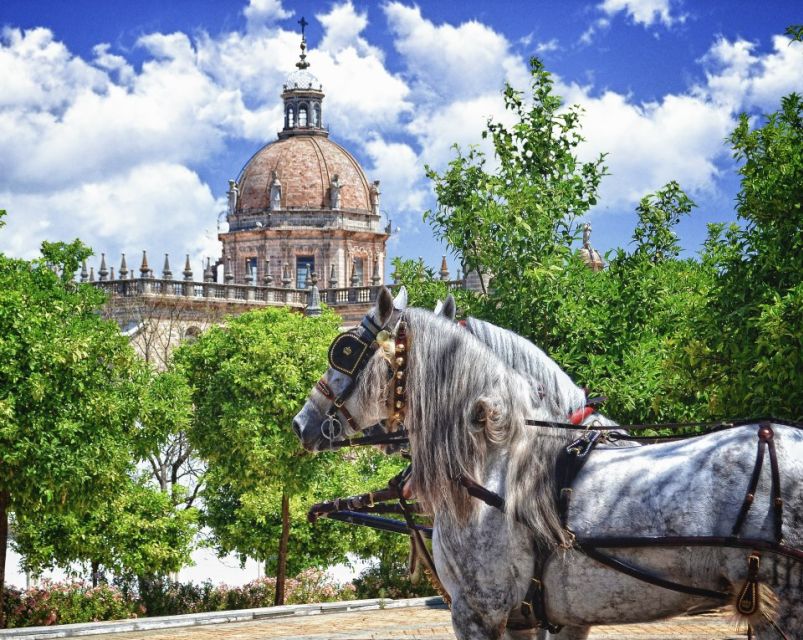
Jerez is best understood on foot. Its story is not confined to a single monument. It sits in church façades, fortified walls, small squares, aristocratic houses, orange trees, wine taverns, and the changing shape of its old neighborhoods.
This tour gives you that broad picture in two hours. You move between the Muslim and Christian parts of town, see major landmarks from outside, and get the historical links that can be easy to miss when you wander alone. I find that especially useful in Jerez, where a plain-looking street may sit beside a church with a very old and complicated past.
The walk begins in Plaza del Arenal. From there, your guide leads you toward San Miguel and the historic center. The exact meeting place can vary with the option you book, so check your confirmation carefully. The tour is offered in English, Spanish, or French, and some walks may be conducted in English and Spanish at the same time.
Guides have included Rose, Lucia, Marta, Charo, Maria, Angel, Rocio, and others. The strongest pattern is clear: the experience depends heavily on the person leading it. Rose has been praised for lively storytelling and clear English. Lucia brings an art conservation background and a particular interest in church architecture. Marta is known for local stories and Jerez wine. Charo has a relaxed, conversational manner and often adds practical tips for tapas and later sightseeing.
More Old Town and Historic Centre Walks in Spain
- Madrid Essential: Historic Center, Plaza Mayor & Royal Palace
★ 5.0 · 6,416 reviews - Valencia Old Town Tour with Wine & Tapas in 11th Century Historic Monument
★ 5.0 · 3,234 reviews - Madrid Historic Centre Food Tour with Authentic Tapas & Wines
★ 5.0 · 814 reviews
San Miguel and the Christian quarter
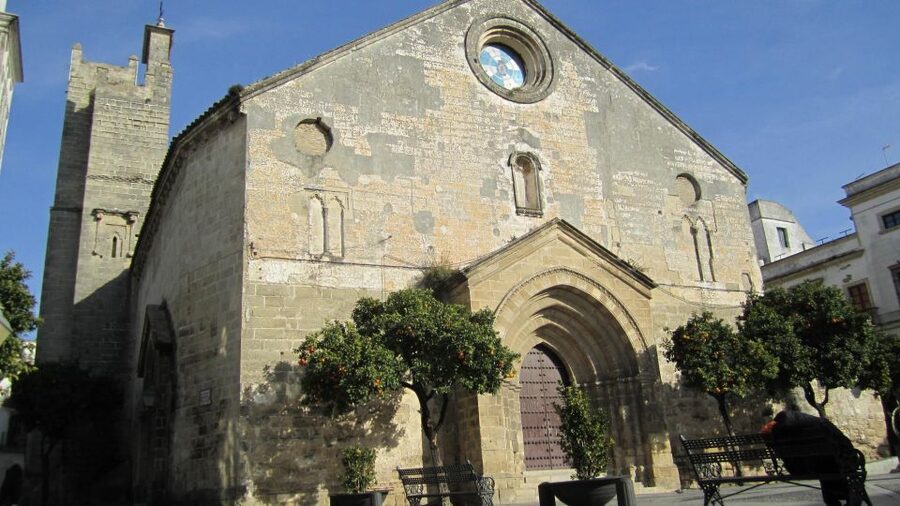
One of the first major areas is San Miguel, a district known for its church and traditional architecture. The neighborhood helps explain how Jerez developed after Christian rule replaced Muslim control. You see a different urban mood here than in the fortified quarter near the Alcázar.
The Church of San Miguel is an important stop, especially if you enjoy religious art and old façades. The route focuses on what you can see from the outside, since admission inside the churches is not part of the standard tour. That is worth keeping in mind. You receive context and close views of the architecture, but you will need extra time and separate tickets if you want a full interior visit.
Your guide may also point out small design details that you would otherwise pass without a thought. Past walks have included explanations of private homes, local architecture, and everyday features such as the city’s orange trees. One earlier guide even helped visitors notice the difference between sour and sweet oranges, a small detail that gives the streets more personality.
This is where a good guide adds real value. A map can show you San Miguel, but it cannot explain how its houses, churches, and streets reflect several periods of Jerez’s past.
From Tartessians to Moors
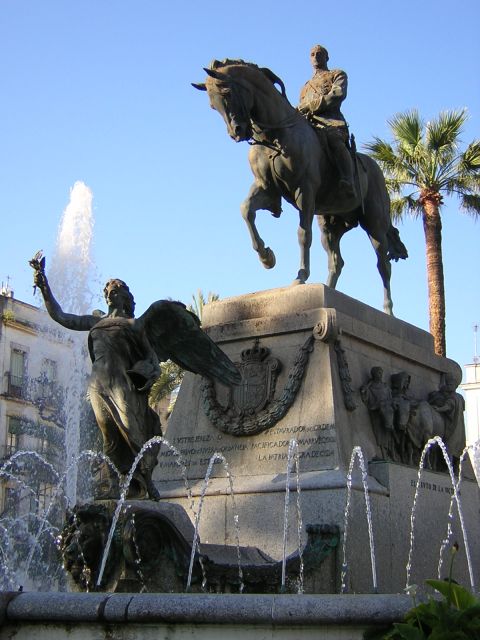
The historical section reaches back to the Tartessians, who are traditionally linked with the first settlement of the area. Their story has a more mysterious quality than the better-documented periods that follow, and it gives the tour a useful starting point.
You then move through the Phoenician, Roman, Visigothic, and Moorish eras. The point is not to memorize a list of rulers. Instead, you learn how each period left marks on the city’s culture and buildings. Jerez’s location in Andalusia made it part of several shifting worlds, and the guide uses the old center to show how those changes affected daily life and urban design.
The Moorish period is especially important near the Alcázar. You should expect the guide to explain the Muslim quarter and the way Christian and Islamic elements sit close together. The tour does not attempt to give you a full academic history of Andalusia, but it provides enough structure to make later visits more meaningful.
I like this approach because it prevents Jerez from becoming just a sherry stop. Wine is a major part of the city’s identity, but its story began long before the modern bodegas and tasting rooms.
The Alcázar walls and fortified Jerez

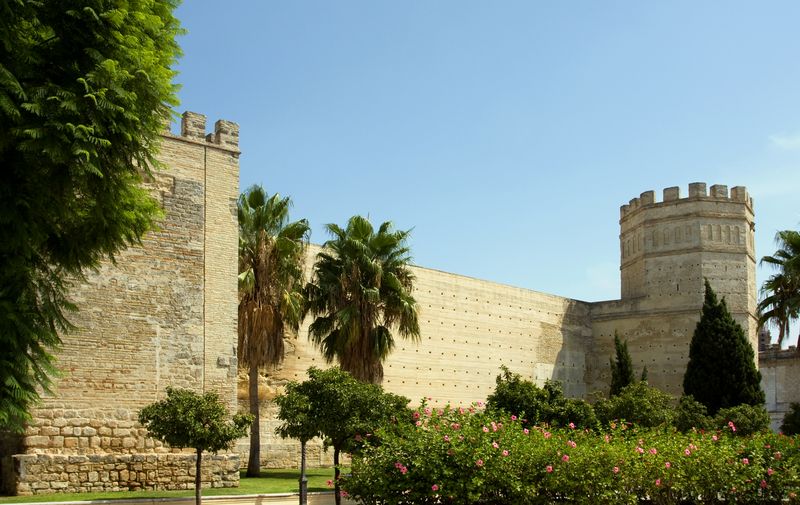
The Alcázar area brings the city’s military past into view. You will see part of the defensive wall and learn how the fortified complex fit into Jerez’s Muslim and Christian story.
The route does not include an interior visit to the Alcázar. That limits the tour for anyone hoping to explore towers, courtyards, or rooms in detail. Still, seeing the defensive wall from the outside is worthwhile, especially when the guide explains its place in the old city.
This is also a good point to understand the layout of Jerez. The Alcázar area is not simply another monument on a checklist. It helps you see why the oldest quarters developed as they did and how power was displayed through fortifications, religious buildings, and grand residences.
If you want to visit the Alcázar inside, allow separate time in your schedule and budget for admission. The walking tour gives you orientation, but it is not a substitute for a full monument visit.
Same city, a different century:
- Montserrat with Black Madonna & Medieval Winery with Tapas/Lunch
★ 5.0 · 5,209 reviews - Barcelona: Tapas Walking Tour with Food, Wine, and History
★ 4.8 · 4,261 reviews - Sevilla Food Tour: Tapas, Wine, History & Traditions
★ 5.0 · 3,468 reviews - Madrid Tapas & Taverns Small Group Food & History Tour
★ 5.0 · 2,664 reviews
The cathedral’s changing façades
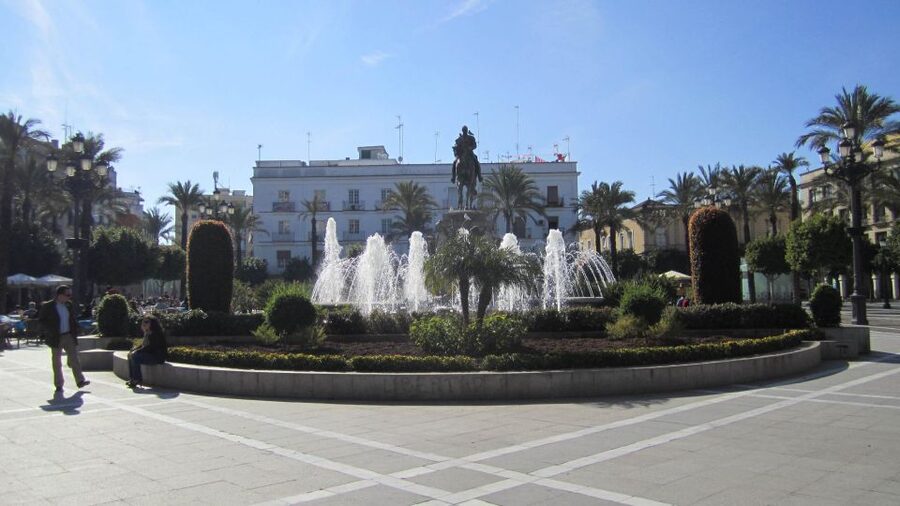
Jerez Cathedral is one of the most visually rewarding parts of the walk. Its exterior combines Gothic, Baroque, and Neoclassical elements, so it does not present one single architectural face.
Your guide can help you read those layers instead of treating the building as a quick photo stop. Look closely at how the styles differ and how later work changed the appearance of an older religious site. Guides with an interest in art and church architecture, such as Lucia and Maria, have made this part especially useful for people who want more than a date and a name.
Again, the standard tour does not include entry. That is both a limitation and a planning advantage. You can first see the cathedral with a guide, then decide if the interior deserves a later visit. If churches are a major reason for your trip, you may want more than this two-hour overview.
If you prefer a balanced introduction to the city, the outside visit works well. It gives you a clear visual reference point and leaves you free to spend your own time inside later.
San Dionisio, palaces, and old civic power
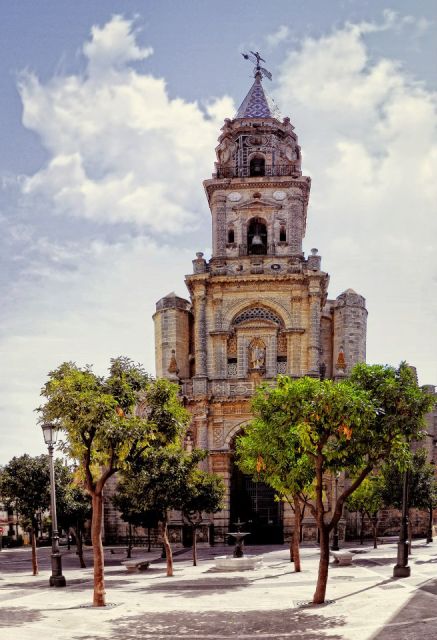
The Church of San Dionisio is a special stop because it is presented as the only Mudejar church in Jerez. Its style reflects the meeting of Christian purpose and Islamic building traditions, a combination that appears in several parts of Andalusia but feels particularly useful to see here after the tour’s discussion of Muslim and Christian neighborhoods.
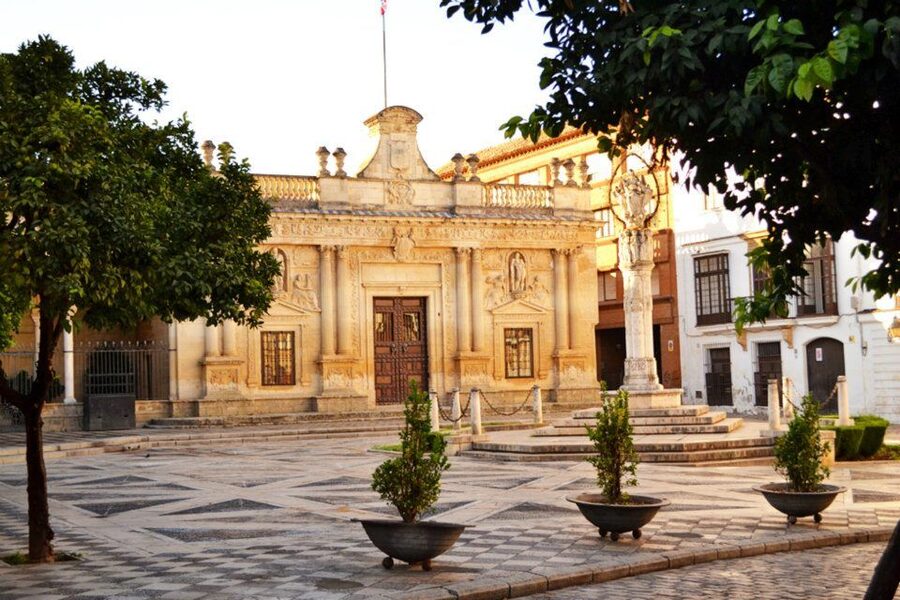
The walk also passes decorative squares and palaces. You may see the site of the old Town Hall and other grand façades that help explain the city’s civic and social past. These stops are less about entering a single famous attraction and more about learning how Jerez worked as a city.
That is one of the tour’s strengths. You are not rushed from one ticketed building to the next. Instead, you get a street-level view of palaces, churches, squares, and residences. The tradeoff is that some stops may feel brief if you want extensive architectural analysis.
Past guides have added stories about local figures, including the famous flamenco dancer Lola Flores. Those personal and cultural details make the route feel less like a procession of monuments and more like an introduction to Jerez as a living place.
The sherry finish
Jerez is one of Spain’s great sherry cities, so the tasting option makes sense. If you choose it, the tour can end with two Jerez wines. This gives you a simple introduction to the local wine tradition after seeing the streets and buildings that make the city famous.
The tasting is not just a final drink. It helps connect the historic center with Jerez’s present-day identity. You can ask your guide about the wines and get a better sense of why sherry is such a central part of local culture.
The setting may be a tabanco, a traditional wine bar. One recent experience ended at a tabanco celebrating its 100th year, with a flamenco performance taking place there. That kind of performance is not guaranteed, so treat it as a fortunate extra rather than a promised part of the booking.
The tasting option also makes this tour a better fit for adults who want culture with a local food and drink element. If you do not drink alcohol, confirm the available option before booking. The supplied details specify two Jerez wines, not a nonalcoholic alternative.
What two hours really gets you
Two hours is enough for a strong introduction, not a full study of Jerez. You can expect a steady walk through the old center, historical explanation, major exterior sights, and possibly the wine tasting at the end.
Several people have found the tour so full of information that they wished it lasted longer. That makes sense. Jerez offers enough churches, palaces, squares, wine traditions, and local stories to fill an entire day.
The compact length is still useful. You can take the tour early in your visit, use it to get your bearings, and then return to the Alcázar, cathedral, bodegas, or neighborhoods that interest you most. Some guides also offer suggestions for tapas and cafés, which can help shape the rest of your day.
The walking pace should be manageable for most people, but wear comfortable shoes. Bring a reusable water bottle, especially in warm weather. The activity is listed as wheelchair accessible, though the old center may include uneven surfaces or architectural limitations, so confirm the details that matter to you before booking.
The guides make the difference
This is not a prerecorded audio walk. You have a live guide in English, Spanish, or French, and the quality of the storytelling shapes the experience.
Rose has been singled out for clear English, humor, and energetic storytelling. Lucia has been valued for her art and architecture background. Marta often brings wine knowledge and personal local detail. Charo’s style has been described as relaxed, like walking around town with a friend. Other guides, including Maria, Angel, Rocio, and Rosa, have also led engaging walks.
Guide assignments can change, so you cannot book the tour expecting a particular person unless the provider confirms it. Still, the range of names and strengths gives you a useful idea of the experience: expect a personal, story-led walk rather than a rigid lecture.
One practical warning comes from a past meeting problem, when a guide did not appear at the expected start point and another guide from the same company helped resolve the situation. This appears to have been an isolated issue, but keep your confirmation handy and allow a few minutes at the meeting point. If you cannot find your guide, contact the provider promptly.
Is $26 a fair price?
At $26 per person, the tour is reasonably priced for a two-hour guided introduction, particularly if you value local context and plan to spend more time in Jerez afterward. The fee covers the guide and taxes, but not tickets for the Alcázar or cathedral.
The value is strongest for first-time visitors. You get a route through several key areas, a clear account of Jerez’s long past, and help understanding architecture that might otherwise blend together. The cost is less attractive if you mainly want interior access, since you will pay separately for the monuments that are not included.
The wine tasting depends on the option you select. If you want the two wines, make sure you choose the correct version while booking. A private group is available, which may be worth considering for families or friends who want a slower pace and more room for questions.
The tour requires at least two adults. A booking for one adult and one child is not allowed under the stated conditions, so families should check the minimum carefully before paying.
Who should book this Jerez walk?
I would choose this tour if you are visiting Jerez for the first time and want the city to make sense before you explore it alone. It suits people who enjoy architecture, local stories, Andalusian history, and a little wine culture in the same outing.
It is also a good choice if you are staying overnight. The walk can point you toward areas, bars, churches, and cafés worth revisiting later. Several guides have added useful food and drink suggestions, making the tour practical as well as historical.
You may want another option if your main goal is a detailed interior visit to the Alcázar or cathedral. You should also think twice if you dislike walking tours that cover many periods quickly. The route favors breadth and connection over long stops inside one building.
The tour is wheelchair accessible, and private groups are available. Languages are English, Spanish, and French, with the possibility of two languages being used at the same time. That last point matters if you prefer a tour conducted only in one language.
Should you book the Historic Center Guided Tour?
Book it if you want a friendly, well-organized introduction to Jerez that goes beyond sherry. The best parts are the links between the Muslim and Christian quarters, the Alcázar defenses, San Dionisio’s Mudejar design, and the cathedral’s changing façades.
Choose the wine tasting if you want a fitting local finish, but remember that a flamenco performance is not guaranteed. Bring water, wear sensible shoes, and plan separate time and money for the Alcázar and cathedral interiors.
At $26, this is a good-value orientation walk for a first visit. It gives you the city’s basic map, its long story, and enough local flavor to help you decide what deserves a closer look.
FAQ
How long does the Jerez historic center tour last?
The tour lasts two hours. Some past walks have finished in about an hour and a half, but the scheduled duration is two hours.
What languages are available?
The live tour is available in English, Spanish, and French. Some visits may be conducted in English and Spanish at the same time.
Does the tour include entry to the Alcázar and cathedral?
No. Tickets and inside visits to the Alcázar and cathedral are not included.
Is sherry tasting included?
You can choose an option that includes a tasting of two Jerez wines. Check that you select the tasting option when booking.
Where does the tour meet?
The usual meeting point is Plaza del Arenal, but it may vary according to the option booked. Check your booking details before setting out.
Is the tour suitable for wheelchair users?
The activity is listed as wheelchair accessible. The tour information also recommends comfortable shoes and a reusable water bottle.
Just added around Spain
- Visita Guiada Por El Casco Histórico De Cuenca Y Su Catedral★ 5.0 · 45 reviews
- Night Walking Tour of Medieval Cuenca★ 5.0 · 64 reviews
- Mosque of Cordoba History Tour in English Tickets included★ 5.0 · 257 reviews
- 2 Hours Tour around Cádiz: History, anecdotes and curiosities★ 5.0 · 89 reviews
- Jerez de la Frontera History and Art Walking Tour★ 4.5 · 49 reviews
- Bilbao Historical Small Group Tour★ 4.5 · 159 reviews
- The Authentic Bilbao Pintxos, Food & Wine Tour with a Local★ 5.0 · 360 reviews
- Girona, Costa Brava and Medieval Village from Barcelona★ 5.0 · 149 reviews
Spain History Tours, compared.
Madrid Essential: Historic Center, Plaza Mayor & Royal Palace
Read our review →
Montserrat with Black Madonna & Medieval Winery with Tapas/Lunch
Read our review →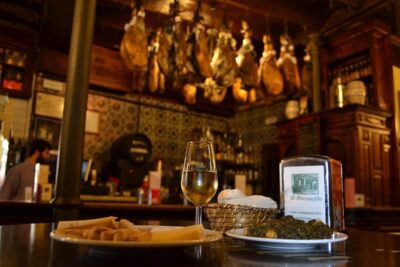
Sevilla Food Tour: Tapas, Wine, History & Traditions
Read our review →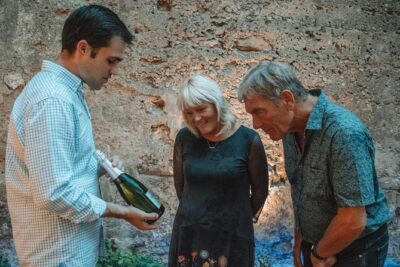
Valencia Old Town Tour with Wine & Tapas in 11th Century Historic Monument
Read our review →
Madrid Tapas & Taverns Small Group Food & History Tour
Read our review →
Barcelona Tapas Walking Tour: Food, Wine & History
Read our review →
Ultimate Seville Tapas, Wine & History Small Group Tour
Read our review →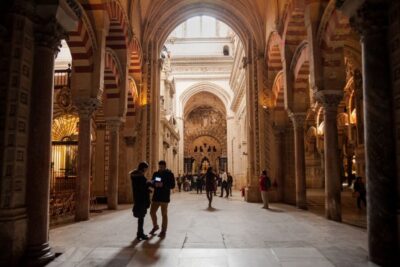
Córdoba: Skip-the-Line Great Mosque-Cathedral History Tour
Read our review →Browse the lists this tour appears in