
Review · UK
Liverpool: A Walk Through Time: Full History Walking Tour
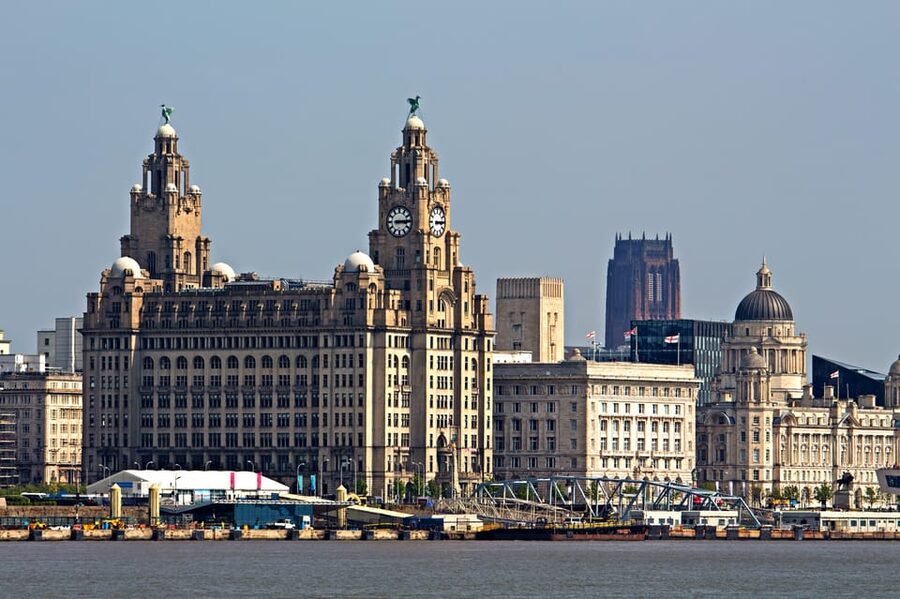
Liverpool’s story is much bigger than The Beatles. This walk connects the city’s medieval beginnings with its rise as a trading port, its role in the British Empire, and the architecture left behind. I especially like the way the route uses real streets and buildings as the classroom, with the Royal Liver Building, Old Dock, and Castle Street doing much of the talking.
I also like the guide-led format. John, who has a PhD in imperial and maritime history, is praised for linking local events to wider world history, while Dave is also noted for clear storytelling. The main consideration is pace: two hours covers a great deal, so you get a strong overview rather than long visits inside each building.
Key points to know before booking
- A city story from 1207 to today: You follow Liverpool’s change from a small medieval settlement to a major port and imperial trading centre.
- The route is rich in landmarks: Expect the Royal Liver Building, waterfront, Royal Albert Dock, Liverpool ONE, Old Dock, Castle Street, the Town Hall area, and Liverpool Parish Church Gardens.
- The guide is the main attraction: John is especially praised for his academic background, clear explanations, dry humour, and willingness to answer questions.
- Good value at $22: For two hours of live guiding across central Liverpool, the price is modest, particularly if this is your first visit.
- Useful for history beyond popular culture: The focus is maritime trade, architecture, commerce, transport, and civic growth, not just music.
- Simple walking logistics: Meet at the river-facing black gate outside the Royal Liver Building. The tour is in English and wheelchair accessible.
Why this walk helps Liverpool make sense
Liverpool can feel like several cities stitched together. You have the grand waterfront, commercial streets, old church grounds, modern Liverpool ONE, and layers of docks that are easy to miss if you simply wander from one attraction to the next.
This tour gives those places a timeline. You begin with the city’s medieval foundations and follow its growth through trade, shipping, engineering, empire, and modern redevelopment. I like that approach because Liverpool’s buildings are not isolated sights. The waterfront explains the port. The port explains the wealth. That wealth explains the grand civic buildings and commercial streets.
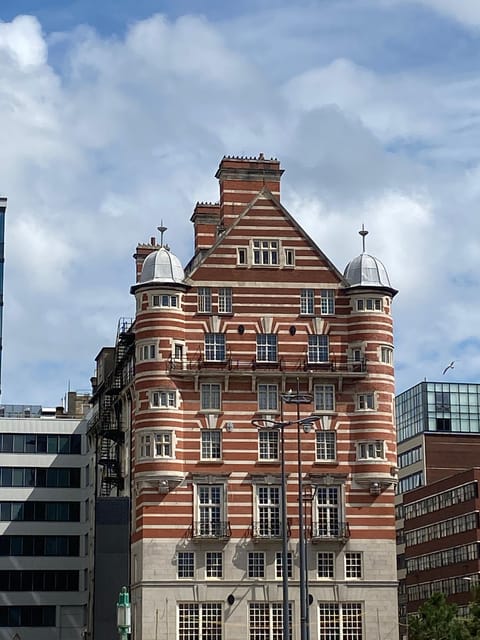
The guide also helps you look up. Architectural details can be easy to miss when you are watching traffic or searching for the next café. The tour draws attention to the buildings as evidence of Liverpool’s past, giving you a better sense of why the city centre looks the way it does.
The experience is firmly outdoors. You walk between stops, listen to the guide, and pause in public spaces. That makes it more immediate than a museum visit, but it also means you should dress for Merseyside weather and wear comfortable shoes.
More History Walking Tours in the UK
- A History of Terror – Belfast City Centre Walking Tour
★ 5.0 · 2,883 reviews - Edinburgh: Old Town History and Tales Walking Tour
★ 4.8 · 2,361 reviews - Old Town Walking Tour History and Tales in Edinburgh
★ 5.0 · 2,168 reviews
Starting beneath the Royal Liver Building
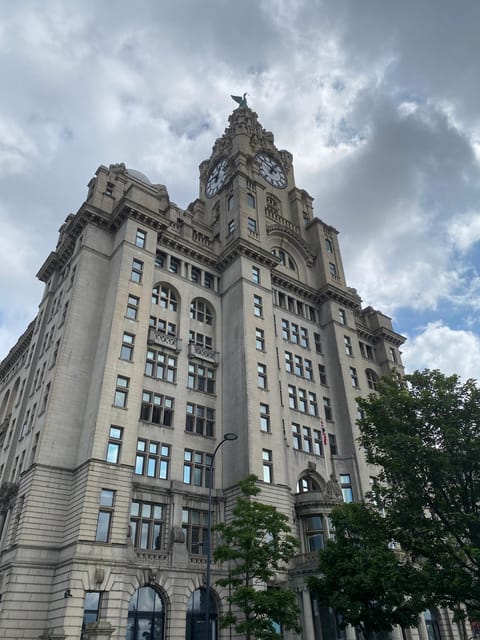
The meeting point is outside the entrance of the Royal Liver Building, at the black gate facing the river. This is a sensible starting place because the building is one of Liverpool’s defining symbols and puts you immediately in the middle of the city’s maritime story.
The opening section introduces Liverpool’s development from 1207 onward. You learn how geography, trade, and technological change helped a small settlement grow into a major commercial centre. The guide’s job here is not simply to list dates. The strongest part of the experience is the effort to connect events and show how one change led to another.
The Royal Liver Building receives its own guided section. You should expect an explanation of its history and place in Liverpool’s identity rather than an interior tour. The route is about understanding what you see from street level.
This is also where the guide sets the tone. John is repeatedly praised for speaking clearly, encouraging questions, and making complicated subjects easier to follow. That matters in an outdoor tour, where passing noise and wind can otherwise make a long explanation hard to catch.
The waterfront and the Three Graces
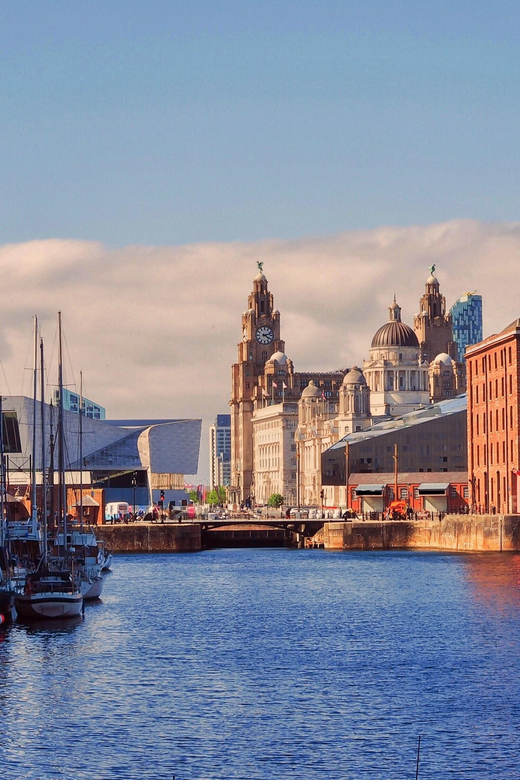
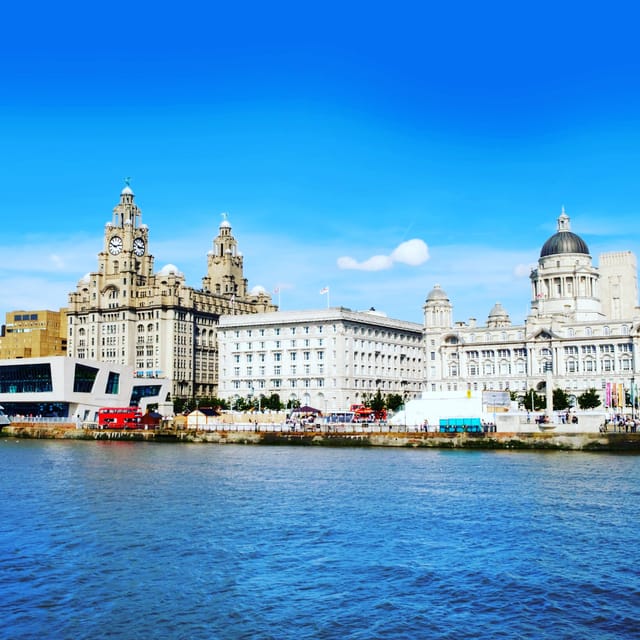
From the starting point, the walk moves along Liverpool’s waterfront. This gives you close views of the city’s most famous group of riverside buildings, including the Royal Liver Building and its neighbouring landmarks.
The waterfront section explains Liverpool’s connection to maritime trade and the wider world. You get a clearer idea of how the port shaped the city and influenced the north of England. This is one of the tour’s most useful themes because it moves beyond local trivia. Liverpool’s rise was tied to goods, ships, people, money, and new transport links moving through the port.
I like this part for orientation. If you are new to Liverpool, the riverfront gives you a visual map of the city. You can see how the commercial centre sits behind the docks, then understand why streets run inland from the water.
The drawback is that the waterfront can be exposed, especially on a cold or wet day. One guide kept a group engaged despite unpleasant weather, but you should still bring a coat. The tour continues even when conditions are less than perfect, unless the operator changes the departure arrangements.
Liverpool Parish Church Gardens and Chapel Street
The walk then reaches Liverpool Parish Church, also known as Our Lady and Saint Nicholas, along with the surrounding gardens and Chapel Street. These stops add an older, more grounded layer to the grand waterfront buildings.
The church area helps show that Liverpool did not begin as an imperial port. It grew from a much smaller settlement, and its religious and civic spaces preserve clues to that earlier stage. The gardens provide a pause from the broad waterfront setting and make the transition from medieval town to modern city easier to picture.
Chapel Street links this older part of Liverpool with the commercial city that developed around it. I find this kind of stop valuable because it shows how history survives in ordinary routes through the centre. You are not only looking at famous buildings. You are following the paths where different parts of the city meet.
There is no extended interior visit listed, so treat the church and gardens as outdoor points for explanation. If you want a detailed look inside the church, you may need separate time before or after the walk.
Same city, a different century:
- London Small Group Tour of Historical Pubs
★ 5.0 · 10,422 reviews - Edinburgh: Edinburgh Castle Guided History Tour with Tickets
★ 4.8 · 9,933 reviews - Edinburgh: Whisky Tasting with History and Storytelling
★ 4.9 · 2,451 reviews - Soho Music & Historic Pubs Tour
★ 5.0 · 1,993 reviews
Castle Street, the Town Hall, and civic Liverpool
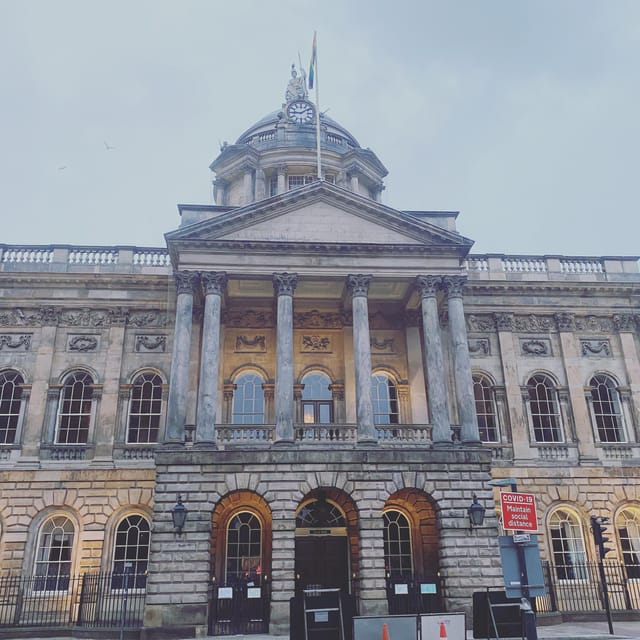
Castle Street is one of the key sections of the route. The walk takes in the street, the Town Hall area, and the Queen Victoria Monument. Here, the focus shifts from port activity to civic power, public display, and the wealth that Liverpool accumulated.
The architecture is especially important. The buildings along Castle Street are not just attractive backdrops. They reflect the confidence of a city that had become a major trading centre. The guide points out details you could easily pass without noticing and explains how the street fits into Liverpool’s larger story.
The Town Hall area gives the history a political and civic dimension. Liverpool’s growth changed its institutions, its public spaces, and the way it presented itself. The Queen Victoria Monument adds another reminder of the city’s place within the British Empire.
This section may appeal most to you if you enjoy architecture and social history. It is less about entering grand interiors and more about reading the city from the pavement. The trade-off is that you need to listen closely while standing in public streets. The route is not a quiet lecture room.
Old Dock and Liverpool ONE
The walk continues to the Old Dock and Liverpool ONE, where Liverpool’s past and present sit close together.
The Old Dock is a key piece of the port story. It helps explain how Liverpool adapted its waterfront to support larger and more efficient shipping. The dock is important not because it is a spectacular ruin, but because it shows the practical foundation beneath the city’s commercial success.
Liverpool ONE offers a sharp contrast. This modern shopping and leisure district shows how the city centre has been reshaped for a later age. By placing it within the same walk as the Old Dock, the guide shows that Liverpool has repeatedly rebuilt itself around changing trade, transport, and economic needs.
I like this pairing because it prevents the tour from becoming a parade of old buildings. You see that Liverpool’s story is still continuing. The past is not sealed off in one historic quarter. It sits beneath and beside modern streets.
Do not expect a shopping break here. Liverpool ONE is a guided stop within the route, not free time for browsing. If you want to shop or eat, plan to return after the tour.
The Royal Albert Dock and the changing port
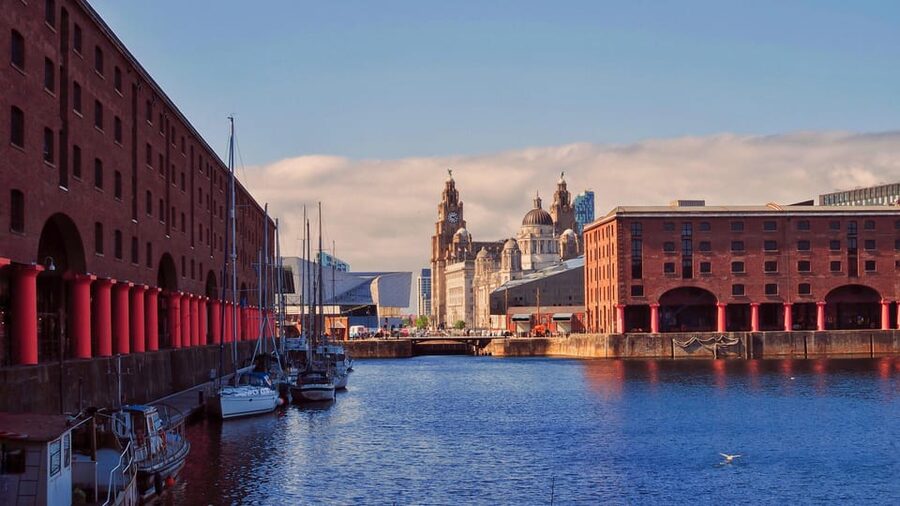
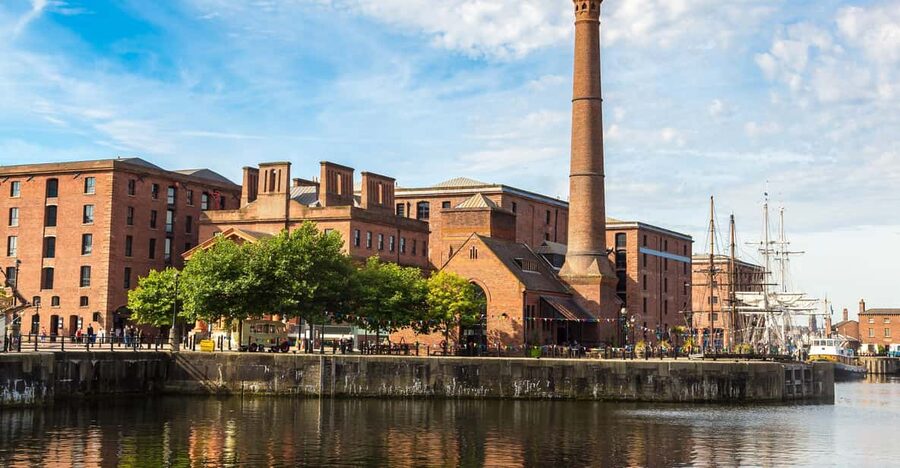
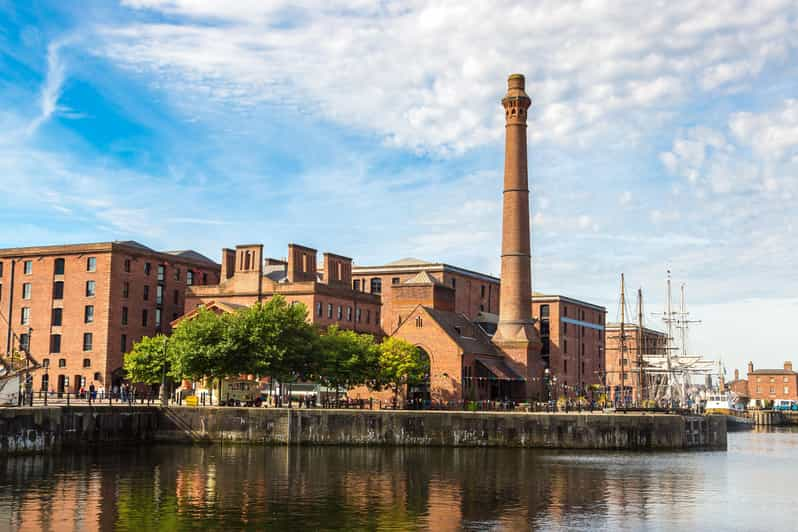
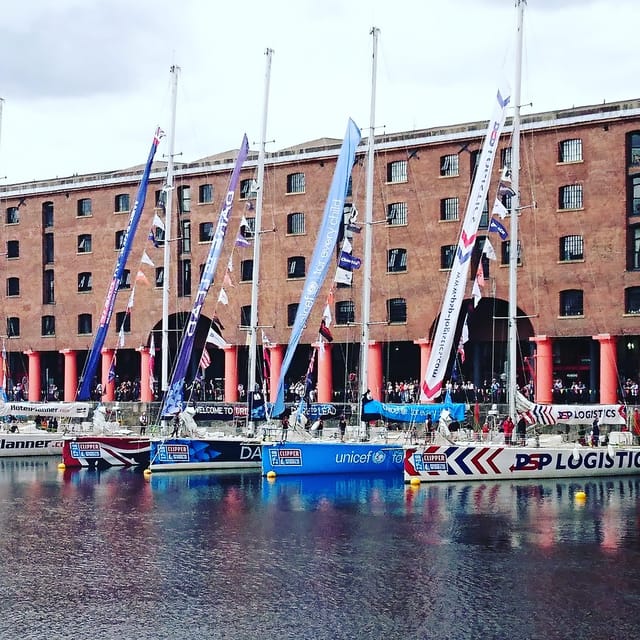
The Royal Albert Dock is the final major waterfront highlight. Its warehouses and open dock space give you a strong sense of the scale of Liverpool’s trading past.
The guide explains how the dock fits into the city’s maritime development and why the waterfront became so important. This is where earlier points about trade, technology, and imperial connections come together in a setting that is easy to understand visually.
The dock is also useful for seeing how Liverpool has reused its port heritage. The experience remains focused on history, but the setting shows how old industrial spaces can become part of a modern city centre.
The section is relatively brief, so you will not get a full museum-style treatment of every warehouse or collection. That is not a flaw if you want a city overview. It simply means you should return later if you plan to explore the Royal Albert Dock in detail.
The route information places the finish on Castle Street, after the main sequence of central landmarks. The opening point remains the Royal Liver Building. Since walking routes can be adjusted, check the exact meeting and finishing instructions on the day of booking.
A guide who turns dates into a story
The strongest element is the live guide. A long list of dates would be hard to absorb in two hours, but the best delivery connects people, places, and events.
John is particularly associated with this walk. His background in imperial and maritime history gives the tour a firm academic base, but the useful part is how he explains it in plain language. He is described as answering detailed questions, projecting his voice clearly, and adding humour without losing the thread of the story.
That combination suits a mixed group. You can ask about architecture, trade, local life, or the city’s role in wider British history. A teenager who was initially doubtful became engaged with the explanations, which suggests the format works for families as well as serious history fans.
Dave has also led the experience and is praised for academic credentials and storytelling. The guide may vary, so the exact personality of your tour is not guaranteed. Still, the format depends on a trained local historian rather than an audio recording or a generic script.
I recommend asking questions. The guides appear to welcome them, and the walk becomes more useful when you connect the general story to the buildings in front of you.
Is two hours enough?
Two hours is enough for a useful first look, not enough for every detail of Liverpool’s past. The route covers a broad period, from the city’s founding in 1207 through its commercial rise and into modern times.
That breadth is the main strength and the main limit. You get the full outline of Liverpool’s development, but individual stops receive only a short explanation. Several sections are listed at roughly 10 to 25 minutes, so the tour keeps moving.
I would book it early in your stay. The guide can help you understand the centre, then suggest places to explore afterward. One practical recommendation mentioned during the experience is where to try scouse, Liverpool’s traditional dish. If you take that advice, the walk can shape the rest of your day.
The route is also useful for returning visitors. If you already know the Beatles story, this gives you another way into the city through maritime trade, architecture, religion, civic life, and industry.
Price, practical details, and who will enjoy it
At $22 per person, this is good value for a two-hour guided walk, especially in a city where the main sights are spread across several central areas. You are paying for a connected explanation rather than admission to a single building.
I would choose this tour if you want:
- A first introduction to Liverpool
- A clear timeline of the city’s growth
- Maritime and imperial history
- Architecture explained in context
- A guide who can handle questions
- A central walking route without transport between stops
It may be less suitable if you dislike outdoor walking, want long indoor visits, or prefer a narrow subject such as Beatles history alone. The route is wheelchair accessible, but the experience still takes place on city streets, so check the conditions and any personal mobility needs before booking.
The tour is in English, with a live guide. You can cancel up to 24 hours before the start for a full refund, and reserve now while paying later. Those terms make it easier to fit into a changing city break.
Should you book A Walk Through Time?
Yes, if you want Liverpool to feel like a connected city rather than a collection of famous addresses. The tour gives you a strong framework, and the academic background of guides such as John adds real substance without turning the walk into a lecture.
Book it especially if this is your first visit, if you enjoy architecture, or if you want to understand why Liverpool mattered far beyond Merseyside. I would not choose it as your only Liverpool activity, since the stops are viewed from outside and the schedule is tight. Pair it with time at the Royal Albert Dock, the waterfront, or a museum afterward.
For $22, the combination of central landmarks, maritime context, and a lively local guide makes this a sensible first-day introduction. Bring good shoes, dress for the weather, and arrive ready to ask questions.
FAQ
How long is the Liverpool history walking tour?
The tour lasts two hours.
Where does the tour start?
Meet outside the entrance of the Royal Liver Building, at the black gate facing the river.
Where does the tour finish?
The stated finishing point is Castle Street.
What language is the tour in?
The live tour is conducted in English.
Is the tour wheelchair accessible?
Yes, the activity is listed as wheelchair accessible.
What places does the tour visit?
The route includes the Royal Liver Building, Liverpool waterfront, Royal Albert Dock, Liverpool ONE, Liverpool Parish Church and its gardens, Chapel Street, Castle Street, the Town Hall area, the Queen Victoria Monument, and the Old Dock.
Who leads the tour?
The experience uses a local guide. John has led many departures and is described as having a PhD in imperial and maritime history. Dave has also led the tour.
Can I cancel for a refund?
Yes. You can cancel up to 24 hours in advance for a full refund.
Just added around the UK
- Private tour of the stunning Cotswolds with an expert local guide★ 5.0 · 45 reviews
- Medieval Walking Tour of Chester★ 5.0 · 155 reviews
- Curious Cambridge – The History Tour that’s FUN!!!★ 5.0 · 80 reviews
- 2.5-Hours Walking Tour of Birmingham into Black Heritage Madiba★ 5.0 · 49 reviews
- Birmingham Gangs Nighttime Historical Walking Tour with Pub Stops★ 5.0 · 53 reviews
- Award Winning Private 2 Hour Belfast Political Black Taxi Tour★ 5.0 · 53 reviews
- Private Political History & Murals Tour Belfast★ 5.0 · 182 reviews
- Belfast Walking Tour: City Centre History, Troubles & Stories★ 5.0 · 39 reviews
UK History Tours, compared.
Edinburgh: Edinburgh Castle Guided History Tour with Tickets
Read our review →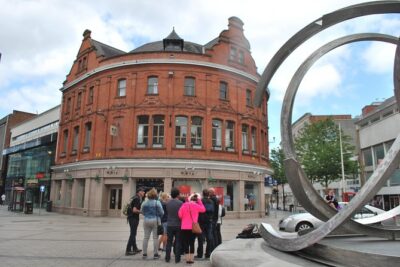
A History of Terror – Belfast City Centre Walking Tour
Read our review →
Edinburgh: Whisky Tasting with History and Storytelling
Read our review →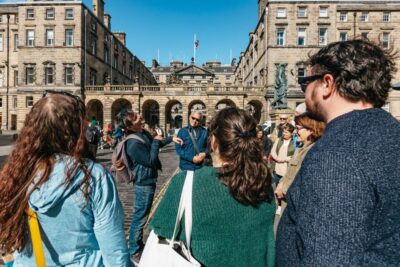
Edinburgh: Old Town History and Tales Walking Tour
Read our review →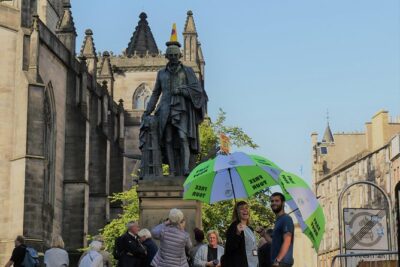
Old Town Walking Tour History and Tales in Edinburgh
Read our review →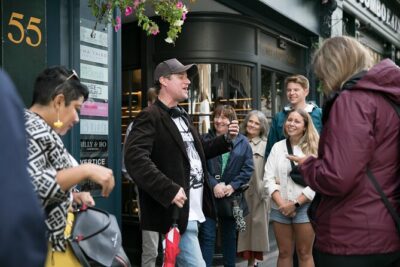
Edinburgh: Old Town and Underground Historical Tour
Read our review →Browse the lists this tour appears in