
Review · UK
Liverpool: Theatrical History Tour and The Dead House
Liverpool saves its strangest entrance for the end. This theatrical history walk finishes beneath the Church of Our Lady and St. Nicholas, where you enter the old Dead House morgue through a trapdoor and descend into a place closed to the public for more than a century.
I like the mix of street theatre and solid local history. You are not simply led from one plaque to the next. The guides act out Liverpool’s darker past, draw the group into the story, and use the streets themselves as a stage. I also like the route through Castle Street, Liverpool Town Hall, the Nelson Monument, and lesser-known lanes before the final descent.
The main drawback is practical: this is not a gentle sightseeing stroll. The underground room is entered at your own risk, you must bring a torch, and the tour is not suitable for wheelchair users or people with limited mobility. Some gruesome storytelling and theatrical scares may also be too much for young children or anyone of a delicate disposition.
Key points to know before you book
- The Dead House is the finale: Enter a former underground morgue beneath St Nicholas Church through a trapdoor.
- The walk begins at Queen Victoria: Meet at the Queen Victoria Monument in Derby Square.
- Street theatre drives the experience: Expect acting, audience participation, humor, and grisly storytelling.
- You need your own torch: The tour specifically asks you to bring one for the underground section.
- The route takes 90 minutes: It covers the original seven streets, Castle Street, Town Hall, the Nelson Monument, and old lanes.
- Accessibility is limited: The tour is not wheelchair accessible and is not recommended for people with visual or mobility difficulties.
Why the Dead House makes this Liverpool walk different
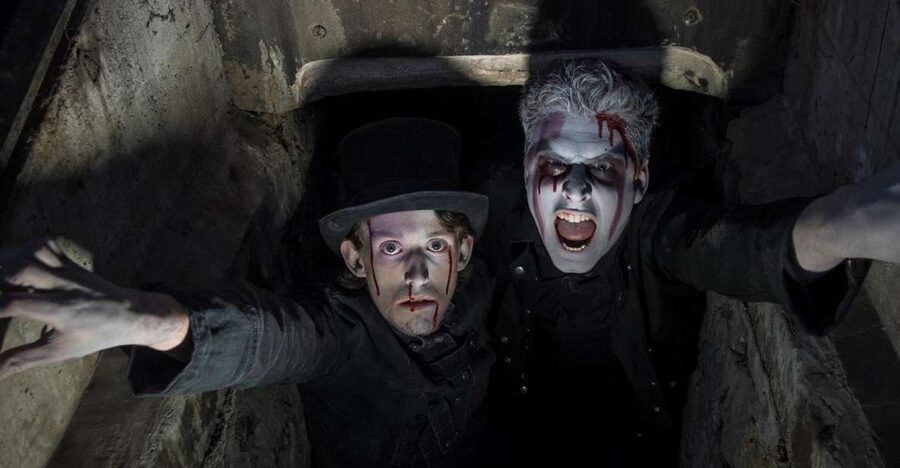
Many city history walks finish at a square, church, or viewpoint. This one ends underground, in a former morgue with an unusually macabre past. The Dead House was named by American author Hermann Melville, and its reputation came from the grim practice of displaying the faces of the deceased behind iron grates.
In the 18th and 19th centuries, local people could come to look through those grates at the dead. That detail gives the final stop a disturbing sense of place. You are not entering a purpose-built attraction with polished displays. You are visiting an old, enclosed site that has spent much of its life away from public view.
The location also had a later wartime role. During World War II, it was used as a temporary police station. That contrast is part of what makes the stop interesting: the room has served practical civic purposes, yet its strongest identity remains tied to death, public mourning, and Liverpool folklore.
The setting beneath the church adds to the effect. You finish inside the boundary of a medieval garden, under a Gothic spire, and reach the room through a trapdoor. You should expect darkness, confined space, and theatrical atmosphere rather than a conventional museum visit.
More History Tours in the UK:
- London Small Group Tour of Historical Pubs
★ 5.0 · 10,422 reviews - Edinburgh: Edinburgh Castle Guided History Tour with Tickets
★ 4.8 · 9,933 reviews - A History of Terror – Belfast City Centre Walking Tour
★ 5.0 · 2,883 reviews
Starting at Queen Victoria Monument in Derby Square
The meeting point is the Queen Victoria Monument in Derby Square. This is a useful central starting place because the first part of the experience quickly puts you in the old heart of Liverpool rather than on a modern tour bus route.
Your guide leads the group on foot through the original seven streets of Liverpool. The route uses short walking sections, including stretches of about 15, 25, 15, 10, and five minutes. That matters if you are planning the rest of your evening: the tour lasts 1.5 hours, but it is broken into stops and performances rather than one long march.
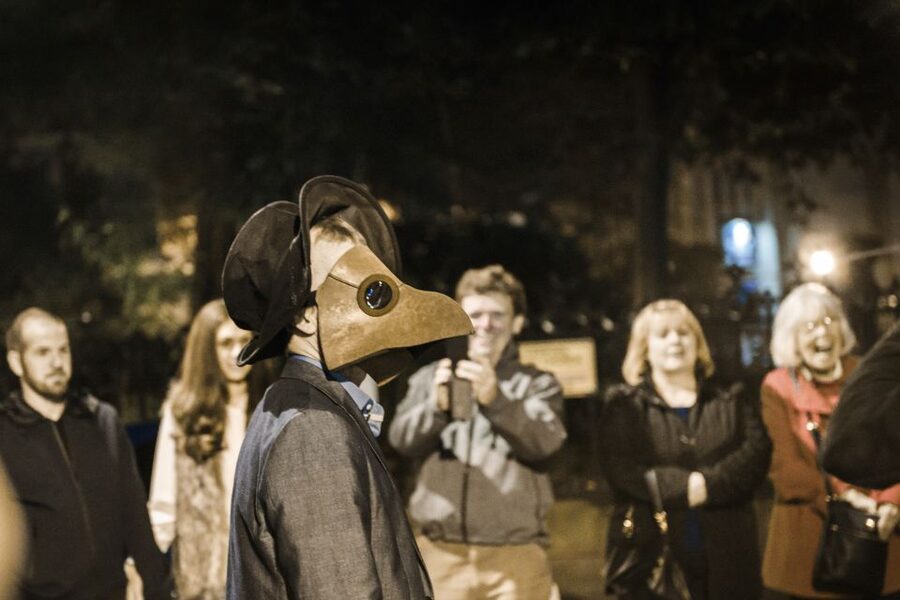
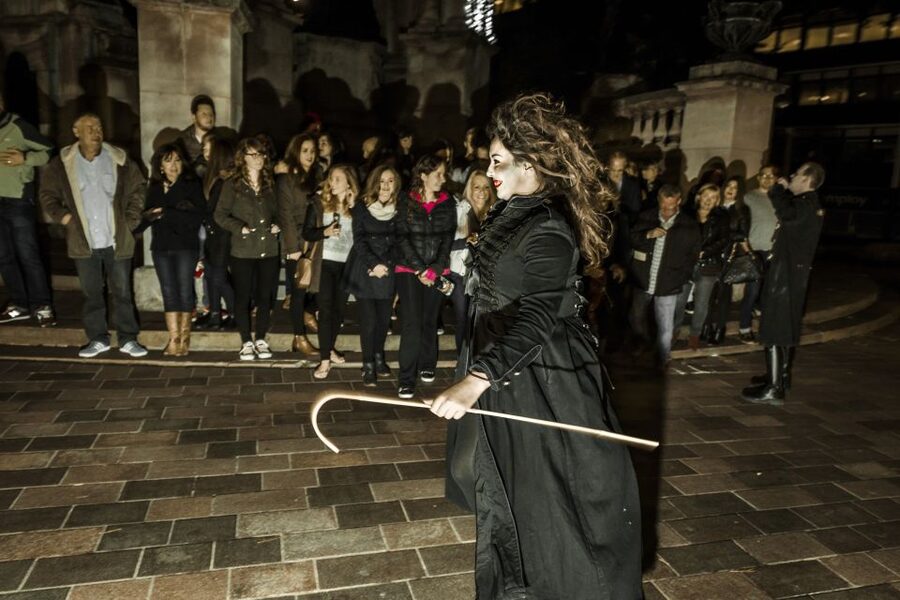
The guides use character work and street theatre to bring the past into the present. Expect a lively presentation with audience participation, jokes, dramatic voices, and moments designed to startle or unsettle you. The style is deliberately theatrical, so this is not the right choice if you want a quiet, academic lecture.
That performance element is also the tour’s strongest feature. The guides do not simply recite dates. They use the surrounding buildings and lanes as part of the story, which helps you notice details you might otherwise walk past.
Castle Street and the old banking halls
One early highlight is Castle Street, known for its lofty banking halls and grand civic architecture. This section gives the tour a useful change of tone. Liverpool’s dark stories are not told only in narrow alleys. They also unfold beside imposing buildings built to express wealth, order, and civic confidence.
The guides connect the physical setting with the city’s older history, using the architecture as a backdrop for theatrical scenes. You can expect to look upward at the scale of the banking halls, then shift attention to a more personal or unsettling story from Liverpool’s past.
I like this part because it prevents the walk from becoming a simple ghost tour. You get architecture, public history, and macabre storytelling in the same stretch. The theatrical approach also helps if you are visiting Liverpool for the first time and want a quick introduction to the old city center.
Still, remember that the focus is entertainment as well as history. The details are presented with wit and dramatic flair. If you prefer a formal architectural tour with long explanations about design and construction, this walk may feel too playful.
Liverpool Town Hall and the grand civic center
Liverpool Town Hall is another major stop. Its regal appearance provides a striking setting for stories about the city’s civic life and past residents. The building’s grand exterior helps show how much Liverpool wanted to project power and importance.
At this point, you are likely to see how the tour balances the polished and the grim. The route moves from grand halls and civic monuments toward darker lanes and the Dead House. That gradual shift gives the final underground visit a stronger build-up.
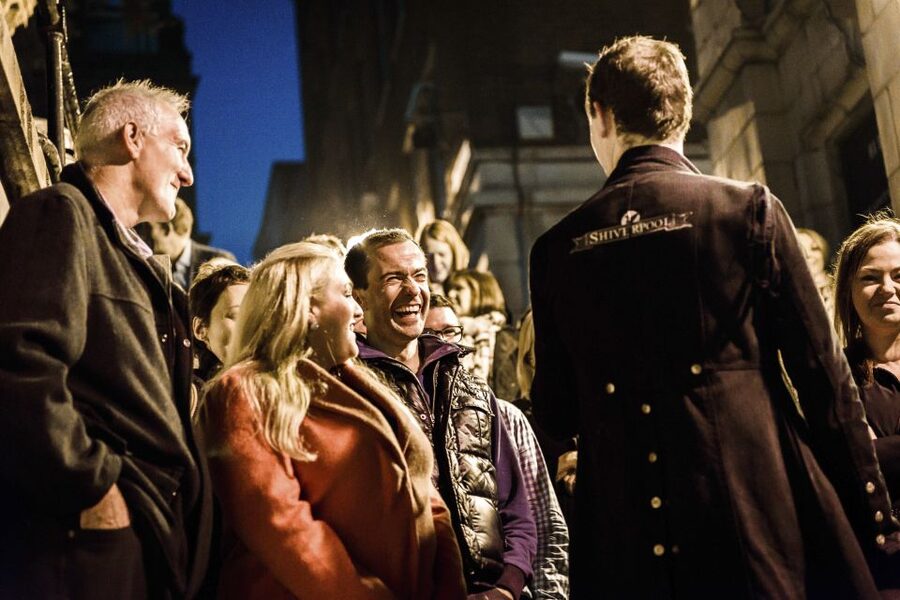
The theatrical guides are central here. Their act includes humor, audience interaction, and a touch of dark spectacle. Past participants have especially praised the pairing of funny, friendly, professional performers who keep both the group and passing pedestrians entertained.
That audience focus can cut two ways. If you enjoy joining in, it makes the walk memorable. If you prefer to stay anonymous at the back of a group, you may find the direct interaction more demanding. Children can attend, but every child must be accompanied by an adult, and the darker material may not suit all families.
Same city, a different century:
- Edinburgh: Whisky Tasting with History and Storytelling
★ 4.9 · 2,451 reviews - Edinburgh: Old Town History and Tales Walking Tour
★ 4.8 · 2,361 reviews - Old Town Walking Tour History and Tales in Edinburgh
★ 5.0 · 2,168 reviews - Soho Music & Historic Pubs Tour
★ 5.0 · 1,993 reviews
Nelson Monument and the crooked lanes
The Nelson Monument appears later in the route, followed by shorter walking sections through old passages and lamp-lit lanes. These stretches help you see a less polished side of the city center, with the theatrical storytelling shifting toward Liverpool’s stranger and more unsettling tales.
The walk is designed around atmosphere. Crooked alleys and narrow lanes can feel very different from the open spaces around the Town Hall, even when they are only a short distance apart. You get a sense of how older streets shaped movement through the city and how stories grow around places that people pass every day.
Do not expect a long stop at every site. The overall experience has only 90 minutes, so the guides keep the route moving. Each location works as part of a larger performance rather than as a detailed standalone lecture.
The strongest moments come from the contrast between ordinary city life and the stories being acted out. Modern Liverpool continues around you, while the performers draw attention to old crimes, deaths, customs, and local legends. That mix of real surroundings and theatrical invention is the heart of the experience.
The final descent into The Dead House
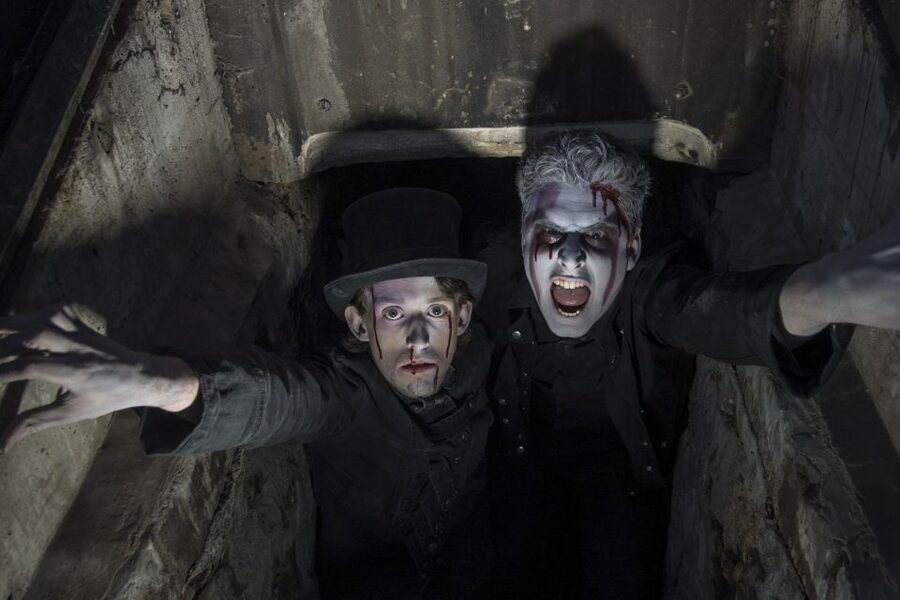
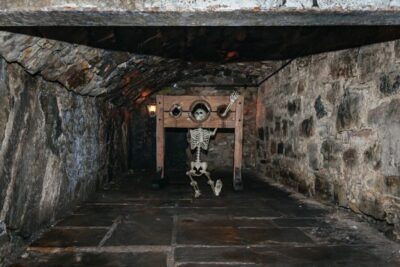
The tour ends at 5 Old Churchyard, near the Church of Our Lady and St. Nicholas. The exact final setting is what separates this experience from a standard historic walking tour. You enter through a trapdoor into an underground morgue that has been closed to the public for more than 100 years.
The guides build toward this moment rather than revealing everything at once. The approach through the medieval garden, beneath the Gothic church spire, creates a strong sense of transition. Once you descend, the tone becomes more sombre and enclosed.
Bring a torch. This is not optional advice dressed up as a packing tip. The tour information specifically requires you to bring your own, and the underground site is not presented as a fully modern visitor facility.
The experience also asks you to accept some personal responsibility. Participants enter the underground location at their own risk. You should wear sensible footwear and be comfortable with dark, uneven, or confined surroundings, although the available information does not specify the exact floor conditions.
The theatrical ending may include a fright or dramatic reveal. The guides have been praised for creating a convincing deathly mood, but you should not book this expecting a mild history lesson. The Dead House is meant to feel eerie.
What the theatrical style adds
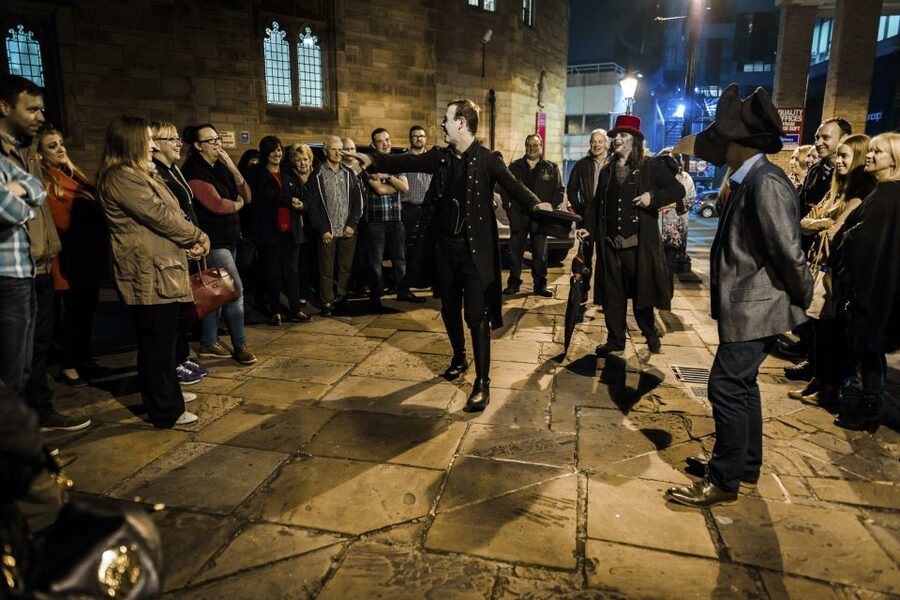
The performance is not a small extra. It shapes the whole walk. Guides act out characters, use humor to keep the group engaged, and encourage audience participation. That makes the tour feel social and energetic, even when the subject matter turns grim.
The best feedback has focused on the guides’ comic timing, warmth, and ability to bring stories to life. You can expect a double-act style presentation, with the performers playing off each other and occasionally drawing attention from people passing by.
The tone is not pure horror. There is plenty of wit, and some of the most popular moments come from the contrast between cheerful delivery and grisly subject matter. One participant wanted more ghost stories, which is useful to know: this is a theatrical history tour with spooky elements, not a dedicated paranormal investigation.
I would choose this experience for a group of friends, a hen party, or a family with older children who enjoy performance and local stories. It also suits repeat visitors who think they already know central Liverpool. The route reveals lesser-known corners and uses familiar landmarks in a different way.
Price, timing, and overall value
At $26 per person, the tour offers 90 minutes of guided performance, city history, and access to a site normally closed to the public. I consider that fair value, especially because the Dead House provides something you cannot reproduce by simply walking around Derby Square or photographing the Town Hall.
The price does not include refreshments or a torch. You should also not expect a coffin, despite the playful note in the tour details. The main thing you are paying for is the guide’s performance and access to the underground site.
The 4.9 rating from 37 ratings points to a very consistent response, with praise aimed mainly at the entertaining guides, unusual route, and final morgue visit. The strongest value comes when you enjoy both history and theatre. If you want a conventional guided walk with precise architectural detail, another tour may give you more information per stop.
The free cancellation policy allows cancellation up to 24 hours before the start for a full refund. You can also reserve now and pay later, which is useful if your Liverpool plans are still shifting. Check the available start time when booking, since the tour lasts 1.5 hours and may shape dinner or evening plans.
Who should skip this experience
You should not book this tour if you use a wheelchair, since the underground section is not wheelchair accessible. It is also not recommended for people with limited mobility, visual impairment, or a delicate disposition.
Guide dogs are the only assistance animals specifically allowed. Smoking, vaping, and e-cigarettes are prohibited. Unaccompanied minors are not allowed, and children must remain with an adult.
The underground location is not open to the general public, so access comes with a different standard from a modern museum. If darkness, enclosed spaces, theatrical scares, or stories about death make you uncomfortable, choose a daytime architecture tour instead.
You may also want to reconsider if you need a fully predictable pace. The route includes several walking sections and performance stops, and the guides may involve the audience. That is part of the fun, but it is not for everyone.
Should you book the Liverpool Dead House tour?
Book it if you want Liverpool history delivered with jokes, acting, and a genuinely unusual final stop. The combination of the seven original streets, Castle Street, the Town Hall, Nelson Monument, old lanes, and the underground Dead House gives you more range than a standard ghost walk.
Bring a torch, wear practical shoes, and prepare for a theatrical experience rather than a quiet lecture. I would choose it for first-time visitors who want an entertaining introduction to the old center, repeat visitors looking for less familiar corners, and groups who enjoy a few scares with their history.
Skip it if accessibility is a concern or if you want detailed museum-style interpretation. For everyone else, $26 is a reasonable price for a 90-minute walk that ends somewhere most people cannot ordinarily enter.
FAQ
Where does the tour start?
The tour starts at the Queen Victoria Monument in Derby Square, Liverpool.
Where does the tour finish?
It finishes at 5 Old Churchyard, Liverpool L2 8GW, near the Church of Our Lady and St. Nicholas.
How long does the tour last?
The tour lasts 1.5 hours.
What language is the tour in?
The tour is conducted in English by a live guide.
Do I need to bring a torch?
Yes. You must bring your own torch for the underground section.
Is The Dead House open to the general public?
No. The underground location is not open to the public, and participants enter at their own risk.
Is the tour wheelchair accessible?
No. The tour is not wheelchair accessible and is not suitable for wheelchair users.
Can children join the tour?
Yes, the activity is family-friendly, but all children must be accompanied by an adult. Unaccompanied minors are not allowed.
What is included in the price?
The price includes the theatrical walking tour and exclusive access to The Dead House. Refreshments and torches are not included.
Just added around the UK
- Private tour of the stunning Cotswolds with an expert local guide★ 5.0 · 45 reviews
- Medieval Walking Tour of Chester★ 5.0 · 155 reviews
- Curious Cambridge – The History Tour that’s FUN!!!★ 5.0 · 80 reviews
- 2.5-Hours Walking Tour of Birmingham into Black Heritage Madiba★ 5.0 · 49 reviews
- Birmingham Gangs Nighttime Historical Walking Tour with Pub Stops★ 5.0 · 53 reviews
- Award Winning Private 2 Hour Belfast Political Black Taxi Tour★ 5.0 · 53 reviews
- Private Political History & Murals Tour Belfast★ 5.0 · 182 reviews
- Belfast Walking Tour: City Centre History, Troubles & Stories★ 5.0 · 39 reviews
UK History Tours, compared.
Edinburgh: Edinburgh Castle Guided History Tour with Tickets
Read our review →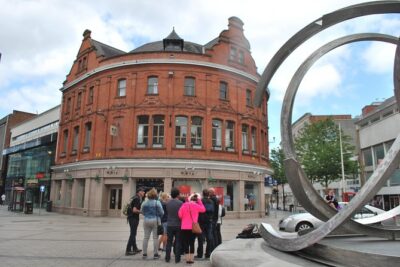
A History of Terror – Belfast City Centre Walking Tour
Read our review →
Edinburgh: Whisky Tasting with History and Storytelling
Read our review →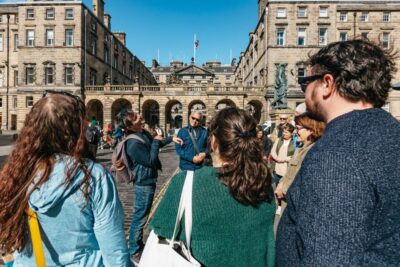
Edinburgh: Old Town History and Tales Walking Tour
Read our review →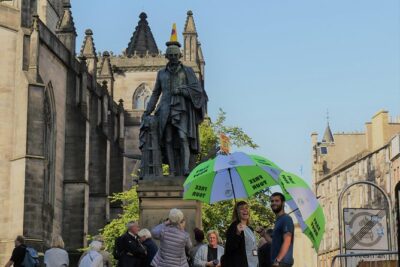
Old Town Walking Tour History and Tales in Edinburgh
Read our review →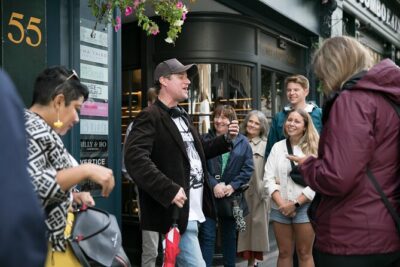
Edinburgh: Old Town and Underground Historical Tour
Read our review →Browse the lists this tour appears in