
Review · MADRID
Madrid: Tour of the Historic City Center
Madrid’s old center is best understood on foot, one narrow street and grand square at a time. This 3.5-hour German walking tour links the Royal Palace, Plaza Mayor, San Miguel Market, Cava Baja, and the Literary Quarter into one useful first look at the city.
I like the route’s mix of famous sights and small corners, especially the taverns of Cava Baja and the quieter streets near the Plaza de la Villa. I also like the practical advice built into the walk, including restaurant suggestions, warnings about tourist traps, and ideas for what to see later.
The main consideration is simple: entrance fees are not included, and you spend more than three hours on foot. The tour is wheelchair accessible, but Madrid’s old lanes and paving may still require patience. It is also conducted in German only.
Key points at a glance
- Madrid’s Habsburg center: Follow the city’s old core from Puerta del Sol through royal squares, churches, convents, and historic lanes.
- Major sights without a rushed checklist: See the Royal Palace, Almudena Cathedral, Plaza Mayor, and San Miguel Market as part of a connected story.
- Local food guidance: Get suggestions for taverns, tapas bars, and restaurants, with a close look at Cava Baja.
- Architecture and history together: The route was designed by Spanish architects and explains both the buildings and the events linked to them.
- German-speaking guidance: Guides such as Anne and Silvia B. bring strong knowledge of Madrid’s past, architecture, food, and present-day life.
- Useful follow-up advice: Finish with marked suggestions for more sights and taverns, plus a viewing terrace visit on request.
Starting under the bear at Puerta del Sol
The tour begins at the bear statue in Puerta del Sol, one of Madrid’s best-known meeting points. This is a practical start because the square sits at the center of the old city and gives you an immediate sense of Madrid’s scale, traffic, and street pattern.
From here, you walk into the historic core rather than simply circling the largest monuments. That matters. Madrid’s character is not limited to palace facades. It also appears in the short lanes, small churches, old convent walls, and taverns tucked just off the main routes.
The first stretch includes the Church of San Ginés and the Convent of Las Descalzas Reales. These stops help set up the city’s religious and royal story. You are not just collecting names for a map. You are seeing how worship, court life, and daily city life occupied the same compact part of Madrid.
The pace appears designed for explanation rather than speed. One German-speaking guide, Anne, is also the author of a Madrid guidebook, Glücksorte in Madrid. Another praised guide, Silvia B., is described as friendly, well prepared, and skilled at explaining how rulers and ordinary people shaped the city. Guide assignments can vary, but the supplied guide information points to a tour with strong personal interpretation rather than a recorded audio script.
More History Tours in Madrid:
- Madrid Essential: Historic Center, Plaza Mayor & Royal Palace
★ 5.0 · 6,416 reviews - Madrid Tapas & Taverns Small Group Food & History Tour
★ 5.0 · 2,664 reviews - Madrid Historical Tour with Local Guide in Eco Tuk Tuk Private
★ 5.0 · 876 reviews
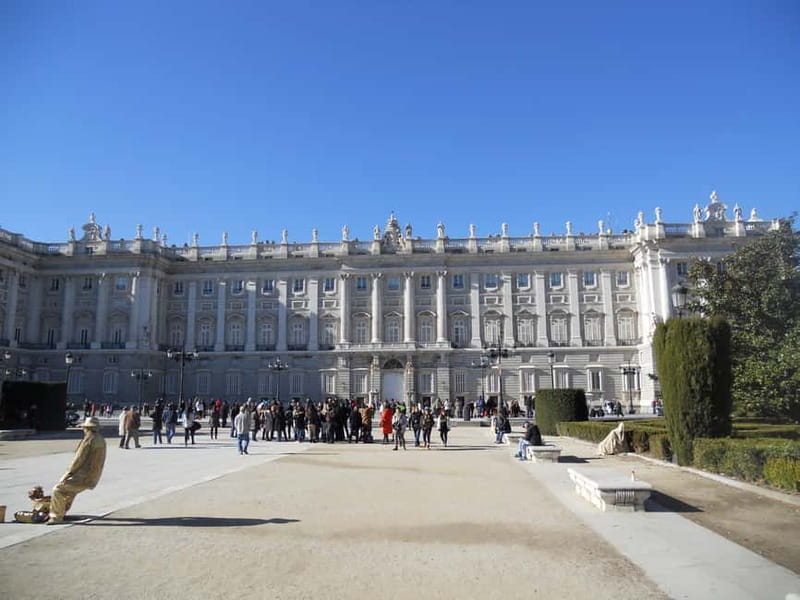
The Royal Palace and Almudena Cathedral
The Royal Palace of Madrid is one of the central sights on the route. You see it as part of the city walk, but an entrance ticket is not included. That distinction is important if you hoped to tour the interior. The tour gives you historical and architectural context, while a separate visit inside would require its own planning and fee.
The palace is especially useful as a turning point in the walk. Madrid’s older center can feel like a maze at first, so a guide’s explanation helps connect royal power with the surrounding streets. You can ask questions and place later sightseeing choices in context.
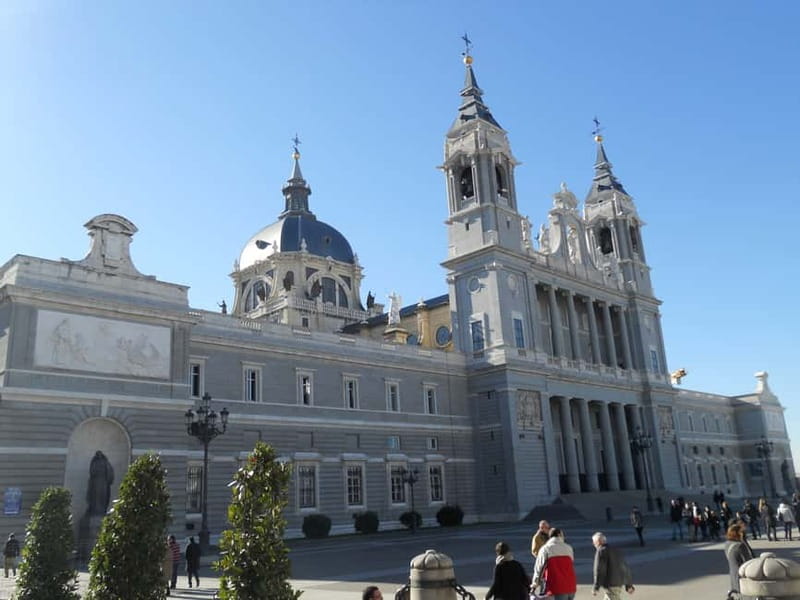
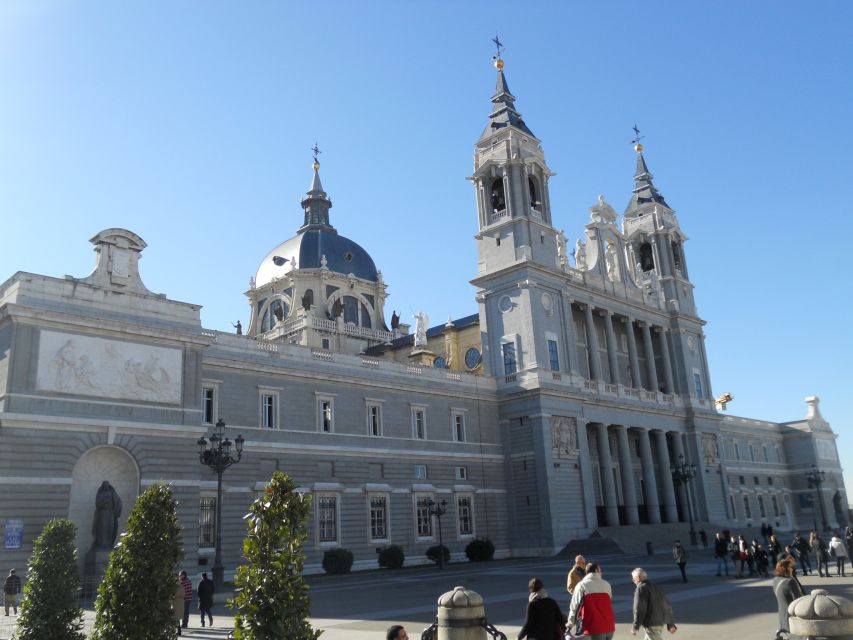
Nearby Almudena Cathedral adds another layer. Its presence beside the palace makes the relationship between monarchy, church, and city easy to grasp. The route treats the buildings as architecture as well as history, which suits anyone who wants more than a list of dates.
The route was designed by Spanish architects with attention to the architectural value of the buildings. That should appeal to you if you notice details such as a building’s position in a square, its changing facade, or the way a narrow street opens onto a larger civic space.
Plaza de la Villa and the old royal center
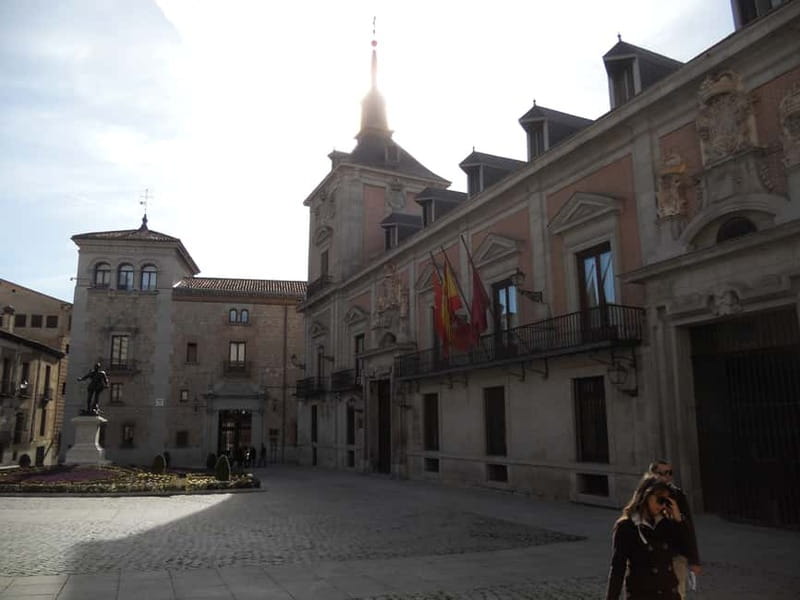
The walk continues toward the Palace of the Councils, Plaza de la Villa, and the Torre de los Lujanes. This is one of the more rewarding parts for anyone who prefers smaller historic settings to major tourist squares.
Plaza de la Villa gives you a more intimate picture of old Madrid. The buildings here help explain how the city was governed and how civic power operated close to royal and religious institutions. The Torre de los Lujanes adds another architectural point of interest, with the guide supplying anecdotes that are easy to miss if you pass through alone.
This section also illustrates why a walking tour can be worth the price. You could find the square on a map, but a map does not explain why the buildings matter together. You get a clearer sense of how Madrid developed in layers, with old government buildings, noble residences, religious foundations, and public spaces packed into a small area.
The route moves through narrow streets away from the main roads. That is a plus for atmosphere, though it means you should wear comfortable shoes and be ready for uneven paving or slower movement in tight spaces.
Carboneras, Plaza de la Paja, and Madrid’s quieter corners
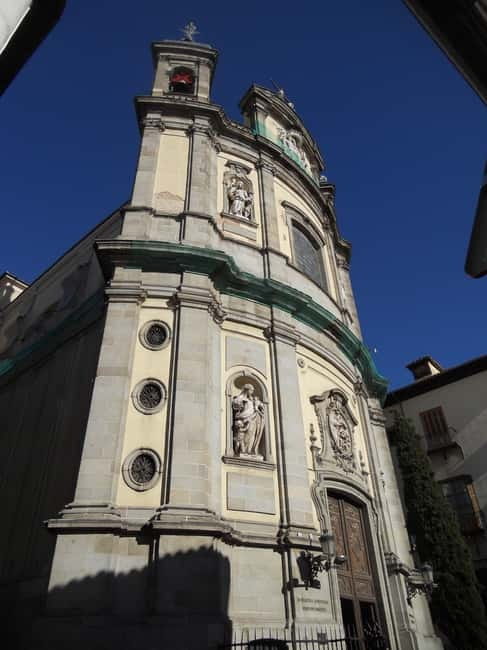
The Monastery of Corpus Christi las Carboneras and Plaza de la Paja bring you into another side of the center. These stops are less immediately famous than the palace or Plaza Mayor, but they help break up the standard sightseeing circuit.
The monastery is linked to Madrid’s religious past, while Plaza de la Paja gives you a sense of the older neighborhood pattern. The guide’s role here is to explain what you are seeing and to point out details that can disappear into the background when you explore alone.
I like this part of the route because it gives the walk some breathing room. You are still in the center, but the experience is not only about the largest monuments. The quieter stops help you understand why Madrid works so well as a walking city.
Your guide may also adapt the explanation to your interests. The strongest feedback about Anne points to individual suggestions for different people in the group, from cultural sights to food stops. That kind of flexibility is useful if you already know you want art, architecture, history, or dining advice rather than a standard speech for everyone.
Same city, a different century:
- Madrid Historic Centre Food Tour with Authentic Tapas & Wines
★ 5.0 · 814 reviews - Madrid Historical Walking Tour
★ 5.0 · 721 reviews - Madrid in a Day Tour:Royal Palace, Historic Center & Prado Museum
★ 5.0 · 628 reviews - Madrid Local’s Tapas Tour Dinner with a side of History
★ 5.0 · 530 reviews
Cava Baja, taverns, and practical food advice
Cava Baja is one of the tour’s most useful stops for planning your evenings. The street is known for its taverns and tapas bars, and the guide discusses places to consider rather than leaving you with only a monument checklist.
This is where the tour moves from Madrid’s past into your actual trip. You can ask for help choosing a neighborhood for dinner, avoiding obvious tourist traps, or finding a place that matches your budget and interests. Restaurant suggestions are included, and one guide’s personal tapas tip was singled out as especially helpful.
Keep in mind that food is not included. You are getting advice and orientation, not a tasting tour. That may be a drawback if you want a series of samples built into the experience, but it is an advantage if you would rather choose your own meal later.
Cava Baja also helps you see how historic streets remain part of daily life. Old buildings and long-standing tavern traditions sit alongside modern dining. The route does not treat Madrid as a museum. It shows you where history and an ordinary evening out meet.
San Miguel Market and Plaza Mayor
The covered Market of San Miguel is another major stop. It is a convenient place to see Madrid’s food culture in one location, though the tour does not include purchases or a meal.
A guide can help you understand how the market fits into the city’s eating habits and how to approach it without wasting time. If you return later, you will already know where it is and what sort of stop it makes. Since no food is included, budget separately if you want to browse or eat there.
Next comes Plaza Mayor, Madrid’s grand public square. It is one of the tour’s essential sights and a good place to hear about the city’s Golden Age. The square’s scale contrasts with the tight lanes you have walked through, so the change in space is part of the experience.
Plaza Mayor can be crowded and commercial, especially at busy times. A guide helps you look past the activity and focus on the square’s design, uses, and place in Madrid’s story. It is also a useful point for orientation because several central neighborhoods connect around it.
The Literary Quarter and the Golden Age
The final part of the route includes Madrid’s Literary Quarter, where the tour returns to the city’s Golden Age and its writers. This gives the walk a cultural finish rather than ending with architecture alone.
The value here is context. Madrid’s old center was shaped not only by monarchs and religious institutions but also by writers, theaters, readers, and the public life of the period. The Literary Quarter helps you see the city as a place of ideas and entertainment as well as government.
You may find this section particularly useful if you plan to spend more time in central Madrid after the tour. The guide can mark additional sights and taverns on your map, helping you turn a broad introduction into a more personal plan for the next few days.
At the end, you can request a viewing terrace visit. The information does not specify a particular terrace or guarantee access, so treat this as an optional addition rather than the main reason to book. It can be a pleasant way to finish if available.
What $47 gets you
At $47 per person, the price is reasonable for a guided walk lasting 211 minutes, especially if you value history, architecture, and practical advice in one session. You are paying for roughly three and a half hours of live guidance through a large part of central Madrid.
The value increases if you use the advice afterward. A warning about a tourist trap, a good tapas suggestion, or a clear recommendation for your next museum can save both money and time. The tour also helps you avoid spending your first day wandering without a plan.
The price is less attractive if you want interior visits, food tastings, or private attention. Entrance fees are excluded, and the tour is a walking experience rather than a package with transport or meals.
The consistently perfect rating and positive comments point to the guides as the main strength. The praise centers on clear explanations, a relaxed pace, local suggestions, and warm interaction. Anne and Silvia B. are named as especially strong guides, but the exact guide for your departure may differ.
Timing, language, and comfort
The listed duration is 211 minutes, or just over three and a half hours. One enthusiastic assessment wished the tour lasted even longer, which suggests that the route can feel full rather than padded. Plan to stay with the group for the entire walk and avoid scheduling another fixed activity immediately afterward.
The tour takes place rain or shine. Madrid weather can change, so bring suitable clothing and shoes. Since the route passes through old streets and squares, comfortable footwear matters more than dressing up for the palace.
The live guide language is German. That is a firm booking point. If you want detailed explanations and questions in German, this tour fits. If you need English or another language, this is not the right choice based on the supplied information.
The tour is listed as wheelchair accessible. Still, the historic center contains narrow lanes and old paving, so you may want to confirm personal route needs before booking. Accessibility does not mean every surface will feel effortless.
Free cancellation is available up to 24 hours before the tour for a full refund, and you can reserve now and pay later. Those terms are useful if your Madrid schedule is still shifting.
Who should book this Madrid walk?
I would choose this tour for a first or second day in Madrid. It covers the old center, gives you a working map of the city, and supplies ideas for meals and later sightseeing.
It suits you best if you:
- Want a clear explanation of Madrid’s Habsburg-era center
- Prefer a relaxed walking pace to a rushed list of sights
- Enjoy architecture, royal history, churches, and old neighborhoods
- Want German-language guidance
- Like receiving restaurant and tapas suggestions
- Plan to explore the center independently after the tour
I would think twice if you dislike long walks, need an English-language guide, or mainly want to enter the Royal Palace and other buildings. The tour shows you the sights and stops for explanation, but admission costs are separate.
Should you book it?
Book this tour if you want a useful introduction to central Madrid with strong personal guidance. Its best feature is the balance between major sights and less obvious streets, with food advice and warnings that remain useful after the walk ends.
The $47 price makes sense for three and a half hours of German-language history, architecture, orientation, and dining tips. Just arrive ready to walk in all weather, budget separately for entrances and food, and confirm that German is the language you want. If that matches your plans, this is a solid way to get your bearings before exploring Madrid on your own.
FAQ
Where does the Madrid historic center tour begin?
The tour begins at the bear statue in Puerta del Sol, Madrid.
How long does the tour last?
The listed duration is 211 minutes, which is about three and a half hours.
What language is the tour conducted in?
The live guided tour is conducted in German.
Are entrance fees included?
No. Entrance fees are not included in the tour price.
Is the tour wheelchair accessible?
Yes, the activity is listed as wheelchair accessible. The route includes historic streets and narrow lanes, so personal access needs may still be worth confirming.
Can I cancel the booking?
Yes. You can cancel up to 24 hours in advance for a full refund. You can also reserve now and pay later.
Just added around Madrid
- Madrid: Tapas, Taverns & History Tour★ 4.7 · 71 reviews
- Madrid Historical in French (petit comité & private)★ 4.8 · 228 reviews
- Madrid: Royal Palace, Prado Museum & Historic Center Tour★ 4.6 · 50 reviews
- Madrid: Authentic Tapas Evening Tour with a side of History★ 4.9 · 37 reviews
- Madrid: Archaeological Museum E-Ticket and Audio Guide★ 4.3 · 115 reviews
- Madrid City Tour: Culture and History★ 5.0 · 29 reviews
- Tapas Crawl in Madrid Historical Quarter for Lunch or Dinner★ 4.9 · 45 reviews
- Madrid: History of Tapas Walking Tour and Tasting★ 4.7 · 30 reviews
Madrid History Tours, compared.
Madrid Essential: Historic Center, Plaza Mayor & Royal Palace
Read our review →
Madrid Tapas & Taverns Small Group Food & History Tour
Read our review →
Madrid Historical Tour with Local Guide in Eco Tuk Tuk Private
Read our review →
Madrid Historic Centre Food Tour with Authentic Tapas & Wines
Read our review →
Madrid in a Day Tour:Royal Palace, Historic Center & Prado Museum
Read our review →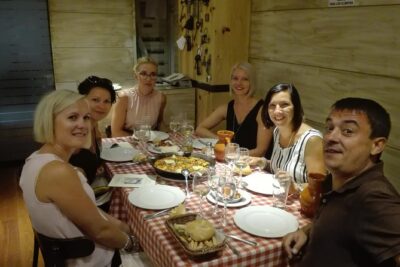
Madrid Local’s Tapas Tour Dinner with a side of History
Read our review →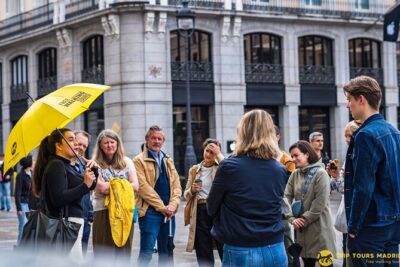
Guided Tour of Madrid of the Austrias and the Historic Center
Read our review →Browse the lists this tour appears in