
Review · MARRAKECH
Marrakech Historical and Cultural Tour – Half Day City Tour
Marrakech reveals itself best on foot, and this tour takes you from Jemaa el-Fna’s performers into quiet lanes, palace courtyards, royal quarters, and working souks. Guides such as Abdul, Mohamed, Hassan, and Ali have been praised for explaining local customs, tile designs, architecture, and the city’s past in an easy, personal way.
I like the tour’s useful mix of major sights and less polished corners, especially the tinsmiths, dyers, herbalists, and traditional shops around the medina. I also like the flexible morning or afternoon departures, plus the option to book privately. The main catch is that entrance fees are extra, crowds can disrupt the plan, and a three-hour schedule may not allow every stop in full.
Key points to know before you book
- Jemaa el-Fna starts the story: Expect performers, musicians, storytellers, snake charmers, and a busy meeting place.
- Bahia Palace gets the fullest visit: Allow about an hour, with admission paid separately.
- The Saadian Tombs can be difficult: Long queues may force the group to choose between waiting and visiting more of the souks.
- The guide matters: Abdul, Mohamed, Hassan, Ali, Jaouad, and others have been praised for clear explanations and friendly group care.
- You walk through real working areas: The route can include workshops, traditional shops, the Jewish quarter, the Kasbah, and lanes away from the main tourist flow.
- Budget for extras: The tour costs $30.94 per person, but monument tickets, drinks, and transport to the meeting point are not included.
A smart first look at Marrakech’s medina
This half-day tour is designed as an introduction, not a complete survey of Marrakech. In roughly three hours, you move between the central square, palace quarters, royal monuments, the Koutoubia Mosque, and the souks. That gives you a useful mental map before you set off on your own.
I especially like the way the route mixes grand places with everyday Medina life. Bahia Palace and the Saadian Tombs explain royal Marrakech, while the workshops and small shops show how the old city still functions. The guide also helps you read details you might otherwise miss, such as the meaning of tile patterns, the eight-pointed star, and the use of color in Moroccan design.
The tour is capped at 15 people. That is small enough for a guide to keep an eye on the group, though the medina can still make things feel scattered. Narrow lanes, quick-moving motorcycles, crowds, and confusing meeting points are part of the experience. Wear good walking shoes and stay close when the group crosses streets or enters a crowded palace.
The start is at Hôtel Restaurant Café de France beside Jemaa el-Fna. There is no hotel pickup or drop-off, so you need to reach the cafe yourself. The tour ends back at the same meeting point, which is handy if you want to continue exploring the square afterward.
More Local Culture and Traditions Tours in Morocco
- Casablanca Cultural Tour: Medina, Views & Local Delights
★ 4.6 · 126 reviews - Half Day Guided Tour in Marrakech History & Culture
★ 5.0 · 93 reviews - Private Cultural Tour in Marrakech City
★ 5.0 · 77 reviews
Jemaa el-Fna, Marrakech’s great meeting place
The tour begins at Jemaa el-Fna, the large square that acts as the front door to the medina. The official stop is short, about 10 minutes, but the setting gives your guide a natural place to explain how Marrakech works as a social and commercial center.
You can expect storytellers, musicians, acrobats, jugglers, snake charmers, and other performers. The square changes through the day, so a morning visit and an afternoon visit will not feel exactly alike. The stop is free, but that does not mean you should treat every interaction as cost-free. Keep your belongings secure and ask before accepting photographs or services.
This is also where the tour’s meeting arrangements can feel least clear. Café de France is a busy starting point, and several tours may gather nearby. Have your booking details ready, arrive with enough time to identify the correct guide, and look for the tour representative rather than assuming every group at the cafe belongs to the same activity.
Bahia Palace and the details inside the walls
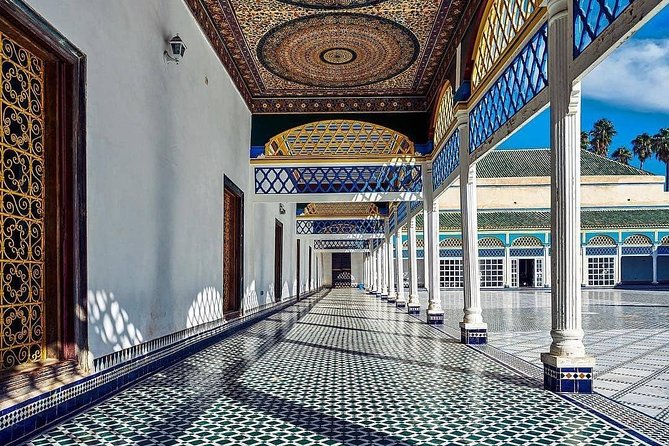
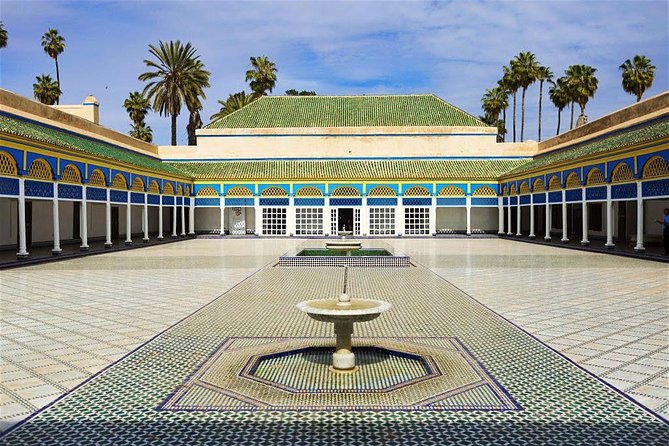
Bahia Palace receives about an hour, making it the most substantial sight on the route. Built in the late 19th century with the aim of being the greatest palace of its time, it is a place of courtyards, gardens, decorative tilework, carved surfaces, and carefully planned rooms.
The name Bahia means brilliance, and the building earns attention through its detail rather than sheer size. This is where a good guide adds real value. Abdul, for example, has been praised for explaining architectural styles, tile patterns, color choices, and the meaning of the eight-pointed star. Those details give you something to look for instead of simply walking through attractive rooms.
Plan on paying the entrance fee separately. The supplied information gives a typical monument cost of about $10 each, though the exact charge can change. Since admission is not part of the $30.94 tour price, budget for the palace and the tombs before you book.
Bahia Palace is also one of the places where the group format matters. The guide needs to keep everyone together while explaining the rooms, and the palace can become crowded. A guide such as Abdu has been praised for tracking the group carefully and helping people stay together inside busy areas. You will still want to keep sight of the person leading the tour.
The Jewish quarter and Kasbah lanes
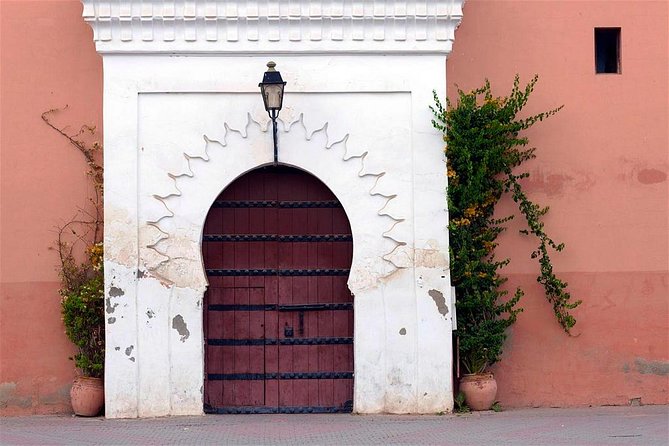
The route also passes through Marrakech’s historic Jewish quarter and the Kasbah district. These areas add useful context between the main monuments. The Jewish quarter is described as seeing a revival, while the Kasbah serves as the royal palace district and remains home to traditional shops and ordinary local life.
The Kasbah is especially useful for understanding the contrast between a famous monument and the surrounding neighborhood. Around the Saadian Tombs, you can find tourist activity, but the nearby streets retain a quieter rhythm once the tombs close. That is the kind of setting where a local guide helps you avoid walking only along the obvious route.
You may also pass Bab Agnaou, one of Marrakech’s historic gates. Built in the 12th century during the Almohad period, it provided entry toward the royal Kasbah in the southern part of the medina. It is not simply a photo stop. Its location helps explain how the city was organized around walls, gates, religious buildings, commercial streets, and royal compounds.
Same city, a different century:
- Fes: Volubilis Roman Ruins, Mouly Idriss, & Meknes Day Trip
★ 4.6 · 2,375 reviews - Marrakech: Saadian Tombs & Bahia Palace, Medina Guided Tour
★ 4.6 · 1,989 reviews - Atlas Mountains – Ancient Ait Ben Haddou Day Tour from Marrakech
★ 5.0 · 411 reviews - Fez: Guided Walking Tour of the Historic Medina
★ 5.0 · 359 reviews
Saadian Tombs and the risk of a long wait
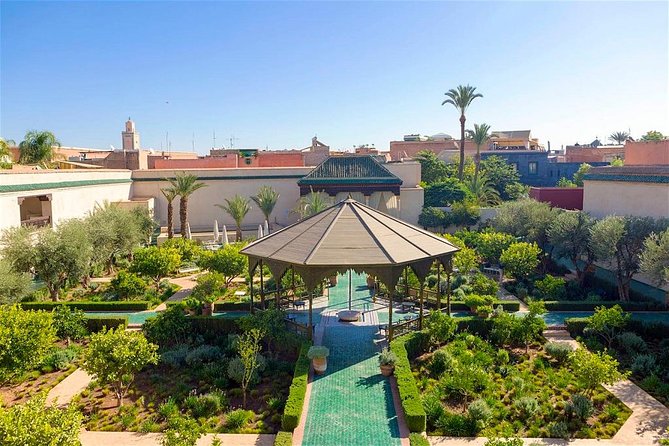
The Saadian Tombs are one of the tour’s most uncertain stops. The tombs date from the Saadian dynasty and are linked to Sultan Ahmad al-Mansur. They were abandoned for centuries, rediscovered by aerial photography in 1917, and later restored by the Beaux-Arts service.
The site is compact and important, but access can be slow. A queue of up to an hour has occurred, and that creates a real problem for a three-hour walking tour. In some cases, the guide may ask the group to vote on whether to wait or use the time in the souks. That is a sensible response to crowd pressure, but it means you may pay for a tour that includes the tombs without actually entering them.
This is the clearest weakness in the experience. If the tombs are your main reason for booking, you should accept that entry is not guaranteed in practice. If the line is long, you might prefer the souks and return later on your own, especially since the tour ends at Jemaa el-Fna and the Kasbah area is accessible independently.
Admission is not included, and the tombs may cost about $10. Consider that extra charge carefully if you might not have time to enter. The guide can explain the site from outside, but that is not the same as seeing the chambers and decoration yourself.
Koutoubia Mosque and the view from outside
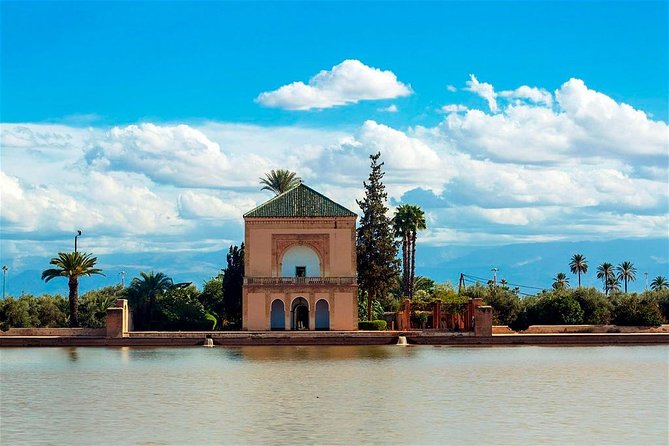
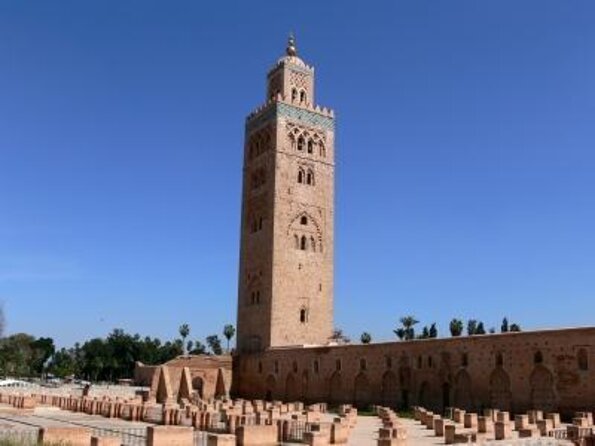
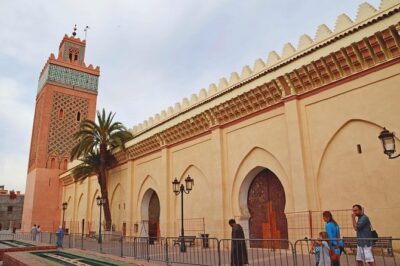
Koutoubia Mosque is the largest mosque in Marrakech and one of the city’s main landmarks. Its name is associated with booksellers, reflecting the commercial life that once surrounded the area. The tour allows about 30 minutes here.
The stop is free, but the tour does not offer interior entry. For most visitors, the value is in the exterior, the minaret, the setting, and the guide’s explanation of the mosque’s place in Marrakech. You can use this pause to take photographs and ask questions about Muslim culture and local religious practice.
Several guides have been praised for explaining cultural customs along with historical facts. That balance matters here. A mosque is not just another old building, and a respectful guide can help you understand what you are seeing without turning the visit into a dry architecture lecture.
Following the guide into the souks
The souks are where the tour can feel most useful to a first-time visitor. Marrakech’s market lanes twist through stalls, workshops, and small stores, and it is easy to lose your bearings or walk past an area without understanding what is made there.
The route can include workshops for tinsmiths, dyers, and herbalists, along with less tourist-focused parts of the market. You might see traditional production and local trade alongside shops aimed at visitors. The point is not only shopping. It is learning how the medina works and seeing the difference between a workshop, a neighborhood store, and a sales stop.
This part also requires a little judgment. One guide has been reported to offer an additional stop that turned into a strong sales pitch for products. The visit included a demonstration of argan processing, which can be interesting, but you should not feel obliged to buy anything. If you want a purely sightseeing-focused tour, ask early whether any shop visits are planned.
Motorcycles can move quickly through narrow lanes, sometimes with little warning. Stay alert, avoid stopping in the middle of a passage, and keep children close. The guide’s job is to lead the group, but you still need to watch your own footing and surroundings.
How the $30.94 price works out

At $30.94 per person, the tour is fairly priced as a short guided introduction, especially if you value a local explanation of the medina and do not want to work out the route yourself. The price covers the guide, but not entrance tickets, drinks, or transportation to and from the meeting point.
The value depends on how much of the planned route the group completes. A smooth three-hour visit with Bahia Palace, the tombs, Koutoubia, Jemaa el-Fna, and the souks gives you a good orientation. A crowded day with a long tomb queue can reduce the sightseeing portion, even though the guide may adapt by showing you more market lanes.
A private upgrade is available. I would consider it if you have limited time, want to ask many questions, are traveling with family, or care strongly about visiting each monument. A private guide may offer more control over pace and priorities, while the group tour makes more sense if you want the lower price and do not mind adjusting plans with other people.
Group discounts are available, which may help families or larger parties. Children must be accompanied by an adult. Most people can participate, but remember that the experience is a walking tour through crowded lanes, not a vehicle-based city circuit.
Which guide style suits you best
The strongest part of this experience is the human element. Guides named in the supplied material include Abdul, Abdu, Mohamed, Mohammed, Hassan, Ali, Jaouad, Abdorahim, and Oussama. The most praised guides are described as friendly, funny, attentive, and able to explain both the formal history of a monument and the customs of daily life.
Abdul is noted for stories, enthusiasm, local recommendations, and taking photographs for participants. That can be especially helpful if you are traveling alone. Ali’s connection to the Medina gives him a local point of view, while Hassan is praised for keeping a group together in crowded streets and accommodating a child.
Guide quality can vary, as it does with any group activity. The operator is Marrakech Guided Experience, and the tour may be handled by different guides. Go in expecting a well-informed local escort, but do not assume you will receive a particular person unless your booking confirms it.
Practical advice for a smoother morning or afternoon
Choose the cooler departure time if you have the option, since much of the route is outdoors and on foot. Drink water before you start and carry some with you, because drinks are not included and there is no scheduled cafe break.
Wear shoes suited to uneven streets. Keep your group close in the souks, especially when motorcycles pass. If you are traveling solo, ask the guide for help with photographs, a service that Abdul has offered to participants.
Bring cash for monument admission and be clear about your own shopping limits. If you do not want a product demonstration, say so politely. If you want to see the Saadian Tombs, ask the guide about the queue as soon as the group reaches the Kasbah, then decide if waiting fits your schedule.
The tour is commonly booked about 19 days ahead, so reserve early if your Marrakech dates are fixed. You receive confirmation when booking, and cancellation is free up to 24 hours before the start time. Inside the final 24 hours, the payment is not refunded and changes are not accepted.
Should you book this Marrakech tour?
Book it if you want a low-cost orientation to the Medina, prefer walking to arranging several sights yourself, and enjoy having local history explained as you go. It is particularly useful on a first day in Marrakech, when the souks, Kasbah, and central square can feel confusing.
Do not book it if your priority is guaranteed entry to the Saadian Tombs, private transport, long visits at each monument, or a relaxed cafe stop. The tour can run longer than three hours, but the pace and route may change when queues and crowds interfere.
For most visitors, I see this as a solid introduction with two important conditions: budget separately for admission, and accept that the tombs may be skipped if the line is too long. If that trade-off suits you, the combination of palaces, markets, royal quarters, and a lively public square gives you a useful first picture of Marrakech.
FAQ
How long does the Marrakech historical and cultural tour last?
The tour lasts about three hours, although some groups have taken longer depending on queues, crowd levels, and the route chosen.
What sights are included?
The route includes Jemaa el-Fna, Bahia Palace, the Saadian Tombs, Koutoubia Mosque, parts of the souks, the historic Jewish quarter, the Kasbah district, and Bab Agnaou.
Are entrance fees included?
No. Entrance fees are extra, and the supplied information estimates that most monuments cost about $10 each. Drinks are also not included.
Where does the tour start and finish?
It starts at Hôtel Restaurant Café de France beside Jemaa el-Fna, at J2G7+G2G jamaa el-fnna, Rue des Banques, Marrakech. The activity ends back at the same meeting point.
Is hotel pickup included?
No. You must make your own way to the meeting point, and no drop-off is included.
Can I book a private tour?
Yes. You can upgrade from the group tour to a private option. The standard group has a maximum of 15 people, and group discounts are available.
Just added around Morocco
- 6-Day Private Morocco Cultural Tour From Casablanca To Marrakech★ 5.0 · 24 reviews
- Discovery of Moroccan Culinary Heritage, History and Secrets★ 4.5 · 48 reviews
- Marrakech The History and Culture Day Trip★ 4.5 · 45 reviews
- Marrakech: Historical Discovery Tour★ 4.1 · 87 reviews
- Marrakech: Day Trip to the Beautiful and Historic Essaouira★ 4.3 · 39 reviews
- From Marrakech: Essaouira Full day trip, beach and History★ 4.9 · 26 reviews
- Fez: Walking Tour in the Ancient City of Fez★ 4.8 · 73 reviews
- Casablanca to Fez: Scenic & Historical Day Trip with Lunch★ 4.7 · 111 reviews
Marrakech History Tours, compared.
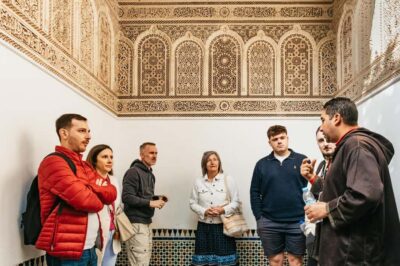
Marrakech: Saadian Tombs & Bahia Palace, Medina Guided Tour
Read our review →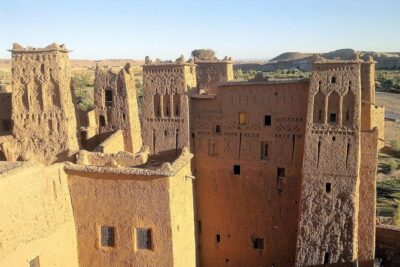
Atlas Mountains – Ancient Ait Ben Haddou Day Tour from Marrakech
Read our review →
Half Day Guided Tour in Marrakech History & Culture
Read our review →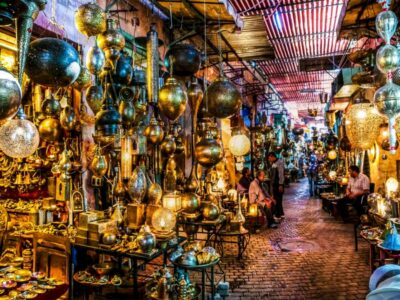
private VIP half journey of Marrakesh : History & Culture.
Read our review →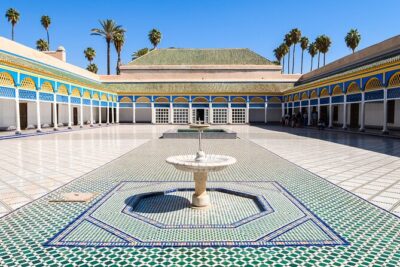

Marrakech: Day Trip to the Beautiful and Historic Essaouira
Read our review →Browse the lists this tour appears in