
Review · PORTUGAL
Óbidos: Medieval Tales & Secrets Spots Guided Walking Tour
Óbidos saves its best trick for the end, or perhaps the middle: a small cup of sour cherry liqueur eaten along with the chocolate it comes in. I like that this tour pairs that playful local taste with Josefa de Óbidos’s paintings and the town’s old churches. I also like the way guides such as Ivo, JP, João Pedro, Bruno, and Maria lead visitors away from the busiest lanes to quieter corners.
The main thing to consider is the walking. Óbidos has uneven stone streets, stairs, slopes, and slippery surfaces in wet weather. Two hours is a brisk stretch of sightseeing, and this tour is not suitable for wheelchair users, people with mobility impairments, or anyone recovering from recent surgery.
Key points at a glance
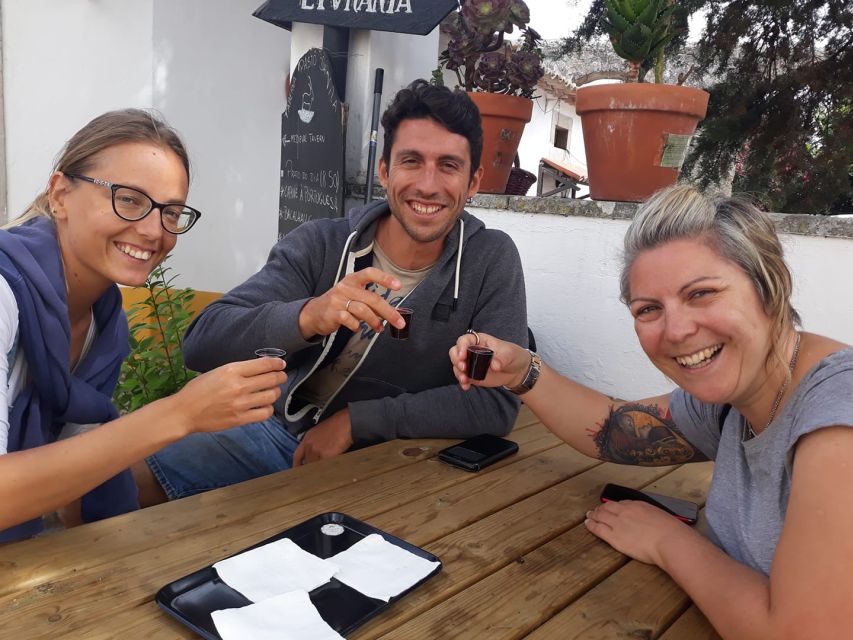
- Ginjinha in a chocolate cup: Taste Óbidos’s famous sour cherry liqueur, with the cup itself becoming a small dessert.
- Five works by Josefa de Óbidos: See paintings by the celebrated seventeenth-century artist who became the first Portuguese woman to have work shown at the Louvre.
- A castle with Muslim roots: Walk through Óbidos Castle and learn how its defenses changed across the centuries.
- Two remarkable bookshops: Visit Ler Devagar at a former royal chapel and São Tiago Bookstore inside a former church.
- The Town of the Queens: Hear how Portuguese queens shaped Óbidos, including Leonor de Avis and her charitable hospital network.
- Back streets and photo stops: The route includes quieter lanes and viewpoints that are easy to miss when exploring alone.
Why Óbidos works best with a guide
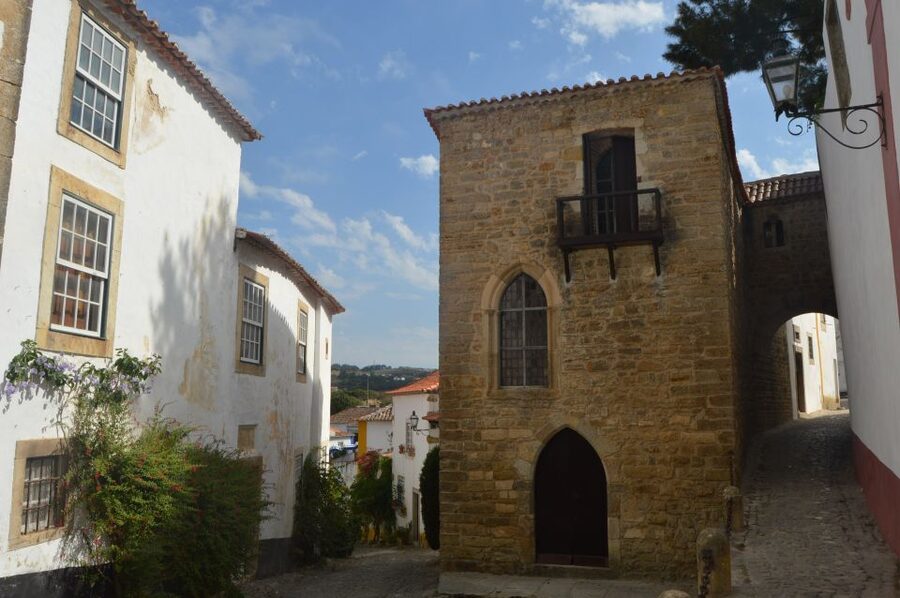
Óbidos is easy to admire and surprisingly easy to misunderstand. You see whitewashed houses, flowerpots, tiled signs, and a castle wall, then move on. A good guide gives those sights a clear story: Muslim origins, Christian rule, royal connections, Jewish and Moorish neighborhoods, churches, art, and the town’s role in Portuguese public life.
That context is the real reason to book. The guide does not simply point at a building and name it. The route connects the town’s churches to its queens, its paintings to local religious life, and its bookshops to buildings that once served very different purposes.
The guides are also a strong part of the experience. Ivo is often praised for his warm manner, entertaining storytelling, and patience with questions. JP, also called J.P. in some bookings, is described as conversational and flexible. João Pedro, Bruno, Maria, Jorge, and others have led tours as well. The exact guide depends on the date, but the experience is designed around a live English or Portuguese-speaking guide rather than an audio recording.
More History Walking Tours in Portugal
- Lisbon: History, Stories and Lifestyle Walking Tour
★ 4.8 · 10,902 reviews - Porto: Historic City Center Walking Tour
★ 4.7 · 1,172 reviews - Porto: Historical Center Walking Tour
★ 4.8 · 898 reviews
Meeting outside the walls
The tour begins at the Óbidos Tourist Office, near the main parking area and outside the town walls. This is a useful meeting point if you are arriving by car or bus, but do not expect to begin directly beside the castle.
Starting outside the walls lets you see Óbidos as a fortified town before entering it. You also avoid the confusion of trying to locate a guide inside the narrow lanes. Arrive ready to walk, since the route finishes back at the Tourist Office after passing through the old town and castle area.
Wear comfortable shoes. This is not a flat pavement stroll. The stone streets can be uneven, and wet weather can make them slippery. The guide may pause for photos, but the route still covers a lot in two hours.
Entering the Town of the Queens
One of the most useful themes on this walk is Óbidos’s connection with Portugal’s queens. The town was associated for centuries with the royal women of Portugal, including Catherine of Austria, Isabel of Aragon, known as Queen Saint Isabel, and Leonor de Avis.
Leonor, the wife of King John II, is especially important here. She helped create the Holy House of Mercy, a charitable organization that developed hospitals and relief work in Portugal and later spread across the Portuguese Empire. In Óbidos, the story gives the churches and charitable buildings a human purpose beyond their architecture.
This is where a guide adds value. On your own, you might photograph a church doorway and continue uphill. With an explanation of the queen’s work, you begin to see the town as a place shaped by royal money, religious devotion, care for the poor, and political influence.
The title Town of the Queens is not just a decorative nickname. It helps explain why Óbidos has such a concentrated group of churches, chapels, charitable institutions, and royal associations.
Churches, chapels, and Josefa de Óbidos
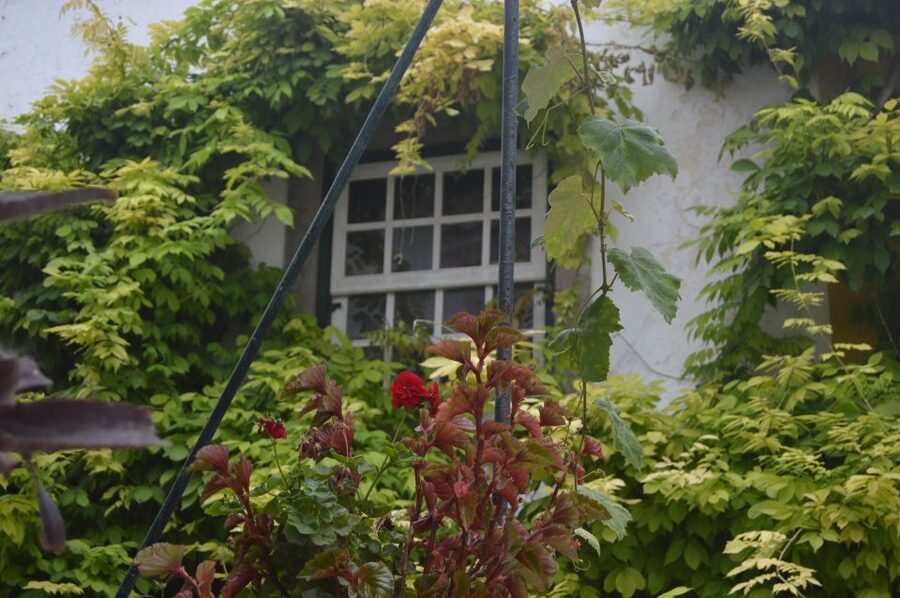
The route includes the Museum of the Saint John the Baptist Church, Saint Peter Church, Saint Martin Chapel, the Almshouse Church, and Saint Mary Church. You also pass Saint Mary Plaza, Maney’s Tower, Camões Mark, and Casa da Música.
That is a lot for two hours, so expect selected highlights rather than a slow museum visit at every stop. The guide’s job is to point out what matters, explain the setting, and keep the walking pace moving.
The art focus is one of the tour’s strongest features. You see five original paintings by Josefa de Óbidos, a local seventeenth-century artist with an international reputation. She was the first Portuguese female artist to have her work exhibited at the Louvre in Paris.
Her presence changes the feel of the visit. Óbidos is not only a preserved medieval town made for photographs. It was also a place where art was produced, displayed, and connected to religious institutions. The paintings give you a reason to look closely at the churches rather than treating them as quick stops between shops.
The route also includes a superb Renaissance pietà by Nicolau de Chanterene. This is a good reminder that Óbidos contains serious art alongside its postcard streets. If you enjoy painting, sculpture, or church interiors, pay attention during this section and ask the guide to explain the pieces in more detail.
More Medieval History Tours in Portugal
- Lisbon: Fado Show and Wine inside Medieval Walls
★ 4.8 · 3,819 reviews - Templar Tour Convent of Christ & Almourol Castle from Lisbon
★ 5.0 · 704 reviews - Lisbon: Segway Medieval Tour of Alfama and Mouraria
★ 4.9 · 420 reviews - From Lisbon: Tour to Óbidos and Nazaré – Medieval Village, Ginja, and Giant Waves
★ 4.8 · 295 reviews
A castle shaped by Muslim and Portuguese rule
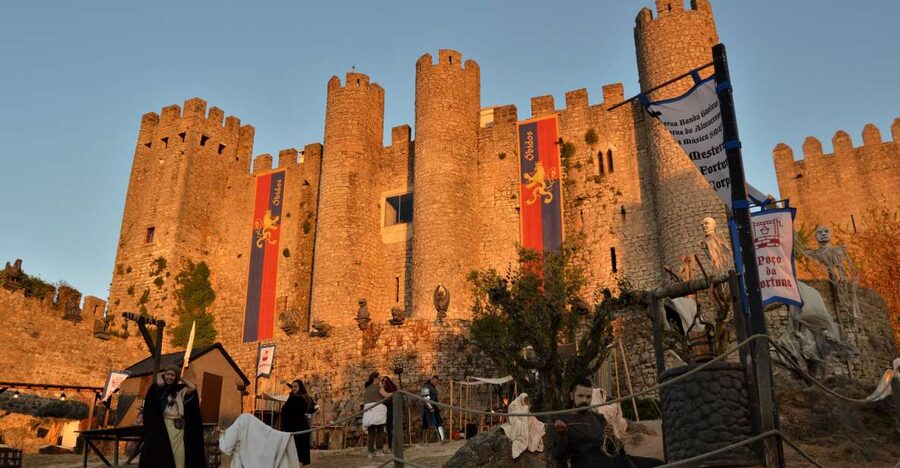
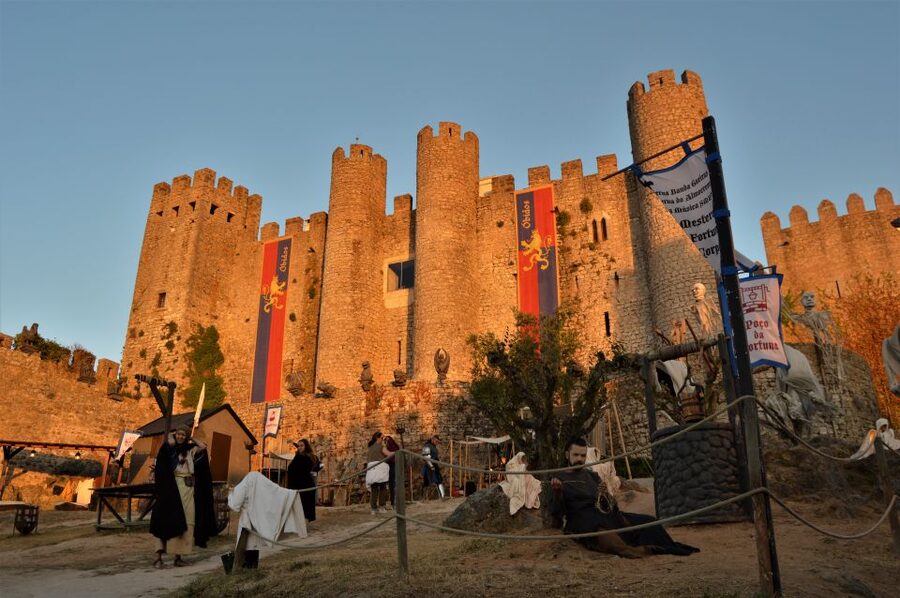
Óbidos Castle is the main historic stop. Its origins are Moorish, and the site is described as around 1,300 years old. That long timeline is what makes the castle more interesting than a simple stone wall and tower.
Expect the guide to explain how the castle fits into the town’s wider story. You are not just looking at battlements. You are seeing the defensive core of a settlement that changed hands, faiths, and political roles over many centuries.
The castle area also gives you some of the strongest views and photo opportunities. The exact amount of time spent inside depends on the group and the guide, but the experience is built around a guided visit rather than a quick look from outside.
There is a practical catch. Castle paths and old stone surfaces can be demanding. If you have trouble with slopes, uneven ground, or wet paving, this is the point where the tour may become uncomfortable. The guide can help with pacing, but the physical character of Óbidos cannot be removed.
Moorish and Jewish quarters
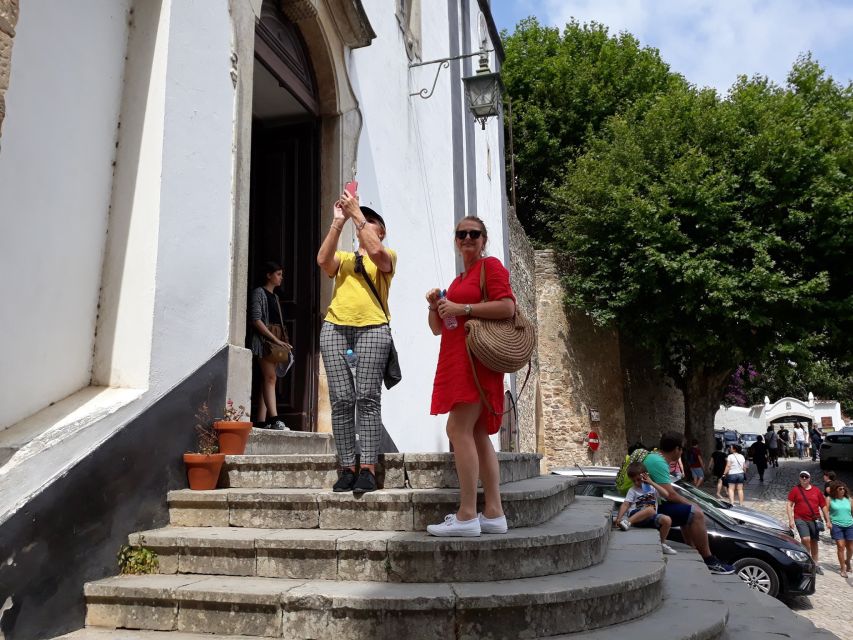
The old Moorish and Jewish neighborhoods are among the places you might miss without local direction. Their importance is not always obvious from the outside. Narrow lanes, altered façades, and later buildings can hide the older pattern of the town.
A guide helps you read the streets. Look for changes in width, tucked-away passages, old doorways, and the way houses press toward the lane. These details are easy to pass without context, especially when the main streets are full of shops and day visitors.
This section also gives the tour a better balance. You are not only hearing about kings, queens, and castle defenses. You are also learning how different communities occupied the town and how Óbidos developed around them.
The quieter lanes are useful for photography, too. Several guides are praised for taking groups away from the main route for less crowded images. You may also be offered help with taking photos at scenic points, a small service that matters when you are traveling alone or with a family.
Bookshops in unexpected buildings
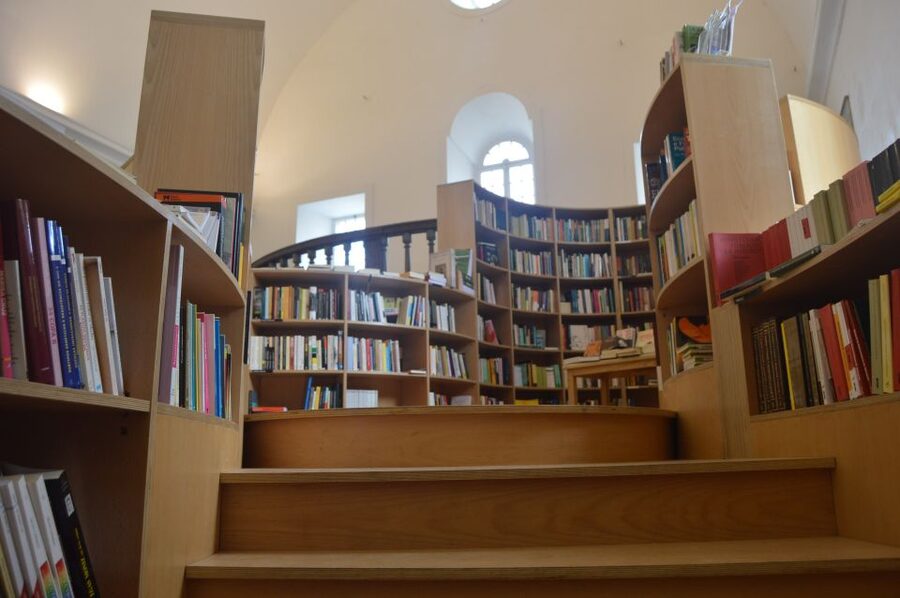
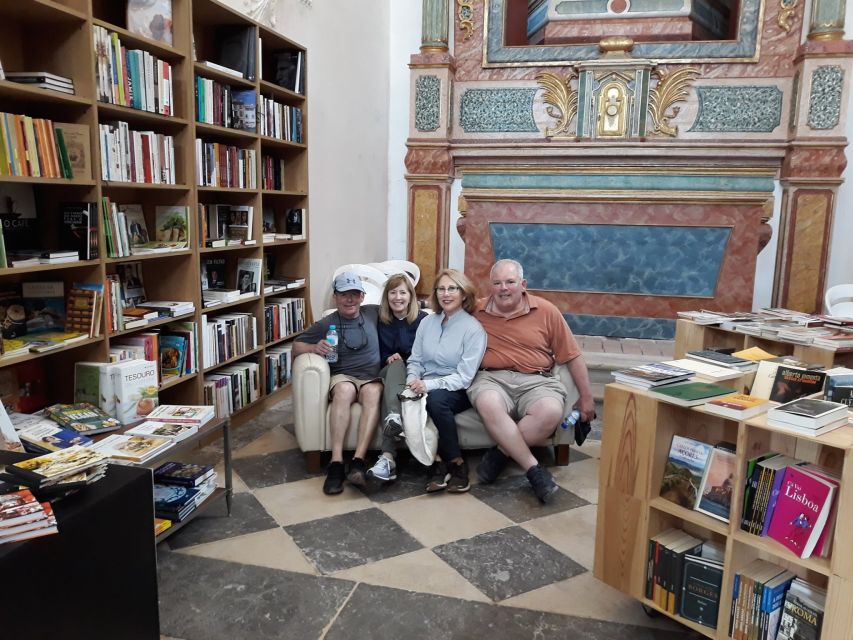
The two bookshops are a clever part of this experience. Ler Devagar is located in a former royal chapel, while São Tiago Bookstore occupies a former church and royal chapel.
These are not ordinary retail stops added to fill time. They show how old buildings in Óbidos continue to serve public life. A chapel becomes a place for books, and a church becomes a cultural shop without losing the sense of its earlier purpose.
The Market Bookstore, or Livraria do Mercado, adds another stop, combining books with organic products. The route therefore gives you three different book-related spaces, although Ler Devagar and São Tiago are the two especially distinctive visits.
I like this part because it interrupts the expected castle-and-church pattern. You get a glimpse of present-day Óbidos, where historic buildings are used in imaginative ways. If you enjoy books, architecture, or independent shops, allow a few extra minutes after the tour to browse at your own pace.
Out beyond the walls
The itinerary includes a walk outside the walls, which helps you see the town as a fortified settlement rather than a series of pretty lanes. From outside, the walls have a stronger sense of scale, and the castle’s position makes more visual sense.
This is also a good time for photographs without standing in the middle of a crowded street. The guide may point out angles and stops that are less obvious from inside the town.
The walk outside the walls contributes to the tour’s pace. You are not spending the full two hours in interiors. Instead, the route alternates between streets, churches, castle areas, bookshops, neighborhoods, and open views.
The chocolate-cup tasting
The final treat is a tasting of Ginjinha de Óbidos, the local sour cherry liqueur, served in a chocolate cup. The tasting is included in the $41 price, along with the guide.
It is a small serving, not a meal, and food is not included. That distinction matters if you are planning the tour around lunch. The liqueur is sweet and fruity, while the chocolate cup makes the tasting feel distinctly local and fun.
This is a good example of the tour’s overall balance. The historical material is substantial, but the experience is not solemn from start to finish. You get churches and queens, then a chocolate cup. Óbidos understands the value of a good ending.
If you do not drink alcohol, check the arrangements before booking. The listed experience includes a liquor tasting, and no nonalcoholic alternative is specified.
Is $41 good value for two hours?
At $41 per person, this is not the cheapest way to wander around Óbidos. You can enter the town on your own for no walking-tour fee, take your own photographs, and read signs as you go.
The price makes more sense if you care about context and efficient sightseeing. In two hours, you cover the castle, several religious buildings, royal connections, art, old neighborhoods, bookstores, the area outside the walls, and a local tasting. You also get help finding less obvious spots.
The cost is especially reasonable for a first visit. A guide can show you what to return to later, point out the buildings worth entering, and suggest where to eat. Several guides have also helped visitors with restaurant suggestions and practical questions about the rest of their time in Óbidos.
It is less compelling if you prefer a slow, unstructured visit. The route is described as intensive, and there is enough material to keep you moving. You may want to revisit the castle or bookshops afterward rather than expecting to linger everywhere during the tour.
Who should book this walk?
I would choose this tour for a first visit to Óbidos, especially if you have only a few hours. It suits people who enjoy history, art, architecture, royal stories, and local food traditions.
Families can benefit from the guide’s storytelling, particularly when the group includes different ages or language levels. Guides have been praised for explaining clearly to multilingual and multiage groups, but children still need to manage the uneven walking.
It also works well for solo visitors and couples who want help with photos and a route beyond the main street. History lovers will get the most from the churches, Josefa de Óbidos paintings, Nicolau de Chanterene’s pietà, and the castle’s long timeline.
I would think twice if you have limited mobility, are recovering from surgery, or dislike steep and uneven paths. Weather can also affect the tour, and it may be canceled in poor conditions.
Practical details before you reserve
The tour lasts two hours and is offered in English and Portuguese. It begins and ends at the Óbidos Tourist Office, outside the walls near the main parking area.
Bring comfortable shoes and plan for outdoor walking. Food is not included, but the Ginjinha tasting is included. The tour can be canceled because of weather, and you can cancel up to 24 hours ahead for a full refund. A reserve-now, pay-later option is also available.
The guide roster includes Ivo, JP, João Pedro, Bruno, Maria, Jorge, and other local guides. You may not be able to choose a specific person, but the strongest pattern in the feedback is clear: guides are valued for storytelling, patience, personal attention, and answers to side questions.
Should you book the Óbidos walking tour?
Book it if you want more than a pretty walk through whitewashed streets. The castle, queens, Jewish and Moorish quarters, Josefa de Óbidos’s paintings, unusual bookshops, and chocolate-cup ginjinha give the two hours real range.
Skip it if you want to roam at your own speed or cannot manage uneven medieval streets. For most first-time visitors who value explanation and want to find corners they could easily miss, $41 is a fair price for a well-filled introduction to Óbidos.
FAQ
Where does the Óbidos walking tour start?
It starts in front of the Óbidos Tourist Office, near the main parking area outside the town walls.
How long does the tour last?
The tour lasts two hours and returns to the Óbidos Tourist Office.
What languages are available?
The live guide speaks English or Portuguese.
Is the Ginjinha tasting included?
Yes. The tour includes a tasting of Ginjinha de Óbidos served in a chocolate cup.
Is food included?
No. Food is not included, although the liquor tasting is included.
What should I bring?
Bring comfortable shoes for uneven stone streets, slopes, and possible slippery surfaces.
Is the tour suitable for wheelchair users?
No. The tour is not suitable for wheelchair users, people with mobility impairments, or people with recent surgeries.
Just added around Portugal
- All of Tomar’s history and loads of fun.★ 5.0 · 39 reviews
- Schist Villages and Medieval Castles Tour★ 5.0 · 30 reviews
- Discovering the Roman Ruins of Conímbriga and the Caves of Sicó★ 5.0 · 32 reviews
- Conímbriga Roman Ruins & Museum | Private Tour★ 4.5 · 33 reviews
- Arrábida: Beach, Nature & History★ 5.0 · 89 reviews
- Albufeira Wine Tour: 2 Vineyards, 6 Tastings & Historic Silves★ 5.0 · 123 reviews
- Albufeira History Walking Tour with Wine and Tapas★ 5.0 · 47 reviews
- Albufeira Wine Tasting: Boutique Winery Tour & Historic Silves★ 5.0 · 380 reviews
Portugal History Tours, compared.

Lisbon: History, Stories and Lifestyle Walking Tour
Read our review →
Douro Valley: Historical Sites, Wine Experience, Lunch & Cruise
Read our review →
Lisbon: Fado Show and Wine inside Medieval Walls
Read our review →
Porto: An Intimate Fado Show in a Historical Tavern
Read our review →

Lisbon: Daytime or Sunset Boat Cruise with History and Wine
Read our review →
Porto: Private Tour of the Historic City in a Ford T Car
Read our review →
Browse the lists this tour appears in