
Review · PORTUGAL
Ponta Delgada: Historical Walking Tour
Ponta Delgada reveals itself best on foot, and this three-hour route links its markets, museums, churches, gardens, theaters, and old defenses into one useful introduction. You move from everyday Azorean life at Mercado da Graça to the grand Portas da Cidade, with local stories filling the spaces between.
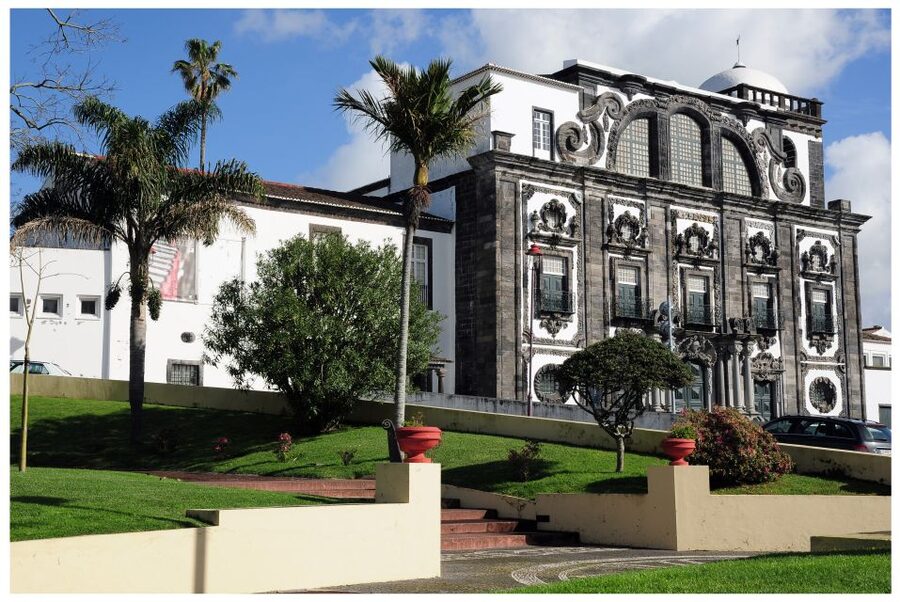
I like the way the tour mixes major sights with less obvious places such as the Padre Sena Freitas Garden and the Palácio da Conceição. I also like that the route includes both culture and practical city orientation, with stops at the Carlos Machado Museum, Forte de São Brás, and Mercado CORES.
The main caution is that the quality of the tour can depend on the guide’s English and approach. Manuela has been praised warmly, but one English-language tour received criticism for unclear speech and too much attention to biblical stories instead of documented history. Saturday visits can also mean some interiors are closed.
Key points at a glance
- Three hours on foot: A compact route gives you a useful first look at central Ponta Delgada without transport between stops.
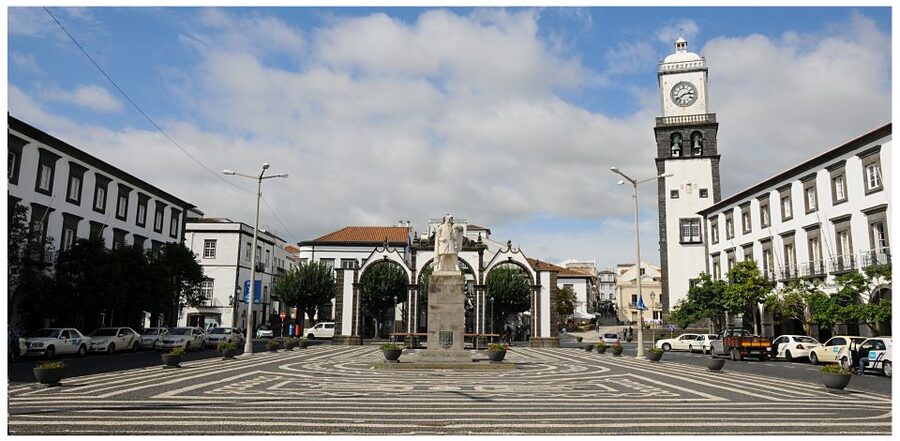
- A good spread of sights: The itinerary includes Mercado da Graça, Teatro Micaelense, the Carlos Machado Museum, Forte de São Brás, and the Portas da Cidade.
- Local guides matter: Manuela has received especially strong praise for her friendly manner and command of the subject.
- Some religious material: Stories connected with churches and Santo Cristo may include biblical or faith-based interpretation, not only secular history.
- Accessible format: The tour is wheelchair accessible, with entry to the listed attractions and insurance included.
- Useful booking flexibility: You can cancel up to 24 hours before the start for a full refund and reserve without paying immediately.
Why this route works for a first look at Ponta Delgada
Ponta Delgada is the capital of São Miguel, but it does not feel like a city you need to conquer in one heroic march. Its center is compact enough for a walking tour, and the best parts are often close together: a market, a church, a formal garden, a theater, and a military fort can all fit into one morning or afternoon.
This tour gives you that structure. Instead of leaving you with a blur of attractive buildings, it explains how the city’s public life developed. You hear about culture at Teatro Micaelense, regional identity at the Carlos Machado Museum, politics at the Palácio da Conceição, religion around Campo de São Francisco, and the sea at Forte de São Brás.
I especially like the mix of grand and ordinary places. The Portas da Cidade is the classic photograph, but Mercado da Graça tells you more about daily life. That balance helps you see Ponta Delgada as a working city rather than just a collection of monuments.
The tour costs $41 per person. That is a fair price if your guide gives clear explanations and the listed admissions are available. You are paying for three hours of interpretation, museum access, and a route that would take more effort to organize on your own. The value is less convincing if several indoor stops are closed or if you mainly want a quick photo walk.
More History Walking Tours in Portugal
- Lisbon: History, Stories and Lifestyle Walking Tour
★ 4.8 · 10,902 reviews - Porto: Historic City Center Walking Tour
★ 4.7 · 1,172 reviews - Porto: Historical Center Walking Tour
★ 4.8 · 898 reviews
Starting beside Luís de Camões
The meeting point is the Ernesto do Canto Public Library, at R. Ernesto do Canto, near the bust of Luís de Camões. This is a useful starting place because it puts you close to the cultural center of town and gives the guide an immediate chance to introduce Portuguese literature and local identity.
You should arrive in comfortable shoes and bring water. The route is accessible, but it remains a three-hour walking tour, so the practical details matter. Wear clothing suited to walking rather than dressing only for photographs.
The opening setting also hints at the tour’s style. This is not simply a march from one famous facade to the next. The guide connects public buildings, writers, religion, politics, and local customs. If you enjoy learning why a place matters, you will get more from this route than from a list of dates.
Mercado da Graça: start with everyday Azorean life
Mercado da Graça is one of the strongest early stops because it gives you a look at local food and trading traditions. Its colors, smells, and produce offer a quick sense of São Miguel that a church interior cannot provide.
I like seeing a market near the start of a city tour. It helps you understand what people buy, cook, and sell, and it gives the guide a natural way to discuss Azorean habits. The market is also a good place to return later if you want local ingredients or a more casual stop during your stay.
Do not expect a full food tour. Lunch is not included, and the focus here is the market as part of Ponta Delgada’s social life. You have time to notice the setting and hear the explanation, but this is not designed as a long tasting session.
The tour eventually returns to Mercado CORES, so you get two different views of local commerce. Mercado da Graça connects you with traditional food culture. Mercado CORES focuses more on crafts, creative work, and present-day Azorean identity.
Theaters and museums explain the city’s cultural side
Teatro Micaelense is the next major cultural marker. The theater represents the performing arts in the Azores and shows that Ponta Delgada’s cultural life is not limited to churches and colonial-era streets.
The route then reaches the Carlos Machado Museum. This is one of the most useful stops for understanding São Miguel beyond its capital. Natural history and regional culture meet here, giving you a chance to connect the island’s environment with the customs that developed around it.
The museum admission is included, which strengthens the tour’s value. A guide can make a museum visit easier by pointing out what matters and explaining how the exhibits relate to the island. Still, the amount you gain will depend on how much time the group spends inside and how clearly the guide presents the material.
One practical point deserves attention: some indoor locations may not be open on every day. A Saturday tour can involve closed stops, so ask about the operating schedule if museum access is a priority. The route remains worthwhile without every interior, but you should not assume that every listed attraction will be fully open at every start time.
Same city, a different century:
- Douro Valley: Historical Sites, Wine Experience, Lunch & Cruise
★ 5.0 · 5,133 reviews - Lisbon: Live Fado Show with Port Wine in Historic Center
★ 4.7 · 4,166 reviews - Lisbon: Fado Show and Wine inside Medieval Walls
★ 4.8 · 3,819 reviews - Porto: An Intimate Fado Show in a Historical Tavern
★ 4.8 · 2,055 reviews
Churches, gardens, and two important Azorean writers
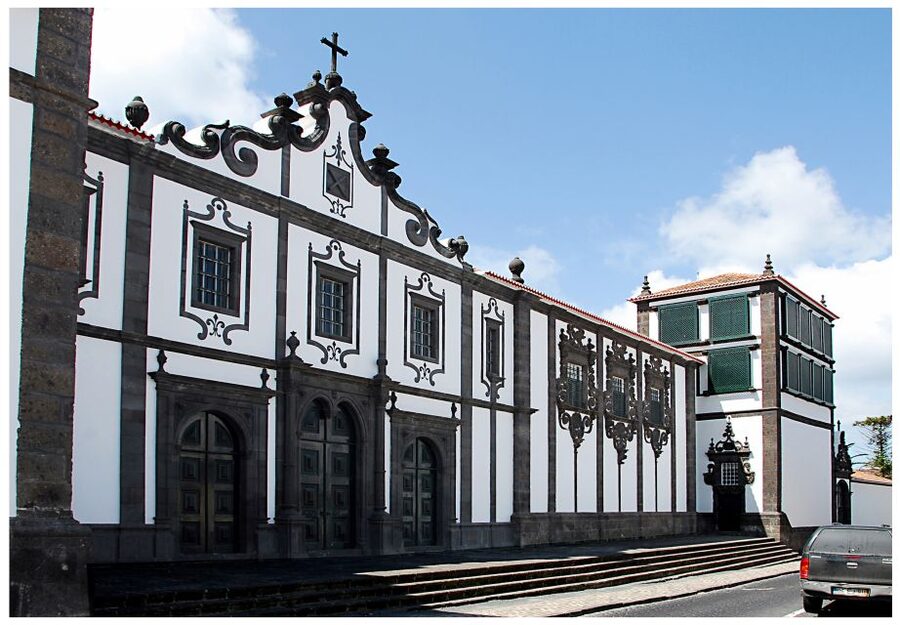
The Igreja do Colégio and the Antero de Quental Garden bring the tour into a more reflective part of the city. You hear about Antero de Quental, a major Portuguese poet, and his influence on Portuguese literature.
The nearby Public Library continues that literary theme. I like this section because it gives Ponta Delgada a voice beyond architecture. The city is not only shaped by trade, religion, and government. Writers and ideas also form part of its identity.
The Padre Sena Freitas Garden provides another change of pace. Gardens can look like minor stops on a busy itinerary, but they give you room to understand how public space works in the city. They also break up the walking with quieter surroundings.
The religious material deserves a clear note. Parts of the route may use biblical stories or faith-based explanations, particularly around churches and religious celebrations. If you want a strictly academic account based on documented political and social history, ask the guide early about the balance between religious tradition and historical evidence.
That is not automatically a flaw. Religion remains important to public life in the Azores, and avoiding it would give you an incomplete picture. The issue is presentation. A strong guide should explain what belongs to belief, what belongs to local tradition, and what can be supported as historical fact.
The Palácio da Conceição and the politics of the islands
At the Palácio da Conceição, the guide discusses Azorean political autonomy and the way authority is divided among the islands. This is a valuable subject because the Azores are not simply one uniform destination. São Miguel has its own role within a wider Atlantic archipelago.
You may find this one of the more useful explanations of the tour, especially if you are unfamiliar with how the islands function politically. The setting helps connect government buildings with the wider question of regional decision-making.
The tour does not present this as an isolated civics lesson. It fits the larger pattern of the route: the market shows daily life, the museum shows regional culture, the gardens and library show public and intellectual life, and the palaces show how the islands are administered.
Coliseu Micaelense and Campo de São Francisco
The Coliseu Micaelense is one of the larger theaters in the archipelago and another sign of Ponta Delgada’s cultural importance. Its inclusion gives the route a sense of scale. You are not only seeing old churches and fortifications, but also places built for large public gatherings and performances.
From there, the route continues to Campo de São Francisco. This open area is closely tied to the Santo Cristo festivities, described as the second-largest religious celebration in Portugal. If you visit during a quiet period, you may not see the event itself, but the guide can explain why this place matters to local religious life.
This is also where the city’s relationship with the sea and its strategic position becomes more visible. Ponta Delgada grew as an Atlantic port, and its public spaces reflect both devotion and maritime concerns.
Forte de São Brás and the city’s Atlantic position
Forte de São Brás gives the tour its clearest military and maritime stop. The fort reflects the need to defend an important island position in the Atlantic, linking local history with the broader story of ships, trade, and strategic power.
The setting is useful because it adds practical context to the city. Ponta Delgada was not built in isolation. Its location brought opportunity, but it also made protection necessary.
The fort also connects to the Santo Cristo festivities through the wider area around Campo de São Francisco. That combination of defense, religion, and public gathering shows how one part of the city can carry several layers of meaning.
Entry to the listed attractions is included, but opening arrangements can vary. If you care most about going inside Forte de São Brás or another specific site, confirm that the visit will be available on your chosen day.
Portas da Cidade and the finish in the old center
The Portas da Cidade is the tour’s obvious visual high point. This symbolic gateway is one of Ponta Delgada’s best-known landmarks and a natural place to understand how the city presents itself to the outside world.
The route then takes in the Câmara Municipal and Igreja Matriz de São Sebastião. Together, they form the civic and religious heart of the city. By this stage, the tour has moved from markets and museums through gardens, government, culture, defense, and worship, so the final central streets feel like a fitting connection between all those themes.
The finish at Mercado CORES adds a modern note. Here, you can look at local crafts and creative projects that express Azorean identity in a current form. It is a useful ending because the tour does not leave you only with the past. It shows how local culture continues to be presented and made today.
Guides, language, and the feel of the group
The tour is offered in English, Portuguese, Scots Gaelic, and Spanish. Guide quality matters greatly on a route with this much cultural and political material. Manuela has been singled out for being friendly and very well informed, and an authentic local perspective is one of the tour’s strongest selling points.
English delivery may vary by guide. One experience was marked down because the explanations were difficult to follow, and the tone felt more solemn than enjoyable. Another tour was described as informative but lacking energy, with a group that had arrived that morning and was tired.
You can improve your own experience by choosing a start time that suits your energy and by telling the guide what interests you. Ask for clear distinctions between folklore, religious belief, and documented history. That small conversation can help shape the tour toward what you came to learn.
The group atmosphere is not fully within the provider’s control, but a guide who allows a short coffee pause or keeps the pace lively can make a real difference. This is a city walk, not a formal lecture, and the best version should leave room for curiosity and conversation.
Accessibility, timing, and what to bring
The activity is wheelchair accessible, which makes this an appealing way to see central Ponta Delgada without arranging separate transport between sights. The route still involves continuous movement through the city, so confirm any personal mobility needs when booking.
The duration is three hours. Pickup and drop-off are not included, which is not a major issue for a central walking tour, but you need to reach the Ernesto do Canto Public Library yourself and arrange your own onward plans from Mercado CORES.
Bring:
- Comfortable walking shoes
- Water
- Comfortable clothing
Insurance for personal accident and liability is included. You can cancel up to 24 hours before the start for a full refund, and the reserve-now, pay-later option helps if your São Miguel plans are still changing.
Should you book this Ponta Delgada walk?
Book it if you want a structured first introduction to the capital, prefer local explanation to sightseeing on your own, and value a route that combines museums, gardens, churches, theaters, politics, and the sea. The $41 price is sensible when the guide is strong and the included attractions are open.
I would be more cautious if you want a purely secular history lesson, dislike religious interpretation, or have only a short time and mainly want photographs at the Portas da Cidade. Ask about the guide’s language fluency and Saturday opening hours before you commit.
For most visitors staying in São Miguel, this is a useful opening walk. It gives you enough context to return to the market, museum, fort, or city center later with better questions and a clearer sense of where you are.
FAQ
Where does the Ponta Delgada Historical Walking Tour begin?
The tour begins at the Ernesto do Canto Public Library, next to the bust of Luís de Camões.
Where does the tour finish?
The walk finishes at Mercado CORES, also associated with Azores for All.
How long does the walking tour last?
The guided tour lasts three hours.
Which languages are available?
The live guide service is offered in English, Portuguese, Scots Gaelic, and Spanish.
Is the tour wheelchair accessible?
Yes, the activity is described as wheelchair accessible.
What is included in the price?
The price includes a guide, entry to the attractions listed for the tour, and personal accident and liability insurance. Lunch, pickup, and drop-off are not included.
Just added around Portugal
- All of Tomar’s history and loads of fun.★ 5.0 · 39 reviews
- Schist Villages and Medieval Castles Tour★ 5.0 · 30 reviews
- Discovering the Roman Ruins of Conímbriga and the Caves of Sicó★ 5.0 · 32 reviews
- Conímbriga Roman Ruins & Museum | Private Tour★ 4.5 · 33 reviews
- Arrábida: Beach, Nature & History★ 5.0 · 89 reviews
- Albufeira Wine Tour: 2 Vineyards, 6 Tastings & Historic Silves★ 5.0 · 123 reviews
- Albufeira History Walking Tour with Wine and Tapas★ 5.0 · 47 reviews
- Albufeira Wine Tasting: Boutique Winery Tour & Historic Silves★ 5.0 · 380 reviews
Portugal History Tours, compared.
Lisbon: History, Stories and Lifestyle Walking Tour
Read our review →
Douro Valley: Historical Sites, Wine Experience, Lunch & Cruise
Read our review →
Lisbon: Fado Show and Wine inside Medieval Walls
Read our review →
Porto: An Intimate Fado Show in a Historical Tavern
Read our review →

Lisbon: Daytime or Sunset Boat Cruise with History and Wine
Read our review →
Porto: Private Tour of the Historic City in a Ford T Car
Read our review →
Browse the lists this tour appears in