
Review · SEVILLE
Seville: Italica Roman Ruins City Tour
Italica gives you something Seville itself cannot: a walk through the remains of the first Roman city founded in Spain. The great amphitheater, built for public spectacles and later used as a Game of Thrones filming site, is the obvious star, but the patterned mosaics and broad ruins of the city make the visit worthwhile.
I like the two-hour format, which gives you enough time to understand the site without turning an outing into an all-day archaeological exercise. I also like the guide-led approach. Guides such as Juanra, Miguel, Jesus, Carlos, Manuel, and Barbara have been praised for making the stones, stories, and mosaics easier to picture.
The main thing to watch is timing. A large mixed-language group can make the tour longer, and one recent visit began 15 minutes late because a coach had not arrived. If your day in Seville is tightly planned, that small delay may matter.
Key points to know before visiting Italica
- Spain’s first Roman city: Italica was founded in 206 BC after the Battle of Ilipa.
- Imperial connections: The city is linked with emperors Trajan and Hadrian, who were born here.
- A memorable amphitheater: You can walk through the arena, passageways, and viewing points used in several Game of Thrones scenes.
- Mosaics are a major draw: The preserved floor designs in the old homes are among the most rewarding details on the site.
- Easy to pair with Seville: Italica is about 8 kilometers northwest of the city, in Santiponce.
- Good value at $21: The price includes the entrance ticket and a live guide, but not transport, food, or drinks.
Why Italica makes a strong half-day outing from Seville
Many visitors come to Seville for its cathedral, Alcazar, and flamenco. Those sights are rightly popular, but Italica offers a different kind of experience. Here, you walk through an ancient Roman settlement rather than looking at Roman objects in a museum.
The site was founded in 206 BC after the Battle of Ilipa, making it the first Roman city established in Spain. Centuries later, it became associated with Trajan and Hadrian, two of Rome’s most important emperors. That connection gives the ruins more weight than a simple collection of broken walls. You are walking through a place tied to the highest level of Roman power.
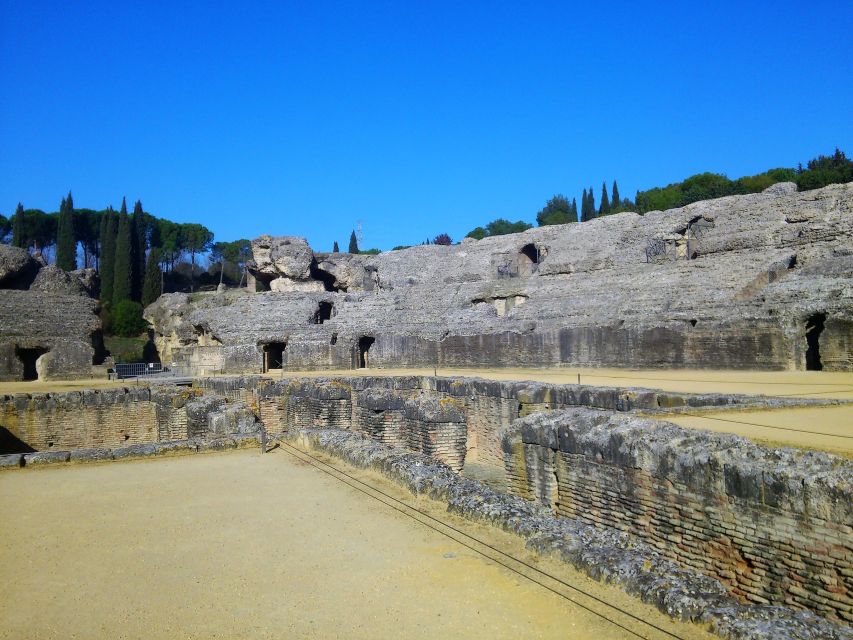
I find the setting most rewarding when you slow down and look at the layout. The remains are not only a single monument. They include the amphitheater, streets, houses, and floor mosaics. The scale helps you picture Italica as a functioning city, even though much of it survives only at foundation level.
At $21 per person, the tour is priced sensibly for a two-hour guided visit. You are paying for the entrance ticket as well as someone to explain what you are seeing. If you went alone, you would still reach the site, but you could easily miss why certain areas mattered or how the ruins fit together.
The cost does not include your ride from Seville to Santiponce. You need to arrange that separately, so the true cost of the outing will be a little higher. Still, the basic tour price is modest for a major archaeological site with a guide and skip-the-line entry.
More Archaeological Site Tours in Spain:
- Cordoba: Medina Azahara Museum and Archaeological Site Tour
★ 4.8 · 199 reviews - Madrid: Archaeological Museum E-Ticket and Audio Guide
★ 4.3 · 115 reviews - Pompeii: Entry Ticket and Guided Tour with an Archaeologist
★ 4.8 · 19,459 reviews
Meeting your guide at Avenida de Extremadura
The meeting point is the main entrance to the Italica archaeological site at Avenida de Extremadura 2, 41970 Santiponce, Seville. The guide waits there rather than collecting you from central Seville, so you need to plan the trip to Santiponce yourself.
That detail is easy to overlook when you are booking from Seville. The tour is not a hotel pickup, and transport is not included. Give yourself enough time to reach the entrance before the stated start. One delayed group lost about 15 minutes when a coach arrived late, so it is wise not to place a major timed attraction immediately after this tour.
The guide-led start is useful once you arrive. You do not have to find your way through a large site or work out where to begin. The tour opens at the entrance and then moves into the main archaeological area.
Tours are offered in English, Spanish, French, and Italian. Private and small-group options are available, but group size can affect the pace. A smaller group usually makes it easier to hear explanations and ask questions. A larger mixed-language group may require repeated explanations and longer stops.
Italian and French departures need a minimum number of participants to operate. If that number is not reached, you can switch to another available language or receive a full refund. That is worth checking if you have booked one of those language options and your schedule is fixed.
The amphitheater: Italica’s most dramatic stop
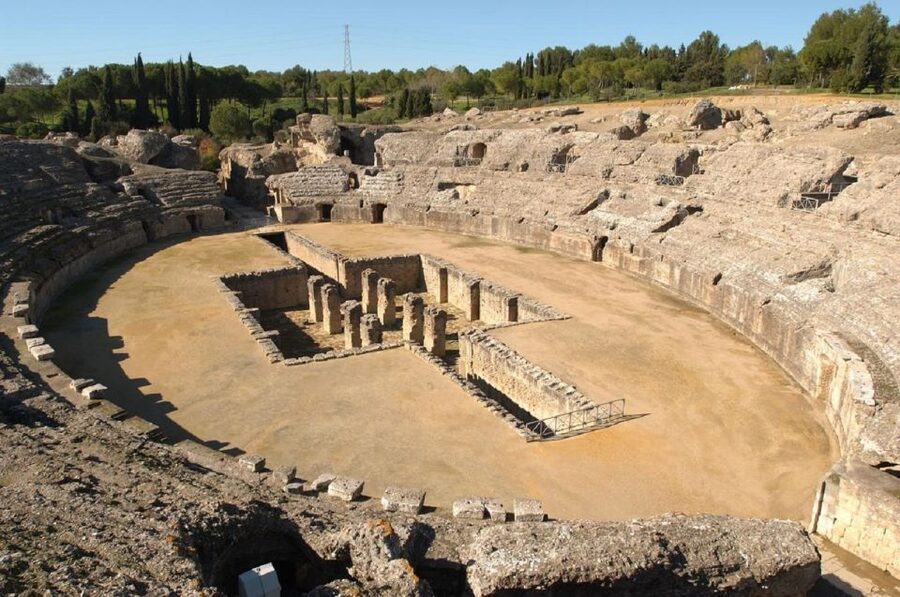
The amphitheater receives about 15 minutes of the stated tour time, but its impact is immediate. This is the place most people recognize from photographs, and it is also the section connected with Game of Thrones.
You enter a huge oval arena surrounded by the remains of seating and passageways. The basic shape is still clear, so you can understand how crowds moved through the building and how the arena was organized. The stone is weathered, but the structure remains strong enough to suggest the noise and spectacle that once filled it.
The Game of Thrones connection may bring you here, but it should not be the only reason you come. Film locations can feel smaller or less dramatic in person than they appear on screen. At Italica, the ancient structure itself is the real attraction. The television connection simply gives you a familiar way into the site.
You may have a chance to look into the arena from several angles. One visitor found the passageways and viewing points especially memorable after the guided portion ended. That is useful advice: do not rush away the moment the formal explanation finishes. If the schedule allows, take a little time to notice the entrances, corridors, and views down into the arena.
The amphitheater is also where the tour’s storytelling matters most. A good guide can help you imagine the building as a public venue rather than a quiet ruin. Guides including Carlos, Manuel, and Juanra have been praised for energetic delivery, clear English, and vivid explanations. Guide assignments can change, but the tour is built around that live interpretation.
Houses and mosaics reveal the city’s finer side
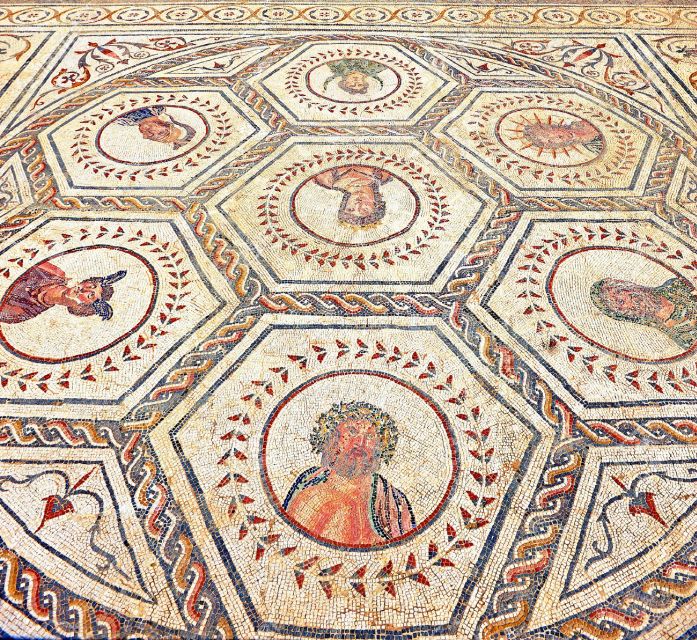
After the amphitheater, about 75 minutes are devoted to Italica itself. This is the longer and, in some ways, more rewarding part of the visit.
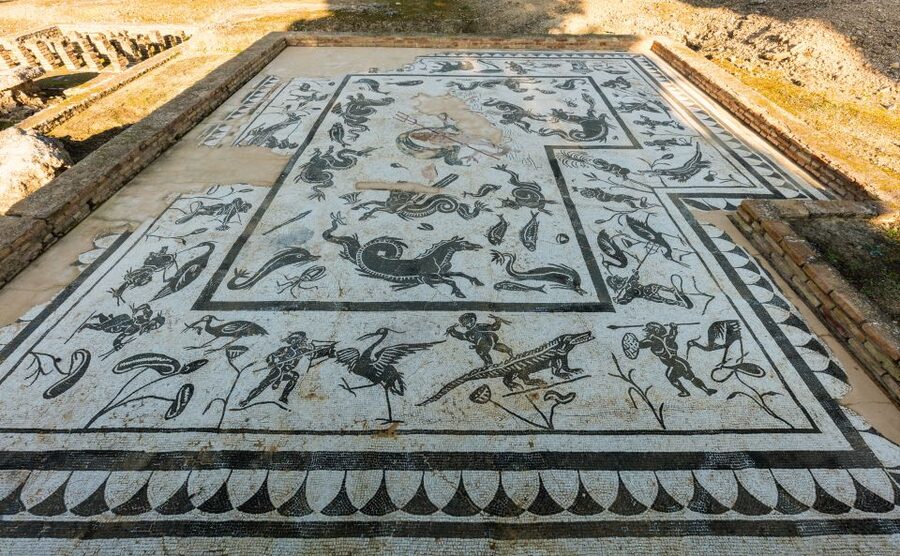
The ancient city includes the remains of homes with striking floor mosaics. These are not minor decorative scraps. Their patterns and preserved sections give you a direct look at the taste and resources of the people who lived here. Against the pale stone of the ruins, the tile work provides color, order, and detail.
I would pay close attention during this part of the tour, because it is easy to focus only on the amphitheater and miss the houses. The mosaics help explain how Roman life reached beyond emperors and public games. A floor inside a private home can tell you about design, status, and daily surroundings in a way that a fallen wall cannot.
The guide walks you through the remains and places individual features within the larger city. You will not simply stop for photographs and move on. The point of the 75-minute section is to connect streets, buildings, and mosaics so the site feels like a city rather than a set of isolated ruins.
Previous guide experiences have varied slightly in emphasis. Paul appreciated a personal approach that placed family life in a useful context, though he would have liked a little more site history. That is a fair expectation to bring with you. A good tour should make the place human, but it should also explain the wider Roman setting.
If you enjoy archaeology, architecture, or design, this section may become your favorite. If you mainly want the famous amphitheater, you should still stay with the group. The residential ruins are where Italica gains depth.
More History Tours in Spain:
- Madrid Essential: Historic Center, Plaza Mayor & Royal Palace
★ 5.0 · 6,416 reviews - Montserrat with Black Madonna & Medieval Winery with Tapas/Lunch
★ 5.0 · 5,209 reviews - Barcelona: Tapas Walking Tour with Food, Wine, and History
★ 4.8 · 4,261 reviews - Sevilla Food Tour: Tapas, Wine, History & Traditions
★ 5.0 · 3,468 reviews
How the guide affects the experience
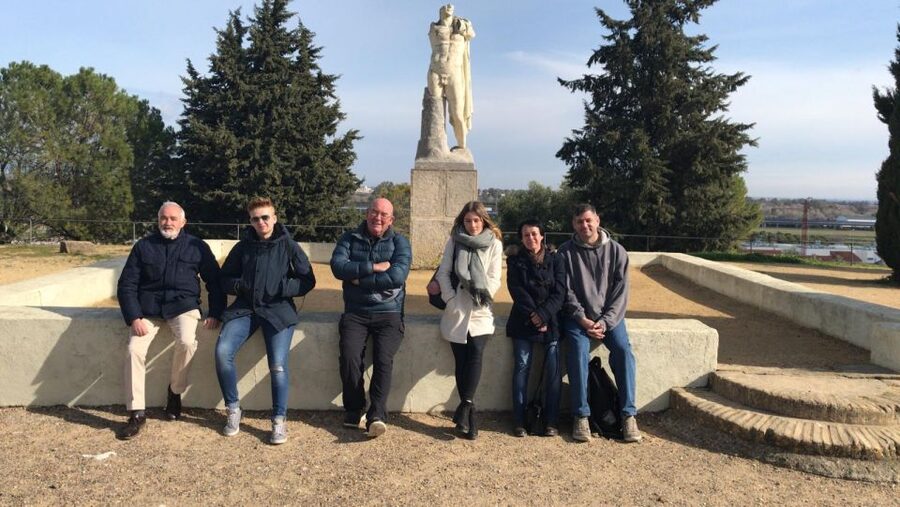
This is not a self-guided walk with a few facts added at the entrance. The guide shapes the entire visit, and the strongest praise has focused on clear explanations, enthusiasm, and the ability to answer questions.
Manuel, for example, has been described as fluent in English and able to respond to questions without breaking the flow of the tour. Barbara was appreciated for explaining the site at each stop and adding useful context. Jesus was praised for making the ruins feel alive, while Carlos was noted for an engaging and passionate style. Juanra was singled out for enthusiasm and stories about the mosaics.
These names give you an idea of the guiding style to expect, but you may not receive any particular guide on your date. The important point is that this activity depends heavily on live interpretation. If your guide is strong, the remains become far easier to understand. If the explanation is brief or hurried, the visit may feel more like a walk through foundations.
Language planning matters. English and Spanish tours have more reliable availability according to the stated conditions. French and Italian tours require a minimum number, so keep the alternative-language option in mind when you book.
Mixed-language groups can create a practical problem. One visit included both French and English speakers, and the repeated explanations made the tour longer. This is not a reason to avoid the activity, but it is a reason to allow breathing room in your schedule.
Group size, timing, and the pace of the walk
The tour lasts two hours. That is long enough to cover the main highlights and short enough to fit into a day of sightseeing around Seville.
The pace should suit most people who enjoy a normal guided archaeological visit, but the site requires walking outdoors. You will move between the amphitheater and the wider city remains, stopping for explanations and photographs. The supplied information does not specify accessibility details, so you should ask the provider directly if you have mobility concerns.
Group size can make a noticeable difference. Small groups are easier to hear and make questions more practical. A private tour gives you more control over the pace, but the price and availability may differ from the standard option.
A delayed start is the main timing concern. One group began 15 minutes late because of a coach arrival, and a large group later pushed the schedule out. If you have dinner reservations, a train, or another timed ticket, leave a buffer after Italica.
The positive side of the fixed two-hour length is that the guide has a clear route. You are less likely to wander without seeing the main areas, and you can make good use of the visit even if you have only part of a day free.
Is the $21 price good value?
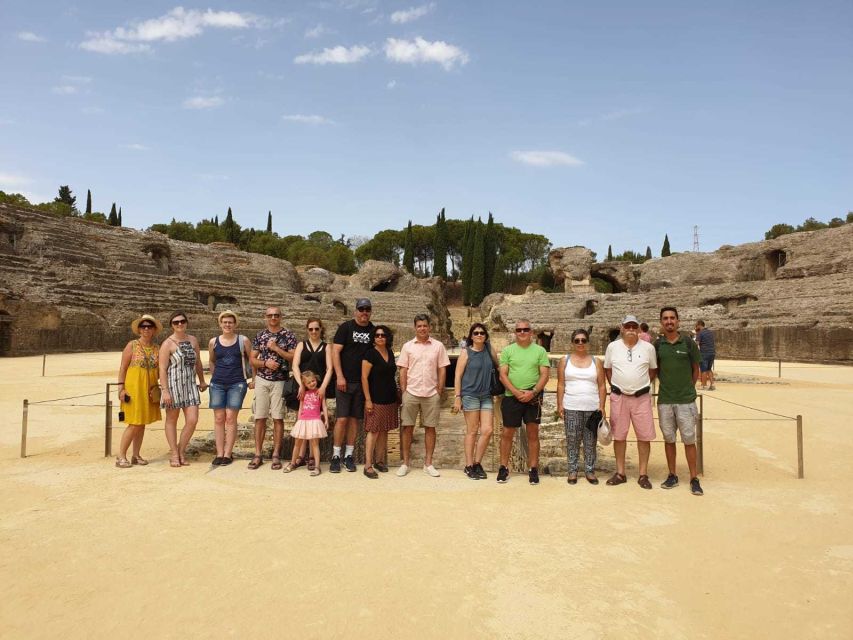
At $21, this is a good-value introduction to Italica, especially if you want context rather than just admission. The entrance ticket is included, and skip-the-line access means you can go directly to the meeting point inside the attraction process instead of dealing with a separate ticket queue.
The price does not cover transport to Santiponce. That is the one major extra to account for. Food and drinks are also not included, though a two-hour tour is short enough that this should not complicate your day.
I would call the tour especially good value for first-time visitors to Italica. You get a clear route, a dedicated guide, and explanations of both the amphitheater and the residential remains. Repeat visitors who already know the site may prefer exploring alone, but even they could appreciate a private guide if they want to ask detailed questions.
The skip-the-line feature is helpful, but it is not the only reason to book. The real value is the interpretation. Roman ruins rarely explain themselves, and Italica covers enough ground that a guide can save you from missing the most important details.
Who should book this Italica tour?
I would recommend it to anyone staying in Seville who has an interest in Roman history, archaeology, ancient architecture, or Game of Thrones filming locations. Families can also benefit because a guide gives younger visitors a story to follow instead of leaving them with silent stones and dates.
It suits you if you prefer a structured visit and want the main site explained in two hours. It is also a good fit if you do not want to spend time arranging an independent route once you reach Santiponce.
You may want to skip it if your Seville schedule is packed tightly or if you dislike group tours. The trip requires separate transport, and a delayed start or repeated language explanations can affect your timing.
I would also think twice if you expect a large, fully restored Roman city. Italica is an archaeological site, not a reconstructed theme park. You will see impressive remains, but you will also see foundations, partial walls, and open ground. The mosaics and amphitheater provide the strongest visual rewards.
Practical advice for making the most of your visit
Arrive at the main entrance with enough time to find the guide. The address is Avenida de Extremadura 2 in Santiponce, not a central Seville meeting point.
Keep your schedule flexible after the tour. A two-hour duration is the planned length, but group size, language needs, or a late coach can add time.
Stay attentive during the city section. The amphitheater is the headline attraction, but the mosaics and houses are what show you how people lived in Italica.
If you are offered time to look around after the formal explanation, use it. The arena’s passageways and viewing points reward a slower look, and the mosaics deserve more than a quick photograph.
Choose your language carefully. Spanish and English are listed options, while French and Italian may depend on minimum numbers. If your preferred language does not operate, you can choose another language or receive a full refund.
Cancellation is flexible up to 24 hours before the tour for a full refund, and you can reserve now and pay later. Those terms are useful if your Seville plans are still changing.
Should you book the Italica Roman Ruins City Tour?
Yes, if you want an easy, guided introduction to one of Andalusia’s most important Roman sites. The amphitheater is memorable, the mosaics add real detail, and the two-hour length fits neatly into a Seville itinerary.
Book it with a little time around the edges. Arrange your own transport to Santiponce, expect some outdoor walking, and do not schedule another must-see attraction immediately afterward.
At $21, the combination of admission and live explanation is strong value. I would choose this tour over simply arriving alone if you want the ruins to make sense. Go independently only if you already know the site well or prefer setting your own pace.
FAQ
Where does the Italica tour meet?
The meeting point is at the main entrance to the Italica archaeological site, Avenida de Extremadura 2, 41970 Santiponce, Seville.
How long does the tour last?
The tour lasts two hours. The planned visit includes about 15 minutes at the amphitheater and about 75 minutes exploring the wider Italica site, with time for movement and explanations.
Is transport from Seville included?
No. Transport to the meeting point is not included, so you need to arrange your own way to Santiponce.
Which languages are available?
Tours are available in Spanish, English, French, and Italian. French and Italian tours require a minimum number of participants to operate.
Is the entrance ticket included?
Yes. The skip-the-line entrance ticket and a local guide are included. Food and drinks are not included.
Can I cancel the booking?
Yes. You can cancel up to 24 hours in advance for a full refund. You can also reserve now and pay later.
Just added around Spain
- Visita Guiada Por El Casco Histórico De Cuenca Y Su Catedral★ 5.0 · 45 reviews
- Night Walking Tour of Medieval Cuenca★ 5.0 · 64 reviews
- Mosque of Cordoba History Tour in English Tickets included★ 5.0 · 257 reviews
- 2 Hours Tour around Cádiz: History, anecdotes and curiosities★ 5.0 · 89 reviews
- Jerez de la Frontera History and Art Walking Tour★ 4.5 · 49 reviews
- Bilbao Historical Small Group Tour★ 4.5 · 159 reviews
- The Authentic Bilbao Pintxos, Food & Wine Tour with a Local★ 5.0 · 360 reviews
- Girona, Costa Brava and Medieval Village from Barcelona★ 5.0 · 149 reviews
Seville History Tours, compared.
Sevilla Food Tour: Tapas, Wine, History & Traditions
Read our review →
Ultimate Seville Tapas, Wine & History Small Group Tour
Read our review →
From Seville: Italica Roman City & Medieval Monastery Tour
Read our review →
Seville: Tapas, Taverns, and History Walking Tour
Read our review →
Seville Evening Historical Tour with Haunted History
Read our review →
Historic Gibraltar Rock and St Michael’s Cave Tour from Seville
Read our review →
Seville: Tapas, Taverns and History Guided Walking Tour
Read our review →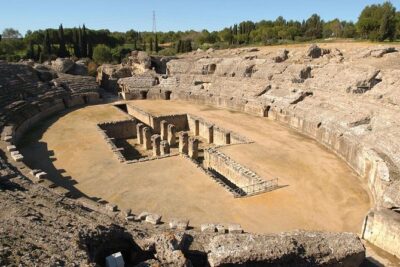
Historical Italica: Half-Day Guided Tour from Seville
Read our review →Browse the lists this tour appears in