
Review · SPAIN
Tarragona: Roman Heritage Guided Walking Tour
Tarragona’s Roman past is not tucked away in one museum. It is built into the city, with ancient walls beside modern streets and an amphitheater looking out toward the Mediterranean. This two-hour guided walk connects those pieces in a way that helps you understand the city’s Roman plan.
I like the visit to the Circus vaults, where you can picture chariot races beneath the old stadium. I also like the seaside setting of the Amphitheater and the large city model, which gives you a useful sense of how Roman Tarragona once worked. The main drawback is time: two hours can feel short, especially if the group is large or the guide needs to explain in both Catalan and Spanish.
Key points at a glance
- The Roman walls begin the story: Learn why Tarragona was placed on a hill above the Mediterranean and why its walls are among the oldest Roman walls outside Italy.
- The Circus vaults bring ancient sport to life: The underground spaces offer a clear link to the chariot races once held here.
- The city model makes the ruins easier to read: You can see how Roman buildings fit into the modern streets and squares.
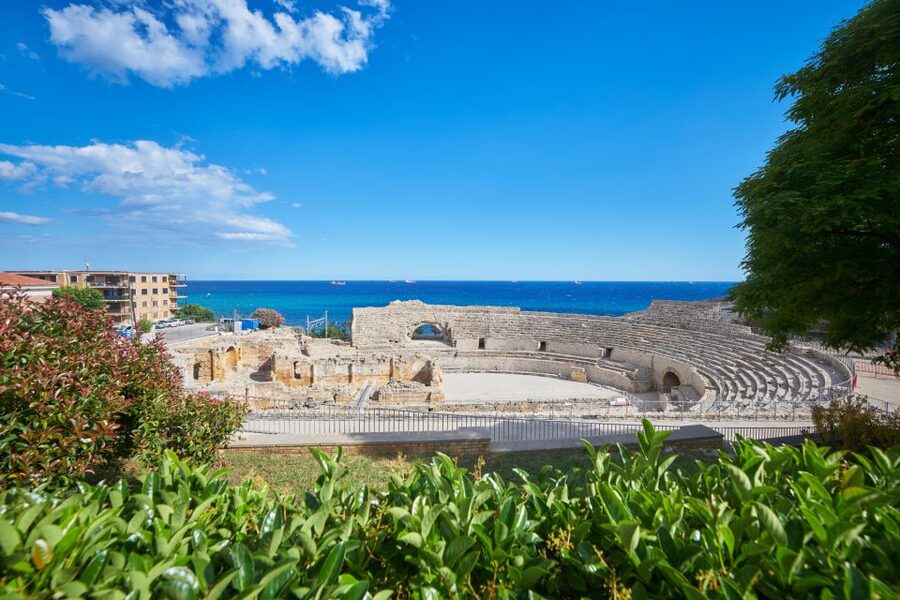
- The Amphitheater combines ruins and sea views: This is the tour’s most striking setting, with Roman entertainment once staged beside the water.
- Adrià has earned strong praise: His clear explanations, local pride, and well-used audiovisual presentation have made a particularly good impression.
- The pace is brisk: Comfortable shoes matter, and you should leave luggage or large bags behind.
Tarragona’s Roman story begins at the city walls
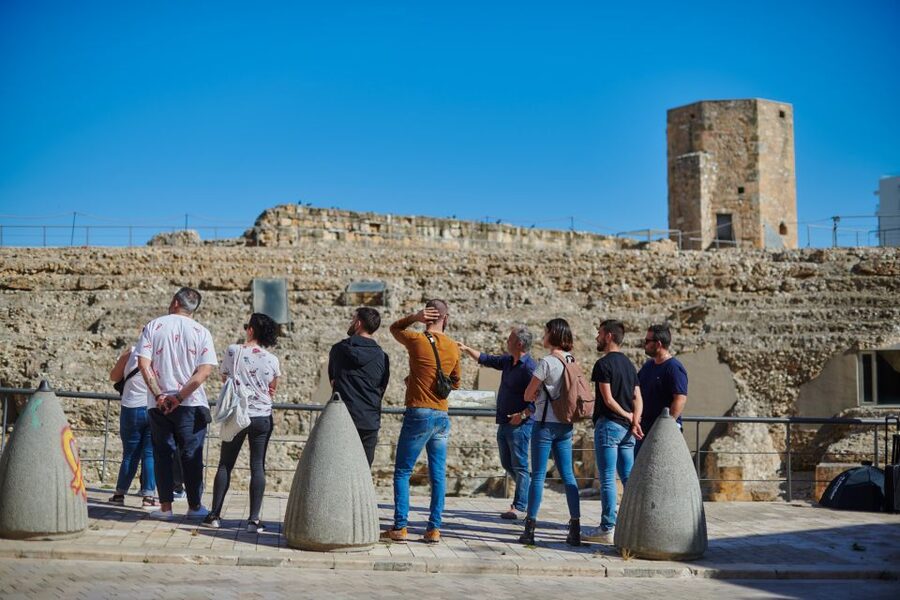
Your meeting point is the Itinere office beside the Roman walls. Arrive 10 minutes early, since the tour begins here and the opening explanation sets up everything that follows.
The walls are more than a quick photo stop. They explain why Tarragona mattered in the first place. The Romans chose this hill beside the Mediterranean as a gateway to the wider peninsula. From this high ground, the city could serve as an important base while also connecting land routes with the sea.
The guide introduces the Roman history of the region beside these defenses. You will hear why this location was useful and how the city’s position shaped its growth. The walls are described as the oldest Roman walls outside Italy, which gives this first stop real weight. You are not just looking at a surviving stone barrier. You are looking at the early edge of Roman power in this part of Spain.
I like beginning here because the walls provide scale. Tarragona’s Roman remains are spread through the modern city, and without some context, it is easy to treat each ruin as a separate sight. The opening talk helps you see them as parts of one planned Roman center.
There is also a practical point. The tour involves walking through the historic center and visiting ancient sites, so good shoes are important. The route is listed as wheelchair accessible, but the experience still takes place around historic remains, streets, and underground spaces. If mobility is a concern, confirm the exact route conditions with the provider before booking.
More History Walking Tours in Spain
- Barcelona: Tapas Walking Tour with Food, Wine, and History
★ 4.8 · 4,261 reviews - Barcelona Tapas Walking Tour: Food, Wine & History
★ 4.5 · 1,928 reviews - Madrid Historical Walking Tour
★ 5.0 · 721 reviews
The Circus vaults and the city’s ancient crowd
The next major stop is the Roman Circus. Admission to the Circus is included, which makes the $17 price easier to justify. You are not paying only for an outdoor walk and a few general explanations. You also enter one of Tarragona’s most memorable Roman spaces.
The Circus was connected with chariot racing, one of the great public spectacles of the Roman world. The surviving vaults help you picture the structure that once handled crowds, movement, and the machinery of a huge public event. The guide uses this space to help you relive the excitement of the races without reducing the stop to a simple list of dates.
I find underground remains especially useful in Tarragona because they show how much of the Roman city is below or inside the modern one. Ancient walls, vaults, and foundations do not always announce themselves from street level. Inside the Circus, the connection between the surviving structure and the Roman city becomes clearer.
The stop also shows the tour’s strength and its limitation. A guide can explain how the Circus functioned and point out details you could easily miss alone. But the entire walking tour lasts only two hours. If you want time for long photographs, close inspection, and a slow reading of every display, the schedule may feel tight.
One January booking described the tour as full but too short, suggesting that three hours would allow a more relaxed visit. That is useful advice for planning. Think of this as a strong introduction to Tarragona’s Roman monuments, not a leisurely archaeological study.
A modern city built over Roman Tarragona
The route continues into Tarragona’s historic center, where Roman remains are woven into today’s houses, streets, and squares. This is one of the most valuable parts of the experience because it shows how an ancient city can remain part of ordinary urban life.
You are not walking through an isolated ruin park. You are moving through a living city while the guide points out how Roman structures relate to the streets around you. That setting helps explain why Tarragona feels different from a single-site archaeological attraction. The past appears in fragments, sometimes beside modern buildings and sometimes below the level of the current street.
A large city model gives the guide a chance to reconstruct the old Roman layout. This is more than a decorative model. It helps you understand where the main buildings stood, how the public spaces fit together, and what each structure was used for.
I particularly like this kind of explanation because ruins can be difficult to read. A wall fragment tells you that something once stood there, but a model can show the shape and purpose of the original building. For a first visit, that visual aid can save you from wandering around with only a vague idea of what you are seeing.
The guide also explains the functions of the Roman buildings. That matters. You learn not only what survived, but how the city operated. The result is a more useful mental map of Tarragona, even if you later explore the monuments at your own pace.
Still, expect the modern streets to bring some noise and distraction. One difficult experience involved a crowded departure with several groups leaving around the same time, making it hard to follow the guide. That may not happen on every outing, but it is worth knowing that group conditions can affect the clarity of the commentary.
The audiovisual presentation before the Amphitheater
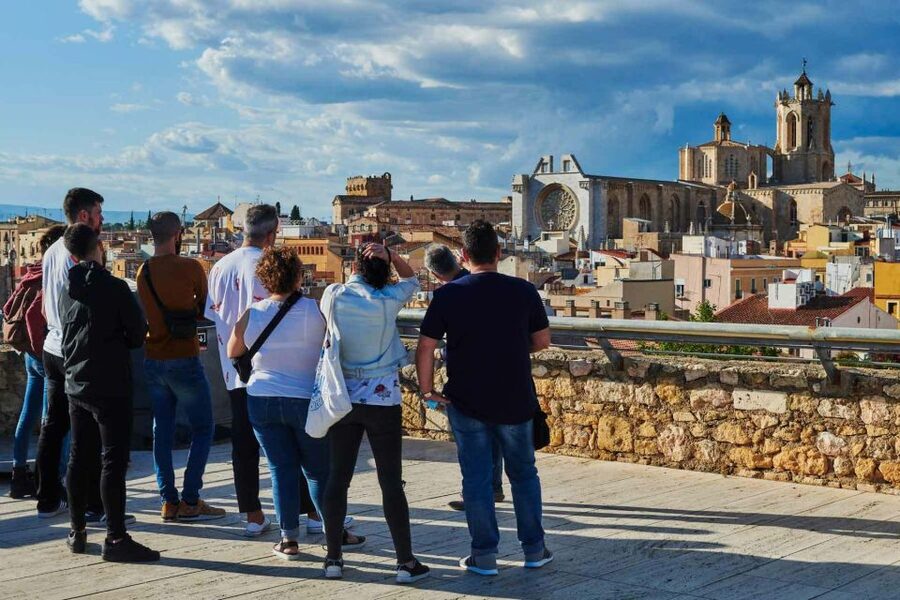
Before heading to the Amphitheater, you watch an audiovisual exhibit with 3D images. The presentation helps fill in what the ruins can no longer show. It is particularly useful for imagining the original form of the stadium and the events held there.
This part of the tour gives you a pause from walking and adds a visual layer to the guide’s explanation. Adrià received special praise for making the material clear and for using the video well. Several comments also point to his enthusiasm and pride in Tarragona, qualities that can make a difference when the subject involves fragments, foundations, and reconstructed plans.
The strongest guide-led sightseeing does not simply provide more facts. It gives you a way to picture the missing pieces. Here, the 3D material can help you imagine the Amphitheater before you reach it, so the actual ruins make more sense.
The language choice is important. The live tour is offered in Catalan or Spanish, and those are the languages identified for the experience. If you are comfortable in one of them, you can expect the guide to explain the monuments directly. If not, this may not be the right tour for you, since no other live-tour language is listed.
Same city, a different century:
- Madrid Essential: Historic Center, Plaza Mayor & Royal Palace
★ 5.0 · 6,416 reviews - Montserrat with Black Madonna & Medieval Winery with Tapas/Lunch
★ 5.0 · 5,209 reviews - Sevilla Food Tour: Tapas, Wine, History & Traditions
★ 5.0 · 3,468 reviews - Valencia Old Town Tour with Wine & Tapas in 11th Century Historic Monument
★ 5.0 · 3,234 reviews
The Amphitheater beside the Mediterranean
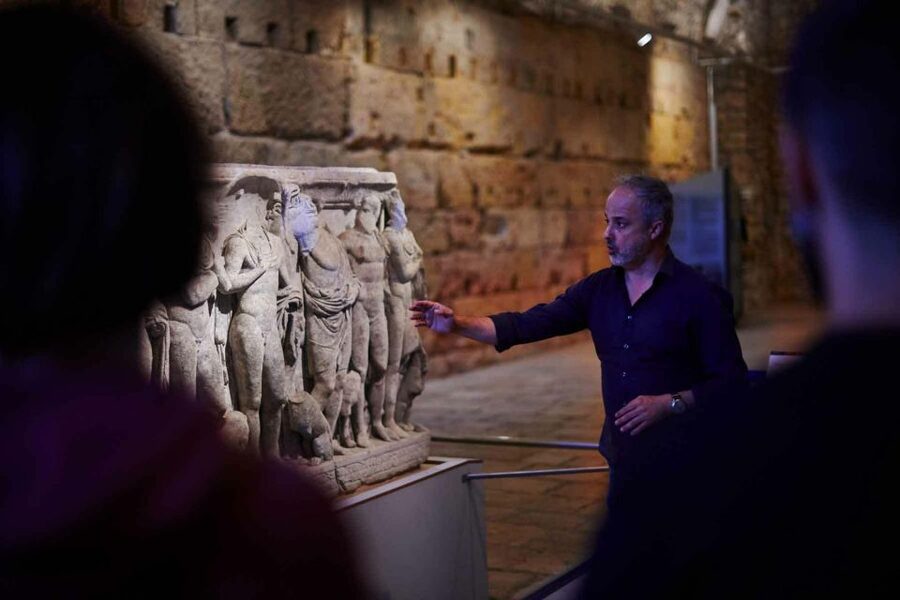
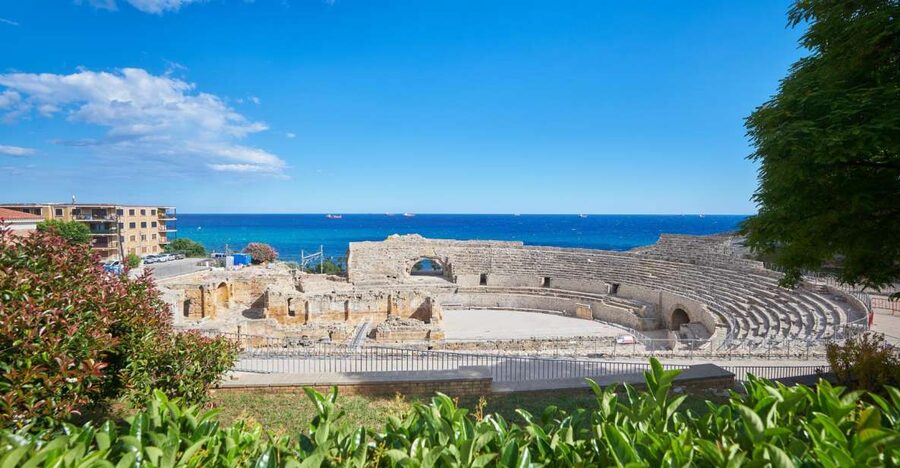
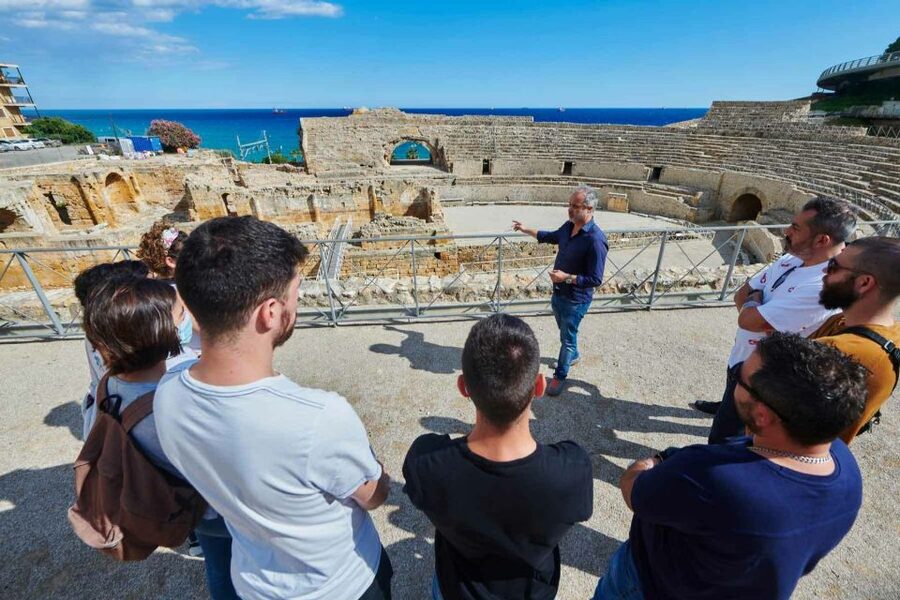
The final major stop is the Amphitheater, set beside the sea. This is likely to be the tour’s visual high point. Ancient stone, open sky, and the Mediterranean create a powerful setting that explains why the site remains so memorable.
The guide covers the gladiator fights and animal hunts held here in ancient times. These were public spectacles designed for a large audience, and the setting makes it easier to understand the theater’s role in Roman society. The tour also covers the stadium’s later history, so the site is not treated as a frozen Roman scene.
The sea view adds something that a guidebook diagram cannot. From the Amphitheater, you can connect the city’s Roman planning with its coastal position. The Romans did not build here at random. The hill, the sea, the walls, and the public buildings all form part of Tarragona’s larger story.
I would save a little attention for the view, not just the arena itself. The tour is still guided, so you may not have unlimited time to linger, but this is the place where the setting does much of the explaining.
The Amphitheater can also be the busiest-feeling part of the route. A large group may gather around the guide, and noise can make it harder to catch every sentence. If the guide is speaking to a crowded group, move close enough to hear without blocking other people. This small choice can make the final stop much more rewarding.
What the guide adds to the experience
The official city guide is central to the value of this walk. Tarragona’s Roman monuments are worthwhile on their own, but the connection between them is not always obvious when you explore independently.
Adrià has been especially well received for clear explanations and an evident affection for his home region. One January tour held in heavy rain was still judged satisfactory, which suggests that the guide and route can carry the experience even when the weather is poor. Still, rain will make historic streets and outdoor stops less comfortable, so pack accordingly.
The feedback is not uniformly glowing. One outing was weakened by a guide who struggled to keep the explanation organized, along with heavy noise from several groups starting at once. That is a fair caution. A guided walk depends on the person leading it, the size of the group, and the sound level around the monuments.
The overall rating of 4.7 from 261 reviews points to a consistently strong experience, but you should read that number in context. The best moments come from clear guiding, the model, the audiovisual presentation, and the Amphitheater setting. The weaker moments come from a short schedule, crowding, or a guide whose delivery is less focused.
Is $17 a good value for two hours?
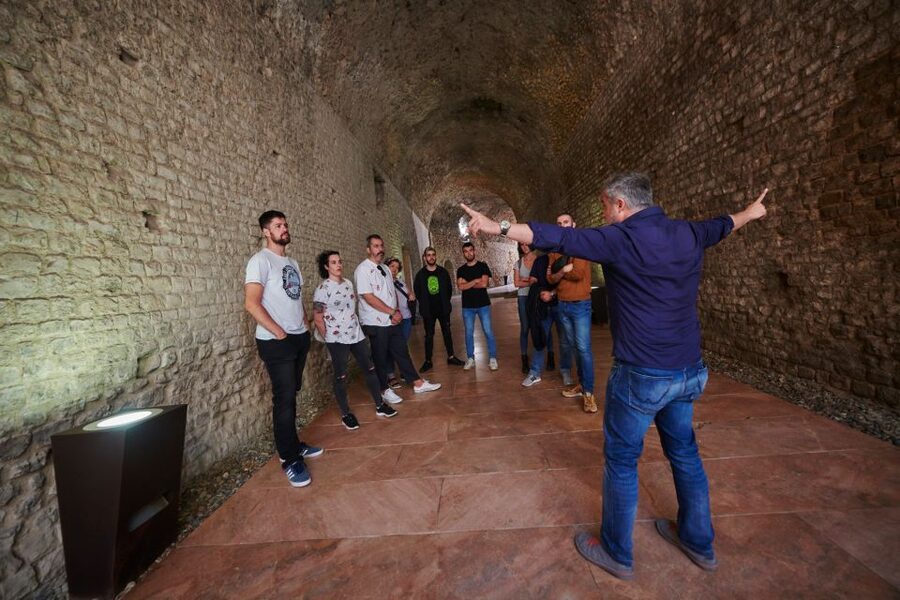
At $17 per person, this is a reasonable introduction to Tarragona’s Roman center. The price includes a guided city walk and entrance to the Circus, while the route also covers the walls, historic center, audiovisual exhibit, and Amphitheater.
The value is strongest if you want orientation. A first-time visitor can learn how the monuments relate to one another instead of spending the day guessing at the Roman layout. The guide’s explanations also reduce the need to arrange separate visits and research each site before arriving.
The value is lower if you prefer a slow, independent pace. Two hours does not leave much room for lingering, and the guide may need to keep the group moving. If you want detailed archaeology, extended photography, or a quiet look at every ruin, you may want to return to the sites on your own afterward.
The reserve-now-and-pay-later option is useful if your schedule is still shifting. You can hold a place without paying at the time of booking, and cancellation is free up to 24 hours before the activity for a full refund.
Who should book this Tarragona walk?
I would recommend it to a first-time visitor who wants a clear introduction to Roman Tarragona without spending a full day on archaeology. It also suits anyone who likes seeing ancient remains in their modern setting rather than visiting only a sealed museum or isolated ruin.
Families and mixed-interest groups may find the city model, chariot-racing theme, 3D presentation, and gladiator stories easier to follow than a long technical lecture. The two-hour length is manageable, though the pace may feel brisk for anyone who needs frequent breaks.
You should think twice if you need a tour in a language other than Catalan or Spanish, or if you want a small, quiet group. You should also leave large bags and luggage behind, since they are not allowed. Comfortable shoes are essential.
My recommendation
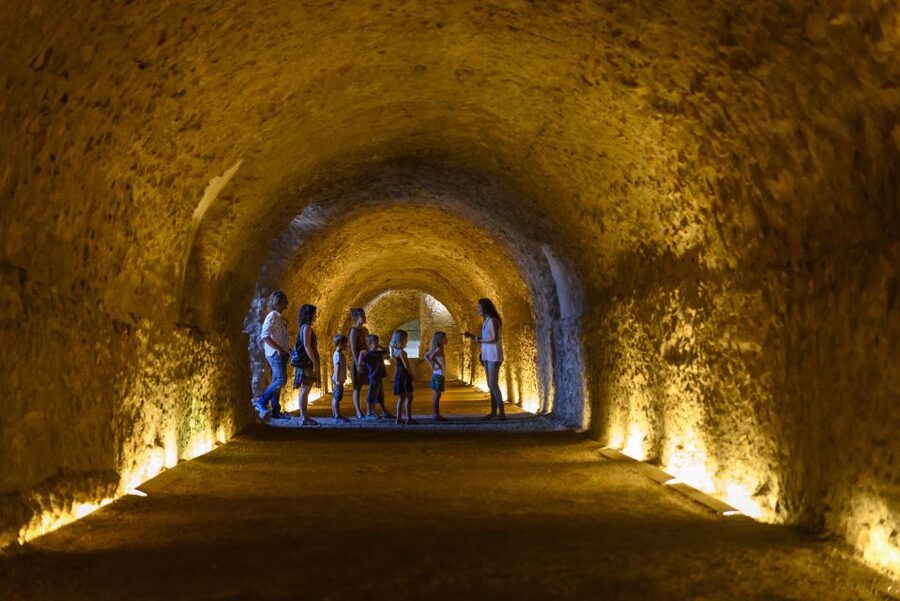
Book this tour if you want the Roman basics presented in a logical order: walls first, Circus vaults next, then the city model and audiovisual material, ending beside the sea at the Amphitheater. The price is fair, and the route gives you both context and memorable settings.
Go in expecting an introduction, not an exhaustive archaeological visit. Try to arrive early, stay close enough to hear the guide, and allow extra time afterward if you want to revisit the Amphitheater or inspect the Roman remains at your own pace. If Adrià is leading, you may get the particularly clear and warm presentation that has made this tour a favorite for many people.
FAQ
Where does the tour meet?
Meet at the Itinere office next to the Roman walls in Tarragona.
How early should I arrive?
Arrive 10 minutes before the activity begins.
How long does the tour last?
The guided walk lasts two hours.
What is included in the price?
The price includes the guided tour of Tarragona and entrance to the Circus.
Does the tour visit the Amphitheater?
Yes. The route ends at the Amphitheater beside the sea, where the guide discusses gladiator fights, animal hunts, and the site’s later history.
What languages are available?
The live tour is offered in Catalan and Spanish.
Is the tour wheelchair accessible?
Yes, the activity is listed as wheelchair accessible.
Can I cancel for a full refund?
Yes. You can cancel up to 24 hours before the activity for a full refund.
What should I bring, and what is not allowed?
Bring comfortable shoes. Luggage and large bags are not allowed.
Just added around Spain
- Night Walking Tour of Medieval Cuenca★ 5.0 · 64 reviews
- Visita Guiada Por El Casco Histórico De Cuenca Y Su Catedral★ 5.0 · 45 reviews
- Mosque of Cordoba History Tour in English Tickets included★ 5.0 · 257 reviews
- 2 Hours Tour around Cádiz: History, anecdotes and curiosities★ 5.0 · 89 reviews
- Jerez de la Frontera History and Art Walking Tour★ 4.5 · 49 reviews
- Bilbao Historical Small Group Tour★ 4.5 · 159 reviews
- The Authentic Bilbao Pintxos, Food & Wine Tour with a Local★ 5.0 · 360 reviews
- Girona, Costa Brava and Medieval Village from Barcelona★ 5.0 · 149 reviews
Spain History Tours, compared.
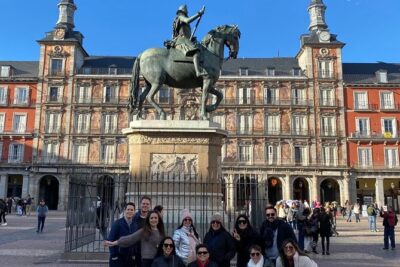
Madrid Essential: Historic Center, Plaza Mayor & Royal Palace
Read our review →
Montserrat with Black Madonna & Medieval Winery with Tapas/Lunch
Read our review →
Sevilla Food Tour: Tapas, Wine, History & Traditions
Read our review →
Valencia Old Town Tour with Wine & Tapas in 11th Century Historic Monument
Read our review →
Madrid Tapas & Taverns Small Group Food & History Tour
Read our review →
Barcelona Tapas Walking Tour: Food, Wine & History
Read our review →
Ultimate Seville Tapas, Wine & History Small Group Tour
Read our review →
Córdoba: Skip-the-Line Great Mosque-Cathedral History Tour
Read our review →Browse the lists this tour appears in