
Review · SPAIN
Toledo: Ancient Underground City Tour in Spanish
Toledo’s most revealing sights may be below street level. This two-hour walk takes you through five underground places, from Roman baths and an old Arab hammam to wells, passageways, and spaces tied to the city’s Jewish past. It is a good way to see how Toledo’s three major cultural influences shaped the city beneath your feet.
I like the tight focus on real underground structures, rather than a general city walk. I also like that the guide explains how these spaces were reused over time, instead of treating them as isolated curiosities. The main drawback is simple: the tour is in Spanish, and it is not suitable for people with mobility impairments.
Key points
- Five separate underground sites: The route includes the Cenizal baths, Roman baths, Salvador’s Well, the Church of the Savior, and the House of the Jew.
- Roman, Muslim, and Jewish connections: The tour explains how three cultures shaped Toledo’s underground world.
- A Spanish-speaking specialist guide: The guide focuses on history, architecture, legends, and the practical use of each place.
- A small price for a focused experience: At $15 per person, the two-hour tour offers strong value if you can follow Spanish.
- Expect uneven or restrictive spaces: Comfortable shoes are important, and the route is not suitable for people with mobility impairments.
- Anecdotes are part of the appeal: Ruth, one of the guides, is specifically praised for extending the tour beyond two hours and explaining details clearly.
Why Toledo’s underground world matters
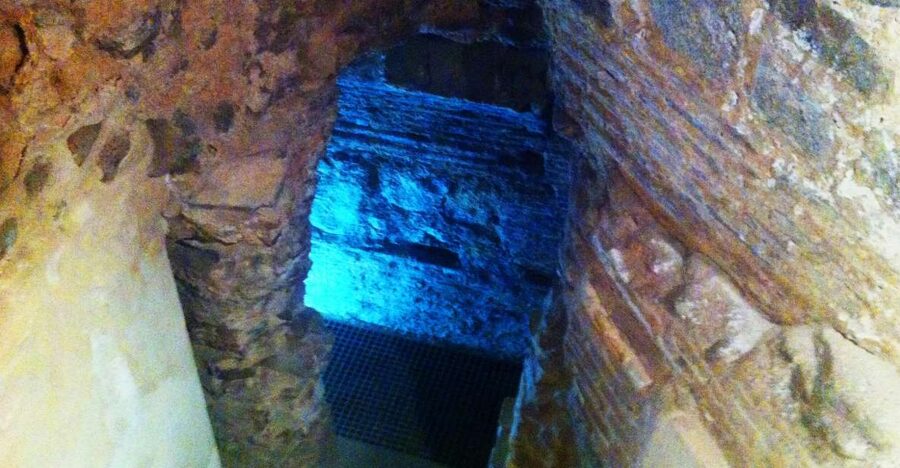
Toledo has been shaped by people who built, repaired, and reused spaces below the streets. Rock was cut out to store water, make shelter, create baths, form tunnels, and provide routes during times of conflict. The result is not one grand underground monument, but a set of small places that help explain how the city worked.
I like this approach because it gives you a different view of Toledo. Above ground, the city is famous for churches, walls, synagogues, and narrow lanes. Below ground, you see the practical side of urban life: water management, bathing, social gatherings, religious change, and the reuse of older structures.
The tour also deals with the line between fact and legend. Some stories grew around places whose original purpose was forgotten. Others helped people explain odd spaces, blocked passages, or features that seemed impossible. Your guide uses those tales as part of the story while also explaining the historical details behind them.
More Ancient History Tours in Spain:
- Mojo Workshop Cooking Class in Ancient Canarian Village
★ 4.9 · 127 reviews - Cartagena: Ancient Roman Walking Tour with Entry Tickets
★ 4.5 · 89 reviews - Pompeii: Entry Ticket and Guided Tour with an Archaeologist
★ 4.8 · 19,459 reviews
Meeting the guide at Nº7
The meeting point is the hall of Nº7. Walk to the end of the hall, where the office of Secretos de Toledo is on the right. This is useful to know because the starting point is indoors and may not be obvious if you are simply looking for a large street-side sign.
The guide speaks Spanish and specializes in Toledo’s history. That language choice is the key factor in deciding if this experience suits you. If you understand Spanish well, the tour should give you more detail than a short written description at each site. If you do not, the architectural points, legends, and explanations may be difficult to follow.
The guide matters here because the locations are not presented as a simple sequence of underground rooms. The explanations connect each place to the city’s changing cultures and to the ways people used the same spaces over centuries.
One guide named Ruth receives especially strong praise for making the tour last more than two hours and adding history and anecdotes to the underground stops. Another description emphasizes her clear explanations and her effort to make sure the group understood. Those details suggest that the quality of the experience depends heavily on the person leading it, as is often true with a history-focused walking tour.
The Cenizal baths and Toledo’s Muslim past
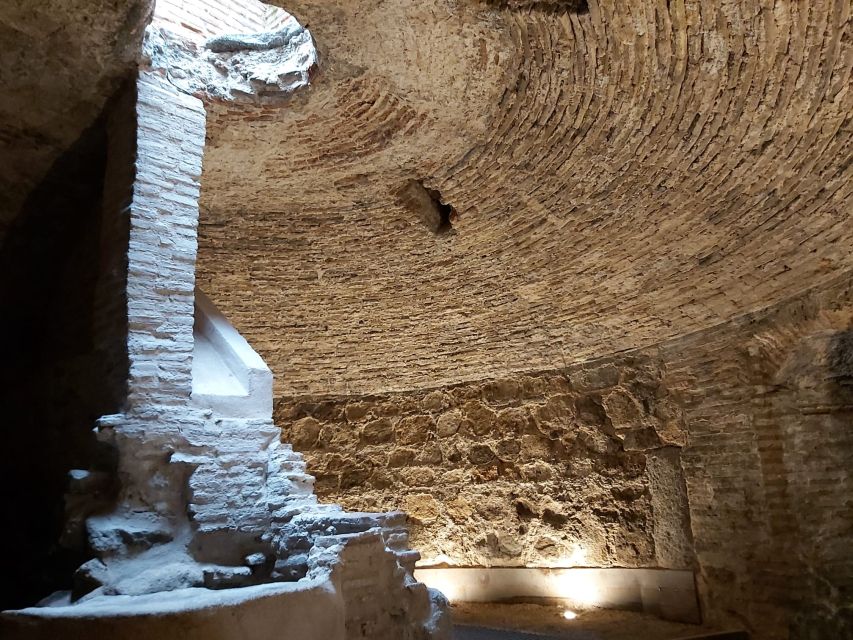
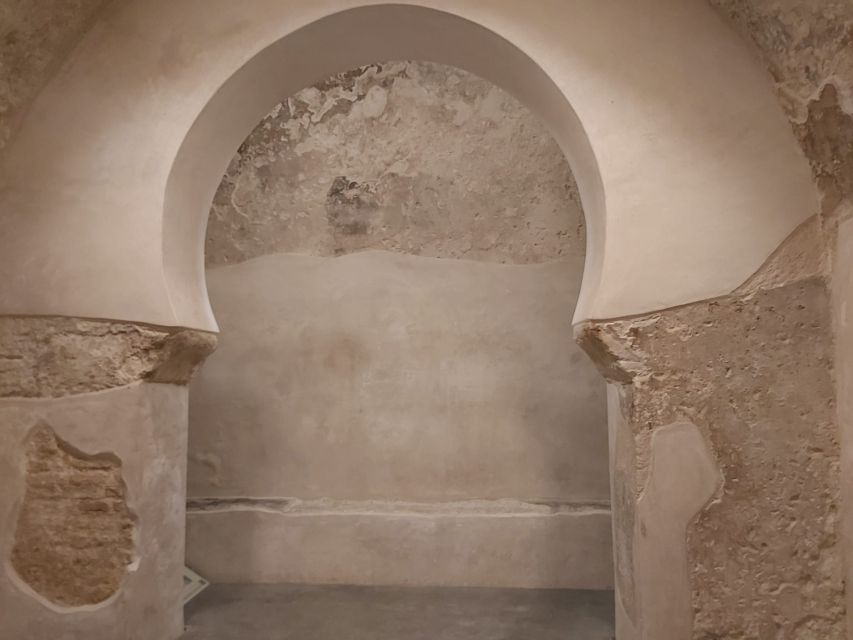
One of the central stops is the bath Cenizal, an old hammam dating from the 11th century. This is one of the clearest places to see the influence of Muslim Toledo.
Your guide explains the building’s architectural features and how the baths were used. That context matters because a hammam was not simply a place to wash. It was part of daily urban life, with a social and practical role that made it important to the surrounding community.
The value of seeing the baths underground is partly visual and partly atmospheric, though the tour information does not promise a particular lighting or sound installation. You are there to study the structure itself and understand why it was built below street level.
The stop also shows how easily modern Toledo can hide its earlier layers. A busy city can grow above a room that once served a very different purpose. The guide’s job is to connect the surviving masonry with the people who used it.
The old Nuncio Roman baths
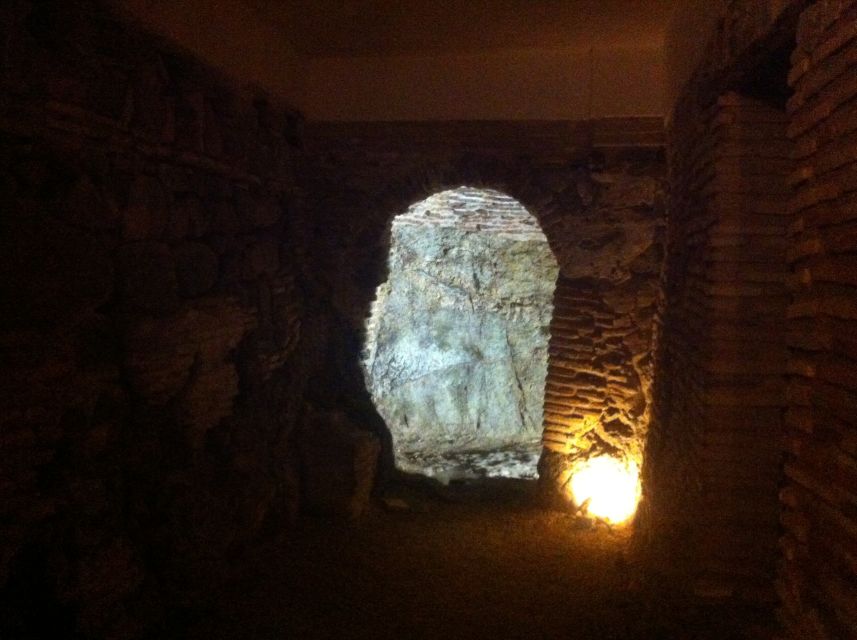
The old Nuncio baths take you further back, to Roman Toledo. These baths were a social space, not just a utility. The Romans built them, and later generations reused the site, giving your guide a chance to explain both the original construction and the changes that came afterward.
I find this kind of stop more useful than a single-period monument because it shows history as a process. Buildings do not always vanish when a new culture arrives. They may be adapted, divided, repaired, or given a new function.
The Roman baths also help explain the city’s long habit of working with the ground beneath it. Water, heat, stone, and shelter all shaped the way Toledo developed. If you are interested in Roman engineering or ancient public life, this may be one of the strongest portions of the route.
Do not expect a large archaeological complex with extensive displays. The appeal is in the surviving underground setting and the guide’s explanation of what you are seeing. The experience works best when you pay attention to construction details and ask yourself how the space once functioned.
More History Tours in Spain:
- Madrid Essential: Historic Center, Plaza Mayor & Royal Palace
★ 5.0 · 6,416 reviews - Montserrat with Black Madonna & Medieval Winery with Tapas/Lunch
★ 5.0 · 5,209 reviews - Barcelona: Tapas Walking Tour with Food, Wine, and History
★ 4.8 · 4,261 reviews - Sevilla Food Tour: Tapas, Wine, History & Traditions
★ 5.0 · 3,468 reviews
Salvador’s Well and the Church of the Savior
The route continues to Salvador’s Well, an 11th-century well that belonged to a mosque. This stop links water, religion, and the changing identity of the city in a compact way.
A well can seem like a modest sight, but it tells you something important about settlement. Reliable water was essential, and a well connected to a mosque was part of the religious and practical life of the neighborhood. Your guide explains the site before taking you to the Church of the Savior.
The church adds another layer to the same location. The sequence from mosque-related well to Christian church helps you understand how Toledo’s buildings and religious spaces changed as political and cultural control shifted.
This is one reason I like the route’s organization. The stops do not treat Roman, Muslim, and Jewish Toledo as separate topics with no connection. Instead, you see how one city reused places and carried traces of earlier communities into later periods.
The Church of the Savior is also a reminder that underground Toledo is not detached from the city above. Wells, foundations, religious buildings, and old passageways often belong to the same long story. The tour helps you read those connections.
The House of the Jew
The final named stop is the House of the Jew. The supplied information identifies it as part of the underground route, but it does not provide a detailed description of the room or its original function. You should therefore expect the guide to supply the historical context during the visit rather than arrive with a fixed list of features.
Its place in the itinerary matters because it brings the Jewish influence into a tour that has already covered Roman and Muslim sites. Toledo is often described through its three cultural traditions, and this stop gives the Jewish side of that story a physical setting.
The tour’s strength is not just the number five. It is the way these locations add up. Roman bathing, Muslim water use, Christian religious change, and Jewish connections each reveal a different part of Toledo’s past. None of the sites alone explains the entire city, but together they form a useful underground lesson.
Legends, facts, and the stories below the streets
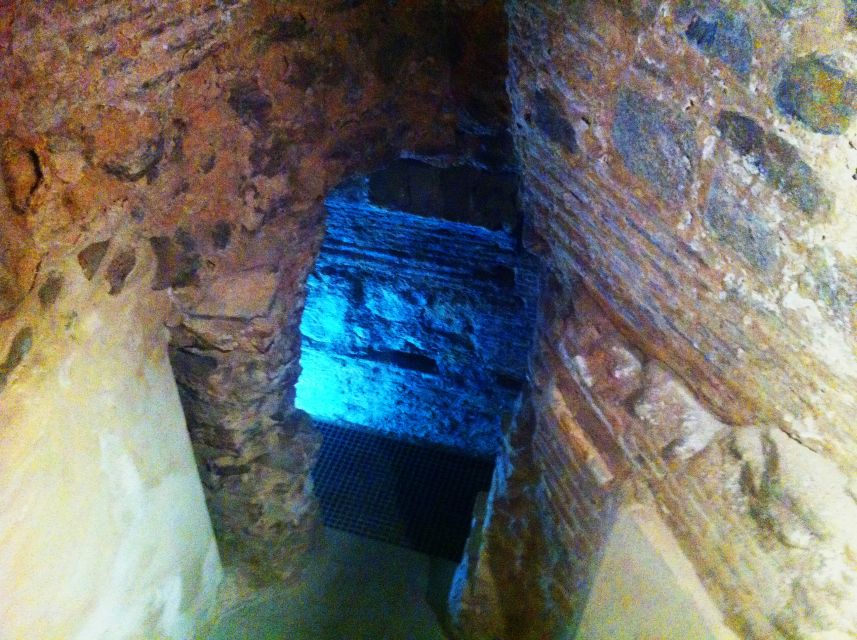
Toledo has accumulated legends around its underground spaces. Some stories may have covered up known facts, while others tried to explain features that were difficult to understand. Your guide discusses those traditions along with the historical information.
That balance is important. A tour based only on legends can become vague and theatrical. A tour based only on dates and building terms can feel dry. Here, the stories help explain why certain places became memorable, while the history gives you a way to judge the stories.
I would pay close attention to the anecdotes. The strongest parts of this kind of experience are often small details about how a space was used, why a structure was built in a certain way, or how one group adapted something left by another.
Since the tour is in Spanish, the language level will shape how much you get from these stories. Intermediate or fluent Spanish speakers should have a much easier time following the connections and humor. If your Spanish is limited, you may still see unusual sites, but the explanations will be the harder part to recover afterward.
Is two hours and $15 a fair price?
At $15 per person, this is a reasonably priced, focused tour. Admission to the sites is included, as is the Spanish-speaking guide. Food and drinks are not included, though a two-hour underground walk does not normally require either.
The price is especially fair if you want something beyond Toledo’s main monuments. Many city walks stay at street level and cover broad themes. This one gives you access to five specific underground locations and concentrates on a subject you might not encounter in a standard orientation tour.
The value drops if you cannot follow Spanish. You are not paying only to enter the sites. A large part of the experience comes from the explanations of architecture, legends, and cultural change. Consider the language ability of everyone in your group before booking.
You can reserve now and pay later, which helps if your schedule in Toledo is still changing. You can also cancel up to 24 hours before the activity for a full refund. Check the available starting times when booking, since the tour lasts two hours.
Shoes, access, and what to expect below ground
Wear comfortable shoes. The tour involves underground locations, and the activity specifically warns that it is not suitable for people with mobility impairments. The information does not give detailed measurements for stairs, passage widths, or surfaces, so contact the provider before booking if you need precise access information.
Video recording is not allowed. You should be prepared to put the camera away and listen to the guide. The restriction may feel limiting if you like documenting every stop, but it also keeps the focus on the structures and the explanation.
The route is not presented as a food tour or a general sightseeing walk. Bring any food or drinks you need before or after, since they are not included. The main preparation is simple: arrive at Nº7, wear steady shoes, and make sure Spanish is a workable language for your group.
Who should book this Toledo tour?
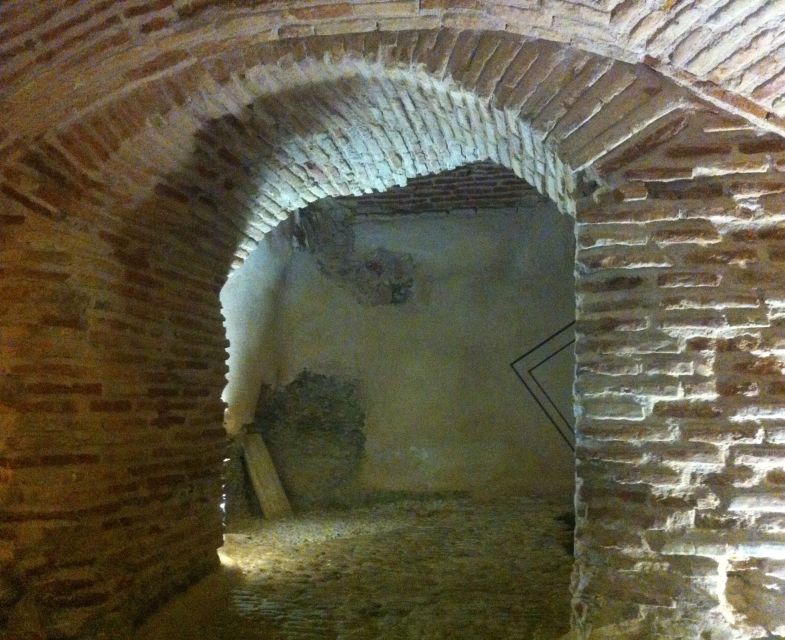
I would choose this experience if you have already seen some of Toledo’s major sights and want a more specialized look at the city. It also suits anyone interested in Roman construction, medieval Muslim Spain, Jewish heritage, old water systems, or the way buildings are reused.
It is a good match for Spanish speakers who enjoy history told through anecdotes. The guide’s role is central, and the strongest value comes from understanding the explanations rather than simply entering the sites.
I would hesitate if you have mobility limitations, dislike enclosed or uneven underground spaces, or need an English-language tour. The activity is explicitly in Spanish, and there is no indication that translation or another language is available.
Should you book the Ancient Underground City Tour?
Book it if you want a compact, affordable look at Toledo’s lesser-seen spaces and can follow Spanish. The five-stop route gives you a clear thread through Roman, Muslim, Christian, and Jewish layers of the city, while the guide adds the legends and practical details that make old stone rooms meaningful.
Skip it if you are looking for a broad introduction to Toledo, an accessible route, or a tour in English. For the right audience, though, $15 buys two hours of focused history in places you would be unlikely to understand fully on your own.
FAQ
How long does the Toledo underground tour last?
The scheduled duration is two hours. A guide named Ruth has also been described as extending the tour beyond two hours, but the stated activity duration is two hours.
What language is the tour conducted in?
The tour is conducted in Spanish by a live Spanish-speaking guide specialized in Toledo’s history.
How many underground locations are included?
The experience includes five underground locations.
Which sites are visited?
The route includes the Cenizal baths, the old Nuncio Roman baths, Salvador’s Well, the Church of the Savior, and the House of the Jew.
What cultures are covered during the tour?
The tour explains the influence of Roman, Muslim, and Jewish cultures on Toledo.
Is admission to the sites included?
Yes. Entry to the sites and the Spanish-speaking guide are included.
Is food or drink included?
No. Food and drinks are not included.
Where is the meeting point?
Enter the hall of Nº7. At the end on the right, you will find the office of Secretos de Toledo.
Is the tour suitable for people with mobility impairments?
No. The activity is not suitable for people with mobility impairments. Comfortable shoes are recommended, and video recording is not allowed.
Just added around Spain
- Visita Guiada Por El Casco Histórico De Cuenca Y Su Catedral★ 5.0 · 45 reviews
- Night Walking Tour of Medieval Cuenca★ 5.0 · 64 reviews
- Mosque of Cordoba History Tour in English Tickets included★ 5.0 · 257 reviews
- 2 Hours Tour around Cádiz: History, anecdotes and curiosities★ 5.0 · 89 reviews
- Jerez de la Frontera History and Art Walking Tour★ 4.5 · 49 reviews
- Bilbao Historical Small Group Tour★ 4.5 · 159 reviews
- The Authentic Bilbao Pintxos, Food & Wine Tour with a Local★ 5.0 · 360 reviews
- Girona, Costa Brava and Medieval Village from Barcelona★ 5.0 · 149 reviews
Spain History Tours, compared.
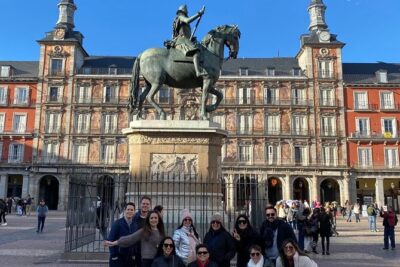
Madrid Essential: Historic Center, Plaza Mayor & Royal Palace
Read our review →
Montserrat with Black Madonna & Medieval Winery with Tapas/Lunch
Read our review →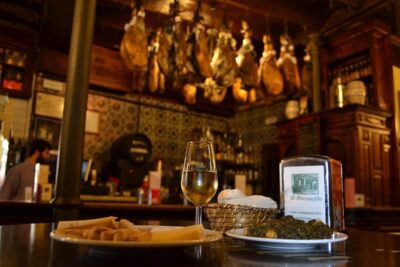
Sevilla Food Tour: Tapas, Wine, History & Traditions
Read our review →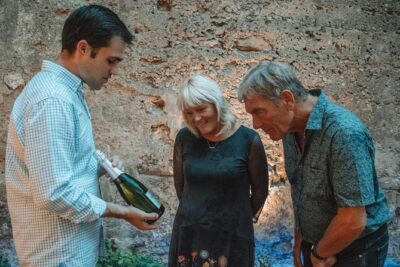
Valencia Old Town Tour with Wine & Tapas in 11th Century Historic Monument
Read our review →
Madrid Tapas & Taverns Small Group Food & History Tour
Read our review →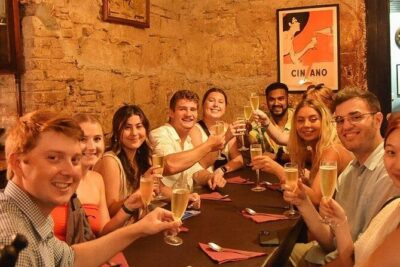
Barcelona Tapas Walking Tour: Food, Wine & History
Read our review →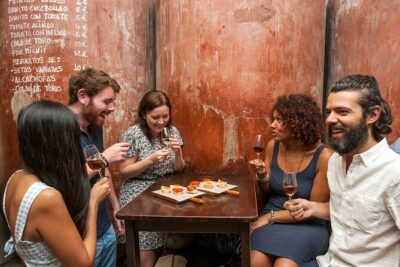
Ultimate Seville Tapas, Wine & History Small Group Tour
Read our review →
Córdoba: Skip-the-Line Great Mosque-Cathedral History Tour
Read our review →Browse the lists this tour appears in