
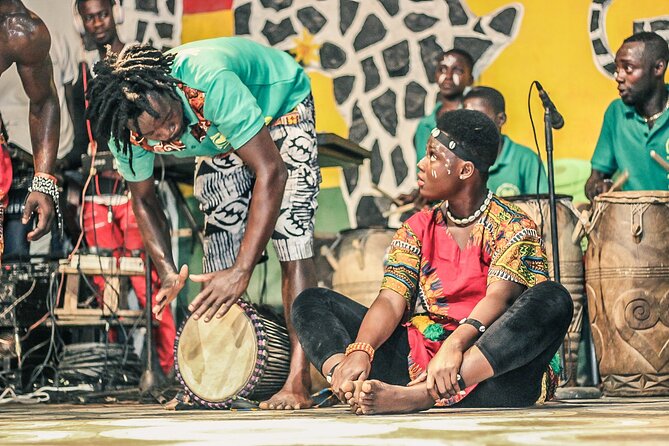
Review · HISTORY TOURS
10 Days Ghana Cultural and Heritage Trip
Ghana’s painful and powerful past comes into sharp focus on this 10-day cultural journey, especially at Cape Coast Castle, Elmina Castle, and Assin Manso. You move from the coastal forts where enslaved people were held to the river where many took their final bath before forced transport overseas. The experience is not just a sightseeing loop. It asks you to pause, listen, and connect with Ghanaian culture today.
I like the way the trip mixes serious history with everyday life. Makola Market and Elmina’s old streets give you the sights, sounds, and practical bustle of modern Ghana, while the naming ceremony and kente weaving visit offer personal contact with local traditions. Nana and his team are named as the local leaders, and the small group limit of 10 should make it easier to ask questions and keep the days organized.
The main consideration is pace. Ten days cover Accra, the Central Region, and Kumasi, with several emotionally demanding sites and long road movements between them. The listed price is $3,500 per person, so you should confirm exactly what your hotel arrangements include before booking.
Key things to know before you book

- Cape Coast, Elmina, and Assin Manso form the emotional center: These visits trace the slave trade from holding cells and castles to the final bath and the modern Wall of Return.
- The naming ceremony is personal rather than simply scenic: You receive a Ghanaian name based on your birth day and wear African clothing as part of the custom.
- Kakum adds a strong change of pace: A canopy walk through the rainforest brings height, trees, and fresh air after several museum and castle visits.
- Accra’s Makola Market is a real city experience: Expect narrow lanes, crowded movement, strong smells, and an enormous range of household goods.
- Kumasi introduces Asante culture: Manhyia Palace Museum, the Okomfo Anokye Sword Site, and Bonwire show a different side of Ghana than the coast.
- The small group and vehicle matter: The maximum group size is 10, and transport is by air-conditioned vehicle with Wi-Fi.
Starting in Accra with a welcome dinner
Your arrival day begins at Kotoka Airport, where pickup and transfer to the hotel are provided. A welcome dinner with drinks gives you a chance to meet the other members of the group and the local trip leaders, including Nana and his team.
The first day is deliberately light. After an international flight, you will appreciate having the transfer arranged instead of negotiating transport immediately. The exact airport pickup timing deserves attention, since the published start time is 8:30 a.m. and your flight arrival may not match it. Confirm the meeting details before you fly.
Meals are only partly included across the trip: eight breakfasts, four lunches, and one dinner are listed. That leaves some meals for you to arrange or pay for, so include a little room in your budget beyond the $3,500 tour price.
More Local Culture and Traditions Tours in the world:
- Amsterdam Food and Cultural Tour with Tastings
★ 5.0 · 4,315 reviews - Sevilla Food Tour: Tapas, Wine, History & Traditions
★ 5.0 · 3,468 reviews - Tromsø: Reindeer Camp and Sami Cultural Tour with Lunch
★ 4.7 · 3,326 reviews
Accra’s independence story, from Nkrumah to Black Star Square
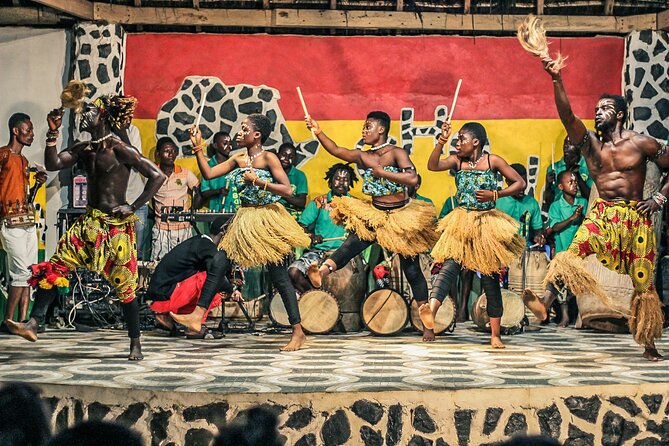
Day two gives you the national story in a compact Accra circuit. At Kwame Nkrumah Memorial Park, you see the burial place of Ghana’s first president and exhibits connected to his public life. His belongings include the smock worn when he declared independence, personal letters, and photographs with international leaders.
This stop helps put later visits into context. Ghana became the first sub-Saharan African country to gain independence from colonial rule in 1957, and Nkrumah became a major voice for African unity. You get about an hour here, enough for the principal displays without turning the morning into a long museum session.
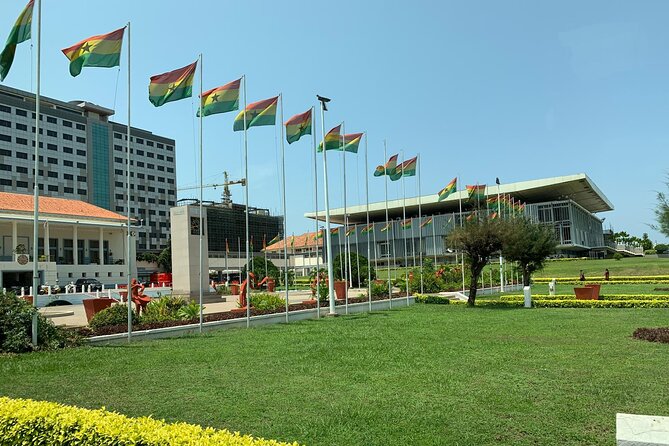
At Independence Square, also called Black Star Square, you see the site used for the annual Independence Day parade on March 6. The Independence Arch, Black Star Gate, and Liberation Day Monument point to the country’s political birth and its memory of liberation.
The visit lasts about 40 minutes. That is enough to take in the large open space and monuments, though it is more about atmosphere and national symbols than a detailed guided tour.
Makola Market and the National Museum
Makola Market is one of the day’s most vivid stops. Its narrow passages carry people, goods, scents, and noise in every direction. Women may pass with large bowls or packages balanced on their heads, while stalls offer household items and other goods at local prices.
You have an hour here, with a guide showing you interesting parts of the market and photo locations. That is useful because the market can feel confusing at first. Keep your belongings secure, stay close to the guide, and wear practical shoes. The tight lanes and crowds are part of the point, but they may be tiring if you prefer quiet, open spaces.
The National Museum of Ghana shifts the focus from daily commerce to culture. Displays cover chiefs’ regalia, musical instruments, gold weights, beads, textiles, stools, pottery, traditional dance, farming, and iron making. There are also exhibits about the slave trade and objects connected with other West African cultures.
I like this pairing because the market shows Ghana as a living place, while the museum explains some of the objects and customs you may see elsewhere. Both visits are scheduled for about an hour, so expect an introduction rather than a scholarly museum study.
Aburi Botanical Gardens and the W.E.B. Du Bois Center
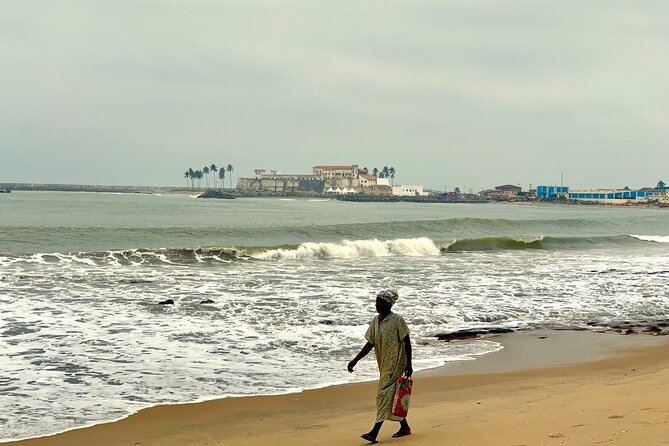
Day three heads to Aburi Botanical Gardens. The focus is on African plants, herbs, their origins, their ages, and their medicinal uses. You have one hour to walk and listen, making this a calmer morning after Accra’s crowded market and busy civic sites.
The garden visit also gives you a chance to think about how plants fit into local life, not just how they look. The description emphasizes social and medicinal importance, so ask your guide to explain which uses are traditional and how the knowledge is passed on.
At the W.E.B. Du Bois Center, the subject shifts to Pan-Africanism. Du Bois was an American sociologist, socialist, and historian who spent his later years in Ghana. The center provides a link between Ghana’s independence movement and wider Black political thought.
The two stops work well together. Aburi focuses on the natural world and local knowledge, while the Du Bois Center places Ghana within a much larger international conversation about African identity and independence.
More History Tours in the world:
- Prague: Medieval Dinner with Unlimited Drinks
★ 4.4 · 19,847 reviews - Pompeii: Entry Ticket and Guided Tour with an Archaeologist
★ 4.8 · 19,459 reviews - History and Hauntings of Salem Guided Walking Tour
★ 5.0 · 14,564 reviews - Athens: Acropolis & up to 5 Archaeological Sites Combo Pass
★ 4.2 · 13,904 reviews
Cape Coast Castle and the weight of the coast
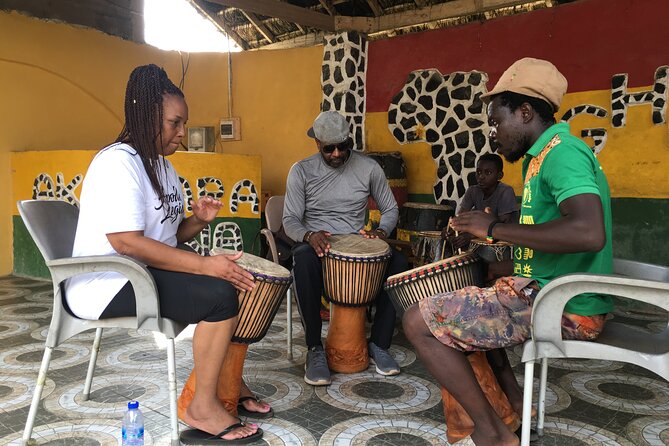
Cape Coast Castle is one of the most important visits on the trip, and also one of the hardest. You see the dungeons where enslaved people were confined while awaiting ships, along with the Door of No Return.
The scheduled visit lasts an hour. That may sound brief for such a significant place, but the castle’s rooms and passages make the experience concentrated. Listen closely to the guide’s explanations and leave time afterward to process what you have seen.
This is not a light historical stop. The physical setting matters: underground rooms, restricted spaces, and the route toward the sea help you understand the violence of the system in a way that a museum display alone cannot. You may want to avoid packing the rest of the day with unrelated plans.
Kakum’s canopy walk and Elmina’s old town
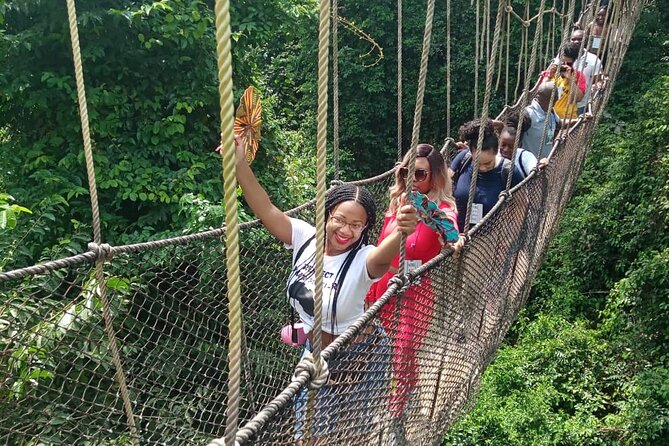
Kakum National Park brings a welcome change from stone buildings and difficult history. The main activity is a canopy walk high among the trees, with about 90 minutes set aside for the park.
The walk is one of the few such canopy systems in the world, according to the tour description. It gives you a view from above rather than from the forest floor. If heights make you uneasy, this is a point to consider before booking. The tour does not describe an alternative activity, so ask the operator what options are available if you do not want to use the suspended bridges.
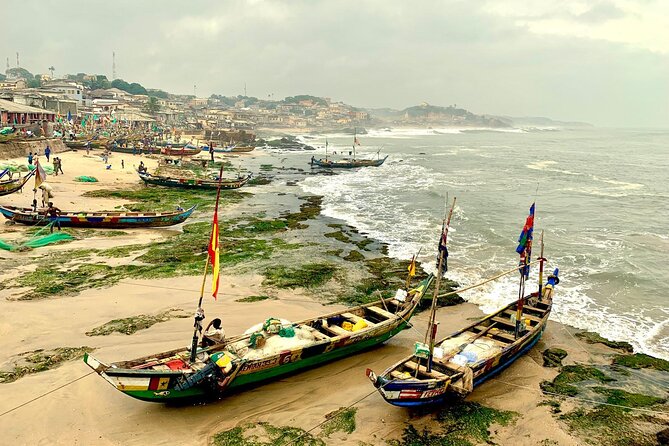
After Kakum, you visit Elmina on foot. The town includes historic buildings, a 17th-century Dutch cemetery, a Posuban Shrine, and an Asafo post. These places show that Elmina is more than a castle stop. It is a lived-in town with its own systems of community, belief, and memory.
Elmina Castle follows the walking tour. It is described as the oldest and largest European building below the Sahara, and the visit includes the slave dungeons, forecourt, and Door of No Return. Seeing Cape Coast Castle and Elmina Castle on the same trip allows you to compare two major sites, but the subject matter can feel repetitive and emotionally heavy. The strength is depth. You are not getting a single symbolic stop and moving on.
A naming ceremony in Elmina
Day six slows the pace. The morning is reserved for rest and relaxation, a sensible pause after the castles, walking, and canopy park. Later, you visit the chief’s palace and learn about local customs.
The most distinctive part is the traditional naming ceremony. You receive a name based on the day you were born and dress in African clothing as part of the event. This is a participatory cultural activity, not just a performance viewed from the side.
I would treat the ceremony with respect and an open mind. The value comes from the meaning attached to names, birth days, and community identity. It is also one of the few moments in the trip where you personally take part in a Ghanaian custom instead of simply looking at historical objects.
Assin Manso and the Reverential Walk of Return
Assin Manso is the most reflective stop of the entire trip. It is described as the place where enslaved people took their final bath before being taken to the castles and shipped away. You walk to the Slave River, barefoot, as part of a ceremony of reconnection and remembrance.
You also visit the Memorial Wall of Return, where names are written to symbolize the return of descendants and members of the wider African diaspora. The walk is about an hour, but its meaning is much larger than the clock suggests.
Bare feet may be uncomfortable on the ground, so prepare for that possibility. More important, understand that this is a solemn ritual. It is not a photo opportunity or a quick attraction. The experience asks you to move slowly and respectfully through a place linked to immense suffering.
Kumasi, Manhyia Palace, and the Asante story
Day eight takes you to Kumasi, the heart of Asante culture. At Manhyia Palace Museum, you learn about the Asante Empire and the role of the king. The museum gives the trip a useful regional contrast. Until this point, much of the focus has been on Accra and the coastal slave-trade sites. Kumasi introduces royal traditions and inland political power.
The schedule also refers to West Africa’s largest and busiest open-air market. The wording does not clearly identify the market by name or give a separate duration, so confirm the exact stop with the operator. It may be an energetic addition, but you should know how much time is available before planning your own evening.
At the Okomfo Anokye Sword Site, you learn about the mystical sword said to have remained planted for 400 years. The visit lasts about 45 minutes and connects spiritual belief, national memory, and the story of Kumasi.
Kente at Bonwire and final shopping in Accra
Bonwire Kente Weaving Centre gives you a close look at Ghanaian cloth and the symbols woven into it. The visit explains different fabrics, their meanings, and their place in Ghanaian culture.
This stop is especially useful if you plan to buy kente or other textiles. You can ask about the meaning of patterns before choosing a souvenir, rather than treating the cloth as decoration alone. The visit lasts an hour.
On the final day, you return to Accra and visit the Accra Arts Center for souvenir shopping. You have about 45 minutes before the airport transfer. That is enough for a final look, but not a long shopping session, so handle most major purchases earlier if you see something you truly want.
The airport drop-off is arranged to give you time for your flight. Still, share your departure details clearly and confirm the transfer plan, especially if your flight is early or international.
What the $3,500 price includes
At $3,500 per person, this is not a budget tour. Its value comes from the amount of coordination involved across 10 days, the private or small-group transport, entrance tickets, local leadership, airport transfers, and access to scheduled cultural activities.
Included meals are eight breakfasts, four lunches, and one dinner. An air-conditioned vehicle with Wi-Fi is also provided, which matters on a trip involving several regions and warm conditions. The group maximum is 10, a strong feature for anyone who dislikes large coach tours.
The price does not list every possible cost. Some meals are not included, and the information does not clearly spell out hotel categories or whether all overnight stays are covered within the quoted amount. Before paying, ask for the hotel details, the complete meal schedule, and any extra admission or activity fees.
The trip is offered in English, Spanish, and French. Confirmation arrives at booking, and free cancellation is available until 24 hours before the start time. Poor weather can lead to a new date or a full refund, since the experience requires suitable conditions.
Who should book this Ghana cultural tour?
You should consider it if you want Ghana’s history presented through real places, not only through lectures. The strongest fit is for someone interested in the slave trade, African independence, Asante culture, traditional ceremony, markets, textiles, and guided local contact.
You should also be comfortable with a full schedule and emotionally serious subject matter. The castles and Assin Manso can be difficult, while Makola Market and the canopy walk add physical and sensory demands.
The tour suits solo visitors, couples, and small groups who want transport and planning handled for them. It may be less suitable if you prefer a slow beach holiday, independent wandering, or detailed time at each museum.
Should you book the 10 Days Ghana Cultural and Heritage Trip?
I would book this tour if your main goal is to understand Ghana through its major heritage sites and living traditions. The combination of Cape Coast, Elmina, Assin Manso, Kakum, Kumasi, Bonwire, and the naming ceremony gives you far more range than a city-only holiday.
The strongest reasons are the small group size, the local leadership associated with Nana and his team, the air-conditioned vehicle, and the serious attention given to remembrance. Before booking, confirm the hotel standard, the unnamed Kumasi market stop, included meals, and airport timing.
If you want a thoughtful introduction to Ghana and accept the cost and pace, this is a strong choice. If your priority is rest, flexible free time, or low-cost travel, choose a shorter and less structured plan.
FAQ
Where does the tour begin?
The tour begins at Kotoka Airport in Accra, Ghana. The listed start time is 8:30 a.m., and airport pickup and hotel transfer are provided.
How many people can join the tour?
The maximum group size is 10 travelers.
What languages are available?
The experience is offered in English, Spanish, and French.
Is transportation included?
Yes. Transportation is provided in an air-conditioned vehicle equipped with Wi-Fi.
Which meals are included?
The package includes eight breakfasts, four lunches, and one dinner.
Can I cancel for a full refund?
Yes. You can cancel at least 24 hours before the experience start time for a full refund. Changes or cancellations made less than 24 hours before the start time are not accepted, and poor weather may result in a different date or a full refund.
Just added around the world
- Scenic Train ride to historical cities of Morretes and Antonina★ 4.0 · 188 reviews
- 6-Day Cultural Tour to Machu Picchu★ 5.0 · 76 reviews
- Jewish Heritage of Curacao★ 4.5 · 68 reviews
- The Curacao’s Colorful History Walking Tour★ 5.0 · 55 reviews
- Discover Scuba Diving Amathounta’s Ancient Port★ 5.0 · 30 reviews
- Olous – Guided Snorkelling Excursion to Discover Olous Sunken Ancient City★ 4.5 · 31 reviews
- Night Walking Tour of Medieval Cuenca★ 5.0 · 64 reviews
- Heraklion Highlights: Knossos, Museum & Historic City Drive★ 5.0 · 64 reviews