
Review · GETTYSBURG
Gettysburg: Horse-Drawn Carriage Battlefield Tour
Gettysburg’s broad fields make more sense from a slow-moving carriage than from a quick car ride. You have time to look across the ground, hear how troops moved, and connect monuments and roads to the fighting of July 1863. The clip-clop of the horses adds a memorable touch without turning the history into a theme-park show.
I like the small groups of up to 10, which give you real access to your guide, and I like the unhurried pace. Guides such as Jim, Dale, Truman, Chris, and Jeff have been praised for clear storytelling, humor, and an interactive style. The main drawback is weather: you sit outdoors for two hours, rain or shine, and the route may not cover every part of the three-day battle.
Key points to know before you book
- Open carriage and wide battlefield views: You ride outdoors, with the fields spread around you and little glass between you and the setting.
- Two hours with a licensed guide: The time allows for questions, battle explanations, and stories about soldiers, leaders, and local townspeople.
- Small group, maximum 10 people: This is a better fit for conversation than a large motor coach.
- A gentle pace, not a quick transfer: The carriage moves slowly, which helps you study the ground but can feel gradual while reaching the main battlefield areas.
- Friendly horses are part of the experience: Stops may allow time to pet the horses and take photographs with the team.
- Plan for the weather: Bring suitable clothing, and consider a cushion for the carriage seat.
Why a horse-drawn carriage works at Gettysburg
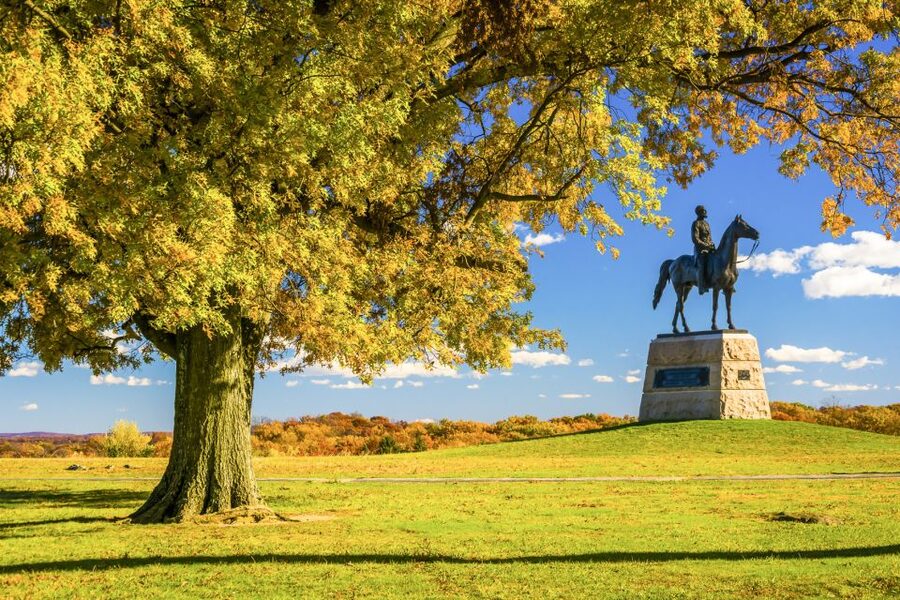
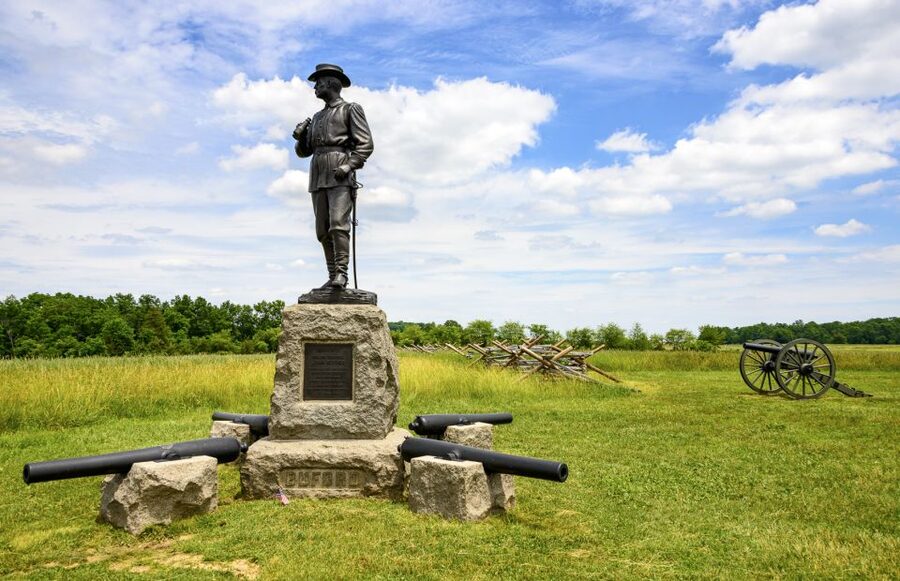
Gettysburg is not one building or one monument. It is a huge outdoor site where roads, fields, stone walls, hills, and farm areas shaped the battle. That scale can be hard to grasp when you move from stop to stop by car.
A carriage gives you a slower view. You hear the horses, feel the open air, and have time to watch the ground change around you. The ride is not meant to recreate combat, and it does not replace a full study of the battlefield. Its strength is that it lets your guide explain how the terrain affected decisions while you are actually looking at it.
The setting also keeps the experience grounded. You are not sitting in a dark room watching a film. You are out among the fields where tens of thousands of soldiers fought and died, and where local residents had to live through the violence. The quiet between explanations can be useful. It gives you a moment to consider the human cost rather than treating Gettysburg as a list of famous names.
The carriage itself is also a practical choice for anyone who wants to see the battlefield without walking long distances. It is not formally suitable for people with mobility impairments or wheelchair users, but one person traveling with a cane found boarding manageable. If mobility is a concern, ask the operator about boarding and seating before paying.
More Battlefield and Military History Tours in the USA:
- 2-Hour Gettysburg Battlefield Guided History Bus Tour with a National Park Guide
★ 4.5 · 2,201 reviews - Gettysburg Battlefield Self-Guided Driving Audio Tour
★ 4.5 · 910 reviews - Guided Savannah Civil War History Walking Tour
★ 5.0 · 492 reviews
Starting slowly from the meeting point
When you arrive, a staff member directs you to the parking area. Do not park on the grass. Parking is included, which is useful in Gettysburg, where finding a simple place to leave your car can otherwise interrupt your sightseeing.
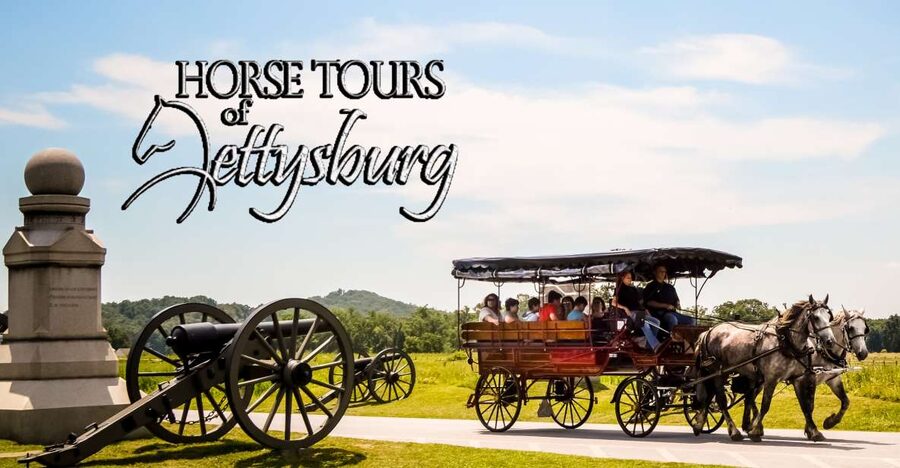
The horses and carriage set the tone before the guide begins. The team is handled by staff who also answer questions about the animals. Different horses have appeared on tours, including Fred and George, Nash and Trina, Hank and Hunter, and other calm draft horses. The names may vary on your departure, but the horses are clearly part of the experience rather than just transportation.
The carriage has an open top, so you get fresh air and unobstructed views. That is a pleasure on a mild morning or crisp autumn day. In summer, the same openness exposes you to heat and sun. In cooler weather, blankets may be available, but you should still dress warmly. One person found the ride chilly even with blankets, while another suggested bringing a cushion for the seat.
The horses set a slow, steady rhythm. This is good for listening and taking pictures, but it means the carriage can take time to reach the battlefield areas. If you are used to a bus tour that moves briskly between stops, the pace may feel too gentle. I would treat the ride itself as part of the visit, not as a fast way to cover ground.
Hearing the battle explained from the field
Your guide is the heart of the tour. The licensed battlefield guides have different personalities, but the strongest pattern is clear: you get a live history lesson rather than a fixed recording.
Jim has been praised for making personal stories part of the explanation. Dale is known for mixing humor with solid detail. Truman brings a wide knowledge of the battle and helps younger visitors stay involved. Chris has been singled out for telling the story in a way that makes people want to learn more. Jeff uses an interactive approach, and other guides have welcomed constant questions instead of sticking to a rigid script.
That matters because Gettysburg can overwhelm first-time visitors. There are commanders, regiments, dates, monuments, and movements on all sides. A good guide helps you sort the important parts from the clutter.
You can ask about the battle itself, the Civil War before Gettysburg, or other campaigns and leaders. The guide may use photographs or visual aids to clarify what happened. One interactive moment has guests pretend to fire a cannon, giving them a simple way to think about the force and direction of artillery. It is a light activity, but it helps children and adults picture a battle that can otherwise remain abstract.
The tone is serious without being stiff. The best guides balance military facts with stories about ordinary people and the townspeople caught between the armies. That broader view is valuable. Gettysburg was not only a contest between famous commanders. It was also a place where civilians faced fear, damage, and loss.
What you see during the two-hour route
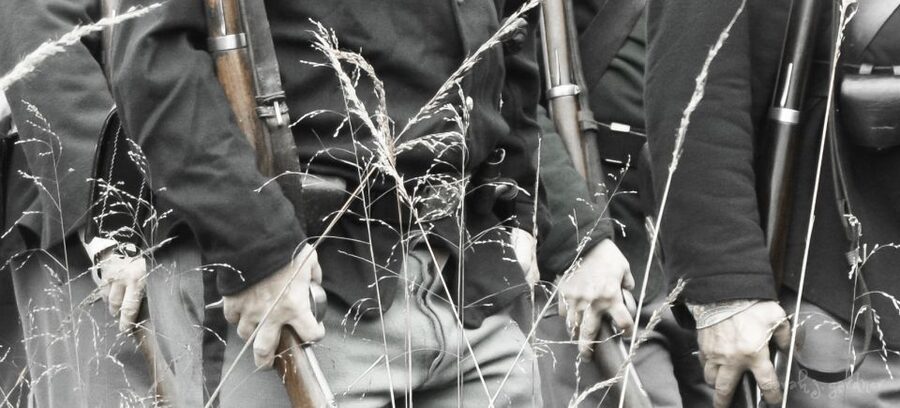
The carriage passes through the open battlefield, with green fields extending on both sides. The exact sequence of points can depend on the route and conditions, so do not book this expecting a fixed checklist of every monument.
The main value of each section is the connection between geography and decisions. Your guide can point out where troops advanced, where positions were held, and why a rise, road, or open field mattered. From a carriage, you have enough time to look in the direction the guide describes instead of immediately driving away.
The ride appears especially useful as an introduction. Several people have paired it with an automobile tour later, finding that the carriage explanation helped them understand what they saw afterward. That is a smart plan if you have a full day or two in Gettysburg. Take the carriage first, then use a self-guided drive to explore areas the two-hour route does not cover.
You should also ask about the route if your main goal is a full account of all three days. One account found the carriage tour concentrated on the second day of the battle. The supplied tour information does not promise a complete three-day circuit, and another person wished the route included the cemetery. Treat this as a focused battlefield introduction, not a substitute for every museum, memorial, cemetery, and road in Gettysburg.
The town’s commitment to preserving the battlefield is part of the story. The guide can help you see why the fields remain open and why monuments and roads are treated as historical evidence. You leave with a clearer sense of how much effort goes into keeping the connection between the modern town and its past.
More Horse Riding Days in the USA:
- Charleston’s Old South Carriage Historic Horse & Carriage Tour
★ 5.0 · 10,023 reviews - Charleston Horse-Drawn Carriage Tour: Explore Historic Charleston
★ 5.0 · 3,561 reviews - Charleston: Historical Downtown Tour by Horse-drawn Carriage
★ 4.8 · 1,009 reviews - Beaufort’s #1 Horse & Carriage History Tour
★ 5.0 · 913 reviews
Horses, photographs, and the human side of the ride
The animals add charm, but they also shape the tempo. The horses are described as calm, gentle, and well cared for, and staff members handle them throughout the outing. At a break, you may have time to pet them. After returning, you may be able to take photographs with the team.
For families, this creates a useful second focus. Children can listen to the battle story, then pay attention to the horses and carriage. The guides have kept children and teenagers involved, including groups with young people from roughly 10 to 14. That does not mean every child will enjoy two hours of history, but the moving carriage and live animals make the subject easier to approach.
The horse element also keeps the experience personal. You are not simply being carried around a historic site. You see the drivers working with the animals, and you hear the hoofbeats as the guide talks. That old-fashioned setting can make the trip feel distinctive, though passing traffic and motorcycles may occasionally remind you that this is a modern road, not a reenactment.
If you want a quiet, private carriage ride for two, note that this is a small-group tour, not necessarily a private one. The group limit of 10 is intimate enough for questions, but you may still share the carriage with families or other couples.
Is $74 a fair price?
At $74 per person, the tour is not the cheapest way to see Gettysburg. You are paying for more than a ride. The price includes the carriage, parking, and a licensed battlefield guide for two hours, with a group limited to 10 people.
The value depends on what you want from the visit. If you only need transportation across the fields, the cost may feel high. If you want a guide who can respond to questions, explain the ground, and adjust the story for adults and children, the price is easier to justify.
A large vehicle tour may cover more ground or offer a lower per-person cost. A self-guided drive gives you more control and lets you stop longer at places that interest you. But both options require more planning, and a self-guided visit puts the burden of sorting the battlefield onto you.
I think the carriage earns its price for a first visit, a family outing, or anyone who wants history delivered in a relaxed way. It is also a good choice if walking is difficult, provided you can board the carriage and are not using a wheelchair. Repeat visitors may find better value in a more specialized tour, museum visit, or self-guided route that reaches sections missed on the carriage ride.
Weather, comfort, and timing tips
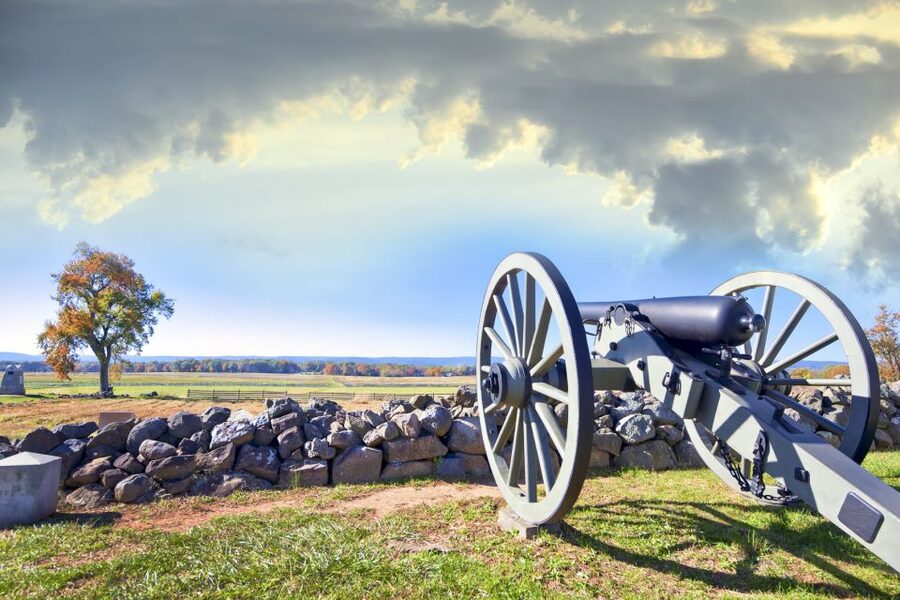
This is an outdoor activity in every practical sense. It operates rain or shine, and the open carriage leaves you exposed to the day’s conditions. Check the forecast, then dress for wind and temperature rather than relying on the season.
Bring:
- Weather-appropriate layers
- Sun protection in warm weather
- A light rain layer if showers are possible
- A small cushion if firm carriage seating bothers you
There is no stated restroom break during the two-hour ride, and one person specifically wished for one. Use facilities before departure. Water may sometimes be offered before the ride, but it is wise to bring your own bottle, especially on a hot day.
The carriage is comfortable enough for two hours for many people, but comfort is personal. The ride is slow and steady, not rough or athletic, yet a carriage seat is still different from a padded coach seat. If you have back concerns, ask about seating before departure.
Fall should be especially pleasant for people who like crisp air and changing leaves. Summer gives you longer daylight but greater heat exposure. Spring and early fall can offer a good balance, though the tour remains dependent on the weather.
Who will enjoy this Gettysburg tour most?
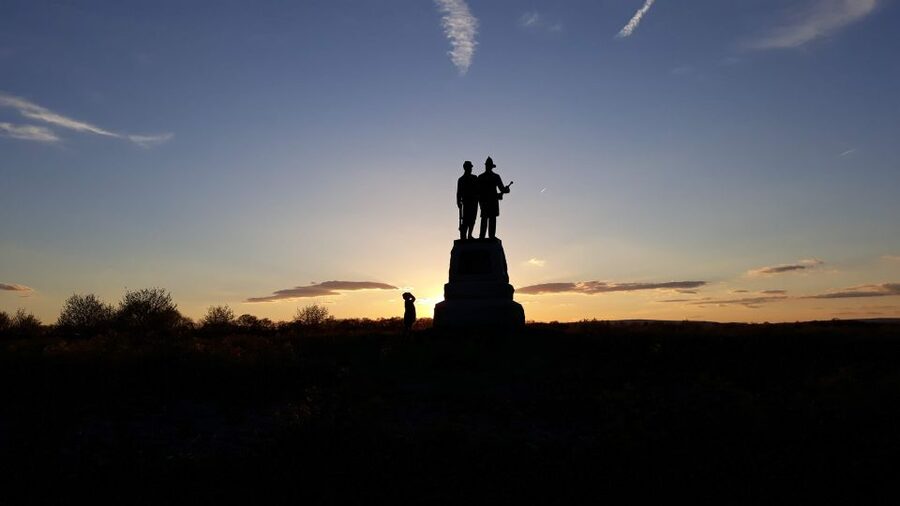
I would recommend it first to people visiting Gettysburg for the first time. You get an organized introduction without spending hours deciding which road or monument to visit next.
It also suits:
- Families who need a history activity that feels active rather than classroom-like
- Couples looking for an unusual way to see the battlefield
- Older visitors who prefer not to walk long distances
- Civil War beginners who want clear explanations before tackling a larger museum or driving route
- Repeat visitors who want a slower, more relaxed look at the fields
It is less suitable if you want a detailed study of every phase of the battle. It is also a poor fit for anyone who dislikes outdoor exposure, horse-drawn travel, firm seating, or a slow pace.
People with wheelchairs should not book this activity, since it is listed as unsuitable for wheelchair users. Anyone with a mobility impairment should contact the operator first rather than assume the carriage will work.
Should you book the carriage ride?
Book it if you want a personable guide, an easy pace, and a memorable way to get your bearings at Gettysburg. The small group and open carriage create plenty of chances to ask questions, while the horses give the visit a character you will not get from a standard car tour.
Do not book it expecting a complete tour of every part of the three-day battle. Ask what route is running on your date, and consider adding the National Cemetery, museum visits, or an automobile tour if you want fuller coverage.
For most first-time visitors, $74 is a reasonable price for two hours of guided history, parking, and a distinctive ride. Dress for the weather, use the restroom first, and leave room in your schedule for the carriage to move at horse speed. That is the point here: Gettysburg rewards patience.
FAQ
How long is the horse-drawn carriage tour?
The tour lasts two hours.
How much does the tour cost?
The listed price is $74 per person.
Is parking included?
Yes. A staff member directs you where to park when you arrive. Do not park on the grass.
How many people can join the tour?
The tour is a small-group experience limited to 10 participants.
What language is the tour conducted in?
The live tour guide speaks English.
Does the tour operate in bad weather?
Yes. The activity takes place rain or shine, so bring clothing suited to the forecast.
Is the tour suitable for wheelchair users?
No. The activity is listed as unsuitable for wheelchair users and people with mobility impairments. If you use a cane or have another mobility concern, contact the operator before booking to discuss boarding.
Just added around the USA
- Red Rocks Amphitheatre Historical Walking Tour★ 5.0 · 74 reviews
- 1-Hour Segway Tour of Cheyenne Cañon Art, History and Nature★ 5.0 · 36 reviews
- Colorado Springs – Guided Walking Ghost / History Tour★ 5.0 · 168 reviews
- Ancient Landscapes Private Geology Hike at Garden of the Gods★ 5.0 · 31 reviews
- Village Food Tours Lunch & History Tour★ 5.0 · 80 reviews
- 2.5 Hour Kayaking with Manatee and History Tour in Tarpon Springs★ 5.0 · 24 reviews
- Safety Harbor Ghost Tour★ 5.0 · 60 reviews
- Historical Bicycle Tour of Dunedin★ 5.0 · 44 reviews
Gettysburg History Tours, compared.
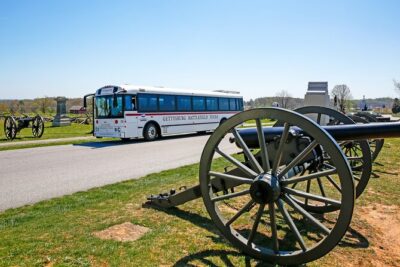
2-Hour Gettysburg Battlefield Guided History Bus Tour with a National Park Guide
Read our review →
Ghost Tour: History and Haunts – Family Friendly – Best in Gettysburg
Read our review →
Gettysburg: 1863 Historic Downtown Walking Tour
Read our review →
Gettysburg: “History and Haunts” Family Friendly Ghost Tour
Read our review →
Gettysburg: Beer, Wine, and History Guided Walking Tour
Read our review →Browse the lists this tour appears in