
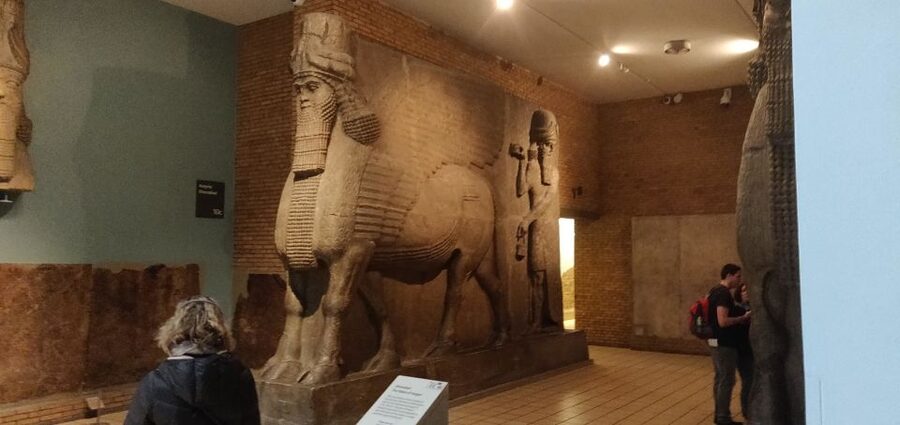
Review · LONDON
London: British Museum Archaeology Course and Guided Tour
The most interesting part of this British Museum experience is that it treats the collection as one long human story, not just a parade of famous objects. With archaeologist Rossa, you move from early human tools to writing, empires, religion, and archaeology itself, using the museum’s greatest pieces as evidence.
I like the clear chronological route, which gives the museum a sense of order, and the way the course explains how scholars read hieroglyphs, cuneiform, and ancient games. The main caution is stamina: five and a half hours is a serious museum session, and much of it involves standing.
- Human history in one route: Follow civilization from early African origins through Mesopotamia, Egypt, Assyria, Greece, Rome, the Vikings, and the Aztecs.
- A real archaeologist as guide: Rossa brings academic knowledge and lively storytelling to objects that can otherwise feel remote.
- Famous objects with useful context: See the Rosetta Stone, Parthenon Marbles, Sutton Hoo Helmet, and Lewis Chessmen.
- Hands-on ancient fun: Play the Royal Game of Ur, a Mesopotamian board game reconstructed from ancient evidence.
- A lesson in detective work: Learn how sites are buried, objects are dated, and dead languages were deciphered.
- Practical half-day format: Meet outside Russell Square Station, walk five minutes to the museum, and finish at the British Museum.
A Five-Hour Story of Human Civilization
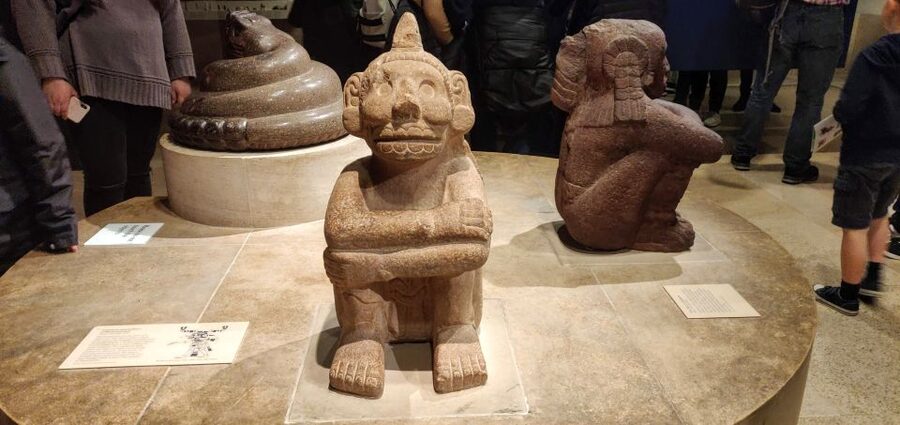
The British Museum can overwhelm you before you have even reached the main galleries. It holds objects from across the world and across thousands of years, so wandering without a plan often means seeing plenty while understanding little.
This course solves that problem with a firm thread: how humans developed tools, settled in cities, created writing, built states, worshipped, traded, fought, and left clues behind. You are not simply shown the museum’s greatest hits. You are shown how archaeologists use those objects to work out what happened.
Rossa leads the experience in English and teaches from an archaeological point of view. That matters. A label may tell you an object’s date and place, but a guide can explain why it matters, what remains uncertain, and how scholars reached their conclusions.
The pace is intensive, yet the route includes breaks and interaction. One especially useful pause comes with the Royal Game of Ur, an ancient board game whose rules were worked out by British Museum scholars. It gives you a welcome change from listening and helps make Mesopotamian life feel less distant.
Meeting at Russell Square Station
You meet the guide outside Russell Square Station. Look for an iPad displaying the local partner’s name, and arrive 10 minutes early. From the station, the walk to the British Museum takes about five minutes.
This meeting point is convenient if you are already visiting Bloomsbury or arriving by Underground. It also gives the group a clear place to gather before entering one of London’s busiest museums.
The tour ends at the British Museum, so you do not need to return to Russell Square Station with the group. That is handy if you plan to continue sightseeing in the museum, visit nearby galleries, or stop for food in central London.
If you are late, contact the provider as soon as possible. One guide went out of his way to find a late participant, but you should not rely on that. A large museum and a five-hour route are not ideal places for a last-second reunion.
More Archaeological Site Tours in London:
- London: British Museum Tour with Archaeologist Guide
★ 4.9 · 68 reviews - Pompeii: Entry Ticket and Guided Tour with an Archaeologist
★ 4.8 · 19,459 reviews - Athens: Acropolis & up to 5 Archaeological Sites Combo Pass
★ 4.2 · 13,904 reviews
The British Museum as an Archaeology Classroom
The museum entrance is only the beginning. The real course takes place among objects from many periods and regions, with Rossa explaining how archaeologists build a picture of the past from fragments.
You begin with the earliest stages of human development, including Neanderthal tools and the origins of humanity in Africa. The focus is not just on the objects themselves. You also consider what a tool can reveal about skill, survival, movement, and social development.
From there, the route moves toward the first cities and civilizations of Mesopotamia. This is where writing becomes central. Sumerian cuneiform, often described as the world’s earliest written language, offers a direct look at administration, trade, law, and daily life.
The value of this section is that it shows civilization as a gradual process rather than a sudden invention. Cities need food supplies, records, labor, power, and systems for managing all of them. Small marks pressed into clay can reveal that entire structure.
Decoding Hieroglyphs and Cuneiform
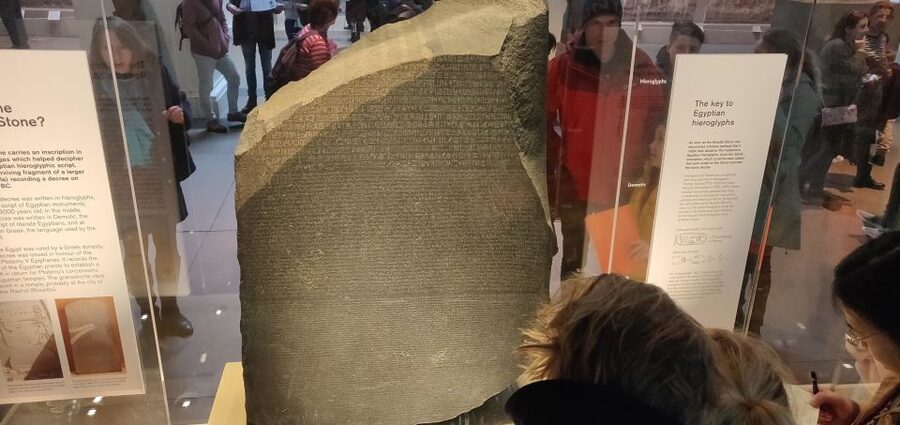
The course gives special attention to the people who learned to read languages that had been silent for centuries. Egyptian hieroglyphs and Sumerian cuneiform are not decorative symbols. They are writing systems that had to be studied, compared, and patiently interpreted.
The Rosetta Stone is the obvious star here, but the explanation around it is what makes the object worthwhile. You learn why the stone was so important for deciphering Egyptian hieroglyphs and how scholars used different versions of the same text to make progress.
Cuneiform presents a different challenge, with wedge-shaped marks pressed into clay. The story of its interpretation shows archaeology at its most methodical. You see how language, historical records, and physical evidence work together.
I especially like this part for families with older children and teenagers. It turns an ancient language into a puzzle rather than a list of dates. It also gives you a better way to look at other inscriptions in the museum later.
Egypt, Assyria, Greece, and Rome
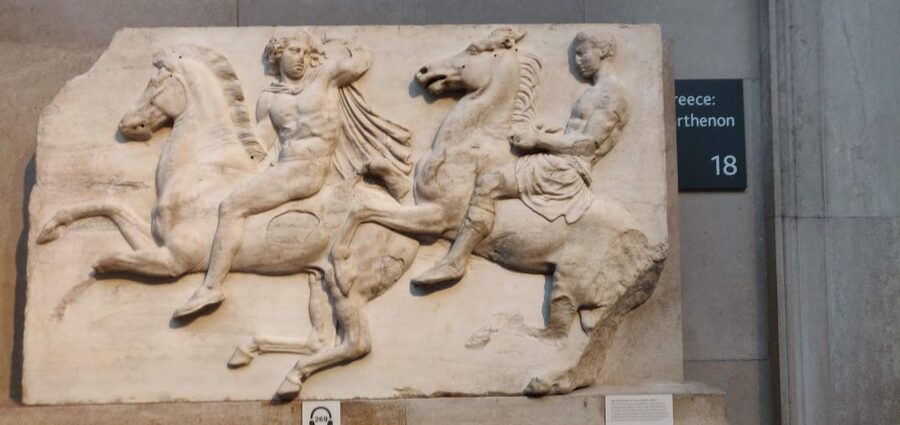
The Ancient Egypt galleries provide some of the museum’s most recognizable material, but the guide keeps the focus on civilization and evidence rather than simply pointing out impressive objects.
You consider how Egyptian society was organized, how writing served different purposes, and how later scholars reconstructed the culture. The route then reaches Assyria, where imperial power, warfare, kingship, and large-scale art offer a different model of civilization.
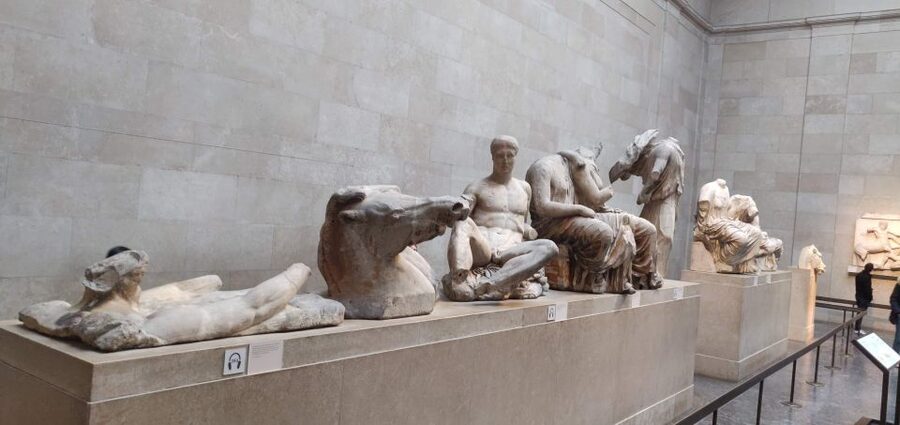
Ancient Greece and Rome broaden the story again. Their galleries raise questions about art, politics, empire, religion, and cultural influence. The Parthenon Marbles are among the most famous objects in the building, and seeing them with historical context helps you understand their place in Greek culture and in modern museum debates.
Rome also gives the course a chance to discuss what happens when an empire weakens and collapses. The broader lesson is useful: civilizations do not simply vanish. Their systems change, populations move, and later societies reuse parts of what came before.
More Guided Tours in London:
- Royal Historic Pubs Walking Guided Tour in London
★ 5.0 · 803 reviews - London: Westminster Abbey Tour with a Royal Heritage Guide
★ 4.7 · 614 reviews - London: Hot Tub Boat Guided Historical Docklands Cruise
★ 4.6 · 62 reviews - History and Hauntings of Salem Guided Walking Tour
★ 5.0 · 14,564 reviews
Vikings, the Aztecs, and the Wider Story
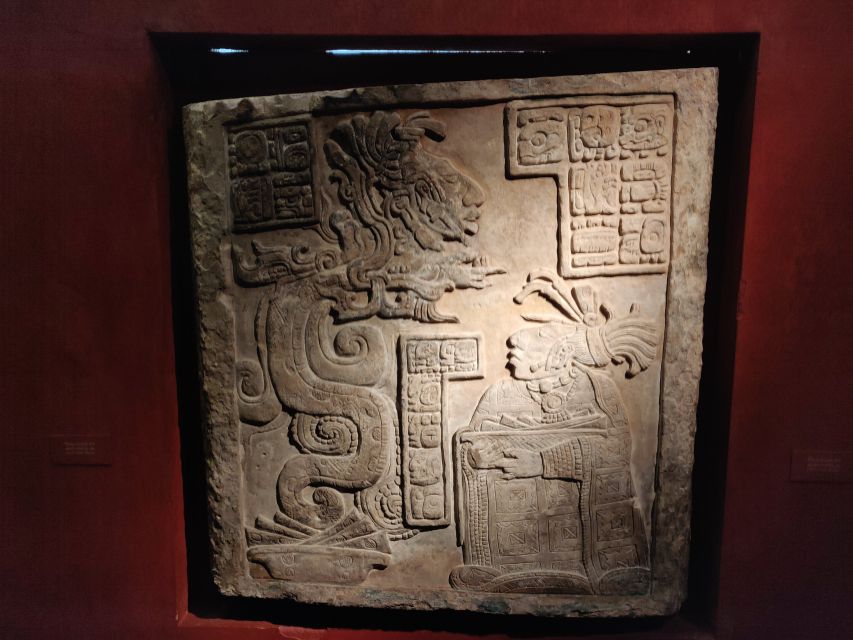
The itinerary does not stop with the classical Mediterranean. You also visit material linked with the Vikings and the Aztecs, helping connect European and American histories to the larger human story.
The Sutton Hoo Helmet gives the early medieval world a powerful object. It is not just a striking piece of equipment. Its burial setting and craftsmanship raise questions about status, belief, trade, and leadership.
The Lewis Chessmen offer a more approachable way into medieval culture. These small figures have personality, but they also point to travel, gaming, social rank, and long-distance connections.
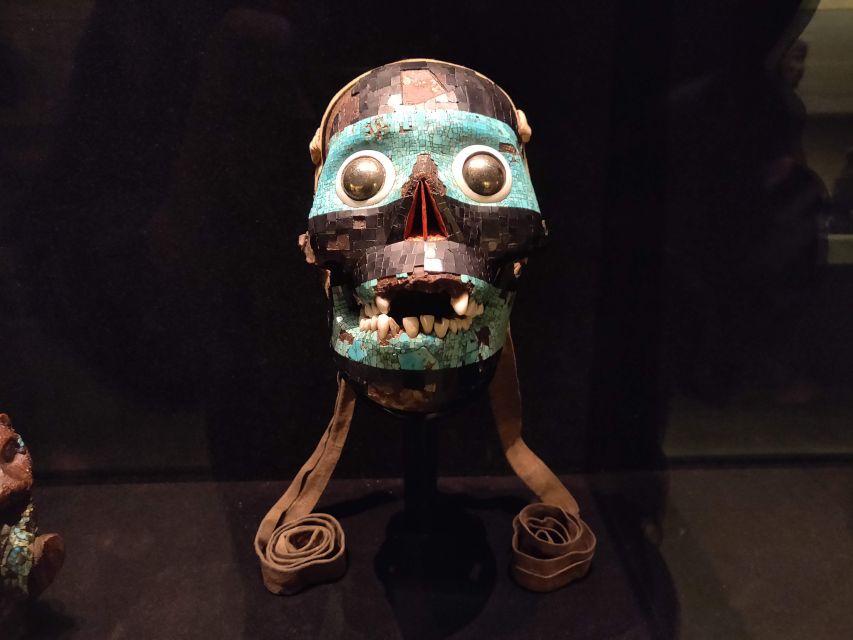
The Aztec material adds another major civilization to the route. That matters because the British Museum’s collection can otherwise pull your attention toward Egypt, Greece, and Rome. This section reminds you that complex states and rich cultural traditions developed in many parts of the world.
You will not see every room or every period in five and a half hours. That is not a flaw so much as a fact of the museum. The route selects objects that support the course’s main ideas, rather than trying to cover the entire building.
The Royal Game of Ur Breaks Up the Lecture
Five hours of museum teaching can sound daunting. The Royal Game of Ur helps keep the day active.
You get to play one of the world’s oldest known board games, using rules deciphered by British Museum scholars. It is a small but memorable part of the experience because it turns an archaeological question into something you can test yourself.
The game also makes an important point: ancient people were not only builders, rulers, priests, and soldiers. They played games, competed, made choices, and spent leisure time much as people do now.
For children and teenagers, this can be the moment that brings the whole course together. For adults, it offers a welcome change of rhythm and a useful reminder that objects become more meaningful when you understand how they were used.
How Archaeologists Date Buried Objects
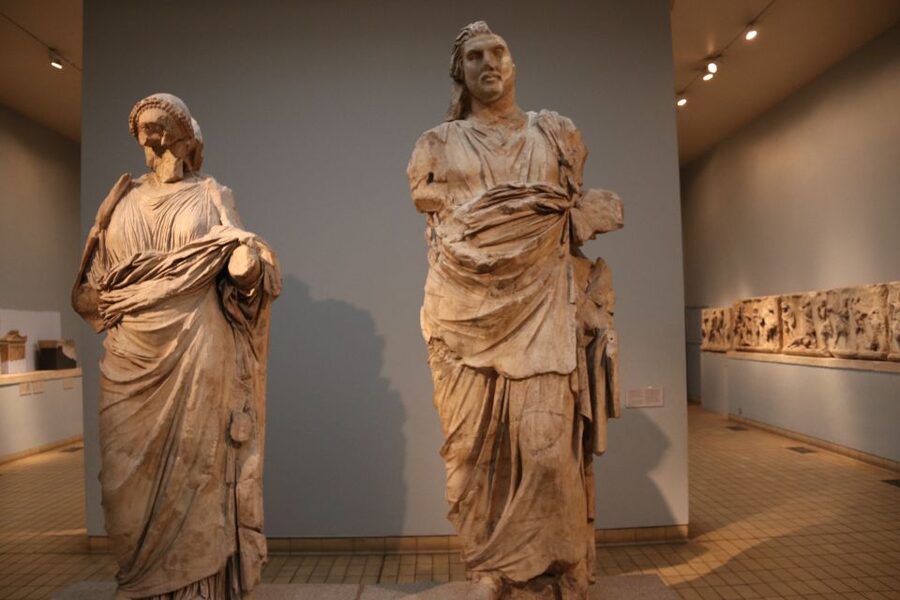
The final part focuses on archaeological method. You learn how ancient sites become buried, how objects are dated, and why some questions remain unsettled.
This section is valuable because museum displays can make the past look certain. In practice, archaeologists work with partial evidence. They compare layers, materials, styles, written records, and scientific tests. A small mistake in context can change the meaning of an object.
The course also explains why an artifact’s location matters. An object removed from its original setting may still be beautiful, but archaeologists lose information about what it was used for, who owned it, and what surrounded it.
That lesson gives you a sharper eye for museums after the tour. You begin to notice not only the object, but also its date, material, original setting, and the questions that remain unanswered.
What Five and a Half Hours Feels Like
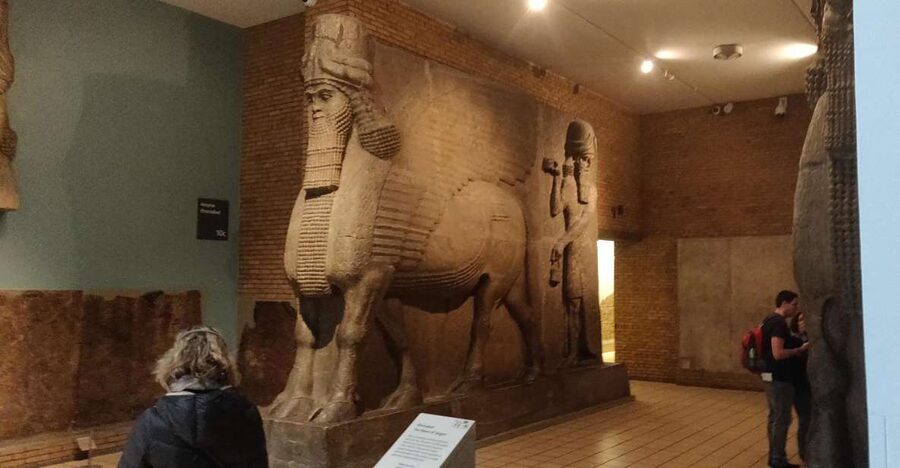
The full session lasts about 5.5 hours, including a break. You should treat it as a full half-day appointment, not a quick highlights tour.
Wear comfortable shoes. You will walk through several galleries and may spend long stretches standing. A folding stool is available at the entrance, and it can be a very good idea, especially for older visitors or anyone who tires easily.
Bring water. Lunch is not included, and the break lasts about 40 minutes. You can bring a packed lunch or buy food at one of the museum’s outlets, but the break can pass quickly, so plan ahead.
Large bags and luggage are not allowed. A day pack backpack may be acceptable, but keep it modest and avoid arriving with suitcases or bulky shopping bags.
The museum can be crowded, especially on a Saturday. Rossa’s strong voice helps in busy rooms, but you should still expect occasional noise and limited space around popular objects.
Is the $81 Price Good Value?
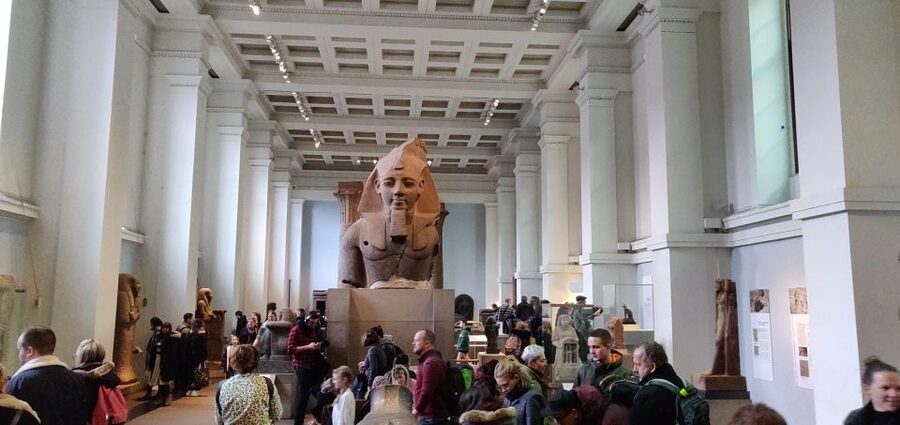
At $81 per person, this is not the cheapest way to visit the British Museum. General entrance to the museum is free, so you are paying for the archaeologist-led course, the guided route, the teaching, and the separate entrance arrangement.
The value depends on how you would otherwise use the museum. If you enjoy building your own route, reading labels, and spending an hour with one object, you may prefer a free visit at your own pace.
If you want a clear explanation of human civilization and the methods behind archaeology, the price makes more sense. A good guide saves you from spending hours moving between galleries without a plan. You also get a connected lesson rather than disconnected facts.
The experience is particularly useful on a first visit. It gives you a framework, then leaves you better prepared to return on your own. Several participants finished wanting more time to wander independently, which is a good reason to consider adding a separate museum visit if your schedule allows.
Who Will Enjoy This British Museum Course?
I would recommend it most strongly to adults and families who like history, archaeology, museums, and big questions about the human past. Teenagers can enjoy it too, especially if they respond well to stories, puzzles, and hands-on activities.
It suits curious first-time visitors better than people seeking a fast photo stop. The course asks for attention, and its strength is the explanation between the objects.
Rossa’s style is energetic and story-led. He has been praised for keeping a 13-year-old engaged for the entire session, answering questions, and making difficult subjects accessible. That does not mean every child will want five hours of archaeology, so think honestly about your family’s attention span.
The tour is wheelchair accessible and suitable for people with limited mobility, but contact the provider in advance if you have special requirements. The amount of walking and standing still matters, so a portable stool may help.
Booking Details and Flexible Plans
The experience costs $81 per person and includes a qualified archaeologist guide, the guided tour, and entrance arrangements. The British Museum itself has free admission, but this activity includes a separate entrance designed to help the group get inside efficiently.
You can cancel up to 24 hours before the start time for a full refund. You can also reserve now and pay later, which is useful if your London schedule is still changing.
The tour is offered in English with a live guide. Check the available start times when booking, since the daily schedule is not fixed in the details provided here.
Should You Book It?
Book this course if you want the British Museum to explain itself. You will see famous objects, but the real reward is learning how they fit into the story of human civilization and how archaeologists know what they think they know.
Skip it if you only want a short highlights visit or prefer complete freedom to wander. Five and a half hours is a long commitment, and lunch planning, comfortable shoes, and some tolerance for standing are essential.
For families with an interested teenager, first-time museum visitors, and anyone fascinated by ancient languages or archaeological detective work, I think the $81 is well spent. Rossa’s teaching gives the museum a human scale, and the Royal Game of Ur provides just enough play to keep the long session moving.
FAQ
How long does the British Museum archaeology course last?
The experience lasts approximately 5.5 hours, including a break.
Where do I meet the guide?
Meet outside Russell Square Station. The guide will hold an iPad showing the local partner’s name. Arrive 10 minutes before the start time.
What language is the tour in?
The live tour is conducted in English.
Is lunch included?
No. Lunch is not included. You have about 40 minutes for a break and can bring food or buy something at one of the museum’s food outlets.
Is the tour wheelchair accessible?
Yes. The activity is wheelchair accessible and suitable for people with limited mobility. Contact the provider in advance if you have special requirements.
Can I cancel the booking?
Yes. You can cancel up to 24 hours in advance for a full refund. Reserve now and pay later is also available.
Just added around London
- London: Medieval History Walking Tour from The Tower★ 4.9 · 318 reviews
- London: Winston Churchill and London in WWII Walking Tour★ 4.8 · 143 reviews
- London: Witches and History Bankside Walking Tour★ 4.8 · 223 reviews
- London: Historic London Pub Walking Tour★ 4.8 · 94 reviews
- London: Hot Tub Boat Guided Historical Docklands Cruise★ 4.6 · 62 reviews
- London: Jack the Ripper Tour with Historic Pub Stops★ 4.8 · 360 reviews
- London: British Museum Tour with Archaeologist Guide★ 4.9 · 68 reviews
- London: Churchill War Rooms & WW2 Westminster Private Tour★ 5.0 · 34 reviews
London History Tours, compared.

London: Historic Pubs of Central London Walking Tour
Read our review →
WW2 London Walking Tour & Churchill War Rooms Entrance Ticket
Read our review →
London: Westminster WW2 Tour & Churchill’s War Rooms Ticket
Read our review →
London: Soho Music and Historic Pubs Walking Tour
Read our review →
Royal Historic Pubs Walking Guided Tour in London
Read our review →
London in WW2 Walking Tour with Churchill War Rooms Visit
Read our review →Browse the lists this tour appears in