
Review · LONDON
London: British Museum Tour with Archaeologist Guide
The British Museum can swallow a morning before you find your bearings. This 2.5-hour archaeologist-led tour gives you a clear route through its greatest rooms, from the Rosetta Stone and Ramses II to the Lewis Chessmen and Sutton Hoo hoard. Guide Rossa brings the objects to life with stories, context, and a sharp eye for the details easy to miss.
I like two things here: you see the museum’s essential treasures without trying to cover every room, and you get the depth of an archaeologist rather than a quick list of dates. I also like that the tour leaves you at the museum, so you can return to the galleries that caught your attention.
The trade-off is simple: the British Museum can be crowded, and Rossa sometimes spends a long time on one object. If you want to race through every major gallery, this may feel slow. If you prefer fewer objects with better explanations, that pace is a strength.
Key points to know before you book
- Rosetta Stone and Parthenon Marbles: See two of the museum’s most famous displays with the historical background that makes them more than photo stops.
- Sutton Hoo and King Raedwald: Learn how this remarkable Anglo-Saxon burial hoard opens a window onto Britain’s early medieval world.
- Rossa’s storytelling: Expect an archaeologist who uses strong stories, clear explanations, and historical notes to connect objects with their makers and discoverers.
- A five-minute walk: Meet at Russell Square Station, then walk with the group to the museum entrance.
- Skip-the-line entry: The tour uses a separate entrance for its museum entry slot, helping the group get inside on time.
- Good for families: The stories and varied collection work well for adults and children, including teenagers who may tire of long museum labels.
Why a guided route helps at the British Museum
The British Museum is not a small, tidy collection you can casually stroll through. Its rooms cover ancient Egypt, Assyria, Greece, Rome, the Viking world, the Americas, Easter Island, and Britain’s early medieval past. Without a plan, you can spend half your time checking maps and still miss the objects you came to see.
This tour solves that problem with a focused route. You are not promised every gallery, and that is the point. In 2.5 hours, the guide concentrates on major works and selected personal favorites, giving you time to listen rather than sprint from case to case.
I find this approach especially useful on a first visit. The museum’s labels can tell you what an object is, but they cannot always explain why it mattered, who found it, or what scholars still debate. Rossa adds those links. His archaeology background gives the tour a stronger sense of place and period than a standard highlights walk.
The result is not simply a checklist of famous items. You get a chain of human stories: rulers commissioning enormous statues, scribes recording languages, warriors carrying game pieces, and archaeologists piecing together evidence from objects left behind.
More Archaeological Site Tours in London:
- London: British Museum Archaeology Course and Guided Tour
★ 4.7 · 113 reviews - Pompeii: Entry Ticket and Guided Tour with an Archaeologist
★ 4.8 · 19,459 reviews - Athens: Acropolis & up to 5 Archaeological Sites Combo Pass
★ 4.2 · 13,904 reviews
Meeting at Russell Square at 9:45 a.m.
Your guide meets you at the entrance to Russell Square Station, holding a tablet marked Spirit of Discovery. The group leaves promptly at 9:45 a.m. for the five-minute walk to the British Museum.
That timing matters. The museum entry slot is fixed, so the guide cannot wait for late arrivals. Plan to reach Russell Square Station early enough to find the correct entrance and gather without rushing. If you are delayed, call the tour provider for directions to the group.
The walk itself is short, but it gives the tour a clean start. You meet outside the museum, then approach together rather than trying to find a guide among the columns and crowds at the museum entrance.
Wear comfortable shoes. You will be on your feet for 2.5 hours, and the galleries are large enough that even a focused visit involves plenty of walking. Bring water, but leave large bags and luggage behind. Weapons and sharp objects are not allowed.
Entering the museum through the separate entrance
The tour includes museum entry and access through a separate entrance for the scheduled group. That is useful at a place where the main approach can feel busy, particularly during popular visiting hours.
Do not confuse skip-the-line entry with a private museum opening. Other groups and ordinary museum crowds can still be present inside. The benefit is a more organized arrival and less time spent working out where to go before the tour begins.
The tour is conducted in English, with a live guide. It is wheelchair accessible, though the museum’s crowds may still affect how easily you move from one display to another. If you have specific access needs, it is sensible to confirm details when booking.
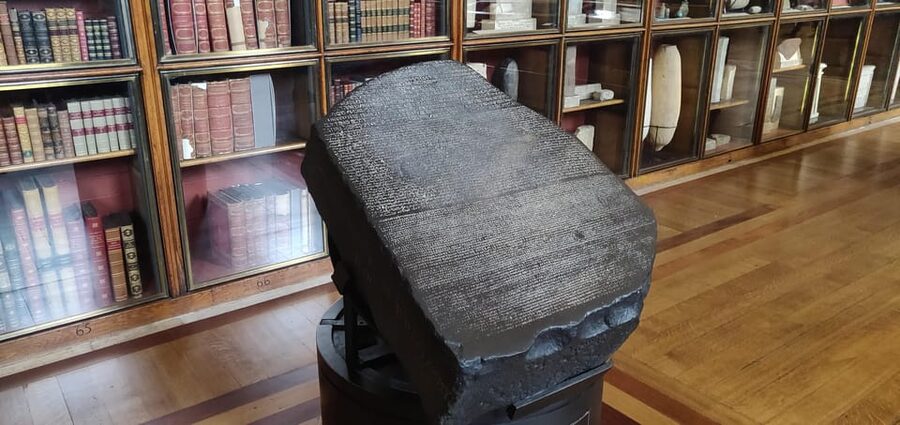
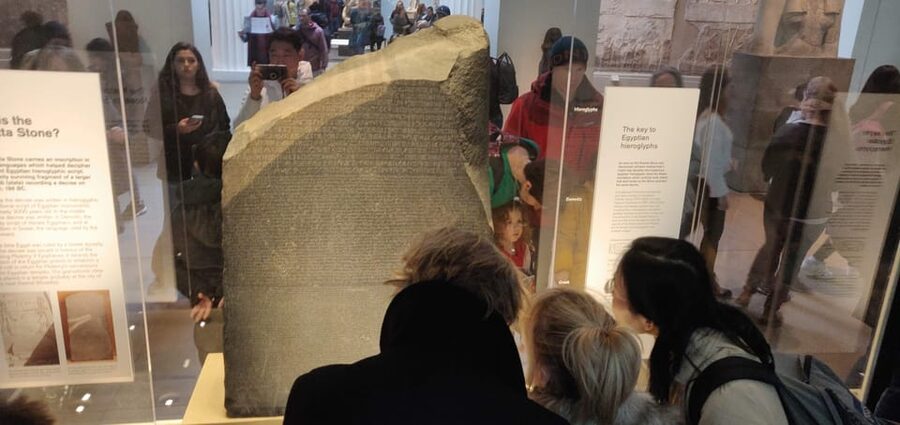
The Rosetta Stone and the making of ancient Egypt readable
The Rosetta Stone is an obvious highlight, but it can be easy to look at it, take a photograph, and move on without grasping its importance. Rossa explains how the same decree appears in three scripts, including Egyptian hieroglyphs, and why that repetition helped scholars work out a writing system that had long puzzled them.
This is the sort of explanation that makes a famous object useful rather than merely famous. You begin to see the stone as a working document tied to power, language, and administration. Its importance comes not only from its appearance, but from the bridge it provided between known and unknown forms of writing.
The Egyptian galleries also include the colossal statue of Ramses II. Its size gives you an immediate sense of royal authority, but the guide’s role is to add the human and political meaning behind the monument. Large statues were not just decoration. They projected control, memory, and the ruler’s place in the world.
You may spend several minutes with one object here. That is worthwhile if you enjoy understanding how evidence works. It is less ideal if you want a fast procession of every Egyptian display.
More Guided Tours in London:
- Royal Historic Pubs Walking Guided Tour in London
★ 5.0 · 803 reviews - London: Westminster Abbey Tour with a Royal Heritage Guide
★ 4.7 · 614 reviews - London: Hot Tub Boat Guided Historical Docklands Cruise
★ 4.6 · 62 reviews - History and Hauntings of Salem Guided Walking Tour
★ 5.0 · 14,564 reviews
Assyrian palaces and the power of carved stone
The Assyrian galleries shift the mood from Egypt’s monumental statues to the palace world of the ancient Near East. The towering reliefs and palace sculptures are among the museum’s most imposing displays.
Rather than treating them as flat wall decoration, the guide places them within the courtly and military world that produced them. Images of rulers, battles, animals, and supernatural figures carried political messages. They showed strength to anyone entering the palace and helped preserve the ruler’s chosen version of events.
This section is a good example of why a specialist guide can improve a museum visit. You see stone carvings every day in a large collection, but it takes context to understand why one scene was repeated, why a creature looked the way it did, or how a palace audience might have read the imagery.
Rossa’s clear voice is useful in crowded rooms. Several people have specifically valued his ability to be heard when the galleries are noisy. Still, a large group around a major display can make it hard to stand in the best position, so stay close and keep an eye on the guide.
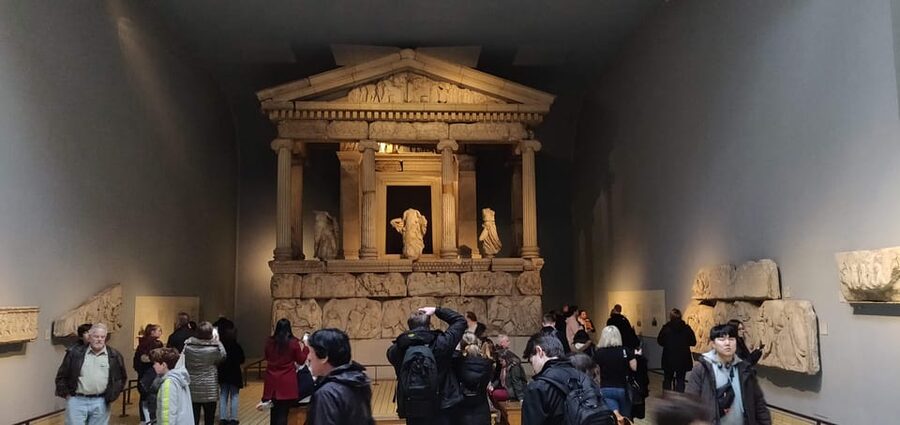
The Parthenon Marbles and the questions they raise
The Parthenon Marbles are among the British Museum’s best-known holdings. Here, the tour moves from ancient Greek art to the modern story of collecting, removal, ownership, and public debate.
You will see sculptural elements associated with the Parthenon, including figures and architectural decoration. The guide explains their artistic and historical importance, but this stop also gives you a chance to think about how ancient objects reached modern museums and why their location remains contested.
That wider frame matters. A good museum tour should not treat every object as an isolated masterpiece. It should show you the route from the original building or culture to the display case in London, including the people involved in discovery and recovery.
If you are most interested in Greek art, you may want to return after the guided portion and spend extra time here. The tour gives you a strong foundation, but 2.5 hours cannot cover every sculpture or every part of the debate in detail.
The Lewis Chessmen and the Viking Age
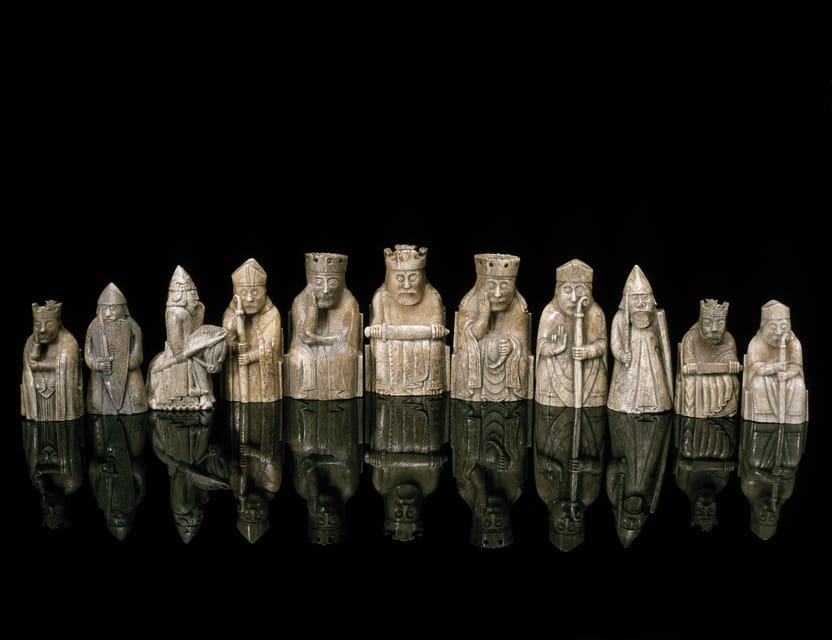
The Lewis Chessmen are a welcome change of scale. After the giant figures of Egypt, Assyria, and Greece, you come face-to-face with small carved pieces that are remarkably expressive.
Their value is not only visual. They offer a route into the social world of the Viking Age, where gaming, craftsmanship, trade, status, and storytelling met. The pieces show how much information can survive in an object made for play.
Rossa uses the chessmen to make the Viking period feel less like a chapter heading and more like a world of individuals. The figures have distinctive expressions and poses, which makes them especially effective for families and younger visitors.
This is one of the tour’s strongest family stops. Children and teenagers can connect with a game more quickly than with a long inscription, and the guide’s stories keep the explanation moving. Adults get the wider setting and the chance to consider how a small set of carved objects can reveal patterns of life from centuries ago.
Sutton Hoo and the mystery of King Raedwald
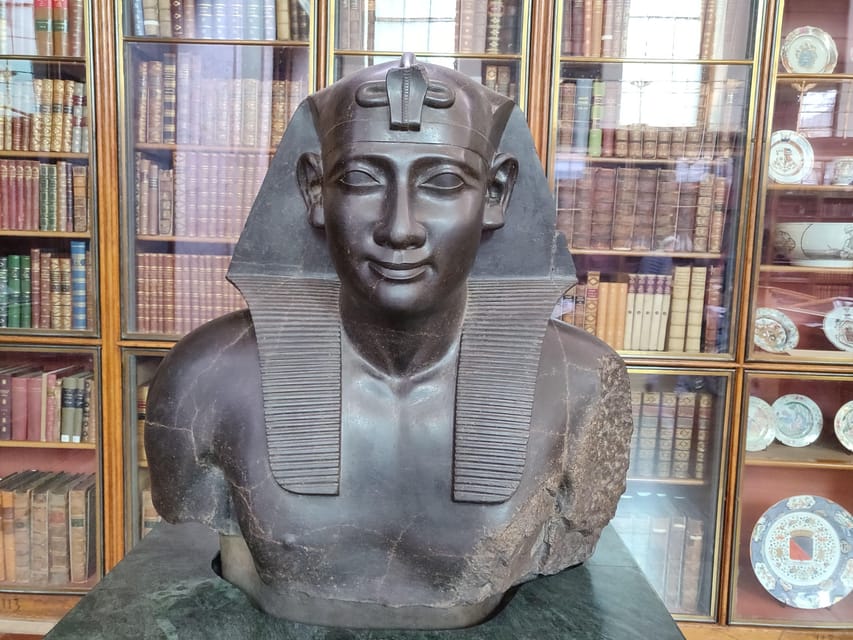
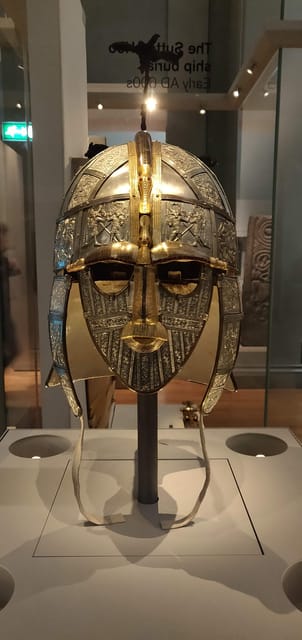
The Sutton Hoo hoard provides the tour’s British chapter. This spectacular collection of objects, linked with the early medieval burial at Sutton Hoo, offers a rare look at the society associated with the mysterious King Raedwald.
The famous ship burial is represented through treasures that suggest wealth, craftsmanship, long-distance connections, and ceremony. The helmet is especially striking, but the wider group of objects matters just as much. Taken together, they show a society that was more sophisticated and connected than the old idea of a simple Dark Ages might suggest.
The guide also brings attention to the people who discovered and recovered the hoard. That part of the story is valuable because archaeology is not only about beautiful objects. It is also about excavation, interpretation, missing evidence, and the difficult work of deciding what a find can truly tell us.
Sutton Hoo is a good late stop because it connects the museum to Britain itself. After seeing civilizations across Egypt, the Middle East, Greece, the Americas, and the Pacific, you return to an important chapter in the history of the British Isles.
Moai statues and the challenge of interpreting distant cultures
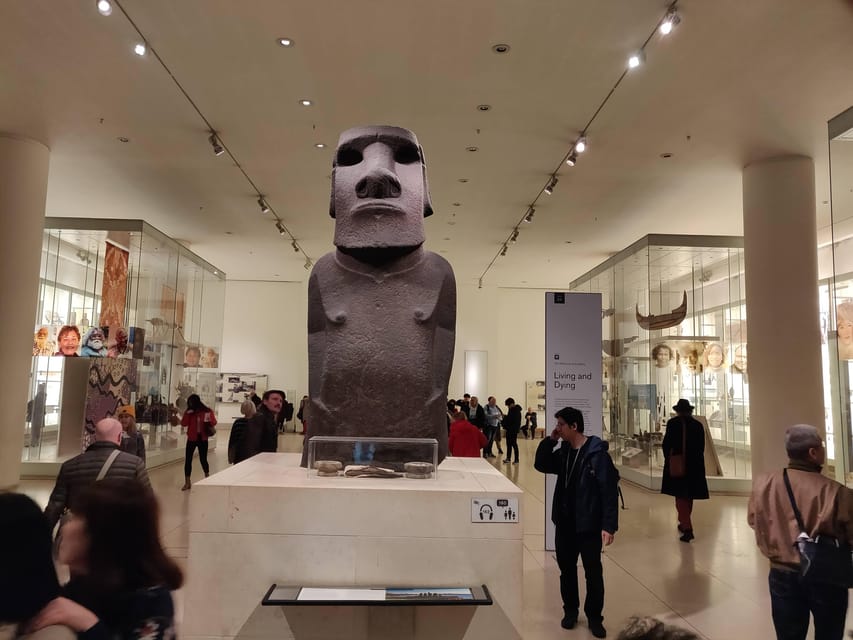
The Moai statues of Easter Island introduce another kind of question. Their monumental faces are familiar, but familiarity can create the illusion that we already understand them.
The tour presents the statues as objects tied to the people and culture that made them, not as strange curiosities placed in a room for spectacle. You hear about the mysteries that remain and the limits of what a museum display can tell you about a distant society.
This stop broadens the tour beyond the usual European and Mediterranean highlights. It reminds you that the museum’s collection covers many regions and that each culture deserves more than a quick label.
As with every stop, the guide has to choose how much time to give it. If the Moai are a personal priority, ask questions during the tour and return to the display afterward for a closer look.
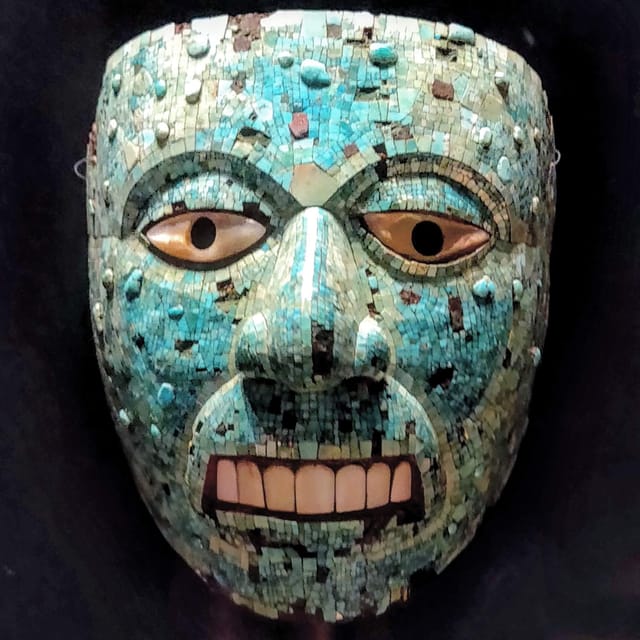
Aztec treasures and a wider view of the collection
The tour also includes the crown jewels of the Aztec Empire. This stop adds the Americas to the route and shows how the museum’s collection moves across centuries and continents.
The strongest part of a stop like this is the connection between material, authority, and ceremony. Royal or sacred objects were not made simply to look attractive. They expressed rank, belief, and the structure of the society that produced them.
The variety keeps the tour from feeling like a narrow march through only Egypt, Greece, and Rome. You move between different cultures and forms of evidence, seeing how archaeologists read objects that served very different purposes.
You should expect selected displays rather than a full tour of every Aztec room. The guide’s job is to build a meaningful route through an enormous museum, not to claim that one morning can explain an entire civilization.
Rossa’s teaching style and tour pace
The guide is the main reason this experience feels different from walking around with an audio guide. Rossa is an archaeologist with a strong speaking voice, an enthusiastic manner, and an ability to turn facts into stories.
He uses historical notes and an iPad during the tour, which helps him prepare carefully and add visual or contextual support. His method focuses on a smaller number of major objects, explaining their history, importance, and the people linked to their discovery.
That depth is the tour’s biggest strength, but it also creates the only recurring caution. Some explanations can run long. If you want to see the maximum number of galleries, you may wish that the group moved on sooner.
I see this as a fair exchange. The British Museum is easy to rush and hard to understand. A few well-explained objects can give you a better mental map than dozens of quick stops. At the end, Rossa offers suggestions for spending more time in the museum on your own, so you are not finished with the building when the guided portion ends.
Is the $58 price good value?
At $58 per person, the tour costs more than entering a free museum on your own. The value depends on how you use your time.
You are paying for the archaeologist guide, the planned route, the museum entry arrangement, and the explanations that connect famous objects with wider stories. If you have only one visit to the British Museum, that structure can prevent a great deal of wandering.
The price looks especially reasonable for families, first-time visitors, and anyone with limited time in London. A guide who keeps teenagers engaged can also save a parent from trying to translate every label into an interesting story.
Independent museum visitors can still get a lot from the British Museum, especially if they have already chosen a few galleries. You may not need this tour if you prefer to set your own pace, read extensively, or focus on one collection for several hours.
The tour includes no food or drinks, so plan around the morning schedule. Bring water and arrange anything you want to eat separately.
Who should book this British Museum tour?
Book it if you want the major sights with real explanation rather than a quick photo stop. It is particularly well suited to:
- First-time British Museum visitors
- Families with children or teenagers
- People with only a few hours for the museum
- History and archaeology enthusiasts
- Anyone who finds large museums overwhelming
- Visitors who enjoy stories about discovery as much as the objects themselves
You may want a different approach if you prefer complete freedom or want to spend a long time in one specialist collection. The fixed start, English-only guiding, and focused route are helpful for some people and restrictive for others.
Cancellation is free up to 24 hours before the start, and you can reserve now and pay later. Those terms make it easier to fit the tour into a changing London schedule.
Should you book it?
I would book this tour for a first British Museum visit, especially if you have a limited morning and want the famous objects placed in context. Rossa’s archaeology training, storytelling, and clear voice give the visit more purpose than wandering from case to case.
The main question is pace. You will not see everything, and some stops receive a long explanation. That is a good deal for you if you want to understand why the Rosetta Stone, Sutton Hoo hoard, Lewis Chessmen, and Parthenon Marbles matter. If your goal is to cover the largest possible number of rooms, explore independently after entering instead.
FAQ
Where does the British Museum tour meet?
Your guide meets you at the entrance of Russell Square Station. The guide holds a tablet displaying Spirit of Discovery.
What time does the group leave Russell Square?
The group leaves promptly at 9:45 a.m. to reach the museum for its entry slot.
How long is the guided tour?
The guided British Museum visit lasts 2.5 hours.
Where does the tour finish?
The tour finishes at the British Museum.
Is museum entry included?
Yes. Entry to the British Museum and the British Museum tour are included.
What language is the tour conducted in?
The live tour is conducted in English.
Is the tour wheelchair accessible?
Yes, the activity is listed as wheelchair accessible.
What should I bring, and what cannot I bring?
Bring comfortable shoes and water. Weapons, sharp objects, luggage, and large bags are not allowed.
Just added around London
- London: Medieval History Walking Tour from The Tower★ 4.9 · 318 reviews
- London: Winston Churchill and London in WWII Walking Tour★ 4.8 · 143 reviews
- London: Witches and History Bankside Walking Tour★ 4.8 · 223 reviews
- London: Historic London Pub Walking Tour★ 4.8 · 94 reviews
- London: Hot Tub Boat Guided Historical Docklands Cruise★ 4.6 · 62 reviews
- London: Jack the Ripper Tour with Historic Pub Stops★ 4.8 · 360 reviews
- London: Churchill War Rooms & WW2 Westminster Private Tour★ 5.0 · 34 reviews
- London: Historic Pubs, British Ales & Classic Dishes★ 4.9 · 36 reviews
London History Tours, compared.
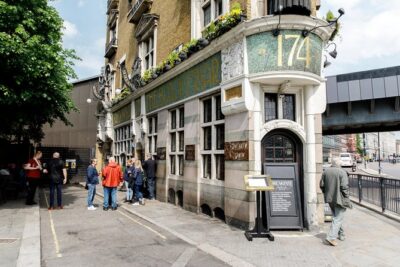
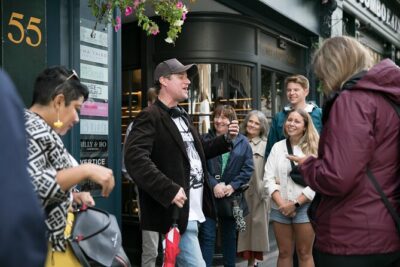

London: Historic Pubs of Central London Walking Tour
Read our review →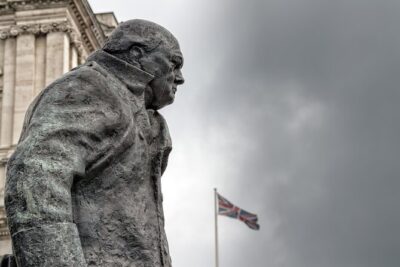
WW2 London Walking Tour & Churchill War Rooms Entrance Ticket
Read our review →
London: Westminster WW2 Tour & Churchill’s War Rooms Ticket
Read our review →
London: Soho Music and Historic Pubs Walking Tour
Read our review →
Royal Historic Pubs Walking Guided Tour in London
Read our review →
London in WW2 Walking Tour with Churchill War Rooms Visit
Read our review →Browse the lists this tour appears in