
Review · ATHENS
Athens: National Archaeological Museum Ticket w/ Opt. Audio
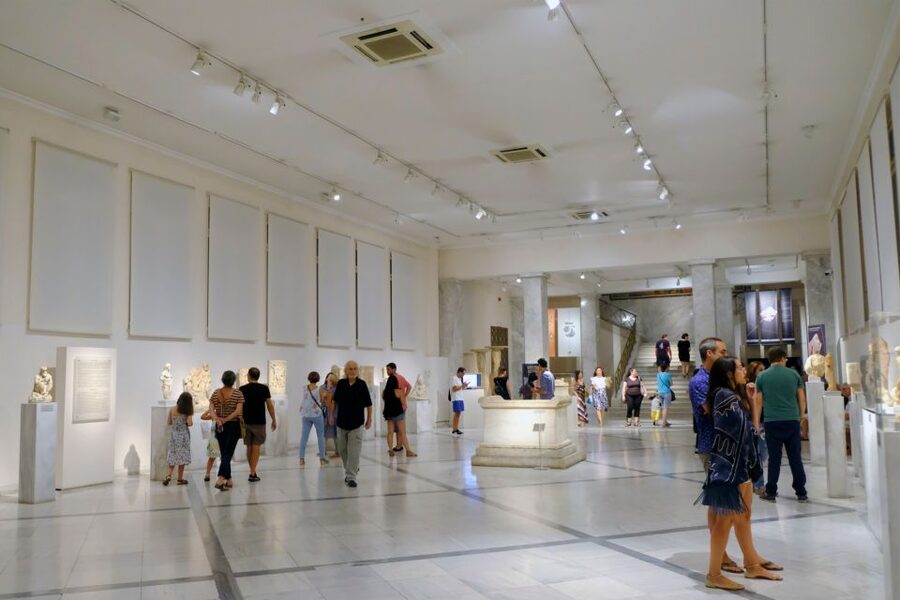
The National Archaeological Museum gives you ancient Greece in one grand sweep, from prehistoric finds to celebrated classical sculpture. The Mask of Agamemnon, Antikythera mechanism, Cup of Nestor, and statues of Zeus and Poseidon are the headline acts, but the real pleasure is seeing how Greek art changed over centuries.
I like the pre-booked admission, which can save time at the ticket counter, and the freedom to set your own pace. You can spend an hour on the famous pieces or several hours following the galleries by period. The main drawback is the optional audio app: it can be hard to navigate, some links may fail, and it uses plenty of phone battery.
Key points at a glance
- See famous ancient treasures: Look for the Mask of Agamemnon, Antikythera mechanism, Cup of Nestor, Ring of Theseus, and major statues.
- Move through Greek history: Galleries cover prehistoric cultures, Mycenae, Athens, Crete, Santorini, and later periods.
- Use a timed ticket: Scan your e-ticket at the entrance and avoid buying an admission ticket on site.
- Choose your level of help: The English self-guided audio tour is optional, so you can explore independently if you prefer.
- Plan around the hours: Tuesday opening begins at 1 PM, and seasonal hours change.
- Bring the basics: You need headphones for the audio tour and a passport or ID card, with a copy accepted.
Why this museum deserves a place in your Athens plans
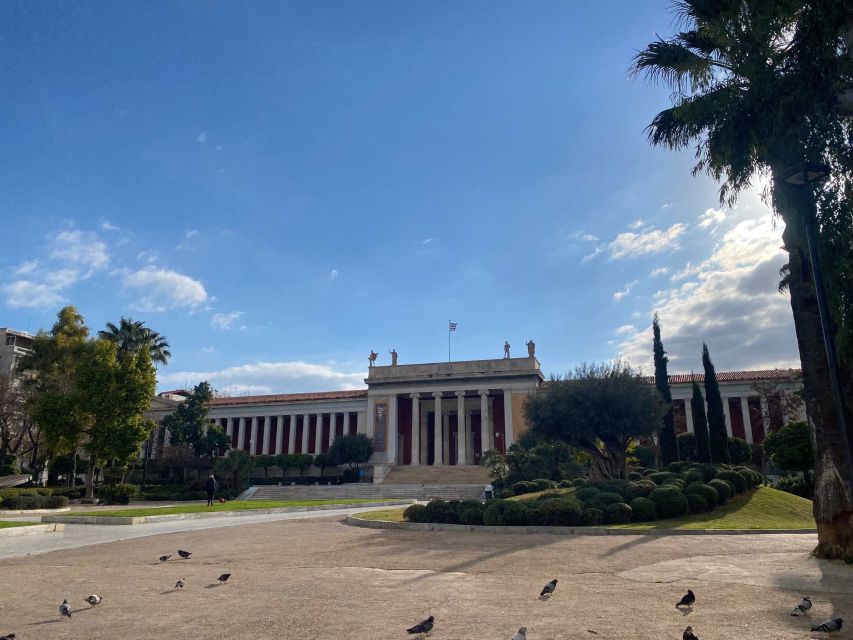
Athens has no shortage of ancient sites, but the National Archaeological Museum helps you understand what you see outdoors. At the Acropolis, you encounter monuments in their original setting. Here, you can stand close to objects brought together from sites across Greece and follow the artistic story in a more orderly way.
The museum is the largest archaeological museum in Greece and one of the world’s major museums devoted to Greek antiquity. That scale is both its strength and its challenge. You will find far more here than you can absorb in one quick visit, so a little planning pays off.
I would not treat this as a simple rainy-day filler. The collection includes objects that appear in history books, but the experience changes when you see the actual size, surface, and detail of the originals. A vase, gold mask, or marble figure that looks small in a photograph can have a much stronger presence in person.
More Archaeological Site Tours in Athens:
- Athens: Acropolis & up to 5 Archaeological Sites Combo Pass
★ 4.2 · 13,904 reviews - Athens National Archaeological Museum E-Ticket with Audio Guide
★ 3.0 · 57 reviews - Buggy Tour in Ancient Ruins and Temples around Athens-SOUNIO Poseidon Temple
★ 5.0 · 56 reviews
Getting there from Omonoia
The nearest metro station is Omonoia, making the museum fairly easy to reach from central Athens. From the station, allow time for the walk and for finding the correct entrance. The building itself is an impressive start to the visit, with a broad, formal appearance that suits the collection inside.
Your ticket is sent by email for the selected date and time slot. At the entrance, scan the e-ticket rather than joining the line for people buying tickets. Pay attention to the signs because the line for ticket holders, the ticket-purchase line, and the area for collecting an electronic narrator device can be different.
The timed entry is most useful when the museum is busy or when your day has several fixed plans. In winter, lines may be short enough that pre-booking is less important. Even then, having the ticket ready on your phone removes one small task from an already busy Athens day.
Bring your passport or identity card, or a copy. The online ticket is intended for visitors over 25. Children under five and eligible younger EU citizens can receive free or reduced admission at the ticket booth with identification. Non-EU citizens under 25 may receive reduced admission from April through October with ID, so check the official conditions before paying the adult price.
A walk through Greek antiquity
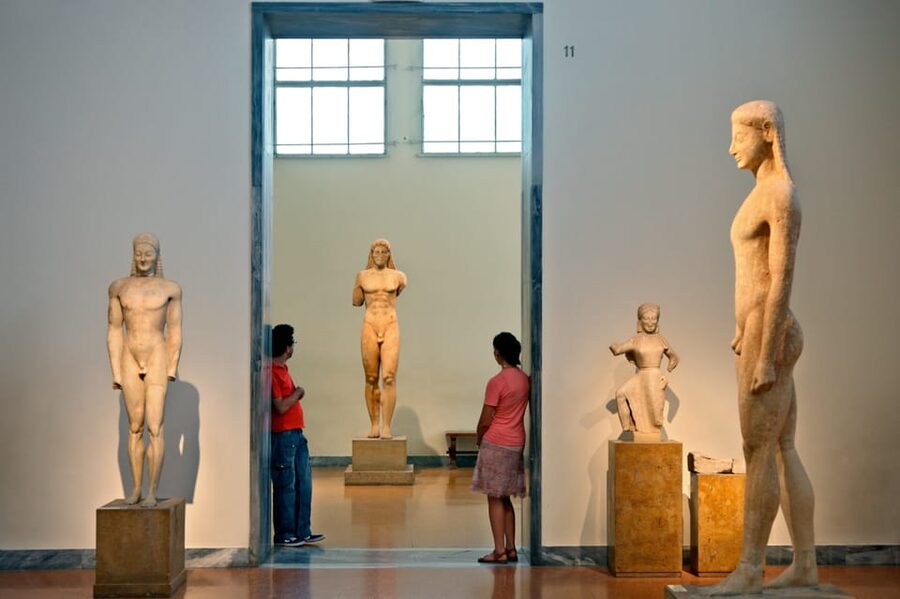
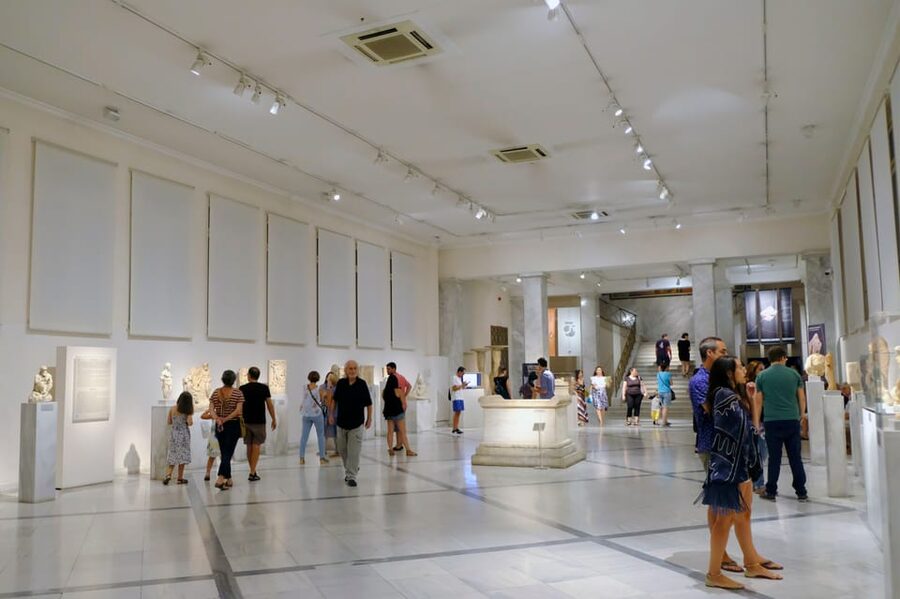
The museum’s rooms cover different periods and places, so you can build your visit around the subjects that interest you most. The layout generally follows historical and cultural groupings, though it is not always obvious which direction you should take next.
Begin with the prehistoric material if you want the broadest story. Finds connected with Mycenae, Crete, and early Greek cultures show that the familiar classical world did not appear all at once. You see older techniques, symbols, burial objects, pottery, and decorative work leading toward later Greek forms.
The Mycenaean material is especially important for visitors drawn to Homeric legend. This is where you find the Gold Deathmask of Agamemnon, along with other objects linked to the early Bronze Age world. The name connects the artifact to the famous king of the Trojan War, though the museum’s real value is the chance to examine the object within its archaeological setting rather than only its mythic label.
Pottery and smaller objects deserve more time than a quick glance. Their painted scenes, shapes, and patterns reveal daily habits as well as artistic skill. If you rush from statue to statue, you will miss much of the evidence about trade, ritual, dining, burial, and home life.
The famous objects worth seeking out
The Antikythera mechanism is one of the museum’s most memorable objects. Found in a shipwreck, it is an ancient geared device connected with astronomical calculations. Even if you are not interested in mechanical history, its survival is startling. It reminds you that ancient technology was more sophisticated than the simple stone-and-marble picture many people carry in their heads.
The Cup of Nestor and Ring of Theseus add a more personal scale to the collection. These are not monumental buildings or giant statues. They are objects made to be held, worn, or used, and they help turn distant antiquity into something more human.
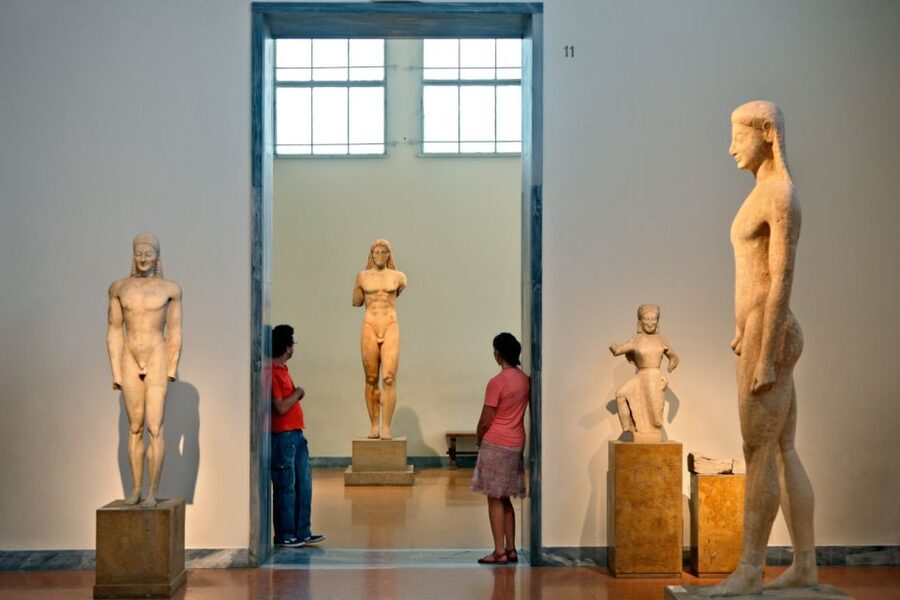
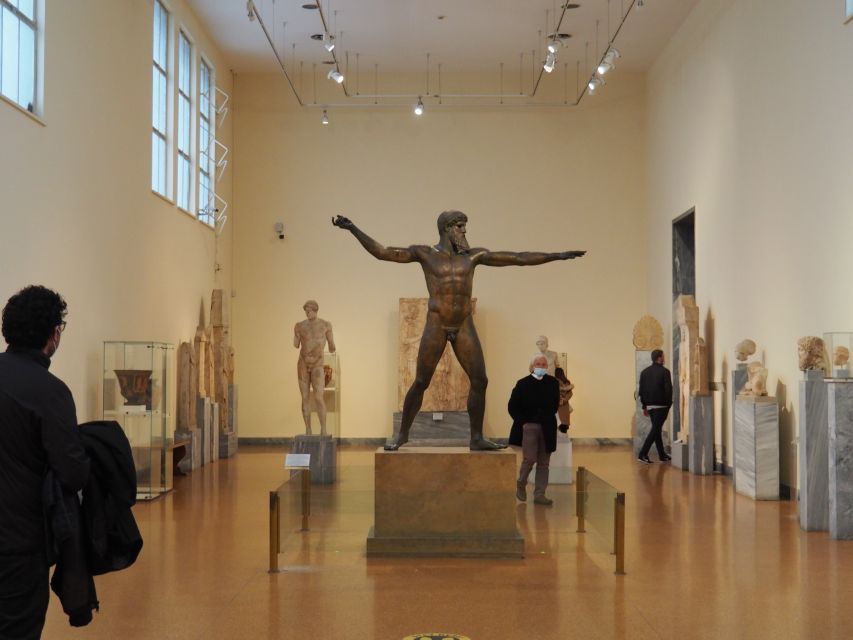
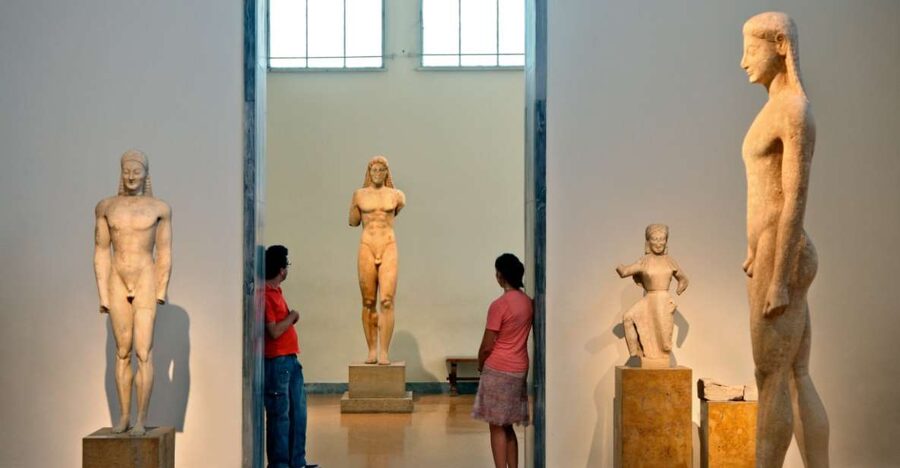
The statues of Zeus, Poseidon, Aphrodite, and other figures provide the grand visual moments. Marble and bronze sculpture can look familiar from books and photographs, but close viewing lets you study posture, expression, balance, and the way artists suggested movement.
The exact viewing experience depends on which galleries are open. Some major rooms have occasionally been closed for part of a visit, so you should allow for the possibility that not every display will be accessible on the day you go. That is a good reason to avoid building an entire Athens schedule around seeing one single object.
More Self-Guided Tours in Athens:
- Athens: Ancient Agora E-Ticket and Audio Tour
★ 3.9 · 413 reviews - Athens: Roman Agora & Ancient Agora E-ticket & 2 Audio Tours
★ 4.1 · 107 reviews - Half Day Ancient Corinth and Canal VR Audio Guided Tour
★ 5.0 · 104 reviews - Ancient Agora Self-Guided Tour with 3D & Audio (No Ticket)
★ 3.9 · 59 reviews
The Santorini collection and ancient daily life

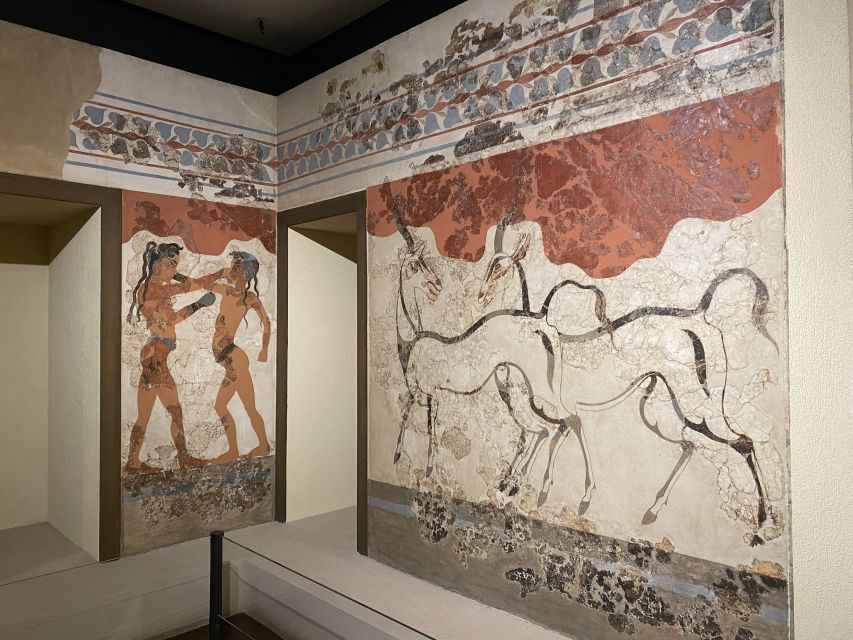
The second-floor material connected with Santorini gives the museum a different feel. Here you can see paintings, amphorae, jugs, and other objects preserved by volcanic ash after the major eruption of the island.
This section is valuable because it moves away from the usual focus on classical Athens. The preserved wall paintings and household objects offer clues about color, nature, trade, clothing, and daily life in the Aegean world. If you have visited Santorini for its cliffs and sunsets, this collection provides an older and far less polished side of the island’s story.
Some labels are placed low and may be difficult to read in dimmer rooms. The museum is generally well laid out, but not every gallery has the same lighting or seating. Wear comfortable shoes, particularly if you plan to explore beyond the best-known rooms.
Should you add the English audio tour?
The optional English audio tour can add useful background, especially if you know little about Greek art or want more than the display labels provide. It is self-guided and designed by professional guides, so you can listen without joining a group or following a fixed schedule.
The catch is the app. The route does not always flow naturally, and some references may not activate. At times it can send you across the museum to find an object that was described as if it were nearby. You may spend more energy managing the tour than looking at the collection.
I would treat the audio as a supplement, not as the main reason to book. Download or open everything before entering if possible, bring headphones, and carry a portable charger. The app can use a large amount of phone battery. If it misbehaves, you can still enjoy the museum with the labels and your own route.
The ticket options also mention a self-guided audio tour for Athens’ Old Town and Plaka. Check exactly what is included in the option you select, since the museum audio is listed only with certain choices. Do not assume that every ticket includes both audio tours.
How much time should you allow?
One hour is enough for a brisk look at the major highlights. That works if you are fitting the museum between other plans or mainly want the famous sculpture and the Antikythera mechanism.
I would allow two to three hours for a more satisfying visit. That gives you time for prehistoric material, sculpture, pottery, the Santorini displays, and the objects you discover along the way. The museum is large, and the best rooms are not necessarily close together.
You can explore at your own pace because this is not a guided group visit. That makes the ticket a good fit if you dislike being hurried. It also means you must decide when to move on. Without a plan, you may spend too long in the first rooms and reach the later galleries when your attention is fading.
A simple strategy works well: choose three priorities before entering, then let the rest of the visit unfold around them. For many people, those priorities will be the Mask of Agamemnon, the Antikythera mechanism, and the major statues. Add the Santorini material if early Aegean culture interests you.
Opening hours and the best time to go
Opening hours change by season. From November 1 through March 31, the museum is listed as open Wednesday through Monday from 8:30 AM to 3:30 PM, with Tuesday hours from 1 PM to 8 PM. From April 16 through October 31, Wednesday through Monday hours are listed as 8 AM to 8 PM, with Tuesday again opening at 1 PM.
Special occasions can change these hours, so check before you set out. The Tuesday schedule is particularly important. A booking description that suggests an 8 AM opening every day could leave you waiting outside if your visit falls on Tuesday.
Early morning is a smart choice during the busier months. It can help you avoid cruise crowds and gives you a quieter first hour with the major displays. The museum can also be a welcome break from Athens heat, though some rooms may feel warm in July and August and air conditioning is not equally strong throughout the building.
Price and practical value
At about $30 per person, this is not the cheapest museum admission in Athens. Its value depends on how much of the collection you plan to see and how much you value arriving with a ticket already in hand.
The price makes more sense if you visit during a busy period, want to save time at the ticket counter, or plan to spend several hours inside. It is less compelling in the quiet winter season, when buying at the museum may be simple and queues can be short.
You are paying for admission, not a live guide. The optional audio tour may improve the visit, but its uneven navigation means you should not count on it as a polished replacement for a private or small-group guide. If you enjoy reading labels and setting your own route, the basic ticket may be enough.
The museum is wheelchair accessible. Bring headphones if you select the audio option, and do not forget a charger if your phone will also hold your ticket.
Who will enjoy this visit most?
This experience suits you if you want ancient Greek art without a fixed group schedule. It is especially useful for first-time visitors who want to see major objects quickly, museum fans who can spend half a day with the collection, and families or mixed-interest groups who need the freedom to separate and meet later.
It may be less satisfying if you want a clear, guided route from one masterpiece to the next. The building is large, directional signs can be limited, and the audio app may not guide you smoothly. You need to be comfortable making your own choices.
It is also a strong option when outdoor sightseeing becomes unpleasant. Athens can be hot, and the museum offers hours of indoor viewing, though the temperature is not perfect in every room and there may not be enough seats when you need a rest.
Should you book this museum ticket?
Book it if the National Archaeological Museum is a priority and you want quick, self-paced admission. The collection is exceptional, and the ticket removes the uncertainty of buying at the door during a busy period.
I would skip the audio add-on unless you are happy to manage an imperfect app and carry headphones and extra battery power. Go early, especially from spring through autumn, and check the Tuesday and seasonal hours before leaving.
For a short Athens visit, this is one of the best places to see the larger story behind Greek antiquity. For a longer visit, give it at least two hours and resist the urge to race through. The museum rewards curiosity more than speed.
FAQ
Where is the National Archaeological Museum?
The nearest metro station is Omonoia.
How long is the ticket valid?
The ticket is valid for one day, on the selected date and time slot.
Is the entry ticket sent by email?
Yes. You receive an e-ticket by email and scan it at the entrance.
Is an audio guide included?
The English self-guided audio tour for the National Archaeological Museum is included only when you select an option that contains it.
Is the audio guide available in other languages?
The listed audio guide language is English.
Do I need headphones?
Bring headphones if you plan to use the audio tour.
Do I need identification?
Yes. Bring a passport or ID card. A copy is accepted.
Is the activity refundable?
No. The activity is non-refundable.
Is the museum wheelchair accessible?
Yes, the activity is listed as wheelchair accessible.
Can visitors under 25 buy the same online ticket?
The ticket is intended for travelers over 25. Children under five and eligible EU citizens under 25 may receive free or reduced admission at the ticket booth with identification. Non-EU citizens under 25 may receive reduced admission from April through October with ID.
More Audio Tours in Athens
- Taormina: Ancient Theater Skip-the-Line Ticket & Audio Guide
★ 4.5 · 2,412 reviews - Athens: National Archaeological Museum Ticket & Audio Guide
★ 4.3 · 1,330 reviews - Medieval Torture Museum Ticket with Audio Guide and Ghost Hunting
★ 5.0 · 962 reviews - Gettysburg Battlefield Self-Guided Driving Audio Tour
★ 4.5 · 910 reviews
Just added around Athens
- Small-Group Women History in Ancient Greece Walking Tour★ 5.0 · 38 reviews
- The original Christian tour on Paul’s footsteps in Athens and ancient Corinth★ 4.5 · 25 reviews
- Ancient Athens tour: Acropolis, Parthenon and Acropolis Museum★ 5.0 · 256 reviews
- Ancient Athens Segway Tour with Agora and Kerameikos★ 5.0 · 94 reviews
- Ancient Sparta & Mystras Private Day Tour from Athens★ 5.0 · 52 reviews
- Athens National Archaeological Museum E-Ticket with Audio Guide★ 3.0 · 57 reviews
- Biblical Corinth Taste Faith & History with wine & Oil Tasting★ 5.0 · 28 reviews
- Ancient Corinth, Sanctuary of Hera, Blue Lake & Canal from Athens★ 5.0 · 26 reviews
Athens History Tours, compared.

Athens: Acropolis & up to 5 Archaeological Sites Combo Pass
Read our review →

Historical Delphi One Day Tour with Arachova Stop & Expert Guide
Read our review →
From Athens: Ancient Corinth Day Trip with Canal & VR Guide
Read our review →
Historic Athens: Small Group Electric Bike Tour
Read our review →
Acropolis, Parthenon & Athens Old City Heritage Walking Tour
Read our review →
Private Biblical Tour Ancient Corinth & Isthmus Canal from Athens
Read our review →
Athens: Ancient Corinth & Nafplio Full Day Trip with Swim
Read our review →Browse the lists this tour appears in