Review · PRAGUE
Prague: World War II and Communist History Tour
Prague’s recent past comes sharply into focus on this walking tour, from the Nazi occupation and the assassination of a senior SS official to the 1989 Velvet Revolution. You move through the city while the guide connects Wenceslas Square, the Jewish Quarter, and the resistance church to the people and choices behind the events.
I like the clear sweep from World War II through Communism, and I like the storytelling. Guides such as Adam, Tony, Zach, Daren, and Analisa have been praised for making complicated politics easy to follow. The tradeoff is that this is a history walk first: some stops are ordinary streets where the guide must supply the drama, rather than preserved wartime sites.
Key points to know before you book
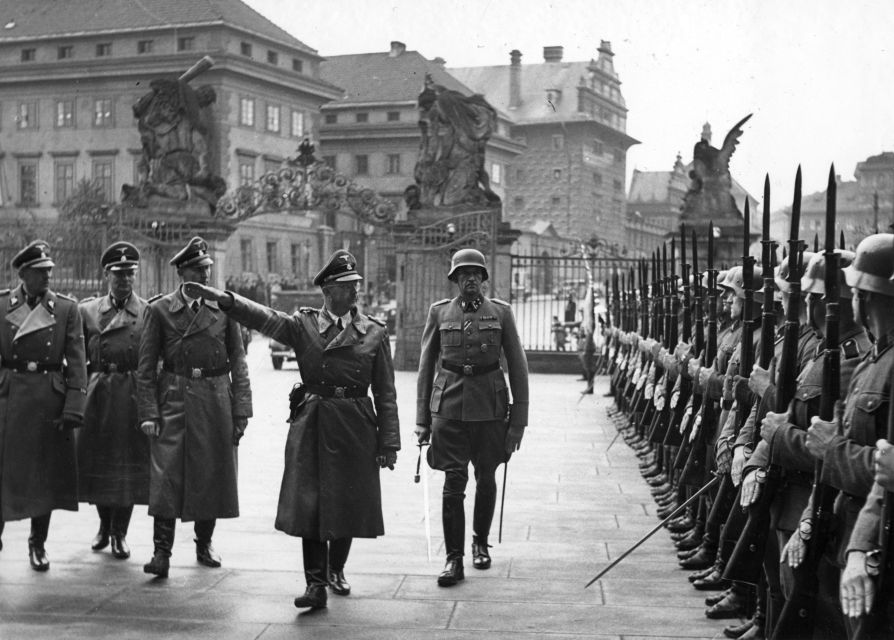
- Operation Anthropoid gives the tour its most powerful wartime moment: Learn where the Nazi head of the security services was assassinated and visit the church connected with the Czech resistance.
- The story runs from Nazi rule to 1989: You cover the occupation, uprising, Communist coup, Prague Spring, Warsaw Pact invasion, Normalization, Charter 77, and the Velvet Revolution.
- The city itself becomes the classroom: Municipal House, the Jewish Quarter, Dancing House, and Wenceslas Square help link political events to Prague’s streets.
- The guide matters here: This tour depends on clear narration, and past guides named Adam, Tony, Zach, Daren, Sean, Kevin, Amanda, and Analisa were singled out for strong storytelling.
- Expect a brisk 150-minute walk: The route covers several parts of central Prague and may include tram travel to save time.
- It costs $34 per person: That is fair value if you want context and interpretation, especially because the walk covers decades that are hard to understand from buildings alone.
Prague’s 20th century in one walk
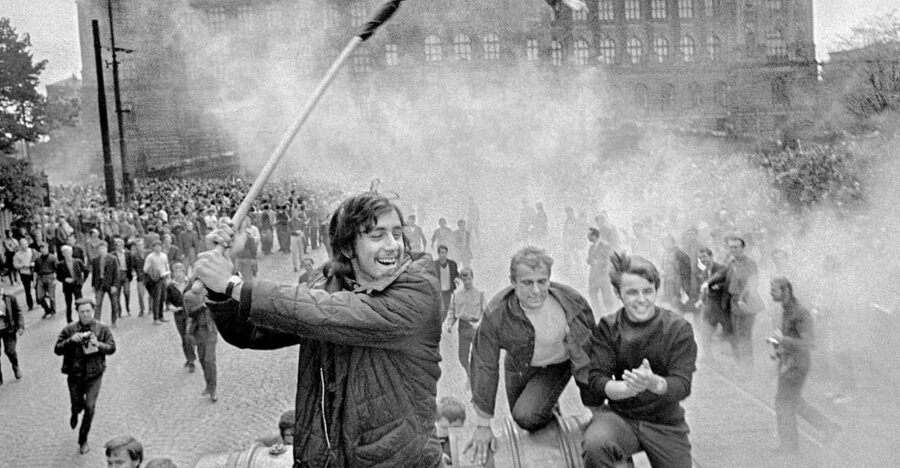
Many Prague walks concentrate on medieval lanes, grand churches, and the castle. This one turns your attention to the last century, when the city moved from Nazi occupation to Communist rule, briefly reached for reform, and then helped bring down the Eastern Bloc.
That broad time span is the tour’s main strength. You are not studying World War II as an isolated chapter, then switching to a separate story about Communism. The guide shows how one period shaped the next. The Czech uprising, the Communist takeover, the Prague Spring, the Warsaw Pact invasion, and the Velvet Revolution become parts of one long account.
I find that useful because Prague’s central squares can otherwise look like attractive backdrops with no obvious explanation. Here, the guide supplies the missing connection between place and event. A building or street may not have a large plaque explaining what happened there, but the story gives it weight.
The tour is conducted in English and lasts 2.5 hours. That is enough time to build a proper narrative, though not enough to examine every site at length. You should expect a steady walk, regular stops, and plenty of spoken history.
More WWII and D-Day Tours in Prague
- Prague: WWII Guided Tour & The Crypt of Operation Anthropoid
★ 4.7 · 1,030 reviews - WWII in Prague Tour & The Crypt of Operation Anthropoid
★ 5.0 · 817 reviews - Terezin In-Depth Holocaust Tour From Prague’s Center (max 7 pax)
★ 5.0 · 170 reviews
Starting near Týnská and the old Jewish Quarter
The meeting point is at Týnská 639/4 in Staré Město, Prague 1. From there, the route explores central Prague, including the Jewish Quarter and the newer parts of the city.
The Jewish Quarter adds important context to the wartime section. Its streets and buildings bring you close to the human cost of Nazi rule, even though this is not presented as a general Jewish Quarter sightseeing tour. The focus remains on World War II and the political events surrounding it.
You should know the difference before booking. If you want a detailed explanation of synagogues, the cemetery, and Jewish life across many centuries, choose a dedicated Jewish Quarter tour instead. This experience uses the area as one part of a wider 20th-century story.
That wider view is useful. The guide can place the Nazi occupation within Prague’s political and social setting, rather than treating it as a list of dates. Past guides have been praised for discussing difficult subjects plainly, without smoothing away political complicity or the brutal consequences of occupation.
Municipal House and the road into Nazi rule
Municipal House is one of the important locations included on the route. Its elegant appearance provides a sharp contrast to the political darkness discussed here.
The tour explains how Nazi rule turned Czechoslovakia, described in the experience as one of Europe’s most progressive and industrialized states, into a nightmare. You hear about occupation, resistance, and the Czech uprising, with the guide using the streets around you to make the period less abstract.
Do not expect a long indoor visit to every building named on the route. This is a walking tour, not a series of museum admissions. The value comes from the guide’s narration and the way the stops are arranged.
That also explains why guide quality matters so much. Adam was praised for his energy and humor, while Tony was repeatedly credited with answering questions and presenting difficult material clearly. Zach was noted for building the story gradually, helping participants understand how the Czech Republic moved from wartime occupation toward Communist rule.
Operation Anthropoid and the resistance story
The most memorable wartime section concerns Operation Anthropoid, the Czech plot to assassinate a high-ranking Nazi security official. The tour identifies where the attack took place and connects it to the church where resistance soldiers later hid.
This is the point where the tour becomes especially concrete. Instead of hearing only about Nazi officials, resistance networks, and retaliation in general terms, you follow a specific operation and its aftermath. The church and crypt have been described as a poignant stop, and one past group entered a museum during the walk as well.
The subject is grim. Nazi retribution after the assassination forms part of the story, and the guide does not treat it as a thrilling adventure detached from its human cost. That balance matters. You get the planning and courage of the resistance, but also the punishment that followed.
If Operation Anthropoid is your main reason for visiting, check the exact current route and inclusions when booking. The supplied details confirm the church, the assassination story, and a museum visit in at least one tour experience, but they do not promise a fixed indoor visit every time.
For more background afterward, one guide recommended historical films, and Anthropoid and Munich were specifically mentioned as useful follow-up viewing. That is a good sign for anyone who likes to keep learning after a tour, though the films are not part of the activity.
More WWII and D-Day Tours in the Czech Republic
- Prague: Communists and World War II Tour
★ 4.7 · 88 reviews
Wenceslas Square and the Communist coup
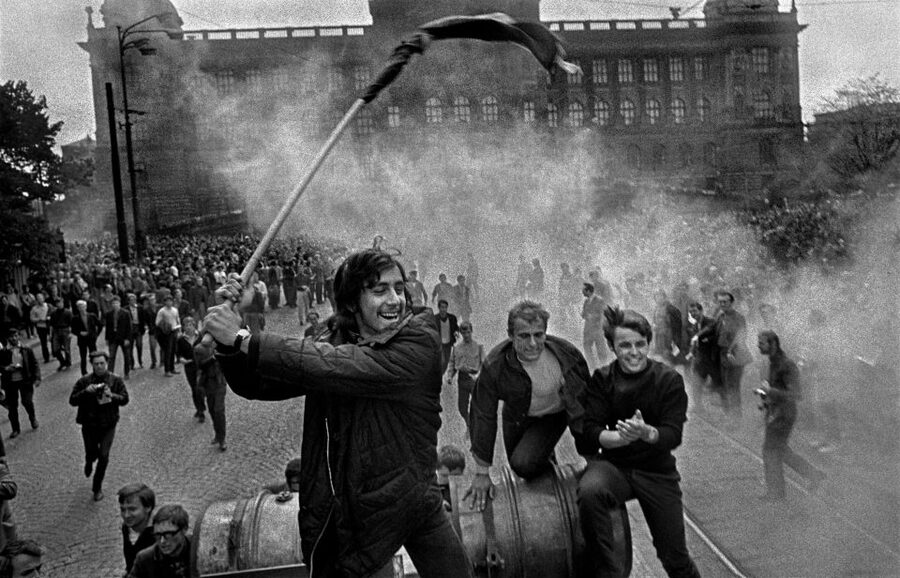
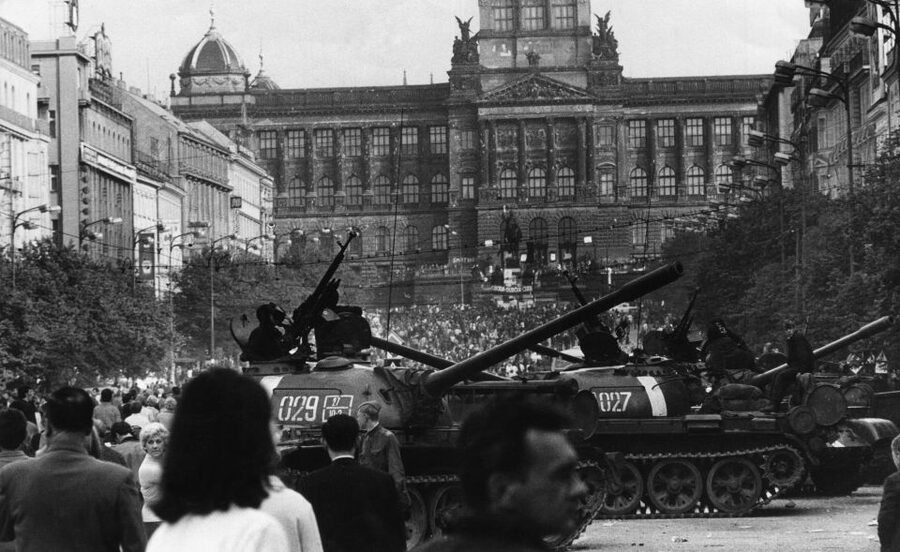
Wenceslas Square is central to the Communist and post-Communist chapters. It is not merely a broad city square on this walk. It becomes the setting for political power, public protest, and mass gatherings.
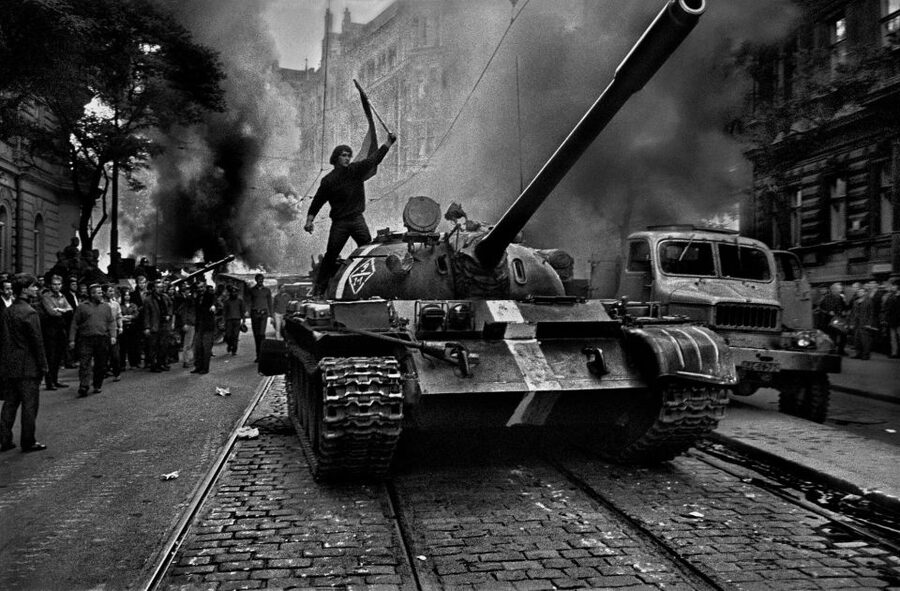
The guide takes you through the Communist coup and the disappointment that followed. You then move into the Prague Spring, the period of reform and hope in 1968, and the trauma of the Warsaw Pact invasion.
This part of the walk gives you a helpful political sequence:
- The Communist takeover changes the country’s direction.
- Reformers attempt to create a less rigid form of Communism during the Prague Spring.
- The Warsaw Pact invasion crushes that experiment.
- Normalization brings years of political control and pressure to conform.
- Dissident movements keep challenging the system until 1989.
A square cannot explain all of that by itself. You need a guide who can make the shifts clear without turning the tour into a lecture. The strongest accounts of this experience describe guides who used humor, questions, and personal anecdotes to keep the story moving.
Wenceslas Square is also one of the places where you may feel the gap between the physical site and the history. The present-day setting does not always provide a visible memorial for every event discussed. Your attention should be on the explanation rather than on expecting a museum display at each stop.
Dancing House and the story after 1968
Dancing House represents one of the route’s more modern landmarks and helps move the walk beyond old Prague. The tour includes it while discussing the years after the invasion, including Normalization, the persecution of the Plastic People of the Universe, and Charter 77.
These subjects show that opposition to the Communist system was not limited to formal politicians. Music, culture, independent thought, and public statements could all become political acts. The story of the Plastic People of the Universe gives the period a cultural dimension that a simple account of leaders and government policy would miss.
Charter 77 brings the dissident movement into sharper focus. The tour explains how Václav Havel and an unusual group of opponents of the regime eventually came to power through the Velvet Revolution of 1989.
You will get more from this section if you know that the tour is not only about official events. It is also about what ordinary people could say, publish, perform, or refuse to accept. That human angle is one reason the experience feels different from a standard architecture walk.
The Velvet Revolution and Václav Havel
The final political movement covered is the Velvet Revolution. The guide explains how years of frustration, dissident activity, and changing public mood swept Václav Havel and other opponents into power.
This gives the tour a satisfying closing point, though not a cheerful one in a simplistic way. You have just heard about occupation, reprisals, political coercion, failed reform, invasion, and cultural persecution. The events of 1989 carry more force because the guide has shown you what came before them.
I particularly like the way this ending changes your view of Prague. The city is not only a collection of beautiful façades. It is also a place where people filled squares, resisted pressure, watched reforms collapse, and then helped force a peaceful political change.
The walk may finish later than the advertised 2.5 hours on some occasions. One person specifically noted that the tour ran longer, so do not schedule a train, dinner reservation, or another timed activity immediately afterward.
How the route feels on foot
This is a city walk of around 150 minutes, not a bus tour. You move through different parts of central Prague, including the old city, the Jewish Quarter, Wenceslas Square, and the area around Dancing House.
One past group received a tram ticket to save walking time. That suggests the guide may sometimes use public transport as part of the route, but you should not treat that as a guaranteed feature unless it appears in your booking details.
The physical demand sounds moderate, but the tour is still best suited to people comfortable spending more than two hours on their feet. A hot day can make the walk tiring, while winter weather can be uncomfortable. One tour continued successfully in pouring rain, and another took place on a freezing December afternoon, but those examples should encourage you to dress for conditions rather than assume the weather will cooperate.
The group size can vary. One participant enjoyed having a small group and plenty of chances to ask questions. A small group makes this subject easier to discuss, especially when you want to ask about Czech politics, the resistance, or the meaning of a particular event.
Guide style matters more than the buildings
This experience depends heavily on the person holding the history together. The strongest guides listed in the supplied information include Adam, Tony, Zach, Daren, Sean, Kevin, Amanda, Analisa, and Alissia.
Several qualities recur in the descriptions of those guides: clear English, strong command of the subject, humor, energy, and the ability to tell a story rather than recite facts. Daren was praised for passion, while Analisa was credited with presenting factual information in a memorable story format. Amanda was described as lively and engaging, and Sean was noted for making the subject come alive.
You cannot usually choose your guide in advance, so expect some variation in personality. Still, the repeated emphasis on storytelling is encouraging. That is exactly what this route needs because many of the locations do not offer extensive visible evidence of the events discussed.
The tour also leaves room for questions. If you are especially interested in Operation Anthropoid, the Prague Spring, the Velvet Revolution, or the Plastic People of the Universe, ask as you go. The guides have been praised for answering questions rather than rushing through a fixed script.
Is $34 good value?
At $34 per person, the tour is good value if you want a guided explanation of Prague’s wartime and Communist past. You are paying for 2.5 hours of English-language guiding across several parts of the city, with a subject that would take serious research to piece together alone.
The value is not based on the number of ticketed attractions. The tour includes a walking experience, and some stops are streets or public squares rather than formal museums. If you measure value by indoor admissions and famous monuments, you may find the offering modest.
If you measure value by interpretation, it becomes stronger. You hear one connected account covering Nazi rule, resistance, the Communist coup, reform, invasion, dissidents, and 1989. That framework can make later museum visits and independent sightseeing much easier to understand.
The price also compares well with the small-group feel reported by one participant. Group size is not guaranteed, but the chance to ask questions adds real value on a subject with so many names, dates, and political shifts.
Free cancellation up to 24 hours before the start and the option to reserve now and pay later make the booking less rigid. Those policies are useful if your Prague schedule is still changing.
Who should take this tour?
I would recommend it to you if you:
- Want more than Prague’s medieval and architectural story.
- Are interested in World War II resistance and Operation Anthropoid.
- Want a clear explanation of Communism in Czechoslovakia.
- Prefer a guide who tells stories and welcomes questions.
- Have already taken a general Old Town or castle walk and want a different angle.
- Enjoy connecting streets and public squares with political events.
It is less suitable if you want a museum-heavy experience, a narrowly focused Jewish Quarter tour, or a slow walk centered on architecture. The guide does much of the work, so people who prefer quiet sightseeing may find the steady narration too intense.
Should you book it?
Book this tour if Prague’s 20th century matters to you and you want the whole sequence in one sitting. The strongest reasons are the Operation Anthropoid story, the church connected with the resistance, the route through Wenceslas Square and other central sites, and the guides’ proven ability to make difficult history understandable.
Leave a little time after the scheduled finish, wear sensible shoes, and arrive ready to listen rather than simply photograph landmarks. For $34, you receive a useful political map of modern Prague, even when the most important evidence is in the guide’s words rather than on the walls.
FAQ
How long is the Prague World War II and Communist History Tour?
The tour lasts 150 minutes, or 2.5 hours.
What language is the tour conducted in?
The live tour guide speaks English.
Where does the tour meet?
The meeting point is Týnská 639/4, Staré Město, 110 00 Prague 1, Czechia.
What historical periods does the tour cover?
It covers Nazi occupation, Czech resistance, the Czech uprising, the Communist coup, the Prague Spring, the Warsaw Pact invasion, Normalization, the Plastic People of the Universe, Charter 77, and the Velvet Revolution of 1989.
Does the tour discuss Operation Anthropoid?
Yes. You learn about the Czech plot to assassinate a senior Nazi SS official and visit the church connected with the resistance soldiers who hid there.
Which Prague landmarks are included?
The experience includes Municipal House, the Jewish Quarter, Dancing House, and Wenceslas Square, along with other locations linked to the historical periods covered.
Is this a walking tour?
Yes. The included activity is a 2.5-hour walking tour. A tram ticket was provided on one reported tour to save time, but public transport should not be assumed unless confirmed for your booking.
Does the tour enter a museum?
A museum visit occurred during one reported tour, but the supplied details do not guarantee an indoor museum visit on every departure.
How much does the tour cost?
The listed price is $34 per person.
Can I cancel or pay later?
You can cancel up to 24 hours in advance for a full refund. You can also reserve the tour and pay later, keeping your plans flexible.
More Cold War and Communism Tours in Prague
- Prague: Communism History and Nuclear Bunker Guided Tour
★ 4.7 · 2,417 reviews - Prague Communism History and Nuclear Bunker Tour
★ 5.0 · 1,742 reviews - Communism & Nuclear Bunker Tour + 70s Canteen Lunch (own expense)
★ 5.0 · 1,036 reviews - Prague: 3–Hour Communism and World War 2 E-Bike Tour
★ 4.9 · 56 reviews
Just added around Prague
- Prague: Medieval Underground Guided Tour★ 4.5 · 209 reviews
- Prague: Communists and World War II Tour★ 4.7 · 88 reviews
- From Prague: Medieval Dinner, Show, Castle and Brewery★ 4.3 · 48 reviews
- Prague: 3–Hour Communism and World War 2 E-Bike Tour★ 4.9 · 56 reviews
- Terezin In-Depth Holocaust Tour From Prague’s Center (max 7 pax)★ 5.0 · 170 reviews
- Prague: World War 2 and Operation Anthropoid Walking Tour★ 4.8 · 193 reviews
- Prague: Plague Doctor Old Town History Walking Tour★ 4.9 · 204 reviews
- Prague: Immersive History Walking Tour and VR★ 4.8 · 73 reviews
Prague History Tours, compared.
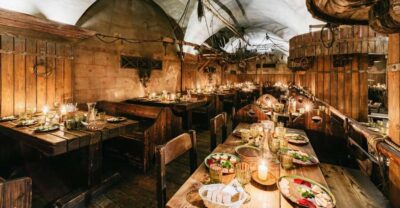
Prague: Medieval Dinner with Unlimited Drinks
Read our review →
Prague: Oldtown, Medieval Underground & Dungeon History Tour
Read our review →
Prague: Ghosts, Legends, Medieval Underground & Dungeon Tour
Read our review →
Prague Old Town, Medieval Underground and Dungeon Historical Tour
Read our review →
Prague 5 Courses Medieval Dinner and Live Performances
Read our review →
Prague: Communism History and Nuclear Bunker Guided Tour
Read our review →
Prague: Historic City Center Bus Tour with Top Sights
Read our review →