Review · ATHENS
Athens: Roman Agora & Ancient Agora E-ticket & 2 Audio Tours
Athens’ two agoras tell different parts of the city’s story. The Roman Agora is a compact stop filled with grand gateways and the famous Tower of the Winds. The Ancient Agora is larger and more rewarding, with the reconstructed Stoa of Attalos and the museum’s excellent collection of everyday objects.
I like the practical pairing of timed entry tickets and offline audio. You can visit without arranging a meeting point, and downloaded maps and narration help you avoid roaming charges. I also like the freedom to pause, replay, or skip material as you walk.
The main caution is the audio itself. It has received mixed reactions, including criticism of robotic delivery, weak pronunciation, and poor timing. Also, the current Ancient Agora entrance has changed because of construction, so you must follow the updated directions rather than simply follow the old route in the app.
Key points to know before you book
- Two archaeological sites in one day: Visit the Roman Agora and Ancient Agora with separate timed admission.
- Start at Monastiraki: The Roman Agora entrance is about 230 meters along Areos Street from the metro station.
- Use Thissio for the Ancient Agora: Construction has closed the main entrance, so enter on foot from Apostolou Pavlou Street near Akamantos Street.
- Five audio languages: Narration is available in English, Spanish, German, French, and Italian.
- Bring your own equipment: You need a charged Android or iOS phone, headphones, and 200 to 300 MB of storage.
- Check discount rules carefully: Reduced or free admission tickets are not provided through this booking and must be obtained at the site ticket booth.
Two agoras, two very different Athenian stories
This experience works because the sites complement each other. The Roman Agora is the smaller, faster visit. The Ancient Agora gives you more room to explore and a much fuller sense of how Athens functioned as a civic center.
The Roman Agora was built during the Roman period as a commercial and public area. The Ancient Agora belongs to the older heart of democratic Athens, where public business, trade, religion, and ordinary daily life came together. Visiting both lets you see the city before and after Roman influence rather than treating Athens as one undifferentiated set of ruins.
You receive a time slot for each site. Suggested combinations are 8:00 AM for the Roman Agora followed by 10:00 AM at the Ancient Agora, 10:00 AM and 12:00 PM, 1:00 PM and 3:00 PM, or 2:00 PM and 4:00 PM.
That two-hour gap is useful. The Roman Agora does not require a long visit, and the break gives you time to walk, eat, or get your bearings before tackling the larger site. You are not joining a group, so the pace is yours. Just keep an eye on the clock, since the tickets are time-slotted.
More Ancient History Tours in Athens
- Athens: Acropolis & up to 5 Archaeological Sites Combo Pass
★ 4.2 · 13,904 reviews - Athens: Ancient Greek Theater Performance
★ 4.7 · 2,481 reviews - Historical Delphi One Day Tour with Arachova Stop & Expert Guide
★ 4.5 · 1,247 reviews
Beginning at the Roman Agora near Monastiraki
The easiest route to the Roman Agora is through Monastiraki Station, served by metro lines 1 and 3. From there, walk along Areos Street for roughly 230 meters toward the site entrance at Epaminonda 6 to 22.
That short walk puts you in one of central Athens’ most convenient archaeological areas. The audio tour is designed to begin at the entrance, so download the material before you arrive. You should not count on finding a quiet place to set up your phone once you are at the gate.
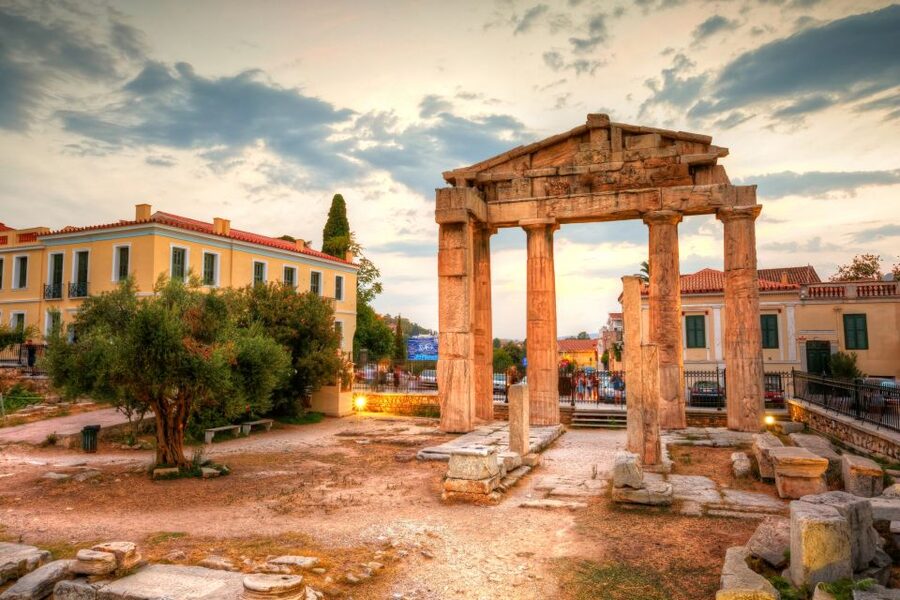
The Roman Agora is a good first stop because it is compact and easy to understand. The Gate of Athena Archegetis is one of the first major sights to catch your eye. Its monumental form gives you a quick sense of the importance of this public space, even if you have limited time in Athens.
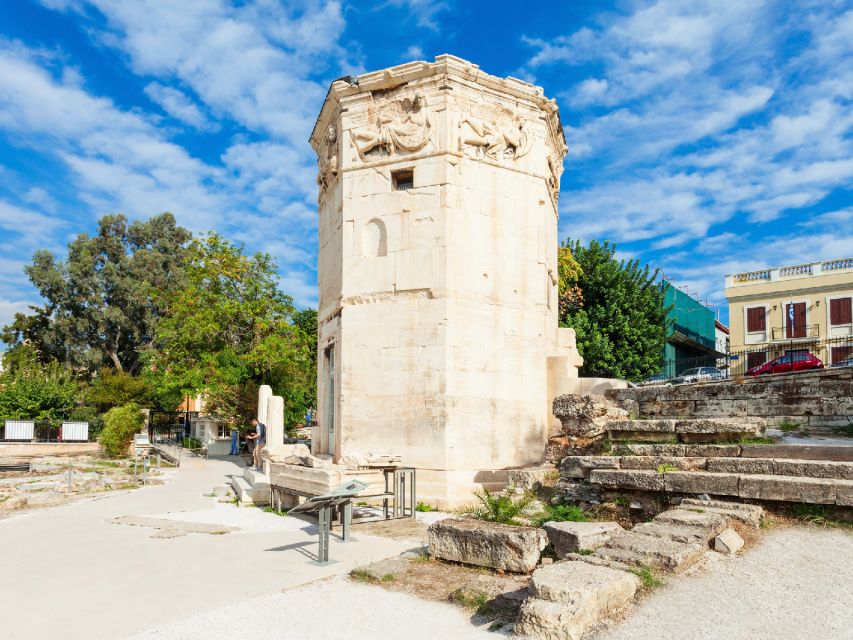
The Tower of the Winds is the site’s star attraction. This unusual marble structure functioned as a water clock, weather indicator, and possibly a timekeeping device. Its carved reliefs represent the winds, giving the building both practical purpose and visual character.
The tour ends at the Mosque of the Conqueror within the archaeological site. That endpoint matters because you should not expect the audio route to return you to the entrance. Plan your next move before you finish, especially if you have a restaurant booking or a strict Ancient Agora entry time.
One practical note: the Roman Agora may feel less rewarding if you expect a large, intact complex. Much of its appeal comes from identifying the purpose of the surviving structures and imagining the busy commercial setting around them. The audio can help, but you will get more from the visit if you look closely at the remains instead of rushing through for photographs.
Moving on to the Ancient Agora from Thissio
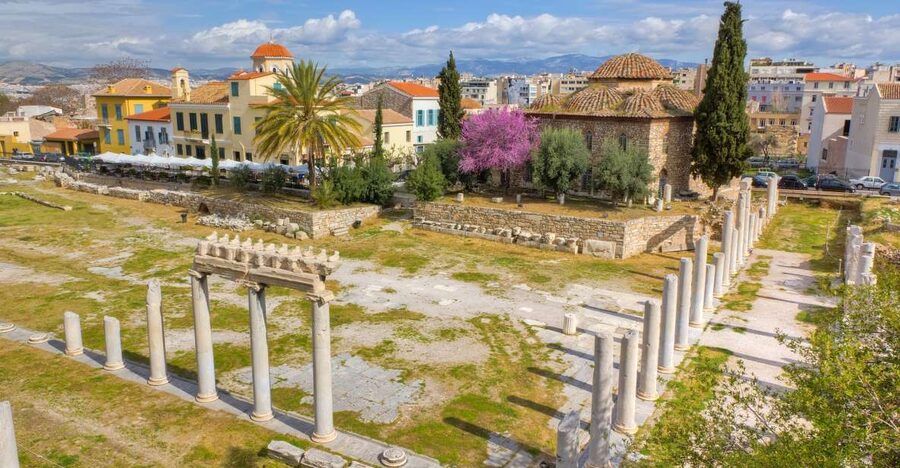
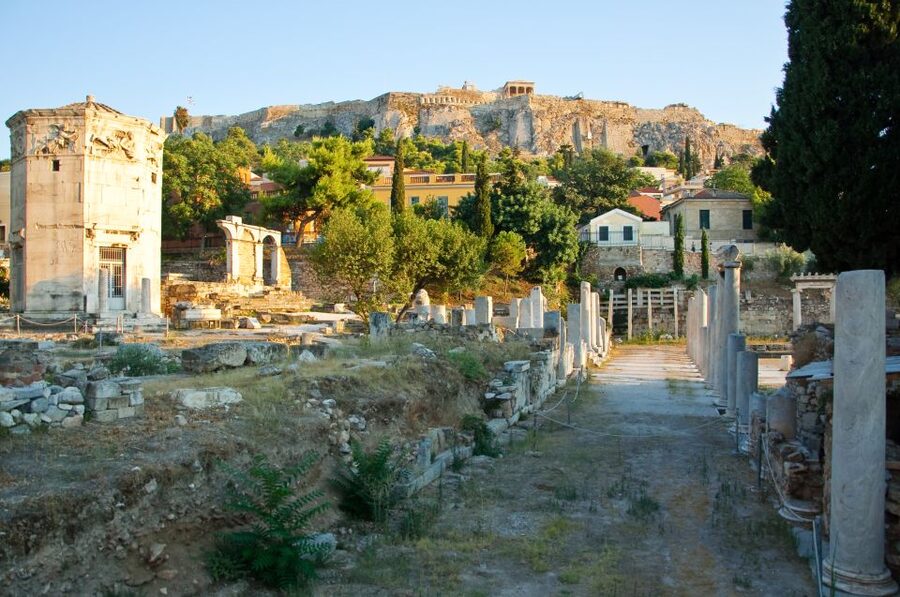
The Ancient Agora has a different character. It is spread over a larger area, and the combination of open ruins, museum displays, and views toward the Acropolis makes it the more substantial half of the day.
Construction has temporarily closed the main entrance. You must use the temporary entrance on Apostolou Pavlou Street at the level of Akamantos Street. The directions specify that the only way to reach the Ancient Agora is on foot from Thissio Station.
This is the most important logistical detail in the whole experience. Do not follow an old map or assume the Roman Agora route will lead you directly there. Leave time to walk from Thissio and look for the temporary entrance. Site rules and access arrangements can change, so follow signs and staff instructions when you arrive.
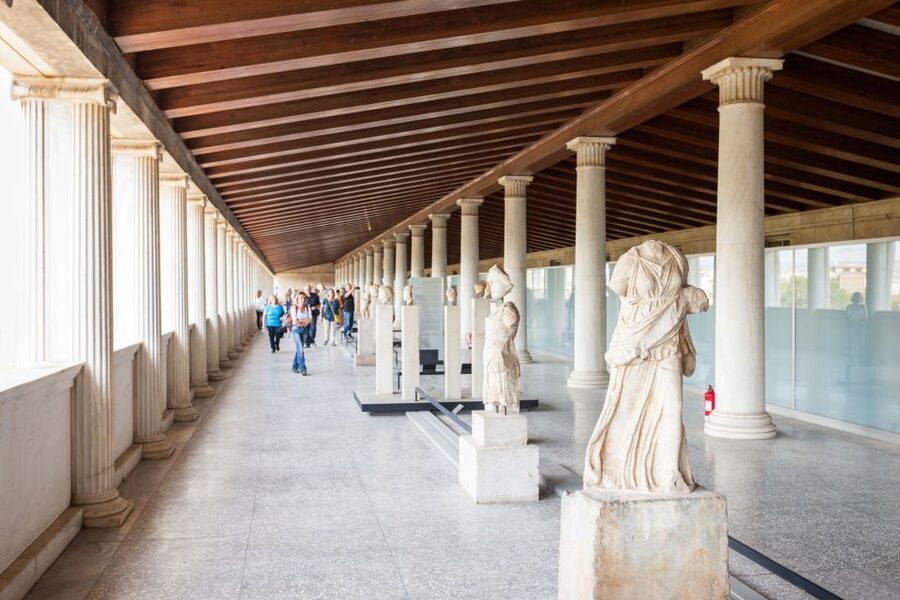
Inside, the audio tour leads you toward the Stoa of Attalos, which also serves as the endpoint. The stoa is especially useful because it gives the open-air ruins a clear architectural anchor. Its long colonnaded form helps you understand how public buildings shaped the Agora.
The Ancient Agora was not simply a collection of temples. It was a working center of Athenian life. Here, public matters, trade, religious activity, and civic business overlapped. As you walk, use the narration to connect the visible foundations with the human activity that once filled the area.
The site rewards a slower pace than the Roman Agora. Give yourself time to look at the layout, compare surviving structures, and stop at viewpoints for photographs. Views toward the city and the Acropolis help you place the Agora within Athens rather than seeing it as an isolated ruin.
Why the Stoa of Attalos Museum matters
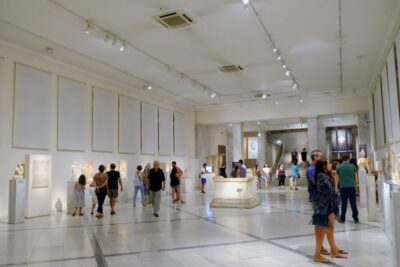
The museum inside the Stoa of Attalos is one of the strongest parts of the Ancient Agora visit. It houses historical objects found at the site and gives you a closer look at the daily world behind the monumental stones.
Outdoor ruins can be difficult to read. A column base or broken wall rarely explains itself. Museum displays provide the missing scale and context. They help you connect the Agora with ordinary life, public activity, and the material objects used by the people who gathered there.
I recommend saving enough energy for the museum instead of treating it as a quick final stop. The audio tour ends at the Stoa, which makes the building easy to find, but you should not assume the end of the narration means the visit is over. The museum is part of the value of entering the Ancient Agora.
More Ancient History Tours in Greece
- From Athens: Ancient Corinth Day Trip with Canal & VR Guide
★ 4.6 · 1,073 reviews - Acropolis, Parthenon & Athens Old City Heritage Walking Tour
★ 4.5 · 876 reviews - Private Biblical Tour Ancient Corinth & Isthmus Canal from Athens
★ 5.0 · 762 reviews - Athens: Ancient Corinth & Nafplio Full Day Trip with Swim
★ 4.8 · 531 reviews
How useful are the audio tours?
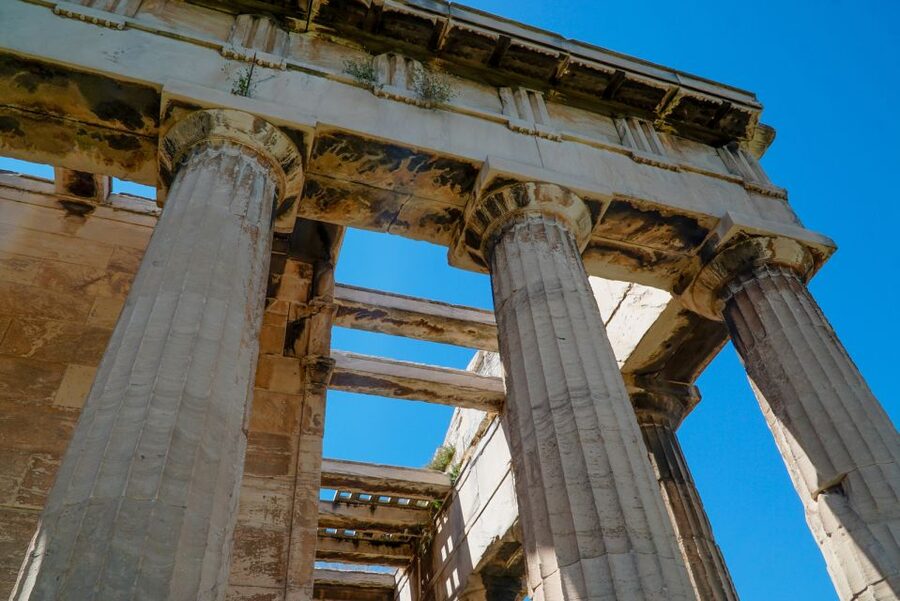
The audio tours are self-guided, so you listen through your own smartphone rather than following a live guide. You receive an activation link, then download the app and the tour content before your visit.
Offline access includes written material, audio narration, and maps. That is a real advantage in Athens, where you may not want to rely on mobile data while walking between sites. It also lets you replay sections after the visit.
The tours are offered in English, Spanish, German, French, and Italian. This gives you a reasonable choice of language, but the quality of the narration may matter more than the language list. One strongly negative assessment described the delivery as AI-like, with poor pronunciation and little time to move between stops.
That criticism is worth taking seriously. A self-guided audio tour needs clear pacing. If the narration moves too quickly, you may miss the physical feature being discussed. If it gives too little time to walk, you end up stopping in awkward places or pausing the track repeatedly.
The best approach is to treat the audio as a companion, not as an inflexible command. Pause it when you need to move, replay sections, and use the map to orient yourself. The material can still add useful context even if the delivery does not suit your ear.
This format also works well for independent visitors who prefer not to be tied to a group. You can spend longer at the Tower of the Winds, skip a section you already understand, or pause at a viewpoint without holding anyone up.
Timing, transport, and the one-day plan
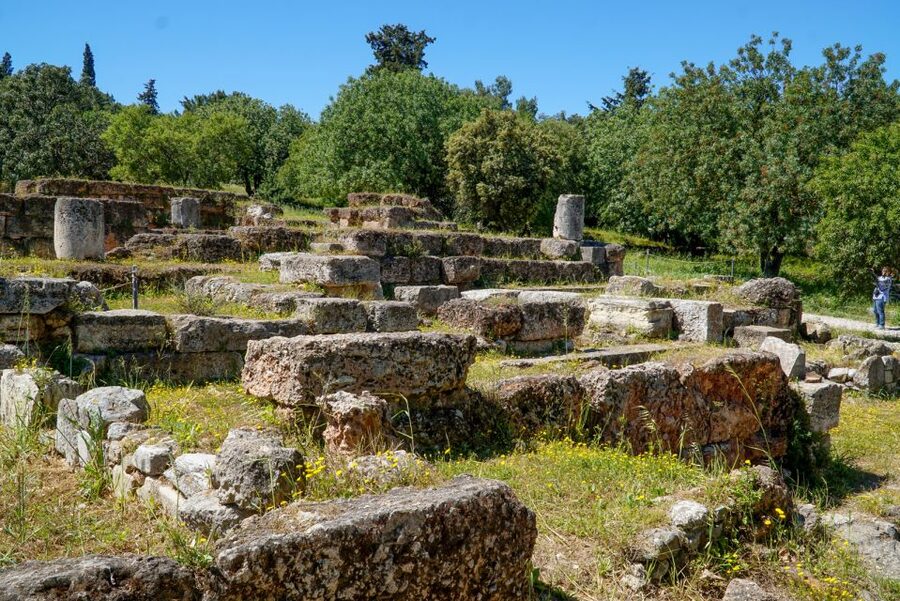
The experience is valid for one day, with four suggested time combinations. The morning options give you cooler conditions for walking, which may be welcome during Athens’ hotter months. Afternoon slots may suit a later start, but sun exposure can make the open Ancient Agora more tiring.
There is no included transportation. You make your own way to each site, using the metro and walking routes described in the instructions. This is not difficult, but it requires attention because the two entrances are not interchangeable.
A sensible plan looks like this:
- Begin at the Roman Agora from Monastiraki.
- Allow time to finish the audio route at the Mosque of the Conqueror.
- Walk toward Thissio and the temporary Ancient Agora entrance.
- Enter the Ancient Agora at your assigned time.
- Spend the longer part of your visit around the ruins and Stoa of Attalos.
Comfortable shoes are essential. You should also carry sunglasses, a sun hat, and sunscreen. The sites are outdoors, and the Ancient Agora in particular asks you to walk over uneven archaeological ground.
The sites are only partially accessible for people with disabilities or reduced mobility. If access is a major concern, check current conditions before paying, since construction may affect the route.
Is $51 a fair price?
At $51 per person, this is not a bargain admission product. Its value depends on whether you want the convenience of arranging both tickets and audio access in one purchase.
The price makes more sense if you are visiting independently, want narration in one of the five available languages, and value offline maps and content. It can save you the trouble of handling separate site arrangements.
It makes less sense for children or anyone eligible for free or reduced admission. Discount tickets are not supplied through this booking and must be obtained at the onsite ticket booth. A family could end up paying for an adult-priced booking that does not match the child’s actual admission requirement.
One parent found this especially frustrating after discovering that a 16-year-old should have entered free. Because the booking is non-refundable, you need to check the current admission rules before purchasing. The instruction to book per device also matters: if two people want to listen on separate phones, confirm how many devices you are booking for.
There is no live guide included. If you want personal explanations, help with photographs, or someone to manage the route, this is the wrong format. A note praising Irini as helpful and an excellent photographer should not be taken as part of this product. The experience described here is self-guided, and you should not expect Irini or another guide to accompany you.
Phone setup and practical preparation
Download everything before you reach the first entrance. You need an Android phone running version 5.0 or later, or an iPhone that meets the app requirements. The tour does not work with Windows Phones, iPhone 5 or 5C, fifth-generation iPod Touch, fourth-generation iPad, first-generation iPad Mini, or older devices.
Allow 200 to 300 MB of storage. Charge your phone fully, and bring headphones. The package does not include a smartphone or headphones, so this is easy to overlook.
I would also suggest checking that the audio files open before leaving your accommodation. An activation link is provided, but a few minutes of preparation can prevent a frustrating start at the gate.
Site officials may alter the route or impose special restrictions. Follow current instructions even if they differ from the app. This is particularly important at the Ancient Agora while construction continues.
Who should book this Agora combination?
I would recommend it to independent adults, couples, and older children who like to set their own pace. It suits people who want more context than a bare admission ticket provides, but who do not want to join a scheduled group.
It is also a good fit if you are comfortable navigating central Athens on foot. The Roman Agora route is simple from Monastiraki, while the Ancient Agora requires more care because of the temporary entrance.
You may want to skip it if you need a live guide, rely on free or reduced admission, dislike listening through a phone, or want a polished professional narration with carefully timed movement cues. The archaeological sites themselves are the reason to go. The audio is an optional layer, and its delivery may not satisfy everyone.
Should you book the Roman Agora and Ancient Agora ticket?
Book it if you want both sites arranged in advance, understand the entry changes, and will use your own phone and headphones. The Ancient Agora, especially the Stoa of Attalos and its museum, is the stronger part of the day, while the Roman Agora makes a worthwhile short companion visit.
Before paying $51, check admission eligibility for every member of your party. If everyone requires regular admission and you value offline audio, the package can be convenient. If a child qualifies for free entry, or if you prefer expert human guidance, buy admission directly and choose another way to explore the ruins.
FAQ
How long is the experience valid?
The ticket combination is valid for one day. You choose from the available time slots for the Roman Agora and Ancient Agora.
What time combinations are available?
Suggested combinations are 8:00 AM and 10:00 AM, 10:00 AM and 12:00 PM, 1:00 PM and 3:00 PM, or 2:00 PM and 4:00 PM. The Roman Agora comes first in each pairing.
Where do I enter the Roman Agora?
The Roman Agora entrance is at Epaminonda 6 to 22 in Athens. From Monastiraki metro station, walk along Areos Street for about 230 meters.
Where do I enter the Ancient Agora?
The main entrance is temporarily closed because of construction. Use the temporary entrance on Apostolou Pavlou Street at the level of Akamantos Street, reached on foot from Thissio Station.
What languages are available for the audio tours?
The audio tours are available in English, Spanish, German, French, and Italian.
Do I need a smartphone and headphones?
Yes. You need a compatible Android or iOS smartphone, headphones, and enough storage for about 200 to 300 MB of tour content. A charged phone is also required.
Are free or reduced admission tickets available through this booking?
No. Free or reduced admission tickets must be obtained at the ticket booth onsite, and they do not include skip-the-line privileges.
More Audio Tours in Athens
- Athens National Archaeological Museum E-Ticket with Audio Guide
★ 3.0 · 57 reviews - Taormina: Ancient Theater Skip-the-Line Ticket & Audio Guide
★ 4.5 · 2,412 reviews - Athens: National Archaeological Museum Ticket & Audio Guide
★ 4.3 · 1,330 reviews - Medieval Torture Museum Ticket with Audio Guide and Ghost Hunting
★ 5.0 · 962 reviews
More Self-Guided Tours in Athens
- Athens: National Archaeological Museum Ticket w/ Opt. Audio
★ 4.4 · 713 reviews - Athens: Ancient Agora E-Ticket and Audio Tour
★ 3.9 · 413 reviews - Half Day Ancient Corinth and Canal VR Audio Guided Tour
★ 5.0 · 104 reviews - Ancient Agora Self-Guided Tour with 3D & Audio (No Ticket)
★ 3.9 · 59 reviews
Just added around Athens
- Small-Group Women History in Ancient Greece Walking Tour★ 5.0 · 38 reviews
- Ancient Athens tour: Acropolis, Parthenon and Acropolis Museum★ 5.0 · 256 reviews
- The original Christian tour on Paul’s footsteps in Athens and ancient Corinth★ 4.5 · 25 reviews
- Ancient Athens Segway Tour with Agora and Kerameikos★ 5.0 · 94 reviews
- Ancient Sparta & Mystras Private Day Tour from Athens★ 5.0 · 52 reviews
- Athens National Archaeological Museum E-Ticket with Audio Guide★ 3.0 · 57 reviews
- Biblical Corinth Taste Faith & History with wine & Oil Tasting★ 5.0 · 28 reviews
- Ancient Corinth, Sanctuary of Hera, Blue Lake & Canal from Athens★ 5.0 · 26 reviews
Athens History Tours, compared.
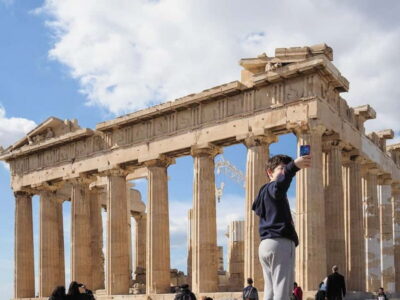
Athens: Acropolis & up to 5 Archaeological Sites Combo Pass
Read our review →
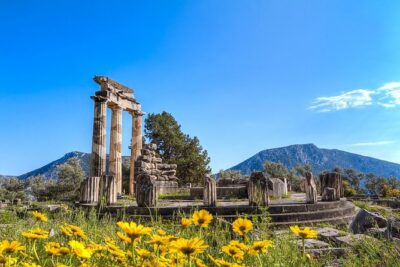
Historical Delphi One Day Tour with Arachova Stop & Expert Guide
Read our review →
From Athens: Ancient Corinth Day Trip with Canal & VR Guide
Read our review →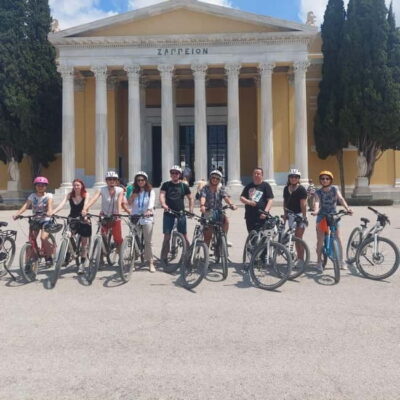
Historic Athens: Small Group Electric Bike Tour
Read our review →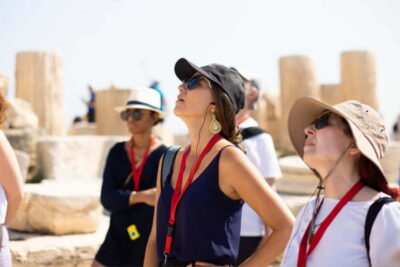
Acropolis, Parthenon & Athens Old City Heritage Walking Tour
Read our review →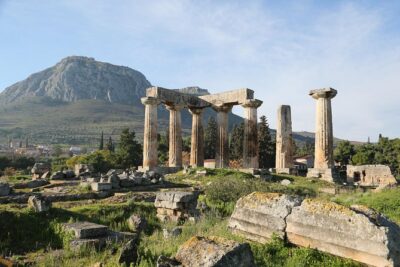
Private Biblical Tour Ancient Corinth & Isthmus Canal from Athens
Read our review →