
Review · ATHENS
Athens: National Archaeological Museum Private Guided Tour
The Antikythera mechanism is the star that first catches the imagination: an ancient device often described as the world’s oldest analogue computer. But the larger reward is the museum around it, where one guided route moves from prehistoric Aegean cultures to classical sculpture, Roman-era objects, and even Egyptian antiquities.
I like the private format, since Christos can adjust his pace and explain what matters instead of marching a large group past hundreds of objects. I also like the useful two-hour focus: enough time for the major rooms, but short enough to fit into a busy Athens day. The drawback is simple: two hours cannot cover an 8,000-square-meter museum with more than 11,000 exhibits, so you may want extra time afterward.
Key points to know before booking
- See the Antikythera mechanism, a remarkable ancient device linked with early astronomical calculation.
- Follow Greek civilization across thousands of years, from Neolithic and Cycladic objects to late antiquity.
- Tour with licensed archaeologist Christos, who has guided families, couples, and mixed-age groups.
- Pay separately for museum admission, listed at €10 per person.
- Meet at the main entrance steps, at 44 Patission Street, with the activity also identifying 28is Oktovriou 42.
- Choose from four tour languages: English, Greek, German, or Turkish.
Why this museum deserves a guided visit

Athens has famous ancient sites outdoors, but the National Archaeological Museum gives you the objects that made Greek history tangible. Here you are not just looking at a temple from a distance. You can examine the sculpture, jewelry, pottery, tools, weapons, and small household objects that show how people lived and what they valued.
The museum began as a place for finds from excavations in and around Athens. Over time, it became Greece’s central national museum, bringing important discoveries from across the country under one roof. That explains the impressive range. A single visit can move from the Aegean islands to mainland Greece, from prehistoric settlements to the Roman period, and from Greek art to Egypt and the Near East.
I find this useful for visitors who know the names of famous Greek periods but do not yet see how they connect. The museum provides that long sequence. You can watch artistic styles change, see new materials appear, and understand that ancient Greece was not one single moment in time.
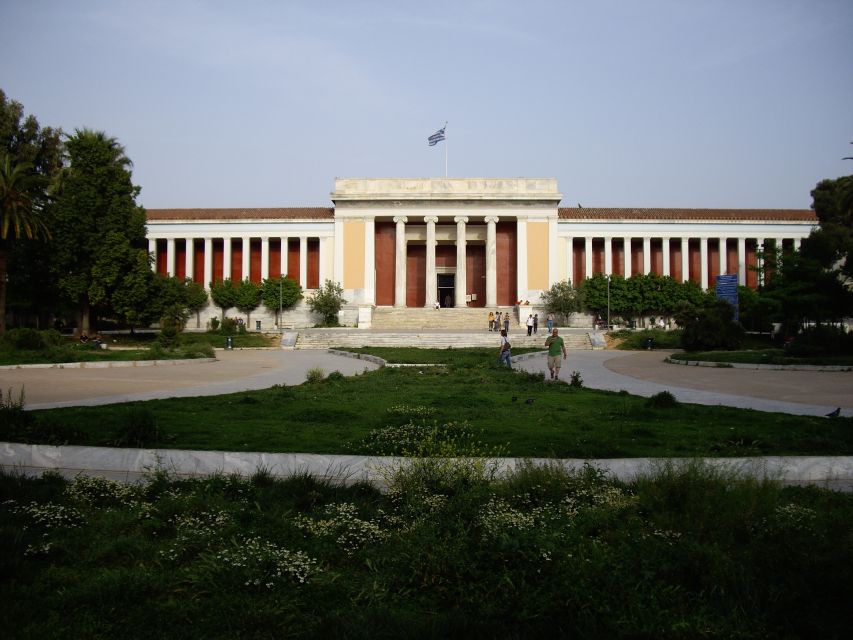
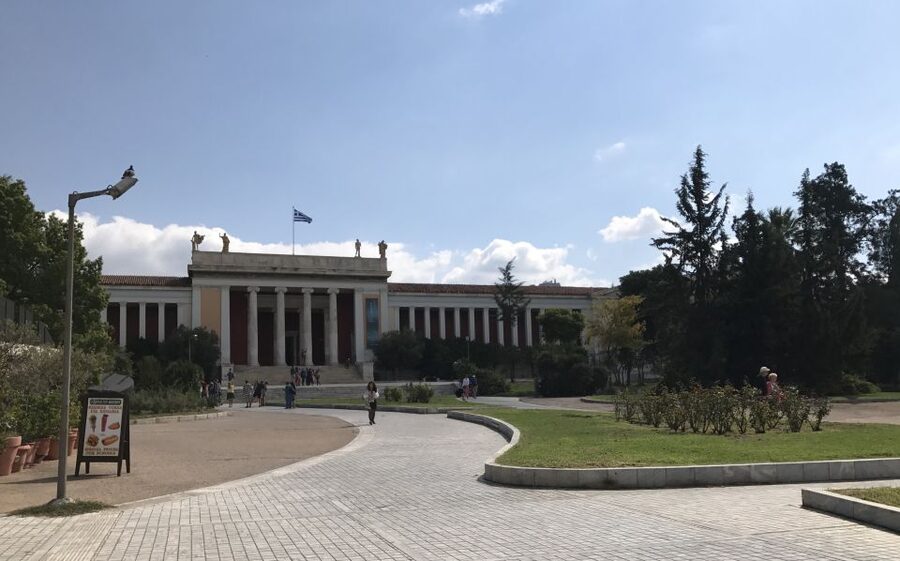
The building itself helps set the tone. It is a grand neoclassical structure from the late 19th century, designed by L. Lange and remodeled by Ernst Ziller. The broad galleries and formal rooms give the collection room to breathe, though the scale can also feel intimidating at first. A guide is most useful during those first impressions, when you need a sensible route through a very large institution.
More Private History Tours in Athens
- Private Biblical Tour Ancient Corinth & Isthmus Canal from Athens
★ 5.0 · 762 reviews - Private Tour of Apostle Paul’s Footsteps in Ancient Corinth
★ 5.0 · 275 reviews - Ancient Corinth, Epidaurus, Nafplio full day private tour from Athens
★ 5.0 · 206 reviews
Meeting at 44 Patission Street
The meeting point is on the steps in front of the museum’s main entrance at 44 Patission Street, 10682. The activity information also gives 28is Oktovriou 42 as the starting location, so check the exact map pin and written instructions before setting out. Both addresses identify the National Archaeological Museum area, but confirming the entrance will spare you an unnecessary few minutes on a busy Athens street.
There is no hotel transfer included. You make your own way to the museum, then meet the guide outside before entering. Museum admission is also separate, listed at €10 per person. That means the advertised $400 price covers the private licensed guide for a group of up to six, not the tickets.
This cost makes the most sense for a family or small group that wants a private introduction. Split among six people, the guiding fee becomes much easier to justify. For one or two people, it is a major expense, and you should compare it with visiting independently using the museum’s labels and your own guidebook.
The first two hours inside the museum
The route is designed as an orientation to the museum’s principal collections rather than a room-by-room survey. Christos leads you through selected highlights and supplies the historical links that labels alone cannot always provide.
That selection matters. With thousands of objects on display, the risk of an independent visit is not missing one famous statue. It is losing your sense of time and place after several galleries. A good guide gives you a framework, then points out objects that support it.
You can expect plenty of explanation about ancient Greek history, artistic development, and the purpose of important objects. Christos has been praised for explaining difficult material in an approachable way, with humor and a pace that keeps the visit moving. Families with teenagers and younger children have found the storytelling engaging, though the speed can be brisk because there is so much ground to cover.
Do not expect a quiet, leisurely look at every display case. This is a highlights tour. If one subject catches your attention, ask about it. The private setup gives you a better chance to raise questions than a large group tour would.
Prehistoric Greece, Cycladic art, and Mycenae
The Collection of Prehistoric Antiquities covers the Aegean from the 6th millennium BC to about 1050 BC. That includes Neolithic, Cycladic, and Mycenaean material, as well as finds from the prehistoric settlement at Thera.
This section is important because it moves the story of Greece well before the classical period most people picture. Cycladic works show the clean, simplified forms associated with the islands. Mycenaean objects point to a more complex Bronze Age society on the Greek mainland. Together, these galleries make clear that Greek culture did not suddenly appear in the 5th century BC.
I particularly like this part for visitors who want context for places such as Mycenae or Santorini. The objects help you connect ruins and archaeological sites with real materials and artistic traditions. Instead of treating prehistory as a distant blur, the guide can show you the changes from one period to the next.
The limitation is time. This material alone could take hours. In a two-hour visit, you will see selected pieces and receive a clear outline, not a specialist treatment of every era.
More Private History Tours in Greece
- The History of Athens: Greek Mythology Private Tour
★ 5.0 · 138 reviews - Ancient Corinth, Mycenae, Epidaurus, Nafplio full day private tour from Athens
★ 5.0 · 130 reviews - Ancient Corinth and Canal half day private tour from Athens
★ 5.0 · 96 reviews - Ancient Olympia full day private tour from Athens
★ 5.0 · 83 reviews
Sculpture from the 7th to the 5th centuries BC
The Sculpture Collection presents the development of Greek sculpture from the 7th through the 5th centuries BC. This is one of the museum’s major draws, and it is where a guide can make a big difference.
Greek sculpture is often taught as a parade of famous names and ideal bodies. In person, the changes are easier to understand. You can look for shifts in posture, expression, proportion, and the treatment of clothing and hair. The guide gives you the vocabulary to notice those changes rather than simply deciding that one statue looks more realistic than another.
This section also rewards a slower eye. A quick walk may leave you with a few impressive images but little sense of development. Christos’s role is to connect the objects, explain why they matter, and point out details you might otherwise pass by.
A two-hour schedule means you should not expect every sculpture gallery. Think of this stop as a carefully chosen introduction. If sculpture is your main interest, stay afterward and continue at your own pace.
The Antikythera mechanism and the Bronze Collection
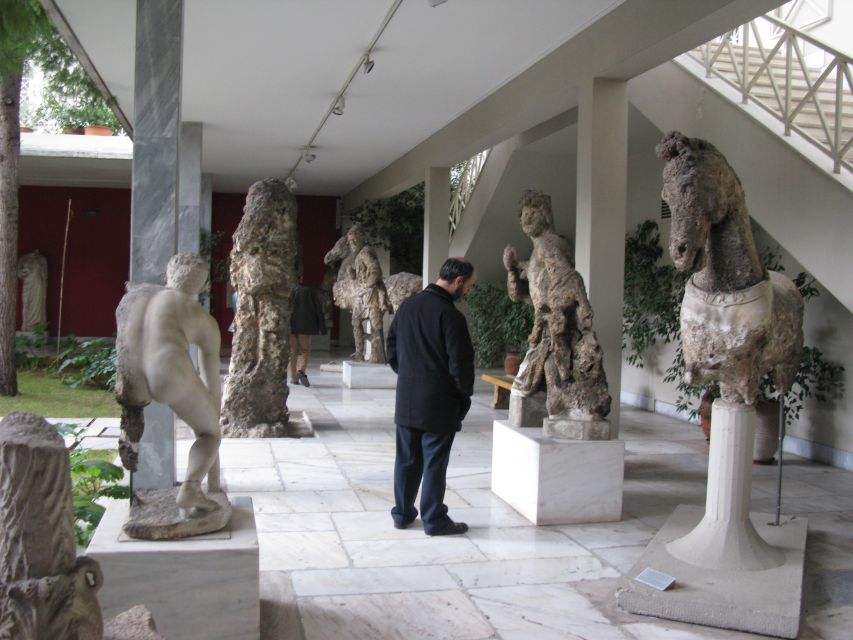
The Antikythera mechanism is the object most likely to make you pause. It is widely described as the world’s oldest analogue computer, and its presence gives the museum a direct link between ancient craftsmanship, astronomy, and mechanical calculation.
The mechanism is valuable not just because it is old. It challenges the easy idea that ancient technology was limited to simple tools. Its design shows a sophisticated attempt to track astronomical cycles. A guide can supply the context needed to appreciate what you are seeing, especially if the object itself appears small or difficult to read at first glance.
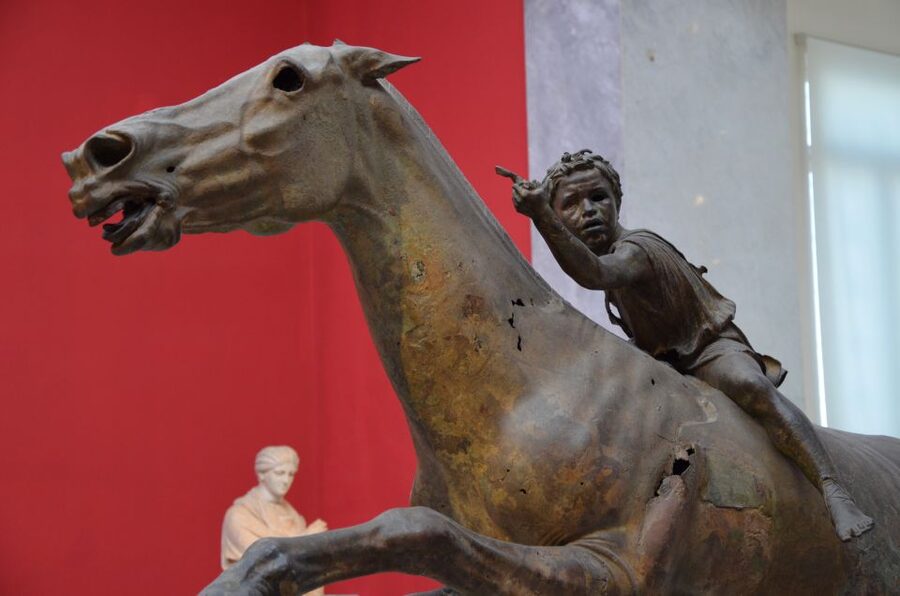
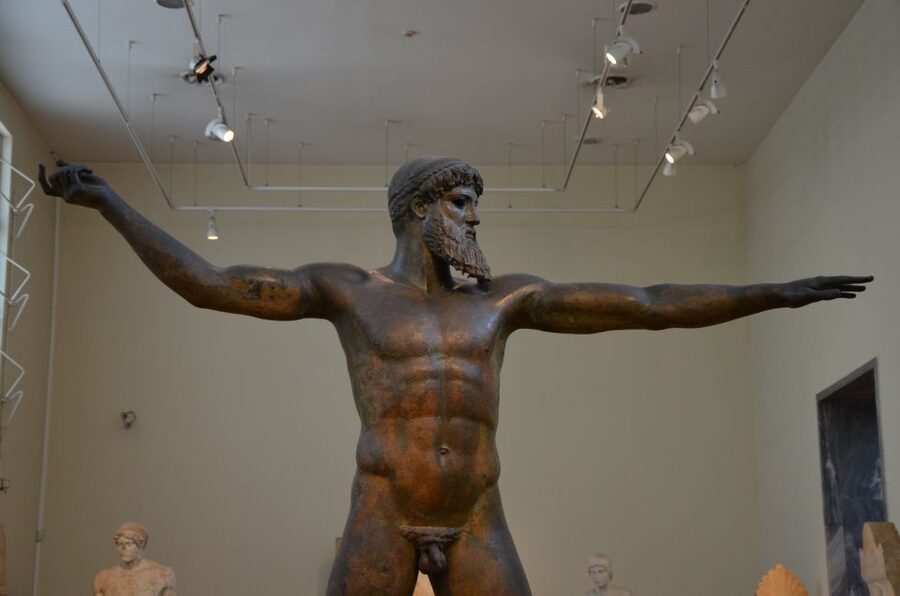
The Bronze Collection adds another set of important works, including statues, figurines, and smaller objects. Bronze allowed artists to create forms and poses that were not always possible in stone, and the collection helps broaden your view beyond the marble sculpture most associated with Greece.
These displays can be especially rewarding for adults and older children who enjoy science, engineering, or the practical side of ancient life. The guide’s explanation turns an unusual object into part of the wider story rather than an isolated curiosity.
Pottery, small objects, Egypt, and the Near East
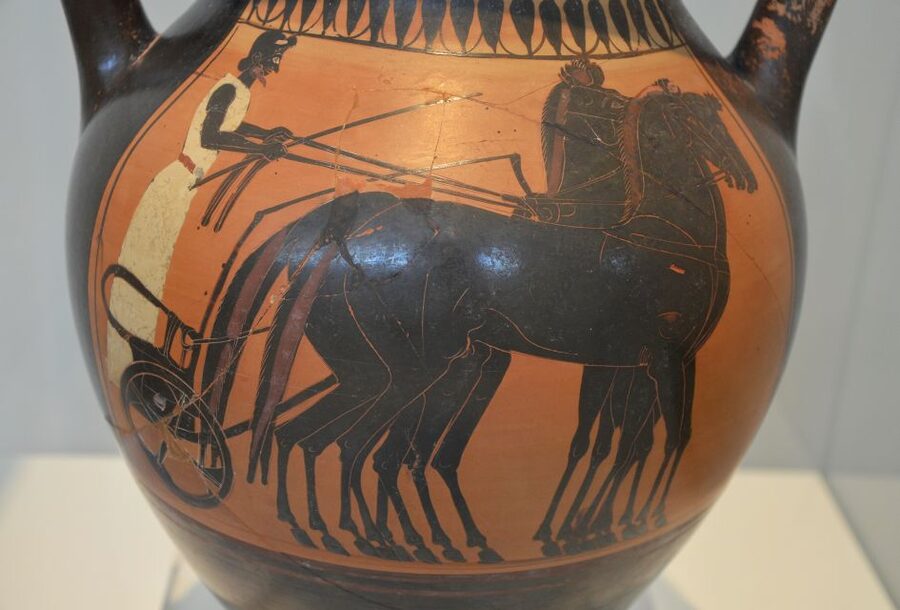
The Vase and Minor Objects Collection covers Greek pottery from the 11th century BC into the Roman period. It also includes the Stathatos Collection, a group of smaller objects from different periods.
Pottery is easy to overlook when a museum also contains monumental sculpture. I would not skip it. Painted vases record myths, rituals, athletic scenes, work, clothing, and social customs. Their shapes also reveal that these were made for different uses, not simply as decoration.
The smaller objects offer a closer look at daily life and personal taste. Jewelry, tools, and household items can feel more immediate than a grand statue. One useful detail from this tour is that Christos has sometimes arranged access to the jewelry room, which may otherwise be locked at certain times of year. Do not assume this is guaranteed, but if ancient jewelry matters to you, mention your interest when arranging the tour.
The Egyptian and Near Eastern Antiquities Collection is the only collection of its kind in Greece. It covers material from the predynastic period, around 5000 BC, through the Roman conquest. This gives the museum a wider setting for Greek culture and shows that the ancient Mediterranean world was connected by ideas, trade, and artistic influence.
How the guide shapes the experience
Christos Theodoropoulos is the named experience provider and licensed archaeologist guide. His approach, based on the tour format and the specific feedback associated with it, is centered on explanation, questions, and a fast-moving highlights route.
He has guided groups that included teenagers and young adults, as well as visitors with a focused interest in ancient jewelry. That range matters. You do not need to arrive with a background in archaeology to follow the tour, and you can ask for more detail if a particular subject catches your attention.
The pace deserves a clear warning. The museum is too large for a relaxed survey in two hours, so Christos may move quickly between rooms. One useful plan is to treat the guided portion as your orientation, then remain afterward to revisit the galleries you liked best.
The guide can speak English, Greek, German, or Turkish. If you have a preference, select or confirm it when booking. The group is private, with the advertised capacity set at six people. That makes conversation easier and gives you more control over the level of detail than a standard public tour.
Is $400 a fair price?
The listed price is $400 per group of up to six, before the €10 museum admission fee per person. For six people, that is about $67 per person for the guide, plus entry. For two people, the per-person cost is much higher.
I would consider it fair for a group that values expert interpretation and wants a planned route through a very large museum. The fee buys more than someone to point at famous objects. It buys a historical structure, answers to questions, and help deciding what deserves your limited time.
Independent entry is a reasonable alternative. The museum is well labeled and laid out in an understandable way, so a self-guided visit can work, especially if you enjoy reading and already know what you want to see. The private tour becomes more worthwhile if ancient Greek history feels unfamiliar, if you are visiting with children, or if you want to avoid wandering through thousands of objects without a plan.
The strongest value comes when you use the tour as the first part of a longer museum visit. After the two hours, revisit the galleries that interested you. That way, the guide provides the structure and you still get time for your own discoveries.
Practical details that affect your day
The experience lasts two hours, with starting times based on availability. Since the museum is large, I would avoid placing a demanding activity immediately afterward. You may want extra time for the galleries the guide can only introduce briefly.
The private format is also useful for mixed interests. One person can ask about sculpture, another about machinery or jewelry, and a child can focus on mythological scenes. The group does not have to follow a fixed public-tour script.
Free cancellation is available up to 24 hours before the activity for a full refund. You can also reserve and pay later, which helps if your Athens schedule is still changing. These are practical advantages, but the main decision remains the value of the guide itself.
Who should book this museum tour?
I would recommend it to first-time Athens visitors who want a strong introduction to ancient Greek art without spending half a day trying to create their own route. Families are another good match, especially when a guide can turn static displays into a story with a beginning, middle, and end.
It also suits anyone who wants to understand the museum’s timeline, not just photograph its most famous objects. The Antikythera mechanism, prehistoric collections, sculpture, pottery, bronze, and Egyptian material make this a broad tour.
You may prefer to visit independently if you are on a strict budget, want to study one collection in detail, or dislike a brisk pace. The museum can support a rewarding self-guided visit. You can also combine both approaches by taking the tour first and staying longer on your own.
Should you book it?
Book this tour if you want a clear two-hour introduction, the help of a licensed archaeologist, and the ease of a private group. Christos is especially useful for families and for visitors who want history explained in plain language rather than left to wall labels.
Skip it if $400 feels too high for your group size or if you prefer slow, independent museum time. The National Archaeological Museum is well organized enough to explore alone. For everyone else, the guide’s route can turn an intimidating collection into a manageable and memorable part of your Athens visit.
FAQ
Where does the tour meet?
Meet at the steps in front of the main entrance of the National Archaeological Museum at 44 Patission Street, 10682. The activity also identifies 28is Oktovriou 42 as the starting location, so confirm the exact map pin before arriving.
How long does the guided tour last?
The guided tour lasts two hours.
What is included in the price?
The price includes an experienced licensed archaeologist guide for a private group of up to six people.
Is museum admission included?
No. Museum entry is listed separately at €10 per person.
Is hotel transfer included?
No. Hotel transfer is not included, so you must make your own way to the museum.
What languages are available?
The tour is offered in English, Greek, German, and Turkish.
What is the maximum group size?
The advertised private group size is up to six people.
Who leads the tour?
The experience provider is Christos Theodoropoulos, a licensed archaeologist guide.
Can I see the Antikythera mechanism?
Yes. Seeing the Antikythera mechanism is one of the highlighted parts of the museum tour.
Can I cancel for a refund?
You can cancel up to 24 hours in advance for a full refund. You can also reserve now and pay later.
More Archaeological Site Tours in Athens
- Athens: Acropolis & up to 5 Archaeological Sites Combo Pass
★ 4.2 · 13,904 reviews - Athens: National Archaeological Museum Ticket w/ Opt. Audio
★ 4.4 · 713 reviews - Athens National Archaeological Museum E-Ticket with Audio Guide
★ 3.0 · 57 reviews - Buggy Tour in Ancient Ruins and Temples around Athens-SOUNIO Poseidon Temple
★ 5.0 · 56 reviews
Just added around Athens
- Small-Group Women History in Ancient Greece Walking Tour★ 5.0 · 38 reviews
- The original Christian tour on Paul’s footsteps in Athens and ancient Corinth★ 4.5 · 25 reviews
- Ancient Athens tour: Acropolis, Parthenon and Acropolis Museum★ 5.0 · 256 reviews
- Ancient Athens Segway Tour with Agora and Kerameikos★ 5.0 · 94 reviews
- Ancient Sparta & Mystras Private Day Tour from Athens★ 5.0 · 52 reviews
- Athens National Archaeological Museum E-Ticket with Audio Guide★ 3.0 · 57 reviews
- Ancient Corinth, Sanctuary of Hera, Blue Lake & Canal from Athens★ 5.0 · 26 reviews
- Half Day Historical Athens City Private Taxi Service Tour★ 5.0 · 79 reviews
Athens History Tours, compared.
Athens: Acropolis & up to 5 Archaeological Sites Combo Pass
Read our review →

Historical Delphi One Day Tour with Arachova Stop & Expert Guide
Read our review →
From Athens: Ancient Corinth Day Trip with Canal & VR Guide
Read our review →
Historic Athens: Small Group Electric Bike Tour
Read our review →
Acropolis, Parthenon & Athens Old City Heritage Walking Tour
Read our review →
Private Biblical Tour Ancient Corinth & Isthmus Canal from Athens
Read our review →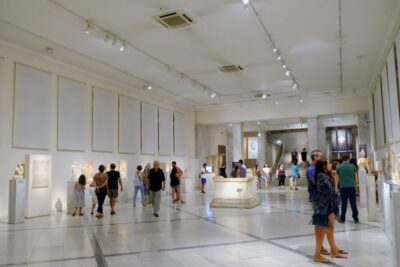
Athens: National Archaeological Museum Ticket w/ Opt. Audio
Read our review →Browse the lists this tour appears in