
Review · ATHENS
Acropolis of Athens Historical Tour For History Enthusiasts
The best thing about this Acropolis tour is its big-picture approach. You do not simply walk past broken columns while someone recites dates. Your guide begins with the rise of human civilization, then places Athens, democracy, drama, mythology, and architecture inside that larger story. Harris, also called Haralampos, is known for turning the visit into an energetic lesson, complete with questions, humor, and philosophical discussion.
I like two things right away. The guides are historians or archaeologists, not simply people reading a script, and personal headsets help you hear them while the Acropolis gets crowded. I also like the route itself: you reach the Parthenon only after seeing the Theatre of Dionysus, the Odeon, the Propylaea, the Erechtheion, and the Temple of Athena Nike, so the famous temple makes more sense when you finally meet it.
The main consideration is pace and exertion. This is a 2-hour-40-minute uphill walk over an ancient site, with uneven surfaces, sun, and crowds. The admission option also matters: the $36.14 price is attractive, but entry tickets are included only when you choose the ticket-inclusive version.
Key points to know before booking
- History before sightseeing: The opening lesson connects early civilization with the rise and influence of ancient Athens.
- A guide with a point of view: Harris, or Haralampos, uses mythology, humor, engineering, and philosophical questions to make the ruins easier to understand.
- A carefully ordered climb: The route begins on the South Slope and finishes at the Parthenon, rather than rushing straight to the most famous monument.
- Clear audio in a busy place: Personal earset receivers let you follow the guide without standing shoulder to shoulder with the group.
- A small-group feel: The maximum group size is 25 people, large enough for social energy but limited enough for questions.
- A useful value at $36.14: The fee buys nearly three hours of interpretation, though you must check whether admission is included in your selected option.
Why this Acropolis tour feels different
Many Acropolis visits begin and end with the Parthenon. That is understandable. It is the site’s star, and the view from the hill can make you forget everything else for a moment. But a monument this old needs framing. Without it, you may admire marble, take photographs, and leave with little sense of why Athens mattered.
This tour tries to solve that problem before the climb properly begins. At the South Slope, the guide introduces the development of human civilization, then explains where Greek civilization fits into that long story. That is a bold choice for an Acropolis visit, but it helps you see Athens as more than a collection of ancient stones.
The strongest guides on this experience, especially Harris, connect facts to ideas. You may hear about democracy, philosophy, athletics, theatre, religion, engineering, and the way later societies used or changed the Acropolis. The goal is not to memorize every ruler or construction date. It is to understand why these places still shape the modern world.
This approach suits you if you like to ask questions and make connections. It may feel less ideal if you want a quick, quiet photo stop with only a few facts. The guide’s energy is part of the experience, and the discussion can be as important as the buildings.
More Ancient History Tours in Athens
- Athens: Acropolis & up to 5 Archaeological Sites Combo Pass
★ 4.2 · 13,904 reviews - Athens: Ancient Greek Theater Performance
★ 4.7 · 2,481 reviews - Historical Delphi One Day Tour with Arachova Stop & Expert Guide
★ 4.5 · 1,247 reviews
Beginning below the Acropolis at the South Slope
The meeting point is Dionysiou Areopagitou 17, near the start of the Acropolis route. The first 40 minutes are devoted to the South Slope and the larger introduction to Greek civilization.
This opening is valuable because ancient Athens did not appear fully formed. The guide sets the city within earlier human development, then explains how Athens became a center for civic life, thought, drama, religion, and public debate. You get the broad framework before the monuments begin competing for your attention.
It is also a smart place to talk about the people behind the stones. Gods and goddesses were not decorative figures in Athenian life. They shaped festivals, temples, political identity, and stories about the city’s origins. Philosophers and playwrights were not separate from public life either. Their ideas and performances were part of the city’s arguments about how people should live.
The South Slope is also a practical beginning. You start lower on the hill and work upward through a connected sequence of sites. Wear shoes with a secure grip, and bring water. The tour requires walking and climbing, and the Greek sun can make the ascent feel harder than the timetable suggests.
Theatre of Dionysus, where drama took public form
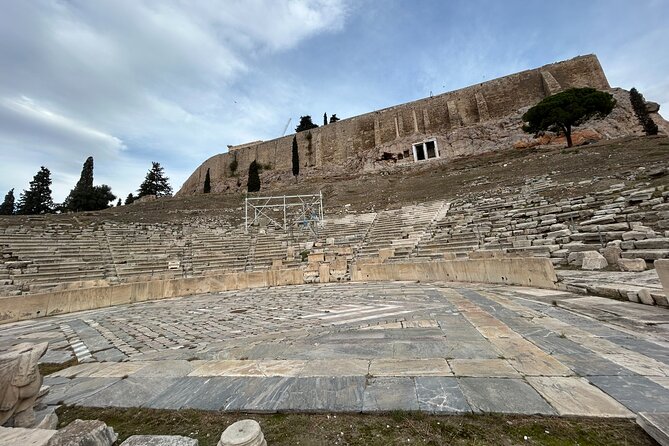
The Theatre of Dionysus is the first major monument on the climb. The tour allows about 20 minutes here, enough to understand why this is not simply an old performance venue.
This is the place associated with the birth of theatre and drama as a public practice. The earliest tragedies and comedies were performed for Athenian audiences, with works linked to Sophocles, Euripides, and Aeschylus. That list alone gives the site unusual weight. You are looking at the setting for stories and ideas that still appear on stages and in classrooms today.
A good guide makes the theatre easier to imagine. The point is not just that plays happened here, but that theatre gave the city a way to examine fear, pride, justice, war, family, and the behavior of its gods. Ancient audiences were not attending light entertainment alone. They were watching public arguments acted out through myth and human conflict.
This is one of the tour’s best stops for families and younger visitors because stories work better than a string of dates. The guide may use questions, quizzes, or anecdotes to keep the group involved. Harris is especially praised for adjusting his explanations to different interests, including mythology and theatre.
The Odeon of Herodes Atticus and the afterlife of Athens
The route continues to the Odeon of Herodes Atticus. The supplied timing does not list a separate duration for this stop, so expect it to be part of the upward walk rather than a long standalone lecture.
The Odeon was built by Herodes Atticus, a wealthy benefactor and philosopher of the second century AD, in memory of his wife. That detail gives the monument a human scale. The Acropolis is often presented as the achievement of a city or a political system, but the Odeon also reflects private grief, wealth, status, and the desire to create a lasting memorial.
It is useful here to notice that the Acropolis was not frozen in the fifth century BC. Athens continued to change under later rulers and cultures. A guide who explains those layers can help you avoid the common mistake of treating every building as part of one single age.
The Odeon also sharpens the contrast between ancient performance spaces. The Theatre of Dionysus belongs to the early story of Greek drama, while the Odeon shows how later Athenians continued to support public culture and monumental building. The two stops work better together than either would alone.
More Ancient History Tours in Greece
- From Athens: Ancient Corinth Day Trip with Canal & VR Guide
★ 4.6 · 1,073 reviews - Acropolis, Parthenon & Athens Old City Heritage Walking Tour
★ 4.5 · 876 reviews - Private Biblical Tour Ancient Corinth & Isthmus Canal from Athens
★ 5.0 · 762 reviews - Athens: Ancient Corinth & Nafplio Full Day Trip with Swim
★ 4.8 · 531 reviews
Temple of Athena Nike at the sanctuary entrance
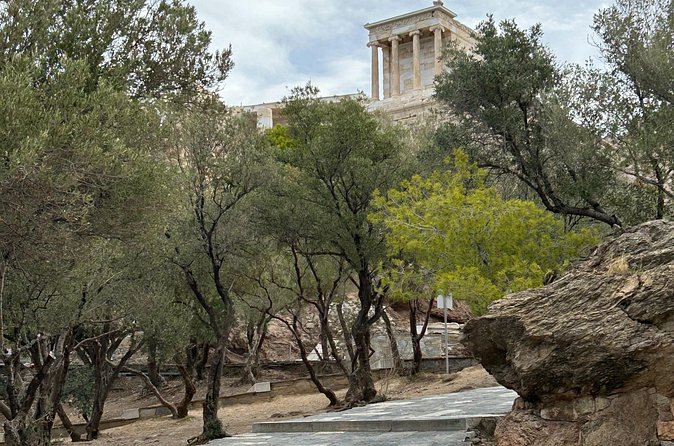
At the main entrance to the Acropolis sanctuary, you reach the Temple of Athena Nike. The scheduled discussion here lasts about 20 minutes.
Athena Nike was dedicated to the goddess of victory. Its position near the entrance is fitting: before entering the central sanctuary, you encounter a small temple tied to success, protection, and civic identity. The building is much smaller than the Parthenon, but do not mistake size for importance.
This is a good place to consider how ancient Athenians linked religion and public life. A temple was not merely a private house for a god. It expressed the city’s hopes and claims. Athena was especially important to Athens, and the different forms of her worship reveal how the city connected wisdom, protection, warfare, and victory.
The stop also reminds you that the Acropolis is not just one building. It is a sacred complex with different structures serving different purposes. If you are focused only on the Parthenon, you can miss that careful arrangement.
Propylaea, the grand gateway uphill
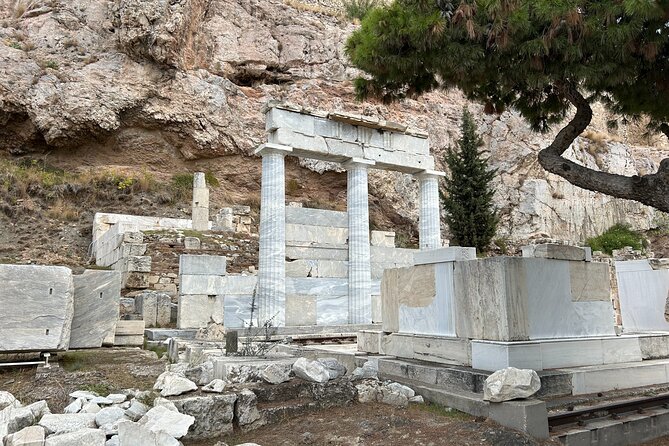
The Propylaea is the monumental gateway leading into the main sanctuary. The tour spends about 20 minutes here, including time to look over the surrounding hills and climb the main stairway.
This is where the route begins to feel especially theatrical. You are not simply approaching a temple. You are passing through an entrance designed to make arrival feel important. The stone, scale, and elevated position turn the climb itself into part of the experience.
The views help explain Athens as a city built around hills, open space, and long sight lines. From here, you can look toward historically important hills and across modern Athens. Ancient and present-day Athens overlap in a way that is hard to grasp from a museum label.
The gateway can also be one of the more crowded parts of the route. Headsets matter here. You can keep moving with the group and still hear the explanation, rather than stopping in a tight cluster around the guide. The group limit of 25 is helpful, though it cannot remove the crowds from the public site.
Erechtheion, a temple of stories and unusual design
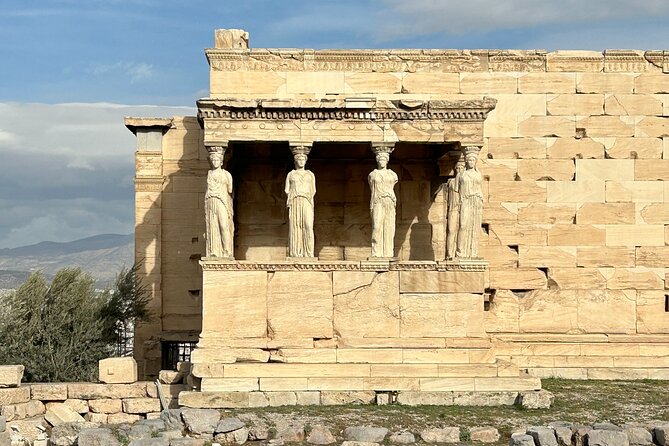
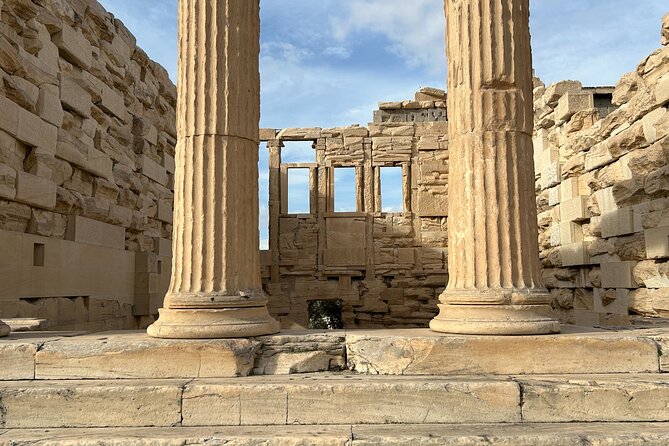
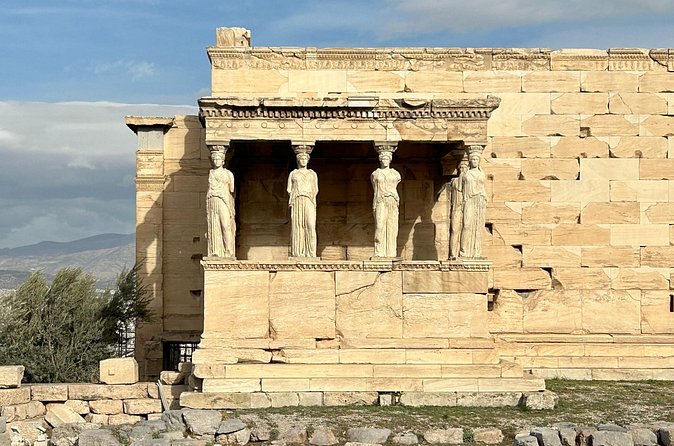
The Erechtheion is the penultimate main stop, with about 20 minutes set aside for it. Located near the center of the sanctuary, it is famous for its unusual sculptures and its connection to myths and legends.
This is the point where the Acropolis can feel less like a single grand statement and more like a collection of overlapping sacred stories. The Erechtheion is tied to ancient myths about Athens, and its design is more complex and irregular than the Parthenon’s clean, symmetrical form.
Your guide can help you read those differences. Instead of asking why one temple is not as visually simple as another, you begin to see that different buildings answered different religious and civic needs. The Erechtheion rewards close attention. Its details are easy to overlook when the Parthenon is waiting nearby.
The sculptures are a particular reason to slow down. Even if you already know the building from photographs, seeing its sculptural program in context gives the visit more force. Ask questions here. This is one of the stops where a historian’s wider command of mythology and ancient culture can make the site feel less abstract.
The Parthenon, saved for the final act
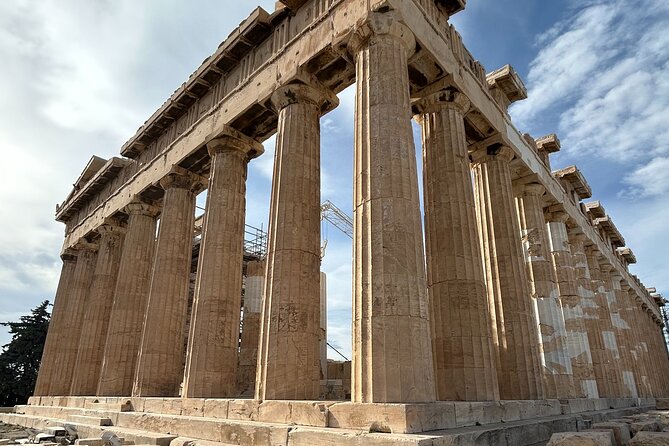
The tour ends with about 30 minutes at the Parthenon, the most famous structure on the hill. Saving it for last is good planning. By this point, you have seen the theatre that shaped drama, the temples linked to victory and myth, and the gateway that framed entry into the sanctuary.
The Parthenon was built as a gift to Athens’ patron goddess, Athena. It is also a major achievement of Classical Greek architecture and a symbol tied to the city’s democratic identity. Those claims can sound grand until a guide explains the decisions behind the building.
One memorable subject is the way the Parthenon’s lines work visually. Some parts that appear straight from a distance are shaped with subtle curves or adjustments so the building looks correct to the human eye. Ancient builders also used technical methods to join marble pieces. These details turn the temple from a famous image into a work of planning, measurement, and problem-solving.
Do not expect a quiet private encounter. The Parthenon is the busiest part of the visit, and the hill can be crowded. Still, the guide’s explanations and the sweeping views give you reasons to look beyond the standard photograph. Athens stretches below, while the temple’s damaged columns point to the long, complicated life of the city.
The tour finishes in front of the Parthenon at the top of the Acropolis. That is convenient for continuing your day, but it is not a return-to-hotel service. Hotel pickup and drop-off are not included, and you should plan your next move from the hilltop.
Guide style, group size, and the role of the headset
The experience is offered in English and accepts a maximum of 25 people. That is not a private tour, but it is small enough to support questions and a sense of group conversation.
The guide is always a licensed English-speaking local historian or archaeologist. Harris, also referred to as Haralampos, receives especially strong praise for mixing history with humor, life lessons, mythology, and thoughtful questions. He is also described as helpful with photographs and attentive to different ages and interests.
That last point matters. One person may want ancient engineering, another may care about gods and heroes, and someone else may be curious about democracy or theatre. Harris is noted for shifting emphasis as he learns what the group wants to explore.
The personal earset receivers are a practical feature, not a gimmick. Ancient sites are noisy, and a guide who speaks while walking can be difficult to follow. The headset lets you keep your eyes on the ruins and still catch the details.
The experience can work for families, including children who enjoy stories and quizzes, and for older participants who need a more considerate pace. One account describes the guide checking weather and elevator conditions for a father using a wheelchair. That does not mean every route or access detail is guaranteed, so you should raise mobility needs before booking, but it does show the sort of care the guide may provide.
Is $36.14 a good value?
At $36.14 per person, this is a reasonable price for nearly three hours with a licensed specialist, provided you choose the version that includes admission. The value comes from interpretation. You are paying to understand the Acropolis, not just to enter it.
Check the ticket choice carefully. Admission fees are included only with the option that says they are included. If you select the version without entry, you will need to handle the ticket cost separately. Food, drinks, hotel transport, and tips are also outside the price.
Booking far ahead may be wise. The experience is booked, on average, 50 days in advance, which suggests that popular dates can fill early. Confirmation arrives at booking, and free cancellation is available until 24 hours before the start time.
The weather rule is important. The tour requires good weather. If poor weather causes cancellation, you are offered another date or a full refund. If you cancel yourself less than 24 hours before the start, the payment is not refunded.
Who should book this Acropolis experience?
I would choose this tour if you want the Acropolis explained as part of a larger story. It is especially well suited to people interested in ancient Greek politics, philosophy, theatre, mythology, religion, engineering, or the continuing influence of Athens.
Families may appreciate the stories, quizzes, and flexible explanations. First-time visitors also gain a lot because the route provides order: South Slope, theatre, Odeon, Temple of Athena Nike, Propylaea, Erechtheion, and finally the Parthenon.
I would think twice if you want to move quickly, avoid discussion, or spend most of your time taking photographs. The guide’s style is active and interpretive. The uphill route, sun, uneven ground, and crowds also require basic stamina.
Should you book it?
Book it if you want to leave the Acropolis with ideas, not just images. The strongest reason to choose this experience is the guide’s ability to connect a theatre, a temple, a gateway, and a ruined masterpiece into one story about how people organized public life and tried to understand the world.
Choose the admission-inclusive option, bring water, wear steady shoes, and allow the full 2 hours 40 minutes. If Harris or Haralampos is leading your departure, expect a lively session with mythology, engineering details, humor, questions, and a few lessons that may stay with you longer than the photographs.
FAQ
How long does the Acropolis tour last?
The tour lasts approximately 2 hours and 40 minutes.
What language is the tour offered in?
The tour is offered in English.
Who leads the tour?
A local licensed English-speaking guide leads the tour, and the guide is always a historian or archaeologist. Harris, also known as Haralampos, is one guide associated with this experience.
Does the price include Acropolis admission?
Admission is included only if you select the option that includes entry fees. The option without admission does not include the ticket.
Where does the tour begin?
The meeting point is Dionysiou Areopagitou 17, Athina 117 42, Greece.
Where does the tour end?
The tour ends in front of the Parthenon at the top of the Acropolis hill.
How many people can join the tour?
The maximum group size is 25 people.
What happens if bad weather cancels the tour?
You will be offered a different date or a full refund if poor weather causes the experience to be canceled.
Just added around Athens
- Small-Group Women History in Ancient Greece Walking Tour★ 5.0 · 38 reviews
- The original Christian tour on Paul’s footsteps in Athens and ancient Corinth★ 4.5 · 25 reviews
- Ancient Athens tour: Acropolis, Parthenon and Acropolis Museum★ 5.0 · 256 reviews
- Ancient Athens Segway Tour with Agora and Kerameikos★ 5.0 · 94 reviews
- Ancient Sparta & Mystras Private Day Tour from Athens★ 5.0 · 52 reviews
- Athens National Archaeological Museum E-Ticket with Audio Guide★ 3.0 · 57 reviews
- Biblical Corinth Taste Faith & History with wine & Oil Tasting★ 5.0 · 28 reviews
- Ancient Corinth, Sanctuary of Hera, Blue Lake & Canal from Athens★ 5.0 · 26 reviews
Athens History Tours, compared.
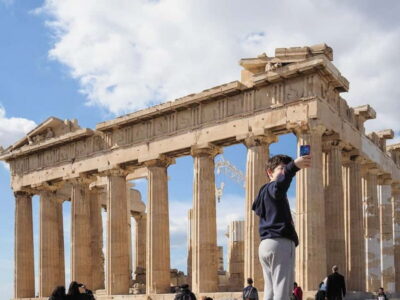
Athens: Acropolis & up to 5 Archaeological Sites Combo Pass
Read our review →
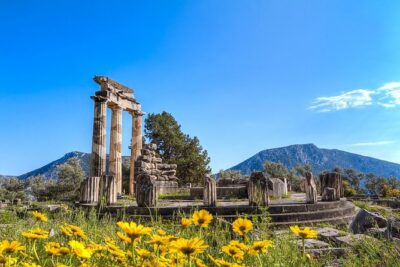
Historical Delphi One Day Tour with Arachova Stop & Expert Guide
Read our review →
From Athens: Ancient Corinth Day Trip with Canal & VR Guide
Read our review →
Historic Athens: Small Group Electric Bike Tour
Read our review →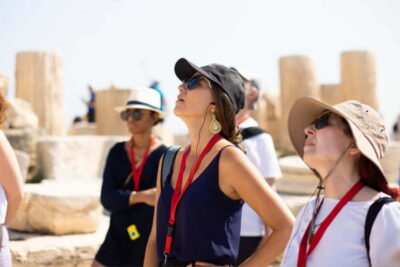
Acropolis, Parthenon & Athens Old City Heritage Walking Tour
Read our review →
Private Biblical Tour Ancient Corinth & Isthmus Canal from Athens
Read our review →
Athens: National Archaeological Museum Ticket w/ Opt. Audio
Read our review →Browse the lists this tour appears in