Review · ATHENS
Ancient Athens E-Bike Tour
The clever idea here is simple: use a standing electric Trikke to cover Athens’ ancient center quickly, without pedaling and without spending the whole afternoon walking uphill. In about two hours, you see the Acropolis from close range, trace the birthplace of democracy at Pnyx, and roll through Plaka, Monastiraki, and the Ancient Agora.
I like the efficient route and the small maximum of 12 people. I also like that guides such as Dimitris and Kevin adjust the outing around what you have already seen, rather than giving every group the same canned ride. The main drawback is that the tour is mostly an outside look at major sites, and archaeological admission is generally extra, so you need more time and money if you want to go inside.
Key points to know before you book
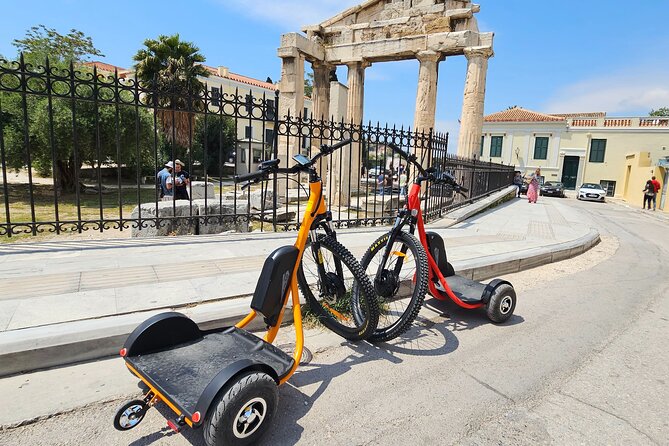
- A motorized standing Trikke does the work: You steer and stand, but there is no pedaling.
- The route covers Athens’ ancient core fast: Acropolis views, Pnyx, the Ancient Agora, Kerameikos, Monastiraki, Roman Agora, and Plaka fit into roughly two hours.
- Pnyx gives the tour its strongest historical moment: This is where the experience connects Athens’ scenery with the beginnings of democracy.
- The group is capped at 12 people: That is small enough for questions and personal guidance.
- Site admission is not the same as tour admission: Budget separately for archaeological areas, especially the Acropolis and Ancient Agora.
- Heat matters in Athens: An electric ride can save your legs and make a midday outing more manageable.
Why this is a smart way to see central Athens

Athens rewards walking, but its ancient sights spread across several hills, lanes, and busy streets. A short ride can give you a useful first look before you return on foot to the places you want to explore properly.
That is the real value of this tour. You are not getting a full archaeological visit at every stop. You are getting a compact orientation, a series of good viewpoints, and enough historical context to decide where to spend the rest of your day.
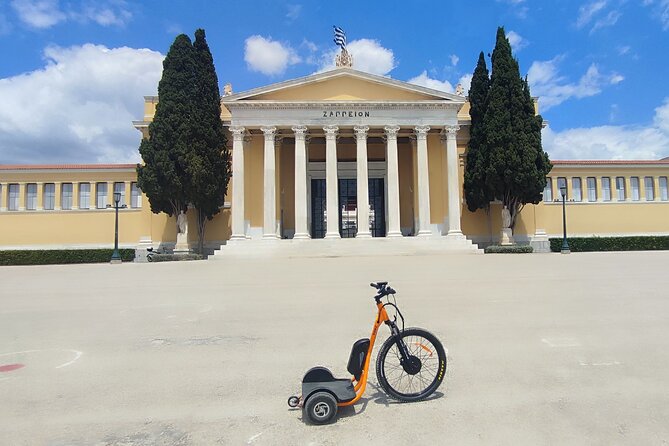
The Trikke is a standing electric tricycle. You do not pedal, and the motor carries you between stops. That matters in Athens, especially in warm weather. You can reach Pnyx and move between the Acropolis area, the Agora, and Plaka without arriving drenched and tired.
The ride also has a playful side. It is more unusual than a standard minibus and less tiring than a long walking route. Children aged 9, 12, 13, and 15 have enjoyed the experience, according to the supplied details, though each child must be comfortable standing, steering, and following the guide.
The group limit is 12 people. That is not a private tour, but it is small enough that you should be able to hear the guide and ask questions. Dimitris is one guide associated with especially personable, adaptable tours, while Kevin is also named in the tour feedback. Your guide may vary.
More Ancient History Tours in Athens
- Athens: Acropolis & up to 5 Archaeological Sites Combo Pass
★ 4.2 · 13,904 reviews - Athens: Ancient Greek Theater Performance
★ 4.7 · 2,481 reviews - Historical Delphi One Day Tour with Arachova Stop & Expert Guide
★ 4.5 · 1,247 reviews
Starting near the Acropolis at 22 Andrea Syngrou
The meeting point is at Leoforos Andrea Syngrou 22, near public transportation and within reach of the Acropolis district. The activity returns to this same point, which makes planning easier if you have dinner, a museum visit, or another booking afterward.
The scheduled operating days are Monday through Saturday, from 10:00 a.m. to 4:00 p.m. The tour takes about two hours, though you should leave a little breathing room around it. Athens traffic, questions, and the pace of a small group can affect the exact finish.
You receive a helmet, use of the Trikke, and customer insurance. Confirmation is provided at booking. The tour requires good weather, so a poor-weather cancellation can lead to a new date or a full refund.
Theatre of Dionysus and the Odeon of Herodes Atticus
The route begins in the Acropolis area, where the Theatre of Dionysus connects Athens with the origin of Western theatre. This is described as the first theatre in the world and the most important theatre of ancient Greece.
You will not be sitting through a performance here. The value is in seeing the place where drama became a public part of civic life. It also helps you understand that the Acropolis hill was not just a religious site. It was part of a wider cultural and political center.
The nearby Odeon of Herodes Atticus gives you a different chapter. Built in the second century AD as a memorial for the wife of Herodes Atticus, this Roman theatre is still used for performances. Its surviving stone structure makes a strong visual impression, especially when viewed from the Acropolis approach.
The tour allows about 10 minutes at the Odeon. That is enough for an explanation and photographs, but not enough for a slow study of architectural details. Admission to the Acropolis complex includes both the Theatre of Dionysus and the Odeon, but that admission is not part of the tour price.
The Acropolis from close range, without an uphill visit

The Acropolis is the headline sight, but this tour does not take you through the Parthenon. Instead, you get close views of the rocky hill and its monuments, including the Parthenon at the summit.
That distinction matters. If this is your first visit to Athens, you may feel that seeing the Acropolis from below is only a preview. It is. The advantage is speed. You can understand the setting, hear the guide’s explanation, and save a separate block of time for entering the hill at your own pace.
The listed Acropolis admission is 20 euros, and the tour information clearly says archaeological tickets are not included. Because the stop descriptions use mixed admission wording, I would confirm the current ticket arrangement before booking and assume you will pay separately for entry.
A separate Acropolis visit is worth considering if you want the Parthenon, the hilltop views, and the monuments up close. The e-bike tour works best as a first look, not as a replacement.
More Ancient History Tours in Greece
- From Athens: Ancient Corinth Day Trip with Canal & VR Guide
★ 4.6 · 1,073 reviews - Acropolis, Parthenon & Athens Old City Heritage Walking Tour
★ 4.5 · 876 reviews - Private Biblical Tour Ancient Corinth & Isthmus Canal from Athens
★ 5.0 · 762 reviews - Athens: Ancient Corinth & Nafplio Full Day Trip with Swim
★ 4.8 · 531 reviews
Pnyx, where the history becomes personal
Pnyx is the stop I would watch for. It gives the tour more substance than a simple photo circuit.
The Pnyx hill is associated with the beginnings of democracy and sits within an archaeological area that also functions as a park. The guide explains the role of the site and the meetings held there, connecting the physical hill to the way citizens took part in public life.
You spend about 15 minutes here, with no admission charge. That is enough to pause, listen, and take in the Acropolis viewpoint. It is also one of the places you might not reach on a rushed independent walk through the central sights.
This is where a good guide makes a real difference. Dimitris has been singled out for explaining the significance of the meeting place and showing how the site relates to Athenian democracy. The stop is not only about an old ruin. It gives you a clearer idea of how the city worked.
The National Observatory and the Hill of the Nymphs
The route continues toward the National Observatory of Athens, the city’s first observatory. It sits on the Hill of the Nymphs, another archaeological area with parkland and historical connections.
The scheduled stop lasts about 15 minutes. Admission is included at this stop, according to the tour details. You should think of it as a viewpoint and context stop rather than a full observatory visit, since the tour is moving through several sites in a short period.
This part of the route adds variety. You are not looking at temples for two straight hours. You get a different hill, a different purpose, and a broader sense of how Athens grew around its ancient center.
The Ancient Agora, Athens’ old public heart
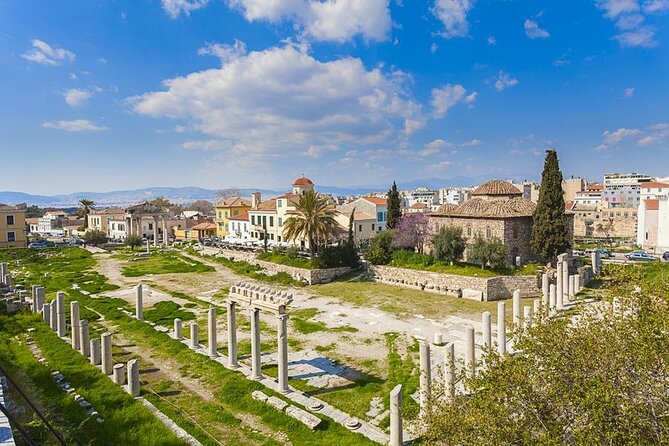
The Ancient Agora was the main marketplace and civic center of ancient Athens. It is one of the most useful places for understanding daily life because it was not only a place for buying goods. It was also tied to public business, debate, and social activity.
The tour allows about 20 minutes here, the longest stop on the route. That extra time makes sense. The Agora has more to explain than a single monument, and the setting helps connect the city’s political and commercial life.
The listed ticket price is 4 euros. The general inclusion section says archaeological tickets are not included, while one stop description labels admission as included. Because of that inconsistency, check with the operator before the day of the tour. If you plan to enter, budget for the ticket rather than assuming it is covered.
If you later return on foot, the Agora rewards a slower visit. The tour gives you the outline. A separate entry lets you spend time with the ruins and the surviving structures.
Kerameikos, Monastiraki, and the changing city
Kerameikos is close to the Ancient Agora and adds a quieter archaeological note. The area is linked to pottery production, which gave the neighborhood its name. The planned stop is about 10 minutes, and no admission fee is listed for this part of the ride.
You then move to Monastiraki, one of Athens’ busiest squares and a central meeting point surrounded by restaurants, bars, and shops. The contrast is useful. One minute you are looking at ancient remains, and soon after you are in the modern city center with people coming and going in every direction.
The Monastiraki stop lasts about 10 minutes. It is not long enough for shopping or a meal, but it helps you get your bearings. You can mark the area for a later return, especially if you want to explore the nearby streets on foot.
The Trikke is helpful here because it lets you connect several districts without repeatedly checking a map. Still, Athens traffic and crowded streets require attention. You should follow the guide’s instructions and avoid treating the ride like a fast joy ride.
Roman Agora and the Tower of the Winds
The Roman Agora was built in the second century AD as a Roman counterpart to the older Greek Agora. Inside, you can see the Tower of the Winds, one of the site’s best-known features.
The planned visit lasts about 10 minutes. The tour information gives a 4 euro price for entry but also lists this stop as admission not included, so confirm the current arrangement. If you are trying to keep costs down, the outside explanation may be enough. If you want to inspect the site, allow for the separate ticket.
This stop also shows how Athens changed under Roman rule. It is a small but useful piece of the city’s long sequence, from Greek civic life to Roman administration and then to the modern neighborhoods around it.
Plaka closes the loop
Plaka is the traditional neighborhood at the foot of the Acropolis. Its narrow streets and old-style buildings give it a different feel from the open archaeological areas and busy Monastiraki square.
You spend about 10 minutes here. That is enough to see the character of the district, but not enough to explore every lane. I would treat this as a preview and return later if you want lunch, shopping, or a slow evening walk.
The description compares Plaka to a Greek island, which captures its picturesque look without suggesting that it is separate from Athens. It is right in the city center, close to major ancient sites and modern restaurants.
Ending near Plaka also makes practical sense. You can return to the meeting point with the group or use the tour as a guide to continue your own exploration nearby.
What the $72.09 price really buys you
At $72.09 per person, this is not the cheapest way to look at Athens. You are paying for the electric Trikke, helmet, insurance, guide, and a compact route that connects several sites in a short time.
The value improves if you are short on time, visiting in hot weather, or not eager to walk between hills. It also makes sense during a first day in Athens, when you want a clear map of the ancient center before choosing where to return.
The price is less attractive if you already know Athens well or plan to walk the same area slowly. It is also not a full sightseeing ticket. You may still pay for the Acropolis, Ancient Agora, Roman Agora, or other archaeological areas.
I would budget the tour price plus possible entry fees. The Acropolis price listed in the information is 20 euros, and the Ancient Agora and Roman Agora are listed at 4 euros each. Ticket prices can change, and the mixed inclusion notes make direct confirmation sensible.
Who will get the most from this ride
I would recommend it for first-time visitors who want orientation without a long walk. It suits couples, families with older children, and anyone who finds Athens’ heat or hills tiring.
It is also useful if you have only a short stay. In two hours, you can identify the Acropolis area, Pnyx, the Agora, Kerameikos, Monastiraki, Roman Agora, and Plaka. You will not master any one site, but you will know where to return.
The tour is less suited to anyone seeking a detailed archaeological lecture or long interior visits. You should also reconsider it if standing for the ride or steering a motorized tricycle would be uncomfortable. The provided information says most people can participate, but it does not give detailed mobility requirements.
Book with weather in mind. The tour runs Monday through Saturday, and poor weather can cause a cancellation or date change. Free cancellation is available up to 24 hours before the start time. After that point, the amount paid is not refunded, and late changes are not accepted.
Should you book the Ancient Athens E-Bike Tour?
Book it if you want a lively introduction to central Athens, especially in warm weather or during a short visit. The strongest parts are the easy motorized ride, the small group, the Pnyx viewpoint, and the chance to connect ancient sites with modern neighborhoods in one compact outing.
Do not book it expecting entry to the Acropolis or a deep visit inside every archaeological area. Think of the tour as a guided overview with useful local context, then plan a separate Acropolis visit if the Parthenon is a priority.
At 4.8 out of 5 from 48 ratings, with 96 percent recommending it, the experience has a strong record. The praise centers on the fun Trikkes, capable guides such as Dimitris, flexible routing, and the amount of Athens you can cover quickly. For many visitors, that is exactly what the city’s hills and summer heat call for.
FAQ
How long does the Ancient Athens E-Bike Tour last?
The tour lasts approximately two hours.
Where does the tour start?
It starts at Leoforos Andrea Syngrou 22, Athens 117 42, Greece.
Where does the tour finish?
The activity ends back at the meeting point.
What days and times does the tour operate?
It operates Monday through Saturday from 10:00 a.m. to 4:00 p.m. The listed operating period runs from January 5, 2023, through December 22, 2026.
Is pedaling required?
No. The standing Trikke is motorized, so no pedaling is required.
What is included in the price?
Use of the Trikke, a helmet, and customer insurance are included.
Are archaeological admission tickets included?
The general tour information says tickets to archaeological areas are not included. Some individual stop notes use different inclusion wording, so confirm the current arrangement before booking.
How many people can join the tour?
The maximum group size is 12 people.
Can I cancel for a full refund?
Yes. You can cancel at least 24 hours before the local start time for a full refund. Cancellations or changes made less than 24 hours before the start time are not refunded. If poor weather cancels the tour, you can receive a different date or a full refund.
More Cycling Trips in Athens
- Athens: Bike Tour of Athens Historical Centre
★ 5.0 · 61 reviews - Explore Athens Historical Centre by Bike
★ 5.0 · 54 reviews - Historical Singapore Bike Tour on Full-Sized Bicycles
★ 5.0 · 1,421 reviews - Barcelona: 2.5-Hour Bike or E-Bike Historical Tour
★ 4.5 · 1,262 reviews
More History Tours by Bike, Segway and Tuk-Tuk in Athens
- Historic Athens: Small Group Electric Bike Tour
★ 4.9 · 966 reviews - Athens: Small Group E-Bike Tour of Historic Highlights
★ 4.9 · 154 reviews - Athens Highlights by E-Bike: Small-Group Historic Tour
★ 5.0 · 131 reviews - Ancient Athens Segway Tour with Agora and Kerameikos
★ 5.0 · 94 reviews
Just added around Athens
- Small-Group Women History in Ancient Greece Walking Tour★ 5.0 · 38 reviews
- The original Christian tour on Paul’s footsteps in Athens and ancient Corinth★ 4.5 · 25 reviews
- Ancient Athens tour: Acropolis, Parthenon and Acropolis Museum★ 5.0 · 256 reviews
- Ancient Athens Segway Tour with Agora and Kerameikos★ 5.0 · 94 reviews
- Ancient Sparta & Mystras Private Day Tour from Athens★ 5.0 · 52 reviews
- Athens National Archaeological Museum E-Ticket with Audio Guide★ 3.0 · 57 reviews
- Biblical Corinth Taste Faith & History with wine & Oil Tasting★ 5.0 · 28 reviews
- Ancient Corinth, Sanctuary of Hera, Blue Lake & Canal from Athens★ 5.0 · 26 reviews
Athens History Tours, compared.
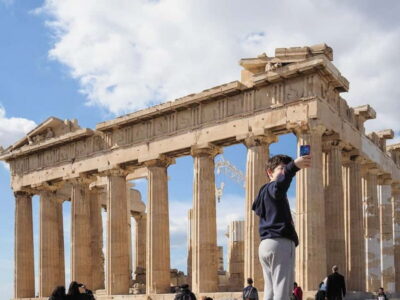
Athens: Acropolis & up to 5 Archaeological Sites Combo Pass
Read our review →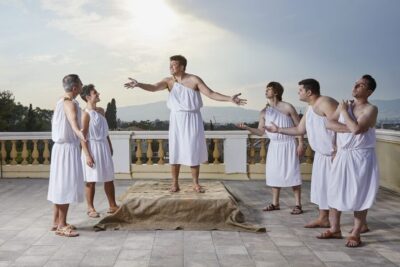
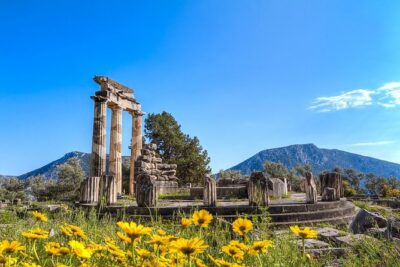
Historical Delphi One Day Tour with Arachova Stop & Expert Guide
Read our review →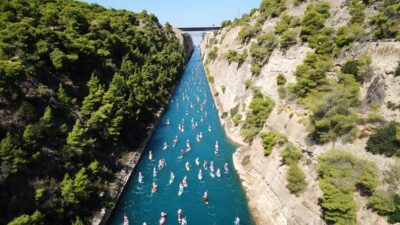
From Athens: Ancient Corinth Day Trip with Canal & VR Guide
Read our review →
Historic Athens: Small Group Electric Bike Tour
Read our review →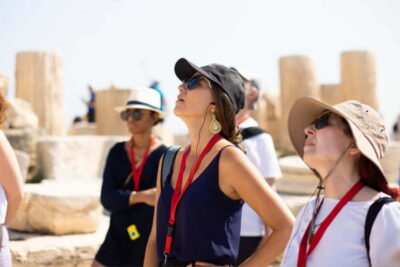
Acropolis, Parthenon & Athens Old City Heritage Walking Tour
Read our review →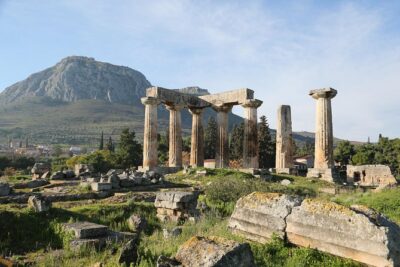
Private Biblical Tour Ancient Corinth & Isthmus Canal from Athens
Read our review →