
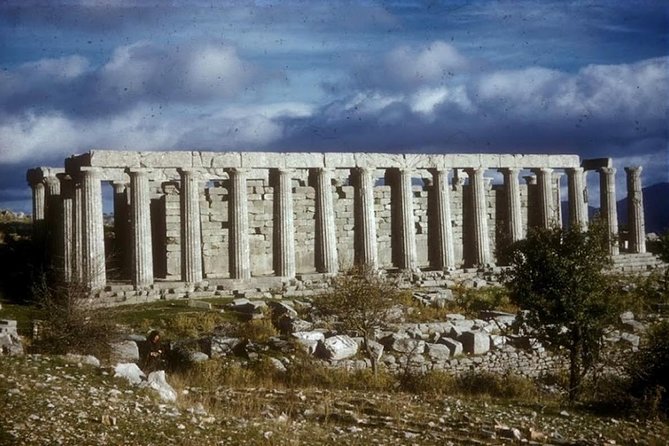
Review · ATHENS
Day tour to Ancient Olympia,Ancient Sparta Mycenae Including Meal
This is the rare Athens day trip that tries to cover three major ancient sites in one long sweep: Olympia, Sparta, and Mycenae. You also get Cave Kaiadas, the Corinth Canal, a private Mercedes vehicle, and a Greek dinner before returning to Athens.
I like two things right away. First, the driver-guide format gives you the freedom of a private trip without the work of planning a complicated route. Second, the journey connects different chapters of Greek history, from the Olympic Games and Mycenaean kings to the military society of Sparta. The drawback is simple: this is an extremely long day, and much of it is spent on the road.
- Olympia in one day from Athens: See the Olympic stadium, temples, palaestras, and museum without arranging several separate transfers.
- Private Mercedes transport: Groups of up to four ride in an E-Class, while larger parties use a minivan or Sprinter.
- Local storytelling between stops: Drivers such as Paddy, Sebastian, Ted, Dallas, and George have been praised for explaining Greek mythology, history, and modern culture during the drives.
- A useful correction to the Sparta myth: At Cave Kaiadas and the Sparta site, you hear about archaeological findings that challenge the old story of disabled Spartan babies being thrown into the pit.
- Dinner included in the advertised package: The meal includes moussaka, Greek salad, tzatziki, a drink, and baklava with ice cream, though I would confirm this detail before departure.
- A flexible route: Weather, daylight, closures, or your interests can change the plan, with alternatives such as Mystras, Nafplio, or Ancient Corinth sometimes used.
Is This the Right Peloponnese Day Trip?
I would choose this tour when I had limited time in Greece but wanted to see far more than Athens. Olympia and Sparta are not quick side trips. Reaching them by public transport in a single day would be awkward, and driving yourself would leave you tired and distracted. Here, you can sleep during part of the ride, listen to stories when you are awake, and let someone else handle the roads.
The price is listed at $286.62 per person. That is not cheap, but the value depends heavily on your group size and priorities. You are paying for a long private transfer, a driver, bottled water, soft drinks, snacks, liability insurance, and dinner, rather than simply buying admission to one site. For a small group, the cost may feel fair because the vehicle and driving are shared only by your party.
The tour is advertised as about 12 hours, but you should plan for the possibility of 14 or 15 hours. The distances are substantial, and the route may change because of weather, daylight, road conditions, closures, or a special event in Athens. You need stamina, comfortable shoes, and a willingness to accept a fast look at several places instead of a slow visit to one.
Starting in Athens With a Private Mercedes
Pickup is available throughout the Athens area, including hotels, apartments, Airbnbs, metro stations, bus stations, the cruise terminal, and Athens International Airport. You arrange the exact point with the operator after booking, so provide a working phone number and clear pickup details.
For one to four people, the vehicle is a Mercedes E-Class. Groups of five to eight use a Mercedes minivan, and larger groups may travel in a Sprinter. This matters on a day with long drives. A comfortable car gives you room to rest between sites, and several people have found it easy to catch up on sleep after arriving in Greece.
The driver is a local guide, but not a licensed guide permitted to accompany you inside the archaeological monuments. That distinction is important. You receive explanations in the car and before entering each place, then explore the sites on your own. If you want a formal guided walk through every ruin, this is not that kind of tour.
The strongest part of the experience is likely to be the driver you are assigned. Paddy, Sebastian, Ted, Dallas, George, Demos, Michael, Pantelis, and others have been praised for good road skills, humor, patience, and clear explanations. You cannot request a particular driver with certainty from the information provided, but it is worth asking when you book.
More Ancient History Tours in Athens
- Athens: Acropolis & up to 5 Archaeological Sites Combo Pass
★ 4.2 · 13,904 reviews - Athens: Ancient Greek Theater Performance
★ 4.7 · 2,481 reviews - Historical Delphi One Day Tour with Arachova Stop & Expert Guide
★ 4.5 · 1,247 reviews
Olympia, Where the Olympic Games Began
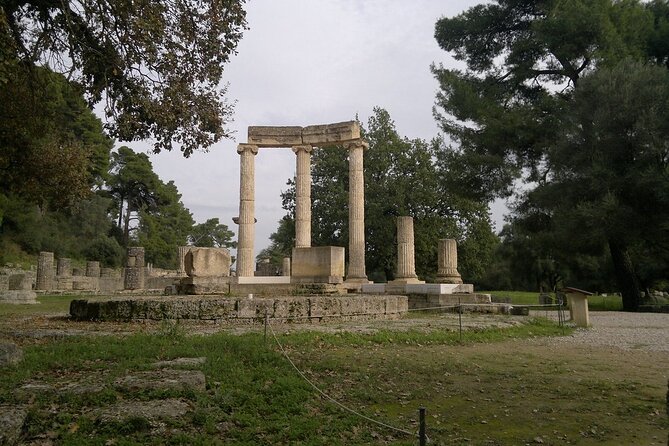
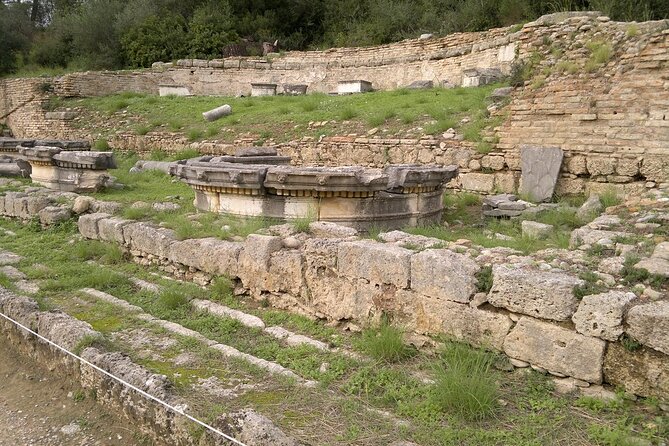
Olympia is the emotional center of the day. It was the ancient Greek religious sanctuary associated with Zeus and the Olympic Games, which traditionally began long before the official date of 776 BC. The site lies beside the Alfeios River, with trees and open countryside around the ruins.
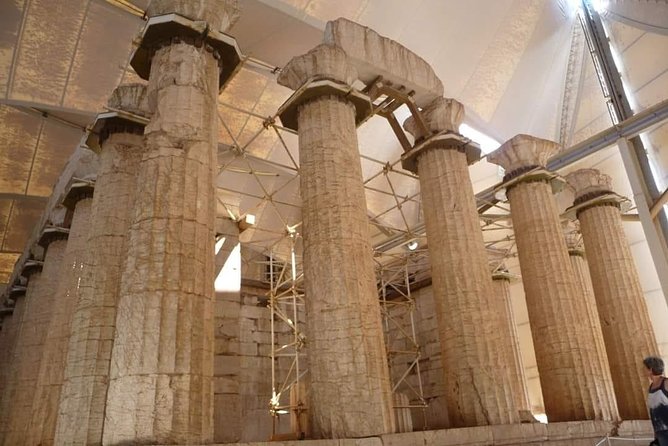
You will see the remains of the Temple of Zeus, once home to a huge gold-and-ivory statue counted among the Seven Wonders of the ancient world. The original statue is gone, but the scale and importance of the temple are still clear from the surviving stones.
The Philippeion is another memorable stop. Its circular form makes it easy to recognize, and it was connected with Philip II of Macedon and later completed by Alexander the Great. The Hera Temple, the palaestra, and the ancient stadium give you a sense of how worship, training, competition, and politics were tied together here.
The stadium is especially effective because it is less abstract than a broken temple. You can picture athletes running on the long track while the surrounding sanctuary served as the religious setting for the games. The Romans allowed the contests to continue for centuries before the games ended in AD 393 under Emperor Theodosius I.
The archaeological museum adds important pieces to the outdoor visit. Make time for it if the schedule allows, since sculptures and architectural fragments help explain what the ruined buildings once looked like. One useful detail from the tour experience is that the Olympia stop may be affected by opening conditions or by the larger route. Ask your driver early in the day how much time you have inside the museum and site.
The listed admission fee for Olympia is €20 per person if that option is not already selected in your booking. Check the exact package before you pay, because the tour details describe entrance fees as separate.
Cave Kaiadas and the Story Sparta Got Wrong
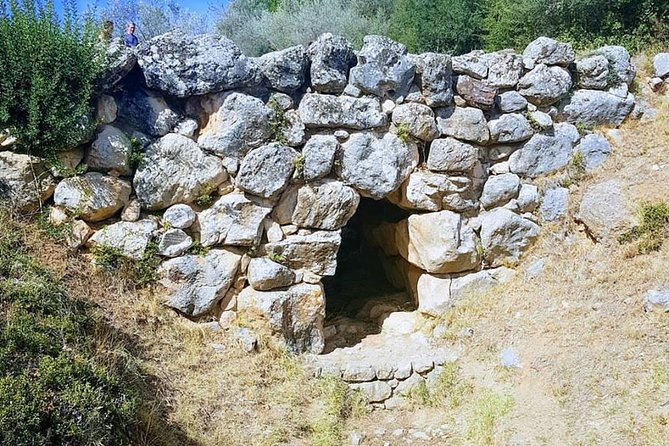
Cave Kaiadas is a short stop, about 45 minutes, but it gives the day a more unusual turn. The site is associated with a pit or underground cavern where prisoners or the bodies of condemned people were said to have been thrown. You go mainly for the setting and the story rather than for a large, preserved monument.
The stop also provides a chance to question one of the most repeated claims about ancient Sparta. The old story says that Spartan infants with birth defects were cast into the pit. Archaeological work beginning in 1983 examined human remains and found adult males and females instead, including people who may have been prisoners, criminals, traitors, or those sentenced to death.
That does not make the place cheerful, but it makes it worthwhile. You are not simply repeating a famous legend. You are hearing how physical evidence can challenge a familiar version of the past.
Expect uneven ground and a brief visit. This is not the kind of stop that justifies a long trip by itself, but it adds texture to the Sparta portion and breaks up the drive.
Ancient Sparta Along the Eurotas River
The archaeological site of Sparta is more open and less monumental than Olympia or Mycenae. Do not arrive expecting a single dramatic ruin. Instead, you see pieces of the ancient city, including the acropolis, theater, Roman-era houses, and the area connected with the tomb of Leonidas.
Sparta became a major political and military power during the Archaic period, roughly 800 to 479 BC. Its conflict with Athens shaped Greek history, and Sparta held power after winning the Peloponnesian War until its defeat by Thebes in 371 BC. Macedonian and Roman rule later changed the region, and the city declined.
The statue of Leonidas is one of the clearest visual highlights. He is shown in battle dress, recalling the defense of Thermopylae against the Persian invasion in 480 BC. The tomb associated with Leonidas and the statue of Lycurgus, the lawgiver linked with Sparta’s military education system, add human figures to an otherwise scattered site.
The Museum of the Olive Tree and Greek Olive Oil may also be part of the visit. It gives you a break from the ruins and connects ancient farming with Greek life that continues today.
This is the place where a good driver-guide makes a real difference. Since the remains are not always self-explanatory, the road commentary and introductions help you understand what you are seeing. You still explore independently inside the site, so keep the admission arrangements and available time in mind.
More Ancient History Tours in Greece
- From Athens: Ancient Corinth Day Trip with Canal & VR Guide
★ 4.6 · 1,073 reviews - Acropolis, Parthenon & Athens Old City Heritage Walking Tour
★ 4.5 · 876 reviews - Private Biblical Tour Ancient Corinth & Isthmus Canal from Athens
★ 5.0 · 762 reviews - Athens: Ancient Corinth & Nafplio Full Day Trip with Swim
★ 4.8 · 531 reviews
Mycenae and the Tomb of Agamemnon
Mycenae takes you farther back, into the Late Bronze Age. It was the center of a powerful kingdom associated with Perseus and the mythical King Agamemnon. The main period of the city ran from about 1600 to 1110 BC, with major fortification work beginning around 1350 BC.
The Lion Gate is the image most people remember. Its massive blocks are called Cyclopean because later Greeks believed that only Cyclopes could have moved stones so large. The gate leads into the fortified acropolis, where the scale of the walls makes the site feel more imposing than its ruined condition might suggest.
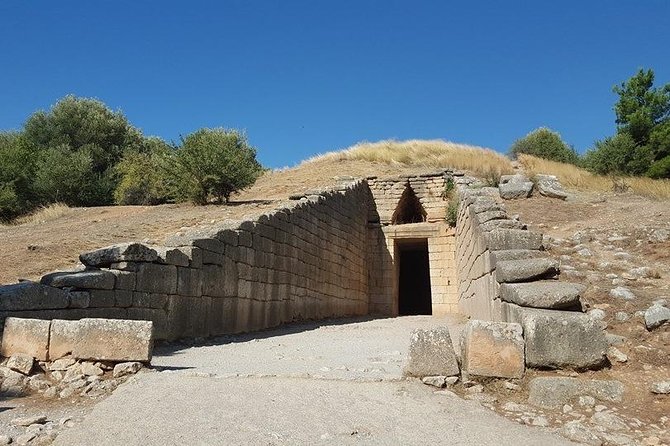
The Treasury of Atreus, often linked with Agamemnon, is technically a beehive-shaped tomb rather than a treasure room. Its carefully fitted stonework and high interior make it one of the most impressive surviving Mycenaean structures. The tour also includes other tombs in the area, giving you a better sense of the burial customs and status of the ruling class.
Mycenae is often the most visually dramatic stop after Olympia. It is compact enough to explore without getting lost, but the surfaces are uneven and the sun can be strong. Wear shoes with a good grip and bring water, even though extra bottled water is provided.
The entrance fee is listed as €20 per person if the Mycenae admission option is not included in your booking. Check this before departure, especially because the total price already feels substantial.
The Corinth Canal and the Long Ride Home
The Corinth Canal is a short photo stop, listed at about 15 minutes. The cut is narrow and striking, linking the Gulf of Corinth with the Saronic Gulf and separating the Peloponnese from mainland Greece.
Do not expect a full visit or a long walk. This is a quick look from the viewing area, but it breaks up the return drive and gives you a modern engineering feature after a day focused on temples, tombs, and ancient cities.
The roads through the Peloponnese include long stretches between the major stops. You will see mountain scenery, villages, and open countryside from the vehicle, but the route can feel tiring. Some roads are winding, especially on routes toward inland archaeological sites. If you get carsick, sit where you can see ahead and tell the driver before the day begins.
A Local Greek Dinner Back in Athens
The tour ends with dinner at Theodores Grill Corner or another local restaurant connected with the operator. The included meal is described as moussaka, Greek salad, tzatziki, one soft drink, beer, or glass of wine, followed by baklava with ice cream.
This is more useful than a rushed meal at a tourist stop. You return to Athens, sit down, and eat without having to find a restaurant after a very long day. The food also gives you a chance to try familiar Greek dishes in a local setting.
There is one point I would clarify before booking. One published experience account said dinner was not included, while the current tour details specifically list dinner as included. Ask for written confirmation of the meal and drink before you travel. That small check can prevent an unpleasant surprise after paying a high day-trip price.
Flexibility, Weather, and Changed Plans
The route is not rigid. Bad weather, seasonal daylight, strikes, road conditions, special events, or a site closure can force changes. Past alternatives have included Mystras, Nafplio, and Ancient Corinth. These are not guaranteed additions, so book this for the general Peloponnese experience rather than for a promise of every possible site.
This flexibility can work in your favor. If a temple is closed, a skilled driver may suggest another historic place and preserve the spirit of the day. It can also disappoint if one of your main goals is removed without much notice. Ask at pickup what the current plan is and how much time you will have at each stop.
The operator says that airport pickup time begins when you are collected, so a flight delay does not automatically create a problem. If you combine the tour with a transfer, luggage is limited to three large American-size bags, and extra services may cost more.
Free cancellation is available up to 24 hours before the start time. Poor weather may lead to a new date or a full refund. Service animals are allowed, and most people can participate, but mention health restrictions before the day begins.
Who Should Book This Tour?
I would book it for a history-focused family, a small group, or anyone with only a few days in Greece who wants to reach distant sites without renting a car. It is particularly useful if Olympia is on your must-see list but you do not have time to spend a night near the western Peloponnese.
You should also enjoy road trips. The itinerary covers a lot, but you cannot spend hours at every monument. Families may appreciate the private vehicle, frequent rest stops, snacks, and the ability to adjust the pace. A classics student or serious archaeology fan may want more time and a licensed guide inside each site.
Should You Book It?
Book this tour if your priority is breadth, comfort, and local explanation. In one demanding day, you can stand in the Olympic stadium, walk among Sparta’s ruins, enter the tomb at Mycenae, see Cave Kaiadas, cross the Corinth Canal area, and finish with Greek food.
Skip it if you prefer slow museum visits, dislike long drives, or want formal guiding inside every archaeological site. The price is easier to justify for a private group sharing one vehicle, especially with dinner and refreshments included.
My practical advice is to confirm three things before paying: which entrance fees are included, whether dinner is definitely part of your package, and how much time is planned at Olympia and Mycenae. If those answers suit you, this is a powerful way to fit the Peloponnese into a short Athens stay.
FAQ
How long does the tour last?
The advertised duration is approximately 12 hours. Because the route covers Olympia, Sparta, Mycenae, Cave Kaiadas, the Corinth Canal, and dinner, the day may run longer. Some departures have lasted about 15 hours.
Is hotel pickup available in Athens?
Yes. Pickup can be arranged from hotels, apartments, Airbnbs, metro stations, bus stations, and other locations within the Athens region. Pickup is also possible from Athens International Airport or the cruise terminal when the required details are provided.
What vehicle is used?
One to four passengers travel in a Mercedes E-Class. Groups of five to eight use a Mercedes minivan. Groups of nine to twenty may use a Mercedes Sprinter, depending on availability.
Is this a private tour?
Yes. Only your group participates in the activity.
Is the driver a licensed guide inside the archaeological sites?
No. The driver provides local guiding services but is not licensed to conduct tours inside the monuments and historical places. You receive explanations during the drives and then explore the sites independently.
Are entrance fees included?
The listed entrance fees are separate unless you select an option that includes them. Mycenae is listed at €20 per person, and Olympia is also listed at €20 per person.
Is dinner included?
The tour details describe dinner as included. It consists of moussaka, Greek salad, tzatziki, one soft drink, beer, or glass of wine, and baklava with ice cream. Confirm this with the operator before departure because one published booking account described a different understanding.
Can the itinerary change?
Yes. Strikes, special events, poor weather, site closures, daylight, or road conditions can change the start time or route. Possible alternatives mentioned for some departures include Mystras, Nafplio, and Ancient Corinth.
Just added around Athens
- Small-Group Women History in Ancient Greece Walking Tour★ 5.0 · 38 reviews
- The original Christian tour on Paul’s footsteps in Athens and ancient Corinth★ 4.5 · 25 reviews
- Ancient Athens tour: Acropolis, Parthenon and Acropolis Museum★ 5.0 · 256 reviews
- Ancient Athens Segway Tour with Agora and Kerameikos★ 5.0 · 94 reviews
- Ancient Sparta & Mystras Private Day Tour from Athens★ 5.0 · 52 reviews
- Athens National Archaeological Museum E-Ticket with Audio Guide★ 3.0 · 57 reviews
- Half Day Historical Athens City Private Taxi Service Tour★ 5.0 · 79 reviews
- Biblical Corinth Taste Faith & History with wine & Oil Tasting★ 5.0 · 28 reviews
Athens History Tours, compared.
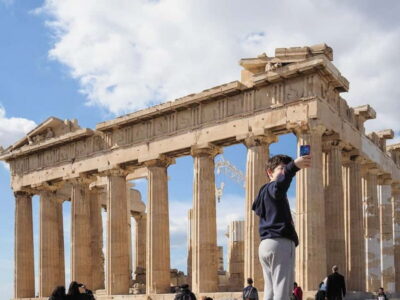
Athens: Acropolis & up to 5 Archaeological Sites Combo Pass
Read our review →
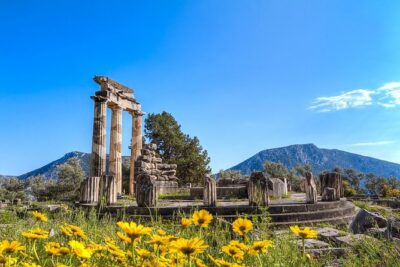
Historical Delphi One Day Tour with Arachova Stop & Expert Guide
Read our review →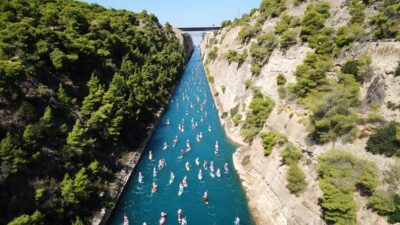
From Athens: Ancient Corinth Day Trip with Canal & VR Guide
Read our review →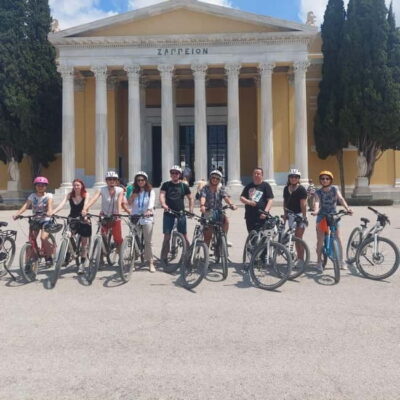
Historic Athens: Small Group Electric Bike Tour
Read our review →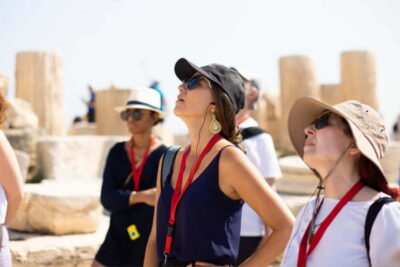
Acropolis, Parthenon & Athens Old City Heritage Walking Tour
Read our review →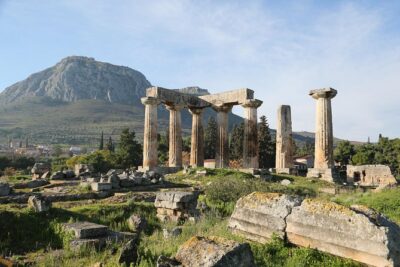
Private Biblical Tour Ancient Corinth & Isthmus Canal from Athens
Read our review →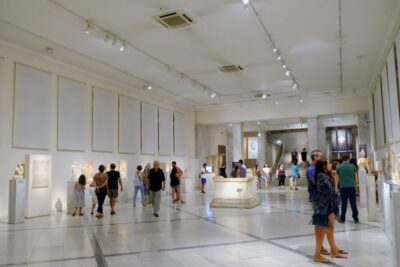
Athens: National Archaeological Museum Ticket w/ Opt. Audio
Read our review →Browse the lists this tour appears in