
Review · ATHENS
Biblical Corinth: St. Paul and His Letters to the Corinthians
The most meaningful part of this day is not simply seeing old stones. You follow St. Paul’s route through Corinth, from the Areopagus in Athens to the port of Cenchreae, with the Bema, Temple of Apollo, and Corinthian ruins filling in the story. The setting makes Paul’s letters feel tied to real streets, markets, ports, and rival temples.
I like two things right away. First, the private vehicle and flexible schedule let you linger at Acrocorinth, shorten a museum visit, or add a church stop without waiting for a bus group. Second, the drivers, including Alex, George, Stephanos, Spiros, Panos, and others, are often praised for their history knowledge, calm driving, and willingness to answer questions.
The key drawback is important: your driver is not a licensed guide and does not normally enter the archaeological sites with you. You will receive commentary before and during the drive, but if you want a guided walk among the ruins, you must request a licensed guide at an extra cost.
Why this private Corinth tour works well
- Paul’s Athens-to-Corinth story: Begin at Areopagus Hill, then follow Paul’s connections to Corinth, Isthmia, Cenchreae, and the Roman forum.
- A true private outing: Only your group rides in the vehicle, with pickup from a hotel, apartment entrance, or cruise port.
- Time at Acrocorinth: The fortress climb can be demanding, but the high view over Corinth rewards you with one of the day’s best moments.
- Ancient engineering in plain sight: See the modern Corinth Canal and the older Diolkos route used to move ships over the isthmus.
- Traditional Greek lunch option: Choose the meal package for lunch included in the price, or arrange your own meal and keep more control over the timing.
- Useful onboard comforts: Air conditioning, Wi-Fi, bottled water, and a flexible pickup time make the long day easier.
From Mars Hill to the road south

The day begins in Athens with a short stop at Areopagus Hill, also called Mars Hill. Here Paul addressed the Athenian council and spoke of the city’s altar to an unknown god. The stop lasts about 20 minutes and has no separate admission charge.
This is a good opening because it gives the Corinth visit a wider frame. Paul did not arrive in Corinth as an isolated preacher in an empty setting. He moved through a Greek and Roman world full of temples, philosophers, merchants, sailors, athletic contests, and competing religious ideas.
You should know that this is a brief stop, not a long Acropolis tour. The focus is Paul’s sermon and the connection to early Christianity. If you have not visited the Acropolis, you may want to reserve another part of your Athens stay for the hilltop monuments themselves.
The drive south is part of the experience. Your driver can explain the route, local history, and Paul’s movements along the way. Several drivers have been singled out for clear English, safe driving, and good pacing. George, Alex, and Stephanos are among the names praised for making the long ride feel useful rather than wasted.
More Ancient History Tours in Athens
- Athens: Acropolis & up to 5 Archaeological Sites Combo Pass
★ 4.2 · 13,904 reviews - Athens: Ancient Greek Theater Performance
★ 4.7 · 2,481 reviews - Historical Delphi One Day Tour with Arachova Stop & Expert Guide
★ 4.5 · 1,247 reviews
The Corinth Canal and the older Diolkos
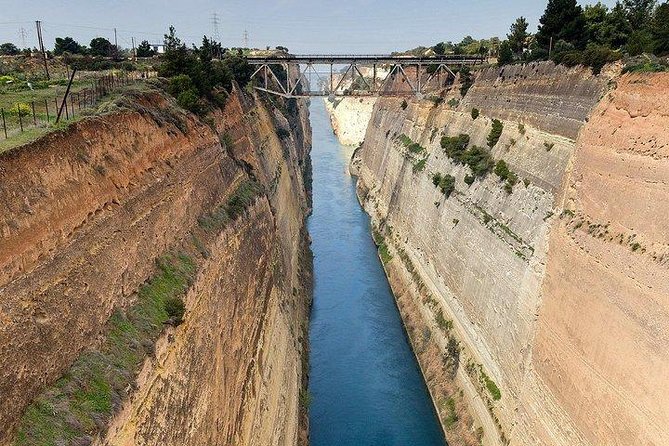
The first major stop outside Athens is the Corinth Canal. From the high viewpoint, you look down between steep limestone walls while boats pass below. The canal is about 6.4 kilometers long and only about 21.4 meters wide at its base, so many modern ships cannot use it.
The canal connects the Gulf of Corinth with the Saronic Gulf. In practical terms, it cuts across the narrow isthmus and makes the Peloponnese appear almost like an island. You get about 30 minutes here, enough for photographs and a quick look at the engineering.
I like this stop because it gives you immediate geographic sense. Corinth was powerful partly because it controlled this narrow land bridge between two seas. Trade, military movement, shipping, and people all passed through the area.
Nearby, the Diolkos provides an older and stranger version of the same idea. Long before the modern canal, ships and cargo could be hauled overland across the isthmus. The remaining roadway is a physical reminder that ancient people solved the same transport problem with very different tools.
The Diolkos visit is short, around 20 minutes, and there are no separate admission fees listed for it. Do not expect a large, fully reconstructed attraction. Its value comes from understanding the route and imagining the traffic of merchants, sailors, and goods moving between the Aegean and Ionian seas.
Isthmia, athletic contests, and Paul’s working world

The tour then turns to Isthmia, a religious and athletic center near the canal. The Isthmian Games honored Poseidon and ranked just below the Olympic Games in importance. Athletes, visitors, officials, and merchants came to the area, making it a useful place to understand the world Paul entered.
The tour connects Paul with this setting through his work as a tentmaker. The account presented during the visit is that he may have served athletes and visitors while sharing his Christian message with people arriving for the games. You should treat the details about exactly whom he served with appropriate care, but the broader point is sound: Paul’s work placed him in contact with people moving through a major public gathering.
The Archaeological Museum of Isthmia takes about 30 minutes. Its displays include objects from the Sanctuary of Poseidon, statues, votive offerings, burial pieces, and glass panels from Kenchreai, the nearby port associated with Paul’s departure for Syria.
The museum fee is not included. The listed admission charge for Ancient Corinth and the Archaeological Museum of Isthmia is €15 per person, payable on site. Check the current fee when booking, since admission charges can change.
The archaeological site of Isthmia adds the Temple of Poseidon, the ancient stadium, and the Sanctuary of Palaimon, associated with sailors. There is also an ancient theater originally used for musical contests. Roman mosaics show sea creatures and scenes from Dionysian mythology, giving you a clear picture of the pagan culture surrounding Paul.
The site visit is listed at about 40 minutes, with the theater and related points included in the broader schedule. If you enjoy ancient athletics, religion, and public life, this section gives the tour more substance than a simple visit to Corinth’s famous ruins.
Ancient Corinth and the Bema
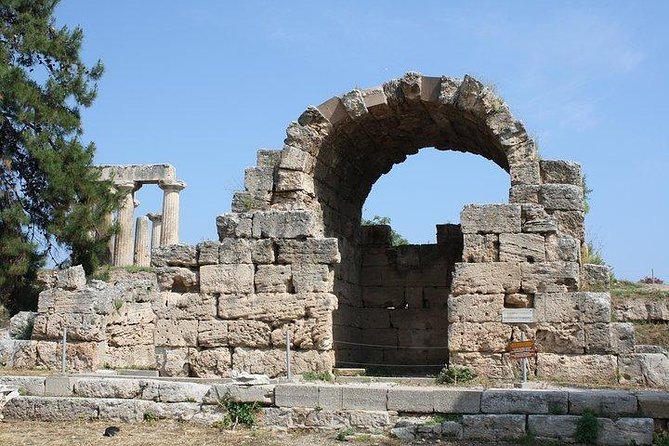
Ancient Corinth is the center of the day. Paul spent more than 18 months here around AD 51 and 52, and the Christian community he established later became the subject of his letters to the Corinthians.
The ruins help you picture why Corinth could be both prosperous and difficult. The city sat at a key crossing point and drew people from different regions. Paul’s letters address disputes, moral questions, worship, social divisions, and practical problems within the early church. Seeing the forum, temples, and public spaces gives those letters a setting instead of leaving them as abstract religious texts.
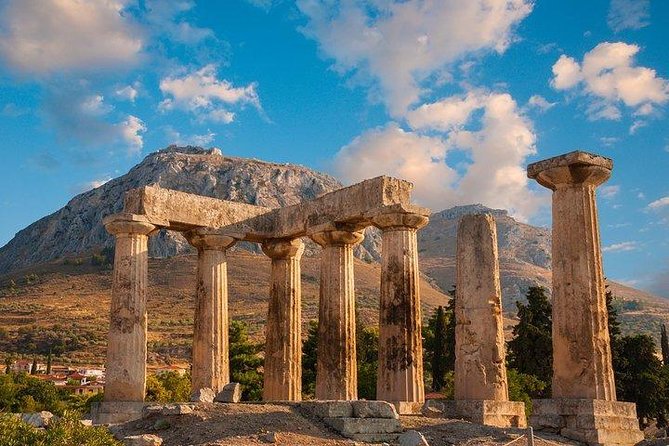
The Temple of Apollo is one of the most recognizable sights. Built around 560 BC, its huge stone columns represent an early form of Doric architecture. When Paul arrived, a temple like this would have dominated the city’s religious world. The contrast between a large pagan sanctuary and Paul’s message about one God and Christ is central to the tour’s purpose.
The Bema, or judgment platform, is another major stop. Acts describes Paul being brought before Gallio, the Roman proconsul, after accusations about his teaching. Gallio treated the dispute as an internal religious matter and declined to judge it. That decision allowed Paul to continue working in Corinth.
You can see the Bema during the site visit, but the driver will normally leave you at the entrance and wait outside. This is the point where the tour’s format matters most. You will have freedom to walk at your own speed, but you will not receive a running explanation beside each ruin unless you add a licensed guide.
The reviews include one clear complaint from a customer who expected the driver to guide the Ancient Corinth ruins in person. The description does state that drivers are not official guides, so read that condition carefully before booking. For some people, the relaxed self-guided format is ideal. For others, a formal site tour is worth the added cost.
More Ancient History Tours in Greece
- From Athens: Ancient Corinth Day Trip with Canal & VR Guide
★ 4.6 · 1,073 reviews - Acropolis, Parthenon & Athens Old City Heritage Walking Tour
★ 4.5 · 876 reviews - Private Biblical Tour Ancient Corinth & Isthmus Canal from Athens
★ 5.0 · 762 reviews - Athens: Ancient Corinth & Nafplio Full Day Trip with Swim
★ 4.8 · 531 reviews
Churches, Cenchreae, and the final Corinth connections

A stop at the Apostolou Pavlou church brings the story into the present. The church honors Paul’s time in Corinth and serves as a place of worship connected with his mission. The visit is short, about 20 minutes, but it gives the day a living religious dimension.
At Kechries, the ancient Cenchreae, you reach Corinth’s eastern port. Acts 18:18 places Paul here before he sailed for Syria with Priscilla and Aquila. The account also connects him with cutting his hair after making a vow.
Cenchreae matters for another reason. Paul’s letter to the Romans mentions Phoebe, a servant of the church there. This offers a useful reminder that early Christian communities included women with important responsibilities, even though the surviving accounts often focus on male leaders.
Today, the stop is a peaceful coastal one and lasts about 30 minutes. It is less monumental than Ancient Corinth, but I find it valuable because it shows how Paul’s message moved outward by sea. The journey was not only about preaching in one city. Ports carried people, letters, ideas, and religious movements across the Mediterranean.
The climb to Acrocorinth
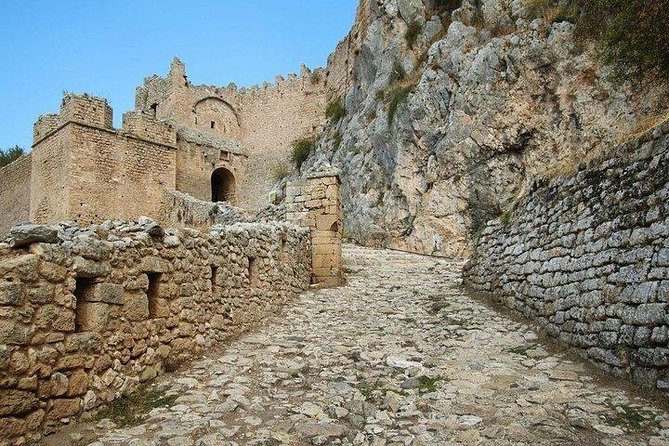
Acrocorinth is the day’s physical challenge and one of its strongest rewards. The fortress rises above Ancient Corinth, and the route upward includes an ascent that some visitors find harder than expected.
Allow time for the climb and wear practical shoes. The exact amount of walking depends on how far you go and how the group handles the visit, but the high ground is not a quick roadside photo stop. One customer described the walk as more than expected and still considered the view well worth the effort.
From the fortress, you can look over Corinth, the surrounding mountains, and the broad area Paul knew. The tour presents the possibility that Paul may have looked out from this height, though that is best treated as a thoughtful connection rather than a documented event.
The private format helps here. A group with strong walkers can spend longer at the fortress, while a group with less energy can shorten the visit and give more time to the ruins or lunch. Drivers have been praised for not rushing people and for adjusting the schedule to match the group.
Greek lunch with time to breathe
Lunch is usually taken at a traditional Greek taverna near Corinth. If you select the option with Greek traditional food, lunch is included. Otherwise, you should expect to pay for your own meal.
This break matters on an eight to nine hour outing. The day includes several sites, a long drive, walking at Ancient Corinth, and the possible climb at Acrocorinth. Past visitors have praised the food and the views, with one group enjoying a meat platter recommended by the taverna owner.
A private tour also makes lunch more personal. You can take your time, ask the driver for help with the menu, or choose a shorter meal if you want more time at the ruins. One guide, George, was especially praised for helping with menu choices and taking photographs.
Cost, transport, and practical value

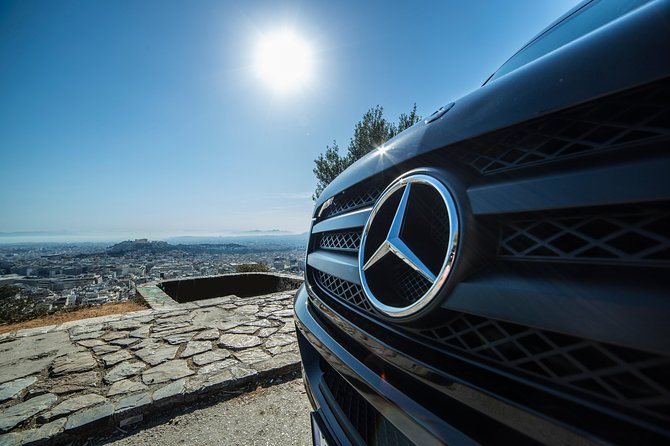
At $218.43 per person, this is not the cheapest way to reach Corinth. It becomes more reasonable when you are traveling as a private group and want hotel or port pickup, an air-conditioned vehicle, bottled water, Wi-Fi, and a flexible day built around your interests.
The price covers private transport and a professional driver with historical knowledge. It does not cover the €15-per-person admission charge listed for Ancient Corinth and the Archaeological Museum of Isthmia, nor does it include a licensed guide inside the archaeological sites.
That distinction changes the value calculation. If you want comfortable transport and a custom route, the price can be fair, particularly for a group splitting the vehicle cost. If your main goal is detailed archaeological instruction at every ruin, budget extra for the licensed guide.
Pickup can be arranged from a hotel, apartment entrance, or cruise port. For port pickup, the driver waits at the gate with your name. The return point can be the original location or another agreed place, which is useful for cruise passengers, but you should give yourself a conservative return buffer.
The tour is offered in English and usually sells about 73 days ahead, so early planning makes sense for a cruise stop or fixed Athens schedule. Free cancellation is available up to 24 hours before the start time.
Who should book this Corinth experience
I would choose this tour if you want Paul’s story to guide the day but also want to see the wider Corinth area. The route includes much more than the main ruins: Mars Hill, the canal, Diolkos, Isthmia, Cenchreae, the Paul church, lunch, and Acrocorinth.
It suits families and small groups who value privacy, Christian visitors who want a place-based connection to Paul, and history fans who prefer a flexible day to a fixed bus schedule. It also works well for cruise passengers who need pickup and return at the port.
I would hesitate if you dislike walking, want every site explained on location, or prefer a short half-day outing. The day is long, the fortress climb can test your legs, and the self-guided archaeological visits require you to read signs or arrange the licensed guide option.
Should you book it?
Book it if you want a full day tracing Paul’s movements through Athens and Corinth, with a private car, room for questions, and time to shape the schedule around your group. The strongest parts are the driver commentary, the Corinth Canal and Diolkos context, the Ancient Corinth ruins, and the view from Acrocorinth.
Before paying, confirm three things: your pickup point, whether lunch is included in your chosen package, and whether you want a licensed guide for the archaeological sites. If you understand those limits, this is a thoughtful and efficient way to connect Paul’s letters with the actual places where his community took root.
FAQ
How long does the tour last?
The experience lasts approximately eight to nine hours.
Is this a private tour?
Yes. Only your group participates, and private transportation is provided.
Where can pickup take place?
Pickup can be arranged at a hotel, an apartment entrance, or a cruise port. The driver can return you to the same place or another agreed point.
Is the tour available from the port?
Yes. For port pickup, the driver waits at the gate with a sign showing your name.
Is a licensed tour guide included?
No. The included driver is not licensed to accompany you inside the archaeological sites. A licensed guide can be requested, depending on availability, for an additional cost.
What admission fees are extra?
The listed admission fee for Ancient Corinth and the Archaeological Museum of Isthmia is €15 per person. These fees are paid on site and are not included.
Is lunch included?
Lunch is included only if you select the With Greek Traditional Food option. Otherwise, lunch is not included in the tour price.
What is included in the vehicle service?
The tour includes private transportation in an air-conditioned vehicle, onboard Wi-Fi, bottled water, and a professional English-speaking driver with historical knowledge.
Does the tour visit the Corinth Canal?
Yes. The schedule includes a stop of about 30 minutes at the canal viewpoint, with time to see the steep walls and watch boats below.
Can the tour be canceled for a refund?
You can cancel up to 24 hours before the experience start time for a full refund. Cancellations or changes made less than 24 hours before the start time are not accepted for a refund.
Just added around Athens
- Small-Group Women History in Ancient Greece Walking Tour★ 5.0 · 38 reviews
- The original Christian tour on Paul’s footsteps in Athens and ancient Corinth★ 4.5 · 25 reviews
- Ancient Athens tour: Acropolis, Parthenon and Acropolis Museum★ 5.0 · 256 reviews
- Ancient Athens Segway Tour with Agora and Kerameikos★ 5.0 · 94 reviews
- Ancient Sparta & Mystras Private Day Tour from Athens★ 5.0 · 52 reviews
- Athens National Archaeological Museum E-Ticket with Audio Guide★ 3.0 · 57 reviews
- Biblical Corinth Taste Faith & History with wine & Oil Tasting★ 5.0 · 28 reviews
- Ancient Corinth, Sanctuary of Hera, Blue Lake & Canal from Athens★ 5.0 · 26 reviews
Athens History Tours, compared.
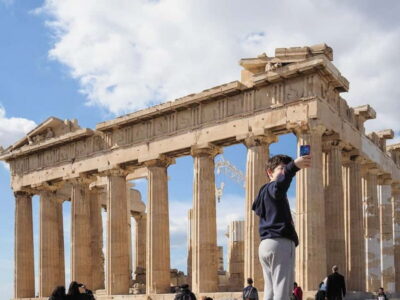
Athens: Acropolis & up to 5 Archaeological Sites Combo Pass
Read our review →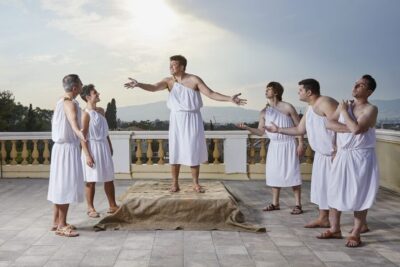
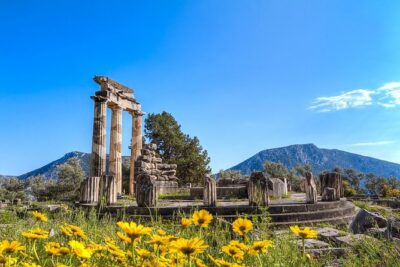
Historical Delphi One Day Tour with Arachova Stop & Expert Guide
Read our review →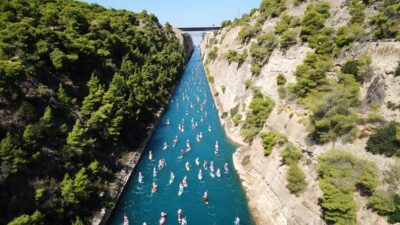
From Athens: Ancient Corinth Day Trip with Canal & VR Guide
Read our review →
Historic Athens: Small Group Electric Bike Tour
Read our review →
Acropolis, Parthenon & Athens Old City Heritage Walking Tour
Read our review →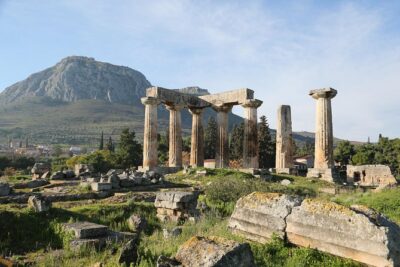
Private Biblical Tour Ancient Corinth & Isthmus Canal from Athens
Read our review →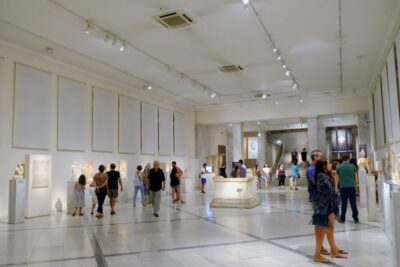
Athens: National Archaeological Museum Ticket w/ Opt. Audio
Read our review →Browse the lists this tour appears in