
Review · ATHENS
Biblical Tour Letters to The Corinthians – St Paul’s Footsteps
The most meaningful part of this day is the way it links Paul’s letters to real places. At Mars Hill, Corinth’s Bema, Cenchreae, and the old port roads, you can picture the setting behind Acts and First and Second Corinthians instead of treating them as distant Bible stories. The route also reaches the Corinth Canal and lesser-known Isthmia.
I like the private format, which lets you skip Mars Hill if you have already seen it and give that time to Corinth. I also like the chance to travel with drivers such as Alex, Kostas, Spyros, or Constantine, who have been praised for clear English, local knowledge, patience, and flexibility. The main caution is that the drivers are not licensed guides and do not enter the archaeological sites with you unless you arrange a licensed guide.
Key points to know before you book
- Paul’s Corinth comes alive at the Bema: See the Roman judgment platform linked with Paul’s hearing before Gallio.
- A private car makes the long day flexible: Your group of up to four can adjust the pace and reorder parts of the route.
- Isthmia adds useful context: The Temple of Poseidon, stadium, theater, and museum show the pagan and athletic world around Paul.
- The Corinth Canal is a short scenic stop: It is impressive, but the canal itself is a modern engineering project, not a site from Paul’s lifetime.
- A licensed guide costs extra: Drivers offer commentary in English but do not guide inside the monuments.
- Budget for entrance fees and lunch: Ancient Corinth and the museum require payment, and lunch at a seaside taverna is not included.
Why this private Corinth tour works for Bible-focused visitors
Paul spent about 18 months in Corinth around AD 51 to 52. That alone makes Corinth one of the strongest Christian-history day trips from Athens. Here, you are not simply looking at ruins. You are moving through the commercial, political, religious, and maritime setting in which Paul preached, worked, faced opposition, and formed an early Christian community.
The day begins in Athens, usually with pickup from your hotel or other accommodation. You travel in a private air-conditioned vehicle with bottled water and WiFi on board. The advertised price is $386.18 for the whole group of up to four, not per person. For four people, that is a strong value for a full private day. For one or two people, the cost is higher per head, but you gain door-to-door transport and control over the schedule.
I would not treat this as a standard guided bus tour. It is better understood as a private driver-led route with historical commentary. Some drivers, including Alex, Kostas, Michael, Pericles, Spyros, Constantine, and others named by the company, have provided detailed explanations and handled the route well. Still, the formal arrangement matters: your driver may answer questions and explain the background, but cannot accompany you inside each site as an official guide.
Other history tours people book around Athens:
- Athens: Acropolis & up to 5 Archaeological Sites Combo Pass
★ 4.2 · 13,904 reviews - Athens: Ancient Greek Theater Performance
★ 4.7 · 2,481 reviews - Historical Delphi One Day Tour with Arachova Stop & Expert Guide
★ 4.5 · 1,247 reviews
Mars Hill and the speech about the unknown God
Areopagus Hill, also called Mars Hill, is the natural opening for a tour about Paul in Greece. This is where Acts places Paul before the Athenian council, addressing people who worshiped many gods and referring to an altar dedicated to an unknown god.
The stop lasts about 20 minutes and has no admission fee. It is brief, but the setting gives the speech a physical location. You can look across the Acropolis area and think about Paul speaking in the intellectual center of ancient Athens, rather than reading the passage without a sense of place.
If you have already visited Mars Hill and the Acropolis, use the private format to ask for more time in Corinth. One couple did exactly that, and the driver adjusted the route. This is one of the clearest advantages over a fixed group excursion.
Mars Hill is not the easiest place for a long, formal talk. The stop is short, and you should expect to hear the main context from the driver before walking up or while viewing the area. If you want a full biblical and archaeological explanation at the site, arrange a licensed guide.
The Corinth Canal and ancient shipping routes
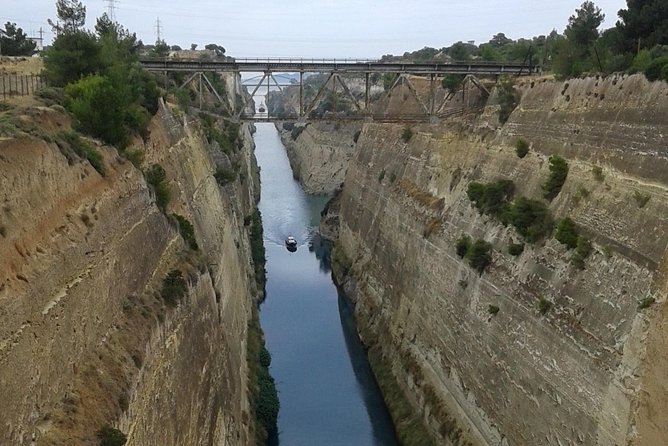
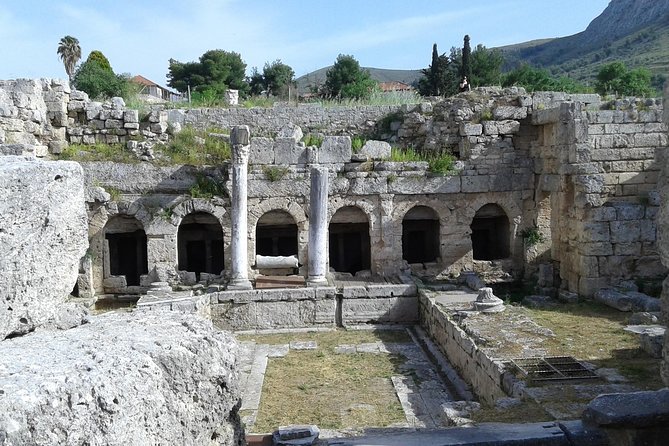
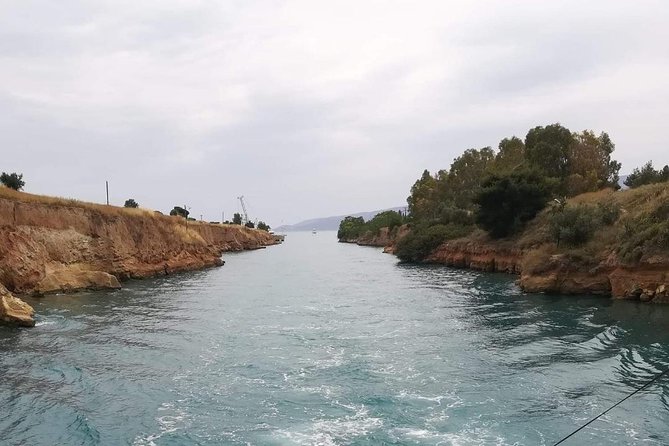
The drive from Athens to Corinth brings you across the Isthmus of Corinth, the narrow strip of land linking mainland Greece with the Peloponnese. The modern Corinth Canal cuts through this strip and connects the Gulf of Corinth with the Saronic Gulf.
You get about 30 minutes here. There is no admission charge, and the stop offers a useful break after the drive. The canal is striking because of its steep walls and narrow waterway, though it dates from the 19th century, long after Paul’s time.
The idea of cutting a canal goes back more than 2,000 years. Before the canal was built, ships had to sail around the Peloponnese, adding roughly 185 nautical miles. That fact helps explain why Corinth became so important. Control of the isthmus meant control of movement between two seas.
Do not confuse the modern canal with the ancient Diolkos. The Diolkos was an overland system used to move ships across the isthmus before the canal existed.
The Diolkos and the working world around Corinth
The Diolkos stop lasts about 20 minutes and has no admission fee. It is less visually grand than Ancient Corinth, but it helps you understand the practical world Paul entered.
Ships and goods once crossed the isthmus by land along this route, linking the Aegean and Ionian seas. Merchants, sailors, craftsmen, and officials passed through the area. Paul’s ministry took place in this kind of mobile commercial setting, not in an isolated religious community.
This is also a good place to ask your driver how Corinth’s position affected its wealth and influence. The route connected ports, encouraged trade, and brought people with different languages, customs, and beliefs together. That mix helps explain why Corinth became both a promising mission field and a difficult church community.
Same city, a different century:
- From Athens: Ancient Corinth Day Trip with Canal & VR Guide
★ 4.6 · 1,073 reviews - Historic Athens: Small Group Electric Bike Tour
★ 4.9 · 966 reviews - Acropolis, Parthenon & Athens Old City Heritage Walking Tour
★ 4.5 · 876 reviews - Private Biblical Tour Ancient Corinth & Isthmus Canal from Athens
★ 5.0 · 762 reviews
Isthmia, the games, and the world Paul faced
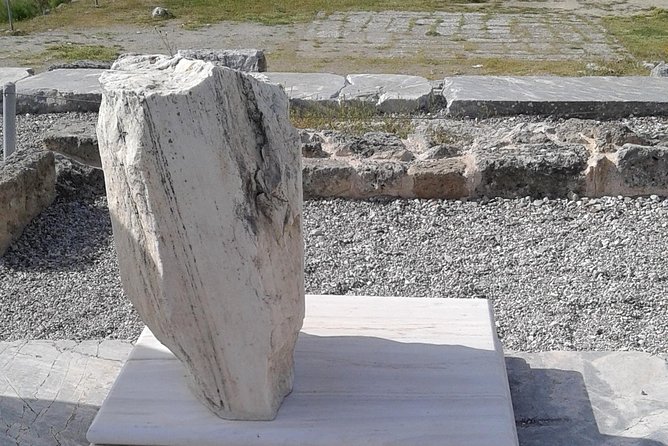
Isthmia offers some of the best context on the tour. The ancient site hosted the Isthmian Games, the second most important athletic competition in the Greek world after the Olympics. The games honored Poseidon and drew athletes and spectators from across the region.
The tour allows about an hour at Isthmia, followed by 30 minutes at the Archaeological Museum of Isthmia. The archaeological site carries an extra admission charge, and the museum portion is not included. The supplied pricing information also refers to a €15 per-person fee for Ancient Corinth and the Archaeological Museum of Corinth, so I would confirm exactly which tickets are required for your chosen route before departure.
The connection to Paul is partly historical and partly interpretive. Paul worked as a tentmaker, and the tour presents him as working near the athletes and visitors attending the games. His letters use athletic images such as running, discipline, and competition, making Isthmia a useful place to consider how daily life may have shaped his language.
The sanctuary included the Temple of Poseidon, an ancient stadium, and the Sanctuary of Palaimon, associated with the protection of sailors. You also see the old theater, used for musical events connected with the games, along with Roman mosaics featuring sea creatures and Dionysian scenes.
These details matter because they show the religious setting Paul encountered. His message was delivered among temples, athletic contests, political meetings, and public entertainment. The early Christian community did not grow in a quiet vacuum. It took root in a place filled with older gods and competing ideas.
The museum adds smaller, more personal objects to the large ruins. Statues, votive offerings, burial finds, and glass panels from Kenchreai help fill out the story. The panels are especially relevant because Kenchreai was the port from which Paul departed for Syria.
Ancient Corinth and the Bema
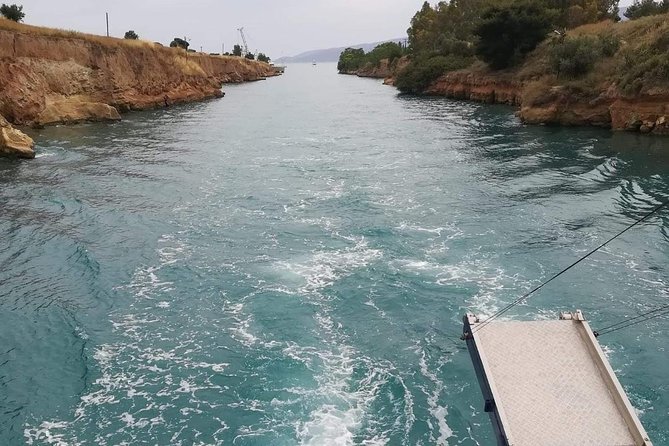
Ancient Corinth is the heart of the day. Plan about an hour here, though the private vehicle gives you some freedom to adjust the time.
Corinth was a commercial center on the isthmus and a major city in the Roman world. Paul lived and preached here for about 18 months. His letters to the Corinthians address arguments, moral questions, worship, leadership, and the practical problems of a growing Christian community.
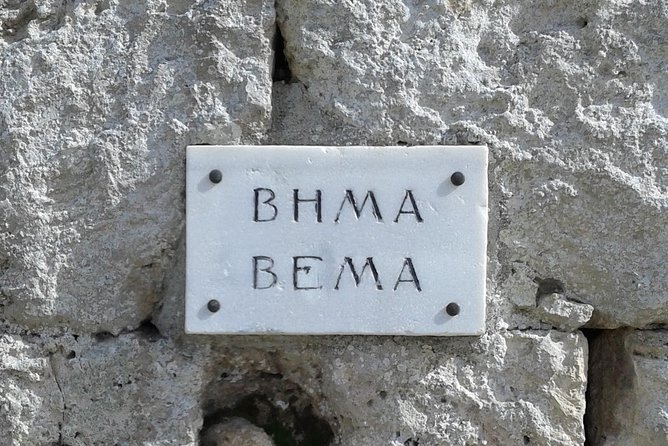
At the Roman Forum, you see the Bema, the stone platform used for public judgment. Acts describes Paul being brought before Gallio, the Roman proconsul, after accusations about his teaching. Gallio dismissed the matter as a dispute within Jewish religious life rather than a Roman crime.
This is one of the strongest moments on the route because the biblical account and the physical setting meet at one spot. The Bema later became a Christian worship site during the Byzantine period, adding another layer to its story.
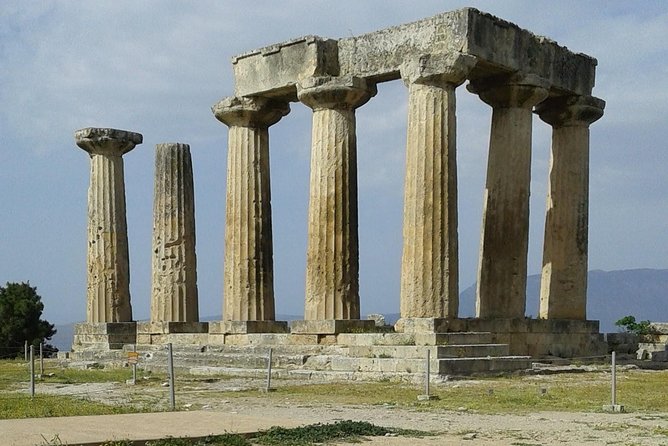
Ancient Corinth also includes the Temple of Apollo, built around 560 BC. Its surviving limestone columns are among the most recognizable remains at the site. When Paul arrived, this temple represented the older religious order surrounding him. The contrast between the Temple of Apollo and Paul’s message about one God gives the stop real force.
The site is exposed, and you will be walking among ruins rather than moving from room to room in a museum. Wear practical shoes, carry water, and allow time to look beyond the main photo points. The entrance fee is not included.
Cenchreae, Phoebe, and Paul’s departure
Kechries is the modern site associated with ancient Cenchreae, Corinth’s eastern port. The stop lasts about 30 minutes and has no admission fee.
Acts places Paul at Cenchreae during his second missionary journey. Before sailing for Syria with Priscilla and Aquila, he cut his hair after making a vow. The port also appears in Romans, where Paul commends Phoebe, a respected servant of the church at Cenchreae.
Phoebe gives this stop particular value. She was not a nameless background figure. Paul specifically identified her with the Christian community at Cenchreae, offering a glimpse of the people who helped early churches function.
Today, the site is quieter than Ancient Corinth. That is part of its appeal, but it also means there may be less to see on the ground. The importance comes from the port’s role in Paul’s movement between communities and from the connection to Phoebe.
Apostolou Pavlou and a seaside Greek lunch
The Apostolou Pavlou church honors Paul’s time in Corinth. You spend about 20 minutes here, with no admission fee. It offers a modern place for reflection after the ancient sites and helps connect the archaeological remains with the continuing Christian identity of Corinth.
Lunch follows in Corinth at a traditional seaside Greek taverna. You get about an hour for the meal, but lunch is not included in the price. The exact menu and cost are not specified, so keep room in your budget.
This break is practical as well as pleasant. The route includes several ancient sites, open ground, and a fair amount of driving. A sit-down meal gives you time to rest and talk through what you have seen instead of rushing straight from one ruin to the next.
Akrokorinthos and the final view
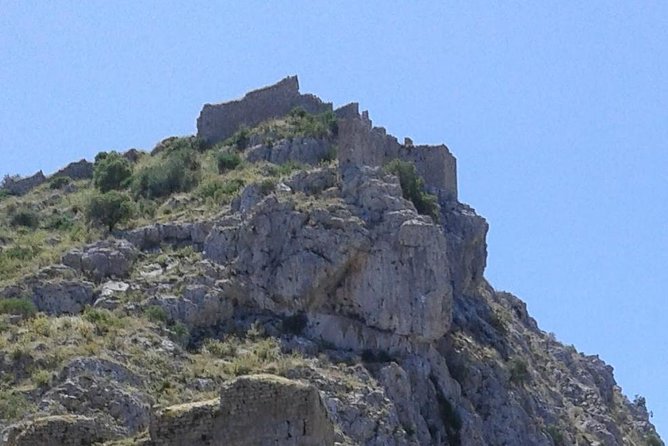
Akrokorinthos is the fortress above Ancient Corinth, and the tour allows about 40 minutes. Its height gives you broad views over the city and the surrounding area.
The connection to Paul is presented through the route he would have known and the vantage point over Corinth. The fortress itself reflects later layers of history as well as the strategic importance of the site. Do not expect a long climb or an extended fortress visit within the stated time. This is a short visit designed to add scale and a final view.
I would ask your driver how far you will walk and how much of the fortress you can reasonably see in 40 minutes. The tour is built around many stops, so the day can feel brisk. One group completed the route in about six hours and felt rushed, while other groups appreciated drivers who let them set the pace. Tell the driver at the start if you prefer fewer stops and more time at the main sites.
Drivers, guides, vehicles, and the real touring style
The tour offers several vehicle types, including a private sedan and more spacious options. Check the vehicle category carefully when booking. One unhappy booking resulted from expecting a larger, more comfortable vehicle after reserving a sedan.
Your driver provides private transportation, air conditioning, bottled water, WiFi, and English commentary. The strongest experiences depend heavily on the individual driver. Alex was praised for helping a group make good use of a short stay in Athens. Kostas was singled out for route planning, photography stops, and familiarity with Corinth. Spyros, Constantine, Pericles, Michael, and others were also credited with good explanations and considerate service.
A licensed guide can be arranged on request and subject to availability. This is worth considering if you want detailed explanations inside Ancient Corinth, Isthmia, and the museum. Without one, you will usually receive the historical background in the car, then explore each site independently while the driver waits outside.
The tour is private for your group only, up to four people. That gives you a useful level of control. You can skip a place you already know, spend longer at a favorite site, or ask for a slower pace. The tradeoff is that you need to communicate clearly. A driver may assume you want to keep moving unless you say otherwise.
Is $386.18 good value?
For up to four people, $386.18 is reasonable for a private eight-hour outing from Athens, especially when you factor in pickup, transport, fuel, air conditioning, and the ability to shape the day. Split four ways, the transport cost is modest for a full private route.
The price is less attractive for a solo visitor or a couple, particularly once you add entrance fees and lunch. The main site and museum admission is listed as €15 per person, though you should confirm the exact ticket arrangements because the route names more than one museum and archaeological area.
The private format is the main value, not a long formal lecture at every monument. If you want a guide walking beside you at each site, budget for the licensed guide upgrade. If you prefer freedom, privacy, and useful commentary between stops, the driver-led arrangement may suit you well.
Free cancellation is available up to 24 hours before the start time. Changes or cancellations inside that window are not accepted for a refund.
Who should book this day from Athens?
I would choose this tour if you care about Paul, the early Christian communities, or the setting behind the Corinthian letters. It also suits visitors who want Corinth without joining a large group and families or friends who can share the private vehicle cost.
It is less suitable if you want a relaxed archaeological day with long, unhurried visits. The route includes many stops, and some are brief. It is also not the best choice if you expect a licensed historian to accompany you inside every site without arranging one in advance.
Should you book the St. Paul Corinth tour?
Book it if you want a private, Bible-centered journey that combines major sites with useful smaller stops such as Diolkos, Isthmia, and Cenchreae. The Bema, the Temple of Apollo, the port at Cenchreae, and the athletic world of Isthmia give the day more substance than a simple visit to the Corinth Canal and ruins.
Before paying, confirm your vehicle, ask whether a licensed guide is available, and agree on the pace. If you have already seen Mars Hill, say so and use the time in Corinth. With those expectations set, this is a worthwhile way to connect Paul’s ministry with the actual roads, ports, temples, and public spaces of ancient Greece.
FAQ
How long does the tour last?
The tour is scheduled for about eight hours, though the exact length can vary with the route and pace. One reported experience ended after about six hours, so discuss timing with your driver at the start.
How many people can join the private tour?
The private tour is for one group of up to four people.
Is pickup included?
Yes. Pickup is offered from your place, making the tour convenient for visitors staying in Athens.
Is a licensed guide included?
No. The included drivers are not licensed guides and do not enter the sites with you. A licensed guide may be arranged upon request, depending on availability.
Which languages are offered?
The tour is offered in English. Drivers provide commentary in fluent English.
Are entrance fees included?
No. Entrance fees are not included. Ancient Corinth and the archaeological museum are listed at €15 per person, purchased on site, though you should confirm which exact sites and museum are covered by that charge.
Is lunch included?
No. The tour includes time for lunch at a traditional seaside Greek taverna, but you pay for the meal yourself.
What does the price include?
The price includes private transportation, an air-conditioned vehicle, bottled water, WiFi on board, and a professional driver with historical knowledge. It does not include lunch, site admission, or a licensed guide.
Just added around Athens
- Small-Group Women History in Ancient Greece Walking Tour★ 5.0 · 38 reviews
- The original Christian tour on Paul’s footsteps in Athens and ancient Corinth★ 4.5 · 25 reviews
- Ancient Athens tour: Acropolis, Parthenon and Acropolis Museum★ 5.0 · 256 reviews
- Ancient Athens Segway Tour with Agora and Kerameikos★ 5.0 · 94 reviews
- Ancient Sparta & Mystras Private Day Tour from Athens★ 5.0 · 52 reviews
- Athens National Archaeological Museum E-Ticket with Audio Guide★ 3.0 · 57 reviews
- Half Day Historical Athens City Private Taxi Service Tour★ 5.0 · 79 reviews
- Biblical Corinth Taste Faith & History with wine & Oil Tasting★ 5.0 · 28 reviews
Athens History Tours, compared.
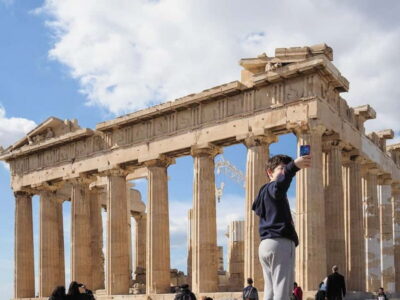
Athens: Acropolis & up to 5 Archaeological Sites Combo Pass
Read our review →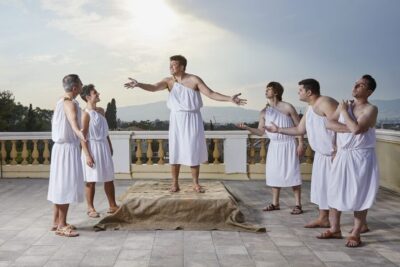
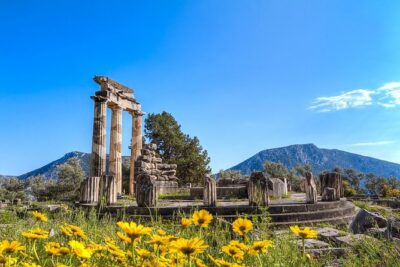
Historical Delphi One Day Tour with Arachova Stop & Expert Guide
Read our review →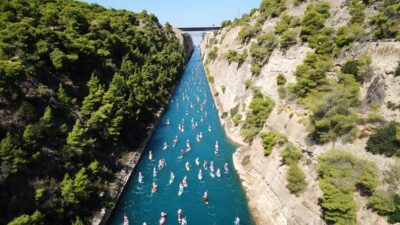
From Athens: Ancient Corinth Day Trip with Canal & VR Guide
Read our review →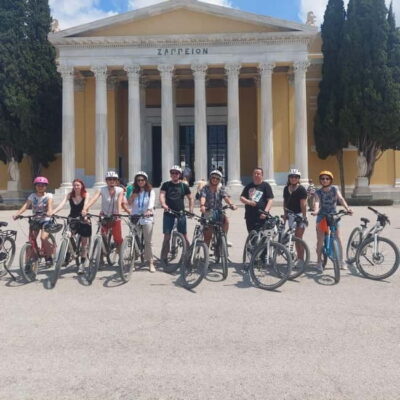
Historic Athens: Small Group Electric Bike Tour
Read our review →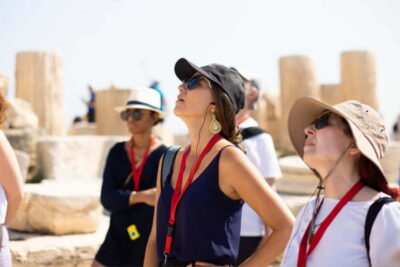
Acropolis, Parthenon & Athens Old City Heritage Walking Tour
Read our review →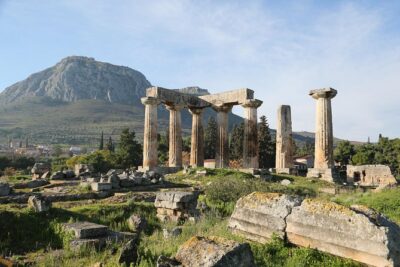
Private Biblical Tour Ancient Corinth & Isthmus Canal from Athens
Read our review →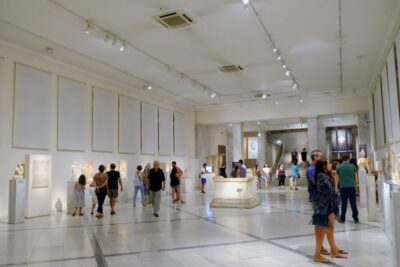
Athens: National Archaeological Museum Ticket w/ Opt. Audio
Read our review →Browse the lists this tour appears in